• About Me
  • Other Writings
  • Interview Clips
  • All About Me: American Racism, American Narcissism, and the Conversation America Can’t Have
  • Video Clips
  • Boy @ The Window Pictures
  • Boy @ The Window Theme Music

Notes from a Boy @ The Window

~

Notes from a Boy @ The Window

Tag Archives: Whiteness

Fear and (White) Women’s History Month

06 Thursday Mar 2014

Posted by decollins1969 in 1, Boy @ The Window, culture, Eclectic, Politics, Pop Culture, race, Youth

≈ Leave a comment

Tags

Death By A Thousand Cuts, Domestic Violence, Elitism, Fear, Feminism, Microaggressions, Misogyny, Racism, Sexual Harassment, Stereotypes, Threats, Violence, Whiteness, Women's History Month


The Scream (1893) by Edvard Munch, The National Gallery, Oslo, Norway, November 27, 2013. (The Herald via Wikipedia). In public domain (US).

The Scream (1893) by Edvard Munch, The National Gallery, Oslo, Norway, November 27, 2013. (The Herald via Wikipedia). In public domain (US).

I often find it ironic that Women’s History Month follows immediately after Black History Month. In this sequence, both are racialized, as the former tends to represent White women, while the latter represents all Blacks regardless of gender, sexual orientation, or country of origin. Meaning that women of color often have to fight to be recognized during Women’s History Month, that poor women often go unrecognized in both Black and Women’s History months, and that other nuances of demographics and history aren’t thought of at all.

Such is the case with issues of -isms within feminism and Women’s History Month. Particularly when combined with the actualization of fear. In the cases of domestic violence, rape, assault, kidnapping, harassment and other threats against women, it’s certainly understandable that the fear of such things (and the breaking down those threats and fears in dialogue) are a big part of feminism and Women’s History Month more specifically. But when combined with certain -isms — especially racism and elitism — these issues become more about profiling stereotypical threats rather than dealing with real threats against women, especially (but not exclusively) for White women.

Compact Glock 19 in 9x19mm Parabellum, November 4, 2007. (Vladimir Dudak via Wikipedia). Released to public domain via CC 3.0 & GNU.

Compact Glock 19 in 9x19mm Parabellum, November 4, 2007. (Vladimir Dudak via Wikipedia). Released to public domain via CC 3.0 & GNU.

It’s something I experience every day. A White woman crossing the street as I approach, on my way home, to my car, to run an errand, or to pick up my son from school. A woman — White or Black — gasping audibly at the sight of me in an elevator, some even not getting on board, as if I had a ski mask over my face and a Glock in my right hand. White female co-workers who, upon seeing me outside the office, would put on a blank face and walk by me while I’m holding open a door, too scared to even say “Hello,” much less a “Thank you.”

It’s the nearly daily reminder that where feminism and Whiteness intertwine, I represent the Black male misogynist. I am dangerous, the guy whom White women and middle class women of color imbue anti-feminist threats and violence. Even when standing still on an elevator, deep in my own thoughts about work, teaching, family and writing.

Martyrdom of Joseph Marchand (1860) by unknown, September 27, 2008. (World Imaging via Wikipedia). Released to public domain via CC 3.0 and GNU.

Martyrdom of Joseph Marchand (1860) by unknown (or death by 1,000 cuts), September 27, 2008. (World Imaging via Wikipedia). Released to public domain via CC 3.0 and GNU.

I get it. White women often have to expend micro-energies on microaggressions from men — including Black men — in order to get through the day. For some, it’s probably an exhausting part of their existence. Likely so much so that they forget to turn off their shields even when bumping into a male co-worker or friend.

From my perspective, though, it’s not that simple. It’s not like I look at every White male and female and see another willfully ignorant and entitled racist ready to accuse me of ruining the country or threaten me with bodily harm. I think that in some feminist circles, racial and classist profiling goes on even more so than with most police officers. Fear is an important part of our existence, but it shouldn’t be the centerpiece of how anyone lives their lives, even when it’s justifiable.

In thinking about feminism, Whiteness and Women’s History Month, my two little cents’ worth of thoughts come down to this. I’m tired of being a victim of your fears, which when multiplied over the past 150 years, have often led to misunderstandings, false accusations, arrests, convictions, beatings and deaths. I’m tired of abstract discussions of microaggressions, threats and violence against mostly White women that don’t include the perspectives of women of color. And I’m tired of feminists who refuse to evaluate their own elitism and Whiteness in how they go about their everyday lives.

City Place Mall: Why You Don’t Shop Where There’s A “Hood Policy”

04 Tuesday Mar 2014

Posted by decollins1969 in 1, culture, eclectic music, High Rise Buildings, Pop Culture, race

≈ 1 Comment

Tags

Breathing While Black, City Place Mall, Criminalization, Dehumanization, George Zimmerman, Hood Policy, Hoodies, Institutional Racism, Lisa Petrie, Malls, Petri Dish, Petrie Ross Ventures, Racial Stereotypes, Racism, Silver Spring Maryland, Trayvon Martin, White Fears, White Supremacy, Whiteness


City Place Mall, main entrance, Silver Spring, MD, June 10, 2012. (Farragutful via Wikipedia). Released to public domain via CC 3.0.

City Place Mall, main entrance, Silver Spring, MD, June 10, 2012. (Farragutful via Wikipedia). Released to public domain via CC 3.0.

Last Thursday afternoon (February 27), a security guard at City Place Mall in Downtown Silver Spring, Maryland confronted me and my 10-year-old son about wearing a hood over our heads, having just come inside from below-freezing and windy weather. The security guard explained that the policy at City Place Mall is to forbid patrons from wearing hoods, hats, scarves, sunglasses and other clothing that would make us more difficult to identify. When I asked for a written indication of this policy, the security guard told us that the one sign for your 400,000-square-foot mall was downstairs in the lower lobby, which does patrons like me little good in informing us of their racism and stupidity.

Keep in mind, I’m a 44-year-old man with a 10-year-old kid, who’s only intent was to go to an indoor ATM machine to withdraw my money from my bank account so that we wouldn’t freeze. We weren’t shopping at Marshall’s or another store in the mall. What were we going to do, buy two packs of Skittles at the dump of a snack store at City Place instead of just one? Buy two bottles of Lipton Ice Tea (Arizona Ice Tea makes our teeth hurt)?

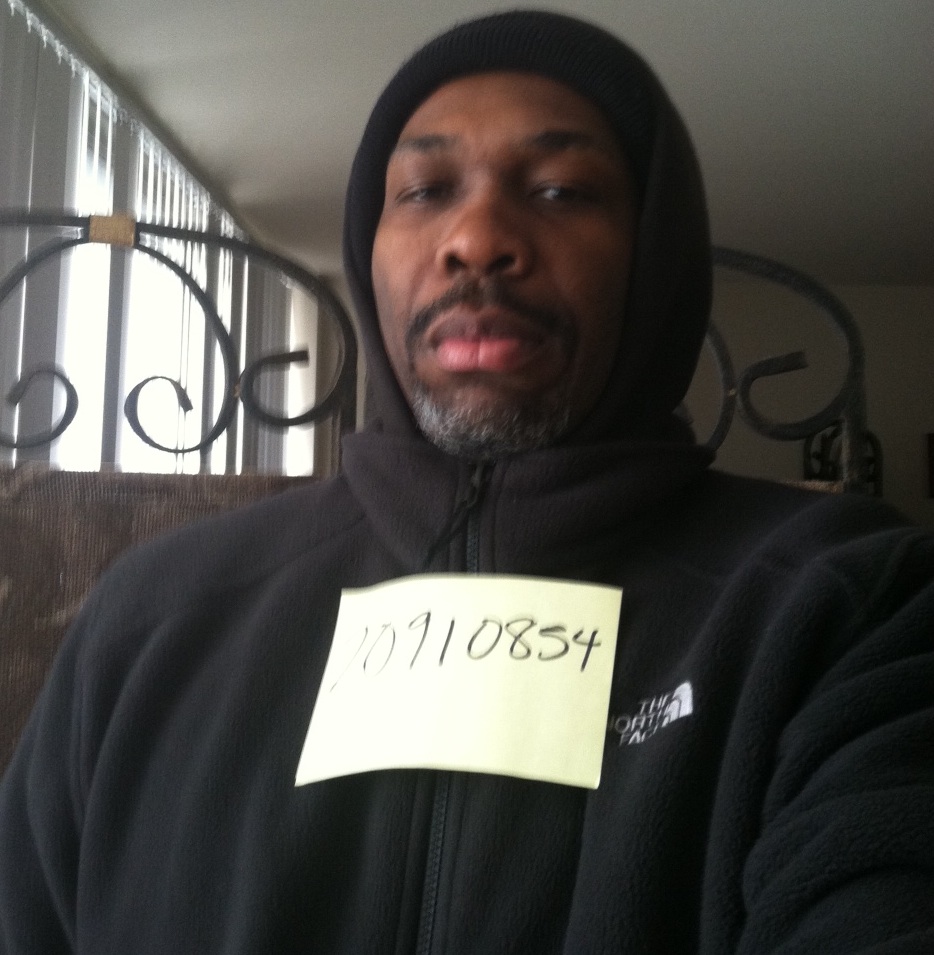
Me with hood get-up I wore last week with son in tow (numbers added), March 4, 2014. (Donald Earl Collins).

Me with hood get-up I wore last week with son in tow (numbers added), March 4, 2014. (Donald Earl Collins).

If this is how they treat all patrons, this policy would merely be a stupid one. I suspect, though, that they don’t stop women in veils or burqas, Sikhs with turbans or every person wearing sunglasses. No, Black and Brown male patrons — especially ones that look young and healthy — are their targets for such an idiotic policy.

I emailed Lisa Petrie about this incident and wanted clarifications about this policy. Petrie is a co-owner of Petrie Ross Ventures, LLC, the Annapolis-based group that manages (read owns here) City Place Mall. In addition, I asked her to answer the following questions:

1. Is this in fact the policy of City Place Mall, to force patrons to remove hoods and other clothing upon entering the mall?

2. If this is in fact your policy, then why isn’t it posted conspicuously at the entrances to the mall for all patrons to see and read?

3. Is this policy one that security guards are supposed to apply, and if so, are they doing so in an equitable manner?

Petrie didn’t answer any of my questions. Instead, she emailed me this response:

It is our policy in all of our properties to ask our patrons to remove their hats, hoods, etc. only as a safety precaution for all that visit our malls. I am unsure as to the procedures as I am not part of the operations team however I will ask that if you have any questions that you follow up with the property manager on site, Mr. Gary Brewer.

Bottom half of a Petri dish, the only thing I'll buy from City Place Mall in the future, October 20, 2005. (Miaow Miaow via Wikipedia). Released to public domain via CC 2.0.

Bottom half of a Petri dish, the only thing I’ll buy from City Place Mall in the future, October 20, 2005. (Miaow Miaow via Wikipedia). Released to public domain via CC 2.0.

This is a ridiculous statement, unless by “safety precaution,” Petrie means that there are George Zimmermans in all their malls waiting to shoot anyone with a hood over their heads if their skin has a significant melanin content. I did, after Petrie sent me his contact information, send Brewer the same information about the incident, as well as my questions. Mr. Brewer has refused to respond.

If this is how City Place Mall and Petrie Ross expects to treat its patrons, though, I think that whatever plans you have for this mall should come with the disclaimer that not all patrons are welcome, especially Black and Brown males. You can name your dilapidated mall Ellsworth or even Crap. I already don’t shop there. I can always withdraw money from another ATM.

My First Boy @ The Window Interview

29 Wednesday Jan 2014

Posted by decollins1969 in 1, Academia, Boy @ The Window, Carnegie Mellon University, culture, Pittsburgh, Politics, Pop Culture, race, University of Pittsburgh, Youth

≈ Leave a comment

Tags

Book Promotion, CMU, Honesty, Lily-White, PR, Public Relations, Whiteness


Screen shot of CMU website's front page, January 29, 2014. (Donald Earl Collins).

Screen shot of CMU website’s front page, January 29, 2014. (Donald Earl Collins).

I had my first interview related to Boy @ The Window two and a half weeks ago, with a public relations person working on behalf of the Carnegie Mellon University website, CMU.edu. But this interview will likely never be posted on Carnegie Mellon’s website. Why, pray tell? Because I was honest about my CMU experience, in that it was bitter work, a frustrating time, a place in which I felt isolated in its lily-White conservatism (with a nod toward Asian students as honorary Whites).

I didn’t say all this in my interview. Okay, here’s what they asked and what I actually said (also on my Boy @ The Window Facebook  page):

Q: Why did you choose to attend CMU and pursue a Ph.D. in history?
A: Joe Trotter, in a word, was my deciding factor. I didn’t want to earn all of my degrees in history at the University of Pittsburgh, and the history department offered to accept my master’s degree and Ph.D. credits from Pitt. Plus, CMU’s history program was simply better, in that I knew I could graduate years ahead of time. But I came because I wanted to work with Joe Trotter.

Q: You mention that you’ve based your career in the areas of education reform and multiculturalism -why? Could you describe your work in these areas a bit more?
A: From the time I began reading history when I was nine years old, I’ve wondered about the horrors of this world, and how we as humans have shown a capacity for compassion and strength despite those horrors. My interest in multiculturalism was a natural extension of my quest to understand my past, those horrors, and especially the people from various backgrounds whom were my classmates in middle school and high school in Mount Vernon, New York. The irony was, though, that I didn’t consciously recognize these connections until I began working on Boy @ The Window. As for education reform, especially around college access and retention, it’s that sense that despite it all, access to higher education can and does transform lives, and provide a pathway to a more productive life. Multiculturalism was my dissertation research while at CMU – not to mention my first book, Fear of a “Black” America (2004) — while my interest in education reform began in my work in the nonprofit world. First with Presidential Classroom in 1999 and 2000, then with an initiative known as Partnerships for College Access and Success (PCAS), where I was the deputy director from 2004 to 2008.

Q: Did CMU play a role in your difficult journey to success? (Perhaps network, training, culture, etc…) Any professor/mentors to note?
A: Yes, because I earned my Ph.D. while at CMU. But in order to become the writer I am now, I actually had to unlearn much of what I learned as a writer while at CMU. By the time I began my doctoral work at CMU in the fall of 1993, my difficult journey was mostly complete. In terms of mentors, the late Barbara Lazarus was mine during my four years at CMU. She was the toughest and kindest administrator, a sharp and clear mind, a quick wit, one of the positive memories I have of CMU.

Q: You work as an author, academic, consultant and more – why such a varied path? Did your time at CMU help you to span these various fields and topics?
A: CMU helped me on my eclectic path because my dissertation committee provided no help in my search for work after I graduated in May 1997. I had to find a way to use the skills I picked up as a historian and academic writer before I could go about the task of remaking myself as a writer. Luckily my dissertation research was as much about education history – and to a lesser extent, education policy – as it was about US and African American history. This helped me find work in the nonprofit sector, as well as adjunct work in schools of education like at Duquesne and George Washington University. I think that the lesson I learned at CMU was that I needed to decide and define my own path, with or without the help of those who taught me.

Q: Have you stayed in touch with anyone, been back to campus or been involved in any CMU groups or activities I should mention? (I realize you live in Silver Spring..)
A: I’ve been back to CMU four times since I graduated in 1997, two of those times to visit with Barbara Lazarus before she passed away in 2003. I have remained in touch with a couple of folks who were in graduate school with me at CMU between 1993 and 1997, but with a wife, a near-preteen son and so much taking up my time, I don’t stay involved with CMU much at all. Mine was hardly a positive experience, and there were times that I as an African American male didn’t exactly feel welcome on campus. So by necessity, my interactions with the CMU community have been limited over the past 17 years.

Within 24 hours of my interview answers, I noticed on my blog site that traffic regarding my CMU-related posts had increased by nine-fold, and stayed that way for a day or two. I guess the public relations folks at Carnegie Mellon wanted a more positive and race-less view from me about my experiences there. Oh well.

When I followed up to find out what they planned to do with my interview, this was what they emailed in response:

Dear Dr. Collins,

Melissa forwarded your message to me. Thank you for sharing your story with us. We are currently vetting a larger number than expected potential stories for use on the homepage. We will keep your responses on file, and let you know if we move forward on a story.

Have a great day,
Heidi

What they really meant to say was, “We’re experiencing technical difficulties with your answers, please stand by…”

In Denigration of the Black and Accomplished

20 Monday Jan 2014

Posted by decollins1969 in 1, Academia, Carnegie Mellon University, culture, Eclectic, Pittsburgh, Politics, Pop Culture, race, University of Pittsburgh, Work

≈ 1 Comment

Tags

Abuse, Academic Culture, Academic Politics, Accomplishments, Achievements, Black Milwaukee, CMU, Denigration, Joe Trotter, Joe William Trotter Jr., Larry Glasco, Laurence Glasco, Meritocracy, Neglect, Pitt, Richard Oestreicher, Running Interference, Scholarship, Whiteness


Screenshot of Richard Sherman post-game interview with Erin Andrews, NFC Championship Game, Seattle, WA, January 19, 2014. (http://msn.foxsports.com).

Screenshot of Richard Sherman post-game interview with Erin Andrews, NFC Championship Game, Seattle, WA, January 19, 2014. (http://msn.foxsports.com).

I plan half of my blog posts in advance. At the beginning of every year, I make up a list of topics that I intend to cover, listed by month, and then go through that list. For the other half, I take advantage of relevant news stories or sudden life experiences that also seem relevant. Screen shot 2014-01-20 at 9.25.25 AM

Today’s post is a combination of planning and the impromptu. I’d already planned to write about the tightrope of being Black and accomplished — actually, more like the noose of it. But thanks to @profragsdale’s tweet, aka, Rhonda Ragsdale, an Associate Professor of History at Lone Star College-North Harris (Houston, Texas) and a PhD candidate at Rice University, I started on this topic a day early. Her tweet was the kick-off to eight hours of tweets about the cold and often cold-shoulder reception women — and Black male and LGBT — faculty and grad students receive when bringing up, discussing or even promoting themselves and their accomplishments.

Only to see more of these tweets and thoughts confirmed in another arena. The response of the racist, George-Zimmerman-set to Richard Sherman’s post-game interview with Erin Andrews on FOX within a couple of moments after he made the play to seal the game for his Seattle Seahawks to go play in Super Bowl XLVIII. You, Black man, can’t have a flash of anger and moment of passion on TV after playing in the NFC Championship Game, for then your accomplishments will be used against you. (Sarcasm aside, Sherman’s taunting will likely result in a fine, but that’s the NFL).

Single Drum Rollers with Rock Crushing Drum crushing soil and rocks (similar to how Whiteness can crush Black accomplishments), January 20, 2014. (http://bomag.com).

Single Drum Rollers with Rock Crushing Drum crushing soil and rocks (similar to how Whiteness can crush Black accomplishments), January 20, 2014. (http://bomag.com).

My post is much, much closer to home. I had the blessing and the curse of having two Black males as my official advisors while in grad school at Pitt and Carnegie Mellon, Larry Glasco for two years at Pitt, and Joe Trotter for four years at CMU. My gripes and complaints about their neglect, selective attentions to my development, and, in Trotter’s case, harassment and psychological torture I’ve already documented well here. What I haven’t discussed is that they were part of a cycle of academic abuse that they passed down to my generation of grad students, and likely some of my colleagues are passing on to their grad students as I write today.

My best example of how denigration in academia works was a conversation I had with Dick Oestreicher, a Pitt professor for my grad seminar in American Working-Class History in Fall ’92. I was in Trotter’s African American History seminar at CMU at the same time. Oestreicher asked me what else I was taking that semester, I guess because I’d proven resistant to the idea that social class had primacy over all forms of inequality, even in the US (a neo-Marxist to the core, I guessed).

When I told him I was in Trotter’s seminar, Oestreicher said, “Oh, I’ve heard of him,” with the disdain a fashion designer usually reserved for suits off Sears’ rack. You’ve “heard of him?” Really? Trotter, an award-winner scholar and author with a groundbreaking book on Black migration, urbanization and class formation in Black Milwaukee: The Making of an Industrial Proletariat, 1915-1945 (1985; 2007), and you’ve heard of him? A colleague only three blocks and one bridge away, and you’ve heard of him? Even now, the only word I have to that is, “Wow!”

If Oestreicher was the only one to do that, and only to Trotter, then my observations here would be suspect. But I witnessed this same kind of thing from other White history professors at Pitt and CMU toward Trotter and Glasco during my grad school years. Heck, one of the reasons I left for CMU in the first place was because I knew several of the most powerful professors in the Pitt history department didn’t respect Glasco’s work, and by extension, my own progress and work.

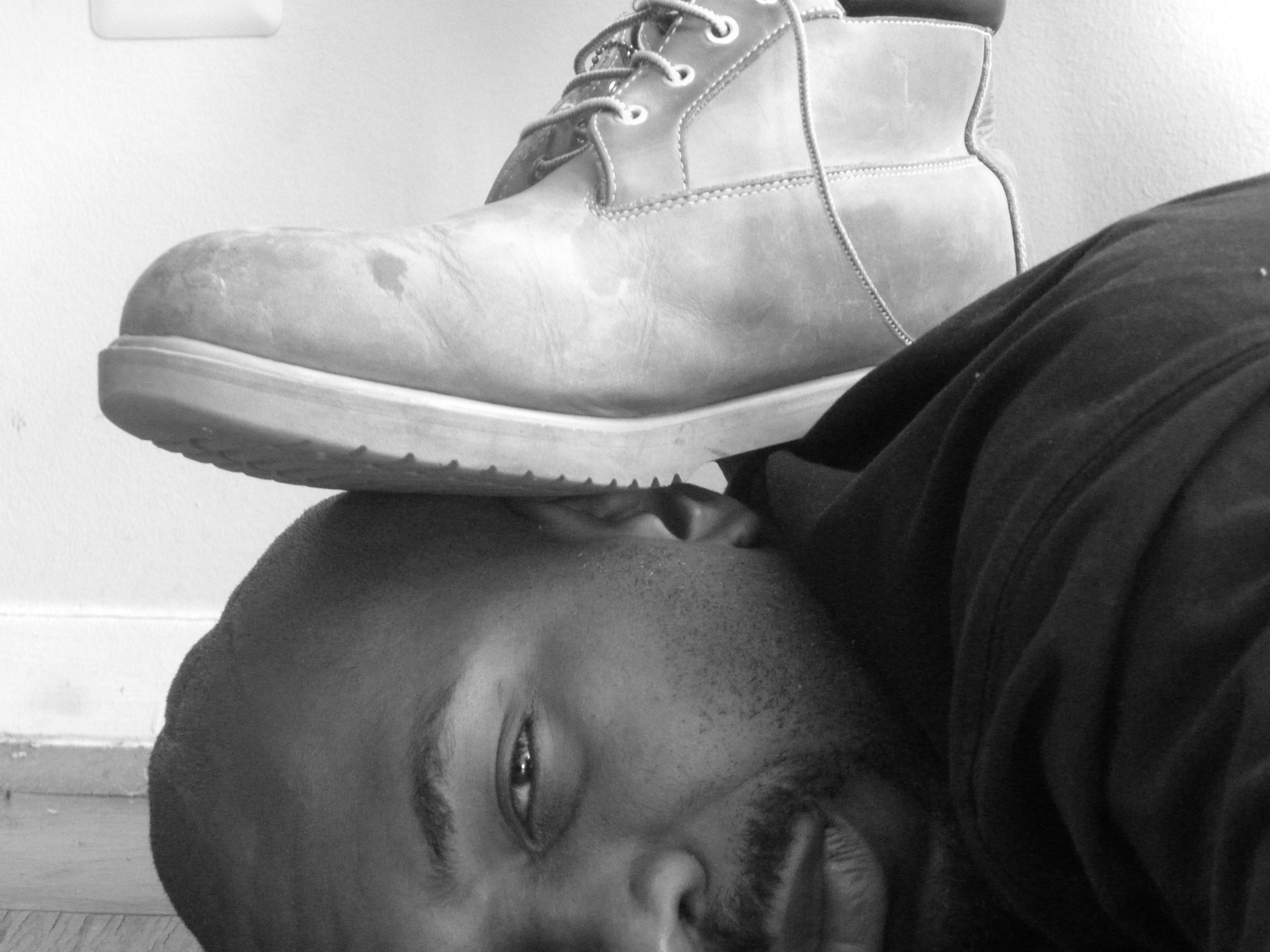
Foot On My Neck & Head, symbolic of my years as a Hebrew-Israelite (also of grad school), April 18, 2011. (Donald Earl Collins).

Foot On My Neck & Head, symbolic of my years as a Hebrew-Israelite (also of grad school), April 18, 2011. (Donald Earl Collins).

Maybe that was part of the reason why Trotter would constantly “run interference” on my behalf, to protect my “interests” during my four years there. Because, despite all the long hours, the sweat, tears and blood, there were folks at CMU who just saw him as a mere Black man, not a colleague or scholar every bit their equal. Given the books, the articles, the grants and so many other accomplishments, Trotter was easily the most productive professor in the department.

None of this justified how Trotter treated me when I was his student. I was semi-aware of the racial politics of accomplishment denial that folks around us practiced. I often chalked it up to jealousy or stress, thinking that the quality of my work or — to use Trotter’s terminology — my scholarship would show the academic world my worth. What White disdain toward Glasco and Trotter — and Trotter’s harassment of me — taught me, though, is that I’d have to be White in order for my accomplishments to seriously matter in academia, and I wasn’t planning on being White in my lifetime. And, that intellectual Whiteness can be nurtured and grown into Black professors.

In the years since finishing my own PhD, I’ve faced my own dilemmas around my achievements. I’ve at times attempted to fit in by downplaying my publications, by not bringing up my degrees, by not talking about my fellowship awards. What have I learned? To deny myself of my own accomplishments is like making a fine wine but not even daring to take a sip. White accomplishment deniers be damned.

Richard Cohen & Rational Racism

17 Wednesday Jul 2013

Posted by decollins1969 in 1, culture, Eclectic, New York City, Politics, race, Youth

≈ Leave a comment

Tags

Affirmative Action, Derrick Bell, Paternalism, Racial Profiling, Racism, Richard Cohen, Stop and Frisk, Ta-Nehisi Coates, White Liberals, Whiteness


Electron microscope image of a lymphocyte, (a.k.a. cancer cell), September 20, 1976. (Dr. Triche/NCI via Wikipedia). In public domain.

Electron microscope image of a lymphocyte, (a.k.a. cancer cell), September 20, 1976. (Dr. Triche/NCI via Wikipedia). In public domain.

Ta-Nehisi Coates’ response to Richard Cohen’s “Racism vs. reality” column in The Washington Post (July 15, 2013) is so spot on that I had to post something about it. “The Banality of Richard Cohen and Racist Profiling” is a must read for anyone who’s tired of those White “liberals” who remain okay with racism for the sake of perceived safety. Below was my two cents on both Coates’ piece and the sidetracking some whom commented on Coates’ piece tried to do by equating racial profiling with affirmative action:

“Richard Cohen is no different than the racist and race-baiting journalists of not too long ago. You know, the ones who’d put ‘Negro Rapes A White Girl’ on the front page of the Chicago Tribune, Washington Post or New York Times, back in the days when Whites would riot and destroy Black neighborhoods upon seeing such headlines. All to sell newspapers, not to actually start a real and serious dialogue on race, racism and remedies.

And this is precisely what makes Cohen and his ill-conceived logic so dangerous. His is a piece that’s meant to make White ‘liberals’ feel okay about the denial of humanity and rights to Blacks. Especially since White ‘liberals’ must also feel that they’re protected and safe from the Black male boogieman criminal.

Don’t get caught up in a debate about affirmative action as some sort of intellectual counterbalance. It’s a false equivalency, plain and simple. More to the point, it’s a distraction from the real point. Like TNC, the late Derrick Bell wrote about this at length. The idea that we as African Americans, male and female, must embody all of the evils and stereotypes of this nation in order for Whites to feel safe. It’s so insulting, so soul-destroying, so infuriating, this immutable racism of Cohen and the millions of folk who think like him.”

Hey George

16 Tuesday Jul 2013

Posted by decollins1969 in 1, culture, Eclectic, eclectic music, music, Politics, race

≈ Leave a comment

Tags

"Hey Joe" (1966/67), George Zimmerman, Injustice, Jimi Hendrix, Juror B37, Justice System, Lyrics, Murder, Trayvon Martin, Whiteness


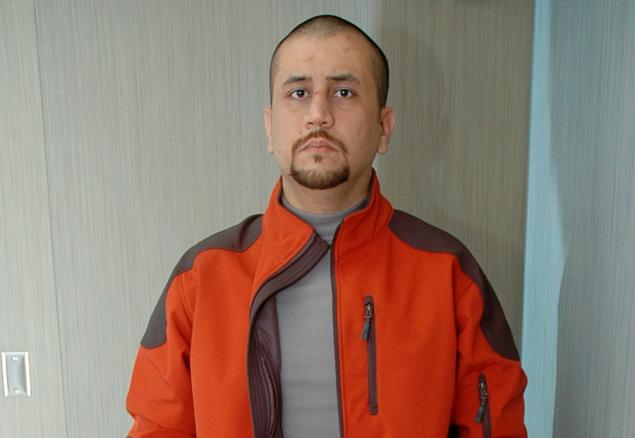
One of 1st George Zimmerman mugshots, February 26, 2012. (http://nydailynews.com).

One of 1st George Zimmerman mugshots, February 26, 2012. (http://nydailynews.com).

Cover for The Jimi Hendrix Experience's "Hey Joe" single, February 28, 2010. (Kohoutek1138 via Wikipedia). Qualifies as fair use because of picture's low resolution.

Cover for The Jimi Hendrix Experience’s “Hey Joe” single, February 28, 2010. (Kohoutek1138 via Wikipedia). Qualifies as fair use because of picture’s low resolution.

I’d originally planned to use Jimi Hendrix’s version of the classic lyrics from “Hey Joe” (1966/67) to talk about my former doctoral/dissertation advisor Joe Trotter. But even Trotter wasn’t evil and emotionally disconnected enough to attempt to end my life, even though his decisions could’ve easily ended my career before it started.

In any case, below is my ode to George Zimmerman, Trayvon Martin’s murderer, walking free because of racism and Whiteness, a racially stacked deck of law enforcement and criminal justice. Some won’t like what I did to Hendrix’s song. Others likely will. I can only imagine what Hendrix would say:

“Hey George, where you goin’ with that gun in your hand
Hey George, I said where you goin’ with that gun in your hand
I’m goin’ down to shoot that young man
You know I caught him walkin’ ’round with a different shade, man
Yeah, I’m goin’ down to shoot that young punk
You know I caught him walkin’ ’round with a different shade, man
Huh! and that ain’t cool
Huh hey George, I heard you shot your n—-r down
You shot him down now
Hey George, I heard you shot that asshole down
You shot him down in the ground yeah!
Yeah!
Yes, I did, I shot him
You know I caught him walkin’ round walkin’ round town
Huh, yes I did I shot him
You know I caught that young n—-r walkin’ ’round town
And I gave him the gun
And I shot him
Alright
Shoot him one more time again baby!
Yeah!”
….

“Hey George, I said
Where you gonna run to now, where you gonna go
I’m goin’ stay down south
Stay down in Florida way
Alright
I’m goin’ stay down South
Way down where I can be free
Ain’t no one gonna jail me
Ain’t no hang-man gonna
He ain’t gonna put a rope around me
You better believe it right now”

The saddest truth is, George Zimmerman, his brother, his family, Juror B37 and others of his racist, murdering ilk will like this rendition and see it as soul-affirming, rather than a simple but painful truth about this nation in which we live.

Toto’s “Africa” & “Reading” Too Much Into It

02 Saturday Mar 2013

Posted by decollins1969 in 1, Boy @ The Window, culture, Eclectic, eclectic music, Hebrew-Israelite, Mount Vernon New York, music, Politics, Pop Culture, race, Religion, Sports, Youth

≈ Leave a comment

Tags

"Africa" (1982), "The Catch", A.B. Davis Middle School, Africa, C-Town, Dwight Clark, Fever, Football, Herschel Walker, Humanities, Imagination, Joe Montana, NFL, Pelham, Puberty, Racialism, Reading, Self-Discovery, Self-Reflection, Tarzan, The Jungle (1906), Toto, Toto IV, Upton Sinclair, USFL, Whiteness, Writing


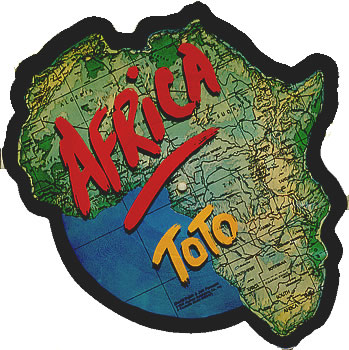
Toto's "Africa" (1982) Singles Sleeve, March 1, 2013. (http://eil.com).

Toto’s “Africa” (1982) Singles Sleeve, March 1, 2013. (http://eil.com).

There are as many reasons my musical tastes are eclectic as there are songs that I like and love. I can’t explain it. There’s no way I can explain why I think one song sounds as unimaginative and boring as Drake’s “Started From The Bottom,” while Nickleback’s “If Today Was Your Last Day” has been one of my favorite songs over the past three and a half years.

My imagination could take the corniest song and make it epic, a mantra, my theme music. Even a song like Toto’s “Africa” (’82-’83), a song that could be interpreted as reflecting White racialism as it related to Tarzan movies of a not-so-bygone era. Yet I’ve seen their video, and probably heard the song at least 3,000 times. It ain’t that deep, but it’s still a song I like.

So, a bit of context. My grades in the early Reagan years — especially in ’82-’83, when I was in eighth grade — didn’t at all reflect our family’s slide into welfare poverty, my ongoing issues with my idiot stepfather, my suicidal struggles or my search for a real relationship with God. What I had to lean on, more than my amazing memory or World Book Encyclopedia, my parents or even God, was my imagination.

The Spark of Imagination (via x-ray), March 1, 2013. (http://esquire.com).

The Spark of Imagination (via x-ray), March 1, 2013. (http://esquire.com).

With puberty and what would turn into a ten-inch growth spurt in a span of twenty months, I became enamored with sports. And the sport I became most interested in early on was football. The strike-shortened ’82 NFL season combined with the formation of the USFL and the coming-out party for soon-to-be draft pick Herschel Walker to get my attention. The vicious hits, the acrobatic catches, the powerful throws were things that I’d seen before. I saw them through the lens of an underdog now, a downtrodden member of an abandoned family who wanted to see folks who’d overcome impossible circumstances achieve great things.

The first person who represented that for me in sports was Joe Montana, quarterback for the San Francisco 49ers. The only ending to a football game I’d ever watched was the end of the NFC Championship Game the year before, with the play known as “The Catch.” I didn’t even know who Joe Montana was, even after watching Dwight Clark go up and catch a ball that was only meant for him.

He was the kind of person I wanted and needed to be in order to overcome what I thought was an impossible deficit. As far as I was concerned, I had to score about a hundred touchdowns to go from welfare to college, let alone anything after college. Yet it didn’t stop me from dreaming about rolling out right to the sidelines on fourth down, sucking in Dallas’ defense, and throwing a ball toward the right-side of end zone, toward the back line, just high enough for Clark to catch and Emerson Walls not to.

It was a dream that required some theme music, and luckily for me it was ’83. Michael Jackson’s Thriller had come out at the start of eighth grade, The Police were big, Toto and Rick Springfield were at their peak, and New Edition had put out there first hit, a Jackson 5 remake. All of it gave me something more modern to move forward with, to get silly about, to “march down field” to when I needed to gear up to get an important A. I’d accidentally found a way to escape my life without ever leaving Mount Vernon.

The Jungle (1906), by Upton Sinclair, 1st Edition, March 31, 2011. (GrahamHardy via Wikipedia). In public domain.

The Jungle (1906), by Upton Sinclair, 1st Edition, March 31, 2011. (GrahamHardy via Wikipedia). In public domain.

Demontravel’s and Carraccio’s classes were the first two places in which I applied this approach to my life and studies. In Carraccio’s case, it was the reading and essay assignment for Upton Sinclair’s The Jungle (1906) a muckraking tale of first-generation, Eastern European, Chicago meatpackers who worked and lived in grueling conditions and where some of them gave their lives — and livers — to Swift and other companies. I’d caught a cold, had a fever, was going to the store for Mom, and had just heard Toto’s “Africa” playing at C-Town in nearby Pelham.

The song served as my background music, giving me the energy and drive I needed to finish the book. I read The Jungle in one night, three hundred pages of it in four hours. I think Carraccio gave me a 95 on my essay. She pulled me aside to say, “You know, if you wanted, you could be a really good writer.” It might’ve been the only thing she said that I thought was right on the mark all year.

Yeah, you could say that I was seriously music deprived, didn’t understand the cultural symbolism or archetypes in the song or video, or simply had and have bad tastes. Y’all may be right, too. But for me, Toto’s “Africa” struck the right note, lifted my imagination, and found the goofball within.

← Older posts
Newer posts →

Boy @ The Window: A Memoir

Boy @ The Window: A Memoir

Places to Buy/Download Boy @ The Window

There's a few ways in which you can read excerpts of, borrow and/or purchase and download Boy @ The Window. There's the trade paperback edition of Boy @ The Window, available for purchase via Amazon.com at http://www.amazon.com/Boy-Window-Donald-Earl-Collins/dp/0989256138/

There's also a Kindle edition on Amazon.com. The enhanced edition can be read only with Kindle Fire, an iPad or a full-color tablet. The links to the enhanced edition through Apple's iBookstore and the Barnes & Noble NOOK edition are below. The link to the Amazon Kindle version is also immediately below:

scr2555-proj697-a-kindle-logo-rgb-lg

Boy @ The Window on Amazon.com: http://www.amazon.com/Boy-The-Window-Memoir-ebook/dp/B00CD95FBU/

iBookstore-logo-300x100

Boy @ The Window on Apple's iBookstore: https://itunes.apple.com/us/book/boy-the-window/id643768275?ls=1

Barnes & Noble (bn.com) logo, June 26, 2013. (http://www.logotypes101.com).

Boy @ The Window on Barnes & Noble: http://www.barnesandnoble.com/w/boy-the-window-donald-earl-collins/1115182183?ean=2940016741567

You can also add, read and review Boy @ The Window on Goodreads.com. Just click on the button below:

Boy @ The Window

Twitter Updates

Tweets by decollins1969
  • RSS - Posts
  • RSS - Comments

Archives

  • June 2025
  • April 2023
  • September 2022
  • August 2022
  • July 2022
  • June 2022
  • May 2022
  • April 2022
  • March 2022
  • January 2022
  • December 2021
  • November 2021
  • October 2021
  • September 2021
  • August 2021
  • July 2021
  • June 2021
  • April 2021
  • March 2021
  • February 2021
  • January 2021
  • December 2020
  • November 2020
  • October 2020
  • September 2020
  • August 2020
  • July 2020
  • May 2020
  • April 2020
  • March 2020
  • January 2020
  • December 2019
  • November 2019
  • August 2019
  • July 2019
  • June 2019
  • May 2019
  • April 2019
  • March 2019
  • February 2019
  • January 2019
  • December 2018
  • November 2018
  • October 2018
  • September 2018
  • August 2018
  • July 2018
  • June 2018
  • May 2018
  • March 2018
  • February 2018
  • January 2018
  • December 2017
  • November 2017
  • October 2017
  • September 2017
  • August 2017
  • July 2017
  • June 2017
  • May 2017
  • April 2017
  • March 2017
  • February 2017
  • January 2017
  • December 2016
  • November 2016
  • October 2016
  • September 2016
  • August 2016
  • July 2016
  • June 2016
  • May 2016
  • April 2016
  • March 2016
  • February 2016
  • January 2016
  • December 2015
  • November 2015
  • October 2015
  • September 2015
  • August 2015
  • July 2015
  • June 2015
  • May 2015
  • April 2015
  • March 2015
  • February 2015
  • January 2015
  • December 2014
  • November 2014
  • October 2014
  • September 2014
  • August 2014
  • July 2014
  • June 2014
  • May 2014
  • April 2014
  • March 2014
  • February 2014
  • January 2014
  • December 2013
  • November 2013
  • October 2013
  • September 2013
  • August 2013
  • July 2013
  • June 2013
  • May 2013
  • April 2013
  • March 2013
  • February 2013
  • January 2013
  • December 2012
  • November 2012
  • October 2012
  • September 2012
  • August 2012
  • July 2012
  • June 2012
  • May 2012
  • April 2012
  • March 2012
  • February 2012
  • January 2012
  • December 2011
  • November 2011
  • October 2011
  • September 2011
  • August 2011
  • July 2011
  • June 2011
  • May 2011
  • April 2011
  • March 2011
  • February 2011
  • January 2011
  • December 2010
  • November 2010
  • October 2010
  • September 2010
  • August 2010
  • July 2010
  • June 2010
  • May 2010
  • April 2010
  • March 2010
  • February 2010
  • January 2010
  • December 2009
  • November 2009
  • October 2009
  • September 2009
  • August 2009
  • July 2009
  • June 2009
  • May 2009
  • April 2009
  • March 2009
  • February 2009
  • January 2009
  • December 2008
  • November 2008
  • October 2008
  • September 2008
  • August 2008
  • July 2008
  • June 2008
  • May 2008
  • April 2008
  • March 2008
  • February 2008
  • January 2008
  • December 2007
  • November 2007
  • October 2007
  • September 2007
  • August 2007
  • July 2007
  • June 2007

Recent Comments

decollins1969's avatardecollins1969 on No Good Teaching Deed Goes…
Mary Rose O’Connell's avatarMary Rose O’Connell on No Good Teaching Deed Goes…
Lyndah McCaskill's avatarLyndah McCaskill on The Raunchiest of Them Al…

NetworkedBlogs on Facebook

NetworkedBlogs
Blog:
Notes From a Boy @ The Window
Topics:
My Life, Culture & Education, Politics & Goofyness
 
Follow my blog

616 616 East Lincoln Avenue A.B. Davis Middle School Abuse Academia Academy for Educational Development AED Afrocentricity American Narcissism Authenticity Bigotry Blackness Boy @ The Window Carnegie Mellon University Child Abuse Class of 1987 CMU Coping Strategies Crush #1 Crush #2 Death Disillusionment Diversity Domestic Violence Economic Inequality Education Family Friendship Friendships Graduate School Hebrew-Israelites High-Stakes Testing Higher Education History Homelessness Humanities Humanities Program Hypocrisy Internalized Racism Jealousy Joe Trotter Joe William Trotter Jr. K-12 Education Love Manhood Maurice Eugene Washington Maurice Washington Misogyny Mother-Son Relationship Mount Vernon High School Mount Vernon New York Mount Vernon public schools Multiculturalism MVHS Narcissism NFL Pitt Pittsburgh Politics of Education Poverty President Barack Obama Race Racial Stereotypes Racism Relationships Self-Awareness Self-Discovery Self-Reflection Sexism Social Justice Teaching and Learning University of Pittsburgh Violence Whiteness Writing

Top Rated

Blog at WordPress.com.

  • Subscribe Subscribed
    • Notes from a Boy @ The Window
    • Join 103 other subscribers
    • Already have a WordPress.com account? Log in now.
    • Notes from a Boy @ The Window
    • Subscribe Subscribed
    • Sign up
    • Log in
    • Report this content
    • View site in Reader
    • Manage subscriptions
    • Collapse this bar
 

Loading Comments...