
• About Me
  • Other Writings
  • Interview Clips
  • All About Me: American Racism, American Narcissism, and the Conversation America Can’t Have
  • Video Clips
  • Boy @ The Window Pictures
  • Boy @ The Window Theme Music

Notes from a Boy @ The Window

~

Notes from a Boy @ The Window

Tag Archives: Self-Loathing

The Life of Mary Louise

28 Sunday Oct 2012

Posted by decollins1969 in 1, Boy @ The Window, Christianity, culture, Eclectic, Hebrew-Israelite, Marriage, Mount Vernon New York, New York City, Politics, race, Religion, Work, Youth

≈ 2 Comments

Tags

616, 616 East Lincoln Avenue, Bradley Arkansas, Depression, Faith, Gill Family, Happiness, Homelessness, Jim Crow, Joblessness, Mary Louise Gill, Mount Vernon Hospital, Resilience, Self-Awareness, Self-Loathing, Self-Reflection, Sixty-Fifth Birthday, Underemployment, unemployment, Welfare


My Mom, Thanksgiving 2006, Mount Vernon, NY. (Donald Earl Collins).

Today, my mother turns sixty-five years old. My mom has now officially hit elderly status, which reads and sounds so weird, considering that she’s only twenty-two years and two months older than me. That Mom’s here at all at sixty-five is really a not-so-minor miracle, considering how hard her life’s been from day one in ’47.

This was what I wrote about my mother’s first thirty-five and a half years of her life, courtesy of Boy @ The Window:

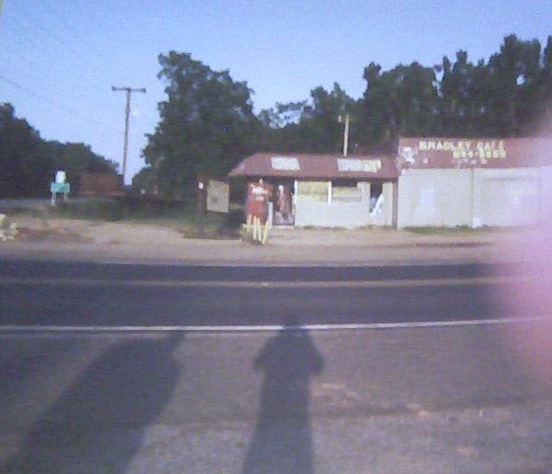
Bradley, Arkansas main road (Route 29) with me and my Uncle Charles in the shadows, June 2, 2001. (Donald Earl Collins).

Mom came from a long line of folk whose lives were hard and impossible ones, where they  couldn’t take handouts even if they wanted to. She was born to Samuel and Beulah Gill in October ’47, their first of twelve children and her father’s second overall child of thirteen. The Gills of Bradley, Arkansas were tenant farmers who lived in the Red River valley in the southwest corner of the state and five miles north of the Arkansas-Louisiana border. The town was a one-flashing- yellow-light-four-corner one. Just over five hundred people lived there, with farms, shotgun houses, and ranch-style homes neatly segregated between a few affluent Whites, lots of po’ White trash and the abundantly poor Black side of town. The conditions she grew up in included corrugated tin roofs and outhouses to boot.

Being born into this family in the late-’40s meant that Mom’s life would be a difficult and emotionally tortured one. She started doing household chores when she was five, helping with her siblings when she was six, and graduated to hoeing and picking cotton by the time she was eight. There wasn’t the time, energy, and experience in the household for Mom to receive any affection or nurturing.

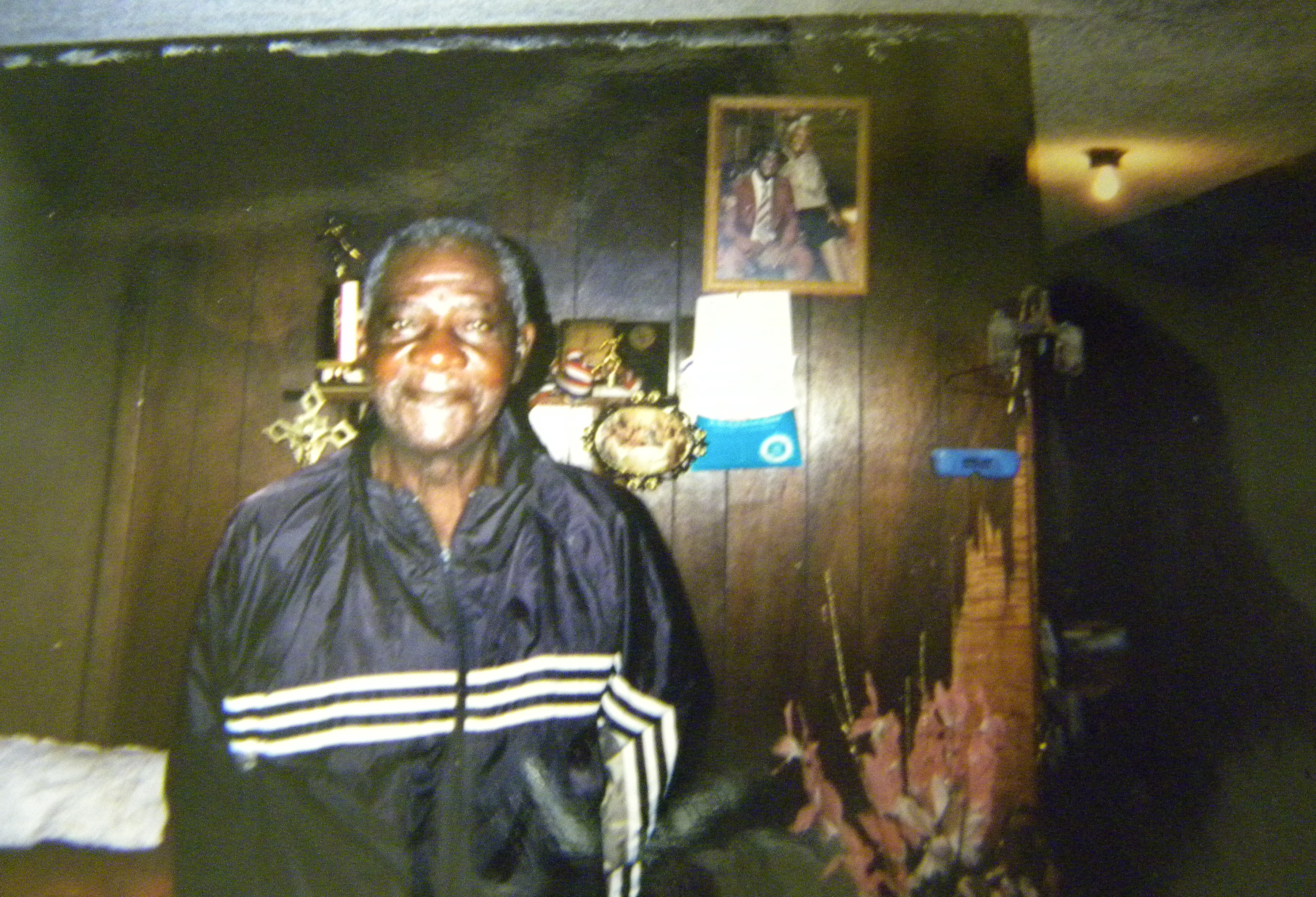
My maternal grandfather Sam Gill, Sr. (82 at the time, 93 now), Bradley, AR, June 2, 2001. (Donald Earl Collins).

With all that and her mother’s constant neglect and occasional abuse — she was once beat with the back of a hair brush for not getting ready for church on time — it’s amazing that Mom wanted to get married or have kids. Yet I knew that what little nurturing and affection Mom received came from her great-grandmother, her aunt, and high school basketball. All served that role as Mom grew into an attractive six-foot woman. Her great-grandmother, half-Choctaw and half-Irish and originally from Indian Territory (now Oklahoma), taught Mom to see herself as beautiful despite her dark complexion. Her Texarkana, Texas aunt taught Mom her basic adult survival skills. And high school basketball took her as a senior to the segregated state quarterfinals in ’65, an amazing feat to say the least.

Still, it was a hard life, one that Mom had vowed she’d never live again. That’s why she moved to New York in the first place. I’d heard these stories for years, and like her, I believed that our lives would get better through sheer hard work. Welfare was never to be something we would live with.

After nearly seventeen years in the New York area, never had all but finally arrived. She had spent my whole life up to that point telling us not to take “handouts,” that she’d “never be on welfare.”
By her thirty-fifth birthday at the end of October ’82, my mother no longer had full-time work at Mount Vernon Hospital, with her hours cut and four mouths to feed. That weekend, all we had left to eat in our two-refrigerator kitchen was a box of Duncan Hines’ Devil’s Food cake mix, Pillsbury All-Purpose Flour, and some sugar. That Saturday and Sunday, we truly ate like Torah-era Jews. Mom made us pancakes out of the flour, without baking powder, eggs or milk, and cooked down some sugar in water to make us a crude
glucose syrup.

Between an abusive Maurice for a husband, the loss of an already insufficient income after not joining her union in a strike, and two toddler-age kids (and another one on the way), the period between May ’82 and April ’83 was probably one of the lowest points in her life.

As I’ve realized over the years, though, Mom’s life was always hard. It was simply a matter of degrees, not of distinction or difference. The mistake of marrying Maurice, becoming a scab (see my post “The Quest For Work, Past and Present” from August ’12) and leaving my older brother Darren at The Clearview School for fourteen years has had an impact on all of our lives to this day. Just as much as fourteen years on welfare, the three-year-long loss of our home at 616 in the ’90s (see post “The Fire This Time” from April ’08 for more) and my late sister Sarai’s twenty-seven year-long struggle with sickle-cell anemia. “Wow” is only the beginning of a description of calamity that has been my mother’s life, about as long as the first hundred digits after 3.14.

What’s made the difference? My mother’s belief in God or Jesus? Her general sense of resilience? Her uncanny ability to deny reality and frequent lack of self-reflection? But I’d say that Mom has learned to expect little from this world and, unfortunately, even less for herself. She often expected the worst, and then being surprised at how not-so-bad “the worst”  was, could continue to soldier on.
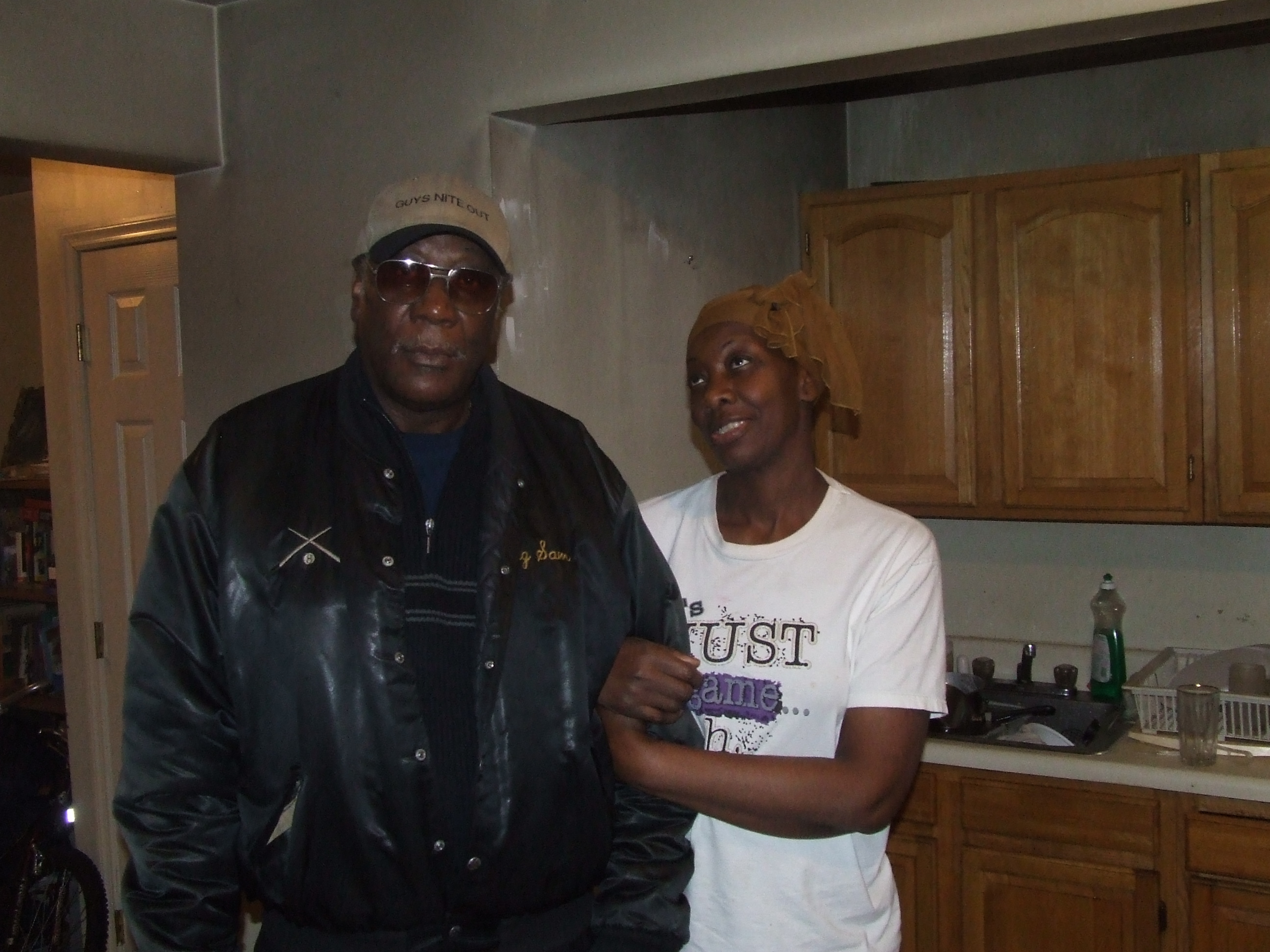
My Mom and my Uncle Sam Gill, Jr., Mount Vernon, NY, November 23, 2006. (Donald Earl Collins).

So I wish my mother a happy sixty-fifth birthday. One in which she can just spend the day at her church in New Rochelle, and then just rest and be. Only one of my siblings lives at 616 these days, and apparently spends more time out and about than he does at home. So, I hope my mother can relax, knowing that she has endured all the evil that this world could throw at her, and despite her view of life, has come out on the other side, badly damaged, but still here.

Touré’s Post-Blackness ≈ I’ma Be Me?

01 Monday Oct 2012

Posted by decollins1969 in 1, Academia, Boy @ The Window, Christianity, culture, Eclectic, eclectic music, Hebrew-Israelite, Mount Vernon New York, Patriotism, Politics, Pop Culture, race, Religion, Youth

≈ Leave a comment

Tags

"Pound Cake" speech, Acting White, American Identity, Authentic Blackness, Authenticity, Bill Cosby, Black Identity, Blackness, Boy @ The Window, I'ma Be Me (2009), Identity Issues, Intrarace Relations, Litmus Test, Post-Blackness, Post-Civil Rights Generation, Post-Racialism, Race, Racism, Reaching Youth, Self-Discovery, Self-Loathing, Self-Reflection, Touré, Wanda Sykes, Who's Afraid of Post-Blackness (2011)


Illustration of red wolf with dinner after a hunt, by Sandra Koch, September 29, 2012. (http://nc-es.fws.gov). In public domain.

I know, I know. Touré’s Who’s Afraid of Post-Blackness (2011) has been out for over a year, and I’ve finally, finally managed to read it in the past couple of weeks. I did not want to like this book. I found — and still find — the title to be pretentious and over the top, a perfect fit for Touré’s Twitter and TV persona. Touré values his ideas like they all are new finds of platinum or a form of safe and sustained nuclear fusion. Sometimes Touré can be cutting-edge, but many times, he goes over the edge (as was the case in August on MSNBC with his “niggerization” of Obama comment).

But in Who’s Afraid of Post-Blackness, Touré puts forward a variety of ideas and insights that I’ll be contemplating in my blogo-neighborhood off and on over the next few months. Touré’s is a very good book. It’s one that is both intellectual and yet revealing about the challenges Blacks face inter- and intraracially in the early twenty-first century.

The premise — once I got past the ridiculous term post-Blackness — is that African Americans and America has advanced just far enough in terms of race for all of our old conceptions of Blackness to have now become meaningless. That Blackness is fully infused in American — maybe even world — culture. That there was never one way to be Black in the first place. Touré himself says, “[t]here is no dogmatically narrow, authentic Blackness because the possibilities for Black identity are infinite. To say something or someone is not Black — or is inauthentically Black — is to sell Blackness short. To limit the potential of Blackness. To be a child of a lesser blackness.” (p. 5).

Litmus paper used in litmus tests, September 29, 2012. (http://chemistry.about.com).

Ironically, though, much of Touré’s book picks apart the notion that the US has become post-racial in the past couple of decades, as best exemplified by the election of President Barack Obama in 2008. Of course, Touré uses notions of Blackness and where it has expanded beyond the authenticity litmus test to show that race/racial bias/racism is still alive and well in America. At the same time, Touré shows how post-Blackness has also provided opportunities for millions of Americans White, Black and Brown to reach beyond their own misconceptions of race and themselves, to enrich our lives in politics, scholarship, the arts, not to mention through hip-hop.

One of my main criticisms of Who’s Afraid of Post-Blackness is that Touré uses a term like post-Blackness (mind you, I hate terms like post-structuralism, post-modernism, and post-racialism too) and doesn’t try in any way to provide a definition that distinguishes it from post-racial. For the purposes of this post, though, the main issue I have revolves around Touré virtually ignoring poor and struggling African Americans in his post-Blackness tour-de-force.

I get it when Touré says that he “never lived a typical Black experience.” (p. 53). At least, I think I do. That despite Touré middle class upbringing, middle-class neighborhood, private school experience, that his is but one representation of Blackness. And that Touré’s experience is as representative of Blackness as my experience of being a Hebrew-Israelite preteen in a working poor family while enrolled in Humanities in Mount Vernon, New York would’ve been thirty years ago (see my post “A Question of My Blackness, Sexuality and Masculinity” from September ’11). Or, for that matter, Wanda Sykes’ comedy special I’ma Be Me (2009) was for her.

That’s great for us, for anyone with enough intellectual power, outsider status, unusual amounts of wisdom, or just plain middle class standing to get the details of Who’s Afraid of Post-Blackness. But when Touré does bring up the twenty-five percent of Blacks who aren’t part of this post-Blackness elite, he talks at them, and not to them. Yes, I completely agree that Blackness isn’t to be defined in terms of poverty, prison, and projects. No, Blackness shouldn’t be defined by how “down” one is with an impoverished community or how “hard” someone is for beating the shit out of another person (see my “Raised on Hip-Hop?” post from April ’10).

Hakeem Olajuwon posting up Patrick Ewing, 1994 NBA Finals, June 1994. (http://rgj.com).

Still, while I stand with almost one hundred percent of what Touré says in Who Afraid of Post-Blackness in ’12, I don’t think that this book would’ve reached me thirty years ago. The way I would’ve seen it in ’82 or even ’87, a middle class Black guy telling me about how my poverty is insignificant to who I was would’ve been excommunicated from my life for eternity. It wouldn’t have helped me at all deal with the pressures I faced socially, academically and in my family (see my “The Silent Treatment” post from June ’10).

Touré wouldn’t have been able to provide for me a roadmap for how to be me and to ignore the crowd of those in my life — White and Black — who regularly told me that I wasn’t authentically Black or that I was “talkin’ White.” If mild-mannered me at twelve wouldn’t have been reached by Touré’s chapter on Black artists taking Blackness and standing it on its head, I imagine that young African Americans growing up in poverty or struggling with identity issues would find Who’s Afraid of Post-Blackness about as easy to embrace as Bill Cosby’s criticism of poor Blacks in ’04.

For me as a writer, the question of how to reach beyond the already converted is always an issue. Touré, as good as he is in his book, merely affirms the path I’ve traveled over the past thirty-one years. He doesn’t really reach those whose path of Blackness has barely begun.

About My Brother

06 Thursday Dec 2007

Posted by decollins1969 in 1, Boy @ The Window, culture, Eclectic, Jimme, Mount Vernon New York, My Father, Politics, Pop Culture, race, Youth

≈ Leave a comment

Tags

616, 616 East Lincoln Avenue, Brotherhood, Brothers, Clear View School, Darren, Darren Gill, Education, Internalized Racism, Jealousy, Mental Retardation, Psychological Abuse, Psychological Scars, Self-Hatred, Self-Loathing, The Clear View School


A better picture of Darren and me, taken in April 1975, Sears, Mount Vernon, NY, July 6, 2006. (Donald Earl Collins).
Darren Gill (cropped), Thanksgiving Dinner, Mount Vernon, NY, November 23, 2006. (Donald Earl Collins).

This Sunday, December 9, my older brother Darren Lynard Gill turns 40 years old. It should be a day of pride, of tears of joy and long-suffering, of wondering about entering the prime decade of his life and my soon joining him there. With our relationship and my older brother’s life as such, there is only the hope that both get better before it’s too late for us.

You see, Darren had both the blessing and the curse of being the first-born son of our mother and our father Jimme Collins (they weren’t married at the time Darren was born) when he was born in ’67. It was a period in which both of our parents were still people full of hopes and dreams. It when my father was nothing more than an occasional social binge drinker and my mother was on the verge of becoming a supervisor of Mount Vernon Hospital’s Dietary Department. Darren became the embodies of their hopes and dreams.

And it should’ve been obvious that at least one of their hopes in Darren came true during his toddler years. All during her first pregnancy, according to my mother, my Uncle Sam, and a number of my mother’s friends at the time, all my mother prayed about was for Darren to be healthy and brilliant. She got what she wished for when Darren turned three. Sometime in 1971, my brother had taught himself how to read. The story goes that Darren was sitting at the dinner table in our second-floor flat at 48 Adams Street while my mother and father and me were milling about. Suddenly, they noticed that Darren had picked up a box of Diamond Crystal Salt and began reading the words on the box. Not just the letter, the actual words “salt” and “diamond” and “crystal”! If he hadn’t been moving his finger from left to right as he was doing this, I don’t think my mother and father would’ve believed what they’d witnessed at all.

This story doesn’t exactly take Darren to the academic decathlon. There was something else Darren inherited from my mother and father besides a high capacity for analytical thinking. He was also extremely shy and didn’t like being around lots of people. For both of them, this shyness needed to be taken care of, as if being shy is some sort of curse. My mother’s solution was placing Darren in Headstart in ’73 and ’74 (delaying his start in public school a full year) so that the shyness issue wouldn’t be one when he started school.

Jimme took this idea one step further and farther. He decided one day that Darren was too much like himself. After seeing an ad for a special school in Upper Westchester County called Clearview, he took us up to Dobbs Ferry (where the school was located at the time) so that Darren could be examined by a group of professionals. After a battery of psychological exams and an IQ test, they determined that my brother was mentally retarded. Darren would begin school in September ’74 at the Clearview School as a day student. Neither of our lives would ever be the same.

But before Darren became an institutionalized version of his shy and wonderfully intelligent self, he gave me the same gift he gave himself. I started kindergarten at Nathan Hale the same fall he started going to Clearview. I already knew and recognized my ABC’s, but couldn’t always make out or sound out words, and didn’t recognize them in sentence form. One afternoon between Christmas and New Years at the end of ’74, we sat down and went through sentence after sentence until I could recognize and read a sentence. He literally changed my life, and I didn’t even know it.

For years after that we remained close. We’d fight like all brothers fight. The main issue besides Clearview was my mother, who treated Darren as if he really was retarded while treating me more favorably because I wasn’t shy like Darren. Between my mother and father’s divorce in ’76-’77, my mother’s second marriage to Maurice, and the kids, poverty, abuse and bizarre religion that would come into our lives on the North Side of Mount Vernon, distance began to grow between us.

The key changes included a temper-tantrum that Darren threw in the middle of a Pelham laundromat in the summer of ’80, when my mother suggested that it was time to move my twelve-year-old brother into a “normal school.” It also included all of the abuse I took from my stepfather two summers later while Darren was off at Clearview’s summer day camp having the time of his life. By the time puberty struck, Darren was jealous of me and I was finding it hard to relate to him and survive 616 East Lincoln at the same time.

Darren would remain a student at Clearview until the year after I finished high school. For fourteen years, the state of New York covered his $33,000-a-year (in 1982 dollars) tuition, as he just slid under the public school accommodations radar for the mildly mentally retarded. I always knew that Darren wasn’t retarded, even though he now mimicked the severely retarded students he’d spent day after day with over the years. Through a dispensation granted by the Mount Vernon Board of Education, Darren graduated with the rest of the Mount Vernon High School Class of ’88, even though he had not spent a day in a public school.

From that point on, Darren was jealous of everything I did. I score a 5 on the AP American History exam, and Darren would take the CollegeBoard score sheet and dump it in the garbage. I get into the University of Pittsburgh, and Darren would enroll in college at home for a semester just to prove that he was just as good as me. If I said I was dating someone, Darren would stop talking to me altogether. Even during our Thanksgiving visit to Mount Vernon last year, Darren became angry with me because I offered and gave him a ride home in my family car, even though he wanted to walk in the pouring, freezing rain. I’ve never been able to have a normal conversation with him for fear of pissing him off or making him feel bad or him letting me know how much better my life has been compared to his.

The truth is, I do feel guilty sometimes about where Darren is in his life. For nearly twenty years, Darren has lived in a one-room flat, where he shares a bathroom and a kitchen in South Side Mount Vernon. His jobs have never paid more than $10 an hour. He’s often too afraid to say “Hi” to a woman he’s attracted to. He’s never learned how to drive and hasn’t taken a college-level course since the end of ’88. I’ve tried many, many times to reach out to him, to give him comfort and out of my hard earned wisdom and knowledge. I went through with my family intervention in ’02 in part because I wanted Darren to see what went wrong for our mother and Jimme as far as his education was concerned. Darren rejects almost all that I have to say and give him out of hand, with a smile of meanness that is praying hard for my failure in this life.

My wife says sometimes that she’s surprised that Darren hasn’t tried to kill himself yet. I’m not, if only because someone with Darren’s level of misery wants to see other people suffer with him, in this life, not in the next. That’s why he regularly visits our mother on Sundays for dinner, to remind her of one of the biggest mistakes she’s ever made. It’s why he regularly calls our father for money, to remind him of the idiotic decisions he has made on Darren’s behalf. It’s why Darren wears a permanent smirk on his face, to conceal his contempt for us all.

But I do want to remind him and anyone who knows either of us one thing. I wouldn’t be the intellectual I am today if Darren hadn’t taken the time to teach me how to read. He stepped in the breach to save me from years of catch-up in public school at a time when no one else in my life was willing or able to. Darren is a better person than me, because without him I wouldn’t be able to do what I do today. Happy Birthday Darren! I love you very much.

Newer posts →

Boy @ The Window: A Memoir

Boy @ The Window: A Memoir

Places to Buy/Download Boy @ The Window

There's a few ways in which you can read excerpts of, borrow and/or purchase and download Boy @ The Window. There's the trade paperback edition of Boy @ The Window, available for purchase via Amazon.com at http://www.amazon.com/Boy-Window-Donald-Earl-Collins/dp/0989256138/

There's also a Kindle edition on Amazon.com. The enhanced edition can be read only with Kindle Fire, an iPad or a full-color tablet. The links to the enhanced edition through Apple's iBookstore and the Barnes & Noble NOOK edition are below. The link to the Amazon Kindle version is also immediately below:

scr2555-proj697-a-kindle-logo-rgb-lg

Boy @ The Window on Amazon.com: http://www.amazon.com/Boy-The-Window-Memoir-ebook/dp/B00CD95FBU/

iBookstore-logo-300x100

Boy @ The Window on Apple's iBookstore: https://itunes.apple.com/us/book/boy-the-window/id643768275?ls=1

Barnes & Noble (bn.com) logo, June 26, 2013. (http://www.logotypes101.com).

Boy @ The Window on Barnes & Noble: http://www.barnesandnoble.com/w/boy-the-window-donald-earl-collins/1115182183?ean=2940016741567

You can also add, read and review Boy @ The Window on Goodreads.com. Just click on the button below:

Boy @ The Window

Twitter Updates

Tweets by decollins1969
  • RSS - Posts
  • RSS - Comments

Archives

  • June 2025
  • April 2023
  • September 2022
  • August 2022
  • July 2022
  • June 2022
  • May 2022
  • April 2022
  • March 2022
  • January 2022
  • December 2021
  • November 2021
  • October 2021
  • September 2021
  • August 2021
  • July 2021
  • June 2021
  • April 2021
  • March 2021
  • February 2021
  • January 2021
  • December 2020
  • November 2020
  • October 2020
  • September 2020
  • August 2020
  • July 2020
  • May 2020
  • April 2020
  • March 2020
  • January 2020
  • December 2019
  • November 2019
  • August 2019
  • July 2019
  • June 2019
  • May 2019
  • April 2019
  • March 2019
  • February 2019
  • January 2019
  • December 2018
  • November 2018
  • October 2018
  • September 2018
  • August 2018
  • July 2018
  • June 2018
  • May 2018
  • March 2018
  • February 2018
  • January 2018
  • December 2017
  • November 2017
  • October 2017
  • September 2017
  • August 2017
  • July 2017
  • June 2017
  • May 2017
  • April 2017
  • March 2017
  • February 2017
  • January 2017
  • December 2016
  • November 2016
  • October 2016
  • September 2016
  • August 2016
  • July 2016
  • June 2016
  • May 2016
  • April 2016
  • March 2016
  • February 2016
  • January 2016
  • December 2015
  • November 2015
  • October 2015
  • September 2015
  • August 2015
  • July 2015
  • June 2015
  • May 2015
  • April 2015
  • March 2015
  • February 2015
  • January 2015
  • December 2014
  • November 2014
  • October 2014
  • September 2014
  • August 2014
  • July 2014
  • June 2014
  • May 2014
  • April 2014
  • March 2014
  • February 2014
  • January 2014
  • December 2013
  • November 2013
  • October 2013
  • September 2013
  • August 2013
  • July 2013
  • June 2013
  • May 2013
  • April 2013
  • March 2013
  • February 2013
  • January 2013
  • December 2012
  • November 2012
  • October 2012
  • September 2012
  • August 2012
  • July 2012
  • June 2012
  • May 2012
  • April 2012
  • March 2012
  • February 2012
  • January 2012
  • December 2011
  • November 2011
  • October 2011
  • September 2011
  • August 2011
  • July 2011
  • June 2011
  • May 2011
  • April 2011
  • March 2011
  • February 2011
  • January 2011
  • December 2010
  • November 2010
  • October 2010
  • September 2010
  • August 2010
  • July 2010
  • June 2010
  • May 2010
  • April 2010
  • March 2010
  • February 2010
  • January 2010
  • December 2009
  • November 2009
  • October 2009
  • September 2009
  • August 2009
  • July 2009
  • June 2009
  • May 2009
  • April 2009
  • March 2009
  • February 2009
  • January 2009
  • December 2008
  • November 2008
  • October 2008
  • September 2008
  • August 2008
  • July 2008
  • June 2008
  • May 2008
  • April 2008
  • March 2008
  • February 2008
  • January 2008
  • December 2007
  • November 2007
  • October 2007
  • September 2007
  • August 2007
  • July 2007
  • June 2007

Recent Comments

decollins1969's avatardecollins1969 on No Good Teaching Deed Goes…
Mary Rose O’Connell's avatarMary Rose O’Connell on No Good Teaching Deed Goes…
Lyndah McCaskill's avatarLyndah McCaskill on The Raunchiest of Them Al…

NetworkedBlogs on Facebook

NetworkedBlogs
Blog:
Notes From a Boy @ The Window
Topics:
My Life, Culture & Education, Politics & Goofyness
 
Follow my blog

616 616 East Lincoln Avenue A.B. Davis Middle School Abuse Academia Academy for Educational Development AED Afrocentricity American Narcissism Authenticity Bigotry Blackness Boy @ The Window Carnegie Mellon University Child Abuse Class of 1987 CMU Coping Strategies Crush #1 Crush #2 Death Disillusionment Diversity Domestic Violence Economic Inequality Education Family Friendship Friendships Graduate School Hebrew-Israelites High-Stakes Testing Higher Education History Homelessness Humanities Humanities Program Hypocrisy Internalized Racism Jealousy Joe Trotter Joe William Trotter Jr. K-12 Education Love Manhood Maurice Eugene Washington Maurice Washington Misogyny Mother-Son Relationship Mount Vernon High School Mount Vernon New York Mount Vernon public schools Multiculturalism MVHS Narcissism NFL Pitt Pittsburgh Politics of Education Poverty President Barack Obama Race Racial Stereotypes Racism Relationships Self-Awareness Self-Discovery Self-Reflection Sexism Social Justice Teaching and Learning University of Pittsburgh Violence Whiteness Writing

Top Rated

Blog at WordPress.com.

  • Subscribe Subscribed
    • Notes from a Boy @ The Window
    • Join 103 other subscribers
    • Already have a WordPress.com account? Log in now.
    • Notes from a Boy @ The Window
    • Subscribe Subscribed
    • Sign up
    • Log in
    • Report this content
    • View site in Reader
    • Manage subscriptions
    • Collapse this bar
 

Loading Comments...