• About Me
  • Other Writings
  • Interview Clips
  • All About Me: American Racism, American Narcissism, and the Conversation America Can’t Have
  • Video Clips
  • Boy @ The Window Pictures
  • Boy @ The Window Theme Music

Notes from a Boy @ The Window

~

Notes from a Boy @ The Window

Tag Archives: Politics of Education

Cath The Great

05 Monday Nov 2012

Posted by decollins1969 in 1, Academia, Boy @ The Window, culture, Eclectic, Politics, Pop Culture, race, Youth

≈ Leave a comment

Tags

Annual Meeting, Carnegie Mellon, Carnegie Mellon University, Carolina Inn, Catherine A. Lugg, Catherine Lugg, Conference, Conference Presentations, Department of HIstory, Durham North Carolina, Educational Policy, Friendship, Friendships, Graduate School, HES, History of Education Society, Pittsburgh, Politics of Education, Serendipity, Steven Schlossman, University of North Carolina


Catherine A. Lugg, circa 2009, November 5, 2012. (Catherine A. Lugg via Facebook).

I define serendipity as the ability of hard work to create what others would consider good luck, fortuitous chances, random opportunities for success. I’ve managed to do just that over and over again over the course of my life, particularly as a student and occasionally as a writer. But as a human being in search of real, positive, life-changing connections and friendships, serendipity has been very hard to make happen. When it does occur, at least for me, it becomes one of those moments that I seal in my mind, like a note in a time capsule.

The beginning of November ’94 was one of those weeks filled with serendipity. It started with the chair of the History Department at Carnegie Mellon, Steven Schlossman. He had decided that he couldn’t make it to the 1994 History of Education Society annual meeting in Chapel Hill, North Carolina. But because he had already booked a room and a flight, Schlossman apparently figured that he could simply transfer both the airline tickets and room to me instead (back in the pre-9/11 days when you could do such things without creating a potential terror alert). So Schlossman met with me a week before this conference and said that I should go “to represent the department” and because he thought it “a great opportunity” for me.

Carolina Inn at night (its better side), Chapel Hill, NC, 2007, November 5, 2012. (http://booked.com).

I wasn’t so sure, with the HES meeting being held in a mansion-turned-hotel, not quite on the University of North Carolina campus. Once I arrived from Pittsburgh on that first Wednesday in November, though, I felt at least free from the burdens of grad school at Carnegie Mellon. The weather was perfect, in the low eighties, and my World History sections for that Thursday and Friday were being covered by other teaching assistants. So I gave myself a tour of Chapel Hill, all the while wondering why didn’t I apply here for graduate school.

That was only the prelude to the four-day conference that began that Thursday. And since Schlossman had charged me to attend four sessions and to take notes on them on his behalf, I went to as many conference offerings as humanly possible. Back then, I had a much higher tolerance for boring academician-speak. So I was easily able to take detailed notes. I asked questions on topics in which I knew little. I even smiled and introduced myself to the mostly over-fifty White male crowd.

By Saturday, I had one mandatory session to attend. It was something about education in Japan and Germany post-World War II and how Japanese textbook makers left Japanese atrocities during World War II out of the nation’s history textbooks. During the Q & A, I asked what I thought was a pedestrian question, pedestrian because I forgot it five minutes after I asked it. Yet several people afterward told me that I’d asked a great question, as if I had some unique perspective or something. “It’s not even my subject matter,” I thought, adding in my mind that “Maybe some of these folks thought that the Black guy in the room didn’t really know anything.”

History of Education Society 1994 Annual Meeting program, November 3-6 1994, November 5, 2012. (Donald Earl Collins).

Or, as it turned out, my dedication to Schlossman’s charge made me seem 1,000 times as enthused about the HES meeting as anyone else attending. For two women did in fact notice me during that session. That Saturday evening, during beer, wine and spirits time in a cramped conference/ball room space, after pleasantries with a couple of older professors, I bumped into the two women again. They immediately engaged me in conversation, because they wanted to know how I managed to remain upbeat during such a boring ass conference.

Barbara and Catherine were both grad students in the School of Education at Penn State, as it turned out. Both were also PhD candidates in the midst of doctoral theses, and because of my being only twenty-four, couldn’t believe that I was a PhD candidate also. What I thought was going to be just another one of thirty conversations with older White male professors and kiss-ass grad students turned into a nearly ninety-minute discussion of research, pop culture, the HES conversation, and the ironies of life, and all with a snarkiness that only someone like me (or Rachel Maddow) could fully appreciate.

It might’ve ended there. Except that Barbara and Catherine’s research on federal education policy and achievement gap data for Latinos (especially Mexican immigrants) dovetailed pretty well with my work on multiculturalism and Black education in Washington, DC. Plus, the three of us saw an opportunity to use next year’s HES meeting as an opportunity to expose the hypocrisy of the old boys’ club and their petri-dish sense of educational issues for women, for communities of color, and for immigrants. We titled it, “Educational Historiography and Diverse Populations: Why Research Isn’t ‘Bringing a Pet to Class’.” Somehow the powers who ran HES accepted our proposal, giving us a chance to present at HES in Minneapolis in October ’95.

A skunk (something a teacher shouldn’t bring to class), November 5, 2012. (http://animal.discovery.com).

By that time, though, Barbara couldn’t make it, having recently married and having moved across the pond to the UK. Catherine ended up taking her place, and ended up doing two presentations in less than twenty-four hours. She’s been there for me as a genuine friend in academia and in my aspirations as a writer ever since.

The HES meetings  were the start of an eighteen-year friendship with Catherine, one that actually survived despite the tendency of the academic life to kill more friendships than one could ever start. I think we’re friends still because we share a same sense of the world, and both are willing to snark our way through the madness of it all.

The Wussification of Grading

29 Wednesday Aug 2012

Posted by decollins1969 in 1, culture, Eclectic, Politics, Youth

≈ Leave a comment

Tags

Core Curriculum, Education, Elementary School, Grading Systems, K-12 Education, MCPS, Montgomery County Public Schools, Politics of Education, Psychology of Grading, Test Teaching, Testing, Wussification


Grades Collage, January 24, 2010. (http://hopkins.typepad.com).

Montgomery County Public Schools opened its doors to students for the start of the 2012-13 school year on Monday, August 27. With the start of the school year came some new changes to the report card and grading system, at least for MCPS’ elementary schools. Starting this year, the school district has dropped the old grading system of O, S and N (Outstanding, Satisfactory and Needs Improvement) for first and second graders, and the old A, B, C, D and E system for third, fourth and fifth graders. Instead, they’ve introduced a new grading system for all 1st-5th graders:

Score Description
ES Exceptional at the grade-level standard
P Meets the grade-level standard by demonstrating proficiency of the content or processes for the measurement topic
I In progress toward meeting the grade-level standard
N Not yet making progress or making minimal progress toward meeting the grade-level standard
M Missing data – no grade recorded
NEP Not English Proficient; may be used for a level 1 or 2 ESOL student for no more than two marking periods.

According to MCPS, “[t]he goal of this grading format is to give families a clear understanding of your child’s progress toward end of year grade level expectations.”

Now, I’ve been an educator of some sort now for the better part of two decades, and have worked with several grading systems as a college professor. Not to mention having to learn different grading systems as a student even before that. Trust me when I say that this new grading system isn’t a clear one, and isn’t easy to understand.

But the overall goal is clear. MCPS wants to tie grades to their new yet only partially implemented integrated Curriculum 2.0, adopted as part of the new Core Curriculum for the state of Maryland. It is an integrated, standards-based curriculum that introduces a variety of interrelated themes across the various subjects for K-5 (although fourth and fifth grade will not see any of this curriculum until 2013, when my son is in fifth grade). In theory, this grading system will be more directly tied to students’ proficiency levels in achieving or exceeding state-level standards in reading, mathematics, writing and other subjects for their grade level.

Sounds reasonable, doesn’t it? After all, if a child is proficient in say, the fourth-grade standard for reading, then they would receive a P grade. This is unreasonable, though, and for at least a couple of reasons. For one, it means the entire MCPS elementary school curriculum has become about meeting standards that will be tested at the state-level on the MSA, and at the county level on MAP-R. The curriculum itself has now become integrated into the testing game at the elementary school level.

Second, and maybe even more important here, is the idea that grading-to-a-testing-based-curriculum is a better and more accurate way to assess children. I’m not sure how this helps kids, though. If a student does well enough to score multiple “ES'” on their report card, they’ve exceeded the standard for their grade level. But this doesn’t necessarily mean they are ready for the next grade level. If a student has multiple N’s on their report card, does that mean that they have failed to meet the standards in several subjects at their grade level, that they aren’t making progress?

ESPN logo, August 29, 2012. (http://thebiglead.com). In public domain.

It seems to me that beyond understanding the grading system and the tensions in its methodology is the fact that, in the end, these grades aren’t going to mean much to MCPS’ K-5 students. Or to students across the state of Maryland, for that matter. After all, an A, C, or E is much easier to interpret than an ES, P, I or N (or ESP(i)N, as I’ll begin to call it from now on). Psychologically speaking, while this grading system takes some symbolic pressure off of performance via state and county test scores, it also means that kids won’t have a full appreciation for success, mixed success or failure beyond a curriculum of testing.

It would’ve been smarter to go to a qualitative grading system — something that I know some schools and universities have used over the years — than to this one that ties curriculum and grading systems to testing. At least with a descriptive system of grading, you can get in a single paragraph a fairly focused analysis from a teacher about a student’s progress, their strengths, weaknesses and where they’ve had good or great success. This new MCPS grading system, though, is the academic equivalent of giving every team in a children’s soccer league a trophy, whether their record was 10-0 or 0-10. It pretty much renders grading meaningless, as everything is about standards and measurements, and ultimately, testing.

College Isn’t For Everyone

07 Thursday Jun 2012

Posted by decollins1969 in 1, Academia, Boy @ The Window, culture, Eclectic, Politics, race

≈ Leave a comment

Tags

Adult Learners, College Access, College Success, Economic Inequality, Education, Education News, Education Reporting, Educational Inequality, For-Profit Colleges, Ivy League Schools, Jay Mathews, K-16 Education, Parental Advantages, Parents, Politics of Education, Poverty, Public Education, Public Institutions, Taking Advantage, Washington Post


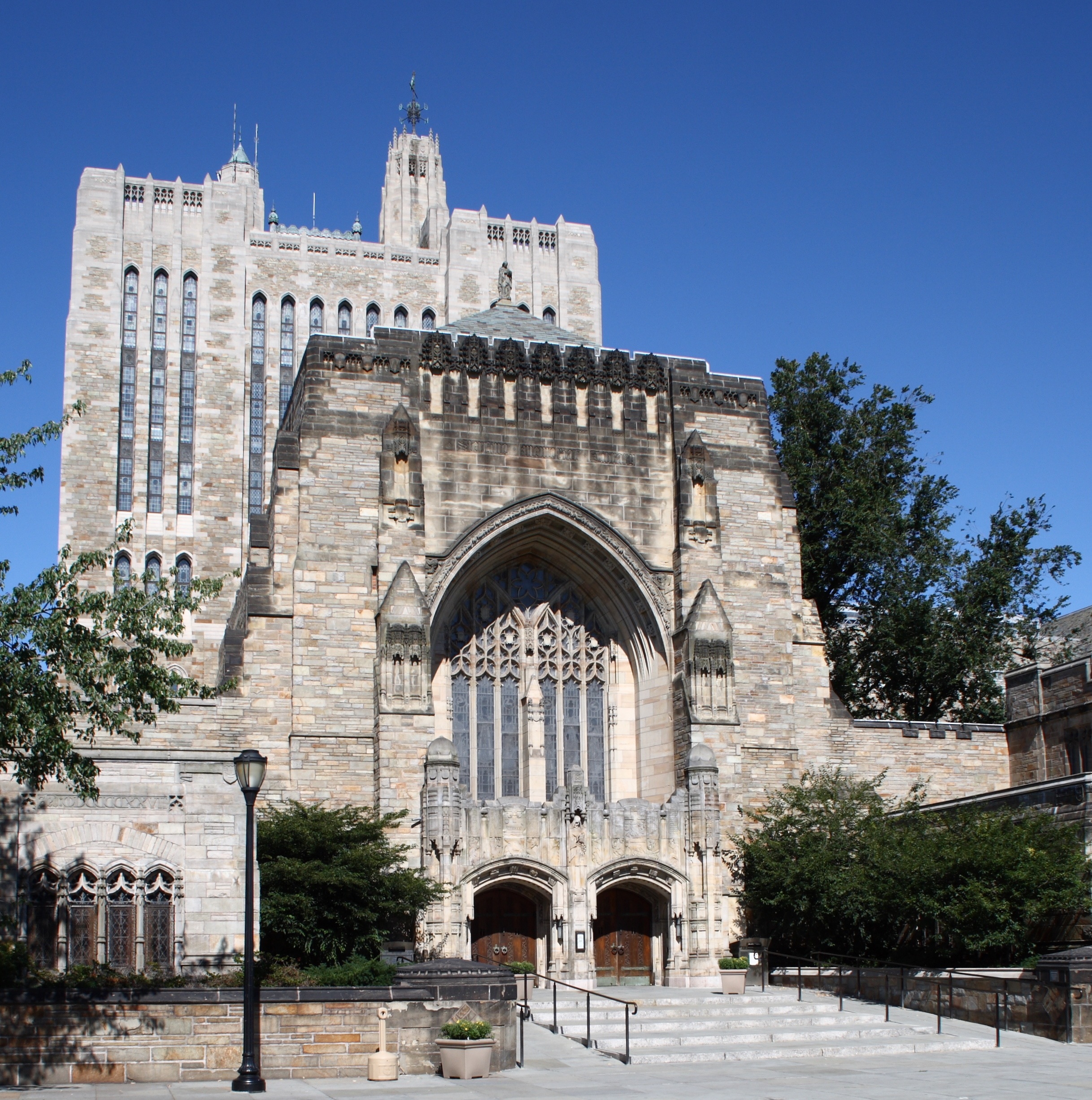
Sterling Memorial Library (cropped), Yale University, New Haven, CT, September 3, 2008. (Ragesoss via Wikipedia). Permission granted via licenses with GFDL and Creative Commons cc-by-sa-2.5.

In May ’05, I attended a conference in DC hosted by the Council for Opportunity in Education on college access and college success. Jay Mathews, an education columnist with The Washington Post, was a guest speaker. Mathews spent most of his talk telling educators that the public doesn’t care for our extensive analysis of what does and doesn’t work in K-16 education reform. “Readers only care about two things,” Matthew said — testing, and “how can I get my kid into Harvard, Yale or Princeton?”

I certainly didn’t like Mathews’ smug and dismissive talk, but he was right about one point, however inadvertent on his part. That most Americans don’t think about education news unless it either confirms their worst fears — that public education is a waste of taxpayer dollars — or confirms their highest hopes — that an Ivy League school (or the near equivalent) accepts Tyler or Courtney as students. Little else matters for most of the American reading public, because columnists, reporters and editors like Mathews have long since abandoned the idea that education is a playing-field leveler for most people. “College isn’t for everyone,” is the common refrain in Mathews’ world, and in the world of most right-thinking Americans.

What does go unreported and underreported, though, is that most Americans with the money and knowledge to give their kids every advantage possible, and do so in a rather ruthless fashion. All while denying other kids in their community similar opportunities, deliberately or otherwise. Over the past thirty-five years, property taxes and other taxes that cover the costs of a public education have been slashed, as taxpayers revolted in places like California and New York in the 1970s and 1980s.

That alone has meant two things: the contributions of the federal government to public education increased to make up for these long-term tax cuts, and the ability of most American school districts to provide all of the necessary resources for students has gone down. This opened the door for the politicized hammering of teachers unions as too powerful, and the growth of the testing mandate since the early 1990s, further weakening public education. Need I even mention public charter schools as the suggested alternative for Americans of lower-income?

Gated community, Houston, TX area [but virtual gates in education for years], February 13, 2012. (Chelsea Lameira via http://www.houstonagentmagazine.com)

But that’s only part of the story. There are plenty of parents who take even more advantage of loopholes based on money and knowledge. They hold their kids out of school a full year before kindergarten, giving them an extra twelve months to become proficient readers before they’ve ever stepped into a classroom. They pay for tutors and Kumon early on, but not because their kids are struggling with reading, writing and math. No, these parents pay for this extra help to give their students the ability to score in the top percentiles on tests that will label their children as “gifted.”

Some parents even transfer their children to different schools within a district with the “right” demographic mixtures to ensure their student’s success and their ability to be noticed. Some parents will begin the process of preparing their kids for the SATs and for AP courses via Kaplan or Princeton Review as early as fifth and sixth grade. And all to ensure that, in the end, their kids will have the post-high school choice of an Ivy League school, or at least, an equivalent elite school, like a Stanford or Georgetown.

These parents, the majority of Americans who would only readily agree with Mathews’ worldview on education news, aren’t evil. But, then again, we all know what the road to Hell is paved with. And in this case, these advantages on the one end point to the severe disadvantages on the other end, no matter how rare it is for the likes of Mathews to write about.

I’m not talking about poverty from birth to eighteen per se, although I could go there in detail. No, it’s the end result, the young adult or over-the-age-of-twenty-five person who finally decides after years of educational neglect to take advantage of the twenty-first century, to go to college after struggling to finish elementary, middle and high school. Most of these students never knew a tutor, never had a parent who understood the loopholes in public education of which to take advantage.

These adult students come into college — often a for-profit institution like University of Phoenix, a

University of Maryland University College administrative offices, Largo, MD, July 2, 2010. (Donald Earl Collins).

community college or a public institution like the one in which I teach now in University of Maryland University College — as raw and unpolished. These students are often long on enthusiasm, yet short on the skills and especially knowledge they need for success. And they have a sharp learning curve in order to get there. One in which these students have to learn in a year or what it took the most advantaged Americans eighteen or nineteen years to learn. The graduation rates of these institutions illustrate how difficult it is for most adult students to climb Mount Everest in their shorts, and all in the middle of a blizzard.

“College isn’t for everyone,” I hear Mathews and millions of other smug Americans say. Of course it isn’t. Especially when you make sure that it isn’t, through money, knowledge and cunning politics.

Curriculum 2.0 – Been There, Done That

21 Monday May 2012

Posted by decollins1969 in 1, Academia, Boy @ The Window, culture, Eclectic, Mount Vernon New York, Politics, Pop Culture, race, Youth

≈ Leave a comment

Tags

Academic Excellence, Closing the Achievement Gap, Curriculum 2.0, Desegregation, Diane Ravitch, Grimes Center for Creative Education, High-Stakes Testing, Humanities Program, Integrated Curriculum, MCPS, Montgomery County Public Schools, Mount Vernon public schools, Pennington-Grimes ES, Politics of Education, Reinventing the Wheel, White Flight


Nekyia: Persephone supervising Sisyphus pushing his rock in the Underworld. Side A of an Attic black-figure amphora, ca. 530 BCE, from Vulci, February 13, 2007. (Bibi Saint-Pol via Wikipedia). In public domain.

This school year, my son’s school district, Montgomery County Public Schools in Maryland, began implementation of what they call Curriculum 2.0. This new curriculum, formerly known as the Elementary Integrated Curriculum, has been in the works for the better part of a decade. As MCPS explained in a flyer to parents, Curriculum 2.o will be one that will “better engage students and teachers, and dedicate more learning time to subjects such as the arts, information literacy, science, social studies and physical education. By blending these subjects with the core content areas of reading, writing, and mathematics, students will receive robust, engaging instruction across all subjects in the early grades.”

Why is better engagement of teachers and students necessary, and how will an integrated curriculum make this possible? The answer to the first part of this question is much more obvious than the answer to the second part. In light of county-level and state-level testing (in the latter case, the MSA for third, fourth and fifth grades), an engaging and integrated curriculum will enable students to be better prepared for the heavy doses of critical reasoning and reading comprehension that this testing involves, at least theoretically.

What hasn’t made much sense has been the implementation process itself, as Curriculum 2.0 became the curriculum for kindergarten and first graders in this 2011-12 school year, with the option of having it for second graders at some schools (like my son’s school in Silver Spring). Meanwhile, third and fourth graders won’t become part of Curriculum 2.0 until 2012-13, and this year’s fifth graders won’t see Curriculum 2.0 at all. It seems as if the implementation process was about as well planned as the SS Minnow’s tour of the South Pacific.

But that’s not the only story here. For someone’s who’s spent a great deal of time attempting to understand

A One Thousand and One Night manuscript written in Arabic under the second half of the Abbasid Era (750-1258 CE), February 9, 2008 (Danieliness via Wikipedia). Released into public domain via cc-by-sa-3.0 license.

the circumstances under which I grew up, including my times in Mount Vernon, New York’s public schools in the ’70s and ’80s, MCPS’s Curriculum 2.0 is sort of like deja vu all over again. Except that in the period between ’76 and ’93, the kind of curriculum MCPS is implementing now was mostly for Mount Vernon’s gifted and talented students then, students who were part of the district’s Humanities Program, particularly those in the Grimes Center for Creative Education. The motivations for developing a similar curriculum three and half decades earlier came out of the need for racial integration and preventing White Flight, and in the process, a measure of academic excellence. Different circumstances in search of the same results, I guess.

A piece of evidence I uncovered a few years ago while working on Boy @ The Window shows how much educators reinvent the wheel in terms of curriculum development, a pitfall in education on which Diane Ravitch has been proven correct for the past thirty years. Charlotte Evans wrote in her April 1981 New York Times article on the Grimes Center that there “is a flowering of creativity at Pennington-Grimes [Grimes had combined with Pennington in the 1980-81 school year] that is evident in the hallways as well as in the classrooms.” Leroy L. Ramsey, New York State Department of Education Administrator of Intercultural Affairs and Educational Integration, when asked by Evans to comment, said that “the intent” of a school like Pennington-Grimes “was to break racial isolation and to stop white flight, and we have done that in Mount Vernon.”

As detailed by Evans in her April 1981 New York Times article, with the

[c]oordinating [of] language, math and science with social studies in the same way, first graders study the family and its roots, how people live and lived in different places. Second graders focus on prehistoric times – the old and new Stone Ages; third graders on the ancient Middle East, fourth graders on Greek and Roman civilization and sixth graders on the Renaissance, Reformation and the Age of Discovery.

This interdisciplinary approach to creating a magnet-style gifted track curriculum did not stop with a focuson other histories and cultures in social studies. “Fifth-graders, for example, specialize in studying the Middle Ages in Islamic nations and in Africa and Europe,” but they also “read Arabian Nights in connection with their Islamic study and went on to African folk tales,” according to fifth-grade teacher Mattie Lucadamo. In addition, there were other “flourishes,” such as “learning the foundation of Hindu-Arabic numbers” and “study[ing] astronomy, tracing it back to the Babylonians.”

It never ceases to amaze me how we as educators, education researchers, and governments spend time, money and human resources recreating what was already in existence, in this case, when I was my son’s age. But, like with the experiment that was the Grimes Center and Humanities, parents with resources will find a way to game the system. In one case, an innovative program was moved to Mount Vernon’s predominantly White North Side in May ’80, and tended to give more preferences to White students in general.

In the case of Curriculum 2.0, the more aware parents will send their kids to Kumon or Kaplan or other testing centers to give their kids every opportunity to do well in this new curriculum, score in the top percentiles on the MSA, and garner the gifted label in time for middle school.

Education, A Numbers Game Love Story

22 Thursday Sep 2011

Posted by decollins1969 in 1, Academia, Boy @ The Window, culture, Eclectic, Politics, race

≈ Leave a comment

Tags

Accountability, Craps, Crunching Numbers, ETS, High-Stakes Testing, K-12 Education, K-16 Education, NCLB, P-20 Education, Politicians, Politics of Education, Psychometricians, Psychometrics, Qualitative Research, Quantitative Analysis, SAT, Statistics, Student Success, Teaching Effectiveness, The Education Trust, US Department of Education


Craps dice, like the state of education reform via numbers crunching these days, August 6, 2006. (Source/Roland Scheicher via Wikipedia). In public domain.

This could just as easily be titled, “Why your multivariate regression analysis isn’t better than my chi-square test,” because that is the state of mainstream education research these days. I find it stifling, like being wrapped in Saran Wrap covered by a condom lined in sheep’s intestines.

Numbers have their place, but the field’s obsession with crunching numbers for trends that defy quantification has increased as a result of federal mandates like NCLB and philanthropy’s accountability movement over the past fifteen years. What’s the long-term impact of the thousands of studies and the deployment of thousands of psychometricians and research analysts in P-20 education reform (that’s early childhood education, K-12, undergraduate and graduate education combined)? Not much, because our politicians and philanthropists are staking themselves to trends almost regardless of numbers.

It all started for me about this time twenty years ago. I did an independent study with Bruce Anthony Jones,

Linear regression graph with over 200 data points, February 22, 2009. (Source/Michael Hardy via Wikipedia). In public domain.

then an assistant professor in the University of Pittsburgh School of Education’s ed policy and administration department. In that one semester, I quickly learned that folks in the education field defined research in only two ways: quantitative and qualitative. And by qualitative, they meant soft research, like Carvel’s soft-serve ice cream. What I didn’t know was that many in the field were working to make the qualitative — surveys, focus groups, oral interviews/transcripts — quantifiable.

Today, everything that can be tracked in American education usually has a number attached to it. It’s hardly grades and standardized test scores anymore. Homework hours, time to task on lesson plans to work on a single problem that may be part of a high-stakes state exam, teacher effectiveness, suspensions and disciplinary reports disaggregated by race and gender. It drives me nuts, and I’ve used SAS and SPSS before, during my grad school days. I can only imagine how a teacher who just wants their students to learn and do well must feel about this numbers game.

But if education has become a number game, it most resembles the game of craps. Take the issue of teacher

Michelle Rhee, former DCPS Chancellor, one of many who've taken advantage of education as craps game, Washington, DC, February 19, 2008. (Source/US Department of Labor). In public domain.

effectiveness, often tied to state-mandates around test scores and students meeting or exceeding a percentile at a given school on these tests. Let’s say if a school as a whole actually exceeds the proficiency percentile. They may well receive more money, and teachers may well get a bonus (depending on the state and school district and union contracts, which by the way, may also be part of a statistical formula). None of this actually proves that these students are better prepared for, say, thinking independently or critically, because critical reasoning isn’t tested by most of the high-stakes state tests.

Nor can they show the writing skills necessary for student success later on in their education, as most of these tests don’t test writing comprehension skills either. Most importantly, where does teacher effectiveness come in as a factor? Do we have to account for time to task in comparison to each exam item, like a psychometrician at the Educational Testing Service (ETS) would? Do we factor out home studying/ homework time, parents’ education, income and race, or whether they eat a hearty breakfast the morning of the exam? Or do we continue to simply say, if Teacher X gets Class A to raise its state test score by 25 percent, they get a raise and a pat on the head? Really?

What’s more, whether teacher effectiveness, student success, or free and reduced lunch programs, politicians, parents and pundits hardly look at any numbers beyond any report’s executive summary. We all insist that our school and community colleges and universities get better at graduating students ready for the real world of work. Fine. Then we insist on lower taxes, blaming teachers, destroying unions, complaining about the state of things but not doing anything to make education work for all of our students. Not fine.

It doesn’t take a two-year study from The Education Trust to realize that there’s no one-to-one correlation

Taco Bell's Gordita Supreme, September 22, 2011. (Source/TacoBell.com).

between an effective teacher and higher student test scores. Or a report from the Institute of Education Sciences at the US Department of Education to know that a lunch of murder burgers and suicide fries with ketchup as a vegetable is about as nutritious as a Taco Bell gordita. School districts and many a college have gone without even adequate resources for years. But instead of providing them, we make them kneel in begging for them, and yet expect them to perform Lazarus-type miracles in the process.

We waste time with numbers and spend little time on causes and solutions that make sense in education. I think about that weak +0.4 correlation number that ETS has put out for years regarding the SAT. It’s the likelihood of someone who does well on the exam beginning their freshman year in college with a 3.0 GPA. I scored an 1120 on the SAT in October ’86, not exactly the greatest score. But I did manage a 3.02 average my first year (and a 2.63 my first semester, by the way), and still came within a few days of dropping out because I was homeless at the beginning of my sophomore year.

I dare say the numbers crunchers at ETS didn’t factor that in their multivariate analysis. Or my homesickness or obsession with a former high school crush. Mark Twain is right about statistics — they can “a good walk spoiled (or lies, I think).”

No Good Teaching Deed Goes Unpunished

13 Friday May 2011

Posted by decollins1969 in 1, Academia, Boy @ The Window, culture, Eclectic, Mount Vernon High School, Politics, race, Youth

≈ 2 Comments

Tags

AP American History, AP US History, AP US History Exam, Blue Ribbon Schools, Burnout, Harold Meltzer, Mount Vernon High School, Mount Vernon New York, Politics of Education, Richard Capozzola, Student Achievement, Teacher Effectiveness, Teachers Unions, William Prattella


AP US History, Harold Meltzer & Teachers Under Assault

AP US History, Harold Meltzer & Teachers Under Assault

It’s never really been much of a surprise to me how much we don’t appreciate good teachers. I should know. A few semesters ago, a student of mine filed a complaint against me because she couldn’t see my lecture notes well enough due to some issue with the LCD projector for my classroom. Mind you, she admitted that she didn’t have her glasses that day. When I didn’t allow her to interrupt me in the middle of class over the issue, she stormed out, yelled a couple of obscenities at me, and slammed the classroom door shut.

I know, it’s much worse on the K-12 level, between incorrigible students and insolent parents, school and district administration. Not to mention the pressures of NCLB, initiatives like Race to the Top (or bottom, really) and private foundations with their own agendas. Add to that article after article blaming teachers unions for being on the wrong side of corporatized education reform that emphasizes math and science and test scores over humanities and social science and critical thinking.

Former NYC DOE Chancellor Joel Klein’s now among them, in his lengthy (really, too long) piece on “The Failure of American Schools” in this month’s Atlantic Monthly, laid much of the blame on teachers and teachers unions. Not our nation’s economic woes, an overemphasis on math and science, or a system that was created not to teach academic excellence, but to weed out the so-called weak-minded. It’s no wonder that the average career of a teacher is five years!

A quarter-century ago on this date, my former teacher Harold Meltzer’s good deeds came to fruition through our AP US History class and our AP exam that year. We learned in September ’86 —  the beginning of our senior year — that three of us (including yours truly) all scored 5’s on the AP American History exam on this date. That meant that three of us had earned six college credits a year before enrolling in any university. There were at least four others who scored a 4, guaranteeing them three college credits. Another five scored a 3, considered a passing score by colleges and the College Board.

It was the best an MVHS AP class had ever done on any AP exam up to that point in the high school’s history, and should’ve been a crowning achievement for Meltzer and the school. Yet instead of praise or at least a “Congratulations,” Meltzer was treated as if he’d shown up MVHS by his boss, Social Studies Department Chair Larry Smith, a red-headed man who looked like a character from Dune. He snickered at me every time he saw me with Meltzer. Neither Superintendent William Prattella nor Richard Capozzola saw fit to honor Meltzer or our class for our achievements. It was ironic, because MVHS won a Blue Ribbon Schools of Excellence award from the US Department of Education a few months later, off of the work of teachers like Meltzer, as well as Humanities students.

There were rumors that some of the White parents were unhappy with Meltzer’s methods of teaching, which typically involved us interpreting history rather than answering straightforward history trivia questions. More than rumors, actually, as I walked in on a meeting between Meltzer and a parent my senior year. That mother demanded an A for her daughter in Meltzer’s AP US History class. What wasn’t exactly a rumor, either was that Smith was looking for any excuse to take AP US History away from Meltzer. Especially since it was so shocking that both White and Black students did equally well on the exam that year. Of course, there were other, more deeply personal issues between the two men that likely involved jealousy and other not-so-secret secrets.

For our part, our cohort stopped talking to Meltzer altogether. Sure he was eccentric, even a bit strange and unorthodox as a teacher, but at least he cared. And by the way our scores turned out, he didn’t deserve the cold shoulders he received from most of my classmates our senior year. It bothered me when I’d see Meltzer saying “Hello” to one of us as we passed his Room 275, only for one of us to walk by as if Meltzer had phased out of our space-time continuum.

I was sure that some of it was related to Meltzer being a “confirmed bachelor.” But mostly, I thought that despite Meltzer’s lack of a normal teaching style, that my classmates were total assholes toward him. Meltzer spent the week before the AP exam after school with us going over every conceivable fact of American history for the more anal of us. It was above and beyond, and also unnecessary. Because Meltzer had taught us enough about egalitarianism, critical and independent thinking, and “coming to the point at once” in the first months of his class for all of us to do well.

Meltzer died from a number of ailments at the age of sixty-six in early January ’03. But one thing I was sure of that hastened his decline was the bitter and broken heart he had from the way he’d been treated in his last years as a teacher. I just hope that I brought a little bit of laughter to the man in his final months and weeks. Or at least, something to smile about.

Bad Conversations and Education Reform

02 Tuesday Nov 2010

Posted by decollins1969 in 1, Academia, Boy @ The Window, culture, Eclectic, Politics, race

≈ 2 Comments

Tags

A Nation At Risk, Bill Gates, Conversations on Education Reform, Corporate Interests, Double the Numbers, Education, Education Reform, Experts, Higher Education, K-12 Education, K-16 Education, Obama Administration, Parents, Politics of Education, Race and Education, STEM Fields, Students, Teachers, Thomas L. Friedman


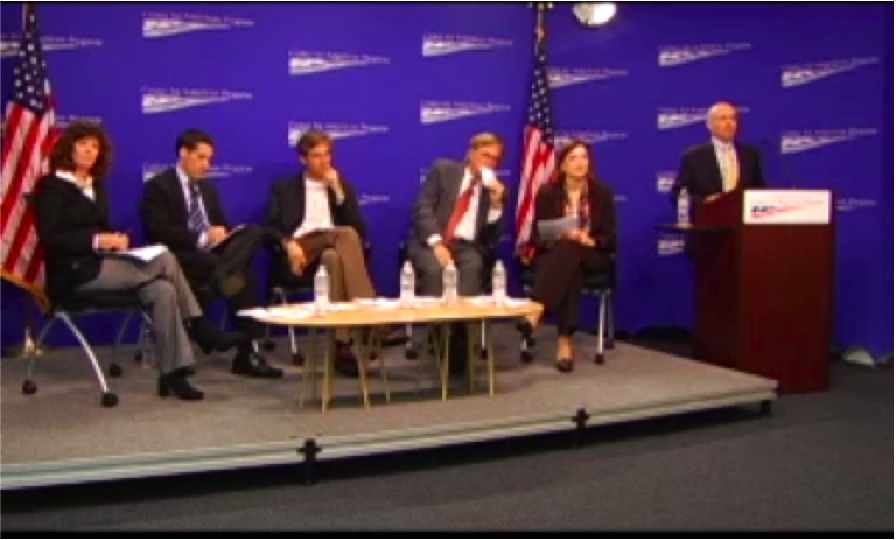
Improving Degree Completion for 21st Century Students, Center for American Progress, Washington, DC, November 2, 2010, Screen Shot. Donald Earl Collins

I’ve been thinking about the fields in which I’ve worked and sort-have-worked in over the past fourteen years, and I’ve drawn one simple conclusion. For all of the talk of education reform, the talk about reform itself is in need of a reformation. I’m tired of the contrast between the experts in the field — who pay little attention to the cutting-edge trends, research and activism in K-16 education — and the everyday folks. They refuse to do anything except complain about teachers, as if education is as simple as organizing a file cabinet.  The who, what and what for’s regarding education reform has stifled what should be an engaging conversation, one that’s essential in the consideration of America’s twenty-first century ills.

Who’s part of this conversation remains something of an atrocity. Almost all of the experts in education reform — whether on a scholarly panel or in the documentary Waiting for Superman — tend to be Whites (more male than female) over the age of fifty. With more than one in three students in public schools of color — and with tens of thousands of teachers and administrators of color in this school districts — it’s hard to believe that all the experts are White, and most of those are middle-aged to elderly males. Their vision, at best, is a liberalized twentieth-century vision of K-12 and postsecondary education. Most of their proposed solutions — smaller class sizes, more homework, small schools, higher certification standards — will not in any way fundamentally reform K-16 education.

When combined with what’s considered important in education reform these days, it becomes painfully

A Nation At Risk (1983) Book Cover, November 2, 2010. Donald Earl Collins

obvious that the conversations we have on education reform are predetermined ones based on certain interests and short-sighted economic considerations. Most of the money in education reform — whether from the federal government, private foundations or corporate interests — is earmarked for things related to STEM fields (science, technology, engineering and mathematics). No one living in this century would deny the importance of STEM fields to a post-industrial economy. But not to the exclusion of everything else. Science folk and scribes alike still need to know how to write well, to think critically, to act ethically, to extend themselves beyond government and corporate interests.

Thomas Friedman — at least as he wrote in The World Is Flat (2005) — Bill Gates, the Obama Administration are all correct in that STEM fields will provide living wages and supply jobs at a rate over the next generation to replace the easy jobs of the by-gone era of industrial jobs straight out of high school. Yet none of them fully appreciates the connection between education reform, community development, corporate irresponsibility, lobbyists and the swaying of government policies and the politics of race and class in all of this.

STEM fields without a real direction for providing livable communities for the poor and for low-income people of color. Education reform that doesn’t do more than make scientists out of artists. Ideas that don’t account for the long-term issues of climate change and energy and resource depletion. Education policies that contradict themselves in terms of funding and a lack of understanding of what education reform truly

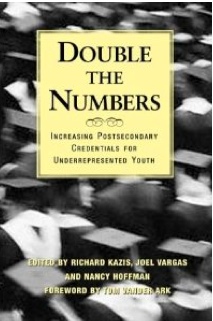
Double the Numbers (2004) Book Cover, November 2, 2010. Donald Earl Collins

means. That’s what we have now, and have had since the 1940s.

In the end, all these ideas are about is tapping the same human resources. The dwindling middle class, folks who’ve managed a traditional education track, folks whose lives are stable enough to allow the resources necessary for higher and advanced education. This need to tweak — instead of overhaul — the educational status quo and then call it reform is what leads to bad conversations. This is why what little in the way of reform actually occurs, and why so few of our kids get the reform they truly deserve.

← Older posts
Newer posts →

Boy @ The Window: A Memoir

Boy @ The Window: A Memoir

Places to Buy/Download Boy @ The Window

There's a few ways in which you can read excerpts of, borrow and/or purchase and download Boy @ The Window. There's the trade paperback edition of Boy @ The Window, available for purchase via Amazon.com at http://www.amazon.com/Boy-Window-Donald-Earl-Collins/dp/0989256138/

There's also a Kindle edition on Amazon.com. The enhanced edition can be read only with Kindle Fire, an iPad or a full-color tablet. The links to the enhanced edition through Apple's iBookstore and the Barnes & Noble NOOK edition are below. The link to the Amazon Kindle version is also immediately below:

scr2555-proj697-a-kindle-logo-rgb-lg

Boy @ The Window on Amazon.com: http://www.amazon.com/Boy-The-Window-Memoir-ebook/dp/B00CD95FBU/

iBookstore-logo-300x100

Boy @ The Window on Apple's iBookstore: https://itunes.apple.com/us/book/boy-the-window/id643768275?ls=1

Barnes & Noble (bn.com) logo, June 26, 2013. (http://www.logotypes101.com).

Boy @ The Window on Barnes & Noble: http://www.barnesandnoble.com/w/boy-the-window-donald-earl-collins/1115182183?ean=2940016741567

You can also add, read and review Boy @ The Window on Goodreads.com. Just click on the button below:

Boy @ The Window

Twitter Updates

Tweets by decollins1969
  • RSS - Posts
  • RSS - Comments

Archives

  • June 2025
  • April 2023
  • September 2022
  • August 2022
  • July 2022
  • June 2022
  • May 2022
  • April 2022
  • March 2022
  • January 2022
  • December 2021
  • November 2021
  • October 2021
  • September 2021
  • August 2021
  • July 2021
  • June 2021
  • April 2021
  • March 2021
  • February 2021
  • January 2021
  • December 2020
  • November 2020
  • October 2020
  • September 2020
  • August 2020
  • July 2020
  • May 2020
  • April 2020
  • March 2020
  • January 2020
  • December 2019
  • November 2019
  • August 2019
  • July 2019
  • June 2019
  • May 2019
  • April 2019
  • March 2019
  • February 2019
  • January 2019
  • December 2018
  • November 2018
  • October 2018
  • September 2018
  • August 2018
  • July 2018
  • June 2018
  • May 2018
  • March 2018
  • February 2018
  • January 2018
  • December 2017
  • November 2017
  • October 2017
  • September 2017
  • August 2017
  • July 2017
  • June 2017
  • May 2017
  • April 2017
  • March 2017
  • February 2017
  • January 2017
  • December 2016
  • November 2016
  • October 2016
  • September 2016
  • August 2016
  • July 2016
  • June 2016
  • May 2016
  • April 2016
  • March 2016
  • February 2016
  • January 2016
  • December 2015
  • November 2015
  • October 2015
  • September 2015
  • August 2015
  • July 2015
  • June 2015
  • May 2015
  • April 2015
  • March 2015
  • February 2015
  • January 2015
  • December 2014
  • November 2014
  • October 2014
  • September 2014
  • August 2014
  • July 2014
  • June 2014
  • May 2014
  • April 2014
  • March 2014
  • February 2014
  • January 2014
  • December 2013
  • November 2013
  • October 2013
  • September 2013
  • August 2013
  • July 2013
  • June 2013
  • May 2013
  • April 2013
  • March 2013
  • February 2013
  • January 2013
  • December 2012
  • November 2012
  • October 2012
  • September 2012
  • August 2012
  • July 2012
  • June 2012
  • May 2012
  • April 2012
  • March 2012
  • February 2012
  • January 2012
  • December 2011
  • November 2011
  • October 2011
  • September 2011
  • August 2011
  • July 2011
  • June 2011
  • May 2011
  • April 2011
  • March 2011
  • February 2011
  • January 2011
  • December 2010
  • November 2010
  • October 2010
  • September 2010
  • August 2010
  • July 2010
  • June 2010
  • May 2010
  • April 2010
  • March 2010
  • February 2010
  • January 2010
  • December 2009
  • November 2009
  • October 2009
  • September 2009
  • August 2009
  • July 2009
  • June 2009
  • May 2009
  • April 2009
  • March 2009
  • February 2009
  • January 2009
  • December 2008
  • November 2008
  • October 2008
  • September 2008
  • August 2008
  • July 2008
  • June 2008
  • May 2008
  • April 2008
  • March 2008
  • February 2008
  • January 2008
  • December 2007
  • November 2007
  • October 2007
  • September 2007
  • August 2007
  • July 2007
  • June 2007

Recent Comments

decollins1969's avatardecollins1969 on No Good Teaching Deed Goes…
Mary Rose O’Connell's avatarMary Rose O’Connell on No Good Teaching Deed Goes…
Lyndah McCaskill's avatarLyndah McCaskill on The Raunchiest of Them Al…

NetworkedBlogs on Facebook

NetworkedBlogs
Blog:
Notes From a Boy @ The Window
Topics:
My Life, Culture & Education, Politics & Goofyness
 
Follow my blog

616 616 East Lincoln Avenue A.B. Davis Middle School Abuse Academia Academy for Educational Development AED Afrocentricity American Narcissism Authenticity Bigotry Blackness Boy @ The Window Carnegie Mellon University Child Abuse Class of 1987 CMU Coping Strategies Crush #1 Crush #2 Death Disillusionment Diversity Domestic Violence Economic Inequality Education Family Friendship Friendships Graduate School Hebrew-Israelites High-Stakes Testing Higher Education History Homelessness Humanities Humanities Program Hypocrisy Internalized Racism Jealousy Joe Trotter Joe William Trotter Jr. K-12 Education Love Manhood Maurice Eugene Washington Maurice Washington Misogyny Mother-Son Relationship Mount Vernon High School Mount Vernon New York Mount Vernon public schools Multiculturalism MVHS Narcissism NFL Pitt Pittsburgh Politics of Education Poverty President Barack Obama Race Racial Stereotypes Racism Relationships Self-Awareness Self-Discovery Self-Reflection Sexism Social Justice Teaching and Learning University of Pittsburgh Violence Whiteness Writing

Top Rated

Blog at WordPress.com.

  • Subscribe Subscribed
    • Notes from a Boy @ The Window
    • Join 103 other subscribers
    • Already have a WordPress.com account? Log in now.
    • Notes from a Boy @ The Window
    • Subscribe Subscribed
    • Sign up
    • Log in
    • Report this content
    • View site in Reader
    • Manage subscriptions
    • Collapse this bar
 

Loading Comments...