• About Me
  • Other Writings
  • Interview Clips
  • All About Me: American Racism, American Narcissism, and the Conversation America Can’t Have
  • Video Clips
  • Boy @ The Window Pictures
  • Boy @ The Window Theme Music

Notes from a Boy @ The Window

~

Notes from a Boy @ The Window

Category Archives: Work

Lies and the Lying Liars in Job Searches

16 Tuesday Nov 2010

Posted by decollins1969 in 1, Politics, race, Work

≈ 3 Comments

Tags

AERA, American Educational Research Association, Deceit and Transparency, Head Hunters, Hiring Process, Jackson & Associates Consulting Services, job search, Nepotism, Robert W. Jackson, World of Work


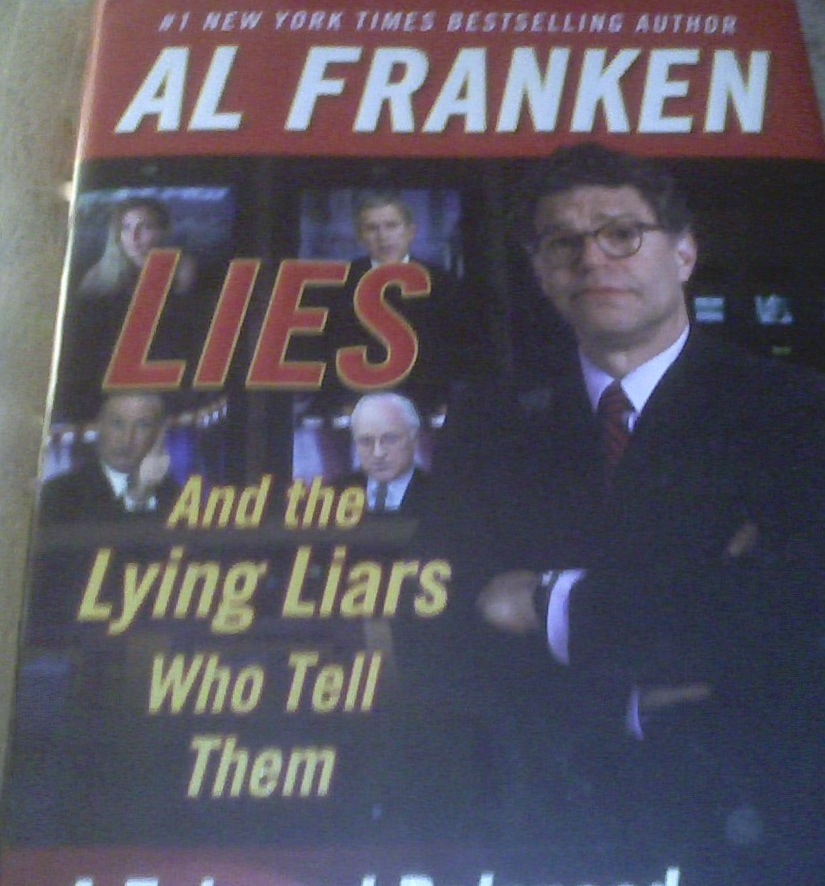
Al Franken's Lies Book Cover, November 16, 2010. Donald Earl Collins. Qualifies as fair use under US copyright law because the photo is being used for illustrative purposes only and is a low-quality crop of original book cover.

Below is a set of emails I received regarding a job I applied for about a month ago. I filled out a thirteen-question addendum to my original application for an initial phone interview, and authorized them to contact all six of my references (which they did) before being offered an interview:


11/09/10 5:24 PM
Dr. Collins – would you be available this Thursday or Friday to come to AERA in Washington for an interview? Please let me know.

Best regards,
Bob

—
Robert W. Jackson, Partner
Jackson & Associates Consulting Services, Inc.
“Excellence in Human Resources & Marketing”
Manage your most important resources – your employees
Tel.  703 450 8567
Cell  703 203 0293
rwj11601@gmail.com
jjacksonhr@aol.com

11/09/10 6:01 PM
I believe we will take about two hours of your time. Perhaps two and a half. It is possible there will be a final interview either next week or at a later date. Hope this helps.

Best,
Bob

11/10/10 8:03 AM
Dr. Collins – Due to travel schedules I need to postpone your interview so I won’t need you to come in to AERA this week. I will be back to you next week with next steps.
Thanks very much.

Best,
Bob

11/16/10 4:13 PM
Dr. Collins – I regret to inform you that AERA has selected another candidate for the Program Manager position. The position was offered to the lead the candidate yesterday and he accepted this morning. Thank you for applying for the position and for the time you spent discussing it with me. I wish you the best of luck with your career.

Sincerely,
Bob
—
Robert W. Jackson, Partner
Jackson & Associates Consulting Services, Inc.

Now, no one likes being rejected for a job, especially knowing that it was most likely an insider — someone who knew the people at the other end doing the hiring. Still, it’s acceptable that it’s who you know, and not what you know, that matters in a high-level job search. But a blatant lie, a delay tactic so that the American Educational Research Association (or AERA) could hire someone with an inside track to the position? Shame on both AERA and Robert Jackson for not having enough transparency and ethics to let me and other applicants know that we were never in line for the job!

Hard Work and the Human Race

17 Friday Sep 2010

Posted by decollins1969 in 1, Boy @ The Window, culture, Eclectic, New York City, Politics, race, Work, Youth

≈ Leave a comment

Tags

Advantage, Boy @ The Window, Daydreams, Hard Work, Holmes Elementary School, Human Race, Individualism, Mount Vernon New York, New York City Marathon, Race, Social Class


Race card cartoon, no date, August 5, 2015. (Emanu!, http://pinterest.com).

Race card cartoon, no date, August 5, 2015. (Emanu!, http://pinterest.com).

When I was nine years old, my fourth grade teacher at Holmes, Mrs. Pierce — a grouch of an older White woman, really — talked about the human race and attempted to describe our species’ variations. She tried to do what we’d call a discussion of diversity now. It went over our heads, no doubt because she didn’t quite get the concept of diversity herself.

Holmes Elementary. Top left corner was Mrs. Pierce's classroom in 1978-79 year.

Holmes Elementary. Top left corner was Mrs. Pierce’s classroom in 1978-79 year.

Like the fourth-grader I was, I daydreamed about the term, human race. I thought of Whites, Blacks, Asians, Hispanics, young and old, male and female, from all over the world, all on a starting line. It was as if four billion people — that was the world population in ’79 — were lined up to run a race to the top of the world. In my daydream, some were faster than others, or at least appeared to be, while others hobbled along on crutches and in wheelchairs. Still others crawled along, falling farther and farther behind those who were in the lead, the ones that looked like runners in the New York City marathon. Before I could ponder the daydream further, Mrs. Pierce yelled, “Wake up, Donald!.” as if I’d really been asleep.

A high school friend recently gave me some much-needed feedback on my manuscript. Her feedback was helpful and insightful, and very much appreciated. But some of it reminded me of the realities of having someone who’s a character in a story actually read that story. Their perceptions will never fully match up with those of the writer, which is what is so groovy and fascinating about writing in the first place.

One of the things that struck me as a thread in her comments — not to mention in so many conversations I’ve had with my students about race and socioeconomics — was the theme of individual hard work trumping all obstacles and circumstances. As if words, slights, and mindsets in the world around us don’t matter. As if poverty is merely a mirage, and bigotry, race and racism merely words on a page. Sure, a story such as the one I have told in this blog for the past three years is about overcoming roadblocks, especially the ones that we set ourselves up for in life, forget about the ones external to our own fears and doubts.

2009 London Marathon. Source: http://www.newsoftheworld.co.uk/

2009 London Marathon. Source: http://www.newsoftheworld.co.uk/

At the same time, I realized what my weird daydream from thirty-one years ago meant. Some people get a head start — or, in NASCAR terms, the pole — before the race even starts. That certainly doesn’t make what that individual accomplishes in life any less meaningful, but knowing that the person had an advantage that most others didn’t possess does provide perspective and illuminates how much distance the disadvantaged need to cover to make up ground. Those who limp and crawl and somehow are able to compete in this human race have also worked hard, likely at least as hard as those with a head start, and more than likely, harder than most human beings should ever have to work.

Plus, there are intangibles that go with race, class and other variables that determines how the human race unfolds. “Good luck is where hard work meets opportunity,” at least according to former Pittsburgh Penguins goaltender Tom Barrasso. Most human beings work hard, but all need opportunities that may provide a real sprint to catch up or take a lead in the human race. Family status, political influence, social and community networks, religious memberships, being in the right place at the right time, all matter and are connected to race and class, at least in the US.

The moral of this story is, hard work matters, individual accomplishment matters. Yet a panoramic view of the race in which humans are engaged matters more in putting our individual successes and the distance that remains in some reasonable perspective. Without that, we’re all just pretending that individual hard work is the only thing that matters, when that’s only half the battle, or half of half the battle.

Beware of the Blogger

01 Sunday Aug 2010

Posted by decollins1969 in 1, Boy @ The Window, Eclectic, Work

≈ Leave a comment

Tags

Bloggers, Blogging, Integrity, Journalism, Paying Dues, Print Journalism, Tony Kornheiser, Writing


Me the Evil Blogger

I have a haiku for Tony Kornheiser, host of ESPN’s Pardon the Interruption and ESPN DC 980’s The Tony Kornheiser Show:

Beware the Blogger, for he’s only right sometimes, but wrong all the time.

This not only sums up Kornheiser’s sentiment regarding bloggers, but those of many veterans of professional journalism. But since Kornheiser’s the most recent dissenter who’s used his microphone as a weapon to whack all bloggers over their heads about blogging, I’ll work with him. Apparently a person who wants to become a print journalist today must, absolutely must, “pay their dues” in order to be great at the profession. By Kornheiser’s definition as a long-time beat sports reporter, that means years of lousy pay, traveling to godforsaken towns and villages, staying in crappy motels and eating artery-clogging food in order to hone the craft of gathering sources and doing interviews.

I have no argument against honing one’s craft. We all should do it, regardless of profession, in order to make the most of our talents and eventually become successful. What I do have a problem with, though, is the idea that bloggers somehow are taking a shortcut. It’s as if we’ve all decided to warp space-time itself instead of seeking to break the speed-of-light-barrier in order to become successful journalists and writers.

All we do, according to Kornheiser and numerous others, is “spew” and “spout opinions,” not based on anything except our guts. Apparently we’re all supposed to become old, gray and grizzled in order to have the privilege of making a decent living and being able to have a radio show and a half-hour TV gig. Still, I get it. Andrew Breitbart’s blogging crusade against anything that he considers politically left managed to drag Shirley Sherrod, Ben Jealous and NAACP and the White House along for his pitiful ride into the mud.

Yet I don’t remember too many people complaining about the blogosphere when the story about former presidential candidate John Edwards broke into the mainstream two years ago. A story that bloggers and the National Inquirer had been banging around for eight months before the real professional journalists got a hold of it. I don’t recall Kornheiser and his buddies giving folks like Mitch Albom (Detroit Free Press, bestselling author of Tuesdays With Morrie) or Bob Ryan (long-time sports reporter and columnist for the Boston Globe) too hard a time over stories that they should’ve never filed or were completely inaccurate. I don’t remember Kornheiser complaining about the plight of print journalism when the Jayson Blair plagiarism scandal (New York Times, 2003) or the Mike Barnicle fabrication scandal (Boston Globe, 1998) broke.

I take offense to any journalist or writer insisting that every blogger is an unadulterated hack with zero skills necessary to be — or become — good writers or journalists. I take offense because I’ve paid my dues, thank you very much. I’ve been writing on the topic of race, culture and diversity for more than twenty years, and have been a published writer for the past seventeen years. Five and a half years of graduate school to become an American and African American historian, and the past ten years to make myself more than an academic writer. Maybe I just imagined my days without food and with holes in my sneakers back then.

Within that, years of archival research hunting for sources much more obscure than “Deep Throat.” Interviews with people in authority, with people long forgotten by the press. A year of my life just learning how to do statistical analysis. Two and a half years of post-graduate unemployment and underemployment, taking crap work and teaching part-time in order to become a better writer and a better historian. But, alas, I haven’t “paid my dues.”

I blog for three reasons. One, because it serves as a form of a journal for me, to be able to track my mood, my progress as I pursue the publication of my memoir Boy @ The Window. Two, because as long as I have something to say about a subject I know quite a bit about — and through my years of experience, I know quite a bit about a lot of things — I can write about that subject. Three, I blog because I want to build an audience, to have an honest presence in the blogosphere, where I spew more than vitriol, where what I have to say is based on research, interviews, sources, and, of course, my biases and my opinions.

To Kornheiser, I say, based on a quote from Vernon Jordan’s memoir, Vernon Can Read! (2001): “Read, Tony, Read!” Read an occasional blog like mine. Don’t just spew your opinion, you dope!

My Father Jimme — Happy Birthday!

17 Saturday Jul 2010

Posted by decollins1969 in 1, Boy @ The Window, Eclectic, Jimme, My Father, New York City, Work, Youth

≈ Leave a comment

Tags

Alcoholism, Boy @ The Window, Forgiveness, Jimme, Mount Vernon New York, My Father, New York City, Reconciliation, Work


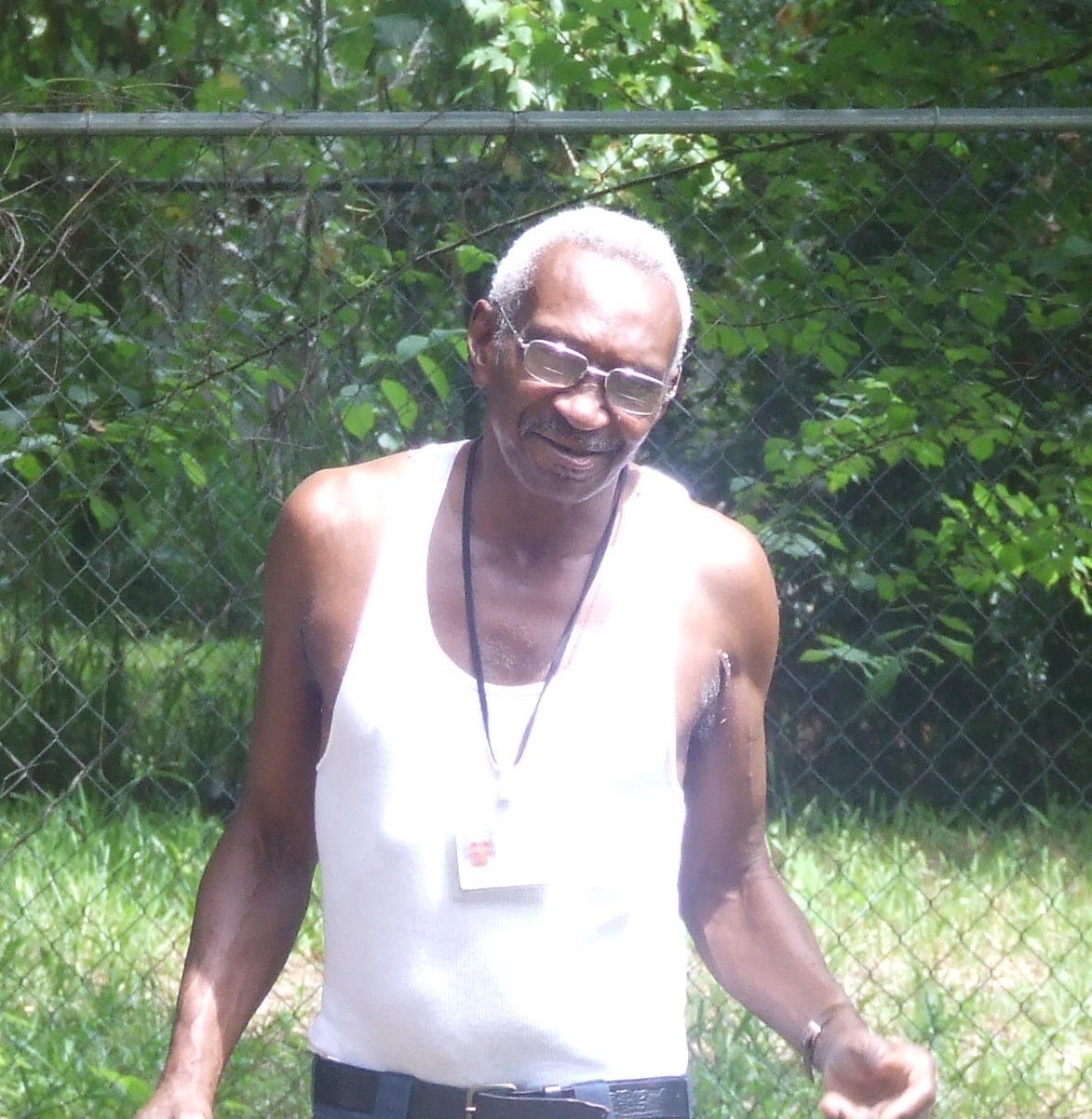
My Father, August 2007

On Monday, my father Jimme turns seventy years old. Seventy, 70, 7-oh! Amazing! Given the years of alcohol abuse, so much loss, so much pain, so much rage, and to recover and make it to the age of seventy? That’s a big-M miracle, the kind that you can only attribute to sheer strength of will and the grace of God.

I must admit, after the summer of ’92, I had my doubts about my father’s future. The few times I saw him that summer, he was drinking like he had never drank before. The first time I saw him, he accused me of lying about having my master’s degree. “No college gonna giv’ you a degree afta a year,” he said. Only when his Jewish bosses told him it was possible for someone to finish a master’s in a year did he believe me.

The second time I went to see him, his landlord Mrs. Smalls was about to evict him. But my father wasn’t there. Or, I guess he was, in a way. He had made plops of defecation, from the front gate and blue slate walk up to the front steps and porch, into the entrance way and foyer, up the gloomy carpeted steps, all the way to the attic bathroom next to his room. They’d been cleaning for hours, according to Mrs. Smalls, but it sure didn’t smell like it.

Fast-forward two years to Christmas Eve ’94. My mother and my younger siblings and I went on a bus trip to Cross County Mall and Toys ‘R Us in Yonkers. Jimme showed up at the last minute to join us and to regale us with his “po’ ass muddafuccas” and his other favorite Jimme-isms. We were on the 7 bus to Yonkers, packed with parents who were shopping late for toys and Christmas trees. Jimme was so drunk that he fell over on some people on the bus once, and fell into the rear stairwell one other time. I wasn’t embarrassed as much as I was disappointed and saddened.

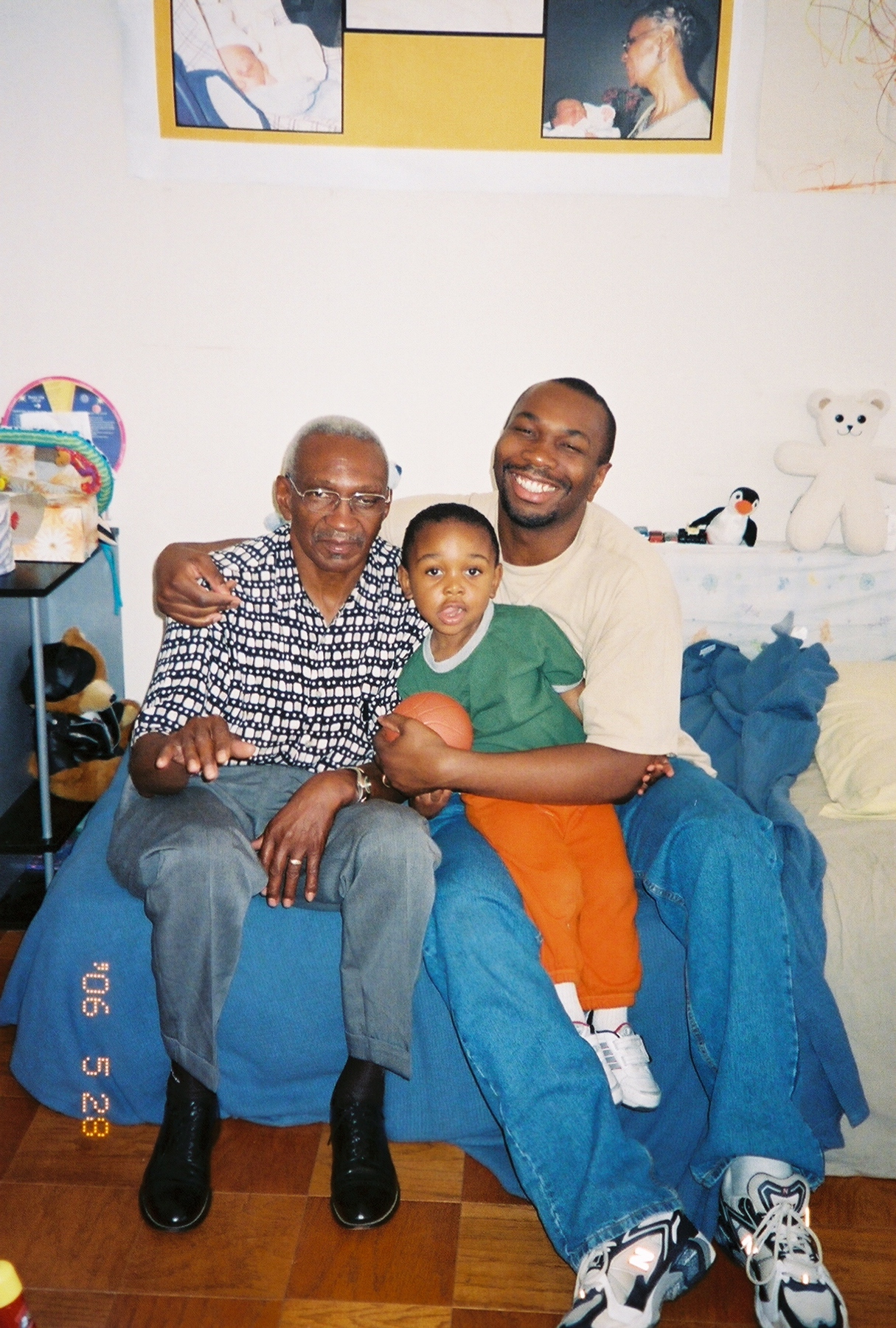
So by the time I finished my doctorate at the end of ’96, I’d all but given up on my father turning things

Three Generations, May 2006

around. A few months later, my father, unemployed and no longer enabled by his former bosses, finally left New York for the family home in Georgia at the invitation of one of his sisters. By the end of ’97, I heard that he had cleaned up his act and moved to Jacksonville. Throughout ’98 and into ’99, I began to get calls from Jimme about how he was finally sober, had found God, and was getting married, to another woman named Mary.

I thought long and hard about blowing him off. All my life, and certainly all of my older brother Darren’s, Jimme had been an evil drunk, verbally abusive and incapable of staying sober for more than three weeks at a time. But he had also been there for me growing up during my Humanities and Hebrew-Israelite years. He helped keep Darren and me from starving or walking around barefoot in ’82 and ’83. He kept the example of hard work in front of us even as the other parent figures in our lives went on dreaded welfare and laid around as if our lives were over. His money was the reason I was able to stay in school after five days of homelessness my sophomore year at Pitt.

So I called him, deciding to give him a second chance. That was February ’99, a two-hour conversation about how he managed to become a recovering alcoholic, a church-goer, and a married man. He admitted that he had made many mistakes, that he was an alcoholic, that he loved me and my brother. It was a conversation, a real conversation, an unbelievable change of relationship. After twenty-nine years and two months, I finally had a father that I really could call father.

That was eleven and a half years ago. I’m still amazed that I’m able to talk to my father as my father, and not as the person I used to have to drag out of bars on 241st Street or in Midtown Manhattan growing up. But most of all, I’m amazed how much I love him and care about him. Happy Birthday…Dad!

Working for My Father

08 Thursday Jul 2010

Posted by decollins1969 in 1, Boy @ The Window, Eclectic, Work

≈ 1 Comment

Tags

Cleaning, Condos, High Rise Apartments, Jimme, My Father, New York City, Office Buildings, Upper East Side, Upper West Side, Work, Working


Me and My Father, August 2007

The first job outside of 616 I ever had was working for my father Jimme. Off and on from September ’84 through the early part of July ’85, me and my older brother Darren schlepped our way between 616, Jimme’s place on South 10th Avenue, the 2 Subway and the Upper West and Upper East Side. We cleaned high-rise offices, high-rise condos, and high-rise co-ops in the process. The last of those jobs was twenty-five years ago this week. This was Jimme’s way of making us earn the money he’d been giving us (really me) since the end of ’82.

Whenever anyone asked me what Jimme did — which was really rare — I usually said, “Oh, my dad’s a carpet cleaner.” I didn’t see him as a simple janitor, although it was true that he cleaned stuff. But Jimme didn’t clean toilets or latrines or bathroom sinks and tubs. He cleaned the floors of office buildings — carpeted, wooden, or otherwise — thoroughly treating any surface he encountered with industrial cleaning machines. He cleaned high-rise co-ops and condos where the mortgage or rent payment per month was more than our rent at 616 for a year. It was an important job in his eyes, and I wasn’t going to diminish it because other folks couldn’t understand or wouldn’t have a clue as to the amount of labor involved in Jimme’s work.

155 West 68th - One of Many Cleaning Jobs in '84 and '85

I didn’t have much of an idea beyond seeing him mop a floor at Salesian High School until I started working for him on a Friday night or a Saturday or Sunday morning. This wasn’t an easy task. We saw Jimme almost everyday for the first three weeks of the summer of ’85, cleaning the carpets and floors of one high-rise after another on the Upper West Side, especially between 67th and 72nd near Broadway. We did mostly night work, in office buildings and in condos. We also had a couple of stints on the Upper East Side around 86th. We carted the industrial carpet cleaning and floor equipment for stripping, buffing, and waxing on the 2, 5, and 6 trains at three in the morning.

Jimme didn’t drink much during these weeks of withering toil and sweat. He was constantly irritated with us, though. “Got no reason to be tired, bo’,” he’d say. “Hurry up an’ dump out that water!,” Jimme would yell. And with a killer’s cold, strangled look, he’d say to us, “I dun told you how to do dis shit right, now I got to do it my gotdamn self!”

It was fascinating seeing Jimme work and work us as hard as he did. Darren didn’t complain much, but then again, he didn’t do much work either. It was up to me and Jimme, and with my dad in a perpetual state of irritation, I was getting pissed too.

“I feel sorry for the people who work for you during the day! I hope I never have to work for you again!,” I yelled over the roaring machines on several occasions.

“Shut up ya faggat!,” Jimme would yell back. Or he’d just mutter in anger, and look at me as if he were ready to stab me in the neck.

In some of the condos we’d clean, Jimme would help himself to whatever he thought wouldn’t be missed — sport coats, shoes and socks mostly. Sometimes we’d take breaks to go to this Jewish deli that used to be on 65th and Broadway/Columbus, across from the Lincoln Center. They made turkey, hot pastrami and corned beef sandwiches stuffed with meat and loaded with every ingredient you could think of — all for five dollars. That, a bag of Doritos, their blondie desserts and a sixteen-ounce carton of Hershey’s chocolate milk made the torture of working for my dad during his brief period of sobriety more bearable. Otherwise we’d tune the radio we had with us to the Mets game while we were working, broadcast by WHN, an AM country oldies station (as in ’40s and ’50s oldies) that was obviously on its last legs.

We’d work these high-rises at night, sleep during only part of the day, with siblings Maurice, Yiscoc, Sarai, and Eri at home, after all, and catch the Subway for another night of work. Until the week after the fourth of July. Jimme decided that it was now all right to have some of his Miller Beer “pep up” while we were working. Besides the usual “I make fitty million dollas a week” and “I buy an’ sell muddafuccas,” Jimme decided that a Subway car was a good place to relieve himself at two in the morning one night.

The lack of sleep, my dad’s crankiness, and now his verbal abuse and drinking while working had all caught up with me. After that week, I quit. I told Jimme, “I’m not doing this anymore. You’ll have to find someone else to drink with.” Those were good times, good times. At least when compared to living at 616.

Born In The U.S.A.

08 Thursday Oct 2009

Posted by decollins1969 in 1, Boy @ The Window, culture, Eclectic, eclectic music, Mount Vernon New York, music, Patriotism, Politics, Pop Culture, race, Work, Youth

≈ Leave a comment

Tags

"Born In The U.S.A.", American Politics, Bruce Springsteen, Economic Inequality, Oligarchy, Poverty, Power of Music, Racism, Social Change, Social Justice


What does it say about a nation or society when a quarter century can go by and the same issues that were front and center then are ones that vex us now? What does it say about us when our standard operating procedure is to avert our eyes to problems that we know must be fixed yesterday? How should we see ourselves if the arguments of our grandparents and parents become our own, especially as we tidy them up for our children and our eventual grandchildren?

If I were Bruce Springsteen (and the E Street Band, for that matter), I might be a bit pessimistic right now. It’s been twenty five years since his groundbreaking single and album made him a household — and not just a New York tri-state area — name. All of his work prior to the summer and fall of ’84 contained threads of social commentary on America’s malaise. But Born In the U.S.A. and “Born In The U.S.A.” raised his level of folksy commentary to a new level, at least for those of us who weren’t listening to Nebraska or who hadn’t heard of the band or Springsteen before.

It was such a simple song. And yet it expressed all of the disappointment, disillusionment and disgust of a generation of folks who grew up seeing America one way. Only to find out that the promise of America the Beautiful and free that they were fed growing up was really somewhere between porridge and gruel. “Born down in a dead man’s town, the first kick I took was when I hit the ground” is such a bitter, yet appropriate way to start a song about a Vietnam veteran whose life never worked out the way it was supposed to. Work hard, do the patriotic thing, and expect to have a job and a comfortable life, if not a happy and prosperous one was the expectation of most Americans. Not poverty, debt, welfare, homelessness, drug addiction, undereducation, unemployment and incarceration.

I became a closet Bruce Springsteen fan because of “Born In The U.S.A.” With my mother out of work and on welfare, my father in the middle of his third decade of alcohol abuse, a stepfather with the familial skills of Charles Manson, I could relate to all of the rage and confusion in the song. It was a refreshing change from the coke-induced pop, R&B and rap of the period. The mid-80s were so weird. Between Springsteen and the E Street Band, John Mellencamp and U2, you had Thompson Twins, Doug E. Fresh, Madonna’s “Like A Virgin,” New Edition’s “Mr. Telephone Man,” Prince’s “Purple Rain” and “I Would Die 4 U,” and battles over who was the real Roxanne. At least some artists were awake and aware enough to write something for those of us whose lives weren’t exactly a Benetton commercial.

Here we are, a quarter-century later, and nothing really has changed. The highly educated have at least something to fall back on, while those of us with a high school diploma or less face a permanently uncertain future. The rich, while not getting as rich as they were just two years ago, remain far richer than those of us working hard but not getting anywhere. We are still fighting wars with little long-term purpose and without sufficient benefits to those who are fighting on our government’s behalf. Our government continues to drag its feet on anything that would benefit anyone with an income under $200,000 a year.

It’s no wonder that somewhere between two and three million Americans are in jail or prison, that three out of ten of us never graduate from high school, and that the richest one percent of Americans have a net worth greater than the bottom 80 percent of us. It’s such a shame that it could render all of us helpless. I, for one, may need to consider refugee status in a nation with even a modicum of universal health care and moderately less hypocrisy in its government.

But Bruce Springsteen hasn’t given up, at least in his music. His work continues to speak truth to power, to say things that most in the music world don’t have the courage or the innate wisdom to say. It’s unfortunate that what sells today is the bling of booty and booty, and not the thought-provoking lyrics and feelings of folks like Springsteen, of artists like Chuck D and Tupac, of those who dare to use music as a weapon of social change (although Pink, John Mayer and James Blunt are occasional exceptions).

With the end of a disappointing first decade of the twenty-first century looming though, maybe we can still hold out hope for a more permanent nexus between our wild world of pop culture and our need for a stimulated social consciousness. That kind of hope is what keeps me going.

On Catherine Lacey

22 Wednesday Apr 2009

Posted by decollins1969 in 1, Academia, Carnegie Mellon University, culture, Eclectic, Pittsburgh, Politics, Work, Youth

≈ Leave a comment

Tags

Catherine Lacey, Friendship, Mentoring, Self-Discovery, Spencer Foundation, Spencer Foundation Dissertation Fellowship Program


Me with Catherine Lacey at the Spencer Foundation, June 25, 2002. (Angelia N. Levy).

Me with Catherine Lacey at the Spencer Foundation, June 25, 2002. (Angelia N. Levy).

This month marks fourteen years since my plans for earning my doctorate were all but assured by a Spencer Foundation Dissertation Fellowship. It was a one-year fellowship, only $15,000, but it meant that I didn’t have to teach for a year, that I didn’t have to do grunt work for my advisor Joe Trotter, and that I wasn’t beholden to the history department at Carnegie Mellon for much of anything. It was a great triumph in my little world of graduate school. But of all the things that resulted from that award, one thing that I didn’t count on was another mentor and friend. Without a doubt, Catherine Lacey has had the longest lasting impact on my career and on my thinking, in and out of academia.

Catherine was the Senior Program Officer and Director of the Spencer Foundation Dissertation Fellowship Program when I applied for it in the fall of ’94. She had taken over the program in ’93, with the apparent charge of making the program more inclusive and more dynamic for its participants. I’m not sure what the foundation’s dissertation fellowship program was like before. All I know is that Catherine’s seven-year-long tenure running it was one in which she practiced compassion, humility, optimism, and quiet leadership. She never sounded like an academician in directing the work, although she was a bit philosophical at times. She never sounded like a bureaucrat or a senior foundation officer who practiced the power of “No,” even though that was certainly a major part of her job. Almost from my first conversation with Catherine, I realized that she was different from anyone I’d met with an academic background or in the foundation world.

Her background was as a Catholic nun who at one point was a Catholic school teacher, at least through the late ’70s, if I remember correctly. At some point she decided to go back to school, to eventually earn a doctorate in education from Harvard’s Graduate School of Education. Even though she was no longer a practicing nun (whatever I mean by that, I’m not entirely sure), I’m sure that this training and philosophical approach to life and work helped her a lot in her position at the Spencer Foundation. Maybe it was also the fact that she grew up in the Midwest, North or South Dakota I believe. Whatever the case, I think that this combination of experiences made her a more flexible and generous person than most of the foundation program officers and academic bureaucrats I’d met before and have come to know since.

The first time I ever heard from Catherine was right after a two-month research stay in Washington, DC and visit home in Mount Vernon, New York. I’d just come off of weeks in the National Archives, the Library of Congress, the Moorland-Spingarn Research collection at Howard University, the Sumner School Archives for DC Public Schools, and several other places doing research on my dissertation topic, multiculturalism in philosophy and practiced among Black Washingtonians. It was the end of March ’95, and it had been five months since I’d submitted my application packet for the Spencer fellowship. When I went to my Carnegie Mellon mailbox in the history department, there it was. A standard #10 envelope with only a one-page letter inside, which I knew because of the envelope’s thinness. I knew it was a rejection letter. Except that it wasn’t, at least not entirely. It had a handwritten note at the bottom of it from Catherine, asking me to give her a call as soon as I received the note.

So I did. Catherine did most of the talking, asking me about my research stay in DC, about my definition of multiculturalism and how it had or hadn’t changed because of my research. Then she talked to me about the selection committee. Apparently out of eight committee members, six voted in favor of awarding me the fellowship, one against, and with one in absentia. The sticking point was how I defined multiculturalism in my research proposal, putting me on the fence between award and no award. Although I would learn later that there were some academic and cultural politics involved in the two non-Yes votes, at the time Catherine told me that she would do everything she could to see if she could still fund my work. “I’m not making any promises,” she said before we got off the phone.

I didn’t know what to make of the call, other than the fact that Catherine cared about funding my work. That it wasn’t everyday that someone with her responsibilities called a student who had technically been rejected was also something I took away from that call. Two weeks passed. On Friday, April 14 of ’95, I got a call at home, right after 9:30 am. I assumed it was my mother or one of my friends. I hadn’t even taken the time to spit and rinse my toothpaste when I answered the phone. After the pleasantries, Catherine excitedly blurted out the good news. And I swallowed my toothpaste in response before asking how and saying thanks.

It turned out that Catherine thought that in addition to the 29 awards that were granted fellowships by the committee, that there were four others (including me) who should also receive the fellowship. Catherine had spent the previous two weeks asking the foundation for additional monies for the other four of us, and found that at least two of the original 29 awardees had accepted other fellowships. As a result, she could then give out four additional fellowships as part of her discretion as the director of the program. I was happy, to say the least about the award. But I was even happier that someone would fight for me and others the way Catherine did.

As a Spencer fellow, I learned a lot from my “fellow Fellows,” as I constantly called our group. That I wasn’t the only one whose advisor was acting as a roadblock toward our degree and career aspirations. That our colleagues on our campuses stared us all down with daggers in their eyes after learning about our awards. That hours upon hours of lonely research and intense writing and editing didn’t make any of our significant others or spouses particularly happy. Still, I learned as much from Catherine as I did from my fellow Fellows. About balance between life and work. About the realization that academia wasn’t our only career option, even as much as we thought it was at the time. That it was all right to feel ambivalent about pursuing an academic career.

This last one was of great importance to me, because my worries about becoming a publish-or-perish professor had always been there. I wanted to do something useful with my degree and life, something to benefit others, something that would allow me to help people who grew up like me, poor, possibly abused, and with the world thinking that I’d sooner go to jail than graduate high school. The one thing that Catherine’s work revealed to me was that it was possible to have a job and career that you could fall in love with, that helps others, and that enabled you to prosper financial. Her job allowed her to do all three, and very well at that.

It was that realization that enabled me to stumble my way into the nonprofit world, doing work on everything from community computer labs and civic education to a social justice fellowship program and education reform work on college access and success. Even after my fellowship ended in June ’96, I kept in contact with Catherine, attended Spencer gatherings and asked for advice. I even took my wife with me on a business trip to Chicago once to, among other things, have her meet Catherine at the Spencer offices in the John Hancock Building. I haven’t had quite the same luck of finding work that is as fulfilling as Catherine’s work was with Spencer. But I haven’t given up trying, and hope that what I have done and am doing does actually help others.

I haven’t talked to Catherine since the end of ’04. Not for lack of trying, though. Catherine decided after two years as a high-level administrator at the University of Pennsylvania’s Graduate School of Education that it was time for her to retire, to move back to the Dakotas, to live in seclusion, I guess. She didn’t particularly like Philly, or the grinding work that is almost pure administration. She missed Spencer, Chicago, and all of the people that she had met over the years. I think that the Bush years and 9/11 depressed her greatly

I miss Catherine. I miss asking her advice on everything from my job to whether I should turn Boy At The Window into a fiction novel instead of keeping it a memoir with narrative nonfiction elements (I know, that’s redundant) or even continue to pursue finding an agent. I miss sending her pictures of Noah or talking to her about her days at Spencer. Most of all, I miss telling her how much her friendship and unofficial mentoring have meant to me over the years. To Catherine, and really, all of my friends, many, many thanks.

← Older posts
Newer posts →

Boy @ The Window: A Memoir

Boy @ The Window: A Memoir

Places to Buy/Download Boy @ The Window

There's a few ways in which you can read excerpts of, borrow and/or purchase and download Boy @ The Window. There's the trade paperback edition of Boy @ The Window, available for purchase via Amazon.com at http://www.amazon.com/Boy-Window-Donald-Earl-Collins/dp/0989256138/

There's also a Kindle edition on Amazon.com. The enhanced edition can be read only with Kindle Fire, an iPad or a full-color tablet. The links to the enhanced edition through Apple's iBookstore and the Barnes & Noble NOOK edition are below. The link to the Amazon Kindle version is also immediately below:

scr2555-proj697-a-kindle-logo-rgb-lg

Boy @ The Window on Amazon.com: http://www.amazon.com/Boy-The-Window-Memoir-ebook/dp/B00CD95FBU/

iBookstore-logo-300x100

Boy @ The Window on Apple's iBookstore: https://itunes.apple.com/us/book/boy-the-window/id643768275?ls=1

Barnes & Noble (bn.com) logo, June 26, 2013. (http://www.logotypes101.com).

Boy @ The Window on Barnes & Noble: http://www.barnesandnoble.com/w/boy-the-window-donald-earl-collins/1115182183?ean=2940016741567

You can also add, read and review Boy @ The Window on Goodreads.com. Just click on the button below:

Boy @ The Window

Twitter Updates

Tweets by decollins1969
  • RSS - Posts
  • RSS - Comments

Archives

  • June 2025
  • April 2023
  • September 2022
  • August 2022
  • July 2022
  • June 2022
  • May 2022
  • April 2022
  • March 2022
  • January 2022
  • December 2021
  • November 2021
  • October 2021
  • September 2021
  • August 2021
  • July 2021
  • June 2021
  • April 2021
  • March 2021
  • February 2021
  • January 2021
  • December 2020
  • November 2020
  • October 2020
  • September 2020
  • August 2020
  • July 2020
  • May 2020
  • April 2020
  • March 2020
  • January 2020
  • December 2019
  • November 2019
  • August 2019
  • July 2019
  • June 2019
  • May 2019
  • April 2019
  • March 2019
  • February 2019
  • January 2019
  • December 2018
  • November 2018
  • October 2018
  • September 2018
  • August 2018
  • July 2018
  • June 2018
  • May 2018
  • March 2018
  • February 2018
  • January 2018
  • December 2017
  • November 2017
  • October 2017
  • September 2017
  • August 2017
  • July 2017
  • June 2017
  • May 2017
  • April 2017
  • March 2017
  • February 2017
  • January 2017
  • December 2016
  • November 2016
  • October 2016
  • September 2016
  • August 2016
  • July 2016
  • June 2016
  • May 2016
  • April 2016
  • March 2016
  • February 2016
  • January 2016
  • December 2015
  • November 2015
  • October 2015
  • September 2015
  • August 2015
  • July 2015
  • June 2015
  • May 2015
  • April 2015
  • March 2015
  • February 2015
  • January 2015
  • December 2014
  • November 2014
  • October 2014
  • September 2014
  • August 2014
  • July 2014
  • June 2014
  • May 2014
  • April 2014
  • March 2014
  • February 2014
  • January 2014
  • December 2013
  • November 2013
  • October 2013
  • September 2013
  • August 2013
  • July 2013
  • June 2013
  • May 2013
  • April 2013
  • March 2013
  • February 2013
  • January 2013
  • December 2012
  • November 2012
  • October 2012
  • September 2012
  • August 2012
  • July 2012
  • June 2012
  • May 2012
  • April 2012
  • March 2012
  • February 2012
  • January 2012
  • December 2011
  • November 2011
  • October 2011
  • September 2011
  • August 2011
  • July 2011
  • June 2011
  • May 2011
  • April 2011
  • March 2011
  • February 2011
  • January 2011
  • December 2010
  • November 2010
  • October 2010
  • September 2010
  • August 2010
  • July 2010
  • June 2010
  • May 2010
  • April 2010
  • March 2010
  • February 2010
  • January 2010
  • December 2009
  • November 2009
  • October 2009
  • September 2009
  • August 2009
  • July 2009
  • June 2009
  • May 2009
  • April 2009
  • March 2009
  • February 2009
  • January 2009
  • December 2008
  • November 2008
  • October 2008
  • September 2008
  • August 2008
  • July 2008
  • June 2008
  • May 2008
  • April 2008
  • March 2008
  • February 2008
  • January 2008
  • December 2007
  • November 2007
  • October 2007
  • September 2007
  • August 2007
  • July 2007
  • June 2007

Recent Comments

MaryPena's avatarMaryPena on My Day of Atonement/Bitter Hat…
decollins1969's avatardecollins1969 on No Good Teaching Deed Goes…
Mary Rose O’Connell's avatarMary Rose O’Connell on No Good Teaching Deed Goes…

NetworkedBlogs on Facebook

NetworkedBlogs
Blog:
Notes From a Boy @ The Window
Topics:
My Life, Culture & Education, Politics & Goofyness
 
Follow my blog

616 616 East Lincoln Avenue A.B. Davis Middle School Abuse Academia Academy for Educational Development AED Afrocentricity American Narcissism Authenticity Bigotry Blackness Boy @ The Window Carnegie Mellon University Child Abuse Class of 1987 CMU Coping Strategies Crush #1 Crush #2 Death Disillusionment Diversity Domestic Violence Economic Inequality Education Family Friendship Friendships Graduate School Hebrew-Israelites High-Stakes Testing Higher Education History Homelessness Humanities Humanities Program Hypocrisy Internalized Racism Jealousy Joe Trotter Joe William Trotter Jr. K-12 Education Love Manhood Maurice Eugene Washington Maurice Washington Misogyny Mother-Son Relationship Mount Vernon High School Mount Vernon New York Mount Vernon public schools Multiculturalism MVHS Narcissism NFL Pitt Pittsburgh Politics of Education Poverty President Barack Obama Race Racial Stereotypes Racism Relationships Self-Awareness Self-Discovery Self-Reflection Sexism Social Justice Teaching and Learning University of Pittsburgh Violence Whiteness Writing

Top Rated

Blog at WordPress.com.

  • Subscribe Subscribed
    • Notes from a Boy @ The Window
    • Join 103 other subscribers
    • Already have a WordPress.com account? Log in now.
    • Notes from a Boy @ The Window
    • Subscribe Subscribed
    • Sign up
    • Log in
    • Report this content
    • View site in Reader
    • Manage subscriptions
    • Collapse this bar
 

Loading Comments...