• About Me
  • Other Writings
  • Interview Clips
  • All About Me: American Racism, American Narcissism, and the Conversation America Can’t Have
  • Video Clips
  • Boy @ The Window Pictures
  • Boy @ The Window Theme Music

Notes from a Boy @ The Window

~

Notes from a Boy @ The Window

Category Archives: New York City

Mr. Mister’s “Kyrie”

01 Tuesday Mar 2011

Posted by decollins1969 in 1, Boy @ The Window, Christianity, culture, Eclectic, eclectic music, Mount Vernon High School, music, New York City, Pop Culture, race, Religion, Youth

≈ Leave a comment

Tags

"Kyrie", #1 Hit, 1986, 616, 616 East Lincoln Avenue, Academic Achievement, Billboard Pop Chart, Christianity, Crazy Eddie's, Faith, Imagination, Kyrie Eleison, Lyrics, Manhattan, Mount Vernon High School, Mount Vernon New York, Mr. Mister, Pop Culture, Pop Music, Race, Richard Page, Walkman


Mr. Mister, “Kyrie” Single Cover, August 8, 2010. Vanjagenije. Qualifies as fair use under US Copyright laws because of the image’s low resolution and because image illustrates subject of this blog post.

Twenty-five years ago this week, Mr. Mister’s “Kyrie” made it to the top of the Billboard pop charts, making me goofy and giddy beyond belief. March ’86 was the beginning of a great month of music for me. I bought my first Walkman — a Walkman-knockoff really — from Crazy Eddie’s on 47th and Fifth in Manhattan, as well as the first of what would be about 200 cassettes of my favorite music. Not to mention a ton of musical experimentation — most of it bad, goofy and un-listen-able for even the musically impaired.

For many of you, Mr. Mister’s “Kyrie” would likely fall into that last category. It was semi-religious rock at a time when the closest thing to that was Amy Grant. It was Creed a whole decade before Creed, but with better musicians. It was a group of studio musicians putting out a breakout album that actually stood apart from the super-serious or super-sugary music of the mid-80s. It was a perfect storm for a sixteen-year-old in search of inspiration beyond the chaos of 616 and the lonely march toward college via Humanities and Mount Vernon High School.

“Kyrie” was one of two songs that kept me in overdrive in and out of the classroom through most of my junior year at Mount Vernon High School. Simple Minds’ “Alive and Kicking” was the other song. It almost became my mantra in the months that straddled ’85 and ’86. Every time I heard that song, especially the album version, was like going on a game-winning touchdown drive at the end of the fourth quarter. Studying was time to throw screen passes or seven-yard slants, to run the ball on a power sweep or on a draw play. It was methodical, the drums and synthesizers, and put me in a determined, methodical mood as I prepared for a test.

But Mr. Mister’s “Kyrie” was magical. Short for “Kyrie Eleison” Latin/Greek for “Lord have mercy,” it became my go-to song for every big academic play I needed to make for the rest of the year, even for the rest of high school. “Kyrie” combined all of the elements that my vivid imagination relied on. My faith in The One, my hope for a better future, lyrics that made me think, music that evoked a big play, like throwing it deep and completing it for a game-changing score. It was as methodical as “Alive and Kicking,” but the bigger bass guitar and heavier synthesizers as the background gave me the feeling that God’s grace was with me wherever I went and whatever I did. It was a true underdog’s song.

It was like I was singing a high-falsetto, four-and-a half-minute prayer whenever I played “Kyrie.” Some of my classmates, as usual, didn’t appreciate whatever deeper meaning I saw in the song or in its lyrics. See, my being Black and high-pitched singing to it was another obvious sign of my weirdness. Yet somehow, when it came to music, I didn’t really care what any of them thought.

As I went off to college and became more sophisticated in my understanding of music, I realized that there were some songs I couldn’t completely part with, no matter how goofy or out-of-date the music video was. “Kyrie” was one of those songs for me. I didn’t play it regularly by the time I’d reached my mid-twenties, but that didn’t mean that I didn’t sing to it in high-falsetto while shopping at Giant Eagle in Pittsburgh when the song would come on over the PA system.

Once iPod and iTunes technology became part of my household in ’06, I uploaded the old song and listened to it regularly again. I’ve wondered from time to time what would the sixteen-year-old version of me would think about me at forty-one. I’ve achieved more, and been hurt and lost more, than I could’ve possibly imagined a quarter-century ago.

It’s taken me more than twenty years to fully understand Richard Page’s lyrics about “would I have followed down my chosen road, or only wish what I could be?” The answer is both. Life is a funny and winding journey, even when on the path of the straight and narrow. Christian or atheist or of some other faith, it’s always good to hope that someone is there to watch over us, to protect us, even our younger selves from our older and allegedly wiser versions of ourselves. And that’s what I here now when I listen to — and sing high-falsetto still to — “Kyrie.”

In Memoriam – “Dr. K” at 50

16 Tuesday Nov 2010

Posted by decollins1969 in 1, Eclectic, New York City, race, Sports, Youth

≈ Leave a comment

Tags

"Dr. K", Baseball, Clayton Kershaw, Cy Young Award, David Come, Dwight Gooden, Greg Maddox, Kerry Wood, Mark Prior, MLB, New York Mets, NL, Race, Racism, Roger Clemens, Sports, Sports Journalism, Sportswriters, Substance Abuse, Tim McCarver


Dwight Gooden on SI Cover (September 2, 1985), November 16, 2010. Source: http://www.inewscatcher.com/2010/03/dwight-gooden.html. Though this image is subject to copyright, its use is covered by the U.S. fair use laws because of the historical significance of the person and the cover, the subject of this blog post.

Before there was Clayton Kershaw, Stephen Strasburg, Kerry Wood or Mark Prior, he had come and gone. Before folks like Tim McCarver and Joe Buck drooled over Roger Clemens, David Cone and Greg Maddox, he was the headliner that caused spittle to fly out of commentators’ mouths. A full quarter-century ago, he was the king of MLB pitching. Who am I talking about? What baseball player could I possibly be referring to? The former Boy Wonder, ’84 NL Rookie of the Year, and ’85 NL Cy Young Winner “Dr. K.,” Dwight Gooden.

He turns fifty years old today. I don’t watch baseball anymore, but thirty years ago, Gooden was the reason I watched. Between a great fastball, sweeping curve and more than average change-up, the nineteen and twenty-year-old Gooden was impossible for most major-leaguers to hit for three years — when’s the last time a pitcher threw for 276 innings but had an ERA of 1.53? — and hard to hit for six of his first seven years. All while on his way to 194 total wins in his career.

Dwight Gooden being honored by Mets at final game at Shea Stadium, Flushing, NY, September 28, 2008. (Kanesue via Wikipedia, Flickr.com). Released to public domain via CC-SA-3.0.

Dwight Gooden being honored by Mets at final game at Shea Stadium, Flushing, NY, September 28, 2008. (Kanesue via Wikipedia, Flickr.com). Released to public domain via CC-SA-3.0.

But no one talks about what could’ve been with Gooden anymore. The mistakes Davey Johnson, Mel Stottlemyre and the Mets leadership made with his arm were not worth mentioning when describing the lessons unlearned with Kerry Wood, Mark Prior or Stephen Strasburg. I guess wearing out a twenty-year-old arm isn’t comparable to, well, wearing out a twenty-year-old arm. Especially when one arm is Black and the other ones are White.

No one mentions Gooden in the same breath with Clemens or Maddox or Cone or any other dominant pitcher of the ’80s or even early ’90s. His drinking and drug problems, his run-ins with law enforcement. All obviously hurt his productivity as his career progressed. But I guess winning 100 games in just over five years as a major-league pitcher made someone like Gooden about as dominant a pitcher as a piñata about to be beaten by a White lynch mob. Someone baseball writers and commentators everywhere could toss aside as easily as they would throw away a donut wrapper.

This is the major reason why I don’t watch MLB baseball anymore. For all of his substance abuse and psychological problems, the man was as dominant a pitcher as any in the history of the game for his first seven years, and was a serviceable shell of himself for another seven of eight years. Yeah, a shell of himself while pitching a no-hitter for the Yankees in ’96.

And yes, he wrecked his career and life — with a lot of help from teammates and coaches. It’s not like he died after killing everyone at a Hall-of-Fame game. But to not discuss Gooden at all shows that, like the ball, only the mindset is White.

My Mom, Birthday 63

27 Wednesday Oct 2010

Posted by decollins1969 in 1, Academia, Boy @ The Window, Christianity, culture, Eclectic, Marriage, New York City, Religion, Youth

≈ Leave a comment

Tags

Bradley Arkansas, Death, Finding Peace, Funeral Arrangements, Happy Birthday, Mother-Son Relationship, Mount Vernon New York, New York City, Regrets


My Mother, Thanksgiving Day 2006. Donald Earl Collins

This has been a rough year for my family. But even with my financial difficulties and writing struggles, teaching, looking for additional work, my wife in grad school and Noah turning seven, nothing compares to what my mother’s gone through in the past few months. In July, my only sister Sarai passed away at twenty-seven after a lifelong struggle with sickle-cell anemia. Earlier this month, my grandmother — my mother’s mother — died after a battle with cancer and dementia at the age of eighty-three.


That’s difficult enough, to lose your only daughter and your mother three months apart. It became a hardship almost immediately. Neither my sister nor my mother made any preparations for Sarai’s death, funeral or burial. “It cost too much,” my mother said after I asked about next steps the morning Sarai passed. It took three days’ worth of work to get Sarai’s afterlife arrangements done. In the case of my mother’s-side grandmother, they were never close. My mother had been back to Bradley, Arkansas to visit her father and mother only two times since she left for the Bronx and Mount Vernon in ’66. Once in the summer of ’69, when she was pregnant with me. The other was in ’04.

Because my mother married and remarried at an early age, I’ve had a front-row seat for watching her in her twenties, thirties, forties and fifties. My mother has always avoided looking back in her life, reflecting on her mistakes or triumphs, or talking about anything that matters other than God. But one thing that was obvious to me when I went home to 616 and Mount Vernon to help with my late sister’s funeral and cremation arrangements was the sense of regret that I could feel coming out of her body. It wasn’t just grief, mourning, the rage that I’ve seen and felt when others dear to me have died. No, there was a sense of deep, repressed regret, about all the things that could’ve and should’ve happened, but never did.

I heard that same sense of missed opportunity in my mother’s voice a few weeks ago, after my mother called to let me know that my grandmother had passed. I’d only met my grandmother once, when I made arrangements during what I called “my Southern poverty tour” as part of my social justice fellowship job to visit Shreveport, Louisiana and Bradley, Arkansas. So while I didn’t feel much for the woman, I did feel for my mother.

I felt for her because unlike my mother, I’ve said everything that I could’ve left unsaid to her years ago. The family intervention (see “The Intervention,” January 21, 2008) I orchestrated nearly nine years ago. All of the arguments we had when I was growing up. My PhD graduation ceremony at Carnegie Mellon in ’97. My I love you’s to her now.

I may regret that our relationship isn’t closer, but at least I know why. I certainly regret how I’ve said some of the things I’ve said to my mother over the years, but not the meaning of my words. The only serious regret I have now is not being in a financial position to do more for my mother than I have over the past quarter-century, to make some aspects of her life easier. Still, all I can wish for her is a Happy Birthday, or at least, a day in which she can find peace. Hopefully, one birthday, she’ll have both.

Half-Baked Z and Christian Zeal

27 Monday Sep 2010

Posted by decollins1969 in 1, Boy @ The Window, Christianity, culture, Eclectic, Jimme, Mount Vernon High School, New York City, Religion, Youth

≈ Leave a comment

Tags

Arrogance, Baked Ziti, Christian Zeal, Kufi, Religion, Religious Zeal, Teaching and Learning, Wisdom


Baked Ziti. Source: http://culinariaitalia.files.wordpress.com/

Sometimes I’ve let my enthusiasm for good things in my life get the better of me. Perhaps that’s because there have been few periods in my life where nearly everything has gone the way I’d expect, especially in my Humanities years. One of those times had been in the months before, during and after my conversion to Christianity in ’84. After I outed myself at the beginning of tenth grade as a Christian and stood up (for once) to my idiot stepfather by refusing to wear my kufi ever again, things in my mind had improved. So much so that I was ready for my life to change, as if my conversion were a magic wand and I was Cinderella.

My conversion became a badge of honor, my Bible my new crutch in the first few months after becoming a Christian and the beginning of tenth grade. I read it every chance I had. At lunch, in my trips into New York with my father Jimme and my brother Darren, before I went to bed at night. Like a nine-year-old, I so wanted my life to change that I forgot that I still had work to do in order to change it. Prayer and fasting (deliberate, of course, and not the empty refrigerator kind) wouldn’t be enough. But I acted like it was.

Torture & the Spanish Inquisition (the direction of unchecked zeal).

It didn’t help that I had Z as a history teacher, one who almost automatically rubbed me the wrong way. She assumed that she was right about everything and looked like an older, worn-out, schoolmarmish version of Madonna to me, a woman whose best days were long past. She was about average height with blonde-gray hair, which looked like it had been freeze-dried. She dressed like a woman who didn’t realize we were in a public school and who didn’t see herself as a real person. Her voice was a slow-whine Brooklyn-accented version of Cyndi Lauper’s, the kind that made me think that she was talking down to us. It irritated the heck out of me when she’d call one of us “Peaches” or when she’d say, “When they’re slow they’re slow,” a reference to how long it would take us to answer one of her idiotic, non-history history questions. A personable person with emotions and empathy, the kind of person equipped to teach a diverse student body, Z was not.

After finishing one of Z’s bubble tests early, fifteen minutes early, as a matter of fact, I handed it in and pulled out my Bible. When she noticed what I was reading, she panicked. “Put that away! Put that away now!,” she yelled from her gray steel desk, exasperated. The exchange we had occurred while other classmates were finishing their exams.

“I’m just reading my Bible.”

“You can’t read that in school!”

“I know my rights! I have a First Amendment right to read the Bible in school, and you’re not teaching right now anyway!”

She threatened to send me to the principal’s office. I called her an “atheist” and put my Bible away. It was the start of a confrontational relationship between me and her.

We got into it quite a few times. One time was over what she was teaching in class, what exactly I don’t remember. What I did in response to it was to blurt out “Is this what you call history? All you talk about is art and music!” She banished me to the hallway outside of class for that one. I called her a “stupid atheist” on my way out.

We were both right and both wrong, both arrogant in our own way. Z was a teacher without an appreciation for student development and socialization. I was a new Christian on a high, believing that my spiritual status would by itself put me in right standing whatever I did. In the end, Z should’ve allow me to read my Bible, and I shouldn’t have confronted her based on her religious or non-religious beliefs. Our perspectives were half-baked, our stances too inflexible. I’m just glad that I’ve become a better person and Christian since those first days.

Hard Work and the Human Race

17 Friday Sep 2010

Posted by decollins1969 in 1, Boy @ The Window, culture, Eclectic, New York City, Politics, race, Work, Youth

≈ Leave a comment

Tags

Advantage, Boy @ The Window, Daydreams, Hard Work, Holmes Elementary School, Human Race, Individualism, Mount Vernon New York, New York City Marathon, Race, Social Class


Race card cartoon, no date, August 5, 2015. (Emanu!, http://pinterest.com).

Race card cartoon, no date, August 5, 2015. (Emanu!, http://pinterest.com).

When I was nine years old, my fourth grade teacher at Holmes, Mrs. Pierce — a grouch of an older White woman, really — talked about the human race and attempted to describe our species’ variations. She tried to do what we’d call a discussion of diversity now. It went over our heads, no doubt because she didn’t quite get the concept of diversity herself.

Holmes Elementary. Top left corner was Mrs. Pierce's classroom in 1978-79 year.

Holmes Elementary. Top left corner was Mrs. Pierce’s classroom in 1978-79 year.

Like the fourth-grader I was, I daydreamed about the term, human race. I thought of Whites, Blacks, Asians, Hispanics, young and old, male and female, from all over the world, all on a starting line. It was as if four billion people — that was the world population in ’79 — were lined up to run a race to the top of the world. In my daydream, some were faster than others, or at least appeared to be, while others hobbled along on crutches and in wheelchairs. Still others crawled along, falling farther and farther behind those who were in the lead, the ones that looked like runners in the New York City marathon. Before I could ponder the daydream further, Mrs. Pierce yelled, “Wake up, Donald!.” as if I’d really been asleep.

A high school friend recently gave me some much-needed feedback on my manuscript. Her feedback was helpful and insightful, and very much appreciated. But some of it reminded me of the realities of having someone who’s a character in a story actually read that story. Their perceptions will never fully match up with those of the writer, which is what is so groovy and fascinating about writing in the first place.

One of the things that struck me as a thread in her comments — not to mention in so many conversations I’ve had with my students about race and socioeconomics — was the theme of individual hard work trumping all obstacles and circumstances. As if words, slights, and mindsets in the world around us don’t matter. As if poverty is merely a mirage, and bigotry, race and racism merely words on a page. Sure, a story such as the one I have told in this blog for the past three years is about overcoming roadblocks, especially the ones that we set ourselves up for in life, forget about the ones external to our own fears and doubts.

2009 London Marathon. Source: http://www.newsoftheworld.co.uk/

2009 London Marathon. Source: http://www.newsoftheworld.co.uk/

At the same time, I realized what my weird daydream from thirty-one years ago meant. Some people get a head start — or, in NASCAR terms, the pole — before the race even starts. That certainly doesn’t make what that individual accomplishes in life any less meaningful, but knowing that the person had an advantage that most others didn’t possess does provide perspective and illuminates how much distance the disadvantaged need to cover to make up ground. Those who limp and crawl and somehow are able to compete in this human race have also worked hard, likely at least as hard as those with a head start, and more than likely, harder than most human beings should ever have to work.

Plus, there are intangibles that go with race, class and other variables that determines how the human race unfolds. “Good luck is where hard work meets opportunity,” at least according to former Pittsburgh Penguins goaltender Tom Barrasso. Most human beings work hard, but all need opportunities that may provide a real sprint to catch up or take a lead in the human race. Family status, political influence, social and community networks, religious memberships, being in the right place at the right time, all matter and are connected to race and class, at least in the US.

The moral of this story is, hard work matters, individual accomplishment matters. Yet a panoramic view of the race in which humans are engaged matters more in putting our individual successes and the distance that remains in some reasonable perspective. Without that, we’re all just pretending that individual hard work is the only thing that matters, when that’s only half the battle, or half of half the battle.

Maybe They’ve Won After All

10 Friday Sep 2010

Posted by decollins1969 in 1, culture, Eclectic, High Rise Buildings, New York City, Patriotism, Politics, race, Religion

≈ 2 Comments

Tags

9-11, Bigotry, Freedom, Ground Zero Mosque, Intolerance, Islam, Islamic Center, Patriotism, Qur'an, Racism, Religion, Terry Jones, Twin Towers, World Trade Center


There’s a Hole in the Bucket (Still) at Ground Zero. Source: http://unambig.com

I wrote this five days after 9-11, after spending three days stuck in Atlanta and a day on a Greyhound bus from Atlanta to DC, after defending a Sikh man against a hostile White male and Black guy because he looked like one of “them.”

———————————-

With much of this week’s focus on the atrocities at the former World Trade Center in New York, the Pentagon, and the airplane crash south of Pittsburgh, there is a disturbing and growing backlash against Americans of Arab descent throughout the nation.  The nation should be outraged because of the wanton destruction of property and life at the hands of suicidal terrorists.  But this in no way should justify the fire bombings of mosques in Texas and marching against Arab communities in Chicago.  This, of course, is among other incidents of hatred and revenge directed at folks who in some cases have been in America for several generations.  And like many Americans, Americans of Arab descent migrated to our multicultural society to escape religious extremism, government persecution, and yes, terrorism.  The backlash against Arab Americans since the attacks on Tuesday sicken me as much as the frightening attacks themselves.

I am a African American male, and I have thought about what the nation’s response might have been if a suicidal group of African American terrorists had done this horrible thing.  Would we be in the midst of race riots in America’s major cities, in which groups of Whites armed with American flags and poles, rocks, guns and whatever else they could find to beat and possibly kill Blacks just because they’re Black?  Would law enforcement agencies search every allegedly suspicious-looking brown-skinned person with kinky hair because they might connect them to an African American terrorist group?

Or what if an Irish terrorist group had hijacked the planes flown into the Twin Towers and the Pentagon?  Would non-Irish Americans then be so quick to lash out at any “Mic” they could find? Would they intimidate Americans of Irish descent to the point where they would be scared out of going to school or attending a prayer vigil with their fellow Americans?  Would we be so willing to engage in the language of bloodlust toward a group of Irish Americans as we have done to our Arab American brothers and sisters?

We can say that the majority of Americans have not engaged in this bigoted and racist behavior.  But our silence is not good enough.  Mainstream journalism acts as if a few prominent Arab Americans denouncing both the terrorist attack and the expected backlash against Arabs by other Americans ends their responsibility.  It does not.  The press must do a better job of discussing this smouldering problem with all Americans, including representatives of the Arab American community.  It also must do better in explaining the differences between the tenets of Islam and the unspeakable acts of terrorists clinging to a warped version of Islam.  It’s not at all much different from the barbaric actions of the Ku Klux Klan, who claim that they act in defense of White Christians.

If we as Americans continue to commit and condone through our silence acts of hatred against Arab Americans, are we much better than the tortured souls who flew four Boeing jets as weapons of mass destruction, all in the name of Allah?  If we are to defeat terrorism as a nation and a world, we must also defeat its roots, fear and hatred.  If we are to be one undivided and multicultural nation united against terrorism, we can no longer tolerate incidents of terrorism against one another, no matter how much we hurt.

——————————–

Needless to say, The Washington Post was engaged in blind, raging patriotism for the next couple of years, so my two cents was ignored. Unfortunately, between the racism and religious hatred directed at the proposed Islamic Center near, but not on, Ground Zero in New York City, and the idiot Terry Jones wanting to burn Qur’ans in Florida, it looks like the nineteen suicidal morons from Saudi Arabia have won after all. We still have a big hole in the ground where the Twin Towers once stood. So much for standing together on the platform of America the brave and the free.

My Father Jimme — Happy Birthday!

17 Saturday Jul 2010

Posted by decollins1969 in 1, Boy @ The Window, Eclectic, Jimme, My Father, New York City, Work, Youth

≈ Leave a comment

Tags

Alcoholism, Boy @ The Window, Forgiveness, Jimme, Mount Vernon New York, My Father, New York City, Reconciliation, Work


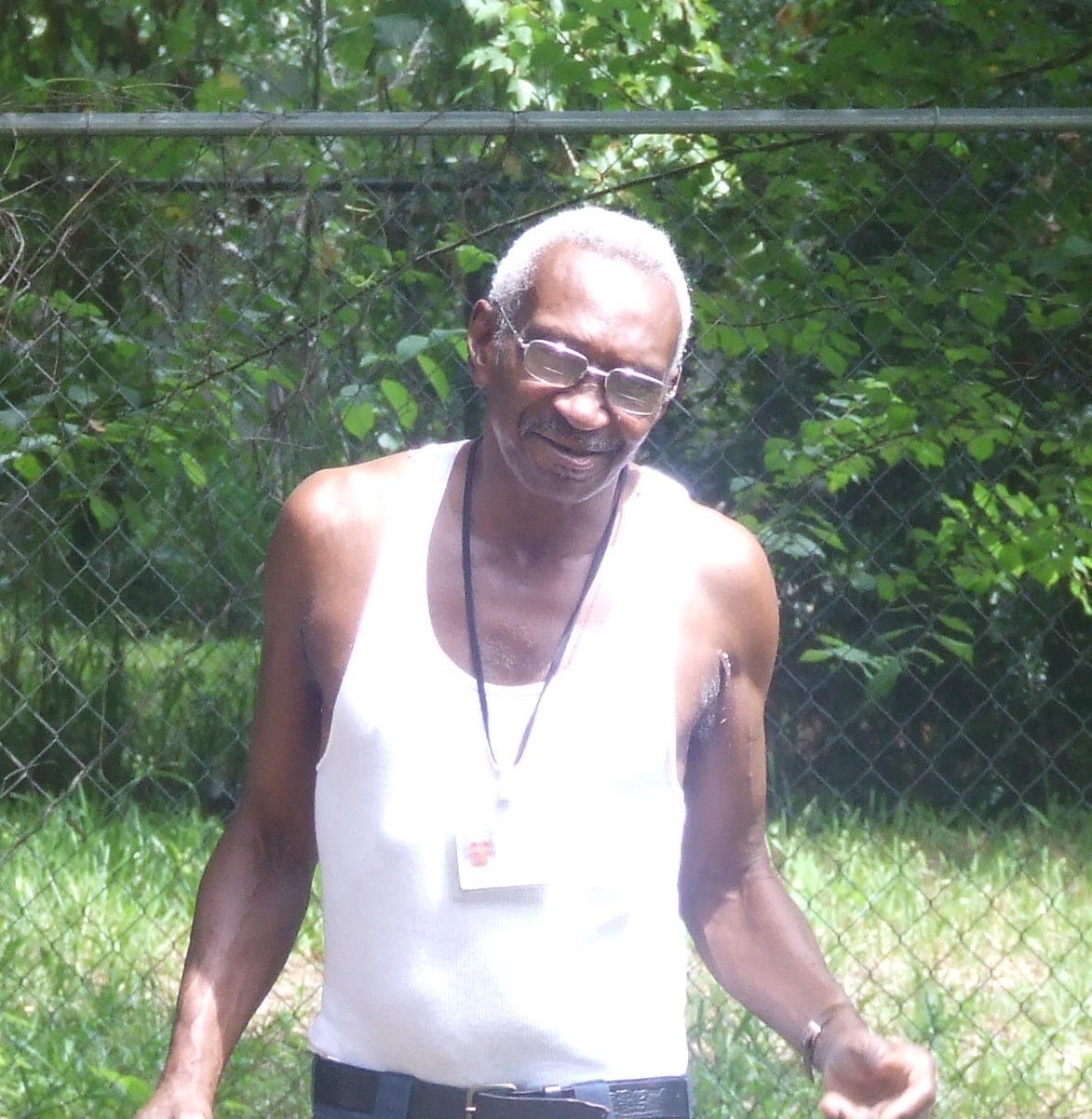
My Father, August 2007

On Monday, my father Jimme turns seventy years old. Seventy, 70, 7-oh! Amazing! Given the years of alcohol abuse, so much loss, so much pain, so much rage, and to recover and make it to the age of seventy? That’s a big-M miracle, the kind that you can only attribute to sheer strength of will and the grace of God.

I must admit, after the summer of ’92, I had my doubts about my father’s future. The few times I saw him that summer, he was drinking like he had never drank before. The first time I saw him, he accused me of lying about having my master’s degree. “No college gonna giv’ you a degree afta a year,” he said. Only when his Jewish bosses told him it was possible for someone to finish a master’s in a year did he believe me.

The second time I went to see him, his landlord Mrs. Smalls was about to evict him. But my father wasn’t there. Or, I guess he was, in a way. He had made plops of defecation, from the front gate and blue slate walk up to the front steps and porch, into the entrance way and foyer, up the gloomy carpeted steps, all the way to the attic bathroom next to his room. They’d been cleaning for hours, according to Mrs. Smalls, but it sure didn’t smell like it.

Fast-forward two years to Christmas Eve ’94. My mother and my younger siblings and I went on a bus trip to Cross County Mall and Toys ‘R Us in Yonkers. Jimme showed up at the last minute to join us and to regale us with his “po’ ass muddafuccas” and his other favorite Jimme-isms. We were on the 7 bus to Yonkers, packed with parents who were shopping late for toys and Christmas trees. Jimme was so drunk that he fell over on some people on the bus once, and fell into the rear stairwell one other time. I wasn’t embarrassed as much as I was disappointed and saddened.

So by the time I finished my doctorate at the end of ’96, I’d all but given up on my father turning things

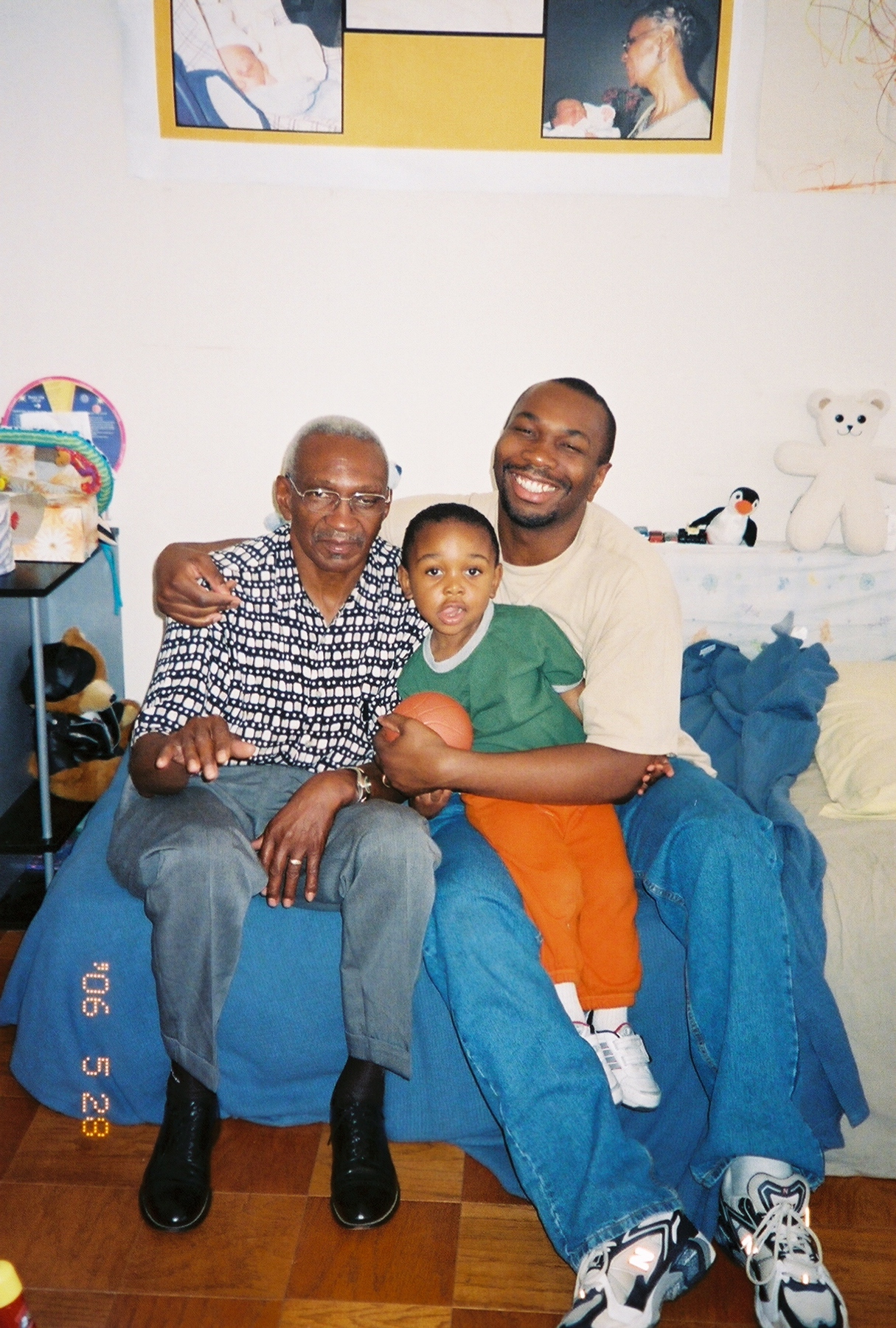
Three Generations, May 2006

around. A few months later, my father, unemployed and no longer enabled by his former bosses, finally left New York for the family home in Georgia at the invitation of one of his sisters. By the end of ’97, I heard that he had cleaned up his act and moved to Jacksonville. Throughout ’98 and into ’99, I began to get calls from Jimme about how he was finally sober, had found God, and was getting married, to another woman named Mary.

I thought long and hard about blowing him off. All my life, and certainly all of my older brother Darren’s, Jimme had been an evil drunk, verbally abusive and incapable of staying sober for more than three weeks at a time. But he had also been there for me growing up during my Humanities and Hebrew-Israelite years. He helped keep Darren and me from starving or walking around barefoot in ’82 and ’83. He kept the example of hard work in front of us even as the other parent figures in our lives went on dreaded welfare and laid around as if our lives were over. His money was the reason I was able to stay in school after five days of homelessness my sophomore year at Pitt.

So I called him, deciding to give him a second chance. That was February ’99, a two-hour conversation about how he managed to become a recovering alcoholic, a church-goer, and a married man. He admitted that he had made many mistakes, that he was an alcoholic, that he loved me and my brother. It was a conversation, a real conversation, an unbelievable change of relationship. After twenty-nine years and two months, I finally had a father that I really could call father.

That was eleven and a half years ago. I’m still amazed that I’m able to talk to my father as my father, and not as the person I used to have to drag out of bars on 241st Street or in Midtown Manhattan growing up. But most of all, I’m amazed how much I love him and care about him. Happy Birthday…Dad!

← Older posts
Newer posts →

Boy @ The Window: A Memoir

Boy @ The Window: A Memoir

Places to Buy/Download Boy @ The Window

There's a few ways in which you can read excerpts of, borrow and/or purchase and download Boy @ The Window. There's the trade paperback edition of Boy @ The Window, available for purchase via Amazon.com at http://www.amazon.com/Boy-Window-Donald-Earl-Collins/dp/0989256138/

There's also a Kindle edition on Amazon.com. The enhanced edition can be read only with Kindle Fire, an iPad or a full-color tablet. The links to the enhanced edition through Apple's iBookstore and the Barnes & Noble NOOK edition are below. The link to the Amazon Kindle version is also immediately below:

scr2555-proj697-a-kindle-logo-rgb-lg

Boy @ The Window on Amazon.com: http://www.amazon.com/Boy-The-Window-Memoir-ebook/dp/B00CD95FBU/

iBookstore-logo-300x100

Boy @ The Window on Apple's iBookstore: https://itunes.apple.com/us/book/boy-the-window/id643768275?ls=1

Barnes & Noble (bn.com) logo, June 26, 2013. (http://www.logotypes101.com).

Boy @ The Window on Barnes & Noble: http://www.barnesandnoble.com/w/boy-the-window-donald-earl-collins/1115182183?ean=2940016741567

You can also add, read and review Boy @ The Window on Goodreads.com. Just click on the button below:

Boy @ The Window

Twitter Updates

Tweets by decollins1969
  • RSS - Posts
  • RSS - Comments

Archives

  • June 2025
  • April 2023
  • September 2022
  • August 2022
  • July 2022
  • June 2022
  • May 2022
  • April 2022
  • March 2022
  • January 2022
  • December 2021
  • November 2021
  • October 2021
  • September 2021
  • August 2021
  • July 2021
  • June 2021
  • April 2021
  • March 2021
  • February 2021
  • January 2021
  • December 2020
  • November 2020
  • October 2020
  • September 2020
  • August 2020
  • July 2020
  • May 2020
  • April 2020
  • March 2020
  • January 2020
  • December 2019
  • November 2019
  • August 2019
  • July 2019
  • June 2019
  • May 2019
  • April 2019
  • March 2019
  • February 2019
  • January 2019
  • December 2018
  • November 2018
  • October 2018
  • September 2018
  • August 2018
  • July 2018
  • June 2018
  • May 2018
  • March 2018
  • February 2018
  • January 2018
  • December 2017
  • November 2017
  • October 2017
  • September 2017
  • August 2017
  • July 2017
  • June 2017
  • May 2017
  • April 2017
  • March 2017
  • February 2017
  • January 2017
  • December 2016
  • November 2016
  • October 2016
  • September 2016
  • August 2016
  • July 2016
  • June 2016
  • May 2016
  • April 2016
  • March 2016
  • February 2016
  • January 2016
  • December 2015
  • November 2015
  • October 2015
  • September 2015
  • August 2015
  • July 2015
  • June 2015
  • May 2015
  • April 2015
  • March 2015
  • February 2015
  • January 2015
  • December 2014
  • November 2014
  • October 2014
  • September 2014
  • August 2014
  • July 2014
  • June 2014
  • May 2014
  • April 2014
  • March 2014
  • February 2014
  • January 2014
  • December 2013
  • November 2013
  • October 2013
  • September 2013
  • August 2013
  • July 2013
  • June 2013
  • May 2013
  • April 2013
  • March 2013
  • February 2013
  • January 2013
  • December 2012
  • November 2012
  • October 2012
  • September 2012
  • August 2012
  • July 2012
  • June 2012
  • May 2012
  • April 2012
  • March 2012
  • February 2012
  • January 2012
  • December 2011
  • November 2011
  • October 2011
  • September 2011
  • August 2011
  • July 2011
  • June 2011
  • May 2011
  • April 2011
  • March 2011
  • February 2011
  • January 2011
  • December 2010
  • November 2010
  • October 2010
  • September 2010
  • August 2010
  • July 2010
  • June 2010
  • May 2010
  • April 2010
  • March 2010
  • February 2010
  • January 2010
  • December 2009
  • November 2009
  • October 2009
  • September 2009
  • August 2009
  • July 2009
  • June 2009
  • May 2009
  • April 2009
  • March 2009
  • February 2009
  • January 2009
  • December 2008
  • November 2008
  • October 2008
  • September 2008
  • August 2008
  • July 2008
  • June 2008
  • May 2008
  • April 2008
  • March 2008
  • February 2008
  • January 2008
  • December 2007
  • November 2007
  • October 2007
  • September 2007
  • August 2007
  • July 2007
  • June 2007

Recent Comments

MaryPena's avatarMaryPena on My Day of Atonement/Bitter Hat…
decollins1969's avatardecollins1969 on No Good Teaching Deed Goes…
Mary Rose O’Connell's avatarMary Rose O’Connell on No Good Teaching Deed Goes…

NetworkedBlogs on Facebook

NetworkedBlogs
Blog:
Notes From a Boy @ The Window
Topics:
My Life, Culture & Education, Politics & Goofyness
 
Follow my blog

616 616 East Lincoln Avenue A.B. Davis Middle School Abuse Academia Academy for Educational Development AED Afrocentricity American Narcissism Authenticity Bigotry Blackness Boy @ The Window Carnegie Mellon University Child Abuse Class of 1987 CMU Coping Strategies Crush #1 Crush #2 Death Disillusionment Diversity Domestic Violence Economic Inequality Education Family Friendship Friendships Graduate School Hebrew-Israelites High-Stakes Testing Higher Education History Homelessness Humanities Humanities Program Hypocrisy Internalized Racism Jealousy Joe Trotter Joe William Trotter Jr. K-12 Education Love Manhood Maurice Eugene Washington Maurice Washington Misogyny Mother-Son Relationship Mount Vernon High School Mount Vernon New York Mount Vernon public schools Multiculturalism MVHS Narcissism NFL Pitt Pittsburgh Politics of Education Poverty President Barack Obama Race Racial Stereotypes Racism Relationships Self-Awareness Self-Discovery Self-Reflection Sexism Social Justice Teaching and Learning University of Pittsburgh Violence Whiteness Writing

Top Rated

Blog at WordPress.com.

  • Subscribe Subscribed
    • Notes from a Boy @ The Window
    • Join 103 other subscribers
    • Already have a WordPress.com account? Log in now.
    • Notes from a Boy @ The Window
    • Subscribe Subscribed
    • Sign up
    • Log in
    • Report this content
    • View site in Reader
    • Manage subscriptions
    • Collapse this bar
 

Loading Comments...