• About Me
  • Other Writings
  • Interview Clips
  • All About Me: American Racism, American Narcissism, and the Conversation America Can’t Have
  • Video Clips
  • Boy @ The Window Pictures
  • Boy @ The Window Theme Music

Notes from a Boy @ The Window

~

Notes from a Boy @ The Window

Category Archives: culture

Providing the Wrong Frame for Higher Education

12 Wednesday Dec 2012

Posted by decollins1969 in 1, Academia, culture, Eclectic, Politics, race, Work, Youth

≈ Leave a comment

Tags

"Investing in the Future", American Competitiveness, Center for American Progress, Critical Thinking, Drew Gilpin Faust, Educational Attainment, Efficiency, Gene Sperling, Glenn Hutchins, Harvard University, Higher Education, Innovation, K-12 Education, Neera Tanden, Philosophy of Education, Poverty, Purpose of Education, social mobility, STEM Fields, Technocrats, Workforce Development


Neera Tanden and Drew Gilpin Faust, Center for American Progress' "Investing in the Future" event (screen shot), Washington, DC, December 10, 2012. (http://americanprogress.org).

Neera Tanden and Drew Gilpin Faust, Center for American Progress’ “Investing in the Future” event (screen shot), Washington, DC, December 10, 2012. (http://americanprogress.org).

I was supposed to attend the Center for American Progress event “Investing in the Future: Higher Education, Innovation, and American Competitiveness” yesterday morning (who does a two-and-a-half-hour event two Mondays before Christmas, really?). But my son happened to have his worst night of sleep in his nine and a third years of life, compounded by a minor asthma attack. So I didn’t get to go.

I’m glad that I didn’t attend, though, as the above link to the site and video will indicate to even an educator with the patience of Jesus. After watching and skipping through the 138-minute recording today, I realized that passing a kidney stone (which I’ve actually done) would be preferable to hearing the drivel that the Center for American Progress, Harvard University and Google sponsored yesterday.

It was a tour-de-force of K-16 education as preparation for practical careers and scientific/technological innovation. Period. Not education to formulate a critical mind. Not education for the betterment of society, for social justice, for changing the world. No, Americans, our very future depends purely on the willingness of Harvard (and other elite universities), corporations and government to work together to turn out millions of students to work in STEM fields, apparently the only fields that matter in the twenty-first century.

Yesterday’s Center for American Progress event proves, more than anything else, that K-12 public education has lost the battle for educational equity and US higher education is in the process of becoming a two-tiered system. The comments and answers from Neera Tanden, Harvard President Drew Gilpin Faust, Glenn Hutchins, Gene Sperling, et al. were indicative of a class of folks who hold little interest in providing the resources necessary to level the educational playing field for poor and struggling working class students.  Or, when they did address K-12 education, it was purely in technocratic scales-of-efficiency terms, as they gave K-12 most of the blame for America’s reduced economic competitiveness.

Box of Cracker Jack bags, December 11, 2012. (http://crackerjackpopcorn.com).

Box of Cracker Jack bags, December 11, 2012. (http://crackerjackpopcorn.com).

But this is the problem with leaders involved in American education these days. Instead of opening up K-12 education to real innovations in philosophy, curriculum, a teacher’s ability to use all of their skills (measurable and intangible) in a student-centered classroom, critical thinking and neuroscience, we were given the typical mantra of testing, teacher effectiveness and cost-cutting. It means that even among our alleged best thinkers — apparently still White, mostly male and over fifty years of age — the best ideas involve an expansive education for the well-off and a Cracker Jack education for the growing numbers of the poor and those struggling to remain above the poverty line.

As for higher education, I’ve already noted that we are well on the way to a two-tiered system in the US (see my post “edX and Ex-lax (& Higher Education’s Future)” from September ’12). One tier will consist of group of schools that will remain elite and near elite, the top 500 or so colleges and universities in the country. The other group of colleges (public, HBCU and for-profit) will struggle mightily with the weight of providing a specialized education for the masses of unprepared and underprepared low-income first generation students, of color and otherwise. They will increasingly lose out to the elite university/corporate/government partnership that will lead to a cheaper, streamlined college education, and mostly online. And all without the complications of providing a well-rounded, liberal arts education.

Ben & Jerry's half baked ice cream flavor, December 11, 2012. (http://bestuff.com/).

Ben & Jerry’s half baked ice cream flavor, December 11, 2012. (http://bestuff.com/).

The speakers at “Investing in the Future: Higher Education, Innovation, and American Competitiveness” also discussed the need to make higher education cheaper. Their solutions of cheaper loans and more stringent requirements for students to meet in order to obtain merit-based aid is nothing new, and in fact reflects trends that date back to the late-1970s. Even Faust’s encouragement of spreading the Harvard solution of providing need-based aid for low-income students only works for high-achieving students, the “low-hanging fruit” strategy that allows the other grapes on the trees to rot.

To be sure, the speakers at this event also talked about comprehensive immigration reform, green jobs/economy and universal health care. But without sufficient attention to the millions and millions of poor and of color people affected by their words and deeds, the Center for American Progress event might as well have been called “Investing in the Oligarchic Past.” Same new-old solutions, same half-baked ideas that show that as long as American education and industry leaders try to force solutions on our poor, we’ll be about as competitive as the USSR was between Stalin and Glasnost/Perestroika.


My Beef With Cory Booker’s Food Stamps Experiment

05 Wednesday Dec 2012

Posted by decollins1969 in 1, Boy @ The Window, culture, Eclectic, Jimme, Marriage, Mount Vernon New York, My Father, New York City, Politics, Pop Culture, race, Work, Youth

≈ Leave a comment

Tags

616, 616 East Lincoln Avenue, Academy for Educational Development, C-Town, Cory Booker, Food Stamps, Food Stamps Experiment, hunger, Newark New Jersey, Nutrition, Omar Wasow, Poverty, Social Safety Net, Social Welfare, Stanford University, Welfare


Cory Booker at the 2011 Time 100 Gala, April 27, 2011. (David Shankbone via Wikipedia). Released to public domain via  Creative Commons Attribution 3.0 license.

Cory Booker at the 2011 Time 100 Gala, April 27, 2011. (David Shankbone via Wikipedia). Released to public domain via Creative Commons Attribution 3.0 license.

I like Cory Booker. I worked with someone at Academy for Educational Development in the mid-00s who told me stories about Booker while she knew him at Stanford and her contact with him over the years. I’ve admired his work in Newark, for the most part, and the fact that he’s been a personable, in-your-face Twitter-accessible mayor who has fought hard for his city over the past decade.

But this week-long “I feel your pain” publicity stunt through living on $30 in food stamps (the SNAP program) seems a bad idea at best, and just plain disingenuous otherwise. Booker’s argument has been the need to raise awareness of how difficult it is to live on food stamps for the most impoverished of us, in Newark or anywhere else in the US. After being critical of Booker’s slumming it via food stamps on Twitter a couple of weeks ago, I received this response from Booker through tech guru and Princeton doctoral candidate Omar Wasow:

“@decollins1969 @corybooker said you can’t love your neighbor if you don’t understand them & you can’t understand w/out shared experience”

Really? I didn’t know that Franklin D. Roosevelt had been homeless, old and sick and out of work before ramming through the Social Security Act of 1935! Or that Lyndon Johnson had been a sharecropper or beaten up for marching to Selma before pushing through the Civil Rights Act of 1964 and Voting Rights Act of 1965!

President Bill Clinton (in context of "I feel your pain" quote), July 23, 2009. (http://dailybail.com).

President Bill Clinton (in context of “I feel your pain” quote), July 23, 2009. (http://dailybail.com).

What worries me, though, more than anything else, is how messiah-like this tweet sounds. It would be a different story if so many politicians and journalists hadn’t run this experiment before (see my post “Slumming Lords Spinning Stories Out Of Suffering” from October ’10). It would be even more different if this experiment really opened up a dialogue on the paltry social safety net and deep poverty. Not to mention the working poor and the millions from the struggling middle class who have fallen into poverty since the start of the Great Recession more than four years ago.

But as someone who’s had way more than one week or one month’s worth of experience with poverty, WIC, welfare checks, case workers with Westchester County Department of Social Services, and of course, food stamps, I actually find these attempts to walk in the shoes of my youth — among millions of others who’ve lived in welfare poverty — insulting on so many levels (see my posts “The Five Sense of Poverty,” “Hunger,” and “Shopping at C-Town“).
Here’s what I lived with between ages twelve and seventeen (October ’82 through August ’87). As the second-oldest child and only other sane person in a household of six, then seven, then eight persons (including my four younger siblings, born between ’79 and ’84), I had many adult responsibilities. I negotiated over the phone with Con Edison and NYNEX/Bell Atlantic when we fell behind on the heat bill or the telephone bill. I walked my mom’s $275 rent check (often three weeks late in ’82 and ’83) over to the super’s office for payment, and usually was at the receiving end of verbal insults and threats for being late.
I went to Waldbaum’s, C-Town and other grocery stores almost every day after school, sometimes three times in one evening (because my mom often forgot items). I also washed clothes with my older brother Darren once a week, watched over my siblings, cooked about one out of every five meals from ’84 until I went off to college in ’87.
Lab mice "Avatars" implanted with cancer to treat cancer, October 5, 2012. (http://danisfoundation.org).

Lab mice “Avatars” implanted with cancer to treat cancer, October 5, 2012. (http://danisfoundation.org).

This is the short list. In doing all of this, especially once we went on welfare in April ’83 (after the birth of my now deceased sister Sarai), I learned a lot about how little Americans thought of the poor, and how little the federal government thought of people like me and my family. The average budget for my mom to raise a family of six kids with a consistently unemployed and wayward idiot (now late) stepfather was a monthly welfare check of $558, $75 in food stamps, and about $50 in WIC benefits.
Even in the best months, it meant a week to ten days with little or no food in the house. Great Northern beans and rice, $5 spaghetti and meat sauce dinners, and days without was a typical month. Unless, of course, my weekly weekend excursions to track down my father Jimme in Mount Vernon, the Bronx and sometimes in Midtown Manhattan at his favorite watering holes yielded enough extra funds to keep me, Darren and my family in food and clean clothes during the leaner times each month at 616.

So, you see Cory Booker, your publicity endeavor really teaches us little about the realities of poverty, hunger and nutrition for the poorest among us, whether in Newark, Mount Vernon, New York or the rest of the US. (Except that you have no experience stretching a dollar). Your food stamps experiment will do what it always does – get the media’s attention. But to understand the embarrassment, the cold stares, the harshness of what I went through and millions like me are going through now? One week and $30 isn’t even close to good enough.

We Called Him Mr. Lewis

03 Monday Dec 2012

Posted by decollins1969 in 1, Academia, Boy @ The Window, culture, Eclectic, Jimme, Mount Vernon High School, Mount Vernon New York, My Father, Politics, Pop Culture, race, Youth

≈ Leave a comment

Tags

Arne Duncan, Bill & Melinda Gates Foundation, Chemistry, Cigarettes, Disllusionment, ExxonMobil, Family Income, High-Stakes Testing, Humanities, Low-Income Students, Michelle Rhee, New York State Regents Exam, Nicotine, Organic Chemistry, Politics of Education, Poverty, Steve Perry, Students of Color, Teacher Effectiveness, Tenth Grade, US Department of Education, Wendy Kopp


Screenshot from To Sir, with Love (1967), December 3, 2012. (http://movies.tvguide.com). Qualifies as fair use under US Copyright laws - pic's low resolution/subject matter for blog.

Screenshot from To Sir, with Love (1967), December 3, 2012. (http://movies.tvguide.com). Qualifies as fair use under US Copyright laws – pic’s low resolution/subject matter for blog.

The dumb technocratic class (Wendy Kopp, Michelle Rhee, Steve Perry, Arne Duncan) and the assholes who fund them (Bill & Melinda Gates Foundation, ExxonMobil, US Department of Education) continue to pump out the mantra that effective teachers are the single most important variable in student performance, retention and graduation. This despite a half-century’s worth of research showing that family income was the far more important piece of data.

But even if Kopp, Rhee and Perry’s snake oil somehow turned out to be true, the fact is, the high-stakes testing movement and No Child Left Behind (and now Race to the Top) has turned effective teachers into lab leaders teaching to state-wide tests. Our current K-12 regime makes it so that ineffective teachers can be seen as effective because they’re only concerned with higher test scores, not actual learning. And some of them, not even concerned with that.

About this time thirty years ago, I had a group of wholly ineffective teachers in my tenth grade Humanities classes at Mount Vernon High School (see my posts “Half-Baked Z and Christian Zeal” from September ’10 and “This…Is…Jeopardy” from March ’11). Mr. Lewis was but one example of an unimaginative instructor. He was our Level 1 Chemistry teacher. We started his class in a very tense situation. There were fifty-one students in our class to start the year because the school administrators had failed to hire a new Level 0 (the highest level for the highest of the high-performing students) teacher for Chemistry. Our future valedictorian and other Level 0 folks spent a month protesting to the head of the Science Department, Estelle Abel, about the overcrowding and the mixing of the two levels. It took nearly two months before the situation was resolved. By that time, November ’84, none of us wanted Lewis for a teacher.

His was a class that could be fun and entertaining, but not usually educational. Sometimes our chemistry education came with errors and miscalculations. Perhaps his mistakes piled up because it was seventh period and near the end of the school day. Or maybe we were tired and inattentive.

Marlboro cigarette butts, September 19, 2007. (bachmont via Wikipedia/Flickr.com). In public domain.

Marlboro cigarette butts, September 19, 2007. (bachmont via Wikipedia/Flickr.com). In public domain.

The truth was that Lewis was a teacher with a serious chemical addiction. His was a chain-smoking world. When he opened up the door to the storage room where the test tubes and Pyrex jars were, stale cigarette smoke entered the room. His teeth were a pasty yellow, and they had a film that seemed to build up on them and in his mouth by the time we had him at the end of the day. On more than one occasion, Lewis would get phlegm caught in his mouth while in the middle of one of his lectures. Then he’d pause as he gulped the phlegm, and then he kept going. It was absolutely disgusting.

One day I met with Mr. Lewis after class to discuss my struggles with the material. He was at the front lab table sitting on a stool. In front of him on the table were fifteen Marlboro cigarettes, all lit and neatly lined up in a row. During our ten minutes together, he smoked one cigarette after another, sucking them down so fast that he had to pause to clear his throat from time to time. By the time I left, he’d gone through twelve out of fifteen, and I smelled like I’d been at one of my father Jimme’s bars. I was more than sure that Lewis’ nicotine dependency was a factor in his inability to teach Chemistry to us well (Cigarettes And Coffee, by Otis Redding).

My grades for the year going into the last weeks of the school year had ranged between an unimpressive 70 and an 87. But with the New York State Regents Exam in Chemistry coming up, Lewis was nonchalant in his attempts to prepare us for the Regents. Lewis went as far as to say, “There’s nothing to worry about” on the subject of organic chemistry. “There will be hardly any organic chemistry on the exam, anyway,” he said. After eight months of listening to his blathering, I thought “That’s it!” The next time I got money from Jimme, I  bought the Barron’s Chemistry Regents exam prep book. It was just before Memorial Day, and I had a month before the exam.

Barron's Regents Exams & Answers Chemistry (2011), December 3, 2012 (http://barnesandnoble.com).

Barron’s Regents Exams & Answers Chemistry (2011), December 3, 2012 (http://barnesandnoble.com).

On my Chemistry Regents I scored a 95, the third or fourth highest grade in the school (the highest grades were a 99 and 97 that year). My score raised my final grade in Lewis’ class six points, from a 79 to an 85. My score left me feeling jaded and disillusioned. “Wow,” I thought. “My teachers really don’t know much more than I do!” I knew that a lot of my Level 1 Chemistry classmates didn’t fare so well on the exams, because they believed Lewis when he said that there wouldn’t be much organic chemistry on the exam. By my own count during the exam, between thirty-five and forty of the 100 questions were organic chemistry ones.

It took having Meltzer for AP US History in eleventh grade for me to trust teachers again. I didn’t need anyone to teach tests to me. I needed a teacher who could help me open up a door into myself and into a world I hadn’t explored before. And millions of students — especially of color and from impoverished backgrounds — need teachers free to do that, without the threat of high-stakes tests hanging over them like a boulder.

James and the PAGPSA

29 Thursday Nov 2012

Posted by decollins1969 in 1, Academia, Boy @ The Window, culture, Eclectic, eclectic music, Hebrew-Israelite, Politics, Pop Culture, race, Religion, Youth

≈ 1 Comment

Tags

Activism, Afrocentric, Afrocentricity, Authentic Blackness, Black Action Society, Campus Climate, Carnegie Mellon University, Community, Diversity, Friendships, Graduate School, GSPIA, Isolation, PAGPSA, Pan African Graduate and Professional Student Association, Pitt, Pittsburgh, Politics of Graduate School, Retention, Self-Discovery, University of Pittsburgh


James and the Giant Peach photo art (1996), November 29, 2012. (http://disneymania.com.br).

About this time twenty years ago, perhaps for the first time in my life, I found myself around like-minded individuals, folks who seemed to understand me on an intellectual level. The fact that these were fellow graduate students, all at Pitt and all willing to form an association that would enable us to develop real connections across the campus, was inspiring to me. After four years of off-and-on involvement in the Black Action Society, not to mention my first year in the History grad program, I’d almost given up on the idea that I could form good friendships and acquaintance-ships through any formal gatherings.

But this was especially true regarding my thinking about my fellow Black students and other students of color. For the most part, I’d been around two kinds of students of color during my first five years at the University of Pittsburgh. One group was the semi-nerdy set, folks who cared deeply about their academic performance, but were also late-bloomers socially — people like me in more than a few ways. They tended to care little, though, about campus activism around diversity, retention or campus climate issues.

The other group was the Afrocentric set, people who often reminded me of my one-time Hebrew-Israelite brethren, whose views of Blackness were so limiting that I would’ve been a traitor just for listening to Chicago or Phil Collins. Those folks had virtually taken over the Black Action Society by my senior year. Forget mentioning popular folks, like sorors, frat guys, football, basketball and track guys and gals, or those fully invested in Pitt’s Honors College. I mingled with them all, and found little in common with them, intellectually or economically.

Me with Mark James, PAGPSA meeting, GSPH building, University of Pittsburgh, February 26, 1993 (Lois Nembhard).

That changed a bit my first year of grad school. Often in my walking and running across campus, I’d bump into a Black grad student here or there. At Hillman Library, the Cathedral of Learning, William Pitt Union, the SLIS building or other places. We’d recognize each other, we said hello, we even exchanged our names. Two of them in particular — Ed and Hayley — reached out to me at the end of the Spring ’92 semester, because they wanted to put together an organization that would represent our interests as grad students of color.

In mid-August, the emails began to go back and forth in earnest to establish what we’d end up calling the Pan African Graduate and Professional Student Association (PAGPSA) that fall. Through Jack Daniel’s office (see my post “The Miracle of Dr. Jack Daniel” from May ’11), we obtained the start-up funds necessary to make the new association go.

At our founding meeting that September, there were eight of us, all highly motivated to be as inclusive as possible, all feeling suddenly less isolated than we had felt a week, month or semester earlier. We decided on the “Pan African” part of the association’s name because we wanted to welcome as many graduate students of color as possible, particularly African and Afro-Caribbean students. The terms “Black” and “African American,” we agreed, wouldn’t be inclusive enough.

We also decided that despite the political implications of our new name, that this association would primarily be about bringing students together for social gatherings, for additional information and education beyond their course work and dissertations, but not to be campus activists. So many of the Black, African and Afro-Caribbean grad students at Pitt were in fact working on master’s or other professional degrees, and wouldn’t be on campus long enough to make lasting changes through activism, strictly speaking. Plus, there was the risk that activism would be so all-consuming — especially on issues like campus climate, long-term support for research and retention rates — that folks would fail to complete the work they came to Pitt to do in the first place.

CMU-Pitt mug, from joint PAGPSA/BGSO meeting on diversity and grad school, October 1992, November 29, 2012. (Donald Earl Collins).

By the time that first meeting broke up, I was content to have met folks like Mark, Hayley, Lois, Errol, Ed, and a couple of others, to find us all on the same page about something as serious as starting a new association of a significant cross-section of Pitt’s graduate students of color. But in the process, I’d made a new friend that fall through our meetings and our joint gatherings with Carnegie Mellon’s Black Graduate Student Organization (BGSO).

James came along and challenged PAGPSA in October and November regarding our campus activism stance, arguing that being a part of any organization of students of color meant being active. Of course the leadership disagreed, but that’s how I met the man. He was a charismatic Black Iowan preacher’s son, and more politically active than anyone I’d known under the age of thirty. James had ideas about everything, from the future of hip-hop to the implications of my research on multiculturalism and Black Washington, DC.

Though he was a GSPIA (Graduate School of Public and International Affairs) master’s student and ultimately finished his degree in ’94, we would remain friends through the rest of the ’90s. Between him and Matt (see my post “My Friend Matt” from September) and PAGPSA, I remained grounded even as I became buried in the minutia of US, African American and educational policy historiography over the next half-decade. Thankfully, I no longer felt like a lone wolf. Thankfully, I knew that I wasn’t alone in a sea of graduate school and faculty White maleness after that fall.

Thanksgiving Family Drama

23 Friday Nov 2012

Posted by decollins1969 in 1, Boy @ The Window, culture, Eclectic, Marriage, Mount Vernon New York, Pop Culture

≈ Leave a comment

Tags

7440 Monticello Street. Turkey Day, Eat'n Park, Family Drama, Father-Son Relationships, German Chocolate Cake, Pittsburgh, Sister-in-Law, Thanksgiving, Thanksgiving 2001


German Chocolate Cake, Thanksgiving Dessert, November 22, 2012. (Donald Earl Collins).

Thanksgiving Day ’12 will go down as the year I finally managed to balance quality and volume for me and my small family of wife and finicky nine-year-old son. I did nearly all of the cooking on Wednesday, starting with the turkey and stuffing at 7:30 am, and ending with mushroom gravy at 11:45 pm. In between, I dropped my son off for school, ran some errands, finished the turkey and stuffing, went for a 5.4-mile run, made the mac and cheese — as well as steak and butternut squash soup (from scratch) for dunch — and finally showered.

Then I made the collard/turnip greens mixture, seasoned ham with brown sugar and butter, super sugary Kool-Aid (first time I’ve made it in two years), iced tea with lemon and German chocolate cake in quick succession. In between, I also made dinner for my son, sorted and wrapped fifteen pounds of meat for the freezer, and did another round of grading for one of my classes. All in all, a very busy day, but it made the mashed potatoes and setting the table yesterday look like nothing by comparison.

Most of my Thanksgivings as an adult have been pretty peaceful. I’ve actually only been back to Mount Vernon for three — count them, three — Thanksgivings since I left for college and Pittsburgh in ’87. One was in ’87, then after the 616 fire in ’95 (see my post “The Fire This Time” from April ’08), and then with me and my family in ’06. At these gatherings, folks were too busy eating to get into serious issues like acne problems of whether someone’s cake was made from scratch or not.

But at my wife’s family’s Thanksgiving gatherings — which I attended or served as sous chef from ’96-’99 and in ’01 — the above issues and more became part of the annual Turkey Day in Pittsburgh. The most elaborate and long-winded of such dinners in Homewood-Brushton was in ’01. It was going to be a doozy right from the start, as I’d agreed to cook virtually all of the Thanksgiving dinner for an estimated twenty-five guests (it turned out to be twenty-eight in all). Me and my wife flew in from DC that Tuesday and wasted no time in buying everything we’d need to make her family’s version of a Thanksgiving meal possible.

Wife’s family and Noah in Pittsburgh, July 15, 2004. (Donald Earl Collins).

My sister-in-law flew in from San Diego the following day, and wasn’t exactly to see us. Or at least, was standoff-ish with me. It was only the third time we’d ever met, and the first time me and my wife had seen her since ’96 (and since we’d married in April ’00). She wasn’t happy having to share her sister with me, among the other issues she had back then.

She found fault with me making a chocolate cake via Duncan Hines instead of completely from scratch, even though I’d also made a twenty-two pound turkey, corn bread, five pounds of collard and turnip greens, five pounds of potatoes, a gallon’s worth of turkey mushroom gravy and stuffing with sausage that Wednesday. It was one of a series of not-so-charming comments from her that week.

Thanksgiving Day wasn’t much better, for us, for my sister-in-law, or for my wife’s extended family. Just after 12:30 pm, “G,” one of my wife’s cousin-in-laws, showed up with his two teenage kids, four hours before we had scheduled ourselves to serve dinner. He reminded me of my now late ex-stepfather, loud, out-of-shape, and ready to eat or fight at a moment’s notice. Between him and my brooding sister-in-law, I was happy to be in a hot kitchen or down in the basement getting furniture while finishing the preparations for dinner.

The dinner itself was a hit, as in-laws, cousins, nieces and nephews went for seconds and thirds between 4:45 and 6:30-ish. Then G suddenly became really loud and obviously angry while watching the Dallas game in the crowded living room. One of his kids had said as a joke to the then forty-nine year-old, “You’re so old, you were born before they built the railroads!” You know, stuff anyone over thirty hears from their kids at least once a week. But for nearly an hour and a half, G smouldered, then yelled, then smouldered some more, as cousins and in-laws tried to step in. He disowned his kids right in front of at least a dozen family members.

The crescendo was between G and his nephew “AA,” the third family member who had attempted to end the situation. AA was telling G to go home, and even offered to take him there. The rest is family strife gold and history.

“Don’t you EVER come to my house!,” G yelled.

“I love you, and…” AA responded.

“If you come to MY house, I’m gonna put you in a body bag!,” G hollered with a death stare.

“Then I’m gonna be in the back of your mind for the rest of your life!,” AA yelled, a bit hurt.

Eat’n Park logo, March 2011. (http://www.printablecoupons.us/).

While that was going on, my sister-in-law suddenly complained to the female contingent at the dining room table, “They never pick up the phone! They screen all of their calls!” That was in reference to me and my wife.

By 9 pm, it was all over, with two disowned kids, a crazy middle-aged man and a gloomy sister-in-law as part of the package deal that was Thanksgiving ’01. All that was left was an awkward Eat’n Park lunch with my sister-in-law that Friday — not exactly “the place for smiles” that day — and her suddenly booking an early return ticket for San Diego for Saturday morning. We had paid for her original round-trip flight, and her new flight cost more than the original ticket. She really wanted to get away!

So despite how tired I’ve been since Thanksgiving morning, I’ll take the peace of mind that comes with a small family and a thankful gathering any day over Thanksgiving ’01 and family drama.

Fear of Flying Solo (Not Literally)

19 Monday Nov 2012

Posted by decollins1969 in 1, Boy @ The Window, culture, Eclectic, eclectic music, Mount Vernon High School, Mount Vernon New York, music, Pop Culture, race, Youth

≈ Leave a comment

Tags

"Sign 'O' the Times (1987), Blackness, Busch Beer, Continental Airlines, Coping Strategies, Crush #2, Depression, First Flight, Homesickness, Infatuation, Loneliness, Love, Lust, Manhood, Obsession, Prince, Self-Discovery, Theft, University of Pittsburgh


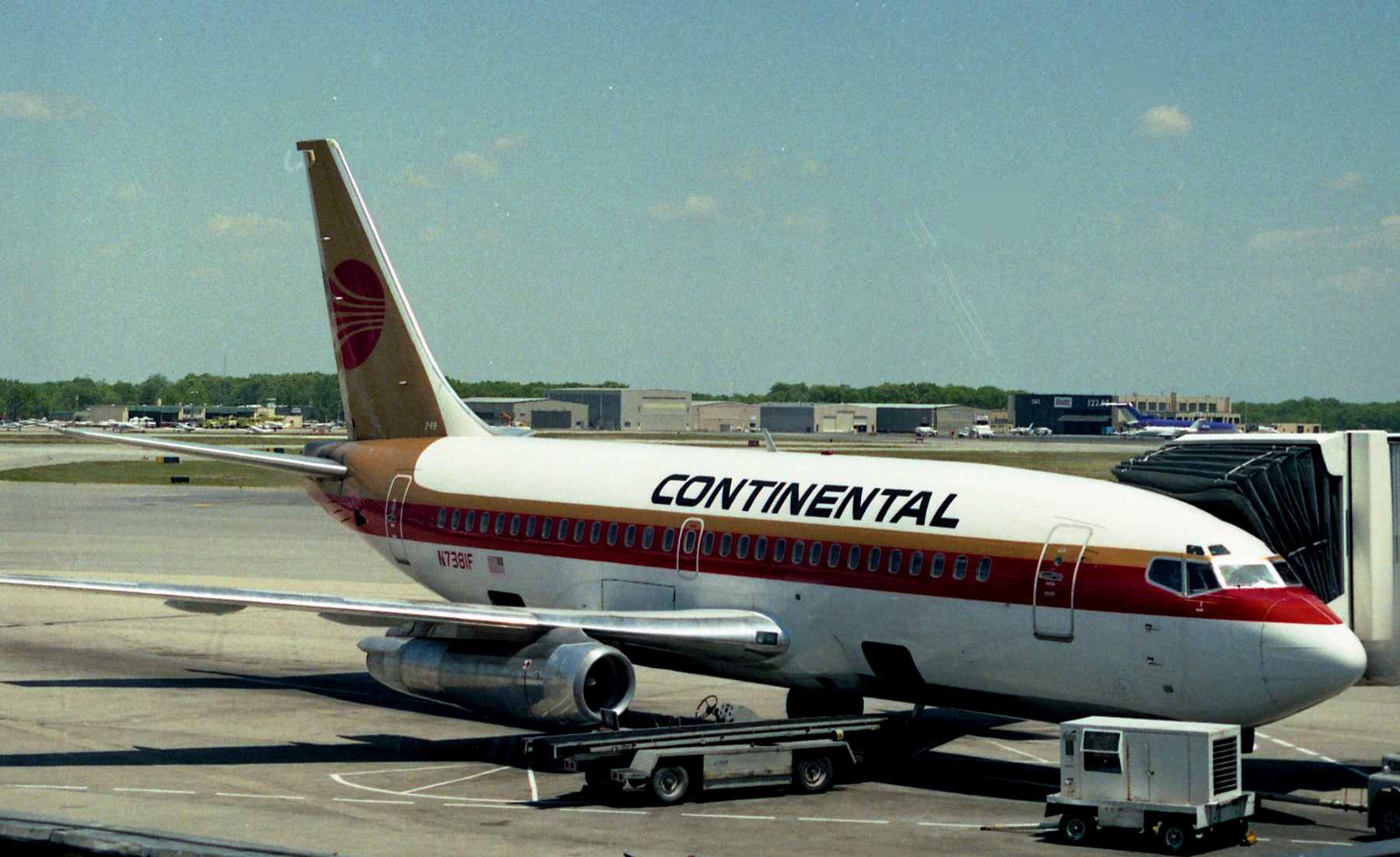
Continental Airlines B737-200 (similar to one I flew on in November ’87, logo included), Providence, RI, 1990, January 2, 2009. (Phillip Capper via Wikipedia). Releases to public domain via cc-Attribution 2.0 Generic license.

This week twenty-five years ago, the pressures of college, “homesickness” and Crush #2 had screwed up the inner movie and music soundtrack (think Enigma’s “I Love You, I’ll Kill You” [1993]) that had been my coping mechanism for the previous half decade. I was in the midst of a psychological breakthrough, but it felt more like a combination of depression and a nervous breakdown at the time. Such were my times as an emotionally tortured seventeen-year-old who should’ve left Mount Vernon a full year earlier (see my post “A One-Year Sooner ‘What If’” from June ’11).

The downward spiral of my first semester at the University of Pittsburgh started with a burglary the third week in October ’87. While I took a bathroom break at my computer lab job in the Cathedral of Learning, someone stole my Calculus textbook. I felt violated, especially since it happened at work. It made me more distrustful of the people I worked with and of Pitt students in general. Of course, I didn’t really even trust myself at the time, and the loss of my textbook didn’t make it any easier. I was out of money to boot, which meant that I wouldn’t be able to replace this loss.

Excerpts of Prince’s Sign ‘O’ the Times (1987) liner notes, November 19, 2012. (Donald Earl Collins). Qualifies as fair use under US Copyright laws – low resolution illustration of text-like writing style for this post.

Crush #2’s response to my letter about her emasculating comments back in the summer made matters worse (see my posts “Origins of the Obsession” from June ’12 and “A Dream That Had to Die” from July ’07). Her letter, dated November 2, was in purple ink, with heart-shapes and circles for dots over “i”s. Reading her letter was like reading the liner notes off of a Prince album in those days. Like the song “I Would Die 4 U,” Crush # 2 had decided to limit her English skills to the ’80s equivalent of text messaging, a real revolution on both their parts. She started, “Thank U 4 your card 2day,” an insult to my intelligence. She wrote indirectly that she did like me at one point in time, but added “but we’re in college now . . . around lots of nu people” She admitted that I was her and her sister’s topic of conversation back in July, but “I needed 2 get over that.” She hinted that I shouldn’t write her again, and that was it. No apologies, no attempt to understand how I felt.

16-ounce “Pounder” can of Busch Beer, November 19, 2012. (http://price2watch.com)

After Crush #2’s wonderful, text-message-like response, I all but stopped going to class. I missed eighteen of twenty-four classes at one stretch between November 3 and Thanksgiving, only showing up for exams or if my black-cloud mood had let up long enough to allow me to function. The weekend before Thanksgiving, I allowed my dorm mates to cheer me up by getting a couple of cases of Busch Beer. These were the pounder type, sixteen-ounce cans of Busch beer. I downed four cans in fifteen minutes, and was drunk within a half hour. I started throwing around the word “bitch” as if it was part of a drinking game. I spent the next day vomiting and trying to regain my balance.

I barely recovered from my bender in time to go home for Thanksgiving that Monday, November 23. I still managed a few firsts, though. That trip back home was my first ever on an airplane. I took a Continental flight from the old and decrepit blue hangar that was Pittsburgh Airport into Newark, with the late Craig “Ironhead” Hayward on the flight sitting in first-class. He was a senior and the starting running back for the Pitt Panthers. Besides being a great player, he was a bit of a party animal and had gotten into fights with Pitt Police. I remember the student newspaper having him in their police blotter, allegedly body-slamming a patron at the O while being arrested for a being a disorderly drunk.

It was the first series of events in which I couldn’t use music, sports or my imagination to escape (see my post “Coping In The Boy @ The Window World” from October ’12). I hadn’t realized that I was attempting to escape myself, not just my immediate past or Mount Vernon. I spent those last weeks of ’87 as if draped in a fog, unable to face the world. I fully understood, though, that I couldn’t drink my way out of my problems. I was obsessed with a woman whom felt sorry for me, had friends at Pitt who weren’t really my friends, and was homesick for 616, a place that was never really mine to call home in the first place.

Male duck swimming solo, Chicago River, Chicago, IL, June 16, 2002. (Donald Earl Collins)

Most of all, after five years of hiding my emotions and opinions, I no longer knew how to be me. Luckily, thinking about Crush #2 as a “triflin’ ass” was, for better and worse, a good start toward recovery for me. And, for that moment in my life, I needed that anger to be a better student, to be a better me. Because as far as I was concerned, I was out in Pittsburgh, alone, facing down my past and present all at once.

Jimme To The Rescue

17 Saturday Nov 2012

Posted by decollins1969 in 1, Boy @ The Window, culture, Eclectic, Hebrew-Israelite, Jimme, Mount Vernon New York, My Father, New York City, Pop Culture, race, Religion, Work, Youth

≈ Leave a comment

Tags

241st Street Subway, 616, 616 East Lincoln Avenue, Abyss, Desperation, Family, Fatherhood, Felix Baumgartner, Financial Rescue, Fiscal Cliff, Manned Balloon Jump, Money, Red Bull Stratos, Relationships, Rescue, Welfare Poverty


United States Coast Guard rescue diver jumps from a helicopter (demonstration), 2004 Seafair, Seattle, WA, June 18, 2008. (Brandon Weeks via Wikipedia). Released to public domain via cc-Attribution 3.0 Unported license.

Thirty years ago this week was the beginning of my second relationship with my father Jimme, brought on by the desperate need for money and material support as the Hebrew-Israelite world of 616 was swirling down the proverbial toilet. Our “fiscal cliff” was more like Felix Baumgartner jumping off a balloon into Jupiter’s atmosphere without a parachute (see my posts “The Quest For Work, Past and Present” from August ’12 and “Pregnant Pauses” from earlier this month). This was the determined teenager me, one with a smart mouth and a firm adult sense of pragmatism, trumping any shame or embarrassment I would’ve felt even four months earlier. As I’ve written in Boy @ The Window:

“It was time to do something desperate. We needed money just to eat bread and water, and the water was free. We hadn’t done a full clothes wash since the beginning of September. Me and Darren both needed a new pair of sneakers about every other month. The ones I had were forming holes on the sides and bottoms.

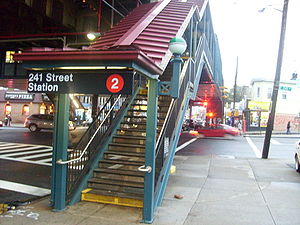
So I turned to Jimme. Mom was always complaining that he didn’t pay child support anyway. And I knew where he lived now. It was 153 South Tenth, not far from the East 241st Street station in the Bronx, the end of the line on the Subway’s 2 and 5 lines running from Brooklyn and Manhattan. There were a bunch of watering holes nearby.

Felix Baumgartner of Austria as he jumps out of the capsule during final manned flight, October 14, 2012. (AP Photo via Red Bull Stratos)

I’d actually started going over to Jimme’s in August, a consequence of my first long walks through Mount Vernon and Southern Westchester County. But this was different. I was going to Jimme’s for money and sneakers. I decided to wait for him at the 241st Street stop after school one Friday at the end of October, figuring I’d catch him just before he started his weekly drinking ritual.

Unbelievably, my first idea for tracking Jimme down worked! I caught Jimme coming down the rickety Subway steps, completely shocked by seeing me there.

“Bo’, whacha doin’ here?”

“We need money, and I need some sneakers.”

“Why don’ you aks Maurice for them?”

“’Cause you’re my father and you haven’t been paying any child support. If you had, I wouldn’t be here!”

With that, Jimme laughed and shook his head. Of course he was also mad. I was in the way of him gettin’ his “pep-up,” virtually anything with alcohol in it.

“Bo’, what I’m gonna do wit’ you? You got me,” he said. I negotiated fifty dollars from him. He promised to get me some sneaks.

The following Tuesday, I went over to his place. Not only did I get my sneakers, a pair of size eleven-and-a-half Nike walking sneaks. I got a brown Members Only jacket to boot. I could tell, though, that they once belonged to someone else. Still a bit hung over, Jimme said, “Man, lo’ at all dese suits! You gotta lo’ like a big shot when you work in the city.” The suits were too big and a bit mismatched. I was just relieved that Jimme cared enough about my feet to get me the right size.

241st Street-Wakefield Station entrance, Bronx, NY, January 18, 2010. (DanTD via Wikipedia). Released to public domain via cc-Attribution 3.0 Unported,

Darren would usually come with me on what gradually became our weekly hike from the land of 616 to the near Bronx and the city. Jimme being Jimme, he would grab me by one hand while giving me the money and put his left arm around my shoulder, whispering in my right ear, “Don’ give Darren nothin’,” or “You keep fitty for yo’self an’ give Darren ten.” “You a Collins, don’ be sharin’ nothin’ wit’ them Gills,” he’d often say.

I almost always broke with Jimme around this. Yes, Darren often was a selfish goofball and my 616 family was just a step or two above total chaos. Yet I couldn’t go to eat at a good pizza shop with Jimme and Darren and let them subsist on bread, water and milk. I couldn’t watch them run around in graying underwear and just wash my own clothes. Not as hard as Mom worked, not as long as I lived there. I wanted to help as much as I could and still take care of my needs.

Jimme knew I was helping out at 616 too. So he would say things like “Don’ be givin’ your motha my money. Those ain’t my kids. Dis jus’ for you and Darren.” Or “Don’ give them muddafuccas nothin’,” which would start a brief argument between me and him about the needs of innocent children. Even with that and his drunken ups and downs, Jimme helped save the day for us and me as we plunged into the watery abyss of welfare poverty.”

← Older posts
Newer posts →

Boy @ The Window: A Memoir

Boy @ The Window: A Memoir

Places to Buy/Download Boy @ The Window

There's a few ways in which you can read excerpts of, borrow and/or purchase and download Boy @ The Window. There's the trade paperback edition of Boy @ The Window, available for purchase via Amazon.com at http://www.amazon.com/Boy-Window-Donald-Earl-Collins/dp/0989256138/

There's also a Kindle edition on Amazon.com. The enhanced edition can be read only with Kindle Fire, an iPad or a full-color tablet. The links to the enhanced edition through Apple's iBookstore and the Barnes & Noble NOOK edition are below. The link to the Amazon Kindle version is also immediately below:

scr2555-proj697-a-kindle-logo-rgb-lg

Boy @ The Window on Amazon.com: http://www.amazon.com/Boy-The-Window-Memoir-ebook/dp/B00CD95FBU/

iBookstore-logo-300x100

Boy @ The Window on Apple's iBookstore: https://itunes.apple.com/us/book/boy-the-window/id643768275?ls=1

Barnes & Noble (bn.com) logo, June 26, 2013. (http://www.logotypes101.com).

Boy @ The Window on Barnes & Noble: http://www.barnesandnoble.com/w/boy-the-window-donald-earl-collins/1115182183?ean=2940016741567

You can also add, read and review Boy @ The Window on Goodreads.com. Just click on the button below:

Boy @ The Window

Twitter Updates

Tweets by decollins1969
  • RSS - Posts
  • RSS - Comments

Archives

  • June 2025
  • April 2023
  • September 2022
  • August 2022
  • July 2022
  • June 2022
  • May 2022
  • April 2022
  • March 2022
  • January 2022
  • December 2021
  • November 2021
  • October 2021
  • September 2021
  • August 2021
  • July 2021
  • June 2021
  • April 2021
  • March 2021
  • February 2021
  • January 2021
  • December 2020
  • November 2020
  • October 2020
  • September 2020
  • August 2020
  • July 2020
  • May 2020
  • April 2020
  • March 2020
  • January 2020
  • December 2019
  • November 2019
  • August 2019
  • July 2019
  • June 2019
  • May 2019
  • April 2019
  • March 2019
  • February 2019
  • January 2019
  • December 2018
  • November 2018
  • October 2018
  • September 2018
  • August 2018
  • July 2018
  • June 2018
  • May 2018
  • March 2018
  • February 2018
  • January 2018
  • December 2017
  • November 2017
  • October 2017
  • September 2017
  • August 2017
  • July 2017
  • June 2017
  • May 2017
  • April 2017
  • March 2017
  • February 2017
  • January 2017
  • December 2016
  • November 2016
  • October 2016
  • September 2016
  • August 2016
  • July 2016
  • June 2016
  • May 2016
  • April 2016
  • March 2016
  • February 2016
  • January 2016
  • December 2015
  • November 2015
  • October 2015
  • September 2015
  • August 2015
  • July 2015
  • June 2015
  • May 2015
  • April 2015
  • March 2015
  • February 2015
  • January 2015
  • December 2014
  • November 2014
  • October 2014
  • September 2014
  • August 2014
  • July 2014
  • June 2014
  • May 2014
  • April 2014
  • March 2014
  • February 2014
  • January 2014
  • December 2013
  • November 2013
  • October 2013
  • September 2013
  • August 2013
  • July 2013
  • June 2013
  • May 2013
  • April 2013
  • March 2013
  • February 2013
  • January 2013
  • December 2012
  • November 2012
  • October 2012
  • September 2012
  • August 2012
  • July 2012
  • June 2012
  • May 2012
  • April 2012
  • March 2012
  • February 2012
  • January 2012
  • December 2011
  • November 2011
  • October 2011
  • September 2011
  • August 2011
  • July 2011
  • June 2011
  • May 2011
  • April 2011
  • March 2011
  • February 2011
  • January 2011
  • December 2010
  • November 2010
  • October 2010
  • September 2010
  • August 2010
  • July 2010
  • June 2010
  • May 2010
  • April 2010
  • March 2010
  • February 2010
  • January 2010
  • December 2009
  • November 2009
  • October 2009
  • September 2009
  • August 2009
  • July 2009
  • June 2009
  • May 2009
  • April 2009
  • March 2009
  • February 2009
  • January 2009
  • December 2008
  • November 2008
  • October 2008
  • September 2008
  • August 2008
  • July 2008
  • June 2008
  • May 2008
  • April 2008
  • March 2008
  • February 2008
  • January 2008
  • December 2007
  • November 2007
  • October 2007
  • September 2007
  • August 2007
  • July 2007
  • June 2007

Recent Comments

MaryPena's avatarMaryPena on My Day of Atonement/Bitter Hat…
decollins1969's avatardecollins1969 on No Good Teaching Deed Goes…
Mary Rose O’Connell's avatarMary Rose O’Connell on No Good Teaching Deed Goes…

NetworkedBlogs on Facebook

NetworkedBlogs
Blog:
Notes From a Boy @ The Window
Topics:
My Life, Culture & Education, Politics & Goofyness
 
Follow my blog

616 616 East Lincoln Avenue A.B. Davis Middle School Abuse Academia Academy for Educational Development AED Afrocentricity American Narcissism Authenticity Bigotry Blackness Boy @ The Window Carnegie Mellon University Child Abuse Class of 1987 CMU Coping Strategies Crush #1 Crush #2 Death Disillusionment Diversity Domestic Violence Economic Inequality Education Family Friendship Friendships Graduate School Hebrew-Israelites High-Stakes Testing Higher Education History Homelessness Humanities Humanities Program Hypocrisy Internalized Racism Jealousy Joe Trotter Joe William Trotter Jr. K-12 Education Love Manhood Maurice Eugene Washington Maurice Washington Misogyny Mother-Son Relationship Mount Vernon High School Mount Vernon New York Mount Vernon public schools Multiculturalism MVHS Narcissism NFL Pitt Pittsburgh Politics of Education Poverty President Barack Obama Race Racial Stereotypes Racism Relationships Self-Awareness Self-Discovery Self-Reflection Sexism Social Justice Teaching and Learning University of Pittsburgh Violence Whiteness Writing

Top Rated

Blog at WordPress.com.

  • Subscribe Subscribed
    • Notes from a Boy @ The Window
    • Join 103 other subscribers
    • Already have a WordPress.com account? Log in now.
    • Notes from a Boy @ The Window
    • Subscribe Subscribed
    • Sign up
    • Log in
    • Report this content
    • View site in Reader
    • Manage subscriptions
    • Collapse this bar
 

Loading Comments...