• About Me
  • Other Writings
  • Interview Clips
  • All About Me: American Racism, American Narcissism, and the Conversation America Can’t Have
  • Video Clips
  • Boy @ The Window Pictures
  • Boy @ The Window Theme Music

Notes from a Boy @ The Window

~

Notes from a Boy @ The Window

Category Archives: culture

Humanities: 26 Years On

18 Tuesday Jun 2013

Posted by decollins1969 in 1, Academia, Boy @ The Window, Carnegie Mellon University, culture, Eclectic, Mount Vernon High School, Mount Vernon New York, Pittsburgh, University of Pittsburgh, Youth

≈ 3 Comments

Tags

A.B. Davis Middle School, Academic Competition, College Access and Success, College Retention, Gifted, Graduating, High-Stakes Testing, Humanities, Humanities Program, Talented, Well-Rounded Students
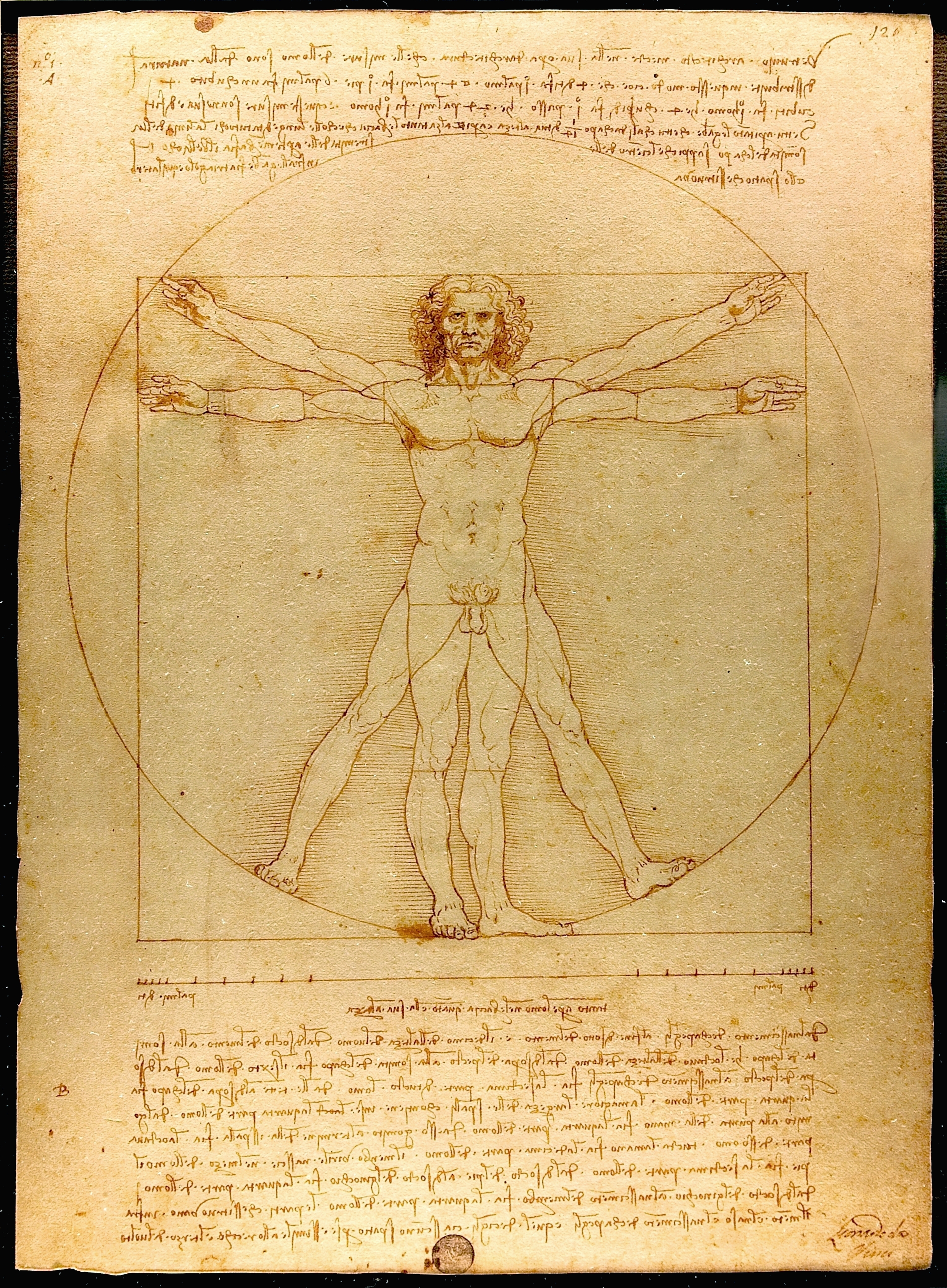

Leonardo di Vinci's Human Body sketch, June 18, 2013. (Wikipedia).

Leonardo di Vinci’s Vitruvian Man (human body sketch, 1485-90), June 18, 2013. (Flickr.com).

Today marks anniversary number twenty-six since the Class of ’87 spent two hours sweating in our polyester caps and gowns on a triple-H summer evening at Memorial Field in Mount Vernon, New York. Oh yeah – and graduated from Mount Vernon High School. Not a big year to mark an anniversary, for sure. But still important for me to remember. After all, I’ve just published a book in which I spend a significant amount of time talking about myself and my former classmates whom help comprise this Class of ’87.

Today I want to say a few positive things about this class, particularly the Humanities Program members of this class. Not that this isn’t in Boy @ The Window as well. But it does help me to reiterate both the obvious and the hidden. Without Humanities, I wouldn’t have taken the path that led me to become the writer, historian, thinker or man that I am today, good, bad and occasionally even ugly. Period.

Not that every high-achieving student in A.B. Davis Middle School or Mount Vernon High School was in Humanities. Some of the more creative and musically-talented folks I’d either met or knew of were in what what I call “gen pop” and not in Humanities. But being someone who on his best days can barely hold a baritone tune (in the same way that an experimental fusion reactor produces energy for only a few seconds), Humanities gave me a chance to do some of what I did best on a platform that could occasionally allow me to maximize my academic gifts.

After ten years of undergrad and grad school at the University of Pittsburgh and Carnegie Mellon, and years of teaching at places as different as Pitt, CMU, Duquesne University School of Education and George Washington University GSEHD, my former classmates remain among the highest academic achievers I’ve ever met. As a group, that is. I’ve met many super-talented and highly creative individuals since ’87. Some of whom were literal geniuses as musicians, actors, studio artists or writers. Students whose academic and athletic prowess would’ve made their peers think about how unfair life can be.

But the one boon (and one criticism too) of Humanities for me was the competition it inadvertently sanctioned. That competition made me a better student, one who could actually focus on the long-term implications for any course I took and how it would apply to what I’d need to do in college. Some of my classes I realized were bullshit (see Andy Butler’s eleventh grade “Higher Math” as prima facie evidence), but I found something useful in most of my courses for my years at Carnegie Mellon, if not at Pitt.

Mount Vernon High School graduation ceremony, June 24, 2009. (http//education.lohudblogs.com).

Mount Vernon High School graduation ceremony, June 24, 2009. (Carucha L. Meuse/The Journal News; http//education.lohudblogs.com).

I think that this competition made us all better students, even as it often didn’t make us better human beings. After all, out of my immediate circle of the top twenty students in the Class of ’87, three of us have doctorates (history, psychology and mathematics education), two have medical degrees, and seventeen of us have earned at least a bachelor’s degree. I’m sure that some of us would’ve done well in college, grad school and our careers even without Humanities. But I’m also sure that the poorest among us – yours truly included – would’ve struggled mightily in college (even if we found a way to graduate) without such a focus on the academic in the first place.

I’ve taught high school students whose skills readily approached my own and those of my classmates from a quarter-century ago, particularly in versions of the AP US History course I taught at Princeton in ’08 and ’09. I’ve also served on the curriculum committee at my son’s school here in Montgomery County, Maryland for the past three years. These students – some more talented than anyone I knew in Humanities – have one thing in common. For the most part, they aren’t challenged by their schools, teachers or curriculum to be competitive, to be well-rounded academically, to strive to be both better students and develop creative talent simultaneously.

Many of these students already feel a sense of academic fatigue, partly because of constant yet meaningless testing, and partly because of a concentration on STEM (Science, Technology, Engineering and Mathematics) fields. Both have led to the near-total exclusion of extensive work on reading and writing skills (even though picking apart STEM field problems requires good reading and analysis skills). Not to mention the slashing of budgets for physical education and art, music and chorus, theater and so many other things that would push them to be better students, to be competitive – in a healthy way, that is.

There are nearly 120,000 words in Boy @ The Window, about 60,000 of them dedicated to my years between the end of sixth grade and the beginning of my junior year at Pitt. Many of them describe all that I remember about being in Humanities. It’s not a pretty picture overall. Despite this, without the likes of Laurell and Sam, Brandie and Bobby, Alex and Allison, Dahlia and Dara, Phyllis and Wendy and JD, Joe and Danny, Suzanne and Denise and Mandume and Rhonda and Kim and so many others, I’d still be living in Mount Vernon right now. I’d be lucky to have a minimum-wage job and a one-room flat in someone’s dilapidated house on the South Side. It’s just that simple.

Why the NBA’s Got No Rhythm

13 Thursday Jun 2013

Posted by decollins1969 in 1, culture, Eclectic, eclectic music, music, Pop Culture, Sports, Youth

≈ Leave a comment

Tags

"Careless Whisper" (1985), 2013 NBA Finals, Boredom, NBA, Rhythm, State of the Game, Superstars, Teamwork, Wham!


Missed dunk by "Big Baby" Glen Davis when with Boston Celtics, June 12, 2013. (http://nbamusings.tumblr.com).

Missed dunk by “Big Baby” Glen Davis when with Boston Celtics, June 12, 2013. (http://nbamusings.tumblr.com).

I’m not watching the NBA Finals again this year. And, no, it’s not just because I’m out of town working away this week, either. The NBA has become as predictably out-of-rhythm as DMX’s rap lyrics. The game lacks flow and consistency, a chemistry that can only be approximated by today’s best teams. Which is why only a handful of teams – the Miami Heat, San Antonio Spurs, Oklahoma City Thunder (before Russell Westbrook’s ACL tear), Memphis Grizzles and Indiana Pacers – had a real shot at even making the finals this year.

But let’s be real. The NBA has always had a bit more predictability to it than, say, the Stanley Cup Playoffs or the NFL Playoffs. For as long as I can remember – the past thirty-five years or so – there have been no more than ten teams at any time and for any season who were well stacked and balanced enough to compete for a title. Most years, we’re lucky to see six teams with that kind of rhythm.

Tim Duncan apparently faking Chris Bosh out of sneakers, Game 1 NBA Finals, June 6, 2013. (http://sneakernews.com).

Tim Duncan apparently faking Chris Bosh out of sneakers, Game 1 NBA Finals, June 6, 2013. (http://sneakernews.com).

But it’s not about teams, right? It’s all about the superstars, the grown men whose talent is literally otherworldly, no? This has been an issue that many a dumb-ass sportswriter has brought up as the David Stern era is about to enter decade number four. Tying the popularity of the game to the elite of the elite basketball stars.

My argument isn’t about the downfall of superstars who can’t carry Michael Jordan’s, Magic Johnson’s or Larry Bird’s jockstrap, much less stand on their mantle. Instead, the lack of rhythm in the game comes down to teams fielding collections of talented (though many are also pampered) athletes, rather than talented and hardworking basketball players. That’s why the argument for a Miami Heat dynasty is ridiculous. Compared to my Knicks of the early-1970s, the Heat of LeBron James and Dwyane Wade might as well be the old San Diego Clippers.

Oh, please call me out for sounding like an old man who doesn’t understand today’s game of tapped-on-the-arm fouls and the need to make threes as critical to today’s NBA. Because the reality is, the team game only works well when a team maximizes the number of easy shots they take and make. Two feet with no one guarding you is easier than any three unguarded. Period.

It’s why I never got excited about my Knicks when they came out in November making nearly sixty percent from three-point range. Those shots aren’t there to be made in the playoffs. You need a team that can guard the ball, get a turnover or a rebound, and then use their athletic skills to get down the court for an easy bucket. Giving the ball to J.R. Smith during a four-on-two fast-break so he can shoot and miss a three has about as much rhythm as a character from Oz being pushed down the stairs and breaking his neck.

My Knicks are just a single case of why the NBA game has the rhythm of a wino playing the drums while drooling on his thighs. Most teams can’t spread the floor, pass the ball around, consistently find the open man, or know when and where to shoot a three. Too many teams have players who try to go one-on-five. Not just in the fourth quarter, but every time they touch the ball.

Speaking of guilty feet have got no rhythm, Mark Sanchez's Butt Fumble, November 22, 2012. (http://huffingtonpost.com).

Speaking of “guilty feet have got no rhythm,” Mark Sanchez’s Butt Fumble, November 22, 2012. (http://huffingtonpost.com).

So when I hear others say how boring the Spurs are, I just think “You don’t know anything about the game.” The Spurs are the closest thing we have right now to the NBA game prior to Michael Jordan’s second retirement in ’98. It’s NBA-light compared to my ’90s bruising Knicks, much less the Lakers and Celtics of the ’80s or the Celtics of the ’60s. Those teams had John Coltrane rhythm with Savion Glover tap-dancing skills.

Maybe it’s just that the league needs to shrink, to maximize talent. I’d get rid of Orlando, Charlotte, New Orleans, Minnesota and Atlanta in a New York minute. But that would just concentrate more athletic talent on fewer teams. It would do nothing to make these teams play like teams.

Some would say that it’s all part of this era of hip-hop and rap, this selfish and self-centered way of thinking about life and sports. Football players seem to have the sense that they’re part of teams, though. Bottom line: maybe it’s time for the NBA to hire dance instructors and a jazz ensemble.

CMU “Pope Girl” Update # 2

12 Wednesday Jun 2013

Posted by decollins1969 in 1, Carnegie Mellon University, Christianity, culture, Pittsburgh, Religion

≈ Leave a comment

Tags

CMU, Pittsburgh Post-Gazette, Pope Girl, Public Nudity


I was wondering why my Carnegie Mellon blog post on Spring Carnival and the “Pope Girl” was trending again, and then I saw this, courtesy of Kaitlynn Riely of the Pittsburgh Post-Gazette on Monday, June 10:

“A Carnegie Mellon University student who dressed as a naked pope and another who portrayed a naked astronaut during an on-campus art parade in April will have their indecent-exposure charges withdrawn so long as they each complete 80 hours of community service.

The agreement, struck by CMU, the district attorney’s office and the students, was ‘a great result’ for Katherine B. O’Connor, 19, and Robb S. Godshaw, 22, who had been scheduled for preliminary hearings Monday morning, said attorney Jon Pushinsky, who represented Ms. O’Connor on behalf of the American Civil Liberties Union.”

O’Connor, a.k.a. “Pope Girl,” and Godshaw must complete their community service in 120 days. Good for them. Now the ACLU can get back to PRISM, NSA and the Obama Administration.

Read more: http://www.post-gazette.com/stories/news/education/2-cmu-students-accept-community-service-for-parade-nudity-691108/#ixzz2W0JvhenV

Road to My Memoir, Part 2: Multiculturalism

08 Saturday Jun 2013

Posted by decollins1969 in 1, Academia, Boy @ The Window, Carnegie Mellon University, culture, Eclectic, Mount Vernon High School, Mount Vernon New York, New York City, Pittsburgh, Politics, Pop Culture, race, University of Pittsburgh, Youth

≈ Leave a comment

Tags

Ability Grouping, Academic Historian, Academic Writing, Afrocentricity, Barbara Sizemore, Comparative Slavery, Elaine, Humanities, Jeannie Oakes, Joyce Harrington, Keeping Track (1985), Multicultural Education, Multiculturalism, Pitt, Pittsburgh Public Schools, Sociology, Tracking


Why Boy @ The Window, Part 2

Why Boy @ The Window, Part 2

When I wrote about this long path to Boy @ The Window last month, I figured that it would take three posts in all to discuss the path. But the road’s shown itself to be longer — and more convoluted — than I anticipated.

So I never did write my book about being on welfare, dehumanization and welfare policy. I found a much more interesting subject to take up the following year, in the summer of ’90. I decided to take the late Barbara Sizemore’s research methods course in Black Studies that fall, to move beyond my history courses, as I’d already taken enough of them to have fulfilled my major.

I wanted to look at the re-segregation of desegregated schools through tracking or ability grouping, specifically in Mount Vernon’s public schools. The book that brought me to this topic was Jeannie Oakes’ masterpiece Keeping Track: How School Structure Inequality (1985). It had begun to turn my mind away from slavery as a long-term history project (perhaps one I would’ve pursued in doing my master’s papers or doctoral research) and toward history of education and racial inequality.

Oakes’ main argument was that school desegregation was a mixed bag of success and failure precisely because of the fact that with tracking by academic “ability,”disadvantaged Black students and advantaged White students would seldom meet in the same classrooms. That made me think of my still recent experiences with the Humanities Program in middle school and high school. After all, a school district that was three-quarters Black, Afro-Caribbean and Hispanic had a magnet program that was about sixty percent White during my six years in Humanities.

I spent that summer — when I wasn’t working — at Mount Vernon Public Library, NYU’s Bobst Library, and New York Public Library giving myself a stronger background on this topic. I met with the former MVHS Humanities coordinator Joyce Flanagan (who had become Harrington by then) about getting more specific demographic data about the program by class year and school (Pennington-Grimes ES, A.B. Davis Middle School and MVHS). Much of the data had already been destroyed, Harrington confided. The data she did give me, while informative, wasn’t enough to do even a watered down version of what Oakes did for Keeping Track (she interviewed 14,000 students and teachers in all).

I ended up doing my research project on Pittsburgh Public Schools and their International Baccalaureate programs at Schenley and Allderdice HS. It was a solid paper, an easy A compared to my comparative slavery paper for Drescher’s graduate course the semester before. But it wasn’t enough for me.

In the course of building up my knowledge on segregation, suburban schools, urban school districts, and community control, I stumbled onto books about multicultural education. I wanted to learn more, so I took a sociology course my final undergraduate semester on the sociology of race and ethnicity (there weren’t any education courses that focused on either race or multiculturalism at Pitt in ’91).

The turning point came with my friend Elaine, who knew of my interest in the topic. She was the one who had informed me of a growing controversy with New York State’s newly proposed history curriculum, one in which the ideas of multicultural education had played a key role. That work the summer before grad school, that work to understand why there was any controversy at all, led me to finding out more about cultural pluralism and its history. This then led to the role of Black intellectuals and educators in applying cultural pluralism, the differences between multiculturalism, multicultural education and Afrocentricity.

I had my dissertation topic in broad strokes before I’d taken any courses as a master’s student (not counting the comparative slavery class). But in the process of moving from re-segregation and Jeannie Oakes to multiculturalism, I’d moved from a wide-eyed student of everything that related to my life at age twenty to an aspiring academician, a historian of educational and cultural ideas.

I’d taken the first steps to bury myself in academic writing and thinking, without fully understanding why I cared about multiculturalism in the first place. It took me a decade to figure out that the lack of understanding of diversity in Humanities was part of what made it a bittersweet experience for me, an experience that drove me toward multiculturalism as a research topic. It took ten years before I realized that my pursuit of multiculturalism in Black Washington, DC was my way of dealing with my own past without any emotion. Multiculturalism took me further away from the writer (and historian) I wanted to be, even as I earned my doctorate on the topic.

Teaching Teachers – and Learning, Too

05 Wednesday Jun 2013

Posted by decollins1969 in 1, Academia, Carnegie Mellon University, culture, Eclectic, Pittsburgh, Politics, Pop Culture, race, University of Pittsburgh, Youth

≈ Leave a comment

Tags

Academic Arrogance, Academic Expectations, Adjunct Teaching, Aspiring Teachers, Duquesne University College of Education, Education Foundations, History of American Education, Learning How to Teach, Lecturing, MAT Program, Pedagogy, Politics of Education, Teachers, Teaching and Learning


Sad teacher, May 9, 2013. (http://www.guardian.co.uk).

Sad teacher, May 9, 2013. (http://www.guardian.co.uk).

I’ve been in a classroom as a lecturer, teaching assistant, teaching fellow, instructor, or professor off and on since November ’91, and consistently as an adjunct associate professor for the past five and a half years. I’ve taught roughly 2,000 students in that time (not counting the high school students I worked with when I was Director of Curriculum with Presidential Classroom in ’99 and ’00). I’ve probably had about 100 or so difficult to impossible students in that time. But no group of students I’ve taught have been more difficult for me to work with than teachers, actual and aspiring. Yet I’ve learned more about teaching from teachers in my classroom than from any other group of students.

This month marks fifteen years since I taught my first graduate course, History of American Education at Duquesne University in Pittsburgh. It was my first opportunity to teach since I’d graduated from Carnegie Mellon University the spring before. It didn’t necessarily show. I figured out fairly quickly, though, that the students in this required education foundations courses weren’t the wide-eyed grinders I had during my Carnegie Mellon years.

Twenty-two students in all were in my course, and nearly half of them were already in the classroom at suburban schools scattered through Western Pennsylvania. Most of my students had at least five years on me, and the youngest was my age, twenty-eight years old. I had only one Black student, and a classroom full of ready-to-be-bored White women with low expectations for any history course. On top of that, we were supposed to meet for two hours a day, five days a week for six weeks. And all for the wonderful salary of $1,935!

Canevin Hall (where I taught for four semesters, Duquesne University, Pittsburgh, PA, June 5, 2013. (http://w4.campusexplorer.com).

Canevin Hall (where I taught for four semesters, Duquesne University, Pittsburgh, PA, June 5, 2013. (http://w4.campusexplorer.com).

I wasn’t intimidated. But I probably should’ve been. I taught the course as if I was teaching a watered down upper-level undergraduate history course, great if the course was only for history majors or high school history teachers (of which I had two or three). With so many actual teachers in my classroom, though, I realized by the beginning of the second week that they were privately critiquing my teaching style. They noted that I lectured too much, that I didn’t facilitate discussions well when I did have discussions, that my paper assignments were too open-ended for a group of classroom and aspiring teachers.

A student who didn’t like their B+ on the first paper assignment aggravated some of the tensions in this first class. She stood up during my review of their first papers and yelled that her master’s “thesis committee didn’t find as many problems with [her] writing” as I did. I said in response, “Well, I didn’t read your master’s thesis or grade it, for that matter.” Just short of losing control of my classroom, I met with the student in the hallway to settle her down (albeit by threatening to report her actions in my classroom to the dean) after that class meeting.

That first semester resulted in a love-hate relationship with the teachers I taught. Most truly liked the way I related US history to the short and winding history of American education. About a sixth of my students tore me apart in evaluations, criticizing everything from my lecture style to how I pronounced certain words with a “New York” or “Black” accent.

This only grew worse in my fall ’98 graduate course. I truly thought I’d drawn the worst group of students ever. Fourteen in all, and none of them seemed interested in earning an MAT (Master’s in Teaching), much less in an ed foundations course. They never seemed to do the readings, much less understand them.

Chicken and broccoli stir-fry over rice, February 2013. (http://slimimzsolutions.com).

Chicken and broccoli stir-fry over rice, February 2013. (http://slimimzsolutions.com).

Two weeks before Thanksgiving, one of my students brought a chicken and broccoli stir-fry dinner to class, which she proceeded to eat during the lecture portion of my class. She continued during the break and into the discussion. No one was prepared. I finally asked, “How many of you have done the readings for this week?” Not a single student raised their hands. I immediately dismissed the class for the week, adding “there’s no need for us to have a discussion this week, then.” I said to the female student intent on eating her way through a three-hour class, “Now you have plenty of time to eat. Don’t bring your dinner to class again.”

I was so frustrated with this group of students. I mean, they were grad students, right? They seemed about as motivated as a group of ninth-graders at a low-performing school, on the verge of dropping out. I decided to do some background checking into my students, and realized that most of them barely met the 2.5 GPA requirement for the MAT program at Duquesne.

That’s when I also realized that some of what my students had said about me during my summer course was correct. I did lecture too much. I didn’t devote enough time to discussion. I never discussed what I wanted to see in their papers. Most importantly, I didn’t meet my students where they were before raising their expectations in their own academic performance. I treated them as if I didn’t care if they learned the material, even though I obviously did care.

I immediately began to apply these minor epiphanies in the last six weeks of this class, with my students more involved as I became more of a facilitator and less of a lecturer. While this group was hard on me in their evaluations, they also noted how their views of history as teachers had changed. Meanwhile, my views on teaching had changed, and for the better.

Walking the Obama Criticism Tightrope

01 Saturday Jun 2013

Posted by decollins1969 in 1, Academia, culture, Eclectic, Patriotism, Politics, Pop Culture, race

≈ Leave a comment

Tags

Blind Faith, Blind Support, Centrists, Eunuchs, Forbidden City, Liberals, Michelle Obama, Obama, Obama Administration, Personality, Policy, Praise, President Barack Obama, President Obama, Rabid Right, Tightrope, White House, White Progressives


Philippe Petit in midst of his high-wire crossing between the Twin Towers, New York City, August 7, 1974. (http://www.talktalk.co.uk).

Philippe Petit in midst of his high-wire crossing between the Twin Towers, New York City, August 7, 1974. (http://www.talktalk.co.uk).

These are the times in which we live. Where a critique of a phrase, speech, demeanor or policy can leave someone like me on the outs with White progressives or blindly devoted Obama supporters. Or a comment that could be used to paint me as an Uncle Tom and a Black socialist revolutionary at the same time. It’s crazy these days whenever the subject of President Barack Obama, (or Michelle Obama, or the Obama Administration) comes up.

I’ve probably done about thirty blog posts and nearly 1,000 tweets related to the politics and policies of President Obama and his administration over the past five and a half years. Most of them have been positive, or at least hopeful. I genuinely like the man, his wife and his kids, at least from afar, in part as a result of reading his books. My distaste for his centrist political decision-making, for policies that have left the nation stagnant economically, educationally, socially and geopolitically are all well documented here and on Twitter as well.

Yet it’s hard for most people I’ve encountered to separate how they feel about the man and his family and what they think about his presidency and politics. I’ve found myself having to defend my writings about Obama against a tide of rabid far-right Americans. They’re mostly White and male, and mostly making arguments that approach the ravings of psychotic serial killers. Theirs is an imagined President Obama, one who conspired with his mother for the presidency from the womb. One whose policies range from socialist and Kenyan one minute to fascist and Islamic the next. They absolutely refuse to admit they’re ape-shit over this Black guy as POTUS, his Black wife as First Lady, and his Black children living in the White House.

I’m used to the ravings of this lunatic fringe, though. They are a familiar enough sort. The academic version of these folks were the ones who insisted that I was a plagiarist because of the quality of my writing. So when I get their often idiotic ramblings and significantly misspelled, often grammatically incorrect responses, I laugh nervously, knowing that you don’t have to be literate to be dangerous.

Maria Spelterini crossing Niagara Falls on tightrope with feet in peach baskets, July 4, 1876. (George E. Curtis [1830-1910] via Wikipedia). In public domain.

Maria Spelterini crossing Niagara Falls on tightrope with feet in peach baskets, July 4, 1876. (George E. Curtis [1830-1910] via Wikipedia). In public domain.

But I also have to deal with two other camps on Obama, one steeped in policy criticism, the other in ecclesiastical praise and worship. Progressives, mostly White (though hardly as exclusive as the rabid right), have been on a rampage about President Obama’s use of executive privilege since day three of his presidency. To be sure, I’ve made many of the same criticisms about the use of drone strikes and the murdering of American citizens (not to mention Pakistani and Yemeni innocents) abroad, about the continued use of Gitmo to hold dozens of folk who have been proven to not be terrorists. Not to mention the Obama Administration’s ineffective use of political capital on the economy, K-12 and higher education, and even healthcare.

Still, my not-as-left-as-me comrades tend to act as if they were clairvoyant about the missteps that the Obama Administration would take and make back in ’08 and early ’09, even though they voted and actively supported his election in the first place.

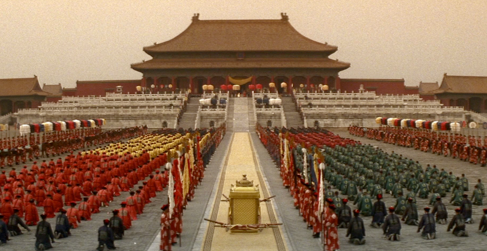
Yet there’s no group more annoying than Obama’s blind supporters. They are Black and White, but both tend to be elites who think that they’re liberals but are really Clinton-esque centrists. They seem to praise President Obama’s every word, every step and every decision. When there’s a clear-cut issue on which to criticize his administration — such as the huge increase in drone strikes and the sequester agreement of ’11 — they remain as silent as church mice. It’s as if Obama’s White House is the Forbidden City and his army of supporters the eunuchs who run the place, never telling the emperor what he actually needs to hear.

So with any criticism of President Obama or even Michelle Obama comes the insinuation that how dare I beat up on the nation’s first Black president. “He’s doing all that he can, but Congress and the GOP stand in his way,” they often say. Or “leave Michelle alone,” some say, noting her active (yet completely ineffective) efforts to tackle childhood obesity as an example of her grace.

Forbidden City tour, with actors playing emperors, eunuchs and concubines, June 1, 2013. (http://www.newmantours.com).

Forbidden City tour, with actors playing emperors, eunuchs and concubines, June 1, 2013. (http://www.newmantours.com).

My last set of comments on Obama came on Twitter a couple of weeks ago, noting their “hard truths” speeches about the plight of African Americans in today’s America, calling for Black graduates of Bowie State University and Morehouse College to take up the mantle of personal responsibility. I said it was the wrong speech for the wrong audience at the wrong time. Except that their audience was really their White supporters watching on TV, not the Black students who already knew too well that mantle.

My tweets brought representatives from all sides out to praise or blast my comments. I was an Uncle Tom one minute, absolutely right the next, and then a socialist making excuses for Black pathologies a minute later. I think the next time I do a post on Obama, I’m riding a unicycle!

Immigration Assignment & Montgomery County Public Schools

29 Wednesday May 2013

Posted by decollins1969 in 1, Academia, culture, Eclectic, Pop Culture, race, Youth

≈ Leave a comment

Tags

Administrators, American History, Fiction, History, Immigration, MCPS, Migration, Montgomery County Public Schools, Parenting, Pedagogy, Personal Stories, Teachers, US History, Woodlin Elementary School, Woodlin ES


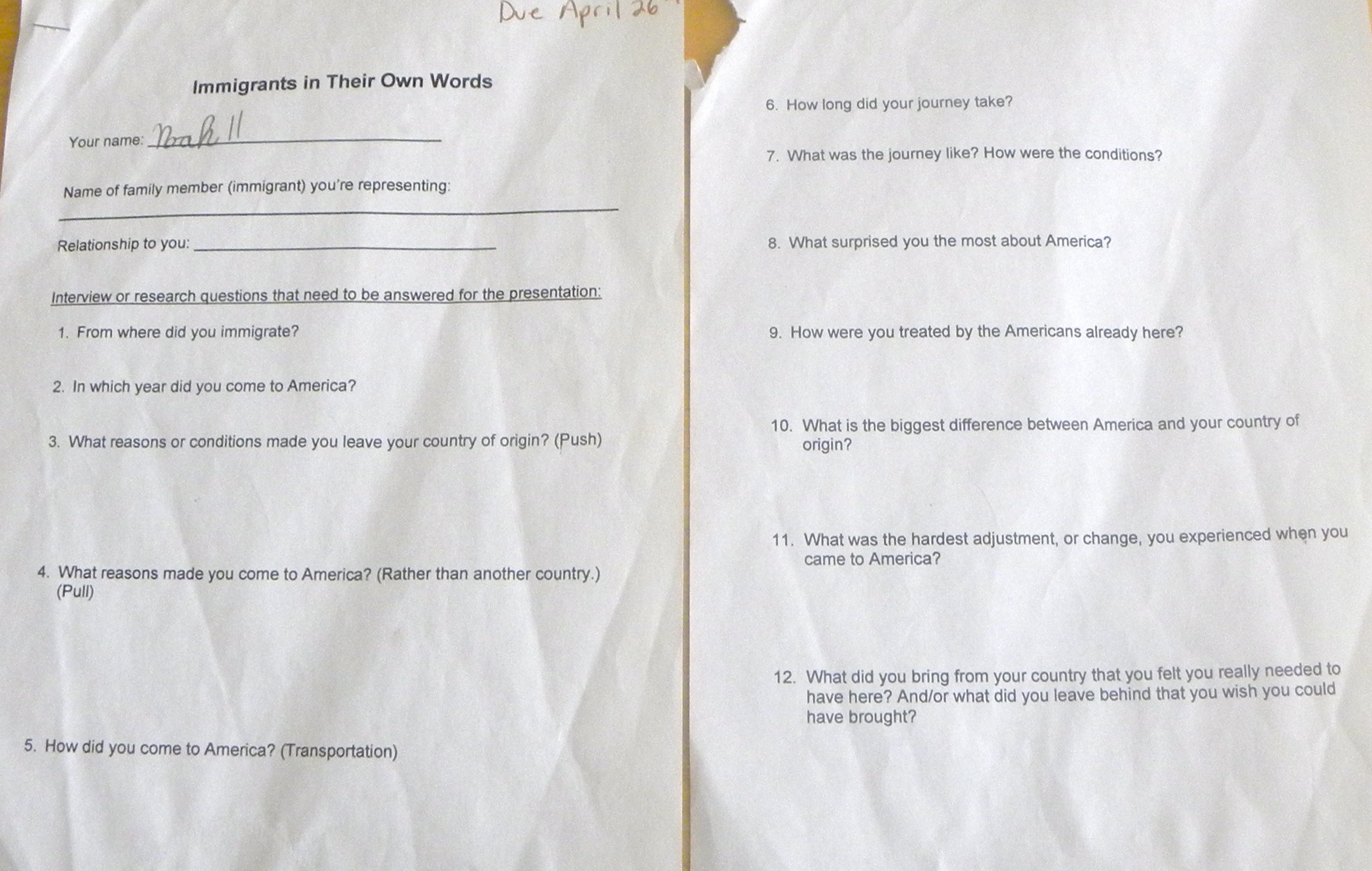
Immigrants In Own Words, Woodlin ES, May 28, 2013. (Donald Earl Collins).

Immigrants In Own Words, Woodlin ES, May 28, 2013. (Donald Earl Collins).

Well, the two-month long ordeal that was my son’s fourth grade immigration/migration segment and assignments concluded at the end of last week. While my son’s teachers at Woodlin ES and administrators at MCPS were well-meaning, this was probably the single worst assignment I’ve seen given by them to my son and his classmates. As I said in my post on this project from earlier this month, teaching undergraduates and graduate students the big and nuanced differences between two enormously important trends in American history is difficult. Teachers with an average understanding (at best) of historical trends and patterns like immigration and migration teaching nine and ten-year olds? That’s an almost impossible task.

It was a thoroughly frustrating assignment to watch my son go through and for me as his helper. It was a terrible set of tasks pedagogically, and just plain bad history, even for elementary school. Their so-called Wax Museum immigration project (they also titled it the 4th grade Legacy Project) called for each student to interview a relative that immigrated to the US. After our complaints, the school modified the assignment to include “a composite of several of your family members, with a mix of fact and fiction to tell the story” (emphasis added). Sorry, but encouraging “realistic” fiction for a big social studies assignment is beyond unacceptable. It shows a complete misunderstanding of US history and proper teaching methods for this subject.

In getting ready for my version of summer academic enrichment for my son (where he can build on his reading, writing and math skills while also doing fun summer camps), I ordered textbooks and other grade-appropriate materials. One of these was the activity workbook for The American Journey textbook, typically US history taught between sixth and eighth grade. I have tons of US history textbooks — I wanted the activities workbook to help guide and calibrate what my son should read and learn without going into every college-level historical nuance.

"An Immigrant's Experience" worksheet from The American Journey activity workbook, May 28, 2013. (Donald Earl Collins).

“An Immigrant’s Experience” worksheet from The American Journey activity workbook, May 28, 2013. (Donald Earl Collins).

When I leafed through the workbook last week, I found a worksheet activity titled “An Immigrant’s Experience.” The worksheet directions asked for students to “[i]nterview someone in your community who immigrated to the United States from another country or research the life of an immigrant to your state.” I realized that the questions from my son’s “Immigrants in Their Own Words” assignment were similar to the ones from this worksheet meant for kids at least two grade levels above his.

That sounds great in some respects, but it’s not. Not really. Not when I considered the fact that this was my son’s (and his classmates’) first real foray into US history at his school. Not when I figured that even this material from Glencoe McGraw-Hill mixed up immigration and migration, and yet the questions were specifically about immigration. These questions were obviously meant to cover either the 1870-1920 period or (in some cases) the period since 1965.

And certainly not when I thought about what my son told me about his teacher’s negative response to changing his assignment questions to specifically reflect migration, in his case, Black migration. Really? I didn’t think that asking his grandmother about what her folks thought about the differences between the US and their home country was an appropriate question.

As part of this social studies segment, my son also had to complete an assignment on waves of immigration, one that listed immigration to the Western Hemisphere in four phases or waves. One being from 1492-1820, then 1820-1890, then 1890-1950, then 1950 to today. This just made me shake my head. The periodization — as we historians call it — was so far off that slaves and conquistadors could be considered immigrants in the same way as Scotch-Irish living in the hills of Kentucky! Apparently MCPS produced this handout in 2001 as part of their social studies focus.

Focus Questions For Waves of Immigration (2001), MCPS, May 28, 2013. (Donald Earl Collins).

Focus Questions For Waves of Immigration (2001), MCPS, May 28, 2013. (Donald Earl Collins).

Now I’ll have to do something I hoped I’d never have to do, at least prior to my son going to high school. I must now correct what my son has been taught in school for the past two months. Good thing, though, that most of what my son learned on this topic will be forgotten by July 4th. It’ll make it easier for me to correct the incorrect.

← Older posts
Newer posts →

Boy @ The Window: A Memoir

Boy @ The Window: A Memoir

Places to Buy/Download Boy @ The Window

There's a few ways in which you can read excerpts of, borrow and/or purchase and download Boy @ The Window. There's the trade paperback edition of Boy @ The Window, available for purchase via Amazon.com at http://www.amazon.com/Boy-Window-Donald-Earl-Collins/dp/0989256138/

There's also a Kindle edition on Amazon.com. The enhanced edition can be read only with Kindle Fire, an iPad or a full-color tablet. The links to the enhanced edition through Apple's iBookstore and the Barnes & Noble NOOK edition are below. The link to the Amazon Kindle version is also immediately below:

scr2555-proj697-a-kindle-logo-rgb-lg

Boy @ The Window on Amazon.com: http://www.amazon.com/Boy-The-Window-Memoir-ebook/dp/B00CD95FBU/

iBookstore-logo-300x100

Boy @ The Window on Apple's iBookstore: https://itunes.apple.com/us/book/boy-the-window/id643768275?ls=1

Barnes & Noble (bn.com) logo, June 26, 2013. (http://www.logotypes101.com).

Boy @ The Window on Barnes & Noble: http://www.barnesandnoble.com/w/boy-the-window-donald-earl-collins/1115182183?ean=2940016741567

You can also add, read and review Boy @ The Window on Goodreads.com. Just click on the button below:

Boy @ The Window

Twitter Updates

Tweets by decollins1969
  • RSS - Posts
  • RSS - Comments

Archives

  • June 2025
  • April 2023
  • September 2022
  • August 2022
  • July 2022
  • June 2022
  • May 2022
  • April 2022
  • March 2022
  • January 2022
  • December 2021
  • November 2021
  • October 2021
  • September 2021
  • August 2021
  • July 2021
  • June 2021
  • April 2021
  • March 2021
  • February 2021
  • January 2021
  • December 2020
  • November 2020
  • October 2020
  • September 2020
  • August 2020
  • July 2020
  • May 2020
  • April 2020
  • March 2020
  • January 2020
  • December 2019
  • November 2019
  • August 2019
  • July 2019
  • June 2019
  • May 2019
  • April 2019
  • March 2019
  • February 2019
  • January 2019
  • December 2018
  • November 2018
  • October 2018
  • September 2018
  • August 2018
  • July 2018
  • June 2018
  • May 2018
  • March 2018
  • February 2018
  • January 2018
  • December 2017
  • November 2017
  • October 2017
  • September 2017
  • August 2017
  • July 2017
  • June 2017
  • May 2017
  • April 2017
  • March 2017
  • February 2017
  • January 2017
  • December 2016
  • November 2016
  • October 2016
  • September 2016
  • August 2016
  • July 2016
  • June 2016
  • May 2016
  • April 2016
  • March 2016
  • February 2016
  • January 2016
  • December 2015
  • November 2015
  • October 2015
  • September 2015
  • August 2015
  • July 2015
  • June 2015
  • May 2015
  • April 2015
  • March 2015
  • February 2015
  • January 2015
  • December 2014
  • November 2014
  • October 2014
  • September 2014
  • August 2014
  • July 2014
  • June 2014
  • May 2014
  • April 2014
  • March 2014
  • February 2014
  • January 2014
  • December 2013
  • November 2013
  • October 2013
  • September 2013
  • August 2013
  • July 2013
  • June 2013
  • May 2013
  • April 2013
  • March 2013
  • February 2013
  • January 2013
  • December 2012
  • November 2012
  • October 2012
  • September 2012
  • August 2012
  • July 2012
  • June 2012
  • May 2012
  • April 2012
  • March 2012
  • February 2012
  • January 2012
  • December 2011
  • November 2011
  • October 2011
  • September 2011
  • August 2011
  • July 2011
  • June 2011
  • May 2011
  • April 2011
  • March 2011
  • February 2011
  • January 2011
  • December 2010
  • November 2010
  • October 2010
  • September 2010
  • August 2010
  • July 2010
  • June 2010
  • May 2010
  • April 2010
  • March 2010
  • February 2010
  • January 2010
  • December 2009
  • November 2009
  • October 2009
  • September 2009
  • August 2009
  • July 2009
  • June 2009
  • May 2009
  • April 2009
  • March 2009
  • February 2009
  • January 2009
  • December 2008
  • November 2008
  • October 2008
  • September 2008
  • August 2008
  • July 2008
  • June 2008
  • May 2008
  • April 2008
  • March 2008
  • February 2008
  • January 2008
  • December 2007
  • November 2007
  • October 2007
  • September 2007
  • August 2007
  • July 2007
  • June 2007

Recent Comments

MaryPena's avatarMaryPena on My Day of Atonement/Bitter Hat…
decollins1969's avatardecollins1969 on No Good Teaching Deed Goes…
Mary Rose O’Connell's avatarMary Rose O’Connell on No Good Teaching Deed Goes…

NetworkedBlogs on Facebook

NetworkedBlogs
Blog:
Notes From a Boy @ The Window
Topics:
My Life, Culture & Education, Politics & Goofyness
 
Follow my blog

616 616 East Lincoln Avenue A.B. Davis Middle School Abuse Academia Academy for Educational Development AED Afrocentricity American Narcissism Authenticity Bigotry Blackness Boy @ The Window Carnegie Mellon University Child Abuse Class of 1987 CMU Coping Strategies Crush #1 Crush #2 Death Disillusionment Diversity Domestic Violence Economic Inequality Education Family Friendship Friendships Graduate School Hebrew-Israelites High-Stakes Testing Higher Education History Homelessness Humanities Humanities Program Hypocrisy Internalized Racism Jealousy Joe Trotter Joe William Trotter Jr. K-12 Education Love Manhood Maurice Eugene Washington Maurice Washington Misogyny Mother-Son Relationship Mount Vernon High School Mount Vernon New York Mount Vernon public schools Multiculturalism MVHS Narcissism NFL Pitt Pittsburgh Politics of Education Poverty President Barack Obama Race Racial Stereotypes Racism Relationships Self-Awareness Self-Discovery Self-Reflection Sexism Social Justice Teaching and Learning University of Pittsburgh Violence Whiteness Writing

Top Rated

Blog at WordPress.com.

  • Subscribe Subscribed
    • Notes from a Boy @ The Window
    • Join 103 other subscribers
    • Already have a WordPress.com account? Log in now.
    • Notes from a Boy @ The Window
    • Subscribe Subscribed
    • Sign up
    • Log in
    • Report this content
    • View site in Reader
    • Manage subscriptions
    • Collapse this bar
 

Loading Comments...