• Spinning Sage’s Gold: Allegories on the Western-Dominated Present and a Possible Post-Western Future (2025)
  • About Me
  • Other Writings
  • Interview Clips
  • Video Clips
  • Boy @ The Window Pictures
  • Boy @ The Window Theme Music

Notes from a Boy @ The Window

~

Notes from a Boy @ The Window

Category Archives: Academia

Bad Conversations and Education Reform

02 Tuesday Nov 2010

Posted by decollins1969 in 1, Academia, Boy @ The Window, culture, Eclectic, Politics, race

≈ 2 Comments

Tags

A Nation At Risk, Bill Gates, Conversations on Education Reform, Corporate Interests, Double the Numbers, Education, Education Reform, Experts, Higher Education, K-12 Education, K-16 Education, Obama Administration, Parents, Politics of Education, Race and Education, STEM Fields, Students, Teachers, Thomas L. Friedman
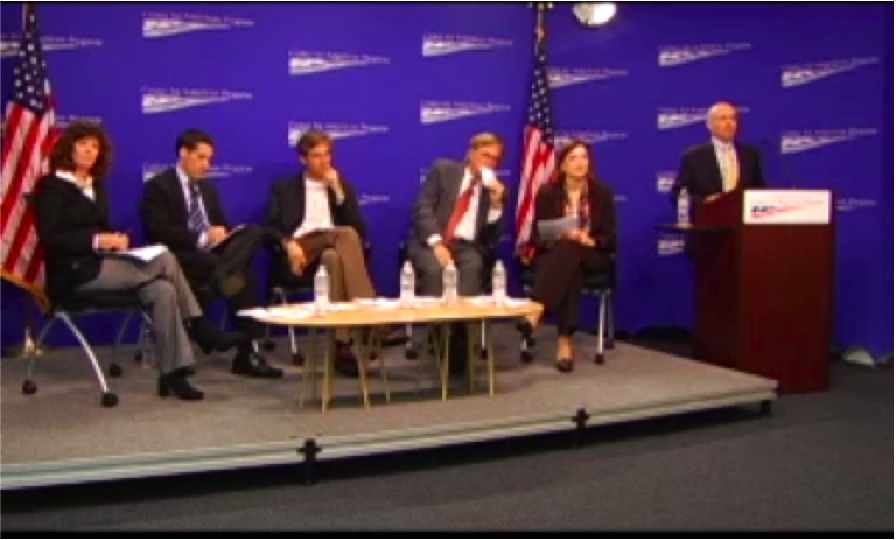

Improving Degree Completion for 21st Century Students, Center for American Progress, Washington, DC, November 2, 2010, Screen Shot. Donald Earl Collins

I’ve been thinking about the fields in which I’ve worked and sort-have-worked in over the past fourteen years, and I’ve drawn one simple conclusion. For all of the talk of education reform, the talk about reform itself is in need of a reformation. I’m tired of the contrast between the experts in the field — who pay little attention to the cutting-edge trends, research and activism in K-16 education — and the everyday folks. They refuse to do anything except complain about teachers, as if education is as simple as organizing a file cabinet.  The who, what and what for’s regarding education reform has stifled what should be an engaging conversation, one that’s essential in the consideration of America’s twenty-first century ills.

Who’s part of this conversation remains something of an atrocity. Almost all of the experts in education reform — whether on a scholarly panel or in the documentary Waiting for Superman — tend to be Whites (more male than female) over the age of fifty. With more than one in three students in public schools of color — and with tens of thousands of teachers and administrators of color in this school districts — it’s hard to believe that all the experts are White, and most of those are middle-aged to elderly males. Their vision, at best, is a liberalized twentieth-century vision of K-12 and postsecondary education. Most of their proposed solutions — smaller class sizes, more homework, small schools, higher certification standards — will not in any way fundamentally reform K-16 education.

When combined with what’s considered important in education reform these days, it becomes painfully

A Nation At Risk (1983) Book Cover, November 2, 2010. Donald Earl Collins

obvious that the conversations we have on education reform are predetermined ones based on certain interests and short-sighted economic considerations. Most of the money in education reform — whether from the federal government, private foundations or corporate interests — is earmarked for things related to STEM fields (science, technology, engineering and mathematics). No one living in this century would deny the importance of STEM fields to a post-industrial economy. But not to the exclusion of everything else. Science folk and scribes alike still need to know how to write well, to think critically, to act ethically, to extend themselves beyond government and corporate interests.

Thomas Friedman — at least as he wrote in The World Is Flat (2005) — Bill Gates, the Obama Administration are all correct in that STEM fields will provide living wages and supply jobs at a rate over the next generation to replace the easy jobs of the by-gone era of industrial jobs straight out of high school. Yet none of them fully appreciates the connection between education reform, community development, corporate irresponsibility, lobbyists and the swaying of government policies and the politics of race and class in all of this.

STEM fields without a real direction for providing livable communities for the poor and for low-income people of color. Education reform that doesn’t do more than make scientists out of artists. Ideas that don’t account for the long-term issues of climate change and energy and resource depletion. Education policies that contradict themselves in terms of funding and a lack of understanding of what education reform truly
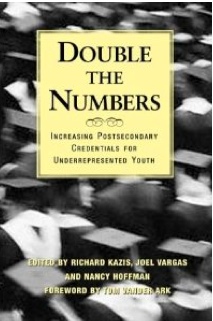
Double the Numbers (2004) Book Cover, November 2, 2010. Donald Earl Collins

means. That’s what we have now, and have had since the 1940s.

In the end, all these ideas are about is tapping the same human resources. The dwindling middle class, folks who’ve managed a traditional education track, folks whose lives are stable enough to allow the resources necessary for higher and advanced education. This need to tweak — instead of overhaul — the educational status quo and then call it reform is what leads to bad conversations. This is why what little in the way of reform actually occurs, and why so few of our kids get the reform they truly deserve.

My Mom, Birthday 63

27 Wednesday Oct 2010

Posted by decollins1969 in 1, Academia, Boy @ The Window, Christianity, culture, Eclectic, Marriage, New York City, Religion, Youth

≈ Leave a comment

Tags

Bradley Arkansas, Death, Finding Peace, Funeral Arrangements, Happy Birthday, Mother-Son Relationship, Mount Vernon New York, New York City, Regrets


My Mother, Thanksgiving Day 2006. Donald Earl Collins

This has been a rough year for my family. But even with my financial difficulties and writing struggles, teaching, looking for additional work, my wife in grad school and Noah turning seven, nothing compares to what my mother’s gone through in the past few months. In July, my only sister Sarai passed away at twenty-seven after a lifelong struggle with sickle-cell anemia. Earlier this month, my grandmother — my mother’s mother — died after a battle with cancer and dementia at the age of eighty-three.


That’s difficult enough, to lose your only daughter and your mother three months apart. It became a hardship almost immediately. Neither my sister nor my mother made any preparations for Sarai’s death, funeral or burial. “It cost too much,” my mother said after I asked about next steps the morning Sarai passed. It took three days’ worth of work to get Sarai’s afterlife arrangements done. In the case of my mother’s-side grandmother, they were never close. My mother had been back to Bradley, Arkansas to visit her father and mother only two times since she left for the Bronx and Mount Vernon in ’66. Once in the summer of ’69, when she was pregnant with me. The other was in ’04.

Because my mother married and remarried at an early age, I’ve had a front-row seat for watching her in her twenties, thirties, forties and fifties. My mother has always avoided looking back in her life, reflecting on her mistakes or triumphs, or talking about anything that matters other than God. But one thing that was obvious to me when I went home to 616 and Mount Vernon to help with my late sister’s funeral and cremation arrangements was the sense of regret that I could feel coming out of her body. It wasn’t just grief, mourning, the rage that I’ve seen and felt when others dear to me have died. No, there was a sense of deep, repressed regret, about all the things that could’ve and should’ve happened, but never did.

I heard that same sense of missed opportunity in my mother’s voice a few weeks ago, after my mother called to let me know that my grandmother had passed. I’d only met my grandmother once, when I made arrangements during what I called “my Southern poverty tour” as part of my social justice fellowship job to visit Shreveport, Louisiana and Bradley, Arkansas. So while I didn’t feel much for the woman, I did feel for my mother.

I felt for her because unlike my mother, I’ve said everything that I could’ve left unsaid to her years ago. The family intervention (see “The Intervention,” January 21, 2008) I orchestrated nearly nine years ago. All of the arguments we had when I was growing up. My PhD graduation ceremony at Carnegie Mellon in ’97. My I love you’s to her now.

I may regret that our relationship isn’t closer, but at least I know why. I certainly regret how I’ve said some of the things I’ve said to my mother over the years, but not the meaning of my words. The only serious regret I have now is not being in a financial position to do more for my mother than I have over the past quarter-century, to make some aspects of her life easier. Still, all I can wish for her is a Happy Birthday, or at least, a day in which she can find peace. Hopefully, one birthday, she’ll have both.

Spencer for Higher

23 Saturday Oct 2010

Posted by decollins1969 in 1, Academia, Boy @ The Window, Eclectic

≈ Leave a comment

Tags

Carnegie Mellon University, Dissertation Fellowship, Doctoral Thesis, Finding Purpose, Grant Making, Grant-seeking, Spencer Foundation, Teaching, Writing


Spenser For Hire Title Screen, February 26, 2008. Source: http://www.aolcdn.com/new_promos/dl_spenser_733x270.jpg

Higher education, that is. Sixteen years ago this weekend, I put my application in the mail for a Spencer Foundation Dissertation Fellowship. It was a $15,000, one-year award that would give me time off from teaching or doing grunt work for my advisor and other professors. I’d have a year to do nothing but do work on my doctoral thesis, to travel, do additional research and lock myself in my apartment for week on end to write what would become a 505-page document.


But don’t let me over-glamorize the moment. After all, I’d applied for fellowships and been in search for grants in the years before and after this application. The University of Pittsburgh had made me part of the first class of recipients for their Challenge Scholarship in ’87. I’d been awarded a graduate student assistantship and teaching assistantships throughout grad school. The Ford Foundation Predoctoral Fellowship — I applied for it twice, in ’91 and ’93. Soon after my Spencer application, I also applied for the Ford Foundation Dissertation Fellowship and the NEH (National Endowment for the Humanities) Dissertation Fellowship (which they disbanded the following year).

I’d later apply for a few postdoctoral fellowships in ’96 and ’97. Then, once I became part of the nonprofit sector, grant-seeking became a part of my jobs. Including letters of inquiry, concept papers, about three dozen grant proposals that I worked on in part or in whole. Not to mention meetings with foundation program officers, numerous networking opportunities at the Independent Sector and other conferences. Between them all, I directly or indirectly helped raise about $1.4 million over the past ten years, and played a role in programs that possessed about $11 million in funding overall.


Spencer Foundation Logo, October 23, 2010

But the most satisfied I ever was in putting together a proposal, or in receiving an award, or in participating in a grant-related experienced, was when I applied for the Spencer Foundation Dissertation Fellowship. You see, I’d spent nearly eighteen months preparing myself to apply. I started doing my dissertation topic research a full year before the October ’94 application deadline, months before my advisor and committee were to officially approve my topic and research.


I’d started going through microfilm of Black Washington newspapers from the 1920s, 1930s, and 1940s, looking up Census data, thinking of places to look up old records of DC Public Schools  from the segregation era, and contemplating interviewing former teachers and students who’d worked at or attending DCPS between 1920 and 1970. It was exhausting doing that and taking a full load of classes, struggling with finances so badly that I had no money for new sneakers, that I’d walk in three-year-old sneakers with holes in them to and from campus in ankle-deep snow to push this project forward. Of course, I lined the sneakers with plastic bags from Giant Eagle to keep my socks and feet dry and warm.

Yes, I was committed to the task all right, and probably should’ve been committed in the process. But it was also worth it. I felt — rather, I practically knew — that it would all work out with the Spencer Fellowship somehow. And it did, not just because of the award, and not just because of my friend and mentor, Catherine Lacey (see April 2009 post). It worked, because it helped me find my calling as a writer and teacher. It worked because it helped bring to the fore my ambivalence about academic writing and scholarship as the raison d’etre of an academically-trained historian.

The application, fellowship and that year free from Carnegie Mellon’s clutches helped put me on the right path. Even if I didn’t know it at the time.

The Testing Season

12 Tuesday Oct 2010

Posted by decollins1969 in 1, Academia, Boy @ The Window, culture, Eclectic, Politics, race

≈ Leave a comment

Tags

Academic Achievement, ACT, Anthony Carnevale, AP, Colleges & Universities, Educational Testing Service, ETS, GMAT, GRE, High-Stakes Testing, LSAT, MCAT, SAT, Standardized Testing, Strivers Research


Mock SAT Answer Sheet, October 12, 2010. Source: http://kellgradcoach.blogspot.com

This really is the testing season, isn’t it? In many more ways than one. For voters, the underemployed and the unemployed, the welfare poor, for undocumented workers, for the Obama Administration, for so many others. But the testing season I’m talking about is standardized testing. Between the SAT, GRE, LSAT, MCAT, GMAT, and ACT, high school students and college undergrads face incredible amounts of stress over a five-decade-long practice that, in the end, reveals more about the system of competition that technocratic university administrators and eugenics-type scientists have created than it actually does

ETS Logo, from http://www.ETS.org, October 12, 2010

about our own abilities.


My own standardized testing history includes the following (not counting the AP or New York State Regents exams, which occur in May and June, another testing season), starting with elementary school:

1. SRAs (1st through 6th grade – ironically, started by Lyle Spencer, who also founded the Spencer Foundation, which sponsored my doctoral dissertation research in 1995-96)

2. PSATs (10th grade)

3. SATs (11th and 12th grade)

4. GREs (junior and senior years, Pitt)

5. LSATs (senior year, Pitt)

My highest score on the SAT — 1120 (540 Verbal, 580 Math). My highest score on the GRE — 1730 (530 Verbal, 580 Math, 620 Analytical). On the LSAT, I scored in the 50th percentile, not bad for someone who studied for it for only two weeks. What does any of this prove in the whole scheme of things? Nothing, really. If these scores were truly great predictors of future academic performance, then Harvard, Yale, Princeton and Carnegie Mellon should have graduation rates approaching 100 percent. Which would explain why many elite institutions have either downgraded their use of these tests in their admissions formulas, or in the case of the big three and UC-Berkeley regarding the SAT, are barely using them at all.


My GRE Score, October 1990.

But for most colleges and universities, these tests are a critical factor in a student’s acceptance and enrollment. They are a necessary evil for figuring out who has academic potential and who doesn’t, at least according to ETS and admissions directors. Which is why I still don’t understand why educators and other folks haven’t taken former ETS vice-president Anthony Carnevale’s work around “strivers” seriously. Or, rather, I do understand. Why give someone like me a leg up because my SAT score was an 1120 — giving my score more weight than a 1280 score for a White kid from a middle class background? All scores are equal. That’s why we call them standardized tests, a standard that doesn’t measure up to the realities of earning a degree.


I guess for those I know who are rolling into these exams this fall (and in some cases, before March or April), the best advice I can give is to get the best score you can. But don’t despair if your scores are only in the 51th, 64th, or 74th percentile, like mine were on the different sections of the GRE. What will ultimately matter is how you perform after you’ve been accepted by and enrolled in that institution.

I’ve given some thought to going back to school in the next couple of years, possibly even law school. Not to become a lawyer, but to make myself more marketable outside of academia and within the philanthropic world. For some odd reason, there are lots of people with law degrees who are working in education reform, international development, and social justice. Go figure.

But even this professor will likely have to take the LSATs again in order to apply to a law program at Georgetown, UPenn or some other school. And that will mean trying to figure out why A and B won’t sit together at the same conference table, but B can sit next to E, except when meetings are held on Tuesdays.

Letter of Recommendation (or Wreck-o-mendation)

23 Thursday Sep 2010

Posted by decollins1969 in 1, Academia, Boy @ The Window, Eclectic, Mount Vernon High School

≈ Leave a comment

Tags

Academia, Carnegie Mellon University, Dan Resnick, Daniel P. Resnick, George Reid Andrews, Joe Trotter, Joe William Trotter Jr., Letters of Recommendation, Pittsburgh, Race, References, Sy Drescher, Transparency, University of Pittsburgh


George Reid Andrews, University of Pittsburgh

About a year and a half ago, I wrote about a string of not-so-wonderful professors I had at Pitt and Carnegie Mellon who were less than fine with me pursuing anything beyond a bachelor’s degrees, much less with me becoming Dr. Collins. I talked about how some of them went so far as to tell me that I wasn’t “graduate material,” as if I were made from parts found at a junk yard instead of in the shop of an Italian tailor.

I’m more than aware of the fact that I didn’t let those doubters stop me from becoming who I am today. Some were undoubtedly ones whose skepticism bordered on racist because of their assumptions about my intelligence and writing ability. Still, it should be noted that there are pitfalls to be avoided, if at all possible, when you’re applying for a job or applying to a college or graduate and professional school.

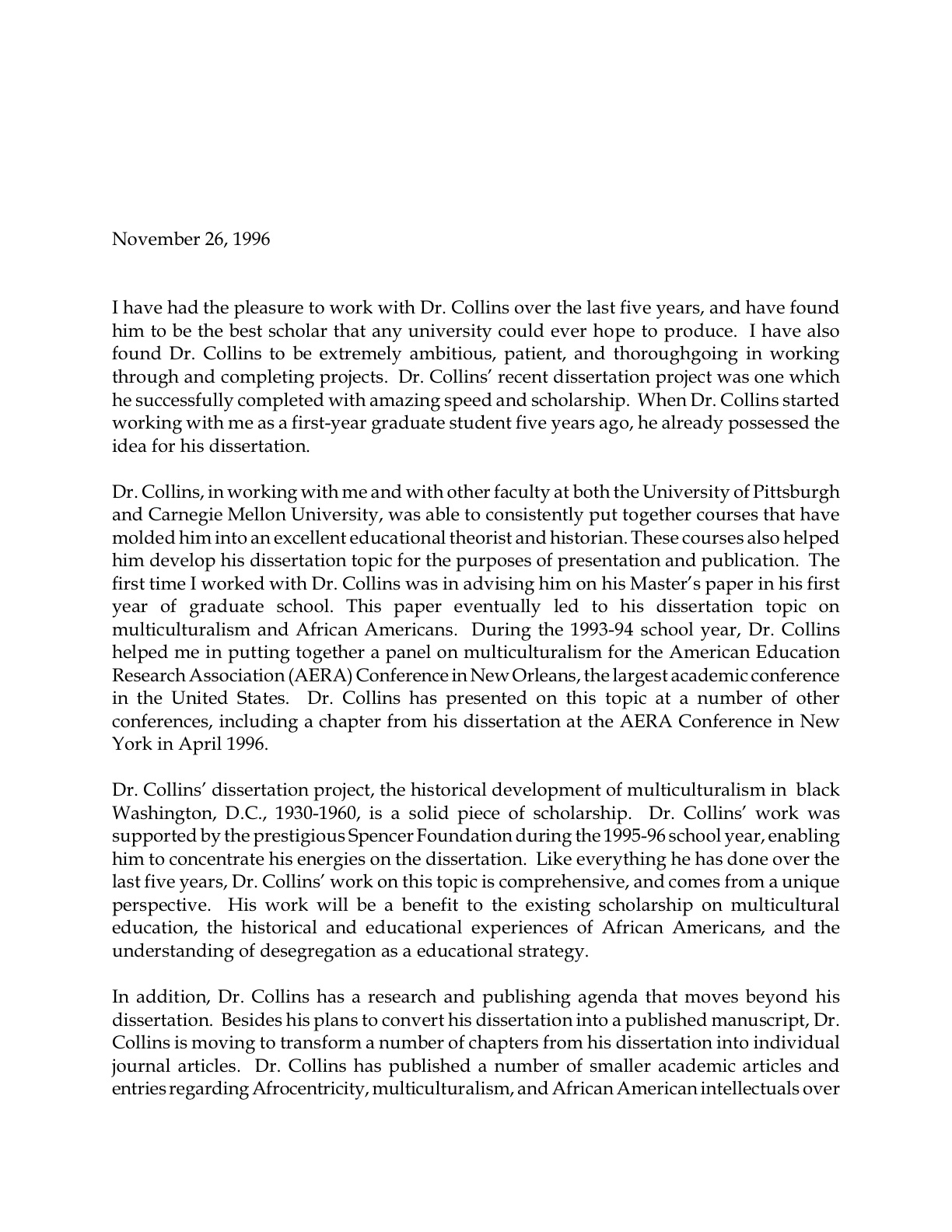
One, even if a professor or teacher has assigned an A for your performance in one of their courses, that doesn’t mean that think that you’re a great student. I learned that the hard way with George Reid Andrews, my professor for Latin American Revolutions my junior year at Pitt. Twenty years ago this week, I asked him for letters of recommendation for graduate school. Andrews agreed, but only to tell me seven months later what he really thought of my work. My research writing samples were “problematic,” my GRE scores were “barely adequate,” and I should’ve considered myself “lucky” just to get into the master’s program in the history department. That terse conversation told me that Andrews’ letter was lukewarm at best, or had found me seriously deficient at worst.

Two, and related to my interactions with Andrews, the process of providing a letter of recommendation or a reference ought to be transparent, so that the student or employee can be confident that they’re not being back-stabbed by the same people in which they’re placing significant trust. It was never a question I dared asked — to see my letter of recommendation — before I’d reached the final stages of grad school.

It would’ve helped with Andrews, and it would’ve helped with two of my three dissertation committee members, Joe Trotter and Dan Resnick. I found out through my Spencer Fellowship that Trotter had written me a lukewarm letter, while Resnick had rambled on and on about my “close relationship” with my “mentor Sy Drescher,” who had played “an instrumental role” in making me a scholar. Drescher, while one of my best professors at Pitt, played much less of a role in me pursuing grad school than so many other professors and students, including his former student Paul Riggs. It was a Leslie Stahl, “let’s give the poor Black boy a hand” kind of letter.

Later, when I asked to see my letters of recommendation from Resnick before sending them out for jobs, he went on for ten minutes about the “sanctity” of the recommendation process, about how privacy and “anonymity” were critical to provide protection for all parties involved. Needless to say, if someone blusters about privacy when politely asked about a letter of recommendation they’re writing for you, do not use that letter!

Bruce Anthony Jones, University of South Florida

Three, it’s important to get to know a person, to gain some sense of trust from them, before asking for a letter or a reference. You don’t have to become friends with them or meet their family — although that does help. They just have to know that their recommendation or reference will be put to good use by you and that what they say about you matters to both of you, in the most positive light possible. Otherwise, what’s the point of writing a letter or spending fifteen minutes on the phone talking about your qualities as a student or worker, right? This can go a bit too far, of course, as I wrote one of my own recommendations for Bruce Anthony Jones, another dissertation committee member, for him to merely put his signature to. Once he changed jobs for the University of Missouri-Columbia, his, um, my letter became worthless, if it had been worth anything at all to begin with.

I’ve written about two dozen letters of recommendation for high school, college and graduate students, for jobs, school applications and fellowship programs. Not to mention about an equal number of recommendations and references for professional colleagues and friends in academia and the nonprofit world. I’ve always written my own letters, insisted on them being seen by the people I’ve recommended and required that they explain their own rationale for their acceptance in the process. Most importantly, I’ve made sure to say “No” if I didn’t feel I could recommend them well or provide a great reference.

And Now, A Plagiarism Moment

13 Monday Sep 2010

Posted by decollins1969 in 1, Academia, Boy @ The Window, Eclectic, race

≈ Leave a comment

Tags

Academia, Black Issues in Higher Education, Carnegie Mellon University, Dan Resnick, Daniel P. Resnick, Department of HIstory, Plagiarism, University of Pittsburgh


Professor Emeritus Daniel P. Resnick. Source: http://www.cmu.edu

I was sitting in the office of the only professor in Carnegie Mellon’s History Department with expertise in the area of history of education one mid-September day in ’93. It was my first semester in the doctoral program there, after transferring from Pitt to finish my PhD. I had already begun to question my decision to do my remaining studies there. My advisor Joe Trotter was “upset” that I’d taken and passed my doctoral written exams the spring before, when I was still technically a Pitt grad student, and had “run interference” to forbid me from publishing any new articles during the ’93-’94 school years. That was after my piece with my friend Marc had come out in Black Issues in Higher Education.

Steve Schlossman, the chair of the history department, was also upset, because I had decided not to take the American history proseminar, a course for first semester grad students. Apparently, even though I had taken the same course at Pitt two years before — and Carnegie Mellon had accepted all of my credits from my master’s program and first year as a doctoral student at Pitt — I had to take this course. I was read the riot act and told that I needed Carnegie Mellon’s “stamp of approval” before becoming a doctoral candidate. I was incensed, because this wasn’t what I’d been promised by my esteemed advisor and the graduate advisor, John Modell.

All this happened before I met Daniel P. Resnick in his office on Tuesday on a cool, but not too cool, and sunny late-summer day. His office was neat, relatively speaking, but spare and spartan in some ways, with books stacked in orderly fashion, and papers in numerous labeled folders. What I noticed the most was the smell, an old person’s not-fully-washed smell, of bagels and lox with some onion cream cheese.

Professor Resnick had gone to the restroom and left the door open for me to sit at a table next to his desk. He had already laid out my writing samples, the ones I’d put in his mailbox the week before. They included the Black Issues in Higher Education piece. After our exchange of greetings, Resnick sat down and said, “Considering your background, your writing is remarkable!” in a way that showed real surprise.

Before I could respond with a defense or process the obvious bigotry in that statement, Resnick then said, “There’s no way you could’ve written all this.” I responded, “Well, I did, and have the grades and degrees to prove it,” preferring not to accuse the only professor in the department with a specialty in the history of education of racism. “What-what I meant was, your papers are well-written…compared to most young scholars,” Resnick stammered. I accepted that response at face value, but kept what he had said before it in mind as I worked with him over the next three years.

Resnick, as it turned out, had lived for a year with his wife, the great Lauren Resnick, on the Mount Vernon-Bronxville border in 1960-61 (one of them was teaching at Sarah Lawrence, I think), so after finding out where I grew up, he had put two and two together and come up with sixteen. I found him patronizing, and about as knowledgeable in the recent developments of educational history as I would be of underground house music in Chelsea right now. Resnick himself had plagiarized, not in terms of his own work, but from the race relations rule book. He had plagiarized in stereotypes, far worse than anything of which he’d accused me.

Was it worth having this man on my dissertation committee? Yes, because I graduated. But, in the final analysis, it would’ve made more sense to transfer to NYU or Stanford School of Education than to spend three minutes, much less three years, working with a man whose belief in my work was minimal at best.

Opposite World

06 Monday Sep 2010

Posted by decollins1969 in 1, Academia, Eclectic, Patriotism, Politics, Pop Culture, race

≈ Leave a comment

Tags

Anti-Intellectualism, Education, FOX News, Ignorance, Kathleen Parker, Maureen Dowd, Narcissism, Opposite World, Sarah Palin, Stupidity, Tea Party


Ignorance and Apathy. Source: http://iftheshoefitz.com

I know that I don’t fit very well in this world. My way of speaking, my walk, my music tastes. They and so much more make me an oddball in a land full of narcissistic conformists who all believe that they’re special. It’s opposite world for me, and has become more so over the past thirty years. No longer is it that “the customer’s always right.” It’s acceptable that people refuse to give up space in public, step on your shoes and toes and dare you to make them say “excuse me.” Folks refuse to say “thank you” for simple and well-meaning gestures, as if a courtesy would force them to acknowledge your existence. Blind loyalty is how we define patriotism, and becomes a quick path of career advancement. It’s a world that’s full of crap, and makes me wish I owned a societal sewage treatment or compost plant to deal with it all. But none of it is more disappointing that our world’s embracing of stupidity.

As any serious scholar knows, there’s a long history of anti-intellectualism in American culture. It’s existed since the days of Woodrow Wilson, and likely at least a generation longer than that. Yet that’s not what I’m concerned with here. These days, we have a people absolutely proud of their lack of knowledge, choosing to avoid knowing anything for fear of rejection by friends, colleagues, voters and leaders. Our pride in ignorance and stupidity knows no bounds. We have folks like Maureen Dowd and Kathleen Parker, as well

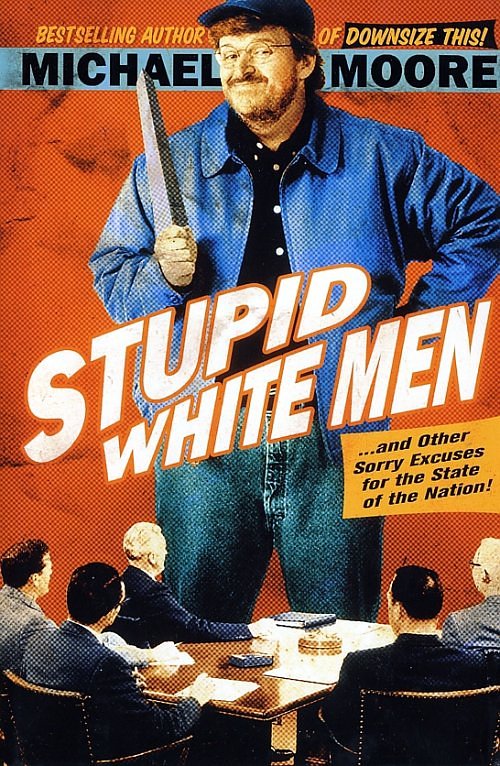
Michael Moore's Stupid White Men (should include women as well). Source: http://www.michaelmoore.com

as Faux News, of course, critical of President Obama, mostly because of his biracial Black and elite education background. That includes criticisms over his being “overly patient” and “too deliberate” in addressing complex foreign policy issues. We have NFL coaches laughing on HBO’s Hard Knocks because they couldn’t figure out that two yardsticks and one twelve-inch ruler equals seven feet in length, something that any fifth-grader supposedly should be able to do.

Sarah Palin’s still a popular candidate — perhaps for president, but more likely as a conservative lightning rod — in no small part because she’s refused to embrace knowledge and “those so-called experts” of such. Apparently it’s okay to not listen to what the opposition has to say because they attended Harvard or graduated from Princeton. At least she’s not as stupid as she appears, having made $13 million since the beginning of ’09 off of selling ignorance to her fans.

We have policy wonks, politicians and bigoted Tea Baggers willing to dismiss any and all evidence — not opinion, but objective, painstakingly gathered evidence — that doesn’t fit their White is right and the Right is right view of the world. We have progressives and liberals — from assisted suicide advocates to vegans — who deny others’ points of view or overall context, leaping into full-throated arguments without looking or without imparting their opinions or their knowledge.

Anyone who disagrees with any side based on evidence, knowledge, and of course, wisdom, can expect to see their knowledge shoved to the side. If it were a book, they’d all burn it. If it were a person, they’d jail it. That’s how much our nation hates knowledge and those who possess it. It’s what makes this world so uncomfortable to live in.

← Older posts
Newer posts →

Boy @ The Window: A Memoir

Boy @ The Window: A Memoir

Places to Buy/Download Boy @ The Window

There's a few ways in which you can read excerpts of, borrow and/or purchase and download Boy @ The Window. There's the trade paperback edition of Boy @ The Window, available for purchase via Amazon.com at http://www.amazon.com/Boy-Window-Donald-Earl-Collins/dp/0989256138/

There's also a Kindle edition on Amazon.com. The enhanced edition can be read only with Kindle Fire, an iPad or a full-color tablet. The links to the enhanced edition through Apple's iBookstore and the Barnes & Noble NOOK edition are below. The link to the Amazon Kindle version is also immediately below:

scr2555-proj697-a-kindle-logo-rgb-lg

Boy @ The Window on Amazon.com: http://www.amazon.com/Boy-The-Window-Memoir-ebook/dp/B00CD95FBU/

iBookstore-logo-300x100

Boy @ The Window on Apple's iBookstore: https://itunes.apple.com/us/book/boy-the-window/id643768275?ls=1

Barnes & Noble (bn.com) logo, June 26, 2013. (http://www.logotypes101.com).

Boy @ The Window on Barnes & Noble: http://www.barnesandnoble.com/w/boy-the-window-donald-earl-collins/1115182183?ean=2940016741567

You can also add, read and review Boy @ The Window on Goodreads.com. Just click on the button below:

Boy @ The Window

Twitter Updates

Tweets by decollins1969
  • RSS - Posts
  • RSS - Comments

Archives

  • June 2025
  • April 2023
  • September 2022
  • August 2022
  • July 2022
  • June 2022
  • May 2022
  • April 2022
  • March 2022
  • January 2022
  • December 2021
  • November 2021
  • October 2021
  • September 2021
  • August 2021
  • July 2021
  • June 2021
  • April 2021
  • March 2021
  • February 2021
  • January 2021
  • December 2020
  • November 2020
  • October 2020
  • September 2020
  • August 2020
  • July 2020
  • May 2020
  • April 2020
  • March 2020
  • January 2020
  • December 2019
  • November 2019
  • August 2019
  • July 2019
  • June 2019
  • May 2019
  • April 2019
  • March 2019
  • February 2019
  • January 2019
  • December 2018
  • November 2018
  • October 2018
  • September 2018
  • August 2018
  • July 2018
  • June 2018
  • May 2018
  • March 2018
  • February 2018
  • January 2018
  • December 2017
  • November 2017
  • October 2017
  • September 2017
  • August 2017
  • July 2017
  • June 2017
  • May 2017
  • April 2017
  • March 2017
  • February 2017
  • January 2017
  • December 2016
  • November 2016
  • October 2016
  • September 2016
  • August 2016
  • July 2016
  • June 2016
  • May 2016
  • April 2016
  • March 2016
  • February 2016
  • January 2016
  • December 2015
  • November 2015
  • October 2015
  • September 2015
  • August 2015
  • July 2015
  • June 2015
  • May 2015
  • April 2015
  • March 2015
  • February 2015
  • January 2015
  • December 2014
  • November 2014
  • October 2014
  • September 2014
  • August 2014
  • July 2014
  • June 2014
  • May 2014
  • April 2014
  • March 2014
  • February 2014
  • January 2014
  • December 2013
  • November 2013
  • October 2013
  • September 2013
  • August 2013
  • July 2013
  • June 2013
  • May 2013
  • April 2013
  • March 2013
  • February 2013
  • January 2013
  • December 2012
  • November 2012
  • October 2012
  • September 2012
  • August 2012
  • July 2012
  • June 2012
  • May 2012
  • April 2012
  • March 2012
  • February 2012
  • January 2012
  • December 2011
  • November 2011
  • October 2011
  • September 2011
  • August 2011
  • July 2011
  • June 2011
  • May 2011
  • April 2011
  • March 2011
  • February 2011
  • January 2011
  • December 2010
  • November 2010
  • October 2010
  • September 2010
  • August 2010
  • July 2010
  • June 2010
  • May 2010
  • April 2010
  • March 2010
  • February 2010
  • January 2010
  • December 2009
  • November 2009
  • October 2009
  • September 2009
  • August 2009
  • July 2009
  • June 2009
  • May 2009
  • April 2009
  • March 2009
  • February 2009
  • January 2009
  • December 2008
  • November 2008
  • October 2008
  • September 2008
  • August 2008
  • July 2008
  • June 2008
  • May 2008
  • April 2008
  • March 2008
  • February 2008
  • January 2008
  • December 2007
  • November 2007
  • October 2007
  • September 2007
  • August 2007
  • July 2007
  • June 2007

Recent Comments

MaryPena's avatarMaryPena on My Day of Atonement/Bitter Hat…
decollins1969's avatardecollins1969 on No Good Teaching Deed Goes…
Mary Rose O’Connell's avatarMary Rose O’Connell on No Good Teaching Deed Goes…

NetworkedBlogs on Facebook

NetworkedBlogs
Blog:
Notes From a Boy @ The Window
Topics:
My Life, Culture & Education, Politics & Goofyness
 
Follow my blog

616 616 East Lincoln Avenue A.B. Davis Middle School Abuse Academia Academy for Educational Development AED Afrocentricity American Narcissism Authenticity Bigotry Blackness Boy @ The Window Carnegie Mellon University Child Abuse Class of 1987 CMU Coping Strategies Crush #1 Crush #2 Death Disillusionment Diversity Domestic Violence Economic Inequality Education Family Friendship Friendships Graduate School Hebrew-Israelites High-Stakes Testing Higher Education History Homelessness Humanities Humanities Program Hypocrisy Internalized Racism Jealousy Joe Trotter Joe William Trotter Jr. K-12 Education Love Manhood Maurice Eugene Washington Maurice Washington Misogyny Mother-Son Relationship Mount Vernon High School Mount Vernon New York Mount Vernon public schools Multiculturalism MVHS Narcissism NFL Pitt Pittsburgh Politics of Education Poverty President Barack Obama Race Racial Stereotypes Racism Relationships Self-Awareness Self-Discovery Self-Reflection Sexism Social Justice Teaching and Learning University of Pittsburgh Violence Whiteness Writing

Top Rated

Blog at WordPress.com.

  • Subscribe Subscribed
    • Notes from a Boy @ The Window
    • Join 103 other subscribers
    • Already have a WordPress.com account? Log in now.
    • Notes from a Boy @ The Window
    • Subscribe Subscribed
    • Sign up
    • Log in
    • Report this content
    • View site in Reader
    • Manage subscriptions
    • Collapse this bar

Loading Comments...