• Spinning Sage’s Gold: Allegories on the Western-Dominated Present and a Possible Post-Western Future (2025)
  • About Me
  • Other Writings
  • Interview Clips
  • Video Clips
  • Boy @ The Window Pictures
  • Boy @ The Window Theme Music

Notes from a Boy @ The Window

~

Notes from a Boy @ The Window

Category Archives: Academia

Burnout

16 Monday Jan 2012

Posted by decollins1969 in 1, Academia, Boy @ The Window, culture, Eclectic, race, Work, Youth

≈ Leave a comment

Tags

Betrayal, Burnout, Emotional Turmoil, Exhaustion, Forgiveness, Hate, Love, Mother-Son Relationship, PhD, PhD Graduation, Pittsburgh, Relationships, Renewal


Cartoon of a patient consulting a doctor about a burn-out (Dutch -- "You are having a burnout."), April 17, 2008. (Welleman via Wikipedia). In public domain.

It’s a word I rarely admit to. One that I usually notice signs of, but try to work through anyway. But as I’ve learned over the years, I’ve needed to acknowledge and understand my burnouts before moving forward and avoiding the conditions that produced it in the first place.

My first experience with burnout was my sophomore year of high school in June ’85. It came after three solid months of applying my memorization skills (some would say near-photograph memory skills) full-time, without the time and space to study at 616 or the support of good teachers that year, especially in Chemistry with the not-so-great Mr. Lewis. That, and no food at home during finals/Regents exams week made me actually sick of school for the first time (see my “Hunger” post from June ’08).

I went through something similar in late November and December ’89, the end of the first half of my junior year at Pitt. I had put together what I called a “total semester” plan for the first time, to organize my life so that I’d have a life outside of my classes and to take a shot at a 4.0 that semester. Only, I was dumb enough to take third-semester calculus a year and a half after my last math course, and I was now a history major taking writing intensive courses.

That, and finding out that one of my closest female friends was attracted to another, much shorter guy — also a friend of mine — meant for a rocky last three weeks of ’89. And I’d unwittingly helped to set them up. I managed a 2.98 GPA that terrible semester, including a D+ in multiple integrals and differential equations. Terrible, at least by my own standards.

Burning Brain (cropped), January 16, 2012. (Selestron76 via http://dreamstime.com). Qualifies as fair use under US Copyright laws.

I was beginning to understand that my occasional burnout wasn’t just because of school or work, but because some area of my life had caused me significant emotional turmoil, which in turn affected my performance in other areas. The period between December ’96 and September ’98 was a long period of burnout for me. I have written here before about my battles with Joe Trotter and Carnegie Mellon as I completed my dissertation at the end of ’96 — too many times for some people’s tastes. What I haven’t discussed is the emotional toll that process took on me and how long it took for me to recover.

I spent most of ’97 and ’98 angry, raging ready to actually strangle most of the folks on Carnegie Mellon’s campus after finishing the degree. I couldn’t look at Trotter without wanting to wrap piano wire around his throat from behind and feeling him squirm as I cut the life out of him. Yeah, it was bad. As my now wife of twelve years can attest, I’d get into arguments with cashiers at CVS over a nickel and their complete disdain for their duties, ready to throw a punch.

But I also couldn’t write, at least write in the ways in which I wanted. I could execute the mechanical exercise of writing well enough, even put together papers for presentation and articles for publication. I even wrote an editorial on race with my then girlfriend that was published in the Pittsburgh Post-Gazette in March ’98. Still, I was writing mostly because I didn’t believe in writer’s block or in burnout, this despite all the contrary evidence.

Add the fact that I’d learned that my own mother was actually jealous of me for going to school, among other things (see “My Post-Doctoral Life” post from May ’08). I was burned out, a sad person to be around for most of ’97 and a good portion of ’98. All while I was an underemployed adjunct professor at Duquesne and working part-time at Carnegie Library of Pittsburgh. I’m not sure how Angelia put up with me, because it was hard for me to put up with me.

So, how did I pull out of my burnout? Time after the doctorate, away from Carnegie Mellon (I didn’t set foot on the campus for nearly two years after I cleaned out my cubicle in July ’97), for starters. Having people in my life who needed me to be me at my best, like Angelia and my Duquesne students, for instance, helped.

But the need to find full-time work and the realization that staying in Pittsburgh to wait for Trotter to be run
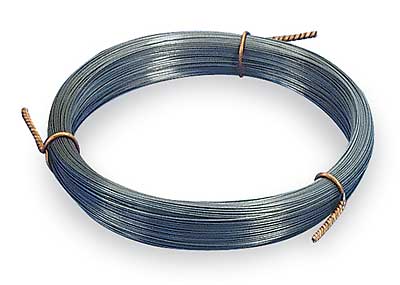
Spool of piano wire, with 247 ft-lbs of torque (enough to kill), January 16, 2012. (http://http://www.monumentalelevatorsupply.com).

over by a PA-Transit bus for a potential job opening was also a great motivator. I realized that despite everything, I’d gained more than I lost in earning my doctorate, and that I may yet find my better self again by putting those roiling emotions in a box in my mind’s attic.

I’ve felt burnout since. In a family intervention from a decade ago, in moving on from New Voices, even in my current context as consultant and professor. At least I’m more aware when I’m feeling that way, and am able to cope with those emotions with reminders of what and whom I have in my life that remains true and good.

Regis and Donald Earl

12 Thursday Jan 2012

Posted by decollins1969 in 1, Academia, Boy @ The Window, culture, Eclectic, Mount Vernon New York, Movies, Pop Culture, race, Work, Youth

≈ Leave a comment

Tags

Friendship, Pitt, Pittsburgh, Regis, Relationships, University of Pittsburgh, Weird, Weirdness, Youth


Regis & Kathie Lee cover, cropped, People Magazine, September 30, 1991. (http://people.com). Qualifies as fair use under US Copyright laws because picture is cropped and of low resolution.

In a conversation I had with my mother about sixteen years ago, she said, “I always thought that all your friends were weird.” This after having broken up with a girlfriend a few weeks before, my first serious relationship in three years. Thanks, Mom! Of course, a month later, I began dating my wife of nearly twelve years (and yes, my mother thinks that Angelia’s weird, too!).

But she did have a point, albeit a small one. Some nerve, since I’m her son, after all! I had accepted this reality by my second semester at the University of Pittsburgh. This after a semester of attempting to be cool, then to not be cool, then to just close myself off out of picking my old Crush #2 scab.

I began my second semester in January ’88, attempting to meet people more like myself, which often meant meeting people a good five or ten years older than me, students comfortable in their own weirdness. The first friend I made this way was Regis. He was a working-class Western Pennsylvanian through and through, with that guttural Pittsburgh-ese accent. Regis said “jag-off” for “jack-off,” “ruff” for “roof,” “yinz” for “you all” or “y’all,” and “dahntahn” for “downtown.”

Regis had been unemployed for nearly a year, laid-off by Westinghouse, where for the previous five years he guarded a boiler room in one of their plants. He was about five-foot-six, constantly scruffy and disheveled, and sometimes looked like he was a step or two away from insanity. Kind of like a Pitt student’s version of Rasputin.

Richard Dreyfuss in Close Encounters of the Third Kind (1977), screen shot -- closest approximation to Regis, circa 1988 -- January 12, 2012. (http://examiner.com). Qualifies as fair use under US Copyright Laws due to low resolution and limited use for blog post.

But Regis was a quick study and absolutely enjoyed going to college, as he was a deeply critical thinker. Heck, he was the smartest person I knew during my Pitt and Carnegie Mellon years! As a result, we hit it off right away in our discussion sections on Friday mornings in Western Civilization II. Me and Regis would often gang up on the rest of the class in the discussion of all things Western European-related, from the French Revolution  to the connections between the European slave trade, the Industrial Revolution, and European imperialism. It was wonderful not being the only oddball in class for a change.

What made us friends, though, had more to do with the fact that Regis didn’t allow himself to be blinded by my attempts to hide the real truth behind my weirdness. He saw through my coping strategies to mask the battering I’d taken from poverty, abuse and Humanities in Mount Vernon. Regis was there for me my sophomore year at Pitt in a way that any true friend would be.

After my bout with homelessness — which I hadn’t told Regis about — I was broke from Labor Day to Thanksgiving. Despite my pride and my mother’s constant mantra of not asking for “handouts,” I first asked Regis for help in November ’88. This after he noticed that we weren’t even hanging out at the Roy Rogers in the Cathedral of Learning anymore.

“To be honest, I’ve only had $205 to my name since September,” I said.

“How’ve you been making it?,” Regis asked.

“Spaghetti one week, pork neck bones and rice the next, tuna fish after that. I’m now down to peanut butter sandwiches,” I said.

“What’s ‘pork neck bones’?” Regis asked, with this incredulous look on his face.

After explaining the intricacies of my diet and poor people’s cooking — especially since this was the first time I’d eaten any pork in seven and a half years — Regis finally said

“I don’t have much, but I can at least bring you some bread and a potata. We don’t want you out here starvin’,” having patted me on my right shoulder as our conversation ended.

Sure enough, later that week, Regis actually gave me some bread and a small sack of potatoes. It would’ve been enough to make me cry, but I was too hungry and tired to do much more than say a weak “Thank you.” That, and make the most of four days’ worth of Russet potatoes.

Regis was in my circle on other matters that semester. We talked, mostly about his Heidegger course, a scary existential philosophy course for anyone to take. I heard so much from Regis about Heidegger’s Being and Time that I felt like I was in the course. Whenever the subject came up, he was always like, “So you got a hot date tonight, right?” No excuse was good enough for him, whether it was lack of money or lack of confidence.

I stayed in touch with Regis for years after that semester and year. We took a Greek History course together in the fall of ’89. I began introducing him to my other weird and not-so-weird friends. He introduced me to working-class White Pittsburgh, for better and for worse. We stayed in touch during the summers I was back in Mount Vernon, through our master’s degrees and my doctorate at Carnegie Mellon.

The last time I saw Regis was in May ’96, just as my fight over my dissertation with Joe Trotter (see my “Running Interference” post from April ’11) was in high gear. Despite two degrees — both in Philosophy — and a professorial disposition, Regis hadn’t secured regular work and was still living at home in East Pittsburgh with his parents. I encouraged him to get a doctorate. But sensing how unhappy I was with my own process, Regis said, “How’s that workin’ out for ya?”

I wonder how Regis is doing today. Well, I should just look him up. After all, we’re both weird Pitt grads!

Reinventing the Writing Wheel

17 Saturday Dec 2011

Posted by decollins1969 in 1, Academia, Boy @ The Window, culture, Eclectic, eclectic music, Hebrew-Israelite, music, Pop Culture, race, Religion, Youth

≈ Leave a comment

Tags

"Children's Crusade", 616, 616 East Lincoln Avenue, Coping Strategies, Historian, Mount Vernon New York, Paul Riggs, Pitt, Re-Discovery, Reinventing the Wheel, Scholar, Self-Discovery, Sting, The Dream of the Blue Turtles, University of Pittsburgh, Western Civilization II, World War I, Writer, Writing


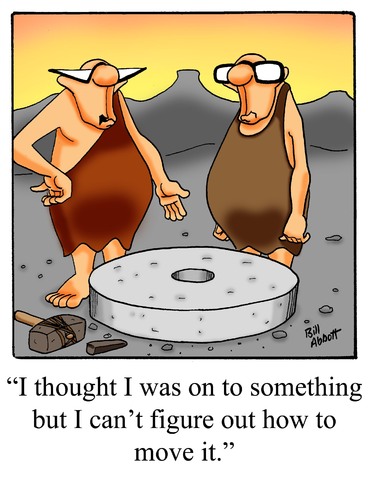
Inventing the Wheel cartoon, October 2, 2009. (Bill Abbott/http://www.toonpool.com/).

One of the side effects of having lived through the hell of my family struggles at 616 in Mount Vernon, New York between ’81 and ’89 was that I’d forgotten about the person I was before we became Hebrew-Israelites. As great as I am at recalling faces, smells, conversations, exact facts and phrases based on images and songs, I’ve been almost equally as good at blocking out whole sections of my personality. All in an effort to cope with the emotional pain and psychological trauma that is betrayal, abuse and neglect.

I have the unfortunate distinction of having seen myself as a writer in ’81 at the age of eleven, only to take nearly twenty years to see myself that way again. There were a few sign posts in the dark forest of confusion about my calling that I found on my way to getting back on the writing road. One of those sign posts was my teaching assistant and friend during my undergraduate years at the University of Pittsburgh in Paul Riggs.

Paul Riggs, Professor and Department Chair, Department of History, Valdosta State University (GA), December 17, 2011. (http://www.valdosta.edu).

Paul was the TA for my section of the Western Civilization II course taught by his advisor in Sy Drescher in the Spring semester of ’88. He was a second-year history grad student, a nice looking White guy for a nerd. Already in his mid-twenties with, his blonde-brown hair and around six-feet, Paul was a rarity on campus. So was his class. Paul found a way to do more than ask us a bunch of questions that were meant to quiz us on the textbook. We debated the significance of things like a richer diet and its impact on population growth and the expansion of European imperialism, the connections between Charles Darwin, evolution, and the advent of scientific racism at the end of the nineteenth century, and so many other things that allowed us to connect the dots.

Paul was also the first teacher I had at Pitt who assumed that I could do the work without acting as if I shouldn’t have been in their classroom. It helped that he occasionally indulged me. When our weekly discussion turned to the killing fields that had been northern France and Belgium for the bulk of the four years of World War I, I allowed my imagination to get the better of me. I made a comment that connected the tragedy of deadly trench warfare to a song by Sting called “Children’s Crusade.” I started quoting lyrics, like “virgins with rifles, a game of charade,” “the flower of England, faced down in the mud, and stained in the blood of a whole generation,” and “corpulent generals safe behind lines.”

I related it all to the documents book and Drescher’s lectures on the war that wiped out a generation of

Sting, The Dream of the Blue Turtle CD Cover (1985), December 17, 2011. (Donald Earl Collins).

young men in Western Europe. It took me two minutes of class time to draw all of the different connections. Paul, shaking his head at the end, got this incredulous smile on his face. All he said was, “um, you know Sting’s overrated?”

But Paul proved to be much more helpful a year and a half later. By then I was in my junior year at Pitt, no longer living in constant worry that I’d have to return to 616 to bury my mother and press charges against my idiot stepfather. By then, Maurice was my ex-stepfather, and thankfully so. For the first time in eight years, I kept a journal, putting together a series of stories based on my worst experiences at 616, on welfare, with my family, and in Mount Vernon.

All of it made me think about writing a book that looked at the sociological and psychological dimensions of the welfare system, for both recipients and for case managers charged with providing benefits. I wanted to make Westchester County Department of Social Services the centerpiece for such a book. I decided to talk to Paul about all of my ideas, not wanting to give away how personal this issue was for me. Paul asked me the questions that it would take another eleven years to answer. “What kind of writer do you want to be?,” and “How is history related to what you want to write about?,” he asked over the course of our conversation.

I really didn’t know the answers to either question. I wasn’t even sure that I wanted to pursue an advanced degree, become a professor, or become a writer. But I knew that I needed to find out.

Still, one thing that I decided to do that would determine most of my career travels over the next decade is to make myself into the semi-dispassionate scholar I knew I needed to become in order to be a better historian, which I presumed would make me a better writer. Only to spend this past decade reconnecting to my emotions and passion, which has made me the writer I once hoped to become.

Simple. Foolish. Thinking. Folk.

07 Wednesday Dec 2011

Posted by decollins1969 in 1, Academia, Boy @ The Window, culture, Eclectic, eclectic music, Politics, Pop Culture, race

≈ Leave a comment

Tags

Charles M. Blow, Child Labor Statements, Election 2012, GOP, Jamiroquai, New York Times, Newt Gingrich, Political Corruptions, Political Messages, Politicians, Say Anything, Tea Party, Tony Kornheiser, Virtual Insanity, Voting, Voting Rights


Virtual Insanity (Jamiroquai) music video screen shot, 1997. (http://www.vid81.com/). Qualifies as fair use under US Copyright laws because of photo's low resolution.

On all sides of the political divide, we bear witness to some of the most unsophisticated thinking that anyone looking back on this time in history could ever possibly imagine.

It’s not just that GOP/TPers like Michele Bachmann or Rick Perry don’t know basic American history or about a constitutional amendment that directly affected their lives as young adults. It’s not just the racial, socioeconomic and gender-based bigotry that Newt Gingrich and Herman Cain have given us for months. It’s among supposedly liberal and moderate political animals as well. It makes me question not only the political process. It makes me think that we should recheck the lead content of our water (tap and bottled), our vegetables and our meat.

Gingrich’s statements over the past few weeks are much more than “unfortunate,” as Tony Kornheiser — an eighty-five-year-old impersonating a sixty-three-year-old — said on his ESPN DC radio show Tuesday. No, Gingrich’s statements are ahistorical, flat-out wrong, borderline racist, and downright nasty toward poor Americans and their children.

Say Anything... movie poster with cropped picture of Newt Gingrich at CPAC conference in Orlando, FL (taken September 23, 2011), December 7, 2011. (Quentin X and Gage Skidmore via Wikipedia/Donald Earl Collins). Released in public domain via cc by 3.0.

To a crowd in Iowa last Thursday, Gingrich said, “Really poor children, in really poor neighborhoods have no habits of working and have nobody around them who works so they have no habit of showing up on Monday…They have no habit of staying all day, they have no habit of I do this and you give me cash, unless it is illegal.” Unfortunate is when you mistakenly drop your flash drive down a garbage disposal. This was so bigoted that it was actually dumb beyond words. And even I thought Gingrich had a bigger brain than this.

This comes only a few weeks after telling the Occupy Wall Street protests to “get a job after you take a bath.” As if getting a college education only to become a $60,000 student loan debt-slave and find oneself unemployed is funny. No, Gingrich, you’re a slime ball, utterly out of touch with America and Americans. At least, any Americans who live in 2011 with less than $10 million to draw from.

But the reactionary right isn’t the only group that has spoken foolery of late, showing us how corrupt our system of politics and government is in our age. Media types of all strips have spoken like simpletons as well. Take Charles M. Blow, visual Op-Ed columnist with the New York Times, who frequents on Twitter as a “pox on both your houses” type. Somehow, though, when people talk about not voting at all, his ability to be rational declines almost as far and as fast as Newt Gingrich’s.

Usually Blow does his SMH sign when he reads 140 characters of what he considers foolishness. Not on November 21. On that day, he tweeted, “I must say that I’m shocked at the number of tweets I’m getting from ppl, seemingly prog, who sound resigned to not voting. Shocked!” Blow followed that with “Voting isn’t just about the right to complain. It’s a demonstration of power. Same as wiggling your fingers in the air, but w politicians.”

The question I have for Blow and voting purists is, what alternative universe do you think we’re living in?

Charles M. Blow, visual Op-Ed columnist, New York Times (cropped), January 18, 2009. (Flickr.com via Arlene M. Roberts). In public domain.

Where money isn’t the key to everything in American politics, and doesn’t determine everything from who runs to literally rigging the system on Election Day? And people considering the possibility of not voting are crazy? Really?

Yes, I know how many people fought and died for my right as a Black male to vote in these United States of America. I’ve been teaching about it for half my life. But that America doesn’t exist anymore. This America, this one where Gingrich, Bachmann and Perry are viable candidates, where progressives with ideas for making our nation better are told they’re being “unrealistic,” is one where normal behaviors often aren’t rational ones. In this case, voting for two sides of virtually the same coin makes no sense to many.

I, for one, will vote next year, and — barring Van Jones running or something — will vote for Obama. But unlike Gingrich or Blow, I’m not arrogant or traditional (or foolish) enough to believe that my ideas for how people should behave are the only ones worth considering.

The 4.0 Of It All

03 Saturday Dec 2011

Posted by decollins1969 in 1, Academia, Boy @ The Window, Eclectic, race, Youth

≈ 1 Comment

Tags

4.0 GPA, Finding Purpose, History Department, Larry Glasco, Master's Degree, Pitt, Pittsburgh, Self-Discovery, University of Pittsburgh


Larry Fitzgerald pulling away from Steelers Defense, Super Bowl XLIII, February 1, 2009. (http://zimbio.com).

This time twenty years, I was a week or so away from turning in a 4.0 first semester of graduate school at the University of Pittsburgh. It wasn’t exactly first and foremost on my mind at the time. I was just trying to get through the semester, and I was beginning to run out of gas. Between my independent study course with Larry Glasco and my graduate semester in pre-1877 US history, not to mention my third-semester Swahili course and History of Black Pittsburgh class, I’d been too swamped to pay attention to my grades. It was a sure sign that I was no longer in the mindset of a Humanities student, a grinder concerned only with A’s. It was also a sign of how much the gatekeepers in Pitt’s history department had pissed me off.

Black Image in the White Mind (1987), George M. Fredrickson, December 3, 2011. (http://tower.com).

I know for an absolute certainty what I was doing by the end of the first week in December ’91. I was putting together what would become a forty-five page master’s paper comparing the intercultural and multicultural education movements in US history for Larry, while also finalizing my master’s readings paper on African American self-perceptions during an after slavery. It was a counter to George Fredrickson’s book The Black Image in the White Mind (1987). I was also in the midst of doing interviews for a paper on civil rights activists in Pittsburgh and the collaboration (or lack thereof) between Black and White activists in the 1960s. Swahili, really, was easier, as all I had left was to convince my Tanzanian teacher Rashidi that I was proficient in conversational Swahili.

Luckily, I’d already been in a zone since the beginning of November, so none of what I now had left to work on was a last-minute deal. I knocked off all of these tasks and more a full week before the end of the semester. For some odd reason, I was completely confident that I’d done well. I just didn’t know that I’d earned straight-As for only the second time in ten years, or in four semesters.

But that was only about a quarter of what was important at the time. In addition to my actual grades, I’d knocked off two graduate-level seminars that semester (counting my independent studies course), and in the process, knocked off my two master’s papers for the degree. In the middle of the semester, I took and passed my language requirement for my master’s, taking a written proficiency exam in Swahili — despite some initial push-back from Larry to take it in Spanish.

I also used a loophole in the University of Pittsburgh handbook to allow I graduate seminar I took my junior year to be counted toward my master’s degree a year and a half later. Once again, I had to go over the head of our LSD-affected graduate advisor, Joe White and the department chair to the dean of the Faculty of Arts & Sciences at Pitt. I cited the exact code in the handbook that allowed me to count as many as nine credits from my undergraduate courses toward my master’s degree, provided that these were graduate-level courses to begin with. And, they approved the use of my Comparative Slavery course as credit to this degree as well.

Having done all of that, having survived an asthmatic cough — my first sign that I had asthma, really — that had lasted more than a third of the semester, having shaken off all of my doubters in the department. I realized by the beginning of December that with two more graduate seminars and a graduate course in another field, that I could my master’s done by the end of April. That minor epiphany made my head swim for a few minutes, just before I dove back into my intercultural education research paper.

A week or so later, I talked with my mother about what I knew was about to happen and about what could happen by the end of two semesters of graduate school. She said, “Well you showed them! You know, you never liked to be told you can’t do something.” I knew this was true. But as I said in response, “But that wasn’t and can’t be the main reason I continue to do this,” I knew that so much more motivated me than the professors who doubted me or getting straight-As.

The point of all of this was so that I could find a purpose for my life and all of the skills and talent I’d been blessed with. This great first semester was merely the start of the journey, not the end.

“It Is Done” – 15 Years Later

21 Monday Nov 2011

Posted by decollins1969 in 1, Academia, Boy @ The Window, culture, Eclectic, race, Youth

≈ Leave a comment

Tags

Academia, Barbara Lazarus, Barbara Sizemore, Betrayal, Calling, Careers, Carnegie Mellon University, Catherine Lugg, Dan Resnick, Daniel P. Resnick, Dissertation, Distrust, Education, Epiphany, Joe Trotter, Joe William Trotter Jr., Self-Discovery, Writing


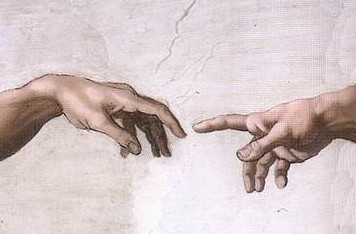
Hands of God & Adam, fingers about to touch, Sistine Chapel ceiling, Vatican, Michelangelo, 1508-1512 (via Wikipedia). In public domain.

The next twenty-four hours will mark a decade and a half since my former dissertation advisor Joe Trotter wrote today’s title quote in a God-like-pronouncement of an email to me regarding my final content-based revisions to my doctoral thesis. With those revisions following my committee meetings in October, I was now officially Dr. Collins. I knew that. I just didn’t feel it.

Working on a book-length research project with an abusive advisor and disinterested committee members at a school as conservative and isolating as Carnegie Mellon University left me exhausted. For I never felt I could ever be all of myself there. I made myself into the scholar I hoped that I wouldn’t become. At least, the twenty-one version of me that began graduate school back in ’91 held that hope. Five years later, I felt alienated from my own purpose and calling, and was more than unsure about becoming a full-time professor and historian. Especially given the wonderful examples of scholarly inhumanity and hypocrisy that Trotter, Dan Resnick and so many others had proven themselves to be (see “You’re Not Ready” post from November ’08 and “And Now, A Plagiarism Moment” post from September ’10).

I was burned out. I felt numb, with a boiling mantle of rage underneath the surface. If Trotter had said the

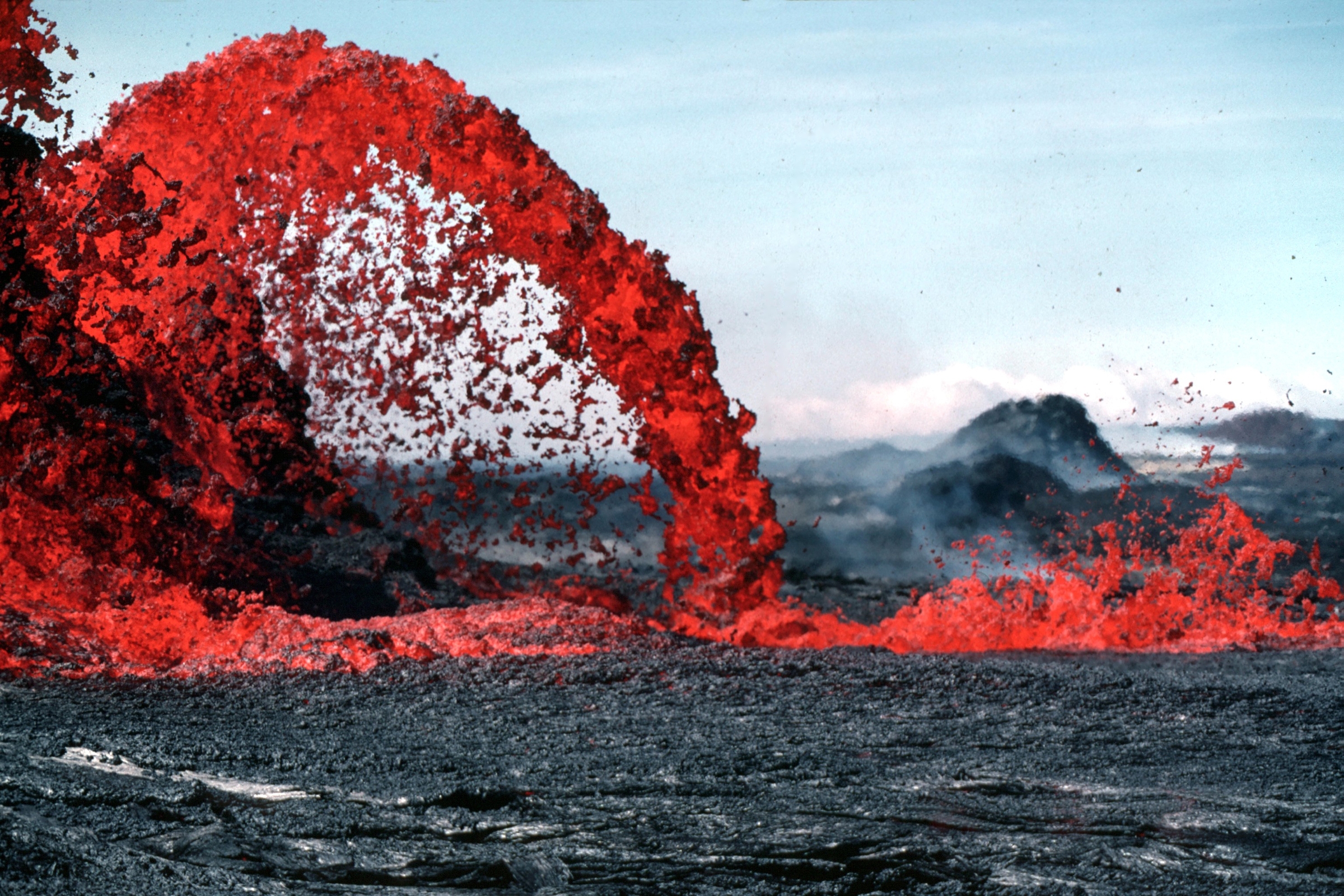
Arching fountain of a Pahoehoe (like my post-PhD rage) approximately 10 m high issuing from the western end of the 0740 vents, a series of spatter cones 170 m long, south of Pu‘u Kahaualea, September 10, 2007. (USGS via Wikipedia). In public domain.

wrong thing to me at the wrong time in ’96, I probably would’ve laid him out with a right hook to the jaw. And Resnick’s lucky that I didn’t own a car, because I might’ve run him down with it.

As it was, when Trotter attempted to meet with me a few weeks later to discuss “my future,” I refused. Especially given his suggestions for job applications. One, a one-year position at a University of Nebraska branch campus. The other, a CUNY school in Queens with a proposed position that wouldn’t begin until July ’98. I told him, “You don’t get to determine my future, certainly not without me.”

What should’ve been a period of rest and repair between Thanksgiving Week ’96 and graduation day in May ’97 was hardly that at all. It took me, really and truly, six months to recover from the dissertation process, and probably close to two years to not pass by or go on Carnegie Mellon’s campus without wanting to strangle my dissertation committee with piano wire. By then, I’d moved on to the rather mundane task of figuring out how to cobble together a career that wasn’t dependent on a full-time faculty position in academia.

And over the past fifteen years, I have pieced together several careers. As a part-time college professor, as a nonprofit program officer and as a consultant. It helped to have people like the late Barbara Lazarus and my dear friend Cath Lugg in my corner in those first years after I’d finished my doctorate. It helped that I expanded my career options from merely pursuing a history professorship wherever Joe Trotter’s winds could’ve taken me.

But it helped, most of all, for me to start trusting my instincts, my own heart, again. The irony of my complete disillusionment at the end of my degree-earning journey was that it left me with the time to contemplate whom I thought I really was, what I really wanted to do in life, and how I wanted to do it.

It was far from an immediate process of epiphanies and revelation. It took me nearly six years after finishing my dissertation to see myself as a writer, cutting through twenty years of denial and abuse in the process. It took me a little longer to see myself as a writer first and foremost, with all of my other professional hats second, third, and so forth. To understand that mine was a concern far greater than multiculturalism in education. My role as a writer and educator was also about aspirations, academic pathways to success, racial and ethnic equity in education, access to and success in college.

Barbara Sizemore, 1927-2004, circa mid-1990s. (http://sesp.northwestern.edu).

Now, that doesn’t mean that I haven’t looked back to wonder what could’ve been. If I were a White male with my credentials, I’d long ago been doing what I’ve been fighting to do as a writer and educator for years. If my advisors had been someone like a Cornel West or Henry Louis Gates. Or if I had attended an Ivy League school in undergrad. Or if I’d earned a master’s degree in journalism or communications, or a doctorate in a school of education or in psychology.

The late Barbara Sizemore once warned me about earning my doctorate in history some two decades ago. “You always have to do things the hard way, don’t you?,” she said to me with disapproval when she learned of my acceptance into Pitt’s history PhD program. I should’ve said, “Yes, I do.” Because the last fifteen years have been a hard road, as all roads to enlightenment are.

Out of Touch, In A Bubble

18 Friday Nov 2011

Posted by decollins1969 in 1, Academia, Boy @ The Window, culture, Eclectic, Politics, Pop Culture

≈ Leave a comment

Tags

American Narcissism, Bubbles, Child Rape, Collusion, Cover-up, Insularity, Jerry Sandusky, Media, Narcissism, Occupy Wall Street, Pedophilia, Penn State, Police Brutality, President Barack Obama, Protests


Bubbles in water, November 17, 2011. (http://crusaders.biz).

I have said in many a blog post over the past four years how narcissistic our people are in this age. But with the recent uncovering of the extinction-level-event involving a serial child rapist and the decades-long covering for Jerry Sandusky at Penn State University has come something somewhat more subtle. A number of journalists and commentators have discussed the “bubble” that has existed at Penn State for years, the one that allowed for a group of high level of administrators to cover up at least one crime.

But the bubble is much more than covering up or denying the existence of a pedophile on a university campus. It’s how Penn State’s leadership has dealt with the world inside and outside of central Pennsylvania. Their commitments of support for two administrators who perjured themselves about what they knew regarding Sandusky’s child rape activities on Penn State’s campus in ’02. Their surly answers and vague statements to the media about the status of coaches or the football team. The three days it took Penn State’s Board of Trustees to respond to the national media crush that came with Sandusky’s arrest and release of the attorney general’s grand jury report with a statement and the firing of the university president and Joe Paterno.

A Real Time with Bill Maher writer playing role of conservative voter in a bubble, September 17, 2011. (Fanny Brown Rice/Flickr.com). In public domain.

And — even above Joe Paterno dictating his retirement terms to the Board of Trustees — Sandusky and his creepy lawyer Joe Amendola’s crash-and-burn defense of the pedophile’s “horse-play” actions via Bob Costas and Rock Center on NBC on Monday. It’s as if Sandusky, Paterno, Amendola and the interim head coach Tom Bradley expect their one-off communiques and non-committal pressers to keep the national and international media away. Kind of like they way they’ve been operating their little fiefdom for the past half-century, by stonewalling and intimidating local media and local authorities.

This bubble, though, isn’t limited to an institution as insular as Penn State. Because our nation has been a superpower for so long, our narcissism has allowed the rich, famous and powerful to create lots of bubbles. Even when folks have wanted to be in touch with the rest of the world, with the common folk of our society, their bubbles have made their interactions awkward and elitist, and have created their own set of problems.

We can start with President Barack Obama. Despite all of his oratory powers, his keen powers of intellect and insight, and his well-connected handlers, POTUS 44 is in the ultimate bubble, as out of touch with the American public as any of his post-World War II predecessors. A president that rode in on a populist wave in ’08, Obama has been all but disconnected from the Occupy Wall Street movement that was sparked — at least in part — by his brief moments of energy on behalf of the jobless in August and September. The bubble allows even someone as bright as Obama to become deluded in his mission, to fall into the grasp of political and corporate interests, even as he works for the American people.

POTUS 43, the man in the ultimate bubble, at window on Air Force One during fly-over of Katrina devastation, August 31, 2005. (http://Politico.com). In public domain.

The mainstream media, colored as it is these days by the green of corporate and affluent interests, is also in its own bubble. They are so far removed from the pulse of the American public that even the “man on the street” interviews done by local news reporters seem staged. They talk mostly to themselves, and are so enamored with their own intellect that even most scholars in academia think journalists are arrogant.

There’s a reason why the media slants everything to look like two equal and opposite sides, no matter the moral imperative to tell the truth. Which, by the way, is the raison d’etre of the Fourth Estate, no? They go through Hell itself to find an opposing side to counter the overwhelming evidence of climate change, or bring in Sandusky’s lawyer — a man with a sordid sexual history, knocking up and marrying a sixteen-year-old client of his — to counter charges against a serial child rapist (alleged). All in the name of objectivity, as subjective as an art critic at an Andy Warhol show.

The mayors of New York, Portland, Oakland and other places are in their bubble of shunning protests that last longer than a Grateful Dead concert, more interested in protecting the interests of their corporate and rich individual buddies than the public at large. And the police? Their bubble is one that allows them to see everyone as the enemy. Their slogan might as well be “To protect and serve — as long as you’re rich or a corporation.”

Protests, sit-ins, revolutions. They all burst bubbles, and put even the most insulated in touch with the pain that ordinary folks feel. That’s what the powerful and rich fear most. And that’s why more of us need to walk around with our proverbial toothpicks, ready to pop as many bubbles as we encounter.

← Older posts
Newer posts →

Boy @ The Window: A Memoir

Boy @ The Window: A Memoir

Places to Buy/Download Boy @ The Window

There's a few ways in which you can read excerpts of, borrow and/or purchase and download Boy @ The Window. There's the trade paperback edition of Boy @ The Window, available for purchase via Amazon.com at http://www.amazon.com/Boy-Window-Donald-Earl-Collins/dp/0989256138/

There's also a Kindle edition on Amazon.com. The enhanced edition can be read only with Kindle Fire, an iPad or a full-color tablet. The links to the enhanced edition through Apple's iBookstore and the Barnes & Noble NOOK edition are below. The link to the Amazon Kindle version is also immediately below:

scr2555-proj697-a-kindle-logo-rgb-lg

Boy @ The Window on Amazon.com: http://www.amazon.com/Boy-The-Window-Memoir-ebook/dp/B00CD95FBU/

iBookstore-logo-300x100

Boy @ The Window on Apple's iBookstore: https://itunes.apple.com/us/book/boy-the-window/id643768275?ls=1

Barnes & Noble (bn.com) logo, June 26, 2013. (http://www.logotypes101.com).

Boy @ The Window on Barnes & Noble: http://www.barnesandnoble.com/w/boy-the-window-donald-earl-collins/1115182183?ean=2940016741567

You can also add, read and review Boy @ The Window on Goodreads.com. Just click on the button below:

Boy @ The Window

Twitter Updates

Tweets by decollins1969
  • RSS - Posts
  • RSS - Comments

Archives

  • June 2025
  • April 2023
  • September 2022
  • August 2022
  • July 2022
  • June 2022
  • May 2022
  • April 2022
  • March 2022
  • January 2022
  • December 2021
  • November 2021
  • October 2021
  • September 2021
  • August 2021
  • July 2021
  • June 2021
  • April 2021
  • March 2021
  • February 2021
  • January 2021
  • December 2020
  • November 2020
  • October 2020
  • September 2020
  • August 2020
  • July 2020
  • May 2020
  • April 2020
  • March 2020
  • January 2020
  • December 2019
  • November 2019
  • August 2019
  • July 2019
  • June 2019
  • May 2019
  • April 2019
  • March 2019
  • February 2019
  • January 2019
  • December 2018
  • November 2018
  • October 2018
  • September 2018
  • August 2018
  • July 2018
  • June 2018
  • May 2018
  • March 2018
  • February 2018
  • January 2018
  • December 2017
  • November 2017
  • October 2017
  • September 2017
  • August 2017
  • July 2017
  • June 2017
  • May 2017
  • April 2017
  • March 2017
  • February 2017
  • January 2017
  • December 2016
  • November 2016
  • October 2016
  • September 2016
  • August 2016
  • July 2016
  • June 2016
  • May 2016
  • April 2016
  • March 2016
  • February 2016
  • January 2016
  • December 2015
  • November 2015
  • October 2015
  • September 2015
  • August 2015
  • July 2015
  • June 2015
  • May 2015
  • April 2015
  • March 2015
  • February 2015
  • January 2015
  • December 2014
  • November 2014
  • October 2014
  • September 2014
  • August 2014
  • July 2014
  • June 2014
  • May 2014
  • April 2014
  • March 2014
  • February 2014
  • January 2014
  • December 2013
  • November 2013
  • October 2013
  • September 2013
  • August 2013
  • July 2013
  • June 2013
  • May 2013
  • April 2013
  • March 2013
  • February 2013
  • January 2013
  • December 2012
  • November 2012
  • October 2012
  • September 2012
  • August 2012
  • July 2012
  • June 2012
  • May 2012
  • April 2012
  • March 2012
  • February 2012
  • January 2012
  • December 2011
  • November 2011
  • October 2011
  • September 2011
  • August 2011
  • July 2011
  • June 2011
  • May 2011
  • April 2011
  • March 2011
  • February 2011
  • January 2011
  • December 2010
  • November 2010
  • October 2010
  • September 2010
  • August 2010
  • July 2010
  • June 2010
  • May 2010
  • April 2010
  • March 2010
  • February 2010
  • January 2010
  • December 2009
  • November 2009
  • October 2009
  • September 2009
  • August 2009
  • July 2009
  • June 2009
  • May 2009
  • April 2009
  • March 2009
  • February 2009
  • January 2009
  • December 2008
  • November 2008
  • October 2008
  • September 2008
  • August 2008
  • July 2008
  • June 2008
  • May 2008
  • April 2008
  • March 2008
  • February 2008
  • January 2008
  • December 2007
  • November 2007
  • October 2007
  • September 2007
  • August 2007
  • July 2007
  • June 2007

Recent Comments

MaryPena's avatarMaryPena on My Day of Atonement/Bitter Hat…
decollins1969's avatardecollins1969 on No Good Teaching Deed Goes…
Mary Rose O’Connell's avatarMary Rose O’Connell on No Good Teaching Deed Goes…

NetworkedBlogs on Facebook

NetworkedBlogs
Blog:
Notes From a Boy @ The Window
Topics:
My Life, Culture & Education, Politics & Goofyness
 
Follow my blog

616 616 East Lincoln Avenue A.B. Davis Middle School Abuse Academia Academy for Educational Development AED Afrocentricity American Narcissism Authenticity Bigotry Blackness Boy @ The Window Carnegie Mellon University Child Abuse Class of 1987 CMU Coping Strategies Crush #1 Crush #2 Death Disillusionment Diversity Domestic Violence Economic Inequality Education Family Friendship Friendships Graduate School Hebrew-Israelites High-Stakes Testing Higher Education History Homelessness Humanities Humanities Program Hypocrisy Internalized Racism Jealousy Joe Trotter Joe William Trotter Jr. K-12 Education Love Manhood Maurice Eugene Washington Maurice Washington Misogyny Mother-Son Relationship Mount Vernon High School Mount Vernon New York Mount Vernon public schools Multiculturalism MVHS Narcissism NFL Pitt Pittsburgh Politics of Education Poverty President Barack Obama Race Racial Stereotypes Racism Relationships Self-Awareness Self-Discovery Self-Reflection Sexism Social Justice Teaching and Learning University of Pittsburgh Violence Whiteness Writing

Top Rated

Blog at WordPress.com.

  • Subscribe Subscribed
    • Notes from a Boy @ The Window
    • Join 103 other subscribers
    • Already have a WordPress.com account? Log in now.
    • Notes from a Boy @ The Window
    • Subscribe Subscribed
    • Sign up
    • Log in
    • Report this content
    • View site in Reader
    • Manage subscriptions
    • Collapse this bar
 

Loading Comments...