• About Me
  • Other Writings
  • Interview Clips
  • All About Me: American Racism, American Narcissism, and the Conversation America Can’t Have
  • Video Clips
  • Boy @ The Window Pictures
  • Boy @ The Window Theme Music

Notes from a Boy @ The Window

~

Notes from a Boy @ The Window

Author Archives: decollins1969

Glad Obama’s In, But Nothing to Celebrate

21 Monday Jan 2013

Posted by decollins1969 in 1, culture, Eclectic, Patriotism, Politics, Pop Culture, race, Religion, Work

≈ Leave a comment

Tags

Capitulation, Centrist, Compromise, Domestic Policies, foreign policy, Glenn Greenwald, Great Recession, Inauguration, Inauguration Day, Long-Term Unemployment, Mitt Romney, National Security, Obama, Obama Administration, Obama's Legacy, Obama's Second Term, Police State, Policies, President Barack Obama, President Obama, Privatization, Rhetoric, Second Inauguration, Wall Street Deregulation


President Barack Obama takes his first oath of office, US Capitol, January 20, 2009. (DoD photo by Master Sgt. Cecilio Ricardo, USAF/Wikipedia). In public domain.

President Barack Obama takes his first oath of office, US Capitol, January 20, 2009. (DoD photo by Master Sgt. Cecilio Ricardo, USAF/Wikipedia). In public domain.

Don’t get me wrong. I wholeheartedly supported President Barack Obama for election in ’08 and again in ’12, as my blog posts and my thousands of tweets show over the past five years. I’ve admonished neo-cons, naysayers, liberals and racists on my pages over the past half-decade for their ridiculous statements about the president’s ancestry, motivations and policies.

But, even with all of this, I’ve gleaned flaws in President Obama’s approach to domestic and foreign policy, to his administration’s continuing Bush’s work on the semi-police state, to his whole-cloth acceptance of K-12 education “reform” and backing off on regulations for the for-profit higher education institution world (see my posts “Can Do No Wrong” [March ’10], “Bad Conversations and Education Reform” [November ’10], “The POTUS and The Last Airbender” [December ’10],  “For the Love of a Lockout & an Impasse” [July ’11], “Emancipation and Compromise” [this month] and “Why Obama Is Only A Failed Centrist President” [this month]).

The recent fiscal cliff solution, the extension of widespread surveillance powers over our email, cell phone calls, text messages (and, presumably, blogs, tweets and Facebook pages like my own as well), and the ho-hum approval of $633 billion in appropriations for the Defense Department’s budget this year, though, give me even less of a reason to celebrate President Obama’s second inauguration.

Crowd at National Mall morning of President Obama's inauguration, January 20, 2009. (DoD photo by Senior Master Sgt. Thomas Meneguin, USAF/Wikipedia). In public domain.

Crowd at National Mall morning of President Obama’s inauguration, January 20, 2009. (DoD photo by Senior Master Sgt. Thomas Meneguin, USAF/Wikipedia). In public domain.

Without a doubt, he was a better choice than that dumb-ass sycophant Mitt Romney. If only because Romney’s entire raison d’être as president would’ve been to allow the rich and corporations another round of economic rape, destroying the American middle class, and pushing the working poor and welfare poor into oblivion in the process.

Obama’s win in November, however, was a sigh of relief for me, not really a jumping-for-joy moment. Now, after witnessing the fiscal cliff debacle, it is obvious that the next four years will be more of the same lukewarm, milk-toast domestic proposals, hardline national security and military policies, and half-baked rhetoric that we were all a part of in President Obama’s first term. By 2017, if I’m still alive to write and tweet, here’s what will remain before us as major crises when Obama leaves office:

National debt; universal health care reform; higher education reform; student aid; student loan policy; minimum wage; living wage; union-busting; long-term unemployment; long-term underemployment; de-industrialization; Wall Street/banking deregulation; housing/mortgage crisis; comprehensive immigration reform; federal tax code; rendition and torture; warrantless wiretapping/surveillance; drone strikes on innocent civilians; upgrading the electrical grid; crumbling infrastructure (roads, bridges, water and sewage systems); PreK-12 education reform; social mobility; green jobs; environmental pollution; cap-and-trade; global warming/climate change; nuclear proliferation; Medicare/Medicaid solvency; religious tolerance; racial/ethnic tensions; women’s reproductive rights; over-incarceration of poor men and women of color; police brutality; gun violence; violent crimes; domestic terrorism; cybersecurity; military-industrial complex; racial/gender/age/sexual orientation discrimination in the workplace; school privatization/high-stakes testing/charter schools/voucher programs; border security, the War on Drugs, prison-industrial complex; voter disenfranchisement; decriminalization of marijuana (and other drugs); post-trauma stress disorder for war veterans and the poor; lingering effects of the Great Recession; funding for public mental health facilities; high-speed rail; food security and policy; prescription drug abuse; Big Pharma; Social Security “reform;” obesity/diabetes/high-blood pressure and other long-term illnesses; and GMOs.

Aerial views of the damage caused by Hurricane Sandy,  New Jersey coast taken during a search and rescue mission, October 30, 2012.  (Master Sgt. Mark C. Olsen, USAF/Wikipedia). In public domain.

Aerial views of Hurricane Sandy damage, New Jersey coast [climate change as example of crises that will go unaddressed during Obama’s second term], October 30, 2012. (Master Sgt. Mark C. Olsen, USAF/Wikipedia). In public domain.

Now, you tell me. Do I really have any reason to see today as a day of celebration?

Paul Krugman: Thomas Friedman ‘Wrong’ About Budget Deficit

17 Thursday Jan 2013

Posted by decollins1969 in Uncategorized

≈ Leave a comment


Krugman is right that Friedman is usually wrong. And not just about the national debt and the federal budget deficit. Despite the new technologies, the world isn’t flat. The story of the Lexus and the olive tree is only relevant today if we begin fueling Lexus cars with olive oil as an alternative source of energy. Now, Friedman wants to compare debt with global climate change? Is he for real?

Unfortunately, Friedman is “for real,” all right, as in a really nosy blowhard masquerading as an intellectual journalist. He’s made himself a multimillionaire taking parts of half-baked ideas and turning them into books and generous speaking fees. Friedman’s the ultimate symbol of our style-over-substance age, emblematic of our decline as a culture. While Friedman may see himself as more serious than Malcolm Gladwell and on par with Jared Diamond, he is neither that good at exploring an idea nor that talented or thoughtful as a writer.

David Brooks, for all his vapid neo-conservative kookiness (and now with his new “Humility” course at Yale), doesn’t always see himself as the smartest guy in the room, above the fray of everyday humanity. Friedman, on the other hand, often sees himself as the smartest guy in the Western Hemisphere, and among the top three when he travels to India or China. That is why, if or when climate change produces a mini-Ice Age, I will gladly gather Friedman’s books and columns and warm my hut with them.
Read the Article at HuffingtonPost

The Falsehoods of a Civil Rights Movement Legacy

15 Tuesday Jan 2013

Posted by decollins1969 in 1, Academia, Boy @ The Window, culture, Eclectic, Mount Vernon High School, Mount Vernon New York, New York City, Patriotism, Politics, Pop Culture, race, Youth

≈ Leave a comment

Tags

Birthday, Civil Rights, Civil Rights Movement, Class Divide, Educational Aspirations, Estelle Abel, Generation X, Generation Y, Generational Divide, Generational Prejudice, Legacy, Martin Luther King Jr., Mythology, Myths, Police Brutality, Post-Civil Rights Generation, Poverty, Racism, Stop and Frisk


Martin Luther King, Jr. Memorial statue, National Parks Service, Washington, DC, August 2, 2012. (NPS via Wikipedia). Qualifies as fair use under US Copyright laws, as this is a 2D picture of a 3D sculpture.

Martin Luther King, Jr. Memorial statue, National Parks Service, Washington, DC, August 2, 2012. (NPS via Wikipedia). Qualifies as fair use under US Copyright laws, as this is a 2D picture of a 3D sculpture.

Well, it’s not officially Martin Luther King Day yet, but since Dr. King was actually born on January 15, 1929, better for me to talk about him today than next week. Especially with President Obama’s second inaugural going on at the same time. But what a legacy! Yet his generation of civil rights activists and righteous protesters have done as much harm to his legacy as have conservatives invoking his “I Have a Dream” speech every time they’re called out on their bigotry.

Yeah, that’s right, I said it! One of the benefits — if you want to call it that — of being born in ’69 is that I’ve witnessed the devolution of the Civil Rights Movement and its leaders and followers into a gauntlet of gatekeepers who expect everyone from my generation to start every sentence paying homage to their sacrifices. I have no problems with that, at least in theory. But the reality is that most folks from the Civil Rights generation — at least the successful ones — made few if any sacrifices for “the cause.” They were in the right place at the right time with the right education and managed to find jobs, careers and positions of influence while the least fortunate of us all saw few material or psychological benefits from Dr. King’s ultimate sacrifice.

I’ve already talked at length about Estelle Abel, a former Mount Vernon High School Science Department chair (see my posts “My Last Day” from June ’11 and “In-Abel-ed” from June ’12 for much more). Her soliloquy about sacrifice and the Civil Rights Movement was supposed to make me feel bad about letting Black Mount Vernon, New York down because I only graduated fourteenth in my class out of over five hundred students. There are others, former and current teachers, professors, librarians, politicians, writers, producers, editors, pastors, politicians, bosses and charlatans who’ve made a point to discuss their elitist notions of the Civil Rights Movement and generation with me.

Hundreds of thousands descended on Washington, DC's Lincoln Memorial August 28, 1963. (Marines' Photo via Wikipedia). In public domain.

Hundreds of thousands descend on Lincoln Memorial August 28, 1963. (Marines’ Photo via Wikipedia). In public domain.

But most — if not all — of these folks are wrong about their glorified view of the Movement and its legacy four and a half decades later. For college educated, middle class African Americans, life has gotten better, even with bigotry, glass ceilings, DWB, a less stable economy, and the conservative backlash that has gone on unabated since the three years before Dr. King’s assassination. For Blacks not as fortunate, almost nothing has changed, at least not for the better.

Some of it, to be sure (and to cut Bill Cosby some slack), is because of individual choices and poor decision-making. Folks, however, can rarely make decisions outside of their own context and circumstances — think outside of the box, in other words — without a significant amount of help. Poverty in all of its forms is just as grinding now as it was a half-century ago. To expect people from the generations since Dr. King to suddenly forget their poverty, abuse, neglect and exploitation and give praise to a generation where many but far from most made sacrifices for the Movement is ludicrous.

I’m certain that had Dr. King lived over the past forty-five years, he wouldn’t have stood by to allow his generation to constantly criticize the under-forty-five as slackers and immature and unfocused, as folks more concerned with money than equality. King likely would’ve made the point that the post-Civil Rights Generations X and Y are merely a reflection of their upbringing, of their parents and teachers and mentors’ nurturing and training. He would’ve made the same point that others from his generation like the late law professor and scholar-activist Derrick Bell has made over the years. That fighting racism, educational neglect and economic exploitation requires more tools than the moral high-ground, protests, marches, a sympathetic media and obvious redneck tactics. The Movement is itself a shifting terrain that requires new tools and tactics to achieve small victories over a long period of time, longer than most folks from the era are willing to admit.

I actually don’t have a strong ax to grind against the Civil Rights generation. Without folks like Dr. King or Jesse Jackson, Medgar Evers or Ella Baker, I wouldn’t have found myself in a gifted-track program in middle school or high school in the ’80s. But let’s not act as if my life was a walk in the park. The legacy of the Civil Rights era never stopped a fist from being thrown into my face by my now ex-stepfather. It never kept us from going on welfare or kept two of my siblings from bring diagnosed as mentally retarded.

NYPD Stop and Frisk caption (actual details for photo unknown), August 2012. (http://thinkprogress.org).

NYPD Stop and Frisk caption (actual details for photo unknown), August 2012. (http://thinkprogress.org).

Nor did the Civil Rights Movement’s legacy stop teachers and professors from putting up barriers to my success as a student or employers from putting up a glass ceiling in an attempt to slow my career advance. It never stopped me from being followed and frisked by police or harassed by overzealous security guards. It’s never paid one of my bills, kept food on my plate or kept me from experiencing homelessness. It’s never even been a source of pride, because that would mean that the Civil Rights Movement and its legacy would belong to me as much as it does to the people who allegedly marched with Dr. King.

I can’t wait for those who cling almost in desperation to the idyllic legacy of Dr. King and the cause to retire and fade away, for the ’60s to truly be over. Maybe that’s when folks from the post-’60s generation — folks like me who care about economic and educational equity, social justice and spiritual transformation — will be able to make an impact on our nation’s sorry state of consciousness without pouring libations to folks who gave up on Dr. King’s work ages ago.

Remembering Harold Meltzer

09 Wednesday Jan 2013

Posted by decollins1969 in 1, Academia, Boy @ The Window, culture, Eclectic, eclectic music, Mount Vernon High School, Mount Vernon New York, Politics, Pop Culture, race, Youth

≈ 5 Comments

Tags

AP US History, Bitterness, Confirmed Bachelor, Death, Dedication, Egalitarianism, Eulogy, Friendship, Harold I. Meltzer, Harold Meltzer, Homophobia, Humanities, Humanities Program, Learning, Life, Mentoring, Metropolitan Opera House, Morison & Commanger, Perseverance, Politics of Education, Self-Discovery, Teaching


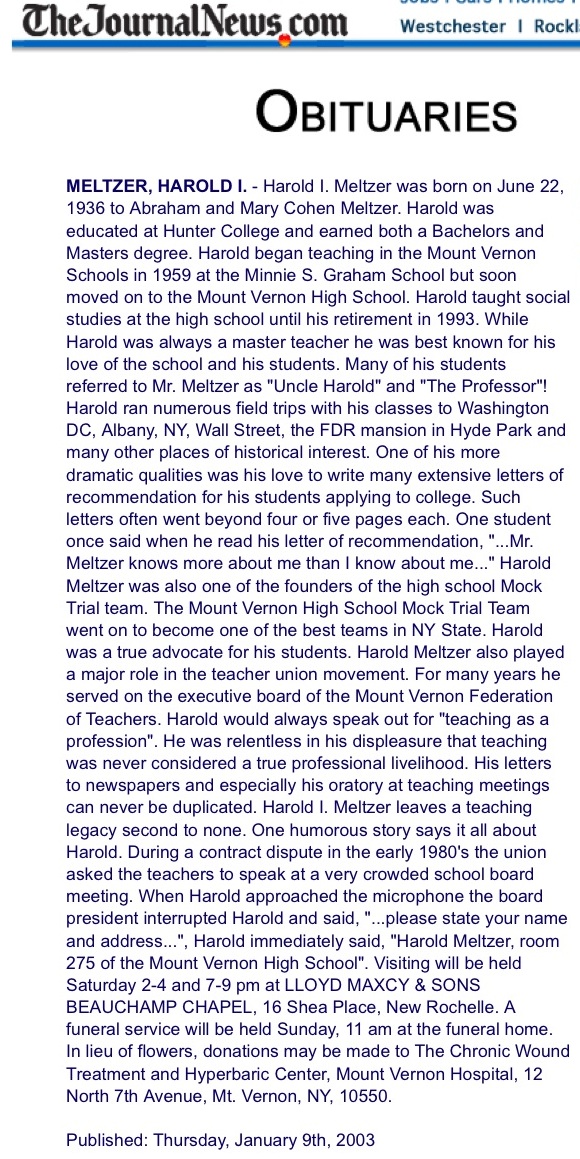
Harold Meltzer obituary (via Frank Pandolfo), January 9, 2003. (Westchester Journal News).

Harold Meltzer obituary (via Frank Pandolfo), January 9, 2003. (The Journal News).

Harold Meltzer, my favorite and best teacher of all, died on January 2, 2003 at the age of sixty-six, ten years ago last week. He was all too young and all too bitter about his years as a history teacher at Mount Vernon High School. But then, dealing with entitled parents and unrepentant administrators in Mount Vernon, New York for thirty-five years would do that to most people. Despite that, Meltzer was a rock, the first teacher since my elementary school years that I genuinely trusted with my family secrets and my inner self. He was the first and maybe only teacher I had in my six years of Humanities who actually seemed like he wanted to teach us (see my post “No Good Teaching Deed Goes Unpunished” from May ’11).

I met Meltzer on our last day of tenth grade, after three days of finals and Regents exams, on June 21, ’85. He had summoned fourteen of us to “Room 275 of Mount Vernon High School,” as the invitation read. We had all registered to take Meltzer’s AP American History class in eleventh grade, our first opportunity to earn college credit while in high school.

Meltzer started off talking to us about Morison and Commager — who I now know as the great consensus historians of the ’50s, until the social history revolution made their textbooks irrelevant by the ’80s — as we sat in this classroom of old history books and even older dust and chalk. Meltzer himself looked to be in his late-fifties (he was actually a day away from his forty-ninth birthday), tall and lanky except for the protruding pouch in the tummy section. His hair was a mutt-like mixture of silver, white and dull gray, and his beard was a long, tangled mess.

Met Logo and A full house, seen from rear of stage, at the Metropolitan Opera House (former bldg, 39th Street), for a concert by pianist Josef Hofmann, November 28, 1937. (National Archives via Wikimedia). In public domain.

Met Logo and A full house, seen from rear of stage, at the Metropolitan Opera House (former bldg, 39th Street), for a concert by pianist Josef Hofmann, November 28, 1937. (National Archives via Wikimedia). In public domain.

The way he spoke, and the way his eyes looked when he spoke made me see him as a yarmulke-wearing preteen on his way to temple. The force with which his words would leave his mouth hit me immediately. As much as I noticed how frequently spit would spew out of Meltzer’s mouth, the rhythm of his speech was slow and sing-song, like an elder or grandfather taking you on a long, winding, roller-coaster-ride of a story. Most of all, I knew that he cared — about history, about teaching, about us learning, about each of us as people. Maybe, just maybe, for some of us, he cared too much.

But for at least for me, Meltzer’s eccentric space in which he told Metropolitan Opera House stories and talked about egalitarianism extended beyond the historical. He was the first teacher I had since before Humanities who’d ask me if things at home were all right, and knew intuitively that things weren’t. He was the first to ask me about how poor my family was and about hunger. And he was the first teacher ever to ask if I had a girlfriend. Needless to say, these questions were unexpected. Yet through these questions, Meltzer had begun to crack my thin, hard wall of separation between school and family.

Because Meltzer cared deeply about reaching students — about reaching me — our student-teacher relationship because a friendship after high school and a mentoring one as well. I wasn’t looking for a mentor, and Meltzer was only being Meltzer. Still, his stories about his battles with MVHS administrators, Board of Education folk, and with upper-crust parents who believed their kids were entitled to A’s just for showing up, were filled with lessons of perseverance, patience, and looking beyond everyday headaches in order to reach people. While this wasn’t a factor in my going to graduate school and spending a significant part of my life as a history professor and educator, these stories have helped me over the years.

1972 Dodge Dart Dark Green (similar to '74 Dodge Dart Meltzer owned when I was at MVHS), December 25, 2009. (http://www.fotosdecarros.com).

1972 Dodge Dart Dark Green (similar to ’74 Dodge Dart Meltzer owned when I was at MVHS), December 25, 2009. (http://www.fotosdecarros.com).

But unfortunately, it was a factor in why Meltzer became embittered and took early retirement in June ’93. The end of the Humanities Program, the intolerance of some administrators toward Meltzer as a “confirmed bachelor,” the lack of decency — forget about gratitude — from many of his most successful students. Those changes, these things, all would take a toll on any teacher who’d stay after school day after day to run Mock Trial, to facilitate study groups, to work on letters of recommendation for students. But no, most of my former classmates who had Meltzer between ’85 and ’87, all they could say was that “Meltzer was weird” or that “I didn’t understand” his lessons.

I’m thankful that I did have Meltzer as a teacher, friend and mentor between ’85 and ’02. I’m thankful that I had a chance to interview him for what is now my Boy @ The Window manuscript in August and November ’02, just a couple of months before he passed (see my post “Mr. Meltzer” from June ’09). I’m glad that despite his physical and psychological pain, Meltzer welcomed me with open arms and answered my questions about his life and his career. I just wish that my former classmates and some of Meltzer’s more cut-throat colleagues had taken the time to really know the man.

Why Obama Is Only A Failed Centrist President

07 Monday Jan 2013

Posted by decollins1969 in 1, culture, Eclectic, Patriotism, Politics, Pop Culture, race

≈ 1 Comment

Tags

Bipartisanship, Centrist, Congress, Corporate Interests, Democratic Party, Deregulation, Economic Inequality, Fiscal Cliff, Fiscal Cliff Deal, George H. W. Bush, George W. Bush, Gerald Ford, Jimmy Carter, Lyndon Johnson, Media Coverage, Neo-conservatives, Presidency, President Barack Obama, President Bill Clinton, President Obama, Republican Party, Richard Nixon, Ronald Reagan, social mobility, Social Safety Net, Washington


Photo portrait of President Lyndon B. Johnson [our last transformational President] in the Oval Office, leaning on a chair, March 10, 1964. (Arnold Newman, White House Press Office via Wikipedia). In public domain.

Photo portrait of President Lyndon B. Johnson [our last transformational President] in the Oval Office, leaning on a chair, March 10, 1964. (Arnold Newman, White House Press Office via Wikipedia). In public domain.

I don’t say what I have to say about President Barack Obama lightly. But in light of the recent “fiscal cliff deal”  and the negotiations process that preceded it, I’ve now become convinced that Obama will be seen as a pretty good president. Period. Obama hasn’t been a unique president, despite his race or relatively humble beginnings. Obama is hardly a great president, either. Nor will Obama be a transformational president. If anything, Obama falls right in line with every American president since the election of Richard Nixon in 1968.

Photo of living presidents with then President-Elect Barack Obama in the Oval Office, January 7, 2009. (http://npr.org).

Photo of living presidents with then President-Elect Barack Obama in the Oval Office, January 7, 2009. (http://npr.org).

The fact is, Obama is a centrist president, beholden to the military-industrial complex, prison-industrial complex, Wall Street and corporate interests, just like Nixon, Ford, Carter, Reagan, Bush 41, Clinton and Bush 43 before him. That Obama is Black and intellectual in his approach matters little in terms of actual policies or in the path that he and his administration have taken toward incremental policies and half-baked compromises. Based on some of Obama’s policies, I could even make the argument that the President is a borderline neo-conservative, although I don’t think you can generalize this argument to every policy.

This has been an argument I’ve made in my US History courses over the past couple of years. When I’ve raised the idea that Nixon was a liberal Republican, that President Bill Clinton was a neo-con (see the repeal of Glass-Steagall Act in 1999 and TANF welfare reform in 1996 as but two examples), and that Obama is hardly a liberal at all, my students have collectively gasped. How dare I say that Nixon was more liberal than Clinton, that Obama is somewhere between a centrist and a neo-con!

But then I’ve worked with them through discussion to talk about the major domestic and foreign policy agendas of the past seven presidents in comparison to our current president. On so many issues, from the US relationship with Israel to the War on Drugs, from welfare reform to financial deregulation, from a re-escalation of the Vietnam War to the surge in Afghanistan, there hasn’t been a nanometer of space of difference in executive branch decision-making. Whether the people in these positions of power have been Nixon and Henry Kissinger, Jimmy Carter and Cyrus Vance, George W. Bush, Dick Cheney and Colin Powell, or Obama and Hillary Clinton.

So I’ve had my students work through parts of Obama’s agenda. The surge and gradual drawing down of US military forces in Afghanistan, in which part of their role is nation-building. “How is that any different from Bush 43?,” I’ve asked. The historic Affordable Care Act, a so-called universal health care bill that fails to cover 20 million Americans and works through complex networks of government subsidies and private insurers, a neo-con plan that failed as an alternative to single-payer under Clinton in 1994. “How is this really a liberal or progressive idea?,” I’ve asked. The continuing War on Drugs, the reauthorization of the Patriot Act, the highest rates of deportation of undocumented immigrants ever. “But yeah, Obama’s a liberal!,” I’ve said sarcastically in concluding this discussion with my students.

Some folks, like the reformed neo-con Bruce Bartlett, have compared the Democratic Party of recent years to the liberal Republicans of yesteryear. Bartlett, though, has stopped short of calling Democrats centrist neo-cons, which is in fact a much more apt description. Bartlett also stopped short in time, as he argued that the tipping point for the Democratic Party’s movement from left-of-center to right-of-center began with President Clinton in the 1990s. But that’s incorrect. The tipping point began when the Democratic Party’s New Deal coalition of labor unions and blue-collar Whites, Southern whites, Catholics and Blacks fell apart as part of a backlash against President Lyndon Johnson’s support of the Civil Rights Movement and the War on Poverty in the late-1960s.

Photo of Presidents George H.W. Bush, Reagan, Carter, Ford and Nixon at the  Ronald Reagan Presidential Library dedication, Simi Valley, CA, November 4, 1991. (Anne Cusack/Los Angeles Times).

Photo of Presidents George H.W. Bush, Reagan, Carter, Ford and Nixon at the Ronald Reagan Presidential Library dedication, Simi Valley, CA, November 4, 1991. (Anne Cusack/Los Angeles Times).

Most Americans, though, don’t have the knowledge or luxury of taking a long view of history and their lives in attempting to put Obama in context. The media’s constant coverage of every trumped-up, imagined or real crisis hardly helps matters, either. They assume on behalf of the public the idea that there are two equal and opposite sides to every issue and every argument, which means most journalists failed geometry in high school. As a result, most Americans believe that Obama’s a liberal because the media consistently makes the false claim that all Democrats are liberals and that a Black guy with a Harvard law degree who used to be a community organizer must be a liberal.

How is a budget cutting agenda that puts Social Security, Medicaid and Medicare on the table as entitlements (and not a paid-for weak social safety net) a liberal idea or policy agenda? How is coming out reluctantly in favor of gay marriage some great progressive stance, comparable to President Kennedy’s speech in favor of civil rights in 1963? How is consistently giving into oligarchic conservatives by pushing hard for a meager tax increase on the most privileged members of our nation — the people who benefited the most from 40 years of policies that have greatly increased the gap between rich and poor — part of a liberal strategy? It isn’t and they aren’t.

Obama being three steps to Congress’ left on gay marriage and a tax increase is an incredibly weak counterargument to the fact that he’s a centrist. And a failed one at that, as his centrism has been based on garnering bipartisan support of weak legislation in terms of socioeconomic appropriations and strong legislation in terms of defense and Big Brother-esque laws. Obama has pushed climate change, long-term unemployment and underemployment, social mobility and real education reform either off his presidential agenda or into the hands of the private sector.

Thank you, but no, Obama’s a centrist, not a liberal. If you want to see a liberal policymaker in action, the nearest place to go these days is Ottawa, not Washington.

The New Gameplan for Boy @ The Window

05 Saturday Jan 2013

Posted by decollins1969 in 1, Boy @ The Window, culture, Eclectic, Mount Vernon New York, Pop Culture, Youth

≈ 2 Comments

Tags

Book Publishing, Commercial Publishing, Editors, Fear of a "Black" America, Gameplan, Independent Publishers, Literary Agents, Manuscript Development, Marketing, Revising, self-publishing, Siege Mentality, Stubbornness, Writers, Writing


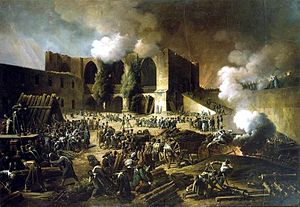
Siege of Burgos (Spain), 1813, by François Joseph Heim. Pic taken December 23, 2012. (1970gemini via Wikipedia). In public domain.

Siege of Burgos (Spain), 1813, by François Joseph Heim. Pic taken December 23, 2012. (1970gemini via Wikipedia). In public domain.

It’s a new year, and with the beginning of all years is a chance to execute new plans, or for most people, to make resolutions they often don’t keep. Such is the case for me regarding my coming-of-age memoir Boy @ The Window. Hopefully I’ll be in the first category of plans for my new year and not in the latter. After five years of beating my fists on the walls of literary agents, acquisition editors and commercial publishers, I have to do far more than hope.

And my fists have needed a few months to heal after the past few years. In all, I contacted somewhere around 140 agents, editors and publishers since the end of ’07 about Boy @ The Window. One in four asked to look at either the first few pages, the first couple of chapters or the entire manuscript. Only two of those agents agreed to represent the manuscript, and then, with major conditions. One went as far as to suggest that I only focus on my family life, as if my preteen and teenage years in Humanities had no impact on my development at all. The other thought I could sell Boy @ The Window better if I turned it into a work of commercial fiction.

I should’ve seen the writing on the proverbial commercial book industry wall long before today. Between the shifts in the commercial publishing marketplace since my experiences with Fear of a “Black” America between ’99 and ’04, the Great Recession’s impact on the industry since ’08, and the rise of the ebook in the past decade. All three pointed to one simple fact. If one wasn’t already a successful author prior to a decade ago, or famous, or with a significant connection to commercial publishing (e.g., a journalist, an editor, or even an editorial assistant), one would face a long, hard walk through the traditional route of publishing a book.

Boxer David Haye displays his bruised knuckles, January 12, 2011. (http://www.thesun.co.uk/)

Boxer David Haye displays his bruised knuckles (cropped), January 12, 2011. (http://www.thesun.co.uk/)

But I’d made up my mind the moment I began working on Boy @ The Window in earnest in the summer of ’06. I didn’t want to self-publish my second book, not after a year and four months of promoting Fear of a “Black” America. While on some level I successfully promoted my first book (I have receipts of my royalty checks to prove that), selling a thousand copies while spending $3,500 to do so for a semi-academic book on multiculturalism was nothing like I had envisioned the process back in ’99.

I persisted in the idea of traditional commercial publishing for the manuscript. I dutifully attended writers conferences, book fairs and other opportunities to meet other authors, potential agents and a few editors. I wrote and rewrote my query letter and proposal, with more revisions than I probably did on the Boy @ The Window manuscript itself. I sent out my letters, took phone calls when they came, reached out to folks for help. And all to end up concluding that I would be in need of dentures by the time a commercial publisher would lukewarmly pick up my manuscript for its list.

Now, even my harshest critics (myself included) consider Boy @ The Window a solid manuscript. So the issue has never really been the quality of the story or the writing. The issues come down to an industry in seismic flux and to me as a person. With my own career in transition and without the obvious examples of success (I’m not regularly booked for TV programs, I have yet to make my first $1 million), I can’t say that I’m in the public eye enough to sell 10,000 copies of my book per week for three weeks, and at least 5,000 a week for three months. That’s the industry threshold for groundbreaking nonfiction success these days.

So dreams of sugar plums or $100,000 advances aren’t exactly dancing in my head these days. But much has changed since I published Fear of a “Black” America in the past eight and a half years. For one, ebooks rule the book publishing marketplace, enabling any aspiring (if not talented) writer to self-publish or to publish independently. Add to this the mix social media, like my blog, Twitter, Facebook and other connections, and nontraditional publishing may well make as much sense as working with an agent.

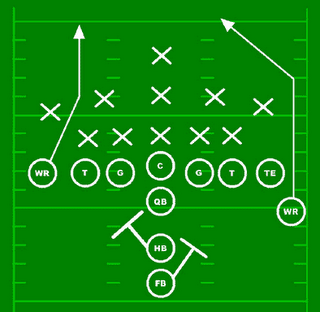
Intermediate pass route game plan (with at least one running back as blocker), November 2011. (http://www.npengage.com).

Intermediate pass route game plan (with at least one running back as blocker), November 2011. (http://www.npengage.com).

This means much more work — and money — on my part, though. I’ll need to hire a copy editor, figure out artwork, finalize pictures, implement my proposed marketing strategy, plan a date for publishing to coincide with marketing, and so on. But I also realize that few commercial publishers do this work for authors anymore, anyway, as they’ve slashed their promotion and marketing budgets. The advantage, then, goes to people like me, with some means for publication and enthusiasm for my book.

I realized all of this at least two years ago. Apparently, so did my wife. When I finally decided to go this route for Boy @ The Window a few weeks ago, she said “I thought you should’ve done it two years ago, but you weren’t ready.” Meaning that I wasn’t ready to dismantle my siege guns and remove my land minds around the commercial publishing castle. Now that I have, I can say with a high degree of certainty that I will publish Boy @ The Window this year, 2013, short of an apocalyptic event.

Emancipation and Compromise

01 Tuesday Jan 2013

Posted by decollins1969 in 1, culture, Eclectic, Patriotism, Politics, Pop Culture, race

≈ 3 Comments

Tags

American Civil War, Compromise, Economic Inequality, Emancipation Proclamation, Fiscal Cliff, Fiscal Cliff Deal, Harry Reid, President Abraham Lincoln, President Barack Obama, President Lincoln, President Obama, Racism, Sen. Mitch McConnell, Slavery, Social Justice, social mobility, Social Safety Net, The Great Emancipator, US Civil War


Statuary by the US Capitol, Washington, DC, December 25, 2012. (J. Scott Applewhite/AP).

Statuary by the US Capitol, Washington, DC, December 25, 2012. (J. Scott Applewhite/AP).

Today marks 150 years since President Abraham Lincoln issued an order as Commander-in-Chief that granted freedom to slaves in territories that remained in rebellion against the Union. It enabled Lincoln to become know as the Great Emancipation, and paved the road for the passage and ratification of the 13th Amendment to the Constitution, outlawing slavery in the US, nearly three years later. This is a great thing to remember on this New Years Day, and yet, the Emancipation Proclamation exemplifies flaws in the political tactics of our leaders.

We seldom see real, lasting changes in our nation. Our Founding Fathers wrote our very Constitution with the expressed purpose of protecting “life, liberty, and property,” specifically the property of rich White male slaveowners and merchants. Lincoln used his office to strip the Southern one-percenters of the Civil War period of the one thing that was central to their “way of life,” the liberty of owning African slaves, of treating humans as property.

But even Lincoln’s proclamation was as much political posturing as it was an order on the road to emancipation and abolition. It would take the bulk of 1863, 1864 and 1865 to bring enough of the Confederate states under Union Army control to make emancipation a reality for three out of four million slaves. Border states and areas already under Union Army would only be forced to free the other one million slaves with the ratification of the 13th Amendment on December 6, 1865. This wasn’t exactly a great compromise, especially for the slaves and for abolitionists.

Fast-forward a century and a half to our tumultuous Congress and jelly boned White House. They’re fighting over tax cuts that should’ve never been enacted in ’01, or expanded in ’03. The cuts should’ve expired two years ago instead of fourteen hours ago. The compromise that the Senate passed at 2 am today is weaker than the Emancipation Proclamation. At least Lincoln knew that he had an Army and Navy that could enforce it over time. In the case of President Barack Obama, Senators Harry Reid and Mitch McConnell, the compromise deal is worth about as much as Neville Chamberlain’s “peace in our time” Munich Agreement with Hitler in September 1938, and led indirectly to World War II less than a year later.

"Kicking the can down the road" cartoon, September 23, 2012. (Clay Bennett/ Chattanooga Times Free Press).

“Kicking the can down the road” cartoon, September 23, 2012. (Clay Bennett/ Chattanooga Times Free Press).

The media loves to say that “both sides need to compromise to make a deal.” President Obama loves to say that “no side can get a hundred percent of what they want.” Let’s follow this line of thought by looking at the compromises that led to the Civil War and Lincoln’s proclamation. Here’s seventy-six years of compromise (starting with the US Constitution):

  • Kicking can of end of US participation in international slave trade to 1808;
  • African slaves (not term used) equated to three-fifths of a person for political representation purposes;
  • Missouri Compromise of 1819 (creating distinction between slave and free states at the 36°30′ parallel);
  • Gag Resolution (forbade Congress from debating anti-slavery bills on the floor of the House and (essentially) the Senate between 1836 and 1844);
  • The Compromise of 1850, which tore up the Missouri Compromise, opening up new territories for slavery’s expansion, while allowing California into the Union as a free state; and
  • Kansas-Nebraska Act (1854) officially declared policy of “popular sovereignty,” that each territory in its petition for statehood could determine to be a state that allowed or did not allow slavery.

Years of compromise led to increasing violence to protect or destroy slavery (including “Bleeding Kansas” and John Brown’s Harper’s Ferry raid in 1859), and of course, to the Civil War. So while Lincoln’s Emancipation Proclamation was itself a compromise, it might as well have been an ultimatum compared to the previous seven decades of inaction and negotiation.

Emancipation Proclamation reproduction, National Underground Railroad Freedom Center,  Cincinnati, OH, (photo taken November 15, 2009). (Wikipedia). In public domain.

Emancipation Proclamation reproduction, National Underground Railroad Freedom Center, Cincinnati, OH, (photo taken November 15, 2009). (Wikipedia). In public domain.

Not that taxes, spending and the social safety net are the same as slavery. But after nearly four decades of declining social mobility, expanding economic inequality and every conceivable break in favor of the wealthy and corporations, isn’t it time to stop compromising our lives and our children’s lives?

Unless we consider the reality that Congress is only doing what its greedy Civil War-era predecessors did a century and a half ago. That the White House is too beholden to moneyed interests to stand for anything that truly helps ordinary Americans. That it will take something far more serious than the Great Recession (or even something potentially as violent as the Civil War) to make this group finally find religion.

← Older posts
Newer posts →

Boy @ The Window: A Memoir

Boy @ The Window: A Memoir

Places to Buy/Download Boy @ The Window

There's a few ways in which you can read excerpts of, borrow and/or purchase and download Boy @ The Window. There's the trade paperback edition of Boy @ The Window, available for purchase via Amazon.com at http://www.amazon.com/Boy-Window-Donald-Earl-Collins/dp/0989256138/

There's also a Kindle edition on Amazon.com. The enhanced edition can be read only with Kindle Fire, an iPad or a full-color tablet. The links to the enhanced edition through Apple's iBookstore and the Barnes & Noble NOOK edition are below. The link to the Amazon Kindle version is also immediately below:

scr2555-proj697-a-kindle-logo-rgb-lg

Boy @ The Window on Amazon.com: http://www.amazon.com/Boy-The-Window-Memoir-ebook/dp/B00CD95FBU/

iBookstore-logo-300x100

Boy @ The Window on Apple's iBookstore: https://itunes.apple.com/us/book/boy-the-window/id643768275?ls=1

Barnes & Noble (bn.com) logo, June 26, 2013. (http://www.logotypes101.com).

Boy @ The Window on Barnes & Noble: http://www.barnesandnoble.com/w/boy-the-window-donald-earl-collins/1115182183?ean=2940016741567

You can also add, read and review Boy @ The Window on Goodreads.com. Just click on the button below:

Boy @ The Window

Twitter Updates

Tweets by decollins1969
  • RSS - Posts
  • RSS - Comments

Archives

  • June 2025
  • April 2023
  • September 2022
  • August 2022
  • July 2022
  • June 2022
  • May 2022
  • April 2022
  • March 2022
  • January 2022
  • December 2021
  • November 2021
  • October 2021
  • September 2021
  • August 2021
  • July 2021
  • June 2021
  • April 2021
  • March 2021
  • February 2021
  • January 2021
  • December 2020
  • November 2020
  • October 2020
  • September 2020
  • August 2020
  • July 2020
  • May 2020
  • April 2020
  • March 2020
  • January 2020
  • December 2019
  • November 2019
  • August 2019
  • July 2019
  • June 2019
  • May 2019
  • April 2019
  • March 2019
  • February 2019
  • January 2019
  • December 2018
  • November 2018
  • October 2018
  • September 2018
  • August 2018
  • July 2018
  • June 2018
  • May 2018
  • March 2018
  • February 2018
  • January 2018
  • December 2017
  • November 2017
  • October 2017
  • September 2017
  • August 2017
  • July 2017
  • June 2017
  • May 2017
  • April 2017
  • March 2017
  • February 2017
  • January 2017
  • December 2016
  • November 2016
  • October 2016
  • September 2016
  • August 2016
  • July 2016
  • June 2016
  • May 2016
  • April 2016
  • March 2016
  • February 2016
  • January 2016
  • December 2015
  • November 2015
  • October 2015
  • September 2015
  • August 2015
  • July 2015
  • June 2015
  • May 2015
  • April 2015
  • March 2015
  • February 2015
  • January 2015
  • December 2014
  • November 2014
  • October 2014
  • September 2014
  • August 2014
  • July 2014
  • June 2014
  • May 2014
  • April 2014
  • March 2014
  • February 2014
  • January 2014
  • December 2013
  • November 2013
  • October 2013
  • September 2013
  • August 2013
  • July 2013
  • June 2013
  • May 2013
  • April 2013
  • March 2013
  • February 2013
  • January 2013
  • December 2012
  • November 2012
  • October 2012
  • September 2012
  • August 2012
  • July 2012
  • June 2012
  • May 2012
  • April 2012
  • March 2012
  • February 2012
  • January 2012
  • December 2011
  • November 2011
  • October 2011
  • September 2011
  • August 2011
  • July 2011
  • June 2011
  • May 2011
  • April 2011
  • March 2011
  • February 2011
  • January 2011
  • December 2010
  • November 2010
  • October 2010
  • September 2010
  • August 2010
  • July 2010
  • June 2010
  • May 2010
  • April 2010
  • March 2010
  • February 2010
  • January 2010
  • December 2009
  • November 2009
  • October 2009
  • September 2009
  • August 2009
  • July 2009
  • June 2009
  • May 2009
  • April 2009
  • March 2009
  • February 2009
  • January 2009
  • December 2008
  • November 2008
  • October 2008
  • September 2008
  • August 2008
  • July 2008
  • June 2008
  • May 2008
  • April 2008
  • March 2008
  • February 2008
  • January 2008
  • December 2007
  • November 2007
  • October 2007
  • September 2007
  • August 2007
  • July 2007
  • June 2007

Recent Comments

MaryPena's avatarMaryPena on My Day of Atonement/Bitter Hat…
decollins1969's avatardecollins1969 on No Good Teaching Deed Goes…
Mary Rose O’Connell's avatarMary Rose O’Connell on No Good Teaching Deed Goes…

NetworkedBlogs on Facebook

NetworkedBlogs
Blog:
Notes From a Boy @ The Window
Topics:
My Life, Culture & Education, Politics & Goofyness
 
Follow my blog

616 616 East Lincoln Avenue A.B. Davis Middle School Abuse Academia Academy for Educational Development AED Afrocentricity American Narcissism Authenticity Bigotry Blackness Boy @ The Window Carnegie Mellon University Child Abuse Class of 1987 CMU Coping Strategies Crush #1 Crush #2 Death Disillusionment Diversity Domestic Violence Economic Inequality Education Family Friendship Friendships Graduate School Hebrew-Israelites High-Stakes Testing Higher Education History Homelessness Humanities Humanities Program Hypocrisy Internalized Racism Jealousy Joe Trotter Joe William Trotter Jr. K-12 Education Love Manhood Maurice Eugene Washington Maurice Washington Misogyny Mother-Son Relationship Mount Vernon High School Mount Vernon New York Mount Vernon public schools Multiculturalism MVHS Narcissism NFL Pitt Pittsburgh Politics of Education Poverty President Barack Obama Race Racial Stereotypes Racism Relationships Self-Awareness Self-Discovery Self-Reflection Sexism Social Justice Teaching and Learning University of Pittsburgh Violence Whiteness Writing

Top Rated

Blog at WordPress.com.

  • Subscribe Subscribed
    • Notes from a Boy @ The Window
    • Join 103 other subscribers
    • Already have a WordPress.com account? Log in now.
    • Notes from a Boy @ The Window
    • Subscribe Subscribed
    • Sign up
    • Log in
    • Report this content
    • View site in Reader
    • Manage subscriptions
    • Collapse this bar
 

Loading Comments...