• About Me
  • Other Writings
  • Interview Clips
  • All About Me: American Racism, American Narcissism, and the Conversation America Can’t Have
  • Video Clips
  • Boy @ The Window Pictures
  • Boy @ The Window Theme Music

Notes from a Boy @ The Window

~

Notes from a Boy @ The Window

Tag Archives: Writing

Reinventing the Writing Wheel

17 Saturday Dec 2011

Posted by decollins1969 in 1, Academia, Boy @ The Window, culture, Eclectic, eclectic music, Hebrew-Israelite, music, Pop Culture, race, Religion, Youth

≈ Leave a comment

Tags

"Children's Crusade", 616, 616 East Lincoln Avenue, Coping Strategies, Historian, Mount Vernon New York, Paul Riggs, Pitt, Re-Discovery, Reinventing the Wheel, Scholar, Self-Discovery, Sting, The Dream of the Blue Turtles, University of Pittsburgh, Western Civilization II, World War I, Writer, Writing
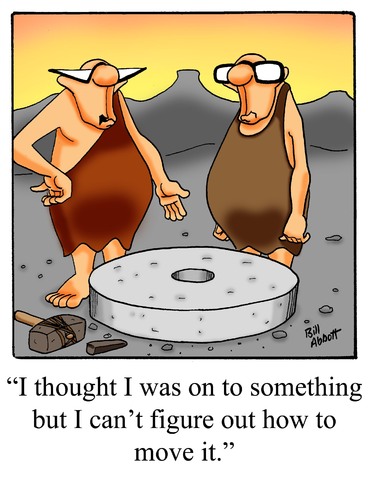

Inventing the Wheel cartoon, October 2, 2009. (Bill Abbott/http://www.toonpool.com/).

One of the side effects of having lived through the hell of my family struggles at 616 in Mount Vernon, New York between ’81 and ’89 was that I’d forgotten about the person I was before we became Hebrew-Israelites. As great as I am at recalling faces, smells, conversations, exact facts and phrases based on images and songs, I’ve been almost equally as good at blocking out whole sections of my personality. All in an effort to cope with the emotional pain and psychological trauma that is betrayal, abuse and neglect.

I have the unfortunate distinction of having seen myself as a writer in ’81 at the age of eleven, only to take nearly twenty years to see myself that way again. There were a few sign posts in the dark forest of confusion about my calling that I found on my way to getting back on the writing road. One of those sign posts was my teaching assistant and friend during my undergraduate years at the University of Pittsburgh in Paul Riggs.

Paul Riggs, Professor and Department Chair, Department of History, Valdosta State University (GA), December 17, 2011. (http://www.valdosta.edu).

Paul was the TA for my section of the Western Civilization II course taught by his advisor in Sy Drescher in the Spring semester of ’88. He was a second-year history grad student, a nice looking White guy for a nerd. Already in his mid-twenties with, his blonde-brown hair and around six-feet, Paul was a rarity on campus. So was his class. Paul found a way to do more than ask us a bunch of questions that were meant to quiz us on the textbook. We debated the significance of things like a richer diet and its impact on population growth and the expansion of European imperialism, the connections between Charles Darwin, evolution, and the advent of scientific racism at the end of the nineteenth century, and so many other things that allowed us to connect the dots.

Paul was also the first teacher I had at Pitt who assumed that I could do the work without acting as if I shouldn’t have been in their classroom. It helped that he occasionally indulged me. When our weekly discussion turned to the killing fields that had been northern France and Belgium for the bulk of the four years of World War I, I allowed my imagination to get the better of me. I made a comment that connected the tragedy of deadly trench warfare to a song by Sting called “Children’s Crusade.” I started quoting lyrics, like “virgins with rifles, a game of charade,” “the flower of England, faced down in the mud, and stained in the blood of a whole generation,” and “corpulent generals safe behind lines.”

I related it all to the documents book and Drescher’s lectures on the war that wiped out a generation of

Sting, The Dream of the Blue Turtle CD Cover (1985), December 17, 2011. (Donald Earl Collins).

young men in Western Europe. It took me two minutes of class time to draw all of the different connections. Paul, shaking his head at the end, got this incredulous smile on his face. All he said was, “um, you know Sting’s overrated?”

But Paul proved to be much more helpful a year and a half later. By then I was in my junior year at Pitt, no longer living in constant worry that I’d have to return to 616 to bury my mother and press charges against my idiot stepfather. By then, Maurice was my ex-stepfather, and thankfully so. For the first time in eight years, I kept a journal, putting together a series of stories based on my worst experiences at 616, on welfare, with my family, and in Mount Vernon.

All of it made me think about writing a book that looked at the sociological and psychological dimensions of the welfare system, for both recipients and for case managers charged with providing benefits. I wanted to make Westchester County Department of Social Services the centerpiece for such a book. I decided to talk to Paul about all of my ideas, not wanting to give away how personal this issue was for me. Paul asked me the questions that it would take another eleven years to answer. “What kind of writer do you want to be?,” and “How is history related to what you want to write about?,” he asked over the course of our conversation.

I really didn’t know the answers to either question. I wasn’t even sure that I wanted to pursue an advanced degree, become a professor, or become a writer. But I knew that I needed to find out.

Still, one thing that I decided to do that would determine most of my career travels over the next decade is to make myself into the semi-dispassionate scholar I knew I needed to become in order to be a better historian, which I presumed would make me a better writer. Only to spend this past decade reconnecting to my emotions and passion, which has made me the writer I once hoped to become.

“It Is Done” – 15 Years Later

21 Monday Nov 2011

Posted by decollins1969 in 1, Academia, Boy @ The Window, culture, Eclectic, race, Youth

≈ Leave a comment

Tags

Academia, Barbara Lazarus, Barbara Sizemore, Betrayal, Calling, Careers, Carnegie Mellon University, Catherine Lugg, Dan Resnick, Daniel P. Resnick, Dissertation, Distrust, Education, Epiphany, Joe Trotter, Joe William Trotter Jr., Self-Discovery, Writing


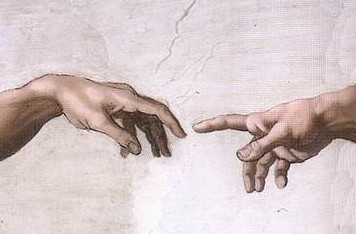
Hands of God & Adam, fingers about to touch, Sistine Chapel ceiling, Vatican, Michelangelo, 1508-1512 (via Wikipedia). In public domain.

The next twenty-four hours will mark a decade and a half since my former dissertation advisor Joe Trotter wrote today’s title quote in a God-like-pronouncement of an email to me regarding my final content-based revisions to my doctoral thesis. With those revisions following my committee meetings in October, I was now officially Dr. Collins. I knew that. I just didn’t feel it.

Working on a book-length research project with an abusive advisor and disinterested committee members at a school as conservative and isolating as Carnegie Mellon University left me exhausted. For I never felt I could ever be all of myself there. I made myself into the scholar I hoped that I wouldn’t become. At least, the twenty-one version of me that began graduate school back in ’91 held that hope. Five years later, I felt alienated from my own purpose and calling, and was more than unsure about becoming a full-time professor and historian. Especially given the wonderful examples of scholarly inhumanity and hypocrisy that Trotter, Dan Resnick and so many others had proven themselves to be (see “You’re Not Ready” post from November ’08 and “And Now, A Plagiarism Moment” post from September ’10).

I was burned out. I felt numb, with a boiling mantle of rage underneath the surface. If Trotter had said the

Arching fountain of a Pahoehoe (like my post-PhD rage) approximately 10 m high issuing from the western end of the 0740 vents, a series of spatter cones 170 m long, south of Pu‘u Kahaualea, September 10, 2007. (USGS via Wikipedia). In public domain.

wrong thing to me at the wrong time in ’96, I probably would’ve laid him out with a right hook to the jaw. And Resnick’s lucky that I didn’t own a car, because I might’ve run him down with it.

As it was, when Trotter attempted to meet with me a few weeks later to discuss “my future,” I refused. Especially given his suggestions for job applications. One, a one-year position at a University of Nebraska branch campus. The other, a CUNY school in Queens with a proposed position that wouldn’t begin until July ’98. I told him, “You don’t get to determine my future, certainly not without me.”

What should’ve been a period of rest and repair between Thanksgiving Week ’96 and graduation day in May ’97 was hardly that at all. It took me, really and truly, six months to recover from the dissertation process, and probably close to two years to not pass by or go on Carnegie Mellon’s campus without wanting to strangle my dissertation committee with piano wire. By then, I’d moved on to the rather mundane task of figuring out how to cobble together a career that wasn’t dependent on a full-time faculty position in academia.

And over the past fifteen years, I have pieced together several careers. As a part-time college professor, as a nonprofit program officer and as a consultant. It helped to have people like the late Barbara Lazarus and my dear friend Cath Lugg in my corner in those first years after I’d finished my doctorate. It helped that I expanded my career options from merely pursuing a history professorship wherever Joe Trotter’s winds could’ve taken me.

But it helped, most of all, for me to start trusting my instincts, my own heart, again. The irony of my complete disillusionment at the end of my degree-earning journey was that it left me with the time to contemplate whom I thought I really was, what I really wanted to do in life, and how I wanted to do it.

It was far from an immediate process of epiphanies and revelation. It took me nearly six years after finishing my dissertation to see myself as a writer, cutting through twenty years of denial and abuse in the process. It took me a little longer to see myself as a writer first and foremost, with all of my other professional hats second, third, and so forth. To understand that mine was a concern far greater than multiculturalism in education. My role as a writer and educator was also about aspirations, academic pathways to success, racial and ethnic equity in education, access to and success in college.

Barbara Sizemore, 1927-2004, circa mid-1990s. (http://sesp.northwestern.edu).

Now, that doesn’t mean that I haven’t looked back to wonder what could’ve been. If I were a White male with my credentials, I’d long ago been doing what I’ve been fighting to do as a writer and educator for years. If my advisors had been someone like a Cornel West or Henry Louis Gates. Or if I had attended an Ivy League school in undergrad. Or if I’d earned a master’s degree in journalism or communications, or a doctorate in a school of education or in psychology.

The late Barbara Sizemore once warned me about earning my doctorate in history some two decades ago. “You always have to do things the hard way, don’t you?,” she said to me with disapproval when she learned of my acceptance into Pitt’s history PhD program. I should’ve said, “Yes, I do.” Because the last fifteen years have been a hard road, as all roads to enlightenment are.

Writing For The First Time, Almost The Last Time

14 Thursday Jul 2011

Posted by decollins1969 in 1, Boy @ The Window, culture, Eclectic, Jimme, My Father, Politics, race, Religion, Youth

≈ Leave a comment

Tags

616, 616 East Lincoln Avenue, Boy @ The Window, Classified Photos, Ex-stepfather, First First Book, Hebrew-Israelites, Jimme, Military, Mount Vernon New York, Stepfather, Summer of 1981, Writer's Block, Writing


I spent most of the summer of ’81, my summer before seventh grade, A. B. Davis Middle School and Humanities writing my first book. I’d been inspired by my second-place finish in Mount Vernon’s city-wide, K-12 writing contest, which came with a $15 check. It wasn’t really a book in any adult sense of the word, but for eleven-year-old me with all my interests in war and weapons back then, it was a magnum opus. It was a book about the top-secret military hardware the Department of Defense didn’t want the rest of America to know about. I remained consumed with reading about war and military technology in my spare time — I wouldn’t have learned the word “fortnight” otherwise! Everything from the B-1 bomber to the M-1 Abrams tank to the Trident submarine and MX missile was to be in this scoop on the latest in military high-tech.

M-1 Abrams with 105 mm cannon, circa 1980. (Source/www.cj-jeep.com)

I even wrote a letter to the Pentagon for declassified pictures of these weapons, which I received in mid-July. It would be another two years before the M-1 Abrams with the 120mm cannon went beyond the prototype stage, so I knew even then that someone at the Department of the Defense had made a mistake in sending me these photos.

By the time of my brother Yiscoc’s birth (one form of Hebrew for “Isaac” and pronounced “yizz-co”) later in the month, I’d written nearly fifty pages on these weapons and why they were so cool for the US military to have. Especially in light of the Soviet military threat. Unfortunately, they didn’t declassify the fact that America’s latest tank used depleted uranium in parts of its hull or in its cannon shells. That would’ve been a real scoop at the time.

Three weeks after Yiscoc came into the world, all of us spent the afternoon at White Plains Public Library. I did some more research for my military book. But I deferred on this book, not really sure that this was what I was meant to do and be. Not only would it be the last time I worked on my military hardware book. It would be the last time I’d write anything that I’d hope to publish for a decade.

Honestly, I’m not sure why I stopped writing, except for school or to journal about getting beat up by my

Peacekeeper (MX) Missile test launch, November 26, 2002, Vandenberg AFB, California. (US Air Force). In public domain.

stepfather Maurice. Maybe it was because of the cares of this world, the steady drop into poverty and welfare, the very nature of being a Hebrew-Israelite for three years, or having a stepfather who terrorized us for so long. Or maybe it was going from one to two, then three by ’83, and four by ’84, younger siblings in a two-bedroom, one-bath apartment. Maybe I just looked at myself through the eyes of my Humanities peers and saw someone who could only play Jeopardy! and sing high-falsetto, not a person with a gift for the written word.

As I’ve thought about those lost years — an eight-year writer’s block, really — three things come to mind. One is that my father Jimme was completely absent from my life for more than a year between April ’81 and August ’82, mostly because of a baseball bat (more on that next week). Two is the reality that I grew to hate, actually, literally, hate, my stepfather, who saw himself as a writer (he was an okay writer, never published, but not really the point). I dare say that I couldn’t hate him as passionately as I did and then turn around and embrace myself as a writer at the same time.

But the third thing involved answering the question, what kind of life would it be for me to pursue writing as a passion, a career and calling? The only people who ever asked me that question were my teachers. My eighth-grade and twelfth grade English teachers Mrs. Caracchio and Ms. Martino and my Western Civ II TA Paul Riggs. They at least made me realize that my biggest fear was being as impoverished at forty or fifty as I was at seventeen or eighteen.

Luckily, once I left Mount Vernon for Pittsburgh and Pitt in ’87, I became interested in writing again. And then once my stepfather became my ex-stepfather two years later, I found myself writing for me in volume for the first time in seven years. It wouldn’t be the last time I’d have writer’s block. Still, the longest I’ve had writer’s block since ’89 has been a day or two.

Yes, I’m still a struggling, though published writer. But I’m not Edgar Allen Poe, like I thought I’d be in pursuing this calling.

When Being An American Equals Never Having to Say Sorry

08 Friday Jul 2011

Posted by decollins1969 in 1, Academia, Boy @ The Window, culture, Eclectic, Mount Vernon High School, Politics, race, Religion

≈ Leave a comment

Tags

"Another E", A Curriculum of Inclusion, Academia, Afrocentricity, Arthur Schlesinger Jr., Asa Hilliard III, Blackness, Commissioner's Task Force on Minorities: Equity and Excellence, Cultural Pluralism, Culture Wars, Davis Middle School, Diane Ravitch, Diversity, Ethnic Studies, Ethnicity, Humanities, Humanities Program, K-12 Curriculum, K-12 Educaiton, Leonard Jeffries, Mount Vernon High School, Multicultural Education, Multiculturalism, New York State Department of Education, Race, University of Pittsburgh, Whiteness, Writing


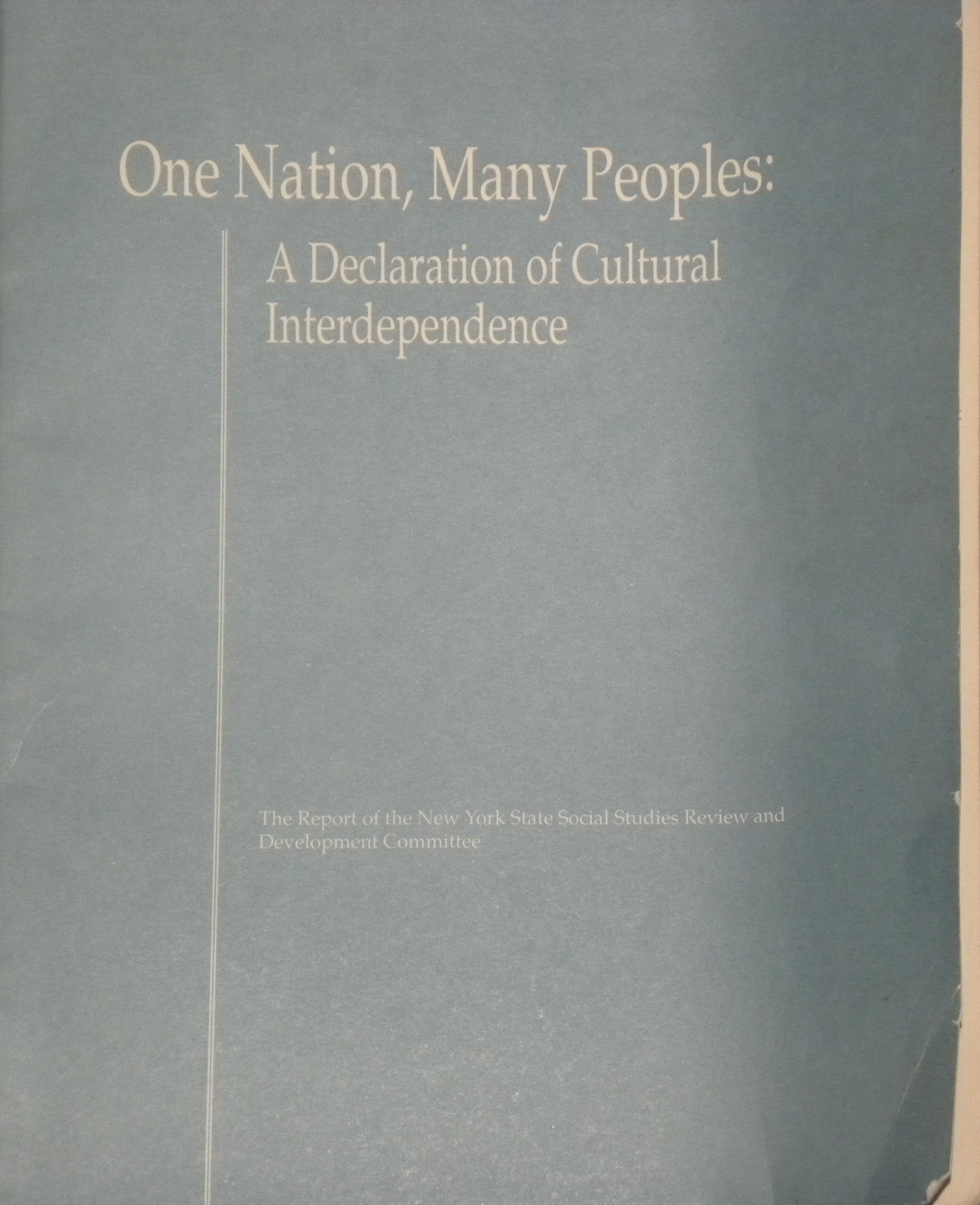
New York State Social Studies Review and Development Committee Report, June 1991 (Picture/Donald Earl Collins). One of several reports produced for the New York State Education Department and Commissioner, as part of the Commissioner's Task Force on Minorities: Equity and Excellence

Twenty years ago this week, I began writing an academic piece that would lead to my dissertation topic, doctorate and first book Fear of a “Black” America (2004). It was a topic that I’d fall in and then out of love with. Ironically, I pursued this topic because of my academic experiences in Humanities at Davis Middle and Mount Vernon High School. The topic was multiculturalism, and more specifically, multicultural education, and how to achieve this kind of curriculum reform in K-12 education. Just writing these words makes me feel both young and naive at the same time.

This whole quest started with a girl. Actually, with the young woman “Another E” (see “The Power of Another E” from April ’09 and “Beyond the Asexual Me” from last month”). She wanted to put an article together for publication, in response to what was then a major controversy involving research into the revision of New York State’s social studies and other curricula. The New York State Department of Education had given a committee the task of figuring out how to make the state’s K-12 curriculum more inclusive and representative of the state’s tremendous racial, ethnic and other forms of diversity.

By the end of September ’91, it would produce A Curriculum of Inclusion: Report of the Commissioner’s Task Force on Minorities: Equity and Excellence. But that deliverable was far from my mind when, tired from my weeks of near starvation post-graduation that April (see “Sometimes Starvation” from May ’11), I reluctantly said okay to working on this article.

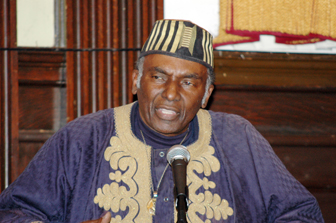
Leonard Jeffries, Newark Public Library, February 1, 2007. (http://npl.org)

Now here I was, minus the young woman in whom I no longer had an interest, now working on a piece that had become more academic than either of us had originally intended. By the time I’d written my first words on multiculturalism, I’d already learned the names Leonard Jeffries, Asa Hilliard III and Arthur Schlesinger, Jr. I’d read articles from the New York Times and the Wall Street Journal about Jeffries’ name-calling, Schlesinger’s incredulousness about calling slaves “enslaved persons,” and about the committee in general getting along like hyenas tearing at a dead wildebeest.

If I’d been just a tad bit smarter, I would’ve done an investigative piece and called and emailed the people on this task force. I would’ve asked them to divulge to me what they would eventually tell the world about their dislike of each other and of anything “multicultural,” which was in quotes for them. For Schlesinger, multicultural was the equivalent of bad ethnic studies or a kind of Afrocentrism that blamed Whites for all that has ailed America and the world for the past 500 years. For Jeffries, it was a racist attempt at appeasing Blacks and other groups of color while maintaining the main theme of Whites on top.

Although this is an oversimplification, it’s not by much. There really wasn’t anyone from the task force, the

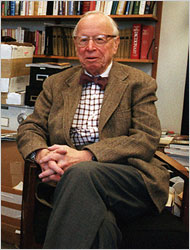
Arthur Schlesinger, Jr., CUNY, circa 2006, months before his death on February 28, 2007. (http://www.nytimes.com)

NYS Department of Education, or anyone who spoke on the Himalayas-out-of-a-termite-mound controversy over a more inclusive K-12 curriculum without taking one of those two views. That’s what interested me the most. Schlesinger, and eventually, folks like Diane Ravitch, Mario Cuomo and others completely against revision that even approached cultural pluralism, versus Jeffries, Hilliard and others arguing beyond what they called a White multiculturalism.

I didn’t have the capacity at that stage of my life to see myself as a writer or a journalist in any way. Just two years removed from the end of my mother’s marriage to my now idiot ex-stepfather, I only saw the piece that I’d turn into a Master’s research paper, doctoral thesis and first book as an academic exercise, one where I found the philosophical middle. I hadn’t a clue as to how to make myself part of the Ground Zero issue of the first seven years of the ’90s, the Culture Wars.

But I did have one experience that provided unique insight into multiculturalism and the arguments made by scholars and pols on all sides. Six years in Humanities in Mount Vernon, New York’s public schools. A place where cultural diversity and how to deal with it within the curriculum was the elephant in the classroom. Some teachers and classes addressed it, and many didn’t, to the detriment of what was a solid program, not to mention me and the others who were my classmates.

Either way, I saw more issues of diversity crop up where a multiculturalist approach would’ve been helpful all during my time in Humanities, including with my kufi and my Hebrew-Israelite years. It was a missed opportunity, one that I unconsciously wanted to address with my research of and writing on multiculturalism.

Elephant in School, retrieved July 7, 2011. (http://teachhub.com)

The Curious Case of Mrs. O’Daniel

30 Thursday Jun 2011

Posted by decollins1969 in 1, Boy @ The Window, culture, Eclectic, Politics, Pop Culture, race, Youth

≈ Leave a comment

Tags

1979-80 School Year, African American History, African American Teachers, Black History, Black Teachers, Board of Education, Cooperative Learning, Corporal Punishment, Fifth Grade, Language Arts, Mrs. O'Daniel, Nurturing Teachers, Reading, Student Engagement, Wiliam H. Holmes Elementary, Writing


I meant to do a post on this last month, but got caught up in other work and other posts. This one’s about the unique experience me and about thirty of my William H. Holmes Elementary School classmates had between ’77 and ’81, and my unique experience in particular. That experience, at least for me (and to a slightly lesser extent, for my classmates), was in having a number of caring, highly qualified Black teachers before we went off to the vicious worlds of A.B. Davis Middle School, Nichols Middle School, and Mount Vernon High School.

Starting in first grade in ’75, I had Ms. Griffin at Nathan Hale Elementary (now Cecil Parker Elementary), Mrs. Shannon — my first teacher crush — in third grade at Holmes, and Mrs. Bryant, a great teacher, in sixth grade. But the toughest and yet very caring of all the Black teachers I had in K-6 in Mount Vernon was Mrs. O’Daniel, my fifth grade teacher. She was the teacher that made me realize how troubled the world around me really was.

I and we learned early on how not to cross Mrs. O’Daniel. Once early in the school year, when our class was wound up and acting out, Mrs. O’Daniel threatened to “introduce [us] to the Board of Education. Do y’all know what that is?” After raising my hand, I said, “Yeah, it’s the building next door to us.” “No, not that Board of Education,” Mrs. O’Daniel said with a slight smile, “this one.” This Board of Education was three yard sticks taped together, and she tapped the palm of her left hand with it to emphasize what it was for — our behinds.

She used it on me one time, because I happened to take something that wasn’t mine from her nook in the classroom, what, I don’t remember. Five taps with the Board of Education across my hand was quite enough for me in the ’79-’80 schools.

Mrs. O’Daniel, though, did much more than provide discipline for our classroom. She spent a lot of our time that year on history, American history, African American history, reading and writing. I read parts of W. E. B. Du Bois’ Souls of Black Folk in her class that year and wrote a small and wholly inadequate book report on it. I learned about the atomic bombs dropped on Hiroshima and Nagasaki for the first time in May ’80. I learned so much about MLK and Malcolm X that year, more than I’d learn all through middle school and high school.

I also discovered how far behind some of my classmates were. We had two twelve-year-olds and a thirteen-year old in our class, and all of them read well below the fifth grade level. Mrs. O’Daniel assigned me and two other classmates the task of working with the older classmates to help them build up their reading and writing skills. That spring, I spent a month working with the oldest member of our class, going over words that I once struggled with in second and third grade. I felt bad for him, but even more puzzled about how a teenager could be stuck in fifth grade reading only on the second grade level.

There was a mystery to Mrs. O’Daniel as far as I was concerned. I still can’t remember if she’d grown up in North Carolina or Alabama, or if she had any kids or grand kids, or if her husband was still alive. When she announced in the early spring of ’80 that she had just turned sixty, we were stunned, thinking of how old sixty was compared to ten, eleven or even thirteen. She seemed a bit strange, but certainly not old beyond our knowledge that she was born in 1920. Mrs. O’Daniel was as tall as teacher as I ever had, but hardly frail or old outside of her salt and less salt hair.

She died in ’83, sometime during my first weeks in Mount Vernon High School. Some of my former Holmes classmates, who were now in Humanities in ninth grade, broke down and cried when they heard the news. I must admit, I was stunned. I’d never known anyone who had contact with me and died before. All I knew was that an older person who cared about me, about all of my classmates, had passed away.

It made me sad, but it didn’t sink in until much, much later how fortunate I was to have had Mrs. O’Daniel and Mrs. Bryant, Mrs. Shannon and Ms. Griffin as my teachers early on. I had no idea that the only teacher of color that I’d have until I reached the University of Pittsburgh would be Ms. Simmons, a first-year, seventh-grade math teacher I stood toe to toe with by Xmas ’81. I think that my understanding of African American history and culture would’ve been much more limited prior to my Pitt years if it weren’t for Mrs. O’Daniel. And for that, and so much more, I thank her.

Peaking As A Sixth Grader

24 Friday Jun 2011

Posted by decollins1969 in 1, Boy @ The Window, Eclectic, race, Religion, Youth

≈ Leave a comment

Tags

616, 616 East Lincoln Avenue, 6th Grade, Ana Gasteyer, Arrogance, Celine Dion, Dental Award, Graduation Day, Hebrew-Israelites, Humanities, Humanities Program, Kufi, Mount Vernon New York, Mount Vernon public schools, Naivete, Reggie Jackson, Sixth Grade, Starling Churn, Straight-A Student, William H. Holmes Elementary, Writing


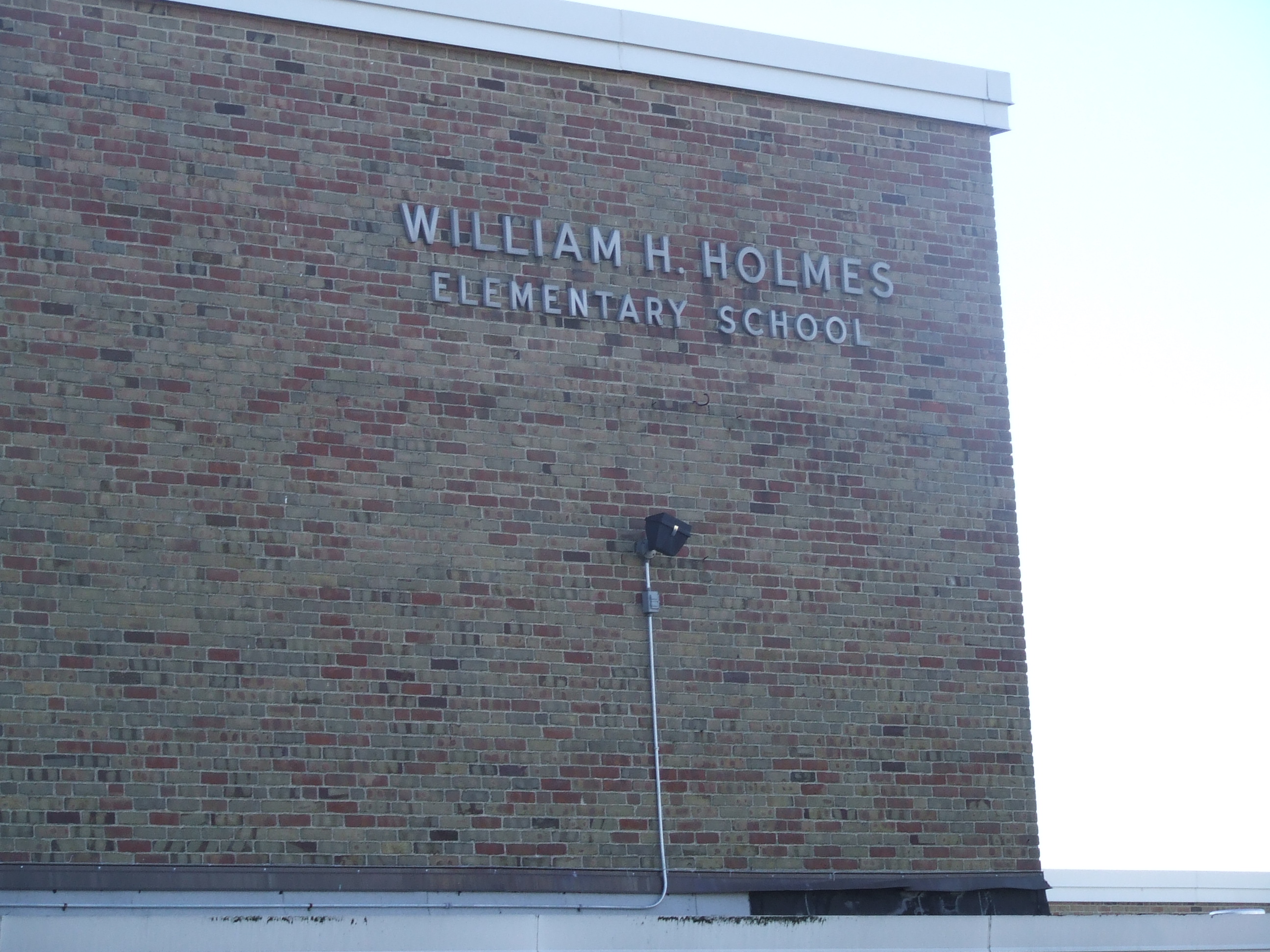
William H. Holmes Elementary, Mount Vernon, NY, November 23, 2006. Donald Earl Collins

I can’t believe that this Sunday’s the thirtieth anniversary of me and my cohort finishing sixth grade. Thirty years since I first felt that feeling of reaching the mountaintop, as if I’d accomplished something in my life. Three decades since the last time I was unknowingly naive and unnecessarily arrogant.

Combined with having become a part of a bizarre religion, I had a new point of view on my life by the time graduation day on Friday, June 26 of ’81 rolled around. My family was now two months into our serving Yahweh, and I was six weeks removed from losing my best friend Starling because of this nutty religion. It was a time in which I felt overwhelmed about my present and immediate future. Yet I acted as if I’d published a book that was both a New York Times Bestseller and a Pulitzer Prize winner. I couldn’t have been more pumped up if I’d been on Walter White’s blue crystal meth from Breaking Bad.

But I had some basis for seeing myself as great. As far as I was concerned, I was the unofficial valedictorian of my elementary school class at William H. Holmes Elementary, the ’50s structure next to the big Presbyterian church on North Columbus and East Lincoln Avenue. My teachers had chosen me out of all of my classmates to speak at our graduation ceremony. On that last Friday in June ’81, I served as the opening speaker, introducing the city councilman who served as our keynote. I even wrote the short introduction that I delivered on that wonderful day.

I firmly believed that no one in the world was smarter than me. In the three years prior to graduation, I had straight A’s. Still, that paled in comparison to my performance my last year of elementary school. I figured out that I earned an A on forty-eight out of fifty-two quizzes and tests in sixth grade. The lowest grade I earned that year was an 88 on a spelling quiz. I’d won a Dental Awareness Month award for Best Poster and came in second in a city-wide writing contest that included essays from high school students. If anyone had known how big my head had grown that year, they would’ve stuck a pin in my temple just to let the air out.

It wouldn’t have been any funnier if I’d pretended I was Mr. October himself, Reggie Jackson, saying his

Ana Gasteyer as Celine Dion, SNL, April 6, 2002. Source: http://snl.jt.org

words, “Sometimes I underestimate the magnitude of me.” Or, really, Ana Gasteyer (of SNL fame) playing Celine Dion and calling herself the “greatest singer in the world.” I wanted so badly to see myself and to be seen by others as special that I forgot about the work it had taken to move my reading and writing skills up seven grade levels in a little more than two and a half years.

It was a great day, sunny and low-eighties with cumulus clouds and low humidity. But knowing what life at 616, Mount Vernon and Humanities had in store for me over the next eight years, I should’ve smelled the ozone in the air. I should’ve looked more closely at my sky, to see the flocks of seagulls flying away from the shoreline. I should’ve sensed — and did, on a very low-frequency — the hurricane gaining strength in my life. I chose to ignore it, hoping that I could fake my way through it while resting on my laurels.

To think that it would’ve been another nine years before I felt like I could take on the world again. If someone had told me in June ’81 that I’d have to wait until my junior year at Pitt to have a straight-A semester, I would’ve grabbed a gun and shot myself through the heart with a Colt .45. And I would’ve made sure that the bullet I used had a hollow tip. If I’d known that I’d have to wait a full decade to be comfortable with myself as myself in all of my goofy-ness again, I probably would’ve cried on the spot.

All I can hope these days is that I can help my son strike a balance between being cool and being cool with himself, especially once he approaches his teenage years. I don’t want him spending a decade trying to figure himself out all by himself.

Milky White Skin

21 Thursday Apr 2011

Posted by decollins1969 in 1, Boy @ The Window, culture, eclectic music, Pop Culture, race, Youth

≈ Leave a comment

Tags

616, 616 East Lincoln Avenue, Adjectives, Adverbs, Bethedsa Maryland, Bethesda Literary Festival 2011, Boy @ The Window, Essay and Short Story Contest, Finding Forrester, Georgetown Cupcakes, Literary Devices, Literary Nonfiction, Literature, Milky Skin, Milky White Skin, Sean Connery, Whiteness, Winners, Writing


Bethesda Literary Festival logo, April 21, 2011. http://www.bethesda.org

I attended the Bethesda Literary Festival last weekend. It’s been a while since I’ve gone to any conference involving writers, wannabe writers, published authors and other curiously weird types. I usually find these events somewhere between dreadfully boring and undeniably soul-sucking. I wish that I could say that the festival held at various parts of downtown Bethesda were an exception. But what I can say is that the Bethesda Literary Festival provided the best desserts — especially the cupcakes (my guess, from Georgetown Cupcakes) — I’ve had at any literary event.

Bethesda Literary Festival 2011 Logo, April 21, 2011. http://www.bethesda.org

The most poignant event at the festival for me was the Essay and Short Story Contest winners for ’11. Grouped into two categories — over 18 and young adults — the winners were announced and had the opportunity to read from their stories and essays. I must admit, some of the stories were compelling. (That word, compelling, a common word lit agents have used as a reason for rejection of Boy @ The Window. I often think that they’re working from an unspoken definition of what compelling really is.) But I also found most of the stories cliché, typical, White both in terms of the actual color as well in racial and cultural terms.

Listening to these aspiring authors, young and talented writers read their work reminded me so much of a line from Finding Forrester, where the character played by Sean Connery says, “Writers write so that readers can read. Let someone else read it.” It’s difficult for any writer to read something they’ve written with the passion and emotion contained within their own words. And with two exceptions — a mother reading for her daughter about a dying aunt, and a seventeen-year-old reading his essay in poetry slam fashion — the Forrester axiom was in full effect.

I kept checking my watch, hoping that I’d hear something that would inspire me or at least pique my interest. The latter did occur, but not in the way in which I would’ve expected. I listened to one forty-

Ridiculousness of Milky Skin, April 21, 2011. Donald Earl Collins

something short-story honorable mention read about a “tongue licking ice cream.” Earlier, there had been a young adult winner, reading phrases like “Same cloudless indigo eyes. Same auburn, frizzy locks. Same childish, pearly pudge of skin…”

It all took me back to novels and other pieces of literature from my high school days. Like Shakespearean plays in which actors described some young English woman as having “milky skin,” as a point of attraction and lust. That kind of writing, the constant shifting and sliding of adjectives and adverbs. It drove me crazy in ’85. Last weekend, it made my eyes glaze over, with both looking like the clear frosting on a glazed donut.

I yawned with the anticipation of more of the same stories that writers and publishers have been selling for as long as I’ve been alive. I knew what was coming. Stories of epiphanies and social consciousness, upper-middle-class-White-Bethesda-and-Potomac-style. Stories of parallel and pain, from climbing Mt. Kilimanjaro and grave illness to autism to death and dying. Universal stories that somehow were milky White, told in a style that made the messy truth of it as palatable as a slice of key lime pie.

I don’t write that way. But not because I can’t. I could write page after page in vivid description of Crush #1. I could count each hair on her well-muscled forearms on the way to measuring every mole on her shoulders, every tooth in magnitude of whiteness, every capillary in her eyeballs. I could spend a few pages describing the different smells of flatulence and excrement I grew up with at 616. From the sweetness of a spaghetti and meat sauce fart to the lingering death-knell scent of a bathroom after the flushing of what once was a combination of coffee, beer and fried chicken.

Literary nonfiction, memoir, or other serious writing endeavors, though, are about the balance between the sweet milky whiteness of the literary and the messy realness of me as the writer. In the case of Boy @ The Window, of me as the main character as well. Descriptions of milky or caramel colored skin do reside among its pages. But so do descriptions of conversations, characters, actions and emotions. All as part of telling a story, sharing some truth, beyond the romance of the purely literary.

← Older posts
Newer posts →

Boy @ The Window: A Memoir

Boy @ The Window: A Memoir

Places to Buy/Download Boy @ The Window

There's a few ways in which you can read excerpts of, borrow and/or purchase and download Boy @ The Window. There's the trade paperback edition of Boy @ The Window, available for purchase via Amazon.com at http://www.amazon.com/Boy-Window-Donald-Earl-Collins/dp/0989256138/

There's also a Kindle edition on Amazon.com. The enhanced edition can be read only with Kindle Fire, an iPad or a full-color tablet. The links to the enhanced edition through Apple's iBookstore and the Barnes & Noble NOOK edition are below. The link to the Amazon Kindle version is also immediately below:

scr2555-proj697-a-kindle-logo-rgb-lg

Boy @ The Window on Amazon.com: http://www.amazon.com/Boy-The-Window-Memoir-ebook/dp/B00CD95FBU/

iBookstore-logo-300x100

Boy @ The Window on Apple's iBookstore: https://itunes.apple.com/us/book/boy-the-window/id643768275?ls=1

Barnes & Noble (bn.com) logo, June 26, 2013. (http://www.logotypes101.com).

Boy @ The Window on Barnes & Noble: http://www.barnesandnoble.com/w/boy-the-window-donald-earl-collins/1115182183?ean=2940016741567

You can also add, read and review Boy @ The Window on Goodreads.com. Just click on the button below:

Boy @ The Window

Twitter Updates

Tweets by decollins1969
  • RSS - Posts
  • RSS - Comments

Archives

  • June 2025
  • April 2023
  • September 2022
  • August 2022
  • July 2022
  • June 2022
  • May 2022
  • April 2022
  • March 2022
  • January 2022
  • December 2021
  • November 2021
  • October 2021
  • September 2021
  • August 2021
  • July 2021
  • June 2021
  • April 2021
  • March 2021
  • February 2021
  • January 2021
  • December 2020
  • November 2020
  • October 2020
  • September 2020
  • August 2020
  • July 2020
  • May 2020
  • April 2020
  • March 2020
  • January 2020
  • December 2019
  • November 2019
  • August 2019
  • July 2019
  • June 2019
  • May 2019
  • April 2019
  • March 2019
  • February 2019
  • January 2019
  • December 2018
  • November 2018
  • October 2018
  • September 2018
  • August 2018
  • July 2018
  • June 2018
  • May 2018
  • March 2018
  • February 2018
  • January 2018
  • December 2017
  • November 2017
  • October 2017
  • September 2017
  • August 2017
  • July 2017
  • June 2017
  • May 2017
  • April 2017
  • March 2017
  • February 2017
  • January 2017
  • December 2016
  • November 2016
  • October 2016
  • September 2016
  • August 2016
  • July 2016
  • June 2016
  • May 2016
  • April 2016
  • March 2016
  • February 2016
  • January 2016
  • December 2015
  • November 2015
  • October 2015
  • September 2015
  • August 2015
  • July 2015
  • June 2015
  • May 2015
  • April 2015
  • March 2015
  • February 2015
  • January 2015
  • December 2014
  • November 2014
  • October 2014
  • September 2014
  • August 2014
  • July 2014
  • June 2014
  • May 2014
  • April 2014
  • March 2014
  • February 2014
  • January 2014
  • December 2013
  • November 2013
  • October 2013
  • September 2013
  • August 2013
  • July 2013
  • June 2013
  • May 2013
  • April 2013
  • March 2013
  • February 2013
  • January 2013
  • December 2012
  • November 2012
  • October 2012
  • September 2012
  • August 2012
  • July 2012
  • June 2012
  • May 2012
  • April 2012
  • March 2012
  • February 2012
  • January 2012
  • December 2011
  • November 2011
  • October 2011
  • September 2011
  • August 2011
  • July 2011
  • June 2011
  • May 2011
  • April 2011
  • March 2011
  • February 2011
  • January 2011
  • December 2010
  • November 2010
  • October 2010
  • September 2010
  • August 2010
  • July 2010
  • June 2010
  • May 2010
  • April 2010
  • March 2010
  • February 2010
  • January 2010
  • December 2009
  • November 2009
  • October 2009
  • September 2009
  • August 2009
  • July 2009
  • June 2009
  • May 2009
  • April 2009
  • March 2009
  • February 2009
  • January 2009
  • December 2008
  • November 2008
  • October 2008
  • September 2008
  • August 2008
  • July 2008
  • June 2008
  • May 2008
  • April 2008
  • March 2008
  • February 2008
  • January 2008
  • December 2007
  • November 2007
  • October 2007
  • September 2007
  • August 2007
  • July 2007
  • June 2007

Recent Comments

MaryPena's avatarMaryPena on My Day of Atonement/Bitter Hat…
decollins1969's avatardecollins1969 on No Good Teaching Deed Goes…
Mary Rose O’Connell's avatarMary Rose O’Connell on No Good Teaching Deed Goes…

NetworkedBlogs on Facebook

NetworkedBlogs
Blog:
Notes From a Boy @ The Window
Topics:
My Life, Culture & Education, Politics & Goofyness
 
Follow my blog

616 616 East Lincoln Avenue A.B. Davis Middle School Abuse Academia Academy for Educational Development AED Afrocentricity American Narcissism Authenticity Bigotry Blackness Boy @ The Window Carnegie Mellon University Child Abuse Class of 1987 CMU Coping Strategies Crush #1 Crush #2 Death Disillusionment Diversity Domestic Violence Economic Inequality Education Family Friendship Friendships Graduate School Hebrew-Israelites High-Stakes Testing Higher Education History Homelessness Humanities Humanities Program Hypocrisy Internalized Racism Jealousy Joe Trotter Joe William Trotter Jr. K-12 Education Love Manhood Maurice Eugene Washington Maurice Washington Misogyny Mother-Son Relationship Mount Vernon High School Mount Vernon New York Mount Vernon public schools Multiculturalism MVHS Narcissism NFL Pitt Pittsburgh Politics of Education Poverty President Barack Obama Race Racial Stereotypes Racism Relationships Self-Awareness Self-Discovery Self-Reflection Sexism Social Justice Teaching and Learning University of Pittsburgh Violence Whiteness Writing

Top Rated

Blog at WordPress.com.

  • Subscribe Subscribed
    • Notes from a Boy @ The Window
    • Join 103 other subscribers
    • Already have a WordPress.com account? Log in now.
    • Notes from a Boy @ The Window
    • Subscribe Subscribed
    • Sign up
    • Log in
    • Report this content
    • View site in Reader
    • Manage subscriptions
    • Collapse this bar
 

Loading Comments...