• About Me
  • Other Writings
  • Interview Clips
  • All About Me: American Racism, American Narcissism, and the Conversation America Can’t Have
  • Video Clips
  • Boy @ The Window Pictures
  • Boy @ The Window Theme Music

Notes from a Boy @ The Window

~

Notes from a Boy @ The Window

Tag Archives: Fear of a “Black” America

On Academic Entourages & Standing Apart From Them

11 Wednesday Sep 2013

Posted by decollins1969 in 1, Academia, Carnegie Mellon University, culture, Eclectic, Pittsburgh, Politics, Pop Culture, race, Religion, University of Pittsburgh, Work, Youth

≈ Leave a comment

Tags

Academia, African American Studies, Afrocentricity, Authenticity, Black Issues in Higher Education, Blackness, Entourage, Fear of a "Black" America, Followers, Loner, Marc, Molefi Asante, Multiculturalism, Politics of Academia, Publishing, Sycophants, Writing


Lil Wayne entourage, Hartford, CT, July 2011. (http://4umf.com/).

Lil Wayne entourage, Hartford, CT, July 2011. (http://4umf.com/).

This week for many is about anniversary number twelve of the 9/11 attacks, which if I hadn’t lived through them, would sound like something out of a Kurt Vonnegut novel. But because I’ve been counting my days for years, this week also represents two decades since I realized that radical “Islamic” terrorists, pro athletes and popular music artists aren’t the only ones with followers. I learned for the first time that even in the world of academia, paragons and those who allege themselves as such also have their entourages of true believers and sycophants. It was a realization that bothered the loner and the aspiring academic historian in me.

Letters to the Editor, Black Issues in Higher Education, September 9, 1993. (Donald Earl Collins)

Letters to the Editor, Black Issues in Higher Education, September 9, 1993. (Donald Earl Collins).

It all occurred in the aftermath of my first major publication, co-written with my friend Marc and published in Black Issues In Higher Education in August ’93. “Afrocentricity: The Fight for Control of African-American Thought” was our 1,200 word contribution to the debate over multicultural education and Afrocentricity in both higher education and in Black culture more generally. It was a publication that came as a surprise, because the editors at Black Issues In Higher Education (the same folks who ran Emerge Magazine, by the way) hadn’t contacted us about receiving our pitch and article, about accepting it for publication, or about when they intended to publish. And even though our article was literally in the centerfold of their August 12, ’93 issue, the folks at Black Issues in Higher Education never paid us for the publication of our work.

The reason why because clearer in their September 9 and September 23 issues. In the “Letters to the Editor” section, the editors published a dozen letters, ten of which were critical of our work. These weren’t scholarly or even logical critiques — we were wrong because we weren’t members of the Church of Afrocentric Babble, plain and simple. These were “How dare you!” or “Shame on you!” letters, not ones based on what we’d actually written.

What became obvious  to me was that Molefi Asante’s former and current students had written most of the letters. Not exactly an unbiased set of sources, as in the circle of Afrocentricity in the early ’90s, there were few people more prominent than Asante (he was the Father of Afrocentricity, after all). Once I realized this, I found myself disappointed. With Black Issues in Higher Education, with Black folks in academia — particularly at Temple University — and with academia itself. Me and Marc weren’t being challenged on our ideas, but on the idea that two alleged neophytes had the balls to challenge the orthodoxy of the early ’90s in African American studies and in high-brow Black cultural circles.

Marc pushed for a response from one of the editors about their unprofessionalism (and to find out why we weren’t being paid for our piece), which led to a conversation with one of the big-wigs. He apparently said to Marc, “We published it [the “Afrocentricity” piece] to teach you a lesson.” When Marc told me, I said, “Well, I guess we’re not gonna get paid.” (Turned out this was standard practice for the likes of Black Issues in Higher Education, Emerge, and for freelancers at BET as well). Marc, pissed and disillusioned, said, “We were just trying to help.”

Letters to the Editor, Black Issues in Higher Education, September 23, 1993. (Donald Earl Collins).

Letters to the Editor, Black Issues in Higher Education, September 23, 1993. (Donald Earl Collins).

It was the last one of many factors that pushed me to write my dissertation and my first book Fear of a “Black” America (2004) on the relationship between education, multiculturalism, and Black identity. I wanted to show that Afrocentricity wasn’t the only strain of thought that ran through the heads of Black scholars and found its way into small “c” curriculum and cultural events in Black communities. In doing so, I certainly stood apart, but I also stood alone a lot, too.

In recent years, I’ve seen numerous entourages eviscerate lone wolfs. On Twitter, in our 24/7 media coverage of the mundane and insignificant yet insane, and at academic conferences. As recently as a couple of months ago, I saw a version of this on Facebook in response to a post I wrote about Mark Anthony Neal’s Looking for Leroy (2013). The entourage makes it difficult for an up-and-comer to get off to an honest start, for conformity with only subatomic levels of independent thought seems to be the norm.

Somewhere between now and when my son (knock on wood) reaches my age of forty-three, maybe some of what I’ve written over the past twenty years will break through the ice of entourages, mad-dog and otherwise. Still, it is a damnable thing when groups get together to stomp out different voices (literally and figuratively), because that’s seems to be the only way to keep the band together.

The New Gameplan for Boy @ The Window

05 Saturday Jan 2013

Posted by decollins1969 in 1, Boy @ The Window, culture, Eclectic, Mount Vernon New York, Pop Culture, Youth

≈ 2 Comments

Tags

Book Publishing, Commercial Publishing, Editors, Fear of a "Black" America, Gameplan, Independent Publishers, Literary Agents, Manuscript Development, Marketing, Revising, self-publishing, Siege Mentality, Stubbornness, Writers, Writing


Siege of Burgos (Spain), 1813, by François Joseph Heim. Pic taken December 23, 2012. (1970gemini via Wikipedia). In public domain.

Siege of Burgos (Spain), 1813, by François Joseph Heim. Pic taken December 23, 2012. (1970gemini via Wikipedia). In public domain.

It’s a new year, and with the beginning of all years is a chance to execute new plans, or for most people, to make resolutions they often don’t keep. Such is the case for me regarding my coming-of-age memoir Boy @ The Window. Hopefully I’ll be in the first category of plans for my new year and not in the latter. After five years of beating my fists on the walls of literary agents, acquisition editors and commercial publishers, I have to do far more than hope.

And my fists have needed a few months to heal after the past few years. In all, I contacted somewhere around 140 agents, editors and publishers since the end of ’07 about Boy @ The Window. One in four asked to look at either the first few pages, the first couple of chapters or the entire manuscript. Only two of those agents agreed to represent the manuscript, and then, with major conditions. One went as far as to suggest that I only focus on my family life, as if my preteen and teenage years in Humanities had no impact on my development at all. The other thought I could sell Boy @ The Window better if I turned it into a work of commercial fiction.

I should’ve seen the writing on the proverbial commercial book industry wall long before today. Between the shifts in the commercial publishing marketplace since my experiences with Fear of a “Black” America between ’99 and ’04, the Great Recession’s impact on the industry since ’08, and the rise of the ebook in the past decade. All three pointed to one simple fact. If one wasn’t already a successful author prior to a decade ago, or famous, or with a significant connection to commercial publishing (e.g., a journalist, an editor, or even an editorial assistant), one would face a long, hard walk through the traditional route of publishing a book.

Boxer David Haye displays his bruised knuckles, January 12, 2011. (http://www.thesun.co.uk/)

Boxer David Haye displays his bruised knuckles (cropped), January 12, 2011. (http://www.thesun.co.uk/)

But I’d made up my mind the moment I began working on Boy @ The Window in earnest in the summer of ’06. I didn’t want to self-publish my second book, not after a year and four months of promoting Fear of a “Black” America. While on some level I successfully promoted my first book (I have receipts of my royalty checks to prove that), selling a thousand copies while spending $3,500 to do so for a semi-academic book on multiculturalism was nothing like I had envisioned the process back in ’99.

I persisted in the idea of traditional commercial publishing for the manuscript. I dutifully attended writers conferences, book fairs and other opportunities to meet other authors, potential agents and a few editors. I wrote and rewrote my query letter and proposal, with more revisions than I probably did on the Boy @ The Window manuscript itself. I sent out my letters, took phone calls when they came, reached out to folks for help. And all to end up concluding that I would be in need of dentures by the time a commercial publisher would lukewarmly pick up my manuscript for its list.

Now, even my harshest critics (myself included) consider Boy @ The Window a solid manuscript. So the issue has never really been the quality of the story or the writing. The issues come down to an industry in seismic flux and to me as a person. With my own career in transition and without the obvious examples of success (I’m not regularly booked for TV programs, I have yet to make my first $1 million), I can’t say that I’m in the public eye enough to sell 10,000 copies of my book per week for three weeks, and at least 5,000 a week for three months. That’s the industry threshold for groundbreaking nonfiction success these days.

So dreams of sugar plums or $100,000 advances aren’t exactly dancing in my head these days. But much has changed since I published Fear of a “Black” America in the past eight and a half years. For one, ebooks rule the book publishing marketplace, enabling any aspiring (if not talented) writer to self-publish or to publish independently. Add to this the mix social media, like my blog, Twitter, Facebook and other connections, and nontraditional publishing may well make as much sense as working with an agent.

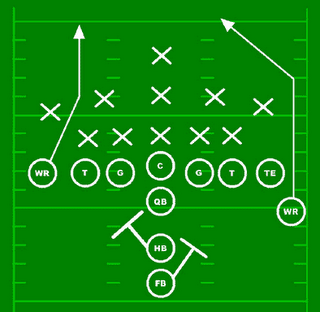
Intermediate pass route game plan (with at least one running back as blocker), November 2011. (http://www.npengage.com).

Intermediate pass route game plan (with at least one running back as blocker), November 2011. (http://www.npengage.com).

This means much more work — and money — on my part, though. I’ll need to hire a copy editor, figure out artwork, finalize pictures, implement my proposed marketing strategy, plan a date for publishing to coincide with marketing, and so on. But I also realize that few commercial publishers do this work for authors anymore, anyway, as they’ve slashed their promotion and marketing budgets. The advantage, then, goes to people like me, with some means for publication and enthusiasm for my book.

I realized all of this at least two years ago. Apparently, so did my wife. When I finally decided to go this route for Boy @ The Window a few weeks ago, she said “I thought you should’ve done it two years ago, but you weren’t ready.” Meaning that I wasn’t ready to dismantle my siege guns and remove my land minds around the commercial publishing castle. Now that I have, I can say with a high degree of certainty that I will publish Boy @ The Window this year, 2013, short of an apocalyptic event.

Promoting Fear of a “Black” America

04 Saturday Feb 2012

Posted by decollins1969 in 1, Academia, Boy @ The Window, culture, Eclectic, Politics, Pop Culture, race

≈ Leave a comment

Tags

Book Signings, Boy @ The Window, Fear of a "Black" America, Hard Work, PR releases, promotions, self-publishing, Social Media, Website, WHUR, WPFW


Fear of a "Black" America front cover, July 2, 2004 (Donald Earl Collins).

It’s been seven years since my first radio interview and book signing for my first book, Fear of a “Black” America: Multiculturalism and the African American Experience (2004). In all, I spent sixteen months actively promoting the book, through PR releases, contacts at universities and through my work at the Academy for Educational Development, and a huge volume of email exchanges and phone conversations. Between this nearly full-time work, my full-time job, and being a full-time parent and husband, I was exhausted by the end of ’05.

It’s unbelievably hard work to promote a book. Especially a self-published one. Not to mention, one that I’d proclaimed as an in-depth response to the conservative movement’s “Culture Wars” on all things “multicultural.” One that was a combination of personal vignettes with interviews and historical research to tell the story of African Americans and other groups of color coming to grips with their notions of multiculturalism in education and in their everyday lives. Granted, it was immediately available via Amazon.com, Barnes & Noble/B&N.com and the now out-of-business Borders.com. But if I’d done nothing, I would’ve sold maybe one hundred copies in ten years.

My work to promote Fear of a “Black” America began about a year and half before it hit virtual and actual shelves in September ’04. I created a website for the manuscript (http://www.fearofablackamerica.com) in February ’03,  learning HTML in detail in three weeks’ time. Within a year, the number of unique visitors to the fledgling site varied between 500 and 1,000 a month. After three years of coming close — but still failing — to publish Fear through traditional publishers like Beacon Press, Random House and Verso, I politely moved on from my agent and decided to self-publish.

A couple of months into the process, I hadn’t much success beyond a couple of professors using copies of Fear in their African American studies courses (a completely random occurrence — they were in different parts of the country). My friend Marc took it upon himself to have me meet him and a friend of his for a long talk about how to organize a marketing campaign for the book at the end of November ’04. While they were certainly well-meaning, their advice provided no real insight into the process other than what I already knew. I just needed to be persistent.

That persistence paid off in early February ’05. In a span of three days, I did an evening drive interview with Howard University Radio (WHUR-FM) and a book signing at Karibu Books. Both, at least, gave me some momentum beyond Black History Month, as I continued doing book signings in the DC area and through my job up in New York that spring.

My promotions reached their height in April ’05, when I did an hour-long interview with Pacifica Radio DC (WPFW-FM) about Fear. There, I realized how much more interested caller were in my personal background and how that shaped my views of multiculturalism. I also learned that some of the callers — whom I didn’t know — had actually read my book. It made all of the groundwork I’d done to get to this point worth the effort. By then, I’d cracked the top 100,000 in the Barnes & Noble list (84,000), or roughly ten to fifteen sales per week, and the top 200,000 (161,000) on Amazon.com (another 10-15 sales per week).

WPFW 90.9 Interview (Part 1), Fear of a “Black” America, April 25, 2005

WPFW 90.9 Interview (Part 2), Fear of a “Black” America, April 25, 2005

During that summer and fall, I continued to promote Fear, with another interview on Pacifica Radio DC in August, and a book signing at Howard University Bookstore in October ’05. But I was running on empty. As fast as email was, it didn’t have the immediacy of what we now call social media. And in ’05, Facebook was in its infancy, Twitter didn’t exist, and Blogger was a relative novelty. Even with a website that received 4,000 hits and over 1,200 visitors a month, I couldn’t generate the cascade effect that I could right now.

My final act of promotion for Fear of a “Black” America came in August ’06, though John Kelly’s Washington Post Metro Column, “Getting Work Done – On the Way to Work,”  in which I talked about editing my book on Metro Rail for two years. By then, I’d pivoted to work on Boy @ The Window, knee-deep in reopening memories that hadn’t been well-considered when I was a teenager.

Between September ’04 and December ’05, I promoted Fear of a “Black” America using $3,500 of my resources, and made over $1,000 on the book, selling about 600 copies in sixteen months. Overall, I’ve sold over a 1,000 copies between ’04 and ’08. Those numbers are on par with most works published in academia.

But I was hardly satisfied. I knew by ’09 that with a social media apparatus, I could’ve sold ten times as many books. I knew that my memoir manuscript deserved more than the fate of self-publishing, that I’d want to find a path to a traditional publisher. Still, despite my moments of despair, I believe that my persistence in finding an agent and a publisher is the right way to go. It’ll make it easier to work hard in promoting Boy @ The Window. In that case, I’ll be doing it in the virtual light of day.

Cream on the Brain

12 Sunday Dec 2010

Posted by decollins1969 in 1, Academia, Boy @ The Window, culture, Eclectic, Mount Vernon High School, Politics, race

≈ Leave a comment

Tags

"A Substance of Things Hoped For", A.B. Davis Middle School, Ability Grouping, Academic Excellence, Barbara Sizemore, Carnegie Mellon University, Creme de la Creme, Culture Wars, Diversity, Fear of a "Black" America, Humanities, Identity, Jeanne Oakes, Keeping Track, Magnet Programs, Magnet Schools, Mount Vernon High School, Mount Vernon New York, Mount Vernon public schools, Multiculturalism, Pittsburgh Public Schools, Student Engagement, Tracking, University of Pittsburgh


A Brain Floating in the Heavy Cream of Obsession with Academic Excellence, December 13, 2010. Donald Earl Collins

A quarter-century ago, education scholar and Ford Foundation education program director Jeanne Oakes published Keeping Track: How Schools Structure Inequality. Oakes’ groundbreaking, definitive work on the educational inequalities created or reinforced by ability grouping has led a whole generation of scholars to examine the viability of tracking in K-12 education. In a 2005 edition of her book, Oakes wrote that “through tracking, schools continue to replicate existing inequality along lines of race and social class and contribute to the intergenerational transmission of social and economic inequality.”

I picked up Oakes’ Keeping Track for the first time in ’90. By then, I already knew from experience how true her words and research were. Six years in Mount Vernon, New York’s public schools via the Humanities Program had taught me all I’d need to know about the tensions between creating a class of students whose level of academic performance was par excellence while simultaneously addressing segregation and diversity in the school district. The magnet program and the district failed at one and succeeded at the other, which in turn reinforced its failure.

I worked on a paper some twenty years ago for the late Barbara Sizemore, my professor at the University of Pittsburgh my senior year (and a former superintendent of DC Public Schools) looking at how magnet school programs actually created resegregation in individual schools and Pittsburgh Public Schools because of the exclusivity that comes with tracking or ability grouping. It was an easy paper for me to do, guided in no small part by my experiences in Humanities at Davis Middle and Mount Vernon High School. Easy, but not easy to get a handle on beyond the obvious demographics of race, class and test scores.

I managed to wiggle myself into the culture wars of the early ’90s and the debate around multiculturalism and K-12 education soon after that paper. It seems obvious now that the unacknowledged diversity of Humanities was what enabled me to take sides in favor of multiculturalism. That led to my dissertation looking at the historical development of multiculturalism among Blacks in Washington, DC (“A Substance of Things Hoped For,” Carnegie Mellon University, 1997 for those who want more information), and eventually, my first book, Fear of a “Black” America from six years ago.

But it took my memoir Boy @ The Window to bring me back to square one. I realized about a year ago that I’d done nearly thirty interviews of former classmates, teachers and administrators for the manuscript. There was much more material to mine beyond their impressions of me and how to shape their descriptions of themselves — and my memories of them — into characters for Boy @ The Window. I decided to work on an academic piece that looked at the benefits and pitfalls of high-stakes schooling — not just testing — in the form of a history lesson via magnet schools, specifically my Humanities experience.

After a quick rejection, I redoubled my efforts a few months ago. I decided to look at the education psychology and sociology literature, as well as Oakes again, to see how these interviews and my experiences could be useful in our testing-obsessed times. I finally realized what had troubled me about Humanities for the past three decades. It was the reality that all involved with Humanities had taken on the e pluribus unum identity of an academic superstar (much more than just a nerd, by the way). Beyond Black or White, and ignoring the realities of poverty in our district and (at least for me) in our program, Humanities was all about sharpening our academic personas above all else.

This fueled the major success of Humanities during its existence between ’76 and ’93, which in turn would define its failures. In successfully nurturing the idea of academic excellence as identity, as evidenced by so many of us attending and graduating from college, this magnet program failed in its other major educational functions. It failed to embrace diversity, to help its students understand the diversity that was Humanities, to nurture creativity and imagination beyond A’s and college acceptances. It failed to develop the whole student, which aside from its charge to help desegregate Mount Vernon public schools, was its original mission.

Humanities failed because its teachers, administrators (including the former superintendent of schools) and many of the most vocal parents (mostly affluent and White) refused to deal with diversity seriously. Academic excellence without significant parental engagement or the humility necessary to discuss issues of race, gender, class, sexual orientation led to a severe overemphasis on calling us the “creme de la creme.” All of this would have a negative impact on our development as students, and as emerging adults.

I don’t think that it’s asking too much of parents, administrators and teachers to work together in both striving for academic excellence while building programs that embrace difference and nurture creativity and imagination, and not just an addiction to A’s. Or is it?

Newer posts →

Boy @ The Window: A Memoir

Boy @ The Window: A Memoir

Places to Buy/Download Boy @ The Window

There's a few ways in which you can read excerpts of, borrow and/or purchase and download Boy @ The Window. There's the trade paperback edition of Boy @ The Window, available for purchase via Amazon.com at http://www.amazon.com/Boy-Window-Donald-Earl-Collins/dp/0989256138/

There's also a Kindle edition on Amazon.com. The enhanced edition can be read only with Kindle Fire, an iPad or a full-color tablet. The links to the enhanced edition through Apple's iBookstore and the Barnes & Noble NOOK edition are below. The link to the Amazon Kindle version is also immediately below:

scr2555-proj697-a-kindle-logo-rgb-lg

Boy @ The Window on Amazon.com: http://www.amazon.com/Boy-The-Window-Memoir-ebook/dp/B00CD95FBU/

iBookstore-logo-300x100

Boy @ The Window on Apple's iBookstore: https://itunes.apple.com/us/book/boy-the-window/id643768275?ls=1

Barnes & Noble (bn.com) logo, June 26, 2013. (http://www.logotypes101.com).

Boy @ The Window on Barnes & Noble: http://www.barnesandnoble.com/w/boy-the-window-donald-earl-collins/1115182183?ean=2940016741567

You can also add, read and review Boy @ The Window on Goodreads.com. Just click on the button below:

Boy @ The Window

Twitter Updates

Tweets by decollins1969
  • RSS - Posts
  • RSS - Comments

Archives

  • June 2025
  • April 2023
  • September 2022
  • August 2022
  • July 2022
  • June 2022
  • May 2022
  • April 2022
  • March 2022
  • January 2022
  • December 2021
  • November 2021
  • October 2021
  • September 2021
  • August 2021
  • July 2021
  • June 2021
  • April 2021
  • March 2021
  • February 2021
  • January 2021
  • December 2020
  • November 2020
  • October 2020
  • September 2020
  • August 2020
  • July 2020
  • May 2020
  • April 2020
  • March 2020
  • January 2020
  • December 2019
  • November 2019
  • August 2019
  • July 2019
  • June 2019
  • May 2019
  • April 2019
  • March 2019
  • February 2019
  • January 2019
  • December 2018
  • November 2018
  • October 2018
  • September 2018
  • August 2018
  • July 2018
  • June 2018
  • May 2018
  • March 2018
  • February 2018
  • January 2018
  • December 2017
  • November 2017
  • October 2017
  • September 2017
  • August 2017
  • July 2017
  • June 2017
  • May 2017
  • April 2017
  • March 2017
  • February 2017
  • January 2017
  • December 2016
  • November 2016
  • October 2016
  • September 2016
  • August 2016
  • July 2016
  • June 2016
  • May 2016
  • April 2016
  • March 2016
  • February 2016
  • January 2016
  • December 2015
  • November 2015
  • October 2015
  • September 2015
  • August 2015
  • July 2015
  • June 2015
  • May 2015
  • April 2015
  • March 2015
  • February 2015
  • January 2015
  • December 2014
  • November 2014
  • October 2014
  • September 2014
  • August 2014
  • July 2014
  • June 2014
  • May 2014
  • April 2014
  • March 2014
  • February 2014
  • January 2014
  • December 2013
  • November 2013
  • October 2013
  • September 2013
  • August 2013
  • July 2013
  • June 2013
  • May 2013
  • April 2013
  • March 2013
  • February 2013
  • January 2013
  • December 2012
  • November 2012
  • October 2012
  • September 2012
  • August 2012
  • July 2012
  • June 2012
  • May 2012
  • April 2012
  • March 2012
  • February 2012
  • January 2012
  • December 2011
  • November 2011
  • October 2011
  • September 2011
  • August 2011
  • July 2011
  • June 2011
  • May 2011
  • April 2011
  • March 2011
  • February 2011
  • January 2011
  • December 2010
  • November 2010
  • October 2010
  • September 2010
  • August 2010
  • July 2010
  • June 2010
  • May 2010
  • April 2010
  • March 2010
  • February 2010
  • January 2010
  • December 2009
  • November 2009
  • October 2009
  • September 2009
  • August 2009
  • July 2009
  • June 2009
  • May 2009
  • April 2009
  • March 2009
  • February 2009
  • January 2009
  • December 2008
  • November 2008
  • October 2008
  • September 2008
  • August 2008
  • July 2008
  • June 2008
  • May 2008
  • April 2008
  • March 2008
  • February 2008
  • January 2008
  • December 2007
  • November 2007
  • October 2007
  • September 2007
  • August 2007
  • July 2007
  • June 2007

Recent Comments

MaryPena's avatarMaryPena on My Day of Atonement/Bitter Hat…
decollins1969's avatardecollins1969 on No Good Teaching Deed Goes…
Mary Rose O’Connell's avatarMary Rose O’Connell on No Good Teaching Deed Goes…

NetworkedBlogs on Facebook

NetworkedBlogs
Blog:
Notes From a Boy @ The Window
Topics:
My Life, Culture & Education, Politics & Goofyness
 
Follow my blog

616 616 East Lincoln Avenue A.B. Davis Middle School Abuse Academia Academy for Educational Development AED Afrocentricity American Narcissism Authenticity Bigotry Blackness Boy @ The Window Carnegie Mellon University Child Abuse Class of 1987 CMU Coping Strategies Crush #1 Crush #2 Death Disillusionment Diversity Domestic Violence Economic Inequality Education Family Friendship Friendships Graduate School Hebrew-Israelites High-Stakes Testing Higher Education History Homelessness Humanities Humanities Program Hypocrisy Internalized Racism Jealousy Joe Trotter Joe William Trotter Jr. K-12 Education Love Manhood Maurice Eugene Washington Maurice Washington Misogyny Mother-Son Relationship Mount Vernon High School Mount Vernon New York Mount Vernon public schools Multiculturalism MVHS Narcissism NFL Pitt Pittsburgh Politics of Education Poverty President Barack Obama Race Racial Stereotypes Racism Relationships Self-Awareness Self-Discovery Self-Reflection Sexism Social Justice Teaching and Learning University of Pittsburgh Violence Whiteness Writing

Top Rated

Blog at WordPress.com.

  • Subscribe Subscribed
    • Notes from a Boy @ The Window
    • Join 103 other subscribers
    • Already have a WordPress.com account? Log in now.
    • Notes from a Boy @ The Window
    • Subscribe Subscribed
    • Sign up
    • Log in
    • Report this content
    • View site in Reader
    • Manage subscriptions
    • Collapse this bar
 

Loading Comments...