
• About Me
  • Other Writings
  • Interview Clips
  • All About Me: American Racism, American Narcissism, and the Conversation America Can’t Have
  • Video Clips
  • Boy @ The Window Pictures
  • Boy @ The Window Theme Music

Notes from a Boy @ The Window

~

Notes from a Boy @ The Window

Tag Archives: Authenticity

Black Male Id-entity & the F-Bomb

26 Thursday May 2011

Posted by decollins1969 in 1, Boy @ The Window, culture, Eclectic, Politics, Pop Culture, race, Youth

≈ Leave a comment

Tags

616, 616 East Lincoln Avenue, Anti-Gay Slur, Authenticity, Basketball, Basketball Courts, Bigotry, Black Males, Carnegie Mellon University, Context, Coolness, F-Bomb, F-word, Faggot, Heterosexism, Homophobia, Joakim Noah, Kobe Bryant, Michael Wilbon, Mount Vernon New York, Nathan Hale Elementary, NBA, Nigga, Pitt, Pittsburgh, Playgrounds, Sean Miller, Toure X, Twitter, University of Pittsburgh, Washington DC, Words


Joakim Noah Apparently Says ‘F–k You Faggot’ To Fan (VIDEO)

Joakim Noah Apparently Says ‘F–k You Faggot’ To Fan (VIDEO)

Gay Rights Month isn’t for another six days, as it’s still May. But in light of Joakim Noah’s unfortunate anti-gay slur outburst, “Fuck you, faggot!,” it makes sense to start this year’s conversation a week early.

This is more than about the NBA, gay athletes in the closet or what professional athletes should and shouldn’t say to fans and to each other. The behind-the-curtain issue here could just as well be about Black male identity (whether heterosexual or gay) and how Black males express themselves to each other and to the rest of the world.

My first memories playing with a group of Black males in Mount Vernon, New York are all negative. When I was six in ’76, a group of preteens on the neighborhood playground near Nathan Hale Elementary on South 6th Avenue tried to force me into sucking one of their dicks, practically sticking it in my face to do so. I got away before being truly scarred for life. After we moved to 616 East Lincoln Avenue in April ’77, our first time playing outside was spent running away from the other kids, who greeted us by throwing rocks at us and calling me and my brother Darren “faggots.” (see my June 1, 2009 post, “In the Closet, On the Down Low” for more).

When I was nine, I played basketball on a court near 616 for the first time with a group of kids from my building. After throwing up an awkward brick and an air ball, I got five minutes of “You terrible!,” “You need to sit down!,” “You’re never gonna be an athlete!,” “You need to get back to reading them books of yours!,” and “You shoot like a faggot!”

Even though I eventually learned how to dribble with both hands, shoot a j, make layups, block shots, and on rare occasions, dunk a basketball, I’ve been leery being around other Black males on the basketball court. One would think after playing pickup with former Pitt basketball players while in grad school that I’d completely forgotten what happened to me back in the spring of ’79. But I hadn’t, at least on an unconscious level. I often watched what I said, I mean, down to every single word. Not to mention how I walked, where my arms were, and how I held my head. Still, I sometimes felt inadequate on the court, whether I went 8-for-9 or 2-for-7, blocked a shot, stole a ball, or got knocked down guarding someone six-foot-six and 260 pounds.

But I figured out something in those years of playing pickup at Pitt and Carnegie Mellon and other places in Pittsburgh and DC over the years. That blending in doesn’t matter. Fools — even ones with momentary lapses in judgment like Joakim Noah — will be fools because on the playground or court, it makes them cool in the minds of their peers.

Yes, this isn’t just a Black male issue. Sean Miller, currently coach of the University of Arizona men’s basketball team — not to mention an all-time Pitt basketball great — once played a prank on me our freshmen year. He called me up in my Lothrop Hall dorm room late one night, offered me a blow job, and called me a “faggot” in the process.  So being called a “faggot” or saying that something or someone is “gay” is part of our culture on and off the basketball court, for Black and White males to be sure.

But unlike Michael Wilbon, I can’t excuse it because it’s commonplace and therefore it may be difficult for some young men to immediately stop themselves from saying “faggot.” Nor can I rationalize this like Touré (a.k.a. TouréX on Twitter) attempted to do in a Twitter exchange with me a couple of days ago. He compared the use of “faggot” to “nigga,” with the idea that both words have more than one meaning and that the meaning can sometimes be positive, depending on context.

I can see the argument for “nigga,” even though I don’t like it when younger men use it to affirm each other and especially me. But “faggot” meaning “less than a man?” Or “stupid” or “dumb?” So is Noah or Kobe more of a man for telling someone else they’re not a man? Even in context, this isn’t positive — it’s potentially soul-destroying, and not just for someone being called a faggot.

Of the preteens and young boys who called me “faggot” growing up, at least three have served hard time. Is there a direct connection? Of course not. Still, it seems that a culture steeped in the requirement of being cool, finding quick and easy success and putting down others while doing so lends itself well to a crash-and-burn mentality that so many of us have about our lives.

The Eclectic, Authentic Donald

04 Saturday Sep 2010

Posted by decollins1969 in 1, Boy @ The Window, culture, earth, wind & fire, Eclectic, eclectic music, Mount Vernon High School, Pop Culture, race, Youth

≈ Leave a comment

Tags

"Broken Wings", "What About Love", 616 East Lincoln Avenue, Authenticity, BET, Cable, Heart, Humanities, Mount Vernon High School, Mount Vernon New York, Mr. Mister, MTV, Music, Race, Sade, VH1


Maxwell's Embrya (1997) Album Art

I am, and will always remain, a goofy oddball. I’ve known that for at least twenty-five years, probably closer to thirty. For it was this week in ’85 that we finally got cable at 616. More than four years after MTV, and a few months into VH1, we finally no longer needed antennas to watch TV. My fat, greasy slob of a stepfather hogged the gigantic wood-framed hand-me-down of a nineteen-inch Zenith, along with the living room, most of the time. But I came home from the beginning of the school year — my junior year of Meltzer and AP US History at MVHS — at the end of the first week, with no one home.

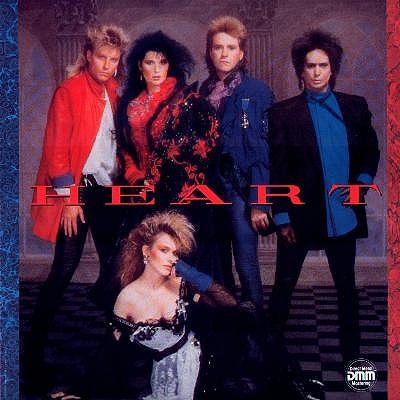
I turned on the TV, found MTV, and boom, I was in the heart of the ’80s. As soon as I hit the channel, a new video began, heavily synthesized and very much over the top. It turned out to be Heart’s “What About Love,” the first release off of their new album. I liked the song immediately. But more importantly, I liked

Heart, 1985. (Look at that hair!?!)

the fact that I could now also put faces and styles to voices and lyrics. I was late, four years too late in understanding the jokes, the fashion motifs and consumerism concerns of my more socioeconomically- blessed classmates. As the saying goes, though, better late than never.

That afternoon, I ended up seeing videos from Sade, Tears for Fears, Dire

Mr. Mister (1985) Welcome To The Real World

Straits, Sting, and Mr. Mister’s “Broken Wings.” The last one was a weird video, but very heartfelt, and one that has stayed with as long as any song I’ve heard or video I’ve seen since (more on that in December). I eventually checked out some boring Alexander O’Neal videos on BET before my mother and younger siblings came home from school and grocery shopping.

It wasn’t as if I hadn’t listened to music before September ’85. I was already well aware of the fact that my music tastes weren’t stereotypically Black, weren’t all that White, and certainly weren’t all that old and mature. Having played the trombone in fifth grade, the fife for Hebrew-Israelite stuff all through ’82, and sang in school choirs sixth, seventh and eighth grade (until my voice started cracking), it wasn’t as if I didn’t know when someone was off key or timing their drum sequences.

Still, I found music that didn’t have the voice of Luther (Vandross) or Patti (Austin or LaBelle) or the beats of Doug E. Fresh, Grandmaster Flash or Run-D.M.C. appealing. It reached me because I had moments I needed to be reached, to be serious, to focus on the pain that was my life in the mid-80s, a pain that few artists sang or wrote about in any direct way. I could relate to the lyrics of rejection, redemption and

The Best of Sade (1992) Album Art

resolution more than I could relate to someone stepping on my brand new sneakers and getting attitude. Songs that could reach me because I had moments I needed to feel and be goofy, to laugh at myself for feeling as pathetic as I did back then. Nothing, and I mean nothing, in the R&B and early hip-hop repertoire of ’85 did that for me.

So I branched out, almost immediately after that MTV afternoon in early-fall early-September. I became even more interested in what some of my classmates called “that White music,” even deliberately listening to WPLJ and Z-100, adding that to WBLS. I also took the occasional turn to WCBS-101 (oldies station of Sinatra, Nat King Cole and Dean Martin), had a brief foray into Phillip Glass and ’80s new age, a rare stumble into jazz, and yes, for those who believe I embody the rejection of all things “Black,” found my need for R&B and some rap in my eyes and ears.That first week in September ’85 pretty much sealed my fate as an eclectic music listener. Many who know me and my Mount Vernon past would say that Humanities and being around all those White kids had something to do with this. Some, including my mother, would say that my education has led to some sense of racial self-loathing, that I deliberately gave up my heritage to chase some false sense of Whiteness — or,

Seal (1994) Album Art

that I’m “acting White.”

I’d say that I was a goofy and serious late-bloomer, who listened to music and lyrics for meaning, for a kernel of wisdom and hope. Some or all of those things can be found in any genre of music, anywhere, anytime, under any circumstance. Music, like people, can’t be separated into races unless people choose to be separate, a truth I understand now and guessed at intuitively then.

Raised on Hip-Hop?

10 Saturday Apr 2010

Posted by decollins1969 in 1, culture, Eclectic, eclectic music, music, Politics, Pop Culture, race

≈ Leave a comment

Tags

Authenticity, Cultural Segregation, Culture, Hip-Hop, Music, Politics, Pop Culture, Race


About seven years ago, I had lunch with a young woman and my former boss (see “What We’ll Do for $$$” post, July ’09) at some overpriced Dupont Circle restaurant specializing in Russian cuisine. It was just before the birth of my son Noah. There was so much wrong in that lunch, in that conversation, in the dynamics of that conversation. But in between the idiotic moments of conversation, there was something completely unrelated to it mentioned that topped everything else. In describing her background in the arts and humanities, the young woman said, “I grew up on hip-hop…”

“Huh?,” I thought. Where did that come from? At the time, I was thirty-three, and she was twenty-seven. That would’ve meant that the young woman was born in ’75 or ’76. Hip-hop was barely an embryo the day she was born, and hadn’t become a truly national phenomenon until the end of ’86. Even then, it would take until the ’90s for hip-hop to dominate the music scene. And, given that this individual had grown up in the mid-Atlantic region and in the Midwest — not exactly hotbeds for the development of hip-hop — I found her statement somewhere between ridiculous and as true as a hollow bell.

It did get me thinking, though, about how circumscribed lives in this country of ours can be when we believe that everyone should see the world the way we see it. As if everyone else’s experience can be encompassed in our little life story. “I was raised on hip-hop” sounded to me like this young woman’s family, friends, community and education was completely immersed in the development and growth of hip-hop. Short of her being best friends with Russell Simmons, Sean Coombs and MC Lyte, the statement’s unbelievable on its face. But it’s also a refusal to recognize that the idealized way in which we describe our lives and world doesn’t really add up to what our world was, is, or the way in which we would like it to be.

Now, there are a whole generation of folks who’ve grown up listening to nothing but hip-hop, dancing in nothing but hip-hop rhythms, reading hip-hop-based novels and watching movies with hip-hop themes. Those folk, born after ’82, have the right to say that they were “raised on hip-hop.” But what does that mean, really? That they see the world through the lens of hip-hop culture? That American politics, globalization, social justice, education, popular culture, sports and entertainment can all be seen by folks simply and completely through the lens of hip-hop culture? If it does mean that, then I guess that’s a’ight. After all, that’s how some of these people in the hip-hop era have grown up.

I suspect, however, that this isn’t what folks like the young woman I described earlier mean when they say that they were “raised on hip-hop.” They’re asserting a sense of Blackness, an essence of an understanding of being Black or African American that they assume cannot be distilled as easily through their parents’ R&B, Jazz or pop music, through dance or art that’s more consistent with more culturally integrative times. For them, hip-hop is being Black — or “keepin’ it real” — a step beyond The Lost Poets, a phase past Marvin Gaye and Jackie Wilson, a grittiness that can’t be expressed through Diana Ross, Michael Jackson or Quincy Jones. Hip-hop is being Black in an urban and impoverished context — or being real and cool, I suppose — even when the people growing up on it aren’t impoverished or aren’t even Black.

And I have problems with this assessment of what being “raised on hip-hop” means for so many who have embraced it without understanding the eclectic origins of hip-hop. Or without acknowledging that too much drink from this well can be as isolating as only embracing neo-conservative ideology or only believing that one denomination of a religion — much less an entire religious ideology — can provide all of the answers we will ever need in this life.

The rhythms of my voice, my ability to speak and write in standard English, my eclectic music collection and my understanding of math and science, all illuminate the fact that I have lived a life of many textures. Yet I am still a Black man whose life was shaped by poverty, racism, community, education, music, sports and so many other things that other African Americans of similar backgrounds face and often embrace. I would never claim that I was “raised on hip-hop” any more than I’d say that I was “raised on physical abuse.” I heard Sugar Hill Gang, Doug E. Fresh and Run D.M.C. between ’80 and ’86, and I experienced physical abuse, but I wasn’t “raised” by either. My experiences are a part of me, but they don’t define me, and I certainly wouldn’t allow myself as an African American be defined by them.

To misquote Laurence Fishburne’s character Morpheus from The Matrix (1999), I’ll say this: “What is Black? How do you define, Black? If you’re talking about what you can feel, what you can smell, what you can taste and see, then ‘Black’ is simply a social construct interpreted by our brains.” Being Black isn’t all that’s hip-hop, and hip-hop isn’t all that makes or defines anyone as Black. It’s the totality of our experiences and actions that do so. Even if we were “raised” on country music, lima beans and Ex-lax.

Newer posts →

Boy @ The Window: A Memoir

Boy @ The Window: A Memoir

Places to Buy/Download Boy @ The Window

There's a few ways in which you can read excerpts of, borrow and/or purchase and download Boy @ The Window. There's the trade paperback edition of Boy @ The Window, available for purchase via Amazon.com at http://www.amazon.com/Boy-Window-Donald-Earl-Collins/dp/0989256138/

There's also a Kindle edition on Amazon.com. The enhanced edition can be read only with Kindle Fire, an iPad or a full-color tablet. The links to the enhanced edition through Apple's iBookstore and the Barnes & Noble NOOK edition are below. The link to the Amazon Kindle version is also immediately below:

scr2555-proj697-a-kindle-logo-rgb-lg

Boy @ The Window on Amazon.com: http://www.amazon.com/Boy-The-Window-Memoir-ebook/dp/B00CD95FBU/

iBookstore-logo-300x100

Boy @ The Window on Apple's iBookstore: https://itunes.apple.com/us/book/boy-the-window/id643768275?ls=1

Barnes & Noble (bn.com) logo, June 26, 2013. (http://www.logotypes101.com).

Boy @ The Window on Barnes & Noble: http://www.barnesandnoble.com/w/boy-the-window-donald-earl-collins/1115182183?ean=2940016741567

You can also add, read and review Boy @ The Window on Goodreads.com. Just click on the button below:

Boy @ The Window

Twitter Updates

Tweets by decollins1969
  • RSS - Posts
  • RSS - Comments

Archives

  • June 2025
  • April 2023
  • September 2022
  • August 2022
  • July 2022
  • June 2022
  • May 2022
  • April 2022
  • March 2022
  • January 2022
  • December 2021
  • November 2021
  • October 2021
  • September 2021
  • August 2021
  • July 2021
  • June 2021
  • April 2021
  • March 2021
  • February 2021
  • January 2021
  • December 2020
  • November 2020
  • October 2020
  • September 2020
  • August 2020
  • July 2020
  • May 2020
  • April 2020
  • March 2020
  • January 2020
  • December 2019
  • November 2019
  • August 2019
  • July 2019
  • June 2019
  • May 2019
  • April 2019
  • March 2019
  • February 2019
  • January 2019
  • December 2018
  • November 2018
  • October 2018
  • September 2018
  • August 2018
  • July 2018
  • June 2018
  • May 2018
  • March 2018
  • February 2018
  • January 2018
  • December 2017
  • November 2017
  • October 2017
  • September 2017
  • August 2017
  • July 2017
  • June 2017
  • May 2017
  • April 2017
  • March 2017
  • February 2017
  • January 2017
  • December 2016
  • November 2016
  • October 2016
  • September 2016
  • August 2016
  • July 2016
  • June 2016
  • May 2016
  • April 2016
  • March 2016
  • February 2016
  • January 2016
  • December 2015
  • November 2015
  • October 2015
  • September 2015
  • August 2015
  • July 2015
  • June 2015
  • May 2015
  • April 2015
  • March 2015
  • February 2015
  • January 2015
  • December 2014
  • November 2014
  • October 2014
  • September 2014
  • August 2014
  • July 2014
  • June 2014
  • May 2014
  • April 2014
  • March 2014
  • February 2014
  • January 2014
  • December 2013
  • November 2013
  • October 2013
  • September 2013
  • August 2013
  • July 2013
  • June 2013
  • May 2013
  • April 2013
  • March 2013
  • February 2013
  • January 2013
  • December 2012
  • November 2012
  • October 2012
  • September 2012
  • August 2012
  • July 2012
  • June 2012
  • May 2012
  • April 2012
  • March 2012
  • February 2012
  • January 2012
  • December 2011
  • November 2011
  • October 2011
  • September 2011
  • August 2011
  • July 2011
  • June 2011
  • May 2011
  • April 2011
  • March 2011
  • February 2011
  • January 2011
  • December 2010
  • November 2010
  • October 2010
  • September 2010
  • August 2010
  • July 2010
  • June 2010
  • May 2010
  • April 2010
  • March 2010
  • February 2010
  • January 2010
  • December 2009
  • November 2009
  • October 2009
  • September 2009
  • August 2009
  • July 2009
  • June 2009
  • May 2009
  • April 2009
  • March 2009
  • February 2009
  • January 2009
  • December 2008
  • November 2008
  • October 2008
  • September 2008
  • August 2008
  • July 2008
  • June 2008
  • May 2008
  • April 2008
  • March 2008
  • February 2008
  • January 2008
  • December 2007
  • November 2007
  • October 2007
  • September 2007
  • August 2007
  • July 2007
  • June 2007

Recent Comments

decollins1969's avatardecollins1969 on No Good Teaching Deed Goes…
Mary Rose O’Connell's avatarMary Rose O’Connell on No Good Teaching Deed Goes…
Lyndah McCaskill's avatarLyndah McCaskill on The Raunchiest of Them Al…

NetworkedBlogs on Facebook

NetworkedBlogs
Blog:
Notes From a Boy @ The Window
Topics:
My Life, Culture & Education, Politics & Goofyness
 
Follow my blog

616 616 East Lincoln Avenue A.B. Davis Middle School Abuse Academia Academy for Educational Development AED Afrocentricity American Narcissism Authenticity Bigotry Blackness Boy @ The Window Carnegie Mellon University Child Abuse Class of 1987 CMU Coping Strategies Crush #1 Crush #2 Death Disillusionment Diversity Domestic Violence Economic Inequality Education Family Friendship Friendships Graduate School Hebrew-Israelites High-Stakes Testing Higher Education History Homelessness Humanities Humanities Program Hypocrisy Internalized Racism Jealousy Joe Trotter Joe William Trotter Jr. K-12 Education Love Manhood Maurice Eugene Washington Maurice Washington Misogyny Mother-Son Relationship Mount Vernon High School Mount Vernon New York Mount Vernon public schools Multiculturalism MVHS Narcissism NFL Pitt Pittsburgh Politics of Education Poverty President Barack Obama Race Racial Stereotypes Racism Relationships Self-Awareness Self-Discovery Self-Reflection Sexism Social Justice Teaching and Learning University of Pittsburgh Violence Whiteness Writing

Top Rated

Blog at WordPress.com.

  • Subscribe Subscribed
    • Notes from a Boy @ The Window
    • Join 103 other subscribers
    • Already have a WordPress.com account? Log in now.
    • Notes from a Boy @ The Window
    • Subscribe Subscribed
    • Sign up
    • Log in
    • Report this content
    • View site in Reader
    • Manage subscriptions
    • Collapse this bar
 

Loading Comments...