• About Me
  • Other Writings
  • Interview Clips
  • All About Me: American Racism, American Narcissism, and the Conversation America Can’t Have
  • Video Clips
  • Boy @ The Window Pictures
  • Boy @ The Window Theme Music

Notes from a Boy @ The Window

~

Notes from a Boy @ The Window

Tag Archives: A.B. Davis Middle School

On Women and Wired Weirdness

05 Saturday Mar 2011

Posted by decollins1969 in 1, Boy @ The Window, culture, Eclectic, Marriage, music, Youth

≈ Leave a comment

Tags

"Cherish The Day", 616, 616 East Lincoln Avenue, A.B. Davis Middle School, Brandie Weston, Crush #1, Damsel-in-Distress, Domestic Violence, Feminism, Fights, Humanities, Marriage, Mount Vernon New York, Mrs. Sesay, Puberty, Relationships, Sade, Sexism, Womanism


[Why Sade? Closest I could find to my dream-life muse, and most appropriate video I could find]

Getting a bit long in the tooth to be rattling off about Crush #1 again, right? After all, yesterday was the twenty-ninth anniversary of the fight that led to a crush that led to some sort of falling in love for the first time. The three-month period between March 4 and May 30 of ’82 shaped the ways I saw girls and women from the age of twelve until my early thirties. The crush on Crush #1 and its inevitable side-tracking as my then stepfather knocked my mother unconscious in front of me helped shaped my feminism, my womanism and my sexism.

In all of that, I’ve learned that I was wired for this weirdness. Because as a person of deep thought, a boy surrounded by sexism and misogyny, and a lonely and semi-ostracized preteen, the sum was much greater than these contradictory parts.

To think that this all pretty much started because I picked a fight with Crush #1 at the end of class in seventh grade. Almost all of my extracurricular incidents that year began or ended in our homeroom with our homeroom/English teacher Mrs. Sesay. I know that she’s a principal somewhere these days, but back then, her lack of behavioral leadership skills in the classroom led to more verbal abuse and fighting than a group of gifted-track kids should’ve stood for. Anyway, the incident began because Crush #1 asked a question about a subject that Mrs. Sesay had spent the entire week going over, a concept that Sesay would test us on that Friday. I laughed out loud — thinking that I was only snickering — after Crush #1 asked that question.

Thinking nothing of it, I began to pack up after the 2:15 pm bell rang. Crush #1 came up to me and pushed me from behind.

“You’re an ugly, arrogant asshole!” she said with the distaste of a ballerina being asked for money by a junkie.

I called her “stupid” and then said something else stupid. “You’re an idiot!,” Crush #1 yelled as she threw two punches into my chest and a third at my jaw.

The fight lasted about fifteen or twenty seconds, but after landing a punch on her left boob and nipple, I stopped fighting, already descending into the land of the idiot romantic. All while Crush #1 kept hitting me, then being pulled away from me by a couple of her friends. One of them, the recently deceased Brandie Weston, called me a “pervert” as they exited the classroom.

I know that I wasn’t the first boy in history to start a fight with a girl who I’d come to like or love, but I do think that boys who do that have a lot of weird in them. Mind you, I hadn’t quite hit puberty yet, so my testosterone levels weren’t high enough yet to be the cause of my brain malfunction. No, my very sexism and her fierce sense of tomboyish feminism was why I liked her in the first place, and drank deep from that well for the next three months.

The Memorial Day ’82 incident with my mother changed what was an otherwise innocent crush and love into something weirder and more meaningful. I think that’s why it has so clearly affected how I’ve seen girls and women over the years. Crush #1 defended herself, my mother tried and couldn’t. Crush #1 was cranky and usually personable, my mother polite and as close-minded as a clam in deep water. Crush #1 would be fine whether she knew I liked her or not, my mother a damsel-in-distress that needed someone with sense and care to help her.

The weeks following that Memorial Day I made a decision to put my mother first. The side effect of that decision was that I’d spend the next fifteen years or so using Crush #1 as my template — and my mother as the anti-template — for understanding women, for befriending, dating or not dating women, for women I’d put on a pedestal from afar and for women I’d merely sleep with. In the end, I’d resent myself and my mother for that decision. And another six years trying to understand why.

Thinking about it now, it still amazes me how much of what occurred between ’82 and ’96 was part of an unconscious decision process. But since the end of ’89, I’ve gotten a reminder about once every six weeks. Crush #1 has been a part my dreams and nightmares, a muse that would surface some of my wiser thoughts. She’s a reminder that the twelve-year-old in me isn’t dead, just dormant.

The muse reminds me of how little I do know about women and romance, even after eleven years of marriage and more than two decades of various relationships overall. And that the struggle between the various strands of feminist, womanist and sexist thought in me remains just that.

The Contrarian One

15 Tuesday Feb 2011

Posted by decollins1969 in 1, Boy @ The Window, Christianity, culture, Eclectic, eclectic music, Mount Vernon High School, Politics, race, Religion, Youth

≈ Leave a comment

Tags

A.B. Davis Middle School, Anonymity, Contrarian, Dune, Humanities, MacGyver, Mount Vernon High School, Mount Vernon New York, Mount Vernon public schools, Privacy, Richard Dean Anderson, Sting, troubled youth


Sting as Feyd-Rautha in David Lynch's Dune, July 20, 2007. TAnthony. Qualifies as fair use under US Copyright laws because this is a low-resolution screenshot illustrating a character which is a subject in the article that uses it, and by nature no free version exists.

For the most part, I have protected the privacy of my childhood classmates and friends by not calling them by their actual names in this blog. I have used pseudonyms, code names like “Crush #1” or “Crush #2,” code letters based on their position in my cohort or how I saw them growing up. I don’t apply these rules to the adults I interacted with because they were public figures, authority figures really. That’s been one of my unofficial journalist-esque rules for this blog, and I’m sticking to it.

In this case, however, I’m pushing the envelope a bit. Even though I have no plans on using a name today, I’m using some initials of a former classmate that almost none of my readers will know. But for those that went through Humanities with me and read this post, the initials may make this person obvious. This classmate — and friend, I guess — was one of the few free thinkers I knew in my Humanities days. He wasn’t just smart — we were all smart. He fashioned himself an intellectual, someone who either thought against the grain or refused to get caught up in what he considered the daily stupid stress sandwich of grades, awards, and more grades that was our magnet program. Most of all, the kid was a contrarian, the one and only JD.

Just like with most of my classmates, I didn’t get along with him at first. He immediate came off to me as someone who saw himself above the fray, maybe even better than the rest of us. It didn’t help that JD introduced himself as “half-Russian, one-quarter French and one-quarter English” that first day of seventh grade nearly thirty years ago. For most of the first year, I thought that his persona was an act, an attempt at upper-crust coolness. I didn’t understand how girls — White and Black — liked this guy, zits and all.

Richard Dean Anderson as MacGyver, May 18, 2007. Source: http://www.just-whatever.com/2007/05/18/what-would-macgyver-do/

At various times during our Humanities days, his looks were compared to Sting, and later, MacGyver — actor Richard Dean Anderson’s most famous character. I’m sure that he liked the comparisons. If you meshed the two, you’d maybe end up with a JD, but probably about two inches shorter than the real life person.

At first, I didn’t think that he was all that smart. After all, we ended up in a fight over my outburst of laughter because he said Australians spoke “Australian” instead of English. I always wondered why we fought this week, of all weeks (twenty-nine years ago this week, by the way). It wasn’t as if we hadn’t annoyed each other before. Eventually I did begin to get Mr. OshKosh, as I called JD in my mind — and occasionally, out loud — during our Davis years. He was a deliberate individual, often trying too hard to be one. It was obvious to me that he thought the whole Humanities thing was a joke, that he found school a Sisyphean effort.

Still, even though we had fought — and I somehow managed to win against the karate kid — we’d get caught up in weird intellectual conversations about communism versus capitalism, or about America’s endless cultural corruption. JD would always take the most extreme view of America the ugly, leaving me no choice other than to argue with him or to agree with him, depending on the severity of his argument. He was a devout atheist, at least in argument, indirectly questioning my Hebrew-Israelite and, later on, early Christian beliefs. That he made me question what I thought I believed and what I actually did believe, I appreciated even at the time. I also got the sense that he was constantly questioning his world while casting doubt in my direction.

It was part of the dissatisfaction that I sensed in him all during our six years together in Mount Vernon’s schools. I didn’t know how much of it came from his home life, but my guess by the middle of high school was that we only saw a tip of a very large iceberg for six and half hours a day and five days a week. What was more obvious, at least to me, was that he seemed comfortable in his uncomfortability at Mount Vernon High School, with the flight of his White classmates in ninth and tenth grade, with the hypocrisy of Humanities as academic light in a sea of ignorance while ignoring the elephants in the room.

Despite holding many of his most private cards to his vest, JD was probably one of the five most honest people I knew in all of my education. His body language, his lack of interest in most things in the classroom, his varied cultural and intellectual interests outside of the classroom, his dating habits all but betrayed his closed-mouthness when it came to who he understood himself to be. He was, and has remained, my favorite contrarian.

The Turd Dream

24 Monday Jan 2011

Posted by decollins1969 in 1, Boy @ The Window, culture, Eclectic, Mount Vernon High School, Politics, Pop Culture, race, Religion, Youth

≈ Leave a comment

Tags

1980s culture, A.B. Davis Middle School, Board of Education, Boy @ The Window, City Hall, Coming-of-Age, Dreams, Friendship, Growing Up, Hebrew-Israelites, Interpreting Dreams, Mount Vernon public schools, Nightmares, Pittsburgh, Race, Racial Strife, Russet Potatoes, Socioeconomic Strife, University of Pittsburgh


Russet Potatoes, January 23, 2011. Source: http://www.Fotosearch.com. Qualifies as fair use under US Copyright laws because of the limited use of picture and because its use is for illustrative purposes directly related to the topic of this post.

I found myself at a party one cold and starry evening, standing in an equally cold kitchen. It was really bright in the kitchen, almost to the point of overpowering my eyes. The walls and cabinets were all-white, the counters made of formica, and the floor light blue-and-white tiled. This was in stark relief from the adjacent living room. It was in a red-brown, ’70s dimmed-light den mode, with beads hanging over the doorway leading out of the kitchen to it. It was the kind of party I never had the chance to go to in high school.

But everyone was there. Even people I hadn’t seen since my Davis Middle School days. The class valedictorian and salutatorian, the affluent and middle class types who went to Pennington Elementary, Crushes #1 and #2, members of the Italian Club, and so many others were there. Two of them were peeling potatoes and throwing them into big pots of boiling water. They started slicing and dicing them, laughing as they were throwing the pieces into the bubbling clean and clear liquid.

Except these weren’t potatoes. These were turds, each shaped like a large Russet, being peeled and chopped, looking white but quickly turning crappy-brown upon contact with the air. The two turd-peelers shared the boiled and mashed turds with my former classmates, who were smiling in glee and eating them up with delight. I then looked at this six-foot, trapezoidal pyramid of a rack in the middle of the super-bright kitchen. It was full of turds, stacked on each one of its seven levels. It was enough to feed the guests several times over.

When I sat up from this dream in my small room in a shared row house on Welsford in Pittsburgh and found myself in the present, the first Saturday of February ’90, I gave Mom a call. I told her about the dream in all of its strange details. I asked her what she thought of it. “You’re friends are full of shit,” she said. After laughing so hard that I nearly rolled out of bed, I said, “That can’t be. It’s got to be more complicated than that.”

Yet I knew that Mom was absolutely right. Most of the people I knew during my years in Humanities — classmates, teachers, administrators, family members and neighbors — were full of crap when it came to me. I certainly included myself in that category. I might’ve made sure of or accidentally given myself a couple of enemas between 7S and the University of Pittsburgh. But it would’ve been hard to stay clean around all the filth on which we dined growing up. This was thanks in large measure to our community leaders and all of the racial and socioeconomic strife that was part of everyday politics and conversations at school and at city hall.

What Mom said was ironic, too. For better and mostly for worse, Mom, father and ex-stepfather had crapped up our lives with their baggage. The turds from their lives were the reason why my dreams had grown to be so vivid, so complicated by the time I reached adulthood. Mostly, my dreams and nightmares brought me to anger, as if someone were trying to steal my life from me, which, as it turned out, was how I felt most of the time when I was awake. And that also made me resolute whenever I left my dreams for the conscious world.

This was the final break between my immediate past of Mount Vernon, the whole Hebrew-Israelite and Humanities thing, and all of the ridicule, ostracism, poverty and abuse that came with those things. My past experiences were all now a part of my dream world. It was an occasional reminder that I wasn’t really myself in the relatively recent past.

That was nearly twenty-one years ago. Except for the occasional email from an ex-teacher or ex-Humanities classmate, the only reminders I have of the time before I became myself again are my Boy @ The Window project and manuscript. And though I don’t necessarily see the people whom I grew up with and around as being full of crap these days, I do see how our collective community baggage would make it difficult for many of us to find our way, our calling. Even in the midst of the best education our city had to offer.

Cream on the Brain

12 Sunday Dec 2010

Posted by decollins1969 in 1, Academia, Boy @ The Window, culture, Eclectic, Mount Vernon High School, Politics, race

≈ Leave a comment

Tags

"A Substance of Things Hoped For", A.B. Davis Middle School, Ability Grouping, Academic Excellence, Barbara Sizemore, Carnegie Mellon University, Creme de la Creme, Culture Wars, Diversity, Fear of a "Black" America, Humanities, Identity, Jeanne Oakes, Keeping Track, Magnet Programs, Magnet Schools, Mount Vernon High School, Mount Vernon New York, Mount Vernon public schools, Multiculturalism, Pittsburgh Public Schools, Student Engagement, Tracking, University of Pittsburgh


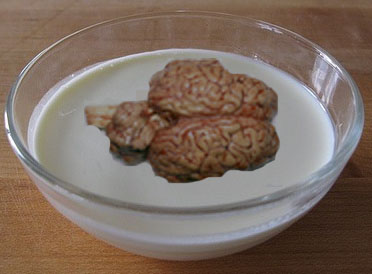
A Brain Floating in the Heavy Cream of Obsession with Academic Excellence, December 13, 2010. Donald Earl Collins

A quarter-century ago, education scholar and Ford Foundation education program director Jeanne Oakes published Keeping Track: How Schools Structure Inequality. Oakes’ groundbreaking, definitive work on the educational inequalities created or reinforced by ability grouping has led a whole generation of scholars to examine the viability of tracking in K-12 education. In a 2005 edition of her book, Oakes wrote that “through tracking, schools continue to replicate existing inequality along lines of race and social class and contribute to the intergenerational transmission of social and economic inequality.”

I picked up Oakes’ Keeping Track for the first time in ’90. By then, I already knew from experience how true her words and research were. Six years in Mount Vernon, New York’s public schools via the Humanities Program had taught me all I’d need to know about the tensions between creating a class of students whose level of academic performance was par excellence while simultaneously addressing segregation and diversity in the school district. The magnet program and the district failed at one and succeeded at the other, which in turn reinforced its failure.

I worked on a paper some twenty years ago for the late Barbara Sizemore, my professor at the University of Pittsburgh my senior year (and a former superintendent of DC Public Schools) looking at how magnet school programs actually created resegregation in individual schools and Pittsburgh Public Schools because of the exclusivity that comes with tracking or ability grouping. It was an easy paper for me to do, guided in no small part by my experiences in Humanities at Davis Middle and Mount Vernon High School. Easy, but not easy to get a handle on beyond the obvious demographics of race, class and test scores.

I managed to wiggle myself into the culture wars of the early ’90s and the debate around multiculturalism and K-12 education soon after that paper. It seems obvious now that the unacknowledged diversity of Humanities was what enabled me to take sides in favor of multiculturalism. That led to my dissertation looking at the historical development of multiculturalism among Blacks in Washington, DC (“A Substance of Things Hoped For,” Carnegie Mellon University, 1997 for those who want more information), and eventually, my first book, Fear of a “Black” America from six years ago.

But it took my memoir Boy @ The Window to bring me back to square one. I realized about a year ago that I’d done nearly thirty interviews of former classmates, teachers and administrators for the manuscript. There was much more material to mine beyond their impressions of me and how to shape their descriptions of themselves — and my memories of them — into characters for Boy @ The Window. I decided to work on an academic piece that looked at the benefits and pitfalls of high-stakes schooling — not just testing — in the form of a history lesson via magnet schools, specifically my Humanities experience.

After a quick rejection, I redoubled my efforts a few months ago. I decided to look at the education psychology and sociology literature, as well as Oakes again, to see how these interviews and my experiences could be useful in our testing-obsessed times. I finally realized what had troubled me about Humanities for the past three decades. It was the reality that all involved with Humanities had taken on the e pluribus unum identity of an academic superstar (much more than just a nerd, by the way). Beyond Black or White, and ignoring the realities of poverty in our district and (at least for me) in our program, Humanities was all about sharpening our academic personas above all else.

This fueled the major success of Humanities during its existence between ’76 and ’93, which in turn would define its failures. In successfully nurturing the idea of academic excellence as identity, as evidenced by so many of us attending and graduating from college, this magnet program failed in its other major educational functions. It failed to embrace diversity, to help its students understand the diversity that was Humanities, to nurture creativity and imagination beyond A’s and college acceptances. It failed to develop the whole student, which aside from its charge to help desegregate Mount Vernon public schools, was its original mission.

Humanities failed because its teachers, administrators (including the former superintendent of schools) and many of the most vocal parents (mostly affluent and White) refused to deal with diversity seriously. Academic excellence without significant parental engagement or the humility necessary to discuss issues of race, gender, class, sexual orientation led to a severe overemphasis on calling us the “creme de la creme.” All of this would have a negative impact on our development as students, and as emerging adults.

I don’t think that it’s asking too much of parents, administrators and teachers to work together in both striving for academic excellence while building programs that embrace difference and nurture creativity and imagination, and not just an addiction to A’s. Or is it?

Anger Issues and Management, Inc

25 Saturday Sep 2010

Posted by decollins1969 in 1, Boy @ The Window, Christianity, Mount Vernon High School, Religion, Youth

≈ Leave a comment

Tags

7S, A.B. Davis Middle School, Anger, Anger Management, Christianity, Envy, Fights, Jealousy, Mount Vernon High School, Mount Vernon New York, MVHS, Patience, Pittsburgh, Race, Ridicule, Righteous Indignation, Scorn, University of Pittsburgh, Wisdom


Rage of the Incredible Hulk. Source:http://www.ramasscreen.com

Exposure to abuse, ridicule and scorn in fairly large dosages when you’re young will leave you with anger issues to manage. I should know. Don’t believe the impressions that my classmates from Humanities and MVHS and my friends from my first two years at Pitt have of me. I may have appeared to smile, to be happy-go-lucky, to be sober and monk-like. But mostly, I was angry, not in a raging, vengeful way, but in a depressed way, a constant, gnawing, sometimes envious, sometimes ironic and sarcastic way. My anger was the kind of anger that I chewed on and swallowed, simmered at low heat for a while in the pit of my belly, then I’d regurgitate it into my mouth, and then chewed on it and swallowed it again.

But, despite what some folks in certain religious circles may say, not all anger is bad, evil or sinful. In fact, sometimes anger is necessary, even if and when it’s dangerous as an emotion or a state of mind. Why, you may ask? Because without anger, you take what life gives to you, even when most of what good you get out of life comes in a miserly and begrudging way. Everything else that comes, if indeed bad or evil for you, isn’t taken in stride or taken with difficulty. You simply don’t take it at all. You become so emotionless that whatever happens doesn’t matter at all, as if your purpose for existing is merely to exist, not to succeed, not to do good works or make yourself a better person because of or despite your circumstances.

That, by the way, is what I’ve heard over the years when some of my former classmates from Mount Vernon — and a few people who knew me in my early days at the University of Pittsburgh — describe me. It was as if I was Porgy in Porgy and Bess, Louis Armstrong or Paul Robeson singing, “I’ve got plenty of nothin’, and nothin’s plenty for me.” That would and did piss me off, but I reminded myself that this was how I had to be to deal with the anger I had within. With emotion, I could’ve easily flown into a rage many

In Treatment Screen Shot. Source: http://sepinwall.blogspot.com

a day between ’81 and ’89.

At the same time, I had the wisdom to allow my anger to rise up, to channel it many more times than not into what I needed to have happen at a particular moment in time. It’s amazing how much you can get done with a sense of righteous anger and indignation, a feeling of got-to-get-it-done-or-else anger. It came at the right time, usually when I felt that my back was up against a concrete wall, with no way out except to fight my way out.

Like in February ’82, the middle of seventh grade, when I just got tired of my 7S classmates thinking that they could say and do anything to me without me getting angry, and tired of days on end at 616 without food to eat. After a fight in the boy’s locker room with one of my classmates — which I won, by the way — I channeled the energy unleashed by that rage and fight into two things. Improving my mediocre grades, and my infatuation over Crush #1. It was three months of relative bliss in the middle of the worst eighteen months of my life.

Richard Marx, 1987.

Or in January ’88, after recovering from the crash-and-burn of my first semester at Pitt. I was mad and disappointed with myself over allowing my obsession with Crush #2 hijack the final six weeks of my semester, not to mention my generally hopeful and creative imagination. After an incident with a couple of my more evil and drunken dorm mates — one in which I cracked a broom handle on the crowns of their heads (no injuries or investigation, luckily) — I summoned some discipline and theme music to get through that second semester. From Richard Marx’s “Should’ve Known Better” to Paul Carrick’s “Don’t Shed A Tear,” I spent fifteen weeks turning anger into A’s and jadedness into new friendships.

I’ve had other periods in my life — in ’93, ’98, and ’03 — where the circumstances dictated that anger, with some patience and understanding, was absolutely necessary in my overcoming of them. The lesson here is that anger — like fire, electricity and nuclear fusion — can be and is often dangerous. Yet it’s also necessary, a potential evil that can be an actual good, if channeled, allowed to dissipate, if tempered by wisdom and patience. At the least, anger allows those of us under stress to know that we are very much alive.

Crush #1 and Other Bedtime Stories

10 Saturday Jul 2010

Posted by decollins1969 in 1, Boy @ The Window, Eclectic, Jimme, Mount Vernon High School, Sports, Youth

≈ Leave a comment

Tags

616 East Lincoln Avenue, A.B. Davis Middle School, Bedtime Stories, Characters, Class of 1987, Classmates, Holmes ES, Humanities, Mount Vernon High School, Mount Vernon New York, Stories


Noah Sleeping, September 2009

For about the past year and a half, me and my wife have spent some of our time at the end of the day with our son Noah telling him bedtime stories. Actually, it’s been mostly me, since my wife doesn’t like making up stuff. At first, it was just about every night, with me telling Noah true stories about family, friends, former classmates and my school experiences.

I’d often put Noah in those stories, especially the ones I knew he’d laugh at. Like the science teacher who came in one day smelling like a skunk had sprayed him because a skunk actually did. Or the story about my second day of high school, where I had to fight a class hipster because he thought that I was a wimpy push-over.

With me injecting Noah into these stories — usually as the character Ben 10 turning into Big Chill or Humongousaur — I realized I had to embellish a bit, making some of my real-life encounters less like real-life. I told stories about my father where I changed almost all of the wording because the real stories involved more profanity and bigotry than a five or six-year-old should ever have to hear. I’d leave out parts of stories about how mean some of my classmates or teachers were just to make sure Noah was ready to go to sleep happy and without asking me a lot of questions about my past.

About six months ago, I started making up stories, about eighty-five percent fictional in nature. The names

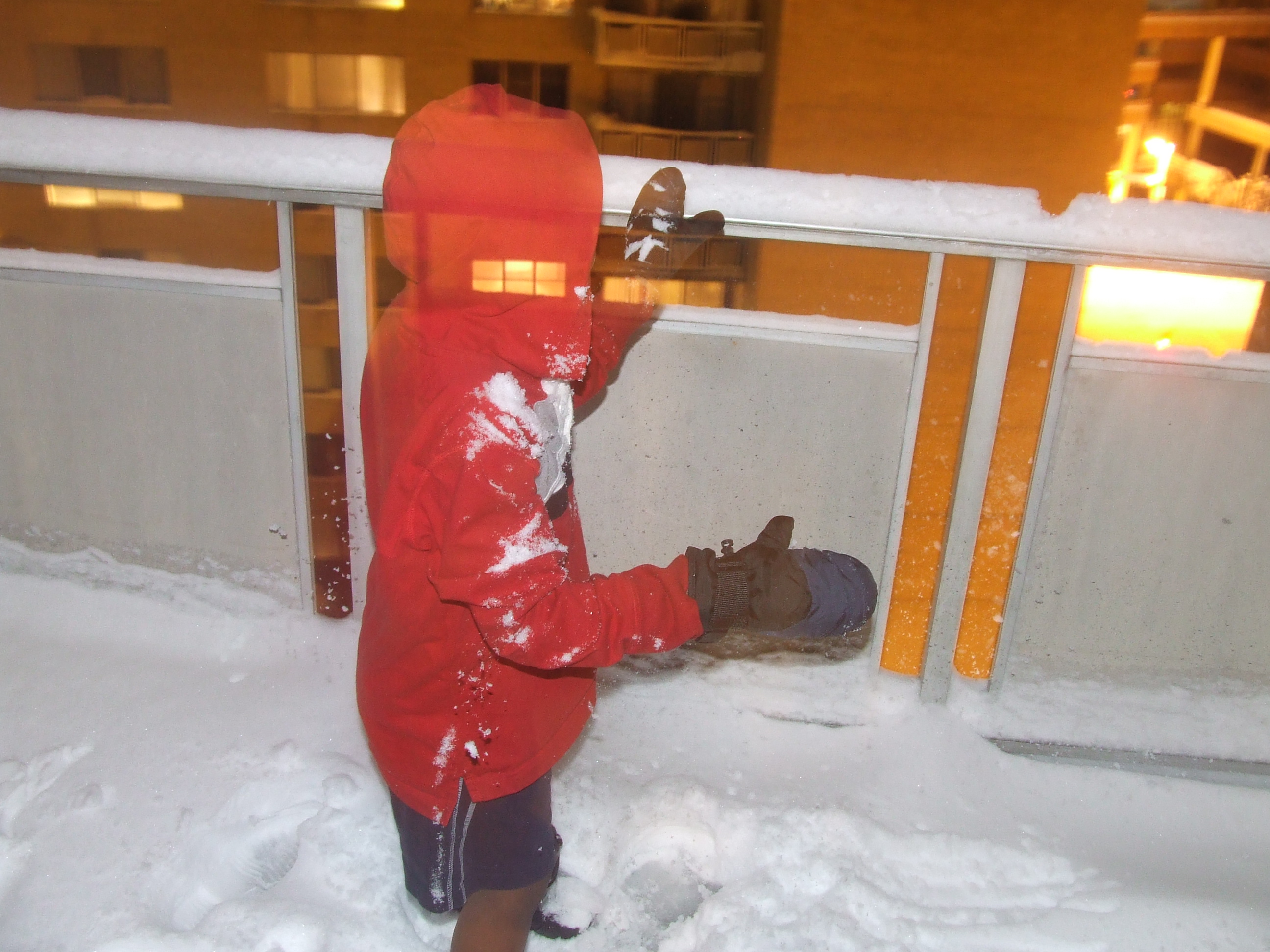
Noah in Snowaggedon (on balcony), February 2010

and places remained the same, but the incidences and their improbable outcomes didn’t. I figured out that Noah mostly enjoyed a few choice characters: a fictionalized ’80s version of my father, a singing, wise-cracking fictional classmate, a super-smart classmate who’d get a case of the “ums” and “uhs” under duress, a friend from my elementary school days who’d fart when under pressure, and an even more tomboyish version of my Crush #1. Noah has since asked for those characters in my stories over and over again.

He’s also asked a lot of questions about my real-life classmates, teachers and family. Like, “Did you really have a classmate who sings ‘Roxanne’ all the time?” Or “Did [your friend] really fart all the time?” “Are you still friends with [super-smart boy]?” So I pulled out the MVHS Class of ’87 yearbook that I had borrowed from a former classmate when revising drafts of Boy @ The Window to show Noah pictures of them so that he could see that these weren’t the larger-than-life, made-up characters I used in my bedtime stories. Not to mention using the power of Facebook to bring home that fact as well.

This past week, Noah’s asked a few more questions. “Do you still like [Crush #1] a lot?,” Noah asked me a couple of days ago. “I still like her, but not the way I liked her when I was twelve,” I said in response, kind of shocked that he asked me that question out of the blue. I then thought for a moment, “Maybe I should keep the twelve-year-old in me to myself until he’s older.”

Noah Salutes

Then I realized. I have to tell Noah these stories. At the very least, it’ll help him not make the same mistakes I made growing up. That way, he won’t have to spend most of his time growing up without good friends, without an eleven-year gap between kisses, with mostly stories that would make most six-year-olds cry. Or, at the least, sad. He can read all about it when he’s older and Boy @ The Window’s published.

First Impressions and Brandie

27 Thursday May 2010

Posted by decollins1969 in 1, Eclectic

≈ Leave a comment

Tags

A.B. Davis Middle School, Brandie Weston, Etiquette, Friendships, Mount Vernon New York


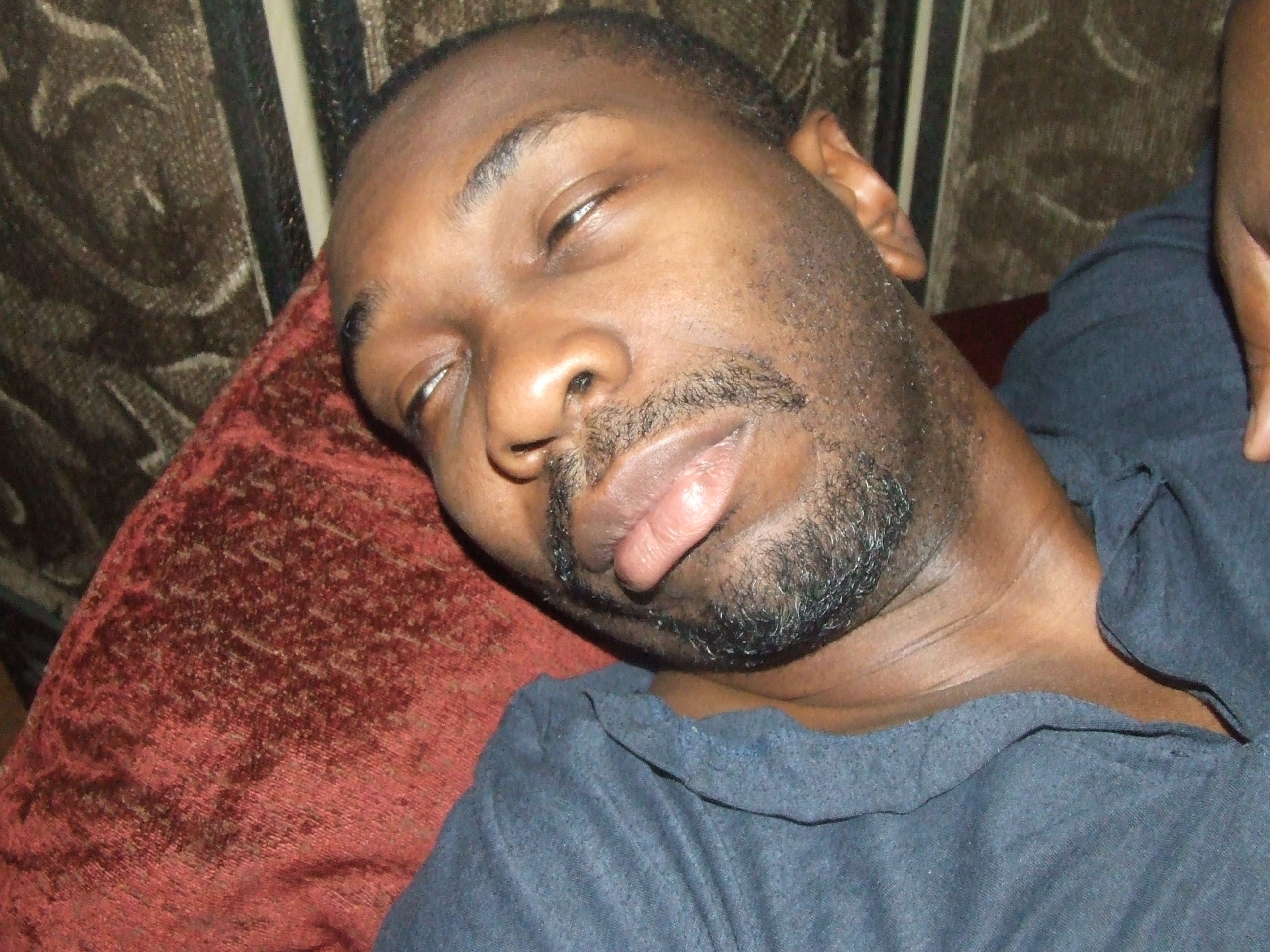
Half-Sleep Mug Shot

A year and a half before me and Brandie were together in Humanities and 7S, my father Jimme took me and my older brother Darren to his “girlfriend’s” two-bedroom apartment on Mount Vernon’s South Side. The place felt bigger to me than it actually was. Maybe it was because of the day we made this visit. It was a Saturday in May ’80, when May used to mean early spring, and not May showers, October winds, and August heat and humidity, like it does now. It was sunny, and that sunshine found its way into that apartment that day, highlighting heavily polished wood and making the yellow walls brighter. Even though Brandie’s mother and Jimme were having drinks and paid me and Darren little mind, it was nice getting out of our sparse space at 616. It was good that Jimme actually showed up this time.

About an hour into the visit, Brandie walked into the apartment door. She held several bags in her hands from shopping. All I noticed was that Brandie was taller than me, and wider too. I saw her as a woman of massive girth, somewhere nearing six feet in height, the stereotypical Black woman whom people like my mother had spent the previous decade of my life making fun of. I couldn’t resist. Like a mindless idiot, I said “Wow, she’s fat!” with glee in my eyes and a welcoming smile all over my face. For me, it was as if I had said, “Wow, you’re gorgeous, and your skin has a wonderful glow!”

Brandie’s reaction was one of stone-faced, speechless shock. Jimme gave me a semi-chuckled “Donald!” to let me know that I had said something inappropriate, but other than that, nothing. Brandie didn’t scream or holler, Brandie’s mother said nothing about it, and everyone — including Brandie — carried on with conversations until we left for home. I learned that Brandie attended Grimes and about Humanities for the first time. I didn’t know that I’d be a classmate of hers sixteen months later.

We ended up fighting inside of six weeks of being together in 7S. I thought I was the “smartest kid in the whole world,” while Brandie thought I was a “dumb ass.” After punching her in the breast, I was also a “pervert” — and pathetic me didn’t even know what “pervert” meant — for the rest of the year. Boy, I really was a dumb ass back then!

It took me until the end of high school for Brandie to see me any other way other than the idiot ten-year-old that I’d been. By then, she had changed as well, and mostly no longer cared for Mount Vernon or most of us as her classmates. But, she didn’t hate me anymore, at least. Brandie and I hugged at our high school graduation in ’87, but not before saying, “You’ve changed a lot over the years. You used to be an asshole you know!”

She was right, of course. Unfortunately, she’s not here for me to say that. Or to say that I’m sorry. Not just for calling her fat. Not just for my prejudice toward people with obesity. But for not revealing my truer self, my better self to her, not in ’80 or ’81 or ’87. Despite all evidence to the contrary, sometimes we really only get one chance to make a good impression on others.

← Older posts
Newer posts →

Boy @ The Window: A Memoir

Boy @ The Window: A Memoir

Places to Buy/Download Boy @ The Window

There's a few ways in which you can read excerpts of, borrow and/or purchase and download Boy @ The Window. There's the trade paperback edition of Boy @ The Window, available for purchase via Amazon.com at http://www.amazon.com/Boy-Window-Donald-Earl-Collins/dp/0989256138/

There's also a Kindle edition on Amazon.com. The enhanced edition can be read only with Kindle Fire, an iPad or a full-color tablet. The links to the enhanced edition through Apple's iBookstore and the Barnes & Noble NOOK edition are below. The link to the Amazon Kindle version is also immediately below:

scr2555-proj697-a-kindle-logo-rgb-lg

Boy @ The Window on Amazon.com: http://www.amazon.com/Boy-The-Window-Memoir-ebook/dp/B00CD95FBU/

iBookstore-logo-300x100

Boy @ The Window on Apple's iBookstore: https://itunes.apple.com/us/book/boy-the-window/id643768275?ls=1

Barnes & Noble (bn.com) logo, June 26, 2013. (http://www.logotypes101.com).

Boy @ The Window on Barnes & Noble: http://www.barnesandnoble.com/w/boy-the-window-donald-earl-collins/1115182183?ean=2940016741567

You can also add, read and review Boy @ The Window on Goodreads.com. Just click on the button below:

Boy @ The Window

Twitter Updates

Tweets by decollins1969
  • RSS - Posts
  • RSS - Comments

Archives

  • June 2025
  • April 2023
  • September 2022
  • August 2022
  • July 2022
  • June 2022
  • May 2022
  • April 2022
  • March 2022
  • January 2022
  • December 2021
  • November 2021
  • October 2021
  • September 2021
  • August 2021
  • July 2021
  • June 2021
  • April 2021
  • March 2021
  • February 2021
  • January 2021
  • December 2020
  • November 2020
  • October 2020
  • September 2020
  • August 2020
  • July 2020
  • May 2020
  • April 2020
  • March 2020
  • January 2020
  • December 2019
  • November 2019
  • August 2019
  • July 2019
  • June 2019
  • May 2019
  • April 2019
  • March 2019
  • February 2019
  • January 2019
  • December 2018
  • November 2018
  • October 2018
  • September 2018
  • August 2018
  • July 2018
  • June 2018
  • May 2018
  • March 2018
  • February 2018
  • January 2018
  • December 2017
  • November 2017
  • October 2017
  • September 2017
  • August 2017
  • July 2017
  • June 2017
  • May 2017
  • April 2017
  • March 2017
  • February 2017
  • January 2017
  • December 2016
  • November 2016
  • October 2016
  • September 2016
  • August 2016
  • July 2016
  • June 2016
  • May 2016
  • April 2016
  • March 2016
  • February 2016
  • January 2016
  • December 2015
  • November 2015
  • October 2015
  • September 2015
  • August 2015
  • July 2015
  • June 2015
  • May 2015
  • April 2015
  • March 2015
  • February 2015
  • January 2015
  • December 2014
  • November 2014
  • October 2014
  • September 2014
  • August 2014
  • July 2014
  • June 2014
  • May 2014
  • April 2014
  • March 2014
  • February 2014
  • January 2014
  • December 2013
  • November 2013
  • October 2013
  • September 2013
  • August 2013
  • July 2013
  • June 2013
  • May 2013
  • April 2013
  • March 2013
  • February 2013
  • January 2013
  • December 2012
  • November 2012
  • October 2012
  • September 2012
  • August 2012
  • July 2012
  • June 2012
  • May 2012
  • April 2012
  • March 2012
  • February 2012
  • January 2012
  • December 2011
  • November 2011
  • October 2011
  • September 2011
  • August 2011
  • July 2011
  • June 2011
  • May 2011
  • April 2011
  • March 2011
  • February 2011
  • January 2011
  • December 2010
  • November 2010
  • October 2010
  • September 2010
  • August 2010
  • July 2010
  • June 2010
  • May 2010
  • April 2010
  • March 2010
  • February 2010
  • January 2010
  • December 2009
  • November 2009
  • October 2009
  • September 2009
  • August 2009
  • July 2009
  • June 2009
  • May 2009
  • April 2009
  • March 2009
  • February 2009
  • January 2009
  • December 2008
  • November 2008
  • October 2008
  • September 2008
  • August 2008
  • July 2008
  • June 2008
  • May 2008
  • April 2008
  • March 2008
  • February 2008
  • January 2008
  • December 2007
  • November 2007
  • October 2007
  • September 2007
  • August 2007
  • July 2007
  • June 2007

Recent Comments

MaryPena's avatarMaryPena on My Day of Atonement/Bitter Hat…
decollins1969's avatardecollins1969 on No Good Teaching Deed Goes…
Mary Rose O’Connell's avatarMary Rose O’Connell on No Good Teaching Deed Goes…

NetworkedBlogs on Facebook

NetworkedBlogs
Blog:
Notes From a Boy @ The Window
Topics:
My Life, Culture & Education, Politics & Goofyness
 
Follow my blog

616 616 East Lincoln Avenue A.B. Davis Middle School Abuse Academia Academy for Educational Development AED Afrocentricity American Narcissism Authenticity Bigotry Blackness Boy @ The Window Carnegie Mellon University Child Abuse Class of 1987 CMU Coping Strategies Crush #1 Crush #2 Death Disillusionment Diversity Domestic Violence Economic Inequality Education Family Friendship Friendships Graduate School Hebrew-Israelites High-Stakes Testing Higher Education History Homelessness Humanities Humanities Program Hypocrisy Internalized Racism Jealousy Joe Trotter Joe William Trotter Jr. K-12 Education Love Manhood Maurice Eugene Washington Maurice Washington Misogyny Mother-Son Relationship Mount Vernon High School Mount Vernon New York Mount Vernon public schools Multiculturalism MVHS Narcissism NFL Pitt Pittsburgh Politics of Education Poverty President Barack Obama Race Racial Stereotypes Racism Relationships Self-Awareness Self-Discovery Self-Reflection Sexism Social Justice Teaching and Learning University of Pittsburgh Violence Whiteness Writing

Top Rated

Blog at WordPress.com.

  • Subscribe Subscribed
    • Notes from a Boy @ The Window
    • Join 103 other subscribers
    • Already have a WordPress.com account? Log in now.
    • Notes from a Boy @ The Window
    • Subscribe Subscribed
    • Sign up
    • Log in
    • Report this content
    • View site in Reader
    • Manage subscriptions
    • Collapse this bar
 

Loading Comments...