Golden State Spencer Fellows

Tags

, , , , , , , , , , , , ,


Spencer Foundation Dissertation Fellows Retreat, Berkeley, CA, February 17, 1996. Donald Earl Collins (psst - I'm the young and cute Black guy in the white turtleneck in the back row)

Fifteen years ago this week I went on my first trip to the West Coast. It was for a Spencer Foundation Dissertation Fellows retreat in some villa of a conference center just off UC Berkeley’s campus. It was our second meeting as a cohort, presenting some of our doctoral thesis work in front of a group of professors from Berkeley, Stanford, UCLA and other places. It was also a chance for the thirty-three of us to meet the selection committee that had made it possible for us to be Spencer Foundation Dissertation Fellows in the first place. We spent so much time in Berkeley and in Oakland that most of us didn’t bother to take the BART into San Francisco, so the trip was a failure in that area — not really.

But it was very important in one aspect above all else. I learned during our three days of meetings how I wasn’t alone in the world of academia. That I wasn’t the only misfit was the first revelation. There were other Fellows whose departments and classmates had shunned them and their work because it touched on the “soft” field of education. Or because it wasn’t hardcore quantitative analysis. Or because they weren’t thirty years old yet. Or even because of the age-old academic issues of looking at educational issues through the trifocal lens of race, gender and class.

Some of us talked about our dissertation advisors and their lack of support for us and our work. We were individuals who had won a prestigious individual award and a $15,000 grant to research and write a doctoral thesis, but somehow had managed to do this without the support of tenured faculty at major, even elite, universities! I found that fascinating. I also would’ve found that unbelievable if my advisor hadn’t been Joe Trotter. We didn’t have any obvious solutions to the problem of asshole advisors who may well not have supported us on the job market. Nor did we have a solution to their midlife crises or male pattern baldness. Yet it was good to spend significant time talking about this.

I also discovered through this retreat that I wasn’t the only one of us ambivalent about having a career as a professor. It didn’t help that we had a freshly minted associate professor from U Chicago talking to us about her average work week. Not because a forty to forty-five hour work week seemed anywhere close to arduous. At least to me. The half of the Fellows who really did want academic careers moaned quite loudly at the prospect of teaching, research, writing and serving on committees for so many hours. I, among others, looked at the list and found it rather mundane and restricting.

Many of us were concerned about becoming institutionalized, kind of like the way Morgan Freeman’s character “Red” talked about it in Shawshank Redemption. My own fear was that I could make myself a successful academician, molding my imagination and writing more fully into the forms of academic prose. Meaning that I wouldn’t be able to communicate with anyone outside of my subfield or field, and certainly not with the general reading public, who usually wouldn’t use words like fait accompli unless they were French speakers. There were a few other Fellows who didn’t want to write or do research at all. They wanted to teach, to change the world of K-16 education somehow.

Catherine Lacey, the director of the Dissertation Fellowship program at the time, concluded with a lofty and philosophical speech about our bright futures. It was a good speech. It made me begin to think about what to do with my life if I didn’t get a full-time gig as faculty at an elite university. For many of us, though, this would also be the last time we could be this honest about our hopes, fears, and warts when it came to our doctoral theses and post-doctoral careers. If only I had known about the Ford Foundation’s associate program officer program when it existed back in ’96.

Sarai, A Poet In My Heart

Tags

, , , , , , , , , , , , , , ,


Sarai, circa 2009. Unknown.

Today, if she were still alive, my sister Sarai would’ve turned twenty-eight years old. To think that I was only six weeks past my thirteenth birthday when she was born. Sarai was the one sibling I didn’t want because she was born in the middle of our plunge into welfare, my ex-stepfather’s abuse, and my mother’s inability to make any good decisions for herself and for the family.

But her life was a miracle in and of itself. Sarai was born a sickly sickle-cell anemia child, another sign of my mother’s indecisiveness and the collective stupidity of adults in my life. None of that really mattered after the first few months, though. From the time she was six months old until I went off to the University of Pittsburgh four years later, I made a point of looking after her, of getting her extra food, of making sure that everything she ate was fortified with iron.

Sarai was my little princess, the only girl I could relate to, the one I could dress and attempt to comb hair for (I say “attempt” because she didn’t have much hair before she became a teenage and my hair-doing skills were mediocre most days). I didn’t want to love her, but I did anyway.

As she grew older, her status as my little baby changed too. But only in a few ways. Whenever I came home

Sarai, Yonkers Apartment, December 23, 1995. Donald Earl Collins

to 616 for the holidays or visits, Sarai would say “hi,” give me a hug, and hold out her right hand for some money. Sometimes I gave her some walking around money, other times I didn’t — I was a poor student for most of the ’90s. It took awhile, but the little girl who was my sister grew up enough to live on her own a few short years before she died. That’s part of how I’d like to remember Sarai.

The first song I ever sang to her outside of lullabies was Starship’s “Sara.” It was the winter of ’86, a quarter-century ago, and Sarai didn’t care too much for my rendition of the song, with my high-falsetto flourishes and adjustments of “Sara” to “Sarai” throughout. (By the way, for those of you who aren’t practicing religious Jews or Judeo-Christian scholars, Sarai was the name of Abram’s wife before God ordained that their names would become Sarah and Abraham.) Of course, I usually sang it to her when she became petulant or when she was teasing her older brothers.

But what I should’ve been singing to her was Fleetwood Mac’s “Sara.” I should’ve been singing “wait a minute baby, stay a little while…” It would’ve been so much more appropriate. Sarai was a “poet in my heart.” She never really changed, and luckily, she never stopped living her life. And now she’s gone, and has been gone for more than seven months now. My life seems more empty, my family even less of a family, than it was before. Hopefully, I’ll see her again, whenever I’m finally called home.

No Rhodes Lead to College Park

Tags

, , , , , , , , , , , , ,


The Road to the University of Maryland President's Residence, June 11, 2010. Donald Earl Collins

University of Maryland President's Residence, June 11, 2010. Donald Earl Collins. Note the Maryland flag colored shell on the Terrapin (turtle).

Three years ago I did an interview at the University of Maryland for a director position with their National Scholarships Office. It was a day-long interview that went from 9 am until 6:30 pm, meeting faculty and administrators throughout the nine-and-a-half-hour process.

It was one of my best interviews. I didn’t feel like I made any obvious errors, and I genuinely liked all of the people I met that day. But there was one question, one topic, that felt out-of-place, awkward, even stupid as part of the discussion of this position. It was the question, “If you get this job, can you guarantee that the University of Maryland will have a Rhodes Scholarship winner in five years?”

I was almost speechless after hearing the question. Not because I didn’t have confidence in my abilities to detect academic excellence or strong leadership skills in students. Not because I didn’t think I could handle the job. Mostly, I just thought that it would be ridiculous for any responsible professional to guarantee a prize like a Rhodes Scholarship based on variables beyond their control. “I can guarantee that I can get more students into the pipeline for a Rhodes, but I think it would be foolhardy for me to guarantee that I could get a Rhodes Scholarship in two or five years.”

Former U.S. Representative Tom McMillen, a Rhodes Scholar, NBA player, and alumnus of the University of Maryland, 2008. BGervais. Creator has granted permision for free use via Creative Commons.The conversation continued over the next fifteen minutes between me, another director and two deans. I discussed other important scholarships and fellowships. Fulbright. Truman, Mellon Mays, Ford Foundation, and so on. But the conversation returned three times to the mandate of then President Mote and his emphasis on raising Maryland’s prestige by having a student win a Rhodes Scholarship. After all, the university had not had a Rhodes Scholarship winner since basketball star Tom McMillen won the award in ’74. One administrator actually said, “We see no reason why we couldn’t do as well as the University of Michigan.”

I thought, “Wow! He said that with a straight face!” I couldn’t believe what I was hearing. It was as if I was listening to my ex-stepfather talk about how great a father he was while his kids were running around 616 with graying drawers and grumbling stomachs. Given the state of the scholarships office at the University of Maryland, they weren’t ready to compete with the University of Pittsburgh yet, much less the most prestigious land-grant public university in the country, and arguably the world. I graduated with and found myself in the same classes with one Rhodes Scholar when I was an undergrad at Pitt, and knew a finalist for the scholarship when I was a grad student there as well. And Pitt had nowhere near the academic reputation in ’91 or ’94 that it had earned by 2008.

I nudged the administrators who were interviewing me to think more systematically about how the scholarships office at the University of Maryland should go about setting goals. That a university must build its reputation for high-achieving students over time, so that its Rhodes Scholarship candidates will survive to at least be finalists in the process. That our competition was more the University of Virginia or University of Delaware or even Johns Hopkins before setting goals on par with the University of Michigan.

I obviously didn’t get the job. Given that conversation, though, I wasn’t sure if I wanted the job. The university found someone who had previous experience working in a university scholarships office. As with most staff positions at universities, experience working as a staff member (considered different from faculty, in case folks don’t know the difference) is more important than nonprofit management or academic teaching experience. I was definitely disappointed.

Still,  I wanted the challenge of creating a more academically enriching environment at the University of Maryland. And after three years of teaching in the University System of Maryland (via University of Maryland University College), I’ve taught enough College Park students to know that much work remains to create the kind of university necessary to produce Rhodes Scholars. Who knows? Maybe Maryland will have its first Rhodes Scholar recipient in thirty-seven years this spring. However, given the split personality of both the campus and the academic culture there, I seriously doubt it.

Steelers’ Maurkice Pouncey still hopeful for Super Bowl – Super Bowl XLV – SI.com

Tags

, , , , , ,


Steelers’ Maurkice Pouncey still hopeful for Super Bowl – Super Bowl XLV – SI.com.

All I know is that I ended up with a high ankle sprain and a hairline fracture in my tibia (left leg) the day after MLK Day last year. It took four weeks for me to be able to run without significant pain, and another two weeks before I could move laterally on that leg.

But I was apparently lucky, according to my orthopedist. I was a “miracle” because I could not only stand on my left leg and foot. I could also stand on my tiptoes without any support, without much pain at all. If Pouncey can do that, he might well be able to play. If he can’t stand on his tiptoes, Pouncey and the Steelers can forget about playing. Period.

Dairy Queens, Dick Oestreicher and Race

Tags

, , , , , , , , , , , , , , ,


Dairy Queen Sign, Near Frankstown Road, Penn Hills (outside of Pittsburgh, PA), June 14, 2005. Shawn Wall. Qualifies as fair use under US Copyright law because there is no attempt to distribute or alter, and this photo is only being used for illustrative purposes.

Black History Month is upon us once again. But instead of the same tired discussion of Carter G. Woodson, MLK or the meaning (or lack thereof) of this month, I’m telling a story that will (hopefully) dredge up issues for many of you.

It was the last Tuesday in October ’92. I was a student in Dick Oestreicher’s US General Field 2 graduate seminar in the history department at the University of Pittsburgh. The topic for our discussion this day

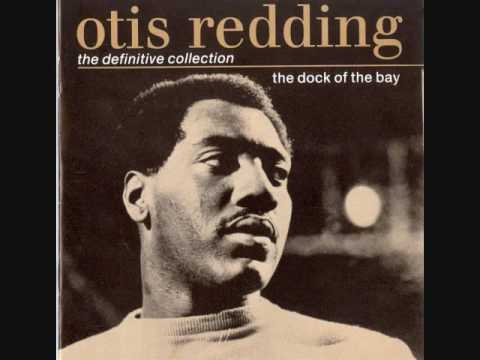
Otis Redding Album Cover, January 31, 2011. Unknown. This photo qualified as fair use under US copyright laws because of its low quality.

was, “Why has black economic mobility, political assimilation, and cultural identity differed from other ethnic groups.” On the surface, it sounded like a good academic discussion to have. But after having to write a fifteen-page analysis on the topic, where I was restricted to William Julius Wilson’s Declining Significance of Race (1978), Thomas Sowell’s Ethnic America (1971), and Kenneth Kusmer’s analysis of race in the context of Black migration to Cleveland (1976), I wasn’t so sure. I made the mistake of being provocative, naming my paper “Sittin’ on the Dock of the Bay” — after the Otis Redding version, and not the Michael Bolton one.

It was a long two-and-a-half hour class. Especially since I was the lone African American in the room talking about race and standing up to the classroom consensus that class was more important than race in the case of the thirty-million-plus people who looked like or had been classified the same as me. I was on the hot seat, arguing that both Sowell and Wilson’s bias was politically conservative in nature, which influenced their analysis of the question of Black progress and lack of such. I also decided that — like so many issues in history — the question of race versus class was an and-both and not an either-or one. That race and class were so intertwined in American culture and history that to separate them would do severe damage to our ability as historians to understand the nature of racism and poverty in American society.

One of my classmates, an over-50 White male, decided at this point to cut off my final point. “You should be grateful, to be able to go to an esteemed institution like the University of Pittsburgh, to be able to sit in that chair and get to earn a Ph.D. If it were thirty years ago, we couldn’t stand in the same Dairy Queen line, right here in Pittsburgh,” the older man said as slowly and as deliberately as someone giving an Oscar acceptance speech. I was amazed, angry, ready to put the man in his place academically. I wanted to verbally take a Dairy Queen triple-scooper and smash it in his stubby nose.

Then my mentally absent professor Dick Oestreicher immediately interrupted, literally positioning himself in the middle of the room to keep me from giving my response. Oestreicher ended class right then and there, dismissing us without even summarizing our discussion or criticizing our allegedly weak academic

Dick Oestreicher, circa 2009

analysis, which he had done in all of the previous weeks.

I was incensed, actually more pissed with Oestreicher than with the bigoted older man. I made sure to stop by Oestreicher’s office the next afternoon after my other grad seminar to find out why he interfered. “You’re going to have to deal with this anyway,” he said while shrugging his shoulders. The following week, I received an A- on my paper, with “Sowell’s well read” as the only comment on my critique of the authors and the undeniably conservative, pro-class and anti-race analysis that the authors provided.

Of my five and a half years in graduate school — and in my two years of grad school at Pitt — it was one of my most unbelievable moments. I wanted to pick Oestreicher up by his mangy hair and show him how some people deal with moments of racism and the people who allow it to continue on their watch. I wanted to tell him that he should stay out of the classroom if he’s too scared to actually teach students.

In the end, I was more patient at twenty-two than I’d probably be about something like this now. I remained academically defiant the rest of the semester, opposed every argument he made whenever he made it. Meanwhile, the bigoted old man had withdrawn from the course in the last month of the semester.

I learned, more than anything else, that many so-called liberal professors were only academic liberals, not actual liberals. Oestreicher in my mind was worse than my hard-ass principal Richard Capozzola at Mount Vernon High School. At least with Capozzola, you knew that he didn’t like anyone who looked like me — meaning young, Black, male, unpopular and poor. With Oestreicher and so many in academia, their liberalism and expressions in support of racial equality were mere scholarly arguments. In reality, people like him would never expect someone like me to have a chance in hell or heaven to become one of their academic peers.

But you know what was the funniest thing of all? I’d never been to a Dairy Queen before.

A Giants Anniversary

Tags

, , , , , , , , , , , , , , , , , , ,


Super Bowl XXV, "Wide Right" Screen Shot, January 29, 2011. This screenshot qualifies as fair use under US Copyright laws because of its low quality and because it is only being used to illustrate the topic of this article.

It’s been twenty years and two days since my Giants pulled off the unexpected against the juggernaut that was the Buffalo Bills in Super Bowl XXV. It was the “Stuck In A Moment” (via U2) or “Wide Right” game, when Scott Norwood missed a 47-yarder to end the game, Giants winning, 20-19. It was a great and somewhat improbable moment, given that the Giants were minus Phil Simms and had as much offensive firepower as a firecracker under water. Yet, they somehow pulled it together, with great defensive, good special teams, and methodical, disciplined long drives in the second and third quarters to keep Jim Kelly and Thurman Thomas off the field.

There were so many things to remember about that game and day. Whitney Houston’s spectacular performance of the national anthem. O.J. Anderson running three and four yards at a time. Andre Reed having a great game. The fact that the first Gulf War was just a few days old (I didn’t support that war either, but at least it had a real sense of international support). How ridiculous it was that few prognosticators picked the Giants to beat the Bills.

Most importantly, my takeaway was that ’91 was going to be a good year. Now just because my original hometown team won. Not just because they weren’t expected to win. But because of the way they won. They played like grinders, with long drives that led to touchdowns, that kept the opposing team’s offense watching on the sidelines. I had used sports as a metaphor for understanding my own life since I was a teenager. With the Giants winning their second Super Bowl in five seasons (or four calendar years), I saw it as a sign of what I needed to do to move forward that year.

I already knew that many of my history professors at the University of Pittsburgh thought I was a very good student, but at least three (including one of my letter writers, who told me his expectations of me after the fact) who didn’t think I was grad student material, whatever that means. I understood that I also didn’t want to go into the workforce in ’91 with just a B.A. in history and minors in math and Black Studies. I knew that having the masters or another graduate degree would help, and was still contemplating taking my 50th percentile LSAT score and using it to get into law school.

All of this would require persistent, consistent work and agitation on my part, because I had few in my corner going to bat for me, no matter what I finally decided. It was no longer a matter of talent or pure analytical ability. No, what I was going through now required wisdom, diligence, the need to seek allies wherever and whenever they could be found. And a bit of luck. All of which that Giants team exhibited throughout the ’90 season and in Super Bowl XXV. (To be continued…)

Kelley Williams-Bolar, Ohio Mother, Convicted Of Felony For Lying To Get Kids Into Better School


This issue is one where race, class and gender meet in a three-car accident, one that could’ve been prevented long ago. Twenty years ago, Jonathan Kozol published probably his most famous book on educationa­l equity overall, Savage Inequaliti­es. The book was a look into communitie­s of poverty and affluence and the huge distance between them in terms of money for education and racial compositio­n, even though the physical distance was usually only a few blocks or miles. East St. Louis, Illinois vs. St. Louis, Chicago vs. New Trier, Camden vs. Cherry Hill, New Jersey, even my first hometown of Mount Vernon vs. Scarsdale and Bronxville­, New York. Muckrakers like Kozol, and experts like Diane Ravitch, Jeanne Oakes and so many others have implied for years that these gross inequities in school district funding, teachers, parental engagement and student achievemen­t. Is there any wonder someone like Kelley Williams-B­olar would circumvent school district lines to give her kids the best possible public school education? I would’ve hoped my mother would’ve done the same for me growing up.

Also around 1991, controvers­ial New Jersey governor Jim Florio attempted to address this issue by raising taxes and equalizing school funding for every district in the state. The result: a race and class-base­d tax revolt, and virtually no chance at re-electio­n in 1994. Bottom line: we need a grassroots effort as intense as the one in New Jersey so that people like Kelley Williams-B­olar have better alternativ­es wherever they reside.
Read the Article at HuffingtonPost