• Spinning Sage’s Gold: Allegories on the Western-Dominated Present and a Possible Post-Western Future (2025)
  • About Me
  • Other Writings
  • Interview Clips
  • Video Clips
  • Boy @ The Window Pictures
  • Boy @ The Window Theme Music

Notes from a Boy @ The Window

~

Notes from a Boy @ The Window

Category Archives: Academia

Patriotism, Post-Racialism and Prima Donnas

04 Monday Jul 2011

Posted by decollins1969 in 1, Academia, culture, Eclectic, Patriotism, Politics, Pop Culture, race

≈ Leave a comment

Tags

4th of July, Abraham Lincoln, Alexandra Pelosi, American Patriotism, Hyper-Patriotism, Imperialism, Independence Day, John Allen Muhammad, July 4th, Martin Luther King, Military, Narcissism, Nationalism, Patriotism, Post-Racialism, Prima Donnas, Susan B. Anthony, Timothy McVeigh


US Flag and Lower 48, July 3, 2011. Source: http://mapsof.net

It’s yet another 4th of July, number 235, and I find myself tired of how the prima donnas in this country think it their right to define for me what patriotism is and isn’t. Last I checked, carrying an M-16 rifle and wearing a uniform overseas isn’t the alpha and omega of patriotism here or anywhere, and saying that it is doesn’t make it so. By that definition, it would mean that Martin Luther King, Jr., Abraham Lincoln and Susan B. Anthony weren’t patriots, while Timothy McVeigh and John Allen Muhammad were. Those who serve in combat are obvious American patriots. But hiding behind our military in defining patriotism allows us as a nation to ignore so many things that contradict our sense of nationalism and patriotism.
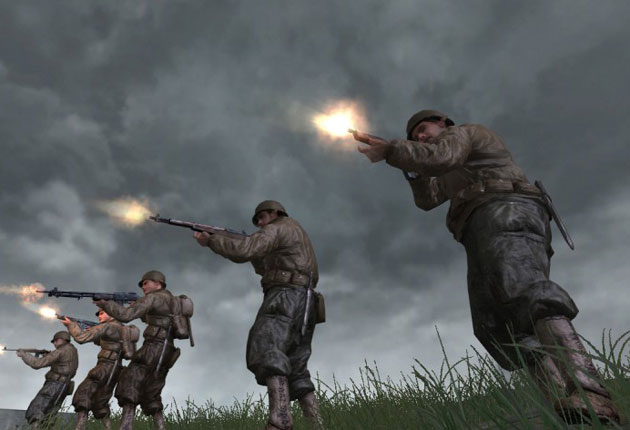
Call of Duty Screen Shot, July 3, 2011. Source: http://independent.co.uk

Patriotism is about much more than guns, battles, taking flanking positions or making perfect speeches wholly incompatible with the imperfections of our society and people. As anyone in the education field knows, Americans in general know about as much history as my son knows right now, and he just finished second grade.

Our aversion to history is especially noticeable when it comes to race. We’ve declared ourselves post-racial when we haven’t even been pre-racial. Meaning that in order to get beyond race, we actually have to deal with it directly, head-on, without holding back, the ugly history of race and racism that is as American as apple pie. I’m afraid that it’ll take a national tragedy, though, for more Americans to dare be that brave, that honest, that, well, patriotic.

It’s sad, because most of us are prima donnas, or rather, imperial narcissists who talk about patriotism without understanding that being a patriot often means using one’s brain and vociferously resisting the status quo. We’re more concerned about winning Mega Millions and Powerball or the price of gas than we really are about troop levels in Iraq and Afghanistan or making US foreign and economic policies more equitable abroad and at home. We somehow assume that “America is #1!” is our birthright, even as many of us haven’t the socioeconomic capacity to partake in America’s remaining riches.

Alexandra Pelosi (a documentarian and former House Speaker Nancy Pelosi’s daughter) has been doing the media circuit talking about her latest film, Citizen U.S.A., the story of immigrants becoming naturalized

Citizen U.S.A. Poster, June 2011. Source: http://www.jfklibrary.org

American citizens and their appreciation of what they believe America is about. Her message has essentially been “shame on you” to native-born Americans for not seeing our nation the way these immigrants can and do.

But even Pelosi’s perspective is limited in its prima-donna-ness. There are millions of us who see the direction of the nation and work not to illuminate its already over-hyped greatness — a classic sign of imperialism, by the way — but to make the nation a better one, a nation that lives up to its ideals. Isn’t this another example of one’s patriotism, one that’s forward-thinking enough to work for the long-term success of a nation, rather than chest-thumping about greatness in the present?

It seems to me that we should illuminate the fact that we expend so much energy making millions of Americans who are not with the prima-donna program into unpatriotic outcasts. So much so that most of us have never had an independent thought on this topic in our entire lives. And if the 4th of July is to be about more than guns, speeches, guns and denigration, we need more people to think for and beyond themselves about patriotism, even if some of us are incapable of accepting independent thought and criticism from them.

A One-Year Sooner “What If?”

18 Saturday Jun 2011

Posted by decollins1969 in 1, Academia, Boy @ The Window, Eclectic, Mount Vernon High School, New York City, Work, Youth

≈ Leave a comment

Tags

616, 616 East Lincoln Avenue, Class of 1987, Graduating Early, High School Graduation, Humanities, Humanities Program, Mount Vernon High School, Mount Vernon New York, New York Giants, New York Mets, Super Bowl XXI, Technisort, Time Traveling, University of Pittsburgh, Working, World Series


Through The Wormhole, Star Trek DS9 Style, June 18, 2011. Donald Earl Collins

Today’s twenty-four years since I graduated from Mount Vernon High School in Mount Vernon, New York as part of the Class of ’87. I’ve talked about the events immediately before and after that milestone. I’ve spent a bit of time on the day of the ceremony itself, and will again when I hit the quarter-century anniversary mark next year. Today, though, I want to hypothesize about what would’ve happened if I had decided to graduate one year earlier. I can’t help it. I’m a historian and intellectual, and not just a scholar who cares about research, so I often speculate in order to find answers that are a little outside of the box.

Because of Humanities and AP, many of the best of the best and brightest had or nearly had enough credits to graduate by the end of our junior year, in June ’86. A dozen or more members of the projected Class of ’87 actually took the option of graduating without a senior year. I could’ve myself. I was a quarter-credit short of graduation, and could’ve gone to summer school to take PE or health class to graduate no later than August ’86.

Back To The Future Photo Clip, May 7, 2009. Source: http://gilka.co.uk

What would’ve happened or not happened isn’t all that easy to figure out with any degree of certainty. But I can make a few educated guesses based on the kind of person I was twenty-five years ago. I hadn’t made any definitive decisions about what college to go to because my plans by April ’86 were for the fall of ’87, and not sooner. I had taken the AP US History exam that May, and all but knew that I’d earned a “5” and six college credits because of my score. The thought of graduating early had crossed my mind in the weeks after the exam.

The reality of life at 616, meanwhile, would’ve been harder to manage. With me out of school in ’86 instead of ’87, I suddenly would’ve found myself with more time on my hands for resentment and anger than I had before. Especially once my Technisort job came to an end at the beginning of August of that year. Sure, I would’ve filled my afternoons with watching or listening to Mets games from August to the World Series win on October 27th, and my fall/winter Sundays with Giants games as they marched to their first Super Bowl. But in between, I would’ve been looking for work, or would’ve found part-time work.

I know for sure that I would’ve spent even more time watching over my younger siblings, washing clothes, running to the grocery store, cooking meals, and so many other things that I ended up doing during my summers at home from my studies at the University of Pittsburgh. That would’ve made me resentful, given the lack of emotional support I had from my Mom.

I would’ve had to endure more weekend searches for my alcoholic father Jimme in order to have enough money to get away from 616 while waiting to start college in ’87. I probably would’ve seen a bit more of my idiot (ex) stepfather between September and November ’86 and March through May ’87, not an easy task considering I sometimes imagined myself stabbing him in the neck.

Or would I? If I know anything about space, time and history, if you change one decision, no matter how small, you change almost everything that comes afterward, even if some events on the surface look the same. I would’ve thought about taking some college courses at Westchester Community College, Pace University, perhaps even Fordham or one of the CUNY schools, like Hunter College. I still would’ve explored applying for schools outside of the NYC area, including the University of Pittsburgh. A couple of extra months at home would’ve made me more weary of being at 616 and in Mount Vernon than I actually was at the beginning of my senior year at MVHS.

Still, there was so much I would’ve missed learning my senior year. About the pitfalls of liking a girl whose only goal in life besides pleasing her parents was in pulling away from them by being cool (read Crush #2 and cruel, actually). All of the friendships and relationships that failed to endure the year. The difference between a great teacher like the late Harold Meltzer and someone in need of a career change like an Estelle Abel or a David Wolf. And that taking three AP courses in one year with teachers of varying abilities and with senioritis in full bloom was a terrible idea.

Those lessons wouldn’t have been learned for at least a year, and made my transition to college harder. Without those bitter lessons, I probably wouldn’t be a historian and a writer. For all I know, I probably would’ve ended up a bartender making the best daiquiris in Westchester County.

Eugene Robinson Disses Black Generation X

08 Wednesday Jun 2011

Posted by decollins1969 in 1, Academia, Boy @ The Window, culture, Eclectic, Politics, Pop Culture, race

≈ Leave a comment

Tags

Abandoned, Abandoned Communities, African Americans, African Immigrants, Black Americans, Black Baby Boomers, Black Gen Xers, Caribbean Immigrants, Disintegration, Emergent, Eugene Robinson, Generational Divide, Intrarace Relations, Invisibility, Mainstream, Mlllennial Generation Blacks, Model Minority, MSNBC, Post-Civil Rights Generation, Pulitzer Prize, Race, Racism, Thomas Sowell, Transcendent, Washington Post


Disintegration Book Cover, June 8, 2011. Donald Earl Collins. Note the beat-up look of the cover, thanks to my wife, who had it for more than five months before I read it last week.

I finally got around to reading Eugene Robinson’s Disintegration: The Splintering of Black America this week. Despite my doubts, I hoped that the famed Washington Post columnist, MSNBC rock star and Pulitzer Prize winner would say something profound, or at the least, provocative. Not only did I not learn anything new in the three and half hours it took for me to read Disintegration. I learned that Robinson, like so many accomplished Blacks of his generation, doesn’t see Black Generation Xers when talking about the state of African America. The generational divide, perhaps the greatest example of disintegration that Robinson should’ve discussed, he rendered invisible throughout his book.

I know I’m late by Black literati standards in taking so long to sit down and read this book. After all, I bought the book this past Christmas as my personal birthday present. I had a feeling, though, that somehow, this book really wasn’t for me, a forty-one year-old Black Gen Xer who’s spent about half of my life thinking about this and other related issues. To slightly misquote Arnold Schwarzenegger from Total Recall, “Welcome to the party, Robinson!”

Over and over again in Disintegration, Robinson referred to the positions of Black Baby Boomers in a splintered Black America, as well as to the hopes, fears and aspirations of millennial generation African Americans (particularly on issues like the decline of interracial prejudice and educational attainment). I guess because Robinson mostly relied on his personal journey as a guide to understanding the history of African America’s disintegration — including using his sons as a time line template — it meant that folks born between ’65 and ’85 didn’t really count.

Unless, of course, they were part of the Abandoned class, the ones who found themselves increasingly poor and isolated after ’68 in communities like Shaw and U Street in DC. Or, in my case, on the South Side and other pockets of Mount Vernon, New York by the late 70s and ’80s. Then Robinson’s sympathetic voice kicked in, one which acknowledged all of the ills that one in four Blacks face every day. Still, Black Gen Xers are only in the Abandoned in Robinson’s mind and words by proxy.

There are far more obvious errors of omission in Robinson’s somewhat thought-provoking, 237-page column than leaving out an entire generation of post-Civil Rights era Black folk. Like Robinson stumbling his way into Thomas Sowell’s “model minority” argument like a punch-drunk boxer in the final round of a fight. Or, really, like a writer running out of steam at the end of a manuscript.

Robinson’s fifteen-page chapter “The Emergence (Part 1): Coming To America” is all about a new immigration wave of Blacks from sub-Saharan Africa and the Caribbean who are more highly educated than any other immigrant group arriving these days (and are better educated than most Americans, for that matter). Yes this is true in the aggregate. But besides a few examples that serve to exaggerate more than enlighten, Robinson’s analysis sounds like Sowell’s arguments from ’72. Only without the conservative policy implications and with a generous lack of sophistication in understanding the diversity within these immigrant groups.

There’s also the use of these troubling terms of Transcendent and Mainstream, both of which evoke a ’70s-style thinking about African Americans who’ve “made it.” How about “New Black Elite” and “Successful Yet Struggling Black Middle,” both of which are more accurate descriptors? I understand that Robinson’s purpose with Disintegration was to poke and prod readers, albeit in a light way. Still, the book seems written for what he would describe as aspiring Transcendents who are far too busy climbing social ladders to think about cultural and community disintegration post-1968, rather than those of us who do.

Which brings me back to Robinson’s Black Gen X blind spot. How is it possible that someone with the panache and diligence of Robinson could forget about the 26-46 year-old demographic in Disintegration? The reasons are as plain as the positions of prestige that Transcendent African American Baby Boomers occupy and cling to like a man with a fingernail death grip on a precipice. (And, despite Robinson’s protestations to the contrary, by his own definition, he and his family are Transcendent. Who else gets to hang out with Oprah and Vernon Jordan or do interviews with President Obama without being Transcendent?)

Me and my generation of Blacks had been written off by Robinson’s gangs of elites and wannabe elites by the time I was a college freshman at the University of Pittsburgh in ’87. Our ideas about the disintegration of Black America and what that has meant over the past forty years are undoubtedly fresher. Yet we as a group aren’t asked about our ideas. Apparently when Black America disintegrated, we fell into a black hole. At least in Mr. Robinson’s neighborhood.

Know Food, Know The World

04 Saturday Jun 2011

Posted by decollins1969 in 1, Academia, culture, Eclectic, Mount Vernon High School, race, Religion

≈ Leave a comment

Tags

Carnegie Mellon University, Commodities, Conflict, Cooperation, Exploitation, Food, Ingredients, Jared Diamond, Peter Stearns, Recipes, Resources, Teaching, Teaching and Learning, University of Maryland University College, World History


Chocolate Cake, Vanilla Icing, 2011. Source: http://www.tastebook.com

I don’t really dedicate much of my blogging to what I do these days, my college teaching work. I guess that I kick up enough dust talking about my Mount Vernon years, my Humanities years, my Carnegie Mellon years, and my former jobs and bosses as it is.

But this is a fairly positive post (mostly, anyway). It about something that I learned recently while teaching one of my World History courses. Something so simple that it’s amazing sometimes how stupid I can be.

I realized one day in discussing the age of exploitation, um, well, exploration that one of the best ways to think about this period — heck, any period in world history, really — begins and ends with one word: food. I’d taught this course a couple of times for University of Maryland University College already. Not to mention having served as a teaching assistant under the great Peter Stearns while a grad student at Carnegie Mellon a decade and a half before (see my “Ego Inflation” post from last month).

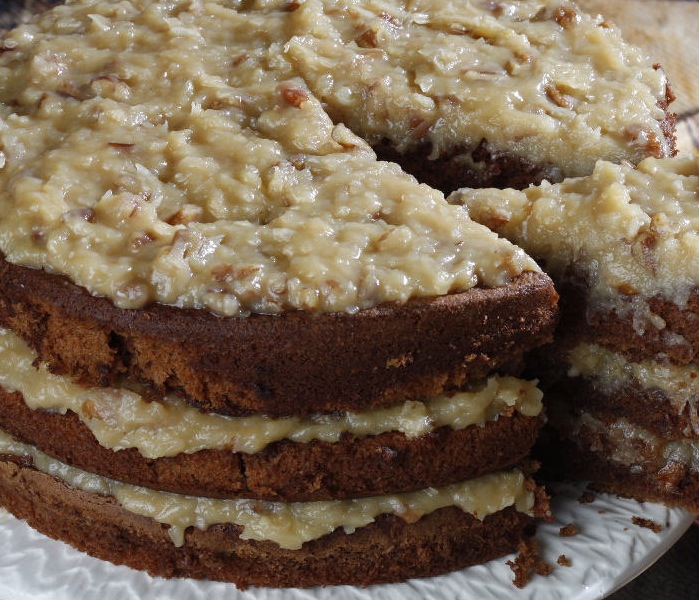
German Chocolate Cake, 2011. Source:http://blogs.courier-journal.com. Meet a cake that was never German, but named by an English guy. And, since when do coconuts grow in Europe or the US?

But on that fall evening in ’09, looking at exploration patterns, commerce patterns and the state of the world circa 1600 CE, it hit me how I could just about reorganize every aspect of the way I’d been teaching World History by just looking at how much food has influenced it. Every bite we take, everything we imbibe, has some history attached to it, and with it, stories of bloody conflict, imperial conquest or rare attempts at true humanity and cooperation.

This is about much more than Jared Diamond’s books on the rise and fall of civilizations because of resources and the lack thereof. Commodities like salt, sugar, black pepper and olive oil have all been written about over the past fifteen years. It’s fairly obvious that these spices and other foodstuffs were fundamental in the histories of the Middle East, ancient Greece and Rome, India, Timbuktu and Western Europe over the past 5,000 years.

Still, I’m not really talking about that kind of history, either. It’s more about something as simple as taking a modern dish and using its ingredients to tell a story. Take something like a chocolate cake with vanilla icing. If the ingredients are natural and not ones cooked up at a chemical plant in northern New Jersey, then they’ve come from all over the world. Cocoa, the main ingredient to mix with the flour, is from the cacao plant, which originally from South America, but is primarily produced in sub-Saharan Africa. Sugar’s needed to sweeten it, and though originally from India, has been grown in Florida, Louisiana and in the Caribbean for centuries. One of the main economic drivers for the enslavement of Africans was the European need to rot out their teeth with the stuff.

Vanilla extract or vanilla beans are originally from Mexico and other parts of Central America. But the largest producers of it are Indonesia and especially Madagascar. There’s history in every gram of devil’s food cake with vanilla icing that we eat.

You could do the same thing with a “traditional” Chinese stir-fry. Especially if ingredients like baby corn or

Sweet-and-sour-chicken, 2011. Source: http://www.foodnetwork.com

sweet and sour sauce are added to the mix. That’s because baby corn and tomatoes (the latter the main ingredient in sweet and sour sauce) are both from the Americas, not Asia or Europe. Both arrived in Ming China nearly 500 years ago.

Every dish, whether invented in 2011 CE or 2011 BCE, has a rich story attached to it. From that story, we can all find important patterns in world history, cultural development, domination and destruction within. It may not be the most profound thing I’ve ever stumbled upon. Still, I didn’t get this from Peter Stearns or Jared Diamond. If anything, I might’ve gotten this from Forrest Gump.

Ego Inflation

18 Wednesday May 2011

Posted by decollins1969 in 1, Academia, Boy @ The Window, culture, Eclectic, Politics, race

≈ 2 Comments

Tags

A Room With A View, Academia, Academic Politics, Carnegie Mellon University, College of Humanities & Social Sciences, Denholm Elliott, Dune, Ego Inflation, Egocentrism, Elite Institution, Elitist Institutions, George Mason University, Grade Inflation, Jace Nance, Mercurial, Napoleonic Complex, Nefud, Peter N. Stearns, Peter Stearns, PhD Graduation, Provost, Race, World History, World Stereotypes


My PhD Graduation, Thackeray Club, Pittsburgh, PA, May 18, 1997. Angelia N. Levy

May 18th. Another year, fourteen years now, in fact. I’ve been Dr. Collins to my students and the world of academia officially for that long. I’ve learned a lot of lessons about the values and limits of having a doctorate in history over the course of the past decade and a half. One of them is how easily egos are inflated by it. And everything else gets inflated in the process of having an ego that could challenge the Himalayas for supremacy.

One of the more stunning and thoughtful moments I had during the graduation ceremony at Carnegie Mellon on that hot and sticky Sunday in ’97 — besides the dreadful realization that my own mother was jealous of me — was shaking Peter Stearns‘ hand on stage. The Napoleonic red-and-white-haired Stearns — currently the university provost at George Mason — was the Dean of Humanities & Social Sciences at

Provost Peter N. Stearns, George Mason University, 2008. Source: http://provost.gmu.edu.

Carnegie Mellon at the time. Having to touch his rough yet clammy right hand as they read off the names of the doctorates that afternoon brought back quite a few not-so-pleasant memories of why I found Carnegie Mellon a terrible elitist (as opposed to elite) school to attend for four years.

I’d most recently co-presented with Stearns on how to successfully finish a doctorate that March, which wasn’t so unpleasant. Except for the fact that most of his presentation was off-the-cuff ego-stroking. Except that the lessons learned from writing a dissertation in six weeks in ’64 were mostly irrelevant to the students in front of us that day. Except that I already knew that Stearns was equally polite and dismissive of my presentation by proxy.

Too bad hand sanitizers — or as my son Noah calls them, hanitizers — were in their infancy in ’97. For as I shook Stearns’ hand, the memory that crept to the fore was my other experience working with the man, when I was a teaching assistant for two sections of his world-famous World Stereotypes, oops, World History course in the fall of ’94. He spent lecture after lecture entertaining mostly White college freshman with dirty jokes about beer and sex in covering World History Plato-to-NATO style. I spent most of my teaching time attempting to refocus my group of students away from stereotyping South Asian women as “demur” and Arab men as horn dogs.

Then the end of that semester came, and I turned in all of my grades. I had a few students with D’s and F’s because they had failed their exams, or hadn’t shown up for class really, or both. One of those students was a White male freshman who’d only been to class twice, had failed one exam and barely passed his final. I received an email from Stearns two days before the end of the semester ordering me to change the student’s grade from an F to a C. The reason: “[h]e’s a good kid…he showed up for a couple of my sections…” [emphasis added]. I send an email back that basically read, “So?” Stearns repeated his order to change the grade, in person, which meant that I needed to change the grades of five other students so that their grades weren’t worse than the student that Stearns had coddled.

It was the one and only time I found myself inflating grades. That exchange confirmed so much that I heard and suspected about the father of college-level World History. Stearns was mercurial, egotistical and played favorites, who somehow were usually White and often male. I knew of at least one former grad student who’d all but been blackballed from finding academic jobs because of him. I also knew that he arbitrarily provided vastly different pay levels to grad students and instructors when he was the history department chair.

Denholm Elliott in A Room With A View, 1985. Source: http://content8.flixster.com/photo/13/52/75/13527526_gal.jpg

When my future wife first saw Stearns in ’96 at some history department conference in which my then advisor Joe Trotter forced me to do a presentation, she said that the five-foot-four man looked like the late British actor Denholm Elliott, especially from the movie A Room With A View (1985). That’s really an insult to Elliott. A better comparison would be between the actor who played the emperor in the Star Wars prequel trilogy. Or, more specifically, like the late actor Jack Nance’s character Nefud from Dune (1984). Very mean of me, I suppose, not to mention, a digression.

As I began to walk off the stage after shaking Stearns’ hand, I felt agitated, and thought of all that I’d gone through with him and with Carnegie Mellon in general. Ultimately, like the characters I mentioned above, Stearns was and remains an imperialist, building an academic empire in his image and crushing all opposition (real and imagined) along the way. His legacy will be the multiplication of inflated student egos who believe they understand the world but instead really only understand how to see the world in their own egocentric ways.

Jack Nance as Nefud in Dune, 1984. Source: http://www.aveleyman.com/FilmCredit.aspx?FilmID=5459

The Miracle of Dr. Jack Daniel

16 Monday May 2011

Posted by decollins1969 in 1, Academia, Boy @ The Window, culture, Politics, race, Youth

≈ Leave a comment

Tags

"Sometimes Starvation", Cathedral of Learning, Challenge Scholarship, Department of HIstory, Diversity, Divine Intervention, Dr. Jack Daniel, Dr. Jack L. Daniel, Grad School, Graduate Fellowships, History Department, Jack Daniel, Joe Carbone, Miracles, Pitt, Qualifications, Race, Students of Color, University of Pittsburgh, Van Beck Hall, Westchester County Department of Community Mental Health


Dr. Jack L. Daniel, University of Pittsburgh, 2004. Pitt Magazine. http://www.pittmag.pitt.edu/summer2004/feature1.html. The use of this photo falls under fair use under US Copyright laws because this blog post is in fact about the subject in this photo.

Last week I started a conversation about my three weeks of starvation in order to secure my entry into graduate school through my post, “Sometimes Starvation.” I’m continuing that conversation with today’s post. For it was that on this date twenty years ago that divine intervention came in the form of a voice inside my head, leading me to a meeting with then University of Pittsburgh Vice-Provost for Academic Affairs, Dr. Jack L. Daniel.

Even as I turned down the opportunity to go back to Mount Vernon and work up in White Plains with Joe Carbone and Westchester County Department of Community Mental Health for the summer of ’91, a name kept popping in my head. And I didn’t know why. I’d only met Jack Daniel on two occasions, both during my freshman year at Pitt. I was a Challenge Scholar, in the inaugural class of Challenge Scholars no less, a merit-based half-tuition scholarship meant to attract more students of color to Pitt, and Dr. Daniel was the author of the program.

I knew that he was a professor with expertise in Black communications. I also knew that he was one of the activists who helped bring the Black Studies Department to Pitt in ’69 by occupying the central computing system on the seventh floor of the Cathedral of Learning, back when he was a freshly minted Ph.D. Other than that, I had zero contact with the man in my four years of undergrad.

For once, I listened to the voice inside my head and, after some coaxing of Dr. Daniel’s assistant, made an appointment with him to discuss my financial options for going to Pitt for my history MA. I figured that I had nothing to lose. I really only hoped that there was an extra $1,000 or two left in his budget that would at least help to feed me through my first year of grad school.

That Thursday, the sixteenth of May, I arrived at my 2:30 pm meeting with Dr. Daniel on the eighth floor of the Cathedral of Learning, not knowing exactly what I was going to say. I walked into the Office of the Provost, where the stale stone of the super-tall building turned into the sights and smells of dark wood, cherry, mahogany even. We exchanged pleasantries, shook hands, and I sat down feeling like I was in sixth grade instead of like I’d recently finished my bachelor’s.

I started. “I’m looking for a little extra money for grad school this fall, so that I don’t have to borrow money to cover tuition and eat,” I said. Dr. Daniel then asked

“What was your GPA here?”

“A 3.4,” I said, rounding up from a 3.37 average.

“What about your GRE scores?”

“60th and 70th percentile on math and reading,” I said.

“What about your major?,” Dr. Daniel asked.

“I was a history major with a 3.82 average,” I said with a smile.

Then Dr. Daniel got this look on his face, like he was actually angry, like there was a piece to the puzzle that I was missing. “Hold on for a second, I need to make a phone call,” he said.

He called Pitt’s History Department Chair, who at the time was one of my future grad school professors, Van Beck Hall, and spent the next couple of minutes chewing him out about my record and about why I hadn’t been awarded a fellowship. I sat there with a stone face, not wanting to give away the sense of glee I felt watching Dr. Daniel on the phone while verbally beating up on a department chair. Politely, of course.

After he got off the phone, he said, “You’ve got your money for school next year.” My mouth fell open, and not just because I couldn’t believe it. I couldn’t believe how easy it was. Then Dr. Daniel explained how his office had worked with the Faculty of Arts and Sciences (and the other major schools within the university) to create a new fellowship to attract more students of color and women into Pitt’s grad programs. He also explained how some departments and programs had resisted communicating the existence of this new fellowship program to potential grad students. I apparently was another case demonstrating how some folks within the university simply refused to address Pitt’s lack of diversity at the graduate level.

I was beyond thankful. Incredulous, thankful, even speechless. I couldn’t stop shaking Dr. Daniel’s hand. Despite three weeks and a loss of twenty-plus pounds, I played basketball at Pitt’s athletic center that evening, making shots as if I’d been on an athlete’s diet for the past three weeks. I was more excited about the possibility of grad school being paid for than I was about getting my first paycheck of the summer that Friday.

The following Tuesday evening, the twenty-first of May, I saw Dr. Daniel walking down Fifth Avenue outside of the Cathedral of Learning as I was on my evening walk home from work. I told him that I’d gotten the paperwork for my full-tuition fellowship and $7,000 graduate student assistantship stipend for the ’91-’92 school year. As he walked away after I said, “Thank you!,” again, I yelled “You’re the man!” All Dr. Daniel did was stretch out his long arms, shrugging it off as if he’d given me a nickel to buy a Tootsie Roll.

No Good Teaching Deed Goes Unpunished

13 Friday May 2011

Posted by decollins1969 in 1, Academia, Boy @ The Window, culture, Eclectic, Mount Vernon High School, Politics, race, Youth

≈ 2 Comments

Tags

AP American History, AP US History, AP US History Exam, Blue Ribbon Schools, Burnout, Harold Meltzer, Mount Vernon High School, Mount Vernon New York, Politics of Education, Richard Capozzola, Student Achievement, Teacher Effectiveness, Teachers Unions, William Prattella


AP US History, Harold Meltzer & Teachers Under Assault

AP US History, Harold Meltzer & Teachers Under Assault

It’s never really been much of a surprise to me how much we don’t appreciate good teachers. I should know. A few semesters ago, a student of mine filed a complaint against me because she couldn’t see my lecture notes well enough due to some issue with the LCD projector for my classroom. Mind you, she admitted that she didn’t have her glasses that day. When I didn’t allow her to interrupt me in the middle of class over the issue, she stormed out, yelled a couple of obscenities at me, and slammed the classroom door shut.

I know, it’s much worse on the K-12 level, between incorrigible students and insolent parents, school and district administration. Not to mention the pressures of NCLB, initiatives like Race to the Top (or bottom, really) and private foundations with their own agendas. Add to that article after article blaming teachers unions for being on the wrong side of corporatized education reform that emphasizes math and science and test scores over humanities and social science and critical thinking.

Former NYC DOE Chancellor Joel Klein’s now among them, in his lengthy (really, too long) piece on “The Failure of American Schools” in this month’s Atlantic Monthly, laid much of the blame on teachers and teachers unions. Not our nation’s economic woes, an overemphasis on math and science, or a system that was created not to teach academic excellence, but to weed out the so-called weak-minded. It’s no wonder that the average career of a teacher is five years!

A quarter-century ago on this date, my former teacher Harold Meltzer’s good deeds came to fruition through our AP US History class and our AP exam that year. We learned in September ’86 —  the beginning of our senior year — that three of us (including yours truly) all scored 5’s on the AP American History exam on this date. That meant that three of us had earned six college credits a year before enrolling in any university. There were at least four others who scored a 4, guaranteeing them three college credits. Another five scored a 3, considered a passing score by colleges and the College Board.

It was the best an MVHS AP class had ever done on any AP exam up to that point in the high school’s history, and should’ve been a crowning achievement for Meltzer and the school. Yet instead of praise or at least a “Congratulations,” Meltzer was treated as if he’d shown up MVHS by his boss, Social Studies Department Chair Larry Smith, a red-headed man who looked like a character from Dune. He snickered at me every time he saw me with Meltzer. Neither Superintendent William Prattella nor Richard Capozzola saw fit to honor Meltzer or our class for our achievements. It was ironic, because MVHS won a Blue Ribbon Schools of Excellence award from the US Department of Education a few months later, off of the work of teachers like Meltzer, as well as Humanities students.

There were rumors that some of the White parents were unhappy with Meltzer’s methods of teaching, which typically involved us interpreting history rather than answering straightforward history trivia questions. More than rumors, actually, as I walked in on a meeting between Meltzer and a parent my senior year. That mother demanded an A for her daughter in Meltzer’s AP US History class. What wasn’t exactly a rumor, either was that Smith was looking for any excuse to take AP US History away from Meltzer. Especially since it was so shocking that both White and Black students did equally well on the exam that year. Of course, there were other, more deeply personal issues between the two men that likely involved jealousy and other not-so-secret secrets.

For our part, our cohort stopped talking to Meltzer altogether. Sure he was eccentric, even a bit strange and unorthodox as a teacher, but at least he cared. And by the way our scores turned out, he didn’t deserve the cold shoulders he received from most of my classmates our senior year. It bothered me when I’d see Meltzer saying “Hello” to one of us as we passed his Room 275, only for one of us to walk by as if Meltzer had phased out of our space-time continuum.

I was sure that some of it was related to Meltzer being a “confirmed bachelor.” But mostly, I thought that despite Meltzer’s lack of a normal teaching style, that my classmates were total assholes toward him. Meltzer spent the week before the AP exam after school with us going over every conceivable fact of American history for the more anal of us. It was above and beyond, and also unnecessary. Because Meltzer had taught us enough about egalitarianism, critical and independent thinking, and “coming to the point at once” in the first months of his class for all of us to do well.

Meltzer died from a number of ailments at the age of sixty-six in early January ’03. But one thing I was sure of that hastened his decline was the bitter and broken heart he had from the way he’d been treated in his last years as a teacher. I just hope that I brought a little bit of laughter to the man in his final months and weeks. Or at least, something to smile about.

← Older posts
Newer posts →

Boy @ The Window: A Memoir

Boy @ The Window: A Memoir

Places to Buy/Download Boy @ The Window

There's a few ways in which you can read excerpts of, borrow and/or purchase and download Boy @ The Window. There's the trade paperback edition of Boy @ The Window, available for purchase via Amazon.com at http://www.amazon.com/Boy-Window-Donald-Earl-Collins/dp/0989256138/

There's also a Kindle edition on Amazon.com. The enhanced edition can be read only with Kindle Fire, an iPad or a full-color tablet. The links to the enhanced edition through Apple's iBookstore and the Barnes & Noble NOOK edition are below. The link to the Amazon Kindle version is also immediately below:

scr2555-proj697-a-kindle-logo-rgb-lg

Boy @ The Window on Amazon.com: http://www.amazon.com/Boy-The-Window-Memoir-ebook/dp/B00CD95FBU/

iBookstore-logo-300x100

Boy @ The Window on Apple's iBookstore: https://itunes.apple.com/us/book/boy-the-window/id643768275?ls=1

Barnes & Noble (bn.com) logo, June 26, 2013. (http://www.logotypes101.com).

Boy @ The Window on Barnes & Noble: http://www.barnesandnoble.com/w/boy-the-window-donald-earl-collins/1115182183?ean=2940016741567

You can also add, read and review Boy @ The Window on Goodreads.com. Just click on the button below:

Boy @ The Window

Twitter Updates

Tweets by decollins1969
  • RSS - Posts
  • RSS - Comments

Archives

  • June 2025
  • April 2023
  • September 2022
  • August 2022
  • July 2022
  • June 2022
  • May 2022
  • April 2022
  • March 2022
  • January 2022
  • December 2021
  • November 2021
  • October 2021
  • September 2021
  • August 2021
  • July 2021
  • June 2021
  • April 2021
  • March 2021
  • February 2021
  • January 2021
  • December 2020
  • November 2020
  • October 2020
  • September 2020
  • August 2020
  • July 2020
  • May 2020
  • April 2020
  • March 2020
  • January 2020
  • December 2019
  • November 2019
  • August 2019
  • July 2019
  • June 2019
  • May 2019
  • April 2019
  • March 2019
  • February 2019
  • January 2019
  • December 2018
  • November 2018
  • October 2018
  • September 2018
  • August 2018
  • July 2018
  • June 2018
  • May 2018
  • March 2018
  • February 2018
  • January 2018
  • December 2017
  • November 2017
  • October 2017
  • September 2017
  • August 2017
  • July 2017
  • June 2017
  • May 2017
  • April 2017
  • March 2017
  • February 2017
  • January 2017
  • December 2016
  • November 2016
  • October 2016
  • September 2016
  • August 2016
  • July 2016
  • June 2016
  • May 2016
  • April 2016
  • March 2016
  • February 2016
  • January 2016
  • December 2015
  • November 2015
  • October 2015
  • September 2015
  • August 2015
  • July 2015
  • June 2015
  • May 2015
  • April 2015
  • March 2015
  • February 2015
  • January 2015
  • December 2014
  • November 2014
  • October 2014
  • September 2014
  • August 2014
  • July 2014
  • June 2014
  • May 2014
  • April 2014
  • March 2014
  • February 2014
  • January 2014
  • December 2013
  • November 2013
  • October 2013
  • September 2013
  • August 2013
  • July 2013
  • June 2013
  • May 2013
  • April 2013
  • March 2013
  • February 2013
  • January 2013
  • December 2012
  • November 2012
  • October 2012
  • September 2012
  • August 2012
  • July 2012
  • June 2012
  • May 2012
  • April 2012
  • March 2012
  • February 2012
  • January 2012
  • December 2011
  • November 2011
  • October 2011
  • September 2011
  • August 2011
  • July 2011
  • June 2011
  • May 2011
  • April 2011
  • March 2011
  • February 2011
  • January 2011
  • December 2010
  • November 2010
  • October 2010
  • September 2010
  • August 2010
  • July 2010
  • June 2010
  • May 2010
  • April 2010
  • March 2010
  • February 2010
  • January 2010
  • December 2009
  • November 2009
  • October 2009
  • September 2009
  • August 2009
  • July 2009
  • June 2009
  • May 2009
  • April 2009
  • March 2009
  • February 2009
  • January 2009
  • December 2008
  • November 2008
  • October 2008
  • September 2008
  • August 2008
  • July 2008
  • June 2008
  • May 2008
  • April 2008
  • March 2008
  • February 2008
  • January 2008
  • December 2007
  • November 2007
  • October 2007
  • September 2007
  • August 2007
  • July 2007
  • June 2007

Recent Comments

MaryPena's avatarMaryPena on My Day of Atonement/Bitter Hat…
decollins1969's avatardecollins1969 on No Good Teaching Deed Goes…
Mary Rose O’Connell's avatarMary Rose O’Connell on No Good Teaching Deed Goes…

NetworkedBlogs on Facebook

NetworkedBlogs
Blog:
Notes From a Boy @ The Window
Topics:
My Life, Culture & Education, Politics & Goofyness
 
Follow my blog

616 616 East Lincoln Avenue A.B. Davis Middle School Abuse Academia Academy for Educational Development AED Afrocentricity American Narcissism Authenticity Bigotry Blackness Boy @ The Window Carnegie Mellon University Child Abuse Class of 1987 CMU Coping Strategies Crush #1 Crush #2 Death Disillusionment Diversity Domestic Violence Economic Inequality Education Family Friendship Friendships Graduate School Hebrew-Israelites High-Stakes Testing Higher Education History Homelessness Humanities Humanities Program Hypocrisy Internalized Racism Jealousy Joe Trotter Joe William Trotter Jr. K-12 Education Love Manhood Maurice Eugene Washington Maurice Washington Misogyny Mother-Son Relationship Mount Vernon High School Mount Vernon New York Mount Vernon public schools Multiculturalism MVHS Narcissism NFL Pitt Pittsburgh Politics of Education Poverty President Barack Obama Race Racial Stereotypes Racism Relationships Self-Awareness Self-Discovery Self-Reflection Sexism Social Justice Teaching and Learning University of Pittsburgh Violence Whiteness Writing

Top Rated

Blog at WordPress.com.

  • Subscribe Subscribed
    • Notes from a Boy @ The Window
    • Join 103 other subscribers
    • Already have a WordPress.com account? Log in now.
    • Notes from a Boy @ The Window
    • Subscribe Subscribed
    • Sign up
    • Log in
    • Report this content
    • View site in Reader
    • Manage subscriptions
    • Collapse this bar

Loading Comments...