• Spinning Sage’s Gold: Allegories on the Western-Dominated Present and a Possible Post-Western Future (2025)
  • About Me
  • Other Writings
  • Interview Clips
  • Video Clips
  • Boy @ The Window Pictures
  • Boy @ The Window Theme Music

Notes from a Boy @ The Window

~

Notes from a Boy @ The Window

Author Archives: decollins1969

Debating the Personal

25 Saturday Apr 2009

Posted by decollins1969 in 1

≈ Leave a comment


For years, I’ve been perplexed with the low level of debate and serious conversation in this country. I guess it started for me in undergrad at Pitt. My first taste of a classroom debate gone awry was in my sophomore year, second semester, the spring of ’89. It was existential philosophy, in which I developed an interest because of my philosophy and AP English classes with Rosemary Martino my senior year at Mount Vernon High School. I really liked this class, but didn’t exactly like my discussion section. It was a place where no reconciliation was possible between believing in the existence of God and my teaching assistant’s atheism. It wasn’t as if I talked about my personal believe in God or Christianity much back then. But then again, I didn’t believe in confronting people on a personal level about their beliefs either.

On the one hand we had a great professor, a young and energetic recent PhD teaching in his second semester at Pitt. He made Nietzsche, Kierkegaard and Camus come alive as he became excited talking about the Ubermensch (Superman) and Abraham’s “teological suspension of the ethical.” On the other hand, one of his teaching assistants, my discussion section instructor, was an Australian man in his late-twenties, with curly hair like the lead singer from Simply Red, except my instructor’s hair was a dirty blond. He spent discussion after discussion railing on Christians as “people who refuse to believe that God doesn’t exist.” One of our discussions was so anti-anything other than atheism that I found it just as bigoted as anything I’d heard from Hebrew-Israelites or out of a televangelist’s mouth, and pretty much said as much. I was ignored.

It was an excruciating hour, as most of the students in our class outed themselves as staunch atheists, berating Christians, Christianity and other religions as purely a form of social control. The two African American students in the section besides me were somewhere between angry and in tears by the end of the class that day. I was more puzzled than miffed. The attacks from our fearless teaching leaders and from the other students had nothing to do with Nietzsche or Kierkegaard. They were only actively engaged in airing their personal beliefs as strongly as they could, in an atmosphere poisoned by our teaching assistant, who obviously had an ax to grind.

I’ll admit, I was bothered by so many students — all White — who were so cocksure that God didn’t exist, that he was a mere fantasy dreamed up by nomads wandering through the deserts and hanging gardens in the Middle East who knew nothing of science and wanted illogical answers. What I was bothered more by, though, was that this became a personal debate, as if anyone who believed in the existence of a higher power was an idiot seeking to dominate others’ minds and through our modern world back to the Stone Age. I found that argument — and my teaching assistant’s support of it — equally illogical and too personal to address in a one-hour class. In eighteen years of on-and-off again teaching, I’ve never gone into the personal in order to have a free-flowing debate, partly because of what I witnessed on that day. A debate like this doesn’t work if your instructor has a personal agenda.

Unfortunately, it is a debate tactic that is all too common in our public discourse and private arguments in everyday America. It doesn’t matter if you’re watching Chris Matthews’ Hardball on MSNBC, Bill O’Reilly’s The O’Reilly Factor on Fox News, listening to Rush Limbaugh or NPR, or chatting with folks on Facebook or in the comfort of Starbucks. Friendly arguments about issues often turn ugly, and they do so because people on all sides get personal. Now, I’m not talking about having an objective academic discussion about a policy or a social issue. We all have biases, points of view, beliefs that we can and should stand on. No, what we do typically is to attack someone’s intelligence or personhood instead of attacking someone’s argument or attempt to understand why they hold so strongly to a particular argument. Or we get deeply personal about a given issue, as if our perspective is shared by so many that we can automatically win a debate because of our experiences.

There’s no debate in America where the personal doesn’t get sucked in more than on race. Whether in the classroom or on Facebook, in a casual conversation over wine or at a major conference presentation, folks just personalize the issues around race as if you’re addressing them. I’ve often discussed the long and troubling history of this country around race in all of its complexity. In response, classmates, friends, professors, students and others have all automatically made it personal. I’ve been called a “racial determinist,” “paranoid,” “Afrocentric,” “irrational,” “overly emotional,” just for saying that our playing field is still far from level or that even Whites who were abolitionists back in the day didn’t typically believe in Black equality. Others, meanwhile, have said things like, “I’m not a racist,” or “Why are you bringing this up now?,” or discussed how their father didn’t get a job because it was given to a less qualified Black. I’m not just talking about Whites. African American students in my classes have often expressed their anger and rage over perceived and real slights and over anything that involved inequality, even when it wasn’t specifically racial in nature.

What I’ve done in my debates in and out of the classroom over the years is to allow different sides of this argument to play out — with some venting, of course — before bringing folks back to the actual argument or the policy or issue around race that we were addressing in the first place. I’ve often had to say, “This isn’t about you. If you think it is, then that says more about you then it does about…” a particular policy or issue of race. It usually works, getting students and my colleagues to calm down and at least agree to disagree. It’s a starting point, hardly perfect, but something that often can be built upon.

The problem is, though, that this issue of the personal goes far beyond race, although it is often involved. Name the issue or policy debate, and you can find a commentator, pundit or everyday whose argued about it from the gut, based on some personal anecdote. Or attacked others as if they didn’t have the right to speak in the first place. Even among friends, debating an issue often means having the fact that I have a PhD or am a progressive thrown in my face as if I don’t have a right to my perspective. A fairer tax system equals “hating the rich.” Say that Rush Limbaugh’s mean because he accused Michael J. Fox of exaggerating or faking his Parkinson’s symptoms, and you’re saying that all Rush listeners are mean, too. Agree with the closing of Gitmo, and you’re accused of supporting terrorism. You can’t have a real or deep debate in this country about anything without it becoming a personal attack or a matter of deep personal conviction. If all politics local, then debating has only recently become a personal crusade.

This is the consequence of generations of privilege without responsibility, of an inadequate system of education that prefers social control to critical thinking, of self-centered pride over collective responsibility. We exaggerate the image of the rugged individualist and Horatio Alger to the point where we all think — progressives and conservatives alike — that we can go it alone. With this kind of thinking, we can’t have honest and good debate about much in this country. It’s too bad. For with global warming and climate change, torture issues and terrorism, a major economic meltdown and ever increasing energy needs, we need rational and reasonable debate more than ever. Without it, I might as well tell Noah to grab a solar generator and find the nearest cave in West Virginia when he’s my age.

On Catherine Lacey

22 Wednesday Apr 2009

Posted by decollins1969 in 1, Academia, Carnegie Mellon University, culture, Eclectic, Pittsburgh, Politics, Work, Youth

≈ Leave a comment

Tags

Catherine Lacey, Friendship, Mentoring, Self-Discovery, Spencer Foundation, Spencer Foundation Dissertation Fellowship Program


Me with Catherine Lacey at the Spencer Foundation, June 25, 2002. (Angelia N. Levy).

Me with Catherine Lacey at the Spencer Foundation, June 25, 2002. (Angelia N. Levy).

This month marks fourteen years since my plans for earning my doctorate were all but assured by a Spencer Foundation Dissertation Fellowship. It was a one-year fellowship, only $15,000, but it meant that I didn’t have to teach for a year, that I didn’t have to do grunt work for my advisor Joe Trotter, and that I wasn’t beholden to the history department at Carnegie Mellon for much of anything. It was a great triumph in my little world of graduate school. But of all the things that resulted from that award, one thing that I didn’t count on was another mentor and friend. Without a doubt, Catherine Lacey has had the longest lasting impact on my career and on my thinking, in and out of academia.

Catherine was the Senior Program Officer and Director of the Spencer Foundation Dissertation Fellowship Program when I applied for it in the fall of ’94. She had taken over the program in ’93, with the apparent charge of making the program more inclusive and more dynamic for its participants. I’m not sure what the foundation’s dissertation fellowship program was like before. All I know is that Catherine’s seven-year-long tenure running it was one in which she practiced compassion, humility, optimism, and quiet leadership. She never sounded like an academician in directing the work, although she was a bit philosophical at times. She never sounded like a bureaucrat or a senior foundation officer who practiced the power of “No,” even though that was certainly a major part of her job. Almost from my first conversation with Catherine, I realized that she was different from anyone I’d met with an academic background or in the foundation world.

Her background was as a Catholic nun who at one point was a Catholic school teacher, at least through the late ’70s, if I remember correctly. At some point she decided to go back to school, to eventually earn a doctorate in education from Harvard’s Graduate School of Education. Even though she was no longer a practicing nun (whatever I mean by that, I’m not entirely sure), I’m sure that this training and philosophical approach to life and work helped her a lot in her position at the Spencer Foundation. Maybe it was also the fact that she grew up in the Midwest, North or South Dakota I believe. Whatever the case, I think that this combination of experiences made her a more flexible and generous person than most of the foundation program officers and academic bureaucrats I’d met before and have come to know since.

The first time I ever heard from Catherine was right after a two-month research stay in Washington, DC and visit home in Mount Vernon, New York. I’d just come off of weeks in the National Archives, the Library of Congress, the Moorland-Spingarn Research collection at Howard University, the Sumner School Archives for DC Public Schools, and several other places doing research on my dissertation topic, multiculturalism in philosophy and practiced among Black Washingtonians. It was the end of March ’95, and it had been five months since I’d submitted my application packet for the Spencer fellowship. When I went to my Carnegie Mellon mailbox in the history department, there it was. A standard #10 envelope with only a one-page letter inside, which I knew because of the envelope’s thinness. I knew it was a rejection letter. Except that it wasn’t, at least not entirely. It had a handwritten note at the bottom of it from Catherine, asking me to give her a call as soon as I received the note.

So I did. Catherine did most of the talking, asking me about my research stay in DC, about my definition of multiculturalism and how it had or hadn’t changed because of my research. Then she talked to me about the selection committee. Apparently out of eight committee members, six voted in favor of awarding me the fellowship, one against, and with one in absentia. The sticking point was how I defined multiculturalism in my research proposal, putting me on the fence between award and no award. Although I would learn later that there were some academic and cultural politics involved in the two non-Yes votes, at the time Catherine told me that she would do everything she could to see if she could still fund my work. “I’m not making any promises,” she said before we got off the phone.

I didn’t know what to make of the call, other than the fact that Catherine cared about funding my work. That it wasn’t everyday that someone with her responsibilities called a student who had technically been rejected was also something I took away from that call. Two weeks passed. On Friday, April 14 of ’95, I got a call at home, right after 9:30 am. I assumed it was my mother or one of my friends. I hadn’t even taken the time to spit and rinse my toothpaste when I answered the phone. After the pleasantries, Catherine excitedly blurted out the good news. And I swallowed my toothpaste in response before asking how and saying thanks.

It turned out that Catherine thought that in addition to the 29 awards that were granted fellowships by the committee, that there were four others (including me) who should also receive the fellowship. Catherine had spent the previous two weeks asking the foundation for additional monies for the other four of us, and found that at least two of the original 29 awardees had accepted other fellowships. As a result, she could then give out four additional fellowships as part of her discretion as the director of the program. I was happy, to say the least about the award. But I was even happier that someone would fight for me and others the way Catherine did.

As a Spencer fellow, I learned a lot from my “fellow Fellows,” as I constantly called our group. That I wasn’t the only one whose advisor was acting as a roadblock toward our degree and career aspirations. That our colleagues on our campuses stared us all down with daggers in their eyes after learning about our awards. That hours upon hours of lonely research and intense writing and editing didn’t make any of our significant others or spouses particularly happy. Still, I learned as much from Catherine as I did from my fellow Fellows. About balance between life and work. About the realization that academia wasn’t our only career option, even as much as we thought it was at the time. That it was all right to feel ambivalent about pursuing an academic career.

This last one was of great importance to me, because my worries about becoming a publish-or-perish professor had always been there. I wanted to do something useful with my degree and life, something to benefit others, something that would allow me to help people who grew up like me, poor, possibly abused, and with the world thinking that I’d sooner go to jail than graduate high school. The one thing that Catherine’s work revealed to me was that it was possible to have a job and career that you could fall in love with, that helps others, and that enabled you to prosper financial. Her job allowed her to do all three, and very well at that.

It was that realization that enabled me to stumble my way into the nonprofit world, doing work on everything from community computer labs and civic education to a social justice fellowship program and education reform work on college access and success. Even after my fellowship ended in June ’96, I kept in contact with Catherine, attended Spencer gatherings and asked for advice. I even took my wife with me on a business trip to Chicago once to, among other things, have her meet Catherine at the Spencer offices in the John Hancock Building. I haven’t had quite the same luck of finding work that is as fulfilling as Catherine’s work was with Spencer. But I haven’t given up trying, and hope that what I have done and am doing does actually help others.

I haven’t talked to Catherine since the end of ’04. Not for lack of trying, though. Catherine decided after two years as a high-level administrator at the University of Pennsylvania’s Graduate School of Education that it was time for her to retire, to move back to the Dakotas, to live in seclusion, I guess. She didn’t particularly like Philly, or the grinding work that is almost pure administration. She missed Spencer, Chicago, and all of the people that she had met over the years. I think that the Bush years and 9/11 depressed her greatly

I miss Catherine. I miss asking her advice on everything from my job to whether I should turn Boy At The Window into a fiction novel instead of keeping it a memoir with narrative nonfiction elements (I know, that’s redundant) or even continue to pursue finding an agent. I miss sending her pictures of Noah or talking to her about her days at Spencer. Most of all, I miss telling her how much her friendship and unofficial mentoring have meant to me over the years. To Catherine, and really, all of my friends, many, many thanks.

Jeremy Spoke In Class Today (updated)

19 Sunday Apr 2009

Posted by decollins1969 in 1, Boy @ The Window, Eclectic, eclectic music, Mount Vernon High School, Mount Vernon New York, music, Patriotism, Politics, Pop Culture, race, Religion, Youth

≈ Leave a comment

Tags

"Jeremy" (1992), Bowling for Columbine (2004), Columbine, Dylan Klebold, Gun Violence, OAH Conference 1999, Oklahoma City Bombing, Pearl Jam, Terrorism, The Culture of Fear (1999), Timothy McVeigh, Toronto, Violence, White Angst, White Male Angst


Helena Garrett, right, mother of bombing victim Tevin Garrett, breaks down as she speaks during a ceremony for the 20th anniversary of the Oklahoma City bombing, Oklahoma City National Memorial, April 19, 2015. (Sue Ogrocki/AP via http://sfchronicle.com).

Helena Garrett, right, mother of bombing victim Tevin Garrett, breaks down as she speaks during a ceremony for the 20th anniversary of the Oklahoma City bombing, Oklahoma City National Memorial, April 19, 2015. (Sue Ogrocki/AP via http://sfchronicle.com).

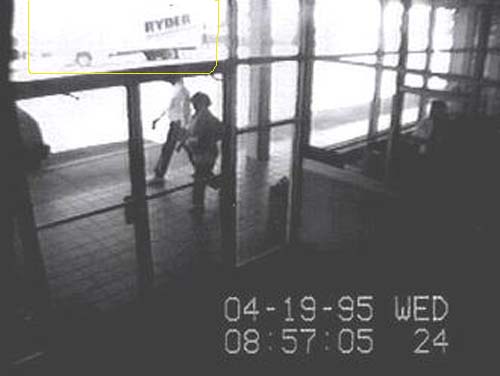
Sometimes as Americans we can be so stupid. It’s been fourteen twenty years since Timothy McVeigh left a Ryder van in front of the Alfred P. Murrah Federal Building building in Oklahoma City filled with two and a half tons of ammonium nitrate and fuel to blow a tragic hole into it, leaving 168 women, men and children dead. It’s been ten sixteen years since two White male teens decided to lock and load at their high school in Columbine, Colorado, leaving 12 students and a teacher dead, 25 others wounded, all before killing themselves in a blaze of White male angst glory. Yet we’re still up in arms over any significant legislation to keep assault guns out of the hands of folks who may do their neighbors harm, as if the Second Amendment doesn’t itself provide limitations on the use of firearms in our society.

Right now, without any abatement, some idiotic father or mother is so depressed about their financial situation and the future of their family that they’re willing to go into their garage, pull out the 9mm pistol or .45 caliber rifle and take out their children, their spouse and themselves in a public display of psychotic-ness. It’s happened in recent months in Chicago, in Maryland, in California, in Florida, and in so many other places that the public only barely pays attention to it anymore. Then there are the folks who are literally clinging to their guns — if not their religion — because the nuts on Fox News Channel and on the conservative talk radio shows have stirred them up about President Barack Obama. That the Obama Administration had any plans to take people’s guns away from them is about as ludicrous as blaming the grunge group Pearl Jam for the Columbine massacre in ’99.

Cover art of Pearl Jam's single "Jeremy" (1992), September 25, 2005. (Tempuser123456 via Wikipedia).

Cover art of Pearl Jam’s single “Jeremy” (1992), September 25, 2005. (Tempuser123456 via Wikipedia).

To think that it’s been more than a decade since Columbine and that we as a nation have learned next to nothing from it is just a sad commentary on how fearful we as a nation are. I remember as I packed my bags for my presentation at the Organization for American Historians conference in Toronto how the events of Columbine unfolded. One of the first things that came out of the media was that songs like Pearl Jam’s “Jeremy” was to blame for stirring the minds of Eric Harris and Dylan Klebold into killing and maiming their unaccepting, cliquish classmates. Except that “Jeremy” killed himself in front of his classmates. He imploded — he didn’t take his rage and angst out on the rest of the world.

Harris and Klebold’s disproportionate response had little to do with Pearl Jam or grunge, and more to do with our culture of fear, as explained by Michael Moore in Bowling for Columbine (2004) through Barry Glassner’s The Culture of Fear (1999). When combined with easy access to guns and other weapons, it’s no wonder why events like Columbine and Oklahoma City, Virginia Tech and more recent ones in Binghamton, New York, Tennessee, Alabama, Pittsburgh, Oakland, Newtown, Connecticut, Aurora, Colorado and so many other places across the country are happening regularly. Kind of like the bombings and shootouts that have taken many a life of American soldiers while keeping Iraq safe for democracy since ’03. In our case, all it took was a severe economic downturn and the election of President Obama to produce disproportionate fear and rage, implosion and explosion, family annihilators and gun-hoarding psychopaths.

I would’ve thought ten years ago that Columbine would take the Brady Bill passed by Clinton and Congress in ’94 a step further, but it didn’t. I would’ve thought that Americans might become more willing to be introspective in considering the reasons for all of our senseless democracy-based violence. But we haven’t been. We haven’t even conducted national townhalls on these issues. We’ve allowed the NRA, gun-makers and others who benefit from the proliferation of assault weapons to dictate how we exercise our Second Amendment rights.

Columbine High School, Littleton, Colorado, April 17, 2008. (Ed Andrieski/AP via http://nytimes.com).

Columbine High School, Littleton, Colorado, April 17, 2008. (Ed Andrieski/AP via http://nytimes.com).

There were the kinds of things I thought about during my five days in Toronto, which seemed as far away from the violence and fear of the US as Rome at the time. I also thought about my experiences in middle school and in high school. I wasn’t bullied, at least in not any physical way. But I felt ostracized at times, and I was certainly made fun of more times than I could count. I didn’t have access to guns, and it never would’ve occurred to me to shoot the folks who were clownin’ me. In later years, in seeing signs of the US melting down economically and culturally, it wouldn’t have been in my thought process to blow up a federal building, threaten the president or another public official, or otherwise arm myself for a coming race war or war against the federal government.

No, what I thought about while in Canada was how peaceful and settled it seemed compared to anywhere I’d been in the US. I didn’t feel my skin color or race the way I usually felt it as an American citizen in America. I loved the multicultural atmosphere and the fact that folks truly embraced it there, and not just by serving hummus and falafel at parties and by taking yoga classes. If I could, I’d move all of us up there to live a less fearful and more accepting lifestyle than the one that we can live here.

Ryder truck that Timothy McVeigh drove caught on camera minutes before explosion, Alfred Murrah Federal Building, Oklahoma City, April 19, 1995. (http://murderpedia.org/).

Ryder truck that Timothy McVeigh drove caught on camera minutes before explosion, Alfred Murrah Federal Building, Oklahoma City, April 19, 1995. (http://murderpedia.org/).

Somehow, some way, we as a country need to find ways to deal with our fear of each other, of failure, of the loss of power and dominance as a nation among nations, as Whites over everyone else. Confronting these fears as part of a public display of transparency and openness will allow for angst without implosion or explosion, and dissent without a turn to ridiculously senseless violence. This is the reason why we have so many dead and wounded every year from gun use (though not usually bombs), in everything from homegrown terrorism to everyday acts of community annihilation. If not, we will continue to serve as a model of first-world dreams and third-world chaos, offering the world not much more than our hypocrisy in the process.

Green and Blue-Eyed Envy

18 Saturday Apr 2009

Posted by decollins1969 in 1

≈ Leave a comment


What do President Barack Obama, Tiger Woods, and yours truly have in common, besides the fact that all of us are at least forty percent Black or African? We’ve all — between the mass scale of a mouse and the cosmic — experienced some hell as a result of success. Any success at all in a society not known these days for sportsmanship, patience or proper etiquette usually leads to folks on the other side losing their minds. Despite all of the talk about this being a world of significantly less racial animosity in the early twenty-first century, it’s fairly obvious that race is intertwined in much of the disagreements and snide statements about all three of us.

For President Obama, his is the most complicated of situations. He walks everyday a presidential tightrope between the powers of his office, the needs of the nation, the demands of the international community, the pressures of the market, and the laser-sights of the media, regardless of ideological perspective. So Obama’s taken a middle-of-the-road approach to governing and policy. From everything from clean energy to the tax code, his is an administration that is about one or two nanometers further left than Clinton’s, but is more intellectual and vocal about it.

Yet at every turn and with every statement or decision, dissenters abound. Now, we still have a First Amendment, and we still should use it to the best of our abilities as a nation. In many cases, we use it sparingly. Not so with Obama. The crazies have been out in force since the primaries last spring. Even now, there are folks blogging about whether he’s an American citizen, or Muslim, or the Antichrist. This week alone, Obama’s been accused of being an anti-Catholic baby killer and an anti-Jesus-in-the-closet-Muslim, one who somehow bowed to Saudi royalty on Monday while also neglecting to mention Jesus in his Sermon on the Mount analogy in his Georgetown speech on Tuesday. Not to mention the 200,000 or so protesters nationwide on Tax Day (that’s a bad protest day for any major US city, much less the nation) who came out angry about taxed Obama hadn’t raised and guns he hadn’t taken away. Even Clinton didn’t face this kind of heat until he started talking about an executive order lifting the ban on gays in the military back in ’93.

Whatever else one can say, no one ever accused Clinton of not being an American citizen, or part of a global conspiracy to put an evil Muslim in the White House, or someone who’s really the Antichrist and will enslave us in the evils of socialism or destroy us all. What a crock! Americans, unfortunately, are incredibly predictable when it comes to diversity and power. When someone, no matter how well meaning, intelligent, good-looking, or well-prepared they are for a certain task, they are metaphorically jumped on like flies swarming a turd in the hot summer sun. When Rush Limbaugh yelled, right around election time, that “IT WAS ALL ABOUT RACE! Let me say it again…IT WAS ALL ABOUT RACE,” it’s the most truth he’s likely ever spoken.

Except this isn’t about President Obama and his supporters playing the race card. It’s about dissent, but dissent based not so much on policy, politics or ideology so much as it’s based on envy. Jon Stewart said it best when he opined that the Republican Party and many conservatives were just “sore losers.” These folks don’t like Obama because he’s popular, articulate, smart, driven, successful, thoughtful (for the most part) and ready to actually do something to improve our country. And of course, no matter how White Obama actually is, he’s still Black in their eyes. It bothers many a conservative to no end that Obama beat them at their own game in the election, and has been hammering at them ever since.

That’s why folks like Rush Limbaugh, Sean Hannity, Bill O’Reilly, Tom DeLay, Michelle Bachmann, Newt Gingrich, Sarah Palin and Dick Cheney have been stirring the pot for events like “Tea Bagging” Day. Or claiming that President Obama’s coming after American gun owners who want to hunt with an Uzi. Or saying that the country’s headed to hell in Satan’s hand basket with Obama in charge. Bottom line: they’re jealous, they’re embarrassed, and they’re angry. The usual tricks didn’t work last year, because they know most Americans want someone, anyone, who can help solve our deepest problems, even if they are Black. That’s not to say that President Obama’s answers are correct or enough. From the stimulus package to education reform, from CIA operatives and torture to his plans for universal health care coverage, I disagree with my president. But at least, I’m not up in arms about him not invoking the name of Jesus at every turn in order to satisfy evangelical conservatives. Like that did us any good with our previous president!

Of course, we don’t behave this way with folks of color in the world of sports and entertainment. That requires a different set of skills, a different mindset toward intellect, and Blacks in particular have been doing well here for decades. True, but not in every sports or in every entertainment medium. Although, maybe not so true. The Indiana Pacers-Detroit Pistons-Pistons fans brawl on November 19 of ’05 bore that out, with angry White fans yelling at Black basketball players and throwing beer on one of them in the process. But of course, race wasn’t an issue here. Alcoholism and an on-the-court fight that went into the stands was.

I digress. Golf certainly is a sport/game/”a good walk spoiled” where competitors of color have been about as common as Blacks and Latinos in graduate school programs. Then along came Tiger Woods in ’96. Even now, even after rehabilitating his left knee and missing most of the ’08 season, it’s obvious that Woods is larger than life. But even with all of the majors, all of the money won and commercials generated — for himself and for golf — all of the records and glory, Woods isn’t well liked by his peers or by many segments of the American public. From the moment Woods put on his first green jacket on April 13 of ’97, he faced pressures that no professional golfer has ever faced. Between all of the death threats while winning the Masters in Augusta, Georgia (a bit of irony there, right?) and Fuzzy Zoeller’s comments about hoping that Woods doesn’t put “fried chicken” and “collard greens” on the Champions dinner menu in ’98, the jealousy was immediate and palpable. Although, as Zoeller claimed, it was a joke about that “little boy,” a twenty-one-year-old Woods at the time.

And that jealousy remains. Look what happened when Woods showed flashes of brilliance at the Masters earlier this month, matched up with Phil Mickelson as he was. Ratings for the event shot up, the crowd followed them around like it was a rock concert. The golfers in the lead in the final round had to beg CBS for a camera to show them playing shots. Don’t tell me that doesn’t generate more envy, even as this Cablinasian makes them all richer.

Some would argue that the race issues with Woods are more obvious than with President Obama. Are they? It seems to me that when people irrationally stock up on firearms in order to protect themselves from the government when the Obama Administration hasn’t said a word about the Second Amendment, that’s an obvious sign that race was part of the fear factor. The Secret Service has noted that death threats against the president are at an all-time high, and that was a month ago. Now why would this be? Because Obama’s advocating socialism? Because conservatives are out of power in Washington? Or because Obama race and success both inspires and creates an unbelievable amount of jealousy? Take your pick.

On a much, much, much smaller scale, I can relate to a bunch of what Obama and Woods have faced and are facing. I’ve only gotten a couple of threats, from former graduate students who didn’t like the fact that a Black professor didn’t give them an A (in both cases, their grades were A-). They weren’t death threats, but I looked over my shoulder anyway. One of them emailed me so often about changing her grade and what she would do to me if I didn’t that I ended up reporting her to my department chair. I’ve had students who were obviously uncomfortable with me as their professor, or assumed that I was an airhead. Then, when I opened my mouth to teach, I often scared those students with ideas, facts and opinions that were based on my expertise as a historian. Their thoughts, for better and for worse, often showed up in their evaluations of my classes at the end of the semester.

But that’s only part of my experience, and not the most significant part when it comes to the issue at hand. My five and a half years as a grad student at Pitt and Carnegie Mellon were years where my colleagues and some of my professors felt the urge to tell me exactly what was on their minds about me. From telling me right from jump street how I didn’t belong in grad school to telling me how amazed they were that I finished my master’s in a year.
That was my former professor Reid Andrews by himself, but not alone in his assessment. From assuming that I never studied because I seldom “looked” stressed to making insinuations that I somehow plagiarized my papers. The chair of the history department at Pitt in Richard Smethurst once asked me — in the only conversation I had with him in two years of grad school at Pitt — if the reason I was there was to play basketball.

The kicker was in the first few weeks after I’d been awarded a Spencer Foundation Dissertation Fellowship in April ’95. It was somewhat of a surprise to me, but it a pleasant one. By then I was finishing up my second year at Carnegie Mellon. Not so for my advisor Joe Trotter. There was this look absolute shock and horror on his face when I told him the good news. I’ll never forget that “I can’t believe it!” look of dread Trotter had on his face. It lasted for a good three seconds before he found himself again, managed a weak smile, and told me to pass on the good news. The moral of this story is that even Black folk can have a race-based jealousy toward another Black person or person of color, despite popular opinion

It didn’t end with my advisor. Among my colleagues, John Hinshaw stopped speaking to me — for two years! At least four others walked up to me and gave me their gut-churning congratulations while telling me how envious they were of me. One wanted to know how I did it, considered that every time they saw me I was out in hallways of Carnegie Mellon “talking to” someone. By this time, my standard answer was, “When you don’t see me, that’s when I’m hard at work.” Which was the truth, of course. Yet it was entirely unrelated to their point. The real question for them was, how did I, some Black guy who often didn’t sound like an indecipherable theoretician or genius, pick up a grant without holding a gun to the head of the Senior Program Officer of the Spencer Foundation Dissertation Fellowship Program?

It’s not that I think that all Whites are envious of the success of others of color, or that all successful people of color face petty and really serious jealousies that spin off into other, more serious threats. It’s that in our nation, any success that is based on more than sheer athletic, comedic, or musical talent for folks of color is subject to greater degrees of jaw-dropping and shock than it would be for Whites. Intellectual, academic and political brilliance — not to mention golf, a thinker’s game — even with so much evidence to the contrary, isn’t something that most expect from people of color, and men of color especially. So of course there’s greater scrutiny, jealousy, fear and embarrassment when “losing” out to one of us. I’m hardly justifying it, though.

How do we as a society overcome this? How do we deal with the envious and not-so-well-adjusted out there, who, whether conservative or just plain bigoted, would prefer to see President Obama fail, Woods’ knee explode and me to disappear, and worse? We can only live our lives, step ever more boldly forward on our respective paths, to see through whatever it is we hope to achieve. And hope that we have time enough to achieve it. That, or we can leave for greener pastures.

The Triumph of An Uncluttered Mind

14 Tuesday Apr 2009

Posted by decollins1969 in 1

≈ Leave a comment


One-time, one-quarter-and-a-half-in-a-Thanksgiving-Day-game, Dallas Cowboys quarterback Clint Longley led the dreaded team to a victory against the Washington Redskins in ’74. He threw a game-winning 50-yard touchdown pass to Drew Pearson with 28 seconds left in the game in leading a comeback for the so-called America’s team. It was the only game Longley played in his all too short three-year NFL career. But the game he played was memorable, and not just for Cowboys and Redskins fans.

I’ve had numerous moments of brilliance in my adult life, sometimes surprising myself with how good I am at certain things. Graduate school was one period of my life where my academic abilities were both consistently on display and occasionally spiked beyond normal excellence. Today marks seventeen years exactly since I passed my master’s oral examination in the history department at the University of Pittsburgh, finishing in just under two semesters what should’ve taken me three to four. My committee had also recommended me into the PhD program. I was barely three months removed from getting my driver’s license, all of twenty-two, and finding myself in a doctoral program less than a year after finishing my bachelor’s.

That was April 14, ’92, but the story that made this triumph possible started a year earlier. I had gotten into New York University, University of Maryland and the University of Pittsburgh for graduate school. I had also applied to Berkeley and the University of Virginia — both rejected me — as well as Howard. They lost my grad school application. Meanwhile, NYU had accepted me, but I was required to commit myself to them before they would disclose their financial package for me. I didn’t want to move back to New York only to starve to death in my first semester of grad school.

The University of Maryland was worse. They didn’t lose my application like Howard did. They misplaced it. Long enough for the deadline for forwarding my application to difference on-campus fellowship program to have passed. They accepted me as a provisional student, not because of my grades, but because they didn’t have any teaching assistant or fellowship slots to hand out by the time they found my application. Provisional wasn’t so bad, although I’d have to maintain a B+ average my first year to be eligible to get a fellowship or teaching assistant position during my second year. What was I supposed to do? Live off of student loans for a whole year? I still don’t understand how I got the short end of the stick for something a grad assistant or professor screwed up.

With the history department at Pitt, the main issue was that professors like Reid Andrews and William Chase didn’t think that I was grad school material. This despite my 3.82 GPA as a history major, my 3.4 GPA overall, my GRE scores, and my having taken a history grad course my junior year, earning an A in the process. I was accepted, put on a waiting list for funding, where I’d linger at the sixth spot for over a month while folks leapfrogged me on the list. This list was allegedly based on the relative qualifications of those who were accepted into the program, in that the closer a student was to No. 1, the more qualified they were for one of the department’s teaching assistantship stipends.

I knew that my having majored in history at Pitt was a factor, because the history department wanted the best possible candidates across the country and from other parts of the world. That I wasn’t a neo-Marxist only interested in working-class history might’ve hurt me also. Intuitively, I knew that race was also involved. No so much that the professors in the department didn’t want Blacks in the program, or representatives from any other group of color for that matter. More so this unspoken notion that someone Black couldn’t handle the rigors of a graduate program as intense as the one at Pitt, which occasionally came out in my conversations with veteran graduate students and with younger professors in the department during my two years there.

I had a decision to make. Did I want to stay in Pittsburgh, at Pitt, and earn a master’s degree? What would I do then? Teach as a social studies teacher in high school? Go get my doctorate? Go back to New York and get a job with a degree that isn’t of much use outside of the education field? I turned to my mother, who told me that I should come back to New York, to help her with my younger siblings. I had made that promise to her, back when I was seventeen, had no life outside of 616 and Mount Vernon High School, and expected to major in computer science. Now she expected me to live up to my promise like it was some kind of contract. So I decided to stick it out in Pittsburgh through the end of May before possibly packing up and moving back to the New York area.

For nearly two weeks in May, I heard a voice in the back of my head that said I should go and meet with Jack Daniel (I know, and I’m sure he’s known for years), the Associate Provost at Pitt and the administrator over my Challenge Scholarship for undergrad. I’d only met him once, in the middle of my freshman year. I didn’t exactly know why I needed to meet with him. I just felt that if I did, I might be able to get money for books for the fall or sometime.

After a couple of weeks, I finally went up to the eighteenth or twenty-first floor of the Cathedral of Learning and scheduled a brief appointment with one of the highest ranking Black administrators at Pitt. A few days later, I used my lunch break from my Western Psychiatric gopher job to meet with Dr. Daniel. I told him my story about Pitt and the waiting list and so on. He got this really pissed look on his face, then he picked up the phone, called up the history department chair, and proceeded to chew him out for about five minutes.

It turned out that the Provost’s Office had created a graduate fellowship in the arts and sciences to attract more female students and students of color to Pitt. It was a one-year fellowship, one that required departments in the arts and sciences to commit additional years of funding to these students once their one-year fellowship ended. Apparently the history department chair knew about this fellowship, but never disclosed the details to me or any of the other qualified students who looked like me. After he got off the phone, Dr. Daniel looked at me and said, “It’s all taken care of. You should have your fellowship packet in a few days.” By the second half of May ’91, I had a one-year grad student assistantship with a $7,000 stipend, health insurance and full-tuition coverage. This one I chalk up to Dr. Daniel and to the grace of God.

If the powers that were in the history department were ready to ensure my failure as a grad student, they didn’t show that side to me immediately. It wasn’t until a week before the start of the fall semester that I heard from my advisor Larry Glasco, the only African American professor in the department, who, by the way, didn’t look particularly Black. He told me in so many words that this program would challenge me intellectually in ways that he wasn’t sure I was prepared for. Glasco also expected me to fulfill my language proficiency requirement in Spanish, a language he had picked up in order to do comparative research between race relations in Cuba and those in the US. I told him, “Thanks, but no thanks. I’ll do my proficiency exam in Swahili instead.” He laughed for a good twenty seconds after I said that.

You see, I had a plan, one that I’d been working on since the beginning of my junior year at Pitt. Although I didn’t know all that I was doing at the time, I did know that the College of Arts and Sciences and the Faculty of Arts and Sciences (the grad school version of CAS) had obscure provisions that allowed an undergraduate student the opportunity to take grad course that could then be applied as credits in a grad program. That was part of the reason I took Sy Drescher’s Comparative Slavery course in the spring ’90 semester. I knew about the language proficiency requirement long before my conversation with Glasco, which was part of the reason why I had taken both Spanish and Swahili my senior year. I also knew that I would need a research topic that would help guide my master’s work, which was part of the reason why I took up E’s offer (see my post “The Power of Another E”) to work on an article comparing multicultural education with Afrocentric education.

I still didn’t know all that I was doing, though, so I spent the first few weeks of grad school feeling out my classes, going out to parties, reading 500 and 600-page scholarly snorefests cover-to-cover and word-for-word. Sometime around the middle of September, between seeing my Swahili professor at the hole-in-a-wall bar Constantine’s with a woman under each arm and reading my third boring book in a week, I became a monk outside of Pitt’s campus. I realized that my grad student assistantship — which was advising history majors and assisting the departmental advisors with that task — would only take up about twenty hours a semester. Other than the occasional weekend get-together with folks like Marc and Michele (or Marc or Michele or Regis or a couple others), I went after my studies in a way that made what I did my last semesters of undergrad look like I hadn’t been trying at all.

I was taking an American history (to 1865) readings seminar, History of Black Pittsburgh, an independent study with my advisor to write my research paper on the intercultural education movement and comparing it to multicultural education, and my third semester of Swahili. Plus, I had turned my summer research project into an article for publication, used it to get a spot for a conference presentation in ’92 at Lincoln University, started working on my first book review for an obscure journal, and gotten the Dean of the Faculty of Arts and Sciences to apply my grad course from my junior year to my master’s work. I was busy from one day to the next, as I learned how to skim 1,500 pages of readings per week, learned the nuances of present perfect in Swahili, and did oral interviews for my paper on the Civil Rights Movement in Pittsburgh. But by the end of that first semester, not only did I have straight A’s (not a terribly difficult feat — it’s grad school, after all). I fulfilled my language requirement, was only a semester away from graduating, and had proven, at least to myself, that I belonged on this academic stage.

I’d also run myself into the ground with exhaustion, which showed a bit my second semester, as I limped toward my master’s with an A, two A-‘s and a B+ in my four courses. I had failed in pacing myself, but I had gotten so far out in front through most of that year that my second semester exhaustion was of little consequence.

The larger issue for me was the politics around finishing a degree adorned with so many requirements so quickly and with such relative ease. I knew I was working harder than I had before. To my classmates and professors, though, it looked like I was hardly working at all. In the political world of academia, there are few things that are worse than being perceived as lazy or as someone resting on their laurels. That, and my obvious preference for race issues over class and neo-Marxist ones made me a gifted grad student without a strong political ally. Glasco was hardly it. After passing my master’s orals and giving me the news that I would be a doctoral student next semester, Glasco said, “we’re going to have to slow you down next year.”

I probably was moving too fast. There weren’t exactly tons of twenty-two-year-olds walking around with master’s degrees or beginning doctoral work. Certainly no one from my life and background was doing what I was doing, and at the pace I was going too. I just wanted to get my life going, to move as far away from the Donald I’d been prior to the fall of ’88. I was both old and young, thinking that life was too short to take a stroll and study the swirling academic forces around me. I’d come to understand this all too well by the time Joe Trotter became my advisor at Carnegie Mellon.

Former Cowboys offensive tackle Blaine Nye described Longley’s twenty-one minute performance that Thanksgiving Day in ’74 as the “triumph of an uncluttered mind.” For a few months in ’91 and ’92, my mind was uncluttered, and it needed to be, as it made the road to my academic future that much easier to travel, at least for a while.

Twenty-Five Christian Years

12 Sunday Apr 2009

Posted by decollins1969 in 1

≈ 1 Comment


This week starting Passover Wednesday evening and going through Easter Sunday marks twenty-five years of my becoming a nondenominational Christian. As I said in my posting last December, the spiritual travels in which I’ve embarked since April ’84 have taken me many places. My relationship with The One is more complicated yet as simple as it was the day I gave up being a Hebrew-Israelite.

To think that it was only three and a half months before my conversion that I had stood on a bridge overlooking the Hutchinson River Parkway and connecting Mount Vernon to Pelham contemplating suicide. I didn’t do the deed, possibly because I heard God speaking to me, just as likely because I was still too full of myself to let my stepfather, my in-school tormentors and life push me over the edge. But I wasn’t happy, knowing in large terms what needed to happen for me to get out of 616 and Mount Vernon and to move on with my life to college and beyond.

It was this period twenty-five years ago that led me to Christianity. I’ve gone into the details of using my ninth grade classes as a entry point into other religions in the first months of ’84 in a previous posting, and covered how I eventually concluded that Christianity and Jesus was the way for me to go. The beginning of that final decision was on Passover evening ’84. It was a rather unremarkable evening of candles and raw horseradish, kosher leg of lamb and parsley, matzos and badly-spoken Hebrew about “the Lord our God the Lord is one,” or something like that. It wasn’t that the evening of sweet Manischewitz mixed with my tongue on fire again was particularly vexing or brutal. It was that I simply no longer cared one way or the other about Yahweh or Pesach or about the existence or lack thereof of the Lost Tribes. I wanted out, and more importantly, I wanted God in.

Once I made my decision, I went through a period of covert Christianity. For five months I was the only person who knew that I had done the prayerful deed. I bought my own first Bible, had started to not wear my kufi in public, and no longer considered the sabbath day from Friday evening to Saturday evening. It was only after my first day of tenth grade, when I went to school minus the kufi, that my story was out. It was only then I felt like I could say that I was a Christian and defend it with all that I believed in.

Then I went through what some folks call a baby Christian stage. I dedicated myself to being as devout as I could for about seven months. I took my Bible wherever I went. To school, on the Subway, to whatever watering hole I found my father Jimme drinking at. I proselytized at times, reinforcing my standing with a few former high school classmates in the process. But most of all, I held out in hope and prayer that God would somehow hit me and my life with a bolt of divine wisdom and intervention, transforming me into the strong person I hoped I could become and giving my life meaning beyond measure. It took the end of tenth grade and my rollercoaster Regents exams week to snap me out of that notion.

For about four and a half years after June ’85, I went through a period when I prayed, but only when I had to, and read, but more out of monotony that for understanding or peace or praise. There were too many conflicting ideas and images, too much to sort out or catch up on, for me to approach God and Christianity in a child-like manner. I only talked to God about the big questions or when I was in crisis, like during my homelessness ordeal in ’88. Otherwise, I took on what I faced in life pretty much the same way I had when I was a Hebrew-Israelite, as if it was me, and only me, against the world.

With my mother’s divorce of my stepfather final in September ’89 and my academic struggles the first half of my junior year (I barely pulled out a B average that fall, so don’t feel sorry for me), I decided to get more serious about being a Christian. I started praying more, reading more, and writing on my own. But not just about God or Jesus. I started asking God for wisdom about what to do with my so-called gifts. Despite a couple of my former classmates’ witticisms, I knew that I wasn’t put here just to play Jeopardy and win the Tournament of Champions. I realized, no, I more fully understood that it was as much up to me to seek wisdom and to put myself in position for opportunities, for God’s wisdom to touch me or intervention to make a difference. Seeing myself as more than just an emotional eunuch with a big brain allowed me to both walk with God and actually enjoy life for the first time.

That didn’t mean that I didn’t see the contradictions that were in my life. It would sometimes shock me how imperfect I was, my life was, even with my walk with God. Despite my academic success, the climbing of a steep learning curve that took me from an emotional twelve-year-old to twenty-one in less than a year and a half, I still didn’t feel comfortable as a Christian. Not fully. Not with my mother, now herself a Christian, constantly reminding me of the sinfulness that was a secular higher education, about the wrongheadedness of abortion, gay and lesbian rights, evolution, interracial marriage, and so many other pitfalls that I now must avoid. I did practice avoidance, partly through my first couple of years of grad school, where debating about the social construction of race was far easier than looking at the social construction of late-twentieth century Christianity.

It dawned on me that in my first seven years as a Christian that I’d only been to church twice. It wasn’t until August ’91 that I joined my friend Marc at his church in Wilkinsburg (just outside Pittsburgh). This place would become my church home for the next seven years. At first, I only attended about once every three or four months, during the holidays or in between semesters. Then, after another financial crisis and crisis of confidence in the summer of ’93, I decided to dedicate a significant portion of my social life to spiritual affairs, to learning how to be in God and in academia at the same time. It was a period of change, as I had transferred to Carnegie Mellon, no longer was racing back to New York and Mount Vernon for summer work, and was otherwise a full-fledged adult in every conceivable way. Yet just like Bono sang — or at least as I’m paraphrasing it — I still hadn’t found what I was looking for, as Christian as I was.

The church that I attended did provide a lot of what I was looking for. Emotional release from being in a stressful environment like lily-White Carnegie Mellon. Fellowship with mostly like-minded Christians. A pastor who didn’t just scream and holler and blather about speaking in tongues every other minute, but actually explained scripture like a good theologian. It was far better than much of what I’d cobbled together from my own studies and from the TV evangelists that were on every Sunday morning. I really got into this church. I became part of the men’s choir, tutored high school students there for a year and a half, went to Wednesday Bible study, tithed in a literal sense, and got to know about a hundred members on a first-name basis.

It was my last two years in grad school that made me realize why I was attracted to Christianity in the first place. Jesus’ willingness to forgive when most others couldn’t, and his corresponding capacity for compassion and love. Jesus’ socialistic, anti-oppression and poverty message. His standing in the breach for the downtrodden and otherwise untouchables in his life, in his world. It was in ’95 that I finally prayed and formally forgave my ex-stepfather for his abuse, not to mention my mother, my father, my former classmates, myself, for sins committed or omitted. That particular prayer gave me the release I needed to see myself as spiritually worthy, not because of anything I’ve done, but because I believe that God sees each of us that way.

It was understanding the two basic principles of Christianity — having no other gods other than God, and to love others as you love yourself — that led me to eventually leave my church home even before we moved from Pittsburgh in ’99. If there are any words in the Bible to be taken literally, the ones I just paraphrased would be the ones. Yet I saw Christians who were far more religious about their Christianity than I who’d violate these principles at every turn. I saw how the gospel of prosperity was the only sermon we’d get every Sunday. Or how gays and lesbians were to blame for Pittsburgh’s long-term decline as America’s ex-steel city (they never explained why New York, Washington, DC and San Francisco were doing so much better even though these were alleged gay meccas). Or how our lives were in disarray because we didn’t know how to live in “perfect” faith. It made me realize that the brand of Christianity practiced at my church was different enough from how I practiced it in my own life that I needed to move on.

So I did. By ’98, I was without a church home. I went to my wife’s church in Pittsburgh until we moved to DC. For the past decade, I’ve been to many a church, not finding exactly what I’d like to see there.

I’ve realized that my spiritual self is more than just this innocent, wanting-myself-and-the-world-to-be-better-than-it-is core. That even my spiritual self is far from perfect. That while there is such a thing as perfect faith, that it’s like nuclear fusion, in that we can only achieve it in a moment. That most faith, supernatural or not, is our ability to overcome the fears that exist in all of us. That spiritual, unconditional love is a choice, and that forgiveness is a choice that we need to make regularly if it’s to mean anything. Most of all, I realize that all of the perfection, balance and wisdom that is in this world but not of it isn’t the monopoly of Christians or even folks who seek spiritual guidance from a higher power. That I as a Christian have to be open to other possibilities if my choice of Christianity is to mean anything at all. That’s a lot to learn in twenty-five years.

Speaking of which, the last Seder I attended wasn’t in ’84, it was in ’95. I was invited to one by a group of first-year history grad students at Carnegie Mellon, who were amazed at how much I knew about Passover. If they only knew… Still, it was nice to go and to realize how much more orthodox Hebrew-Israelite practices were compared to this Passover commemoration. I wonder what I’ll learn in the next twenty-five years, or at least, the next twenty-five months.

Racebending Avatar: The Last Airbender

08 Wednesday Apr 2009

Posted by decollins1969 in 1

≈ Leave a comment


Water. Earth. Fire. Air. Race. A few days ago, I decided to check on the progress of the ’10 movie The Last Airbender, the live-action version of my all-time favorite animated series, Avatar: The Last Airbender. As many other fans had already known or discovered, M. Night Shyamalan and Paramount had been putting together a cast that flew in the face of what helped make the animated series so popular in the first place. That there were White faces in the cast for The Last Airbender isn’t so surprising. That there were mostly White faces in a pan-Asian/indigenous people conception, at least until recently, was surprising.

Maybe I’m overreacting again. Maybe it wasn’t possible over the past two years to find Biracial, Asian or Native American actors to fill some of the more distinctive roles. I mean, with Russell Means, Jet Li and Kal Penn too old or unavailable, the director and producers for the film would have to find unproven or unknown actors to fill the roles of Aang, Sokka, Katara, Zuko and the other characters from the original show. Despite having about two years to do research and planning for The Last Airbender, Shyamalan and company came up with a mostly White cast by the end of ’08. There were a bunch of protests over the initial casting of Jesse McCartney as Zuko, who was replaced with Dev Patel only a few weeks ago. Because I have a kid and do watch movies made in this decade, I actually know who these actors are. None of them are Zuko, at least in look or face. Apparently no one Japanese was available to play that part.

It’s not that I would expect any studio or director to be able to go out and find Biracial folks who are Indian and German, Native American and Irish, Japanese and French, Chinese and Black, and just so happen to be good actors for this film. But I would expect them to at least try. Even in my small world of teaching, writing and nonprofit work, I’ve had students in the past years who look the role and are young enough to play these characters, assuming their acting chops are more than sufficient. So what gives?

What gives is the same old model of open, blind casting that Hollywood uses to find the best actors for a particular project. Except that open or blind casting really isn’t open or blind. It’s a way of allowing relatively unknown actors to get a role normally reserved for the more successful or famous ones. But it hardly guarantees that actors of color get a role that they would otherwise fit. Black actors have been aware of this for years. So have Asian and Native American actors going back to the days of the Western shoot ’em ups and Hollywood’s first forays into “Asian” films in the ’50s. To think that after the groundbreaking success of Avatar — not to mention films such as Slumdog Millionaire, The Last Samurai, Memoirs of a Geisha and Apocalypto — you would think that the folks involved in The Last Airbender project would use a different formula. But of course not. It took pressure from fans and critics for the Shyamalan and the cast directors to find folks like Cliff Curtis, Jessica Andres, and Aasif Mandvi.

Some bloggers and critics have said that with the casting of Dev Patel as Zuko, that the film decidedly has White actors playing the “good guys” and the darker cast members playing the “bad guys.” If the movie goes the way the casting process has gone, they may well be correct. I have a bit more faith in this end of the process than in the casting end. With the creators of the animated series (DiMartino and Konietzko) involved in the writing process for the film, they may be able to break out of the Hollywood archetype mold and build in complexity with these characters. We all know that Zuko and Iroh were complicated characters, not purely good or evil. Aang himself was both wise and naive and made lots of mistakes as Avatar. If that somehow stays in a script that these actors can somehow follow, I don’t think it would come off as White good guys versus multicultural bad guys.

Some bloggers and critics have said that the casting shouldn’t matter, since almost all of the voices for the animated series were White. Not quite true. Yes, most of the main characters’ voices were White. But Zuko’s wasn’t — Dante Basco’s Filipino American — and neither was Iroh’s, at least for two of the three seasons. So many of the other voices crossed ethnic and racial boundaries that to argue that the voices were distinctly White is a moot point. The voices matched the characters, who weren’t drawn as Whites. And to assume that a voice that isn’t White would sound “Asian” in some obvious way is about as ridiculous as blind casting for a multicultural film project like The Last Airbender.

What does all of this mean? Nothing, really, since the majority of folks who’ll turn out to see the movie will be concerned about three things: special effects — including martial arts moves — how closely the story lines follow the ones in the animated series, and whether Katara and Aang in the film live up to the animated series. For all we know, none of this will matter at all, and The Last Airbender will boom or bust Independence Day weekend ’10 because the fans will come out in droves or drips to support the franchise. As for me, I’ll wait for my trusted critics to give me a glimpse of what to expect before I spend a dime to go see it with my son. If any of the issues that have cropped up in casting or in the struggle over themes and archetypes seem to have had an effect on the film, we’re not going. This despite having become a fan because of my son. I’ll wait for DiMartino and Konietzko to create another series first. And if the worse case scenario occurs, Shyamalan will lose another fan.

← Older posts
Newer posts →

Boy @ The Window: A Memoir

Boy @ The Window: A Memoir

Places to Buy/Download Boy @ The Window

There's a few ways in which you can read excerpts of, borrow and/or purchase and download Boy @ The Window. There's the trade paperback edition of Boy @ The Window, available for purchase via Amazon.com at http://www.amazon.com/Boy-Window-Donald-Earl-Collins/dp/0989256138/

There's also a Kindle edition on Amazon.com. The enhanced edition can be read only with Kindle Fire, an iPad or a full-color tablet. The links to the enhanced edition through Apple's iBookstore and the Barnes & Noble NOOK edition are below. The link to the Amazon Kindle version is also immediately below:

scr2555-proj697-a-kindle-logo-rgb-lg

Boy @ The Window on Amazon.com: http://www.amazon.com/Boy-The-Window-Memoir-ebook/dp/B00CD95FBU/

iBookstore-logo-300x100

Boy @ The Window on Apple's iBookstore: https://itunes.apple.com/us/book/boy-the-window/id643768275?ls=1

Barnes & Noble (bn.com) logo, June 26, 2013. (http://www.logotypes101.com).

Boy @ The Window on Barnes & Noble: http://www.barnesandnoble.com/w/boy-the-window-donald-earl-collins/1115182183?ean=2940016741567

You can also add, read and review Boy @ The Window on Goodreads.com. Just click on the button below:

Boy @ The Window

Twitter Updates

Tweets by decollins1969
  • RSS - Posts
  • RSS - Comments

Archives

  • June 2025
  • April 2023
  • September 2022
  • August 2022
  • July 2022
  • June 2022
  • May 2022
  • April 2022
  • March 2022
  • January 2022
  • December 2021
  • November 2021
  • October 2021
  • September 2021
  • August 2021
  • July 2021
  • June 2021
  • April 2021
  • March 2021
  • February 2021
  • January 2021
  • December 2020
  • November 2020
  • October 2020
  • September 2020
  • August 2020
  • July 2020
  • May 2020
  • April 2020
  • March 2020
  • January 2020
  • December 2019
  • November 2019
  • August 2019
  • July 2019
  • June 2019
  • May 2019
  • April 2019
  • March 2019
  • February 2019
  • January 2019
  • December 2018
  • November 2018
  • October 2018
  • September 2018
  • August 2018
  • July 2018
  • June 2018
  • May 2018
  • March 2018
  • February 2018
  • January 2018
  • December 2017
  • November 2017
  • October 2017
  • September 2017
  • August 2017
  • July 2017
  • June 2017
  • May 2017
  • April 2017
  • March 2017
  • February 2017
  • January 2017
  • December 2016
  • November 2016
  • October 2016
  • September 2016
  • August 2016
  • July 2016
  • June 2016
  • May 2016
  • April 2016
  • March 2016
  • February 2016
  • January 2016
  • December 2015
  • November 2015
  • October 2015
  • September 2015
  • August 2015
  • July 2015
  • June 2015
  • May 2015
  • April 2015
  • March 2015
  • February 2015
  • January 2015
  • December 2014
  • November 2014
  • October 2014
  • September 2014
  • August 2014
  • July 2014
  • June 2014
  • May 2014
  • April 2014
  • March 2014
  • February 2014
  • January 2014
  • December 2013
  • November 2013
  • October 2013
  • September 2013
  • August 2013
  • July 2013
  • June 2013
  • May 2013
  • April 2013
  • March 2013
  • February 2013
  • January 2013
  • December 2012
  • November 2012
  • October 2012
  • September 2012
  • August 2012
  • July 2012
  • June 2012
  • May 2012
  • April 2012
  • March 2012
  • February 2012
  • January 2012
  • December 2011
  • November 2011
  • October 2011
  • September 2011
  • August 2011
  • July 2011
  • June 2011
  • May 2011
  • April 2011
  • March 2011
  • February 2011
  • January 2011
  • December 2010
  • November 2010
  • October 2010
  • September 2010
  • August 2010
  • July 2010
  • June 2010
  • May 2010
  • April 2010
  • March 2010
  • February 2010
  • January 2010
  • December 2009
  • November 2009
  • October 2009
  • September 2009
  • August 2009
  • July 2009
  • June 2009
  • May 2009
  • April 2009
  • March 2009
  • February 2009
  • January 2009
  • December 2008
  • November 2008
  • October 2008
  • September 2008
  • August 2008
  • July 2008
  • June 2008
  • May 2008
  • April 2008
  • March 2008
  • February 2008
  • January 2008
  • December 2007
  • November 2007
  • October 2007
  • September 2007
  • August 2007
  • July 2007
  • June 2007

Recent Comments

MaryPena's avatarMaryPena on My Day of Atonement/Bitter Hat…
decollins1969's avatardecollins1969 on No Good Teaching Deed Goes…
Mary Rose O’Connell's avatarMary Rose O’Connell on No Good Teaching Deed Goes…

NetworkedBlogs on Facebook

NetworkedBlogs
Blog:
Notes From a Boy @ The Window
Topics:
My Life, Culture & Education, Politics & Goofyness
 
Follow my blog

616 616 East Lincoln Avenue A.B. Davis Middle School Abuse Academia Academy for Educational Development AED Afrocentricity American Narcissism Authenticity Bigotry Blackness Boy @ The Window Carnegie Mellon University Child Abuse Class of 1987 CMU Coping Strategies Crush #1 Crush #2 Death Disillusionment Diversity Domestic Violence Economic Inequality Education Family Friendship Friendships Graduate School Hebrew-Israelites High-Stakes Testing Higher Education History Homelessness Humanities Humanities Program Hypocrisy Internalized Racism Jealousy Joe Trotter Joe William Trotter Jr. K-12 Education Love Manhood Maurice Eugene Washington Maurice Washington Misogyny Mother-Son Relationship Mount Vernon High School Mount Vernon New York Mount Vernon public schools Multiculturalism MVHS Narcissism NFL Pitt Pittsburgh Politics of Education Poverty President Barack Obama Race Racial Stereotypes Racism Relationships Self-Awareness Self-Discovery Self-Reflection Sexism Social Justice Teaching and Learning University of Pittsburgh Violence Whiteness Writing

Top Rated

Blog at WordPress.com.

  • Subscribe Subscribed
    • Notes from a Boy @ The Window
    • Join 103 other subscribers
    • Already have a WordPress.com account? Log in now.
    • Notes from a Boy @ The Window
    • Subscribe Subscribed
    • Sign up
    • Log in
    • Report this content
    • View site in Reader
    • Manage subscriptions
    • Collapse this bar
 

Loading Comments...