• About Me
  • Other Writings
  • Interview Clips
  • All About Me: American Racism, American Narcissism, and the Conversation America Can’t Have
  • Video Clips
  • Boy @ The Window Pictures
  • Boy @ The Window Theme Music

Notes from a Boy @ The Window

~

Notes from a Boy @ The Window

Tag Archives: University of Pittsburgh

Cream on the Brain

12 Sunday Dec 2010

Posted by decollins1969 in 1, Academia, Boy @ The Window, culture, Eclectic, Mount Vernon High School, Politics, race

≈ Leave a comment

Tags

"A Substance of Things Hoped For", A.B. Davis Middle School, Ability Grouping, Academic Excellence, Barbara Sizemore, Carnegie Mellon University, Creme de la Creme, Culture Wars, Diversity, Fear of a "Black" America, Humanities, Identity, Jeanne Oakes, Keeping Track, Magnet Programs, Magnet Schools, Mount Vernon High School, Mount Vernon New York, Mount Vernon public schools, Multiculturalism, Pittsburgh Public Schools, Student Engagement, Tracking, University of Pittsburgh
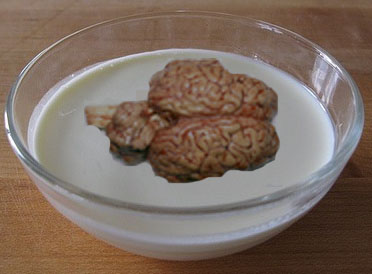

A Brain Floating in the Heavy Cream of Obsession with Academic Excellence, December 13, 2010. Donald Earl Collins

A quarter-century ago, education scholar and Ford Foundation education program director Jeanne Oakes published Keeping Track: How Schools Structure Inequality. Oakes’ groundbreaking, definitive work on the educational inequalities created or reinforced by ability grouping has led a whole generation of scholars to examine the viability of tracking in K-12 education. In a 2005 edition of her book, Oakes wrote that “through tracking, schools continue to replicate existing inequality along lines of race and social class and contribute to the intergenerational transmission of social and economic inequality.”

I picked up Oakes’ Keeping Track for the first time in ’90. By then, I already knew from experience how true her words and research were. Six years in Mount Vernon, New York’s public schools via the Humanities Program had taught me all I’d need to know about the tensions between creating a class of students whose level of academic performance was par excellence while simultaneously addressing segregation and diversity in the school district. The magnet program and the district failed at one and succeeded at the other, which in turn reinforced its failure.

I worked on a paper some twenty years ago for the late Barbara Sizemore, my professor at the University of Pittsburgh my senior year (and a former superintendent of DC Public Schools) looking at how magnet school programs actually created resegregation in individual schools and Pittsburgh Public Schools because of the exclusivity that comes with tracking or ability grouping. It was an easy paper for me to do, guided in no small part by my experiences in Humanities at Davis Middle and Mount Vernon High School. Easy, but not easy to get a handle on beyond the obvious demographics of race, class and test scores.

I managed to wiggle myself into the culture wars of the early ’90s and the debate around multiculturalism and K-12 education soon after that paper. It seems obvious now that the unacknowledged diversity of Humanities was what enabled me to take sides in favor of multiculturalism. That led to my dissertation looking at the historical development of multiculturalism among Blacks in Washington, DC (“A Substance of Things Hoped For,” Carnegie Mellon University, 1997 for those who want more information), and eventually, my first book, Fear of a “Black” America from six years ago.

But it took my memoir Boy @ The Window to bring me back to square one. I realized about a year ago that I’d done nearly thirty interviews of former classmates, teachers and administrators for the manuscript. There was much more material to mine beyond their impressions of me and how to shape their descriptions of themselves — and my memories of them — into characters for Boy @ The Window. I decided to work on an academic piece that looked at the benefits and pitfalls of high-stakes schooling — not just testing — in the form of a history lesson via magnet schools, specifically my Humanities experience.

After a quick rejection, I redoubled my efforts a few months ago. I decided to look at the education psychology and sociology literature, as well as Oakes again, to see how these interviews and my experiences could be useful in our testing-obsessed times. I finally realized what had troubled me about Humanities for the past three decades. It was the reality that all involved with Humanities had taken on the e pluribus unum identity of an academic superstar (much more than just a nerd, by the way). Beyond Black or White, and ignoring the realities of poverty in our district and (at least for me) in our program, Humanities was all about sharpening our academic personas above all else.

This fueled the major success of Humanities during its existence between ’76 and ’93, which in turn would define its failures. In successfully nurturing the idea of academic excellence as identity, as evidenced by so many of us attending and graduating from college, this magnet program failed in its other major educational functions. It failed to embrace diversity, to help its students understand the diversity that was Humanities, to nurture creativity and imagination beyond A’s and college acceptances. It failed to develop the whole student, which aside from its charge to help desegregate Mount Vernon public schools, was its original mission.

Humanities failed because its teachers, administrators (including the former superintendent of schools) and many of the most vocal parents (mostly affluent and White) refused to deal with diversity seriously. Academic excellence without significant parental engagement or the humility necessary to discuss issues of race, gender, class, sexual orientation led to a severe overemphasis on calling us the “creme de la creme.” All of this would have a negative impact on our development as students, and as emerging adults.

I don’t think that it’s asking too much of parents, administrators and teachers to work together in both striving for academic excellence while building programs that embrace difference and nurture creativity and imagination, and not just an addiction to A’s. Or is it?

An Alternate Universe Donald

23 Tuesday Nov 2010

Posted by decollins1969 in 1, Academia, Boy @ The Window, culture, Eclectic, eclectic music, Marriage, music, Politics, Pop Culture, race, Religion, Youth

≈ Leave a comment

Tags

Alternate Universe, Amy Holmes, Carnegie Mellon University, Conservatism, Dinesh D'Souza, Faust, FOX News, John McWhorter, Jon Secada, Kafka, Mariah Carey, Megyn Kelly, Tara Wall, Tupac, University of Pittsburgh, Wu-Tang Clan


Muppet as Michael Steele on The Daily Show Screen Shot, November 23, 2010. Source: http://tellingthetruthiness.blogspot.com

In light of revelations — skin-deep, that is — from FOX News’ not-so-dumb-butt Megyn Kelly in an upcoming GQ article titled “She Reports, We Decided She’s Hot,” it seems to me that I missed out. Not in taking photos that reveal arms, chest, butt, abs or flanks. But in the massive gold rush that anyone with brains and without a conscience could have been a part of over the last thirty years. That gold rush? The “I’m a conservative and will saying anything, true or not” gold rush.

If I had turned conservative while at Pitt or Carnegie Mellon, it would’ve opened up doors. More doors than have been opened to or for me over the past twenty years. Imagine, a tall Black guy with a doctorate and still in his twenties and willing to serve as a mouthpiece for low taxes on the rich, a minimal social welfare safety net, and corporatization of public schools and Capitol Hill? I’d be a senior staff person of the American Enterprise Institute or the Heritage Foundation by now, with a 3-handicap on the golf course to boot!

But back in the days when I attended Pitt, conservatives were not nearly that organized. There were plenty of them, but not working to identify future leaders the way conservatives have at places like Dartmouth or Stanford or even Carnegie Mellon, my second grad school. No, at Pitt, most conservatives hunkered down in bathroom stalls calling people like me the N-word or offered me bananas through their scrawlings on the metal partitions and doors.

College Republicans and other conservatives were much more organized on Carnegie Mellon’s campus, and with nearly four years there, I could’ve joined at any time. I’d probably adapted my music list. I’m not sure Mariah Carey or Jon Secada would’ve gone over well with this group, much less Tupac or Wu-Tang. I definitely would’ve needed to shave the goat-tee, my signature look for most of the past seventeen years. And I would’ve started using a knife and fork to eat fried chicken for sure.

Still, these would’ve been small prices to pay for steady and well-paying employment. I would’ve hit a six-figure income before I turned thirty. And I would’ve easily been able to turn my history of multicultural thoughts and actions of African Americans in the twentieth century — Fear of a “Black”

John McWhorter at the ISMIL conference in Leiden, June 2008, downloaded November 23, 2010. Jasy jatere (in public domain)

America — into a book about the fears of Blacks and Whites of a new and dangerous multicultural world. I might’ve even been able to keep my title, without the word Black in quotes, though. It would’ve been a bestseller, and I would’ve offed Dinesh D’Souza and John McWhorter as the intellectual giants of conservative thought on race. Yay, alternative me!

I’m not sure if me and my wife of more than ten years would’ve made it past the boyfriend-girlfriend stage. Her views are less leftist and more amoral in some areas than mine. But I couldn’t see her supporting me being a mouthpiece against gay rights and marriage, abortion, education reform without community engagement and austerity cuts in public services. It probably wouldn’t have mattered how much money I made. All of my memories of marriage, of good times and bad, of arguments and making up, of Noah from pregnancy to seven — all gone. Only a person equally conservative and amoral — more than likely White, although Tara Wall or Amy Holmes are among notable exceptions. — would’ve likely married me or would’ve wanted to have a kid with me.

For some folks, this is a pointless exercise. I’m a liberal, a social-Christian, democratic-leftist, one with a handful of cultural conservative views around etiquette and public conduct that I wouldn’t impose on anyone except myself, a progressive, in a word. I didn’t have tons of opportunities to become a lucrative mouthpiece and writer for the Right. And I wouldn’t have taken them if I’d been taken to a strip club and given a suitcase full of $100-bills to be turned. Still, it’s good to dream. To realize that my life, such as it has been, has had so much more color and flavor to it than it would’ve in this Faust-Kafka vision of one of my alternate universes.

Anger Issues and Management, Inc

25 Saturday Sep 2010

Posted by decollins1969 in 1, Boy @ The Window, Christianity, Mount Vernon High School, Religion, Youth

≈ Leave a comment

Tags

7S, A.B. Davis Middle School, Anger, Anger Management, Christianity, Envy, Fights, Jealousy, Mount Vernon High School, Mount Vernon New York, MVHS, Patience, Pittsburgh, Race, Ridicule, Righteous Indignation, Scorn, University of Pittsburgh, Wisdom


Rage of the Incredible Hulk. Source:http://www.ramasscreen.com

Exposure to abuse, ridicule and scorn in fairly large dosages when you’re young will leave you with anger issues to manage. I should know. Don’t believe the impressions that my classmates from Humanities and MVHS and my friends from my first two years at Pitt have of me. I may have appeared to smile, to be happy-go-lucky, to be sober and monk-like. But mostly, I was angry, not in a raging, vengeful way, but in a depressed way, a constant, gnawing, sometimes envious, sometimes ironic and sarcastic way. My anger was the kind of anger that I chewed on and swallowed, simmered at low heat for a while in the pit of my belly, then I’d regurgitate it into my mouth, and then chewed on it and swallowed it again.

But, despite what some folks in certain religious circles may say, not all anger is bad, evil or sinful. In fact, sometimes anger is necessary, even if and when it’s dangerous as an emotion or a state of mind. Why, you may ask? Because without anger, you take what life gives to you, even when most of what good you get out of life comes in a miserly and begrudging way. Everything else that comes, if indeed bad or evil for you, isn’t taken in stride or taken with difficulty. You simply don’t take it at all. You become so emotionless that whatever happens doesn’t matter at all, as if your purpose for existing is merely to exist, not to succeed, not to do good works or make yourself a better person because of or despite your circumstances.

That, by the way, is what I’ve heard over the years when some of my former classmates from Mount Vernon — and a few people who knew me in my early days at the University of Pittsburgh — describe me. It was as if I was Porgy in Porgy and Bess, Louis Armstrong or Paul Robeson singing, “I’ve got plenty of nothin’, and nothin’s plenty for me.” That would and did piss me off, but I reminded myself that this was how I had to be to deal with the anger I had within. With emotion, I could’ve easily flown into a rage many

In Treatment Screen Shot. Source: http://sepinwall.blogspot.com

a day between ’81 and ’89.

At the same time, I had the wisdom to allow my anger to rise up, to channel it many more times than not into what I needed to have happen at a particular moment in time. It’s amazing how much you can get done with a sense of righteous anger and indignation, a feeling of got-to-get-it-done-or-else anger. It came at the right time, usually when I felt that my back was up against a concrete wall, with no way out except to fight my way out.

Like in February ’82, the middle of seventh grade, when I just got tired of my 7S classmates thinking that they could say and do anything to me without me getting angry, and tired of days on end at 616 without food to eat. After a fight in the boy’s locker room with one of my classmates — which I won, by the way — I channeled the energy unleashed by that rage and fight into two things. Improving my mediocre grades, and my infatuation over Crush #1. It was three months of relative bliss in the middle of the worst eighteen months of my life.

Richard Marx, 1987.

Or in January ’88, after recovering from the crash-and-burn of my first semester at Pitt. I was mad and disappointed with myself over allowing my obsession with Crush #2 hijack the final six weeks of my semester, not to mention my generally hopeful and creative imagination. After an incident with a couple of my more evil and drunken dorm mates — one in which I cracked a broom handle on the crowns of their heads (no injuries or investigation, luckily) — I summoned some discipline and theme music to get through that second semester. From Richard Marx’s “Should’ve Known Better” to Paul Carrick’s “Don’t Shed A Tear,” I spent fifteen weeks turning anger into A’s and jadedness into new friendships.

I’ve had other periods in my life — in ’93, ’98, and ’03 — where the circumstances dictated that anger, with some patience and understanding, was absolutely necessary in my overcoming of them. The lesson here is that anger — like fire, electricity and nuclear fusion — can be and is often dangerous. Yet it’s also necessary, a potential evil that can be an actual good, if channeled, allowed to dissipate, if tempered by wisdom and patience. At the least, anger allows those of us under stress to know that we are very much alive.

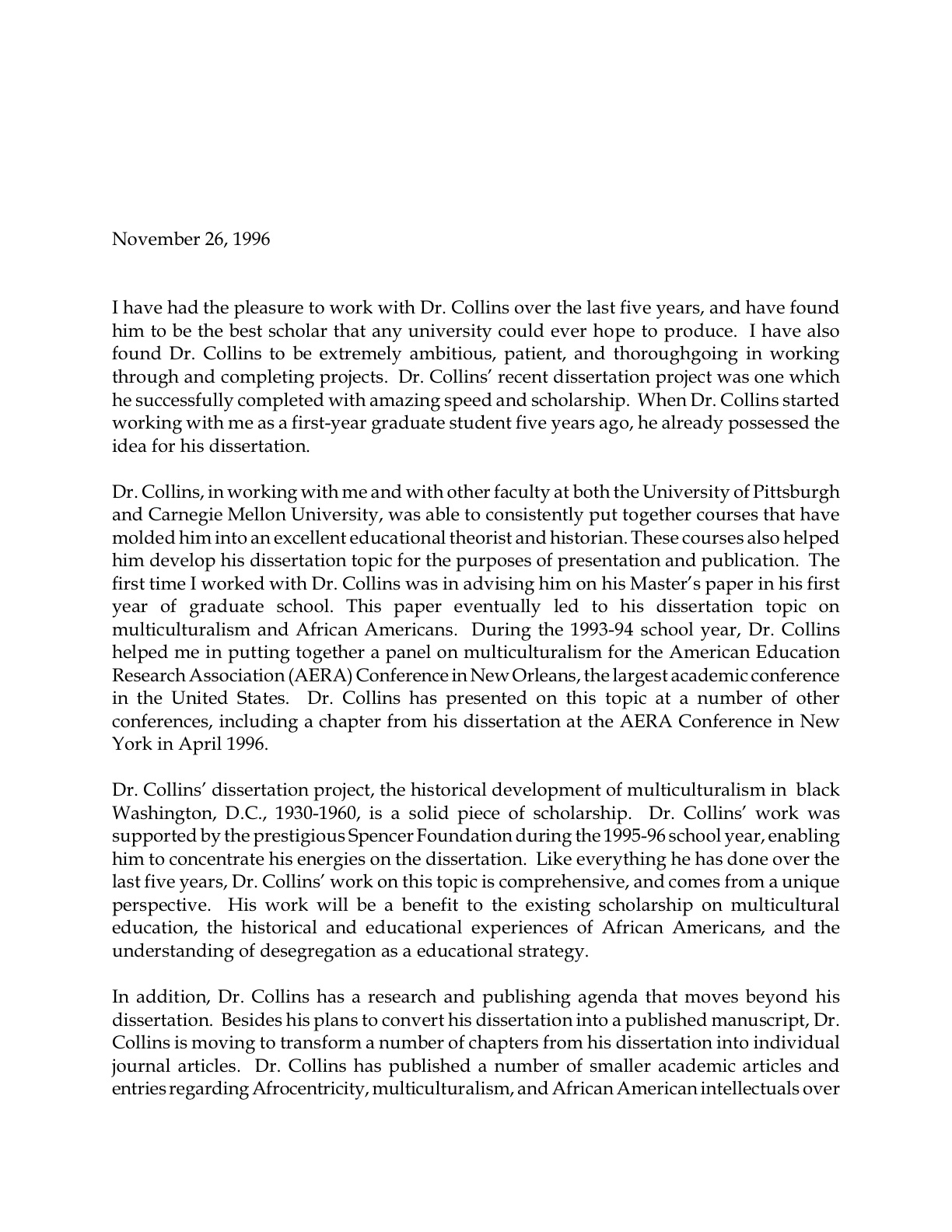
Letter of Recommendation (or Wreck-o-mendation)

23 Thursday Sep 2010

Posted by decollins1969 in 1, Academia, Boy @ The Window, Eclectic, Mount Vernon High School

≈ Leave a comment

Tags

Academia, Carnegie Mellon University, Dan Resnick, Daniel P. Resnick, George Reid Andrews, Joe Trotter, Joe William Trotter Jr., Letters of Recommendation, Pittsburgh, Race, References, Sy Drescher, Transparency, University of Pittsburgh


George Reid Andrews, University of Pittsburgh

About a year and a half ago, I wrote about a string of not-so-wonderful professors I had at Pitt and Carnegie Mellon who were less than fine with me pursuing anything beyond a bachelor’s degrees, much less with me becoming Dr. Collins. I talked about how some of them went so far as to tell me that I wasn’t “graduate material,” as if I were made from parts found at a junk yard instead of in the shop of an Italian tailor.

I’m more than aware of the fact that I didn’t let those doubters stop me from becoming who I am today. Some were undoubtedly ones whose skepticism bordered on racist because of their assumptions about my intelligence and writing ability. Still, it should be noted that there are pitfalls to be avoided, if at all possible, when you’re applying for a job or applying to a college or graduate and professional school.

One, even if a professor or teacher has assigned an A for your performance in one of their courses, that doesn’t mean that think that you’re a great student. I learned that the hard way with George Reid Andrews, my professor for Latin American Revolutions my junior year at Pitt. Twenty years ago this week, I asked him for letters of recommendation for graduate school. Andrews agreed, but only to tell me seven months later what he really thought of my work. My research writing samples were “problematic,” my GRE scores were “barely adequate,” and I should’ve considered myself “lucky” just to get into the master’s program in the history department. That terse conversation told me that Andrews’ letter was lukewarm at best, or had found me seriously deficient at worst.

Two, and related to my interactions with Andrews, the process of providing a letter of recommendation or a reference ought to be transparent, so that the student or employee can be confident that they’re not being back-stabbed by the same people in which they’re placing significant trust. It was never a question I dared asked — to see my letter of recommendation — before I’d reached the final stages of grad school.

It would’ve helped with Andrews, and it would’ve helped with two of my three dissertation committee members, Joe Trotter and Dan Resnick. I found out through my Spencer Fellowship that Trotter had written me a lukewarm letter, while Resnick had rambled on and on about my “close relationship” with my “mentor Sy Drescher,” who had played “an instrumental role” in making me a scholar. Drescher, while one of my best professors at Pitt, played much less of a role in me pursuing grad school than so many other professors and students, including his former student Paul Riggs. It was a Leslie Stahl, “let’s give the poor Black boy a hand” kind of letter.

Later, when I asked to see my letters of recommendation from Resnick before sending them out for jobs, he went on for ten minutes about the “sanctity” of the recommendation process, about how privacy and “anonymity” were critical to provide protection for all parties involved. Needless to say, if someone blusters about privacy when politely asked about a letter of recommendation they’re writing for you, do not use that letter!

Bruce Anthony Jones, University of South Florida

Three, it’s important to get to know a person, to gain some sense of trust from them, before asking for a letter or a reference. You don’t have to become friends with them or meet their family — although that does help. They just have to know that their recommendation or reference will be put to good use by you and that what they say about you matters to both of you, in the most positive light possible. Otherwise, what’s the point of writing a letter or spending fifteen minutes on the phone talking about your qualities as a student or worker, right? This can go a bit too far, of course, as I wrote one of my own recommendations for Bruce Anthony Jones, another dissertation committee member, for him to merely put his signature to. Once he changed jobs for the University of Missouri-Columbia, his, um, my letter became worthless, if it had been worth anything at all to begin with.

I’ve written about two dozen letters of recommendation for high school, college and graduate students, for jobs, school applications and fellowship programs. Not to mention about an equal number of recommendations and references for professional colleagues and friends in academia and the nonprofit world. I’ve always written my own letters, insisted on them being seen by the people I’ve recommended and required that they explain their own rationale for their acceptance in the process. Most importantly, I’ve made sure to say “No” if I didn’t feel I could recommend them well or provide a great reference.

And Now, A Plagiarism Moment

13 Monday Sep 2010

Posted by decollins1969 in 1, Academia, Boy @ The Window, Eclectic, race

≈ Leave a comment

Tags

Academia, Black Issues in Higher Education, Carnegie Mellon University, Dan Resnick, Daniel P. Resnick, Department of HIstory, Plagiarism, University of Pittsburgh


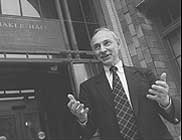
Professor Emeritus Daniel P. Resnick. Source: http://www.cmu.edu

I was sitting in the office of the only professor in Carnegie Mellon’s History Department with expertise in the area of history of education one mid-September day in ’93. It was my first semester in the doctoral program there, after transferring from Pitt to finish my PhD. I had already begun to question my decision to do my remaining studies there. My advisor Joe Trotter was “upset” that I’d taken and passed my doctoral written exams the spring before, when I was still technically a Pitt grad student, and had “run interference” to forbid me from publishing any new articles during the ’93-’94 school years. That was after my piece with my friend Marc had come out in Black Issues in Higher Education.

Steve Schlossman, the chair of the history department, was also upset, because I had decided not to take the American history proseminar, a course for first semester grad students. Apparently, even though I had taken the same course at Pitt two years before — and Carnegie Mellon had accepted all of my credits from my master’s program and first year as a doctoral student at Pitt — I had to take this course. I was read the riot act and told that I needed Carnegie Mellon’s “stamp of approval” before becoming a doctoral candidate. I was incensed, because this wasn’t what I’d been promised by my esteemed advisor and the graduate advisor, John Modell.

All this happened before I met Daniel P. Resnick in his office on Tuesday on a cool, but not too cool, and sunny late-summer day. His office was neat, relatively speaking, but spare and spartan in some ways, with books stacked in orderly fashion, and papers in numerous labeled folders. What I noticed the most was the smell, an old person’s not-fully-washed smell, of bagels and lox with some onion cream cheese.

Professor Resnick had gone to the restroom and left the door open for me to sit at a table next to his desk. He had already laid out my writing samples, the ones I’d put in his mailbox the week before. They included the Black Issues in Higher Education piece. After our exchange of greetings, Resnick sat down and said, “Considering your background, your writing is remarkable!” in a way that showed real surprise.

Before I could respond with a defense or process the obvious bigotry in that statement, Resnick then said, “There’s no way you could’ve written all this.” I responded, “Well, I did, and have the grades and degrees to prove it,” preferring not to accuse the only professor in the department with a specialty in the history of education of racism. “What-what I meant was, your papers are well-written…compared to most young scholars,” Resnick stammered. I accepted that response at face value, but kept what he had said before it in mind as I worked with him over the next three years.

Resnick, as it turned out, had lived for a year with his wife, the great Lauren Resnick, on the Mount Vernon-Bronxville border in 1960-61 (one of them was teaching at Sarah Lawrence, I think), so after finding out where I grew up, he had put two and two together and come up with sixteen. I found him patronizing, and about as knowledgeable in the recent developments of educational history as I would be of underground house music in Chelsea right now. Resnick himself had plagiarized, not in terms of his own work, but from the race relations rule book. He had plagiarized in stereotypes, far worse than anything of which he’d accused me.

Was it worth having this man on my dissertation committee? Yes, because I graduated. But, in the final analysis, it would’ve made more sense to transfer to NYU or Stanford School of Education than to spend three minutes, much less three years, working with a man whose belief in my work was minimal at best.

Finding Home

30 Monday Aug 2010

Posted by decollins1969 in 1, Boy @ The Window, culture, Eclectic, High Rise Buildings, Youth

≈ Leave a comment

Tags

48 Adams Street, 6007 Penn Circle South, 616 East Lincoln Avenue, Apartments, East Busway, East Liberty, Home, Living Space, Mount Vernon New York, Pitt, Pittsburgh, University of Pittsburgh


Highland Building (tall) and 6007 Penn Circle South (short). Source: http://urbanplacesandspaces.blogspot.com

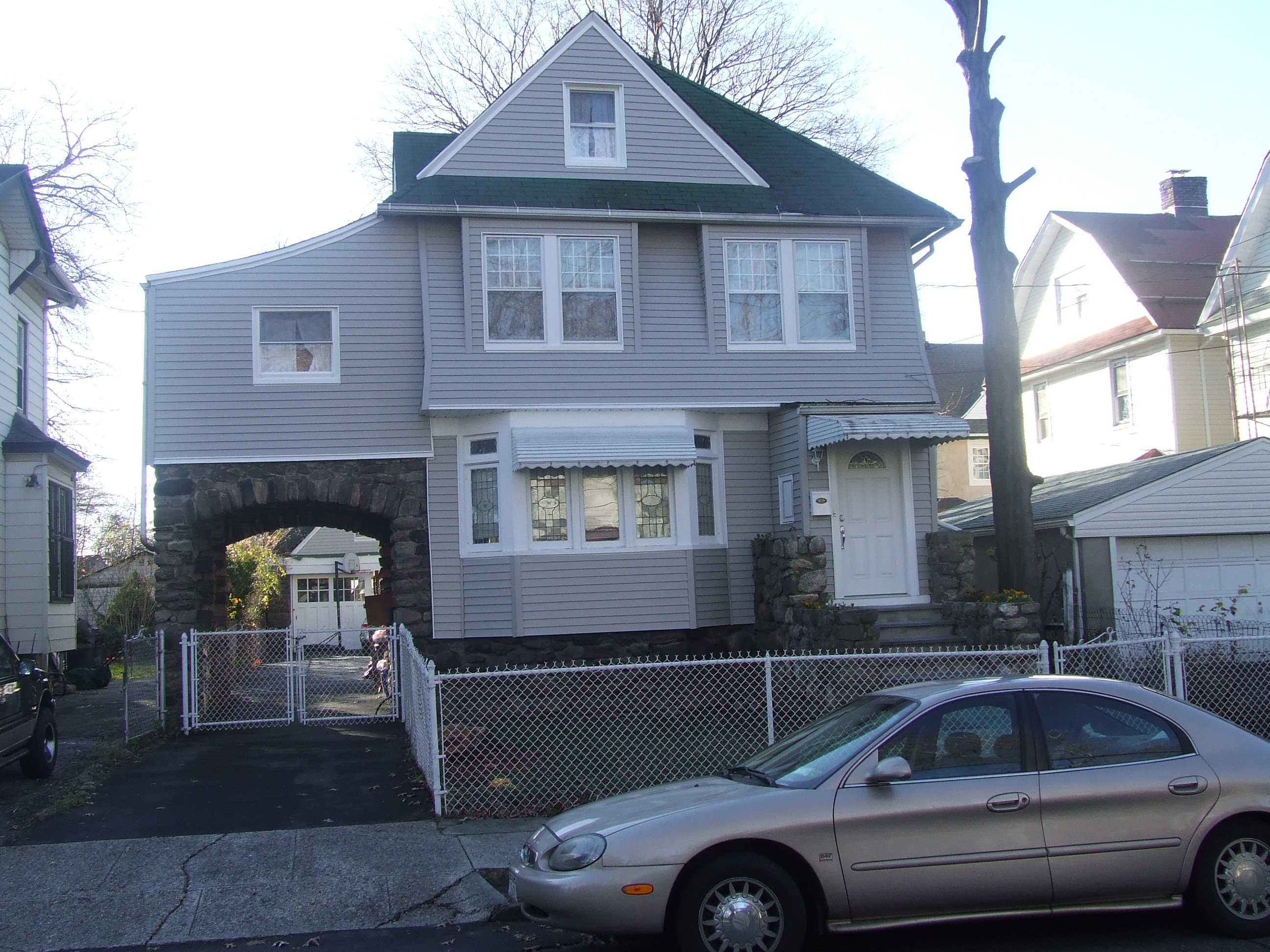
A flat at 48 Adams Street in Mount Vernon, New York. Followed by one at 24 Adams Street. Then 48 Adams Street again. Then the entire second floor of the house at 425 South Sixth Avenue. After that, a 1,200-square-foot apartment on the third floor of the front building of the 616 East Lincoln Avenue

48 Adams Street, circa 2006

complex. After going to Pittsburgh for college, a dorm room at Lothrop Hall my freshman year. Five days of Howard Johnson’s and sleeping on a concrete landing on the fifth floor in a stairwell at Forbes Quadrangle (now Wesley Posvar Hall) the beginning of my sophomore year. A poorly partitioned one-room flat with a shared kitchen and bathroom in a firetrap for a row house, 25 Welsford Avenue, the rest of my sophomore and all of my junior years at Pitt.

The above is every place I’ve lived during my first twenty years on the planet. I never felt at home in any of those places, and when I’d come close, something violent or life changing would occur to remove that feeling of at least a sense of minor uneasiness. Alcoholism, domestic violence, divorce, second marriage, financial pressures, religious stupidity, more domestic violence and abuse, more siblings, financial collapse, college, homelessness, lack of funds and privacy defined the spaces in which I lived between ’69 and ’90. I was mostly lonely and yet hardly alone for all of those years. I had about as much space to think and write as I would’ve had in a bathroom stall at Grand Central before the renovations there during the ’90s (a story for another post). Which is why most of my Mount Vernon classmates and friends can testify to dozens of “Donald sightings” — me walking everywhere — between the ages of twelve and eighteen.

I made the decision after my junior year to find my own place, my own space, as close to or as far away from Pitt’s campus as I could. I took a week off from my summer job at Westchester County Department of Community Mental Health in White Plains at the beginning of August ’90 and took the express Greyhound to the ‘Burgh. I stayed with my friend Terri and her mother — a blog post unto itself — while looking all over the city and its po’ White and Black trash suburbs for anything between $150 and $300 a month in rent, one with my own kitchen and bath.

I found a nice place in Wilkinsburg, only discouraged by the distance it was from the East Busway East Busway near East Liberty stop. Source: http://www.pittsburghtransit.info(Pittsburgh elected in ’64 to spend twenty years building a busway instead of a subway to connect downtown with the suburbs — talk about being cheap!) and Pitt. Not to mention feeling uneasy about a slightly older next door neighbor who looked like she caroused a bit too much. I looked at places in Shady Side, Squirrel Hill, Highland Park, North Oakland, off Braddock Road and near Frick Park, even the Manchester and Friendship neighborhoods (somewhere between middle class, affluent, and student housing). The rent was either too rich for me or the places looked a bit run down.

Finally, on my next to last day to look, I found a place at 6007 Penn Circle South in East Liberty, right

East Liberty Presbyterian Church, down the street. Source: http://www.citizendia.org

across from the Shady Side neighborhood. It was a one-room efficiency (calling it a “studio” would make it sound better than it was). I had a kitchenette area with a sink, counter, cabinets, a stove and oven with a ventilation fan, and a fridge. I had my own bathroom and enough closet space for my meager clothes and toiletries. I was within walking distance of Giant Eagle, the big grocery store in the area, as well as the busway. The Highland Park Zoo bus, the 71B, as well as the 71C, ran their way to Oakland and Pitt. And Pitt was within my walking distance back then — it was more than two and a half miles from Penn Circle South to the Cathedral of Learning.

It was $220 if rent for each month was paid before the first day of the month, and $245 if not. I took the 450-square-foot flat, this despite some of the riff-raff living in the building, the hole-in-the-wall bar Constantine’s within a couple of blocks, or Kelly’s Bar for the down and out across the street. The heating and cooling, the toilet and shower, the food in my fridge was all mine. My friends Kenny, Elaine, Marc all thought it was a dump. Maybe so, especially compared to the places I’ve lived since. But it was my dump. Those eight and a half years there, I learned so much about myself and life and God and women and love. I learned how to live my life while I was in apartment 204. That began twenty years ago today. The building’s now gone (at least, it was slated to be), but the memories remain.

What A Fool Believes

23 Monday Aug 2010

Posted by decollins1969 in 1, Boy @ The Window, Cleaning, Mount Vernon High School, Religion, Youth

≈ Leave a comment

Tags

616 East Lincoln Avenue, Domestic Violence, Mount Vernon High School, Mount Vernon New York, Pittsburgh, Poverty, Race, University of Pittsburgh, Urban Decay, Violence


Wall Collapse Rattles Mount Vernon High School - wcbstv.com, April 13, 2010

Mount Vernon really has changed, and unfortunately, not for the better. I’m talking about in the past four years, and not just since I left for college and Pittsburgh twenty-three years ago this week. As some of you may know, I was threatened the week of my sister’s death and funeral by a young thug because I stopped him from choking his girlfriend in front of me and her three-year-old daughter.

That’s not a completely accurate description. I yelled “Hey! Stop!” as I ran toward the side gate of 616. I saw a short, nappy-headed, unkempt-corn-rowed-haired, light-skinned thug. At first, he was yelling, “Get out the godd**m car you B***H” at a young woman in a blue older-modeled Toyota Camry, punching his fists on the driver’s side window at the same time. Then, when she did get out, she grabbed her three or four-year-old daughter and attempted to get toward the side gate. The fool then pushed her up against the back right side of the car and proceeded to wrap his hands around the young woman’s neck, as if no one else was around.

I was on the telephone with my father, talking to him about the rough week it had been, standing outside to get away from folks for a moment or two, staring across the gates and driveway to the five-story red-brick sister complex 630 East Lincoln when I witnessed this episode of domestic violence. After I yelled and distracted the dumb ass, the young woman ran inside with her daughter. Then the short butt attempted to run up on me, telling me to “mind your own godd**m bisness, you stupid f**k!” He tried to get in my face, but at five-foot-four, he was much too short to intimidate me with rage. I told him if he took another step, that I’d call the cops. He did, and then I dialed 911.

“Oh, you think your life’s miserable now! It just got a whole lot worse for you and your family. And for what? You willing to risk your life for her? For a b***h?,” the stupid ass said as he gradually backed out of the yard and then outside the 616 gate. Apparently he wasn’t as stupid as he looked, as he kept moving farther away while yelling “I ain’t goin’ nowhere, you stupid f**k!” Finally, I said something. “Yeah, I’m a stupid f**k. You and your homies could beat me up, kill me, put me out of my misery. But I’m not the one walking away, you are!” Mr. Thuggish Ruggish Bone then disappeared.

There were numerous other reminders that what was once my hometown would never be again. The fact that neighborhoods that were once affluent White ones were now a mixture of White, African American and Latino, and weren’t so affluent anymore. The closings of Athena’s and Baskin-Robbins and other businesses in once ritzy Fleetwood, the rundown sense that I saw in faces Black and White and Brown all during that week.

Other parts of the city had long succumbed to poverty, crime and neglect, but with the middle class regardless of race in full flight, the uphill battle for a thriving bedroom suburb was now an unorganized retreat, with carnage all along the way. The newest thing I saw in Mount Vernon during my midsummer night and day-mare was the track behind Mount Vernon High School and the construction crew working on a new wall for the southwest corner of the building.

I know that a fair number of my Mount Vernon-based or nostalgic readers will think me biased, ungrateful even for having grown up in a town that they themselves found enriching and enjoyable. If that is the case, then that’s wonderful. Your Mount Vernon wasn’t the one I experienced, and “your blues ain’t like mine” (as the late Bebe Moore Campbell would say), sorry to say.

Aside from the atypical experience of dealing with the death of my sister, the Mount Vernon I grew up with and the one I witnessed last month were one and the same. My time growing up there included unpleasant moments with young punks and thugs, far too much rage and violence and poverty for me to stick around after high school. The difference now is, the city as a whole has become a reflection of my worst experiences, and not a “city on the move.” Silver linings like Ben Gordon or Denzel Washington or not, anyone who refuses to acknowledge that this is the reality for most living in Mount Vernon should tune into a 70s station and look up Michael McDonald for advice on foolishness and wisdom.

← Older posts
Newer posts →

Boy @ The Window: A Memoir

Boy @ The Window: A Memoir

Places to Buy/Download Boy @ The Window

There's a few ways in which you can read excerpts of, borrow and/or purchase and download Boy @ The Window. There's the trade paperback edition of Boy @ The Window, available for purchase via Amazon.com at http://www.amazon.com/Boy-Window-Donald-Earl-Collins/dp/0989256138/

There's also a Kindle edition on Amazon.com. The enhanced edition can be read only with Kindle Fire, an iPad or a full-color tablet. The links to the enhanced edition through Apple's iBookstore and the Barnes & Noble NOOK edition are below. The link to the Amazon Kindle version is also immediately below:

scr2555-proj697-a-kindle-logo-rgb-lg

Boy @ The Window on Amazon.com: http://www.amazon.com/Boy-The-Window-Memoir-ebook/dp/B00CD95FBU/

iBookstore-logo-300x100

Boy @ The Window on Apple's iBookstore: https://itunes.apple.com/us/book/boy-the-window/id643768275?ls=1

Barnes & Noble (bn.com) logo, June 26, 2013. (http://www.logotypes101.com).

Boy @ The Window on Barnes & Noble: http://www.barnesandnoble.com/w/boy-the-window-donald-earl-collins/1115182183?ean=2940016741567

You can also add, read and review Boy @ The Window on Goodreads.com. Just click on the button below:

Boy @ The Window

Twitter Updates

Tweets by decollins1969
  • RSS - Posts
  • RSS - Comments

Archives

  • June 2025
  • April 2023
  • September 2022
  • August 2022
  • July 2022
  • June 2022
  • May 2022
  • April 2022
  • March 2022
  • January 2022
  • December 2021
  • November 2021
  • October 2021
  • September 2021
  • August 2021
  • July 2021
  • June 2021
  • April 2021
  • March 2021
  • February 2021
  • January 2021
  • December 2020
  • November 2020
  • October 2020
  • September 2020
  • August 2020
  • July 2020
  • May 2020
  • April 2020
  • March 2020
  • January 2020
  • December 2019
  • November 2019
  • August 2019
  • July 2019
  • June 2019
  • May 2019
  • April 2019
  • March 2019
  • February 2019
  • January 2019
  • December 2018
  • November 2018
  • October 2018
  • September 2018
  • August 2018
  • July 2018
  • June 2018
  • May 2018
  • March 2018
  • February 2018
  • January 2018
  • December 2017
  • November 2017
  • October 2017
  • September 2017
  • August 2017
  • July 2017
  • June 2017
  • May 2017
  • April 2017
  • March 2017
  • February 2017
  • January 2017
  • December 2016
  • November 2016
  • October 2016
  • September 2016
  • August 2016
  • July 2016
  • June 2016
  • May 2016
  • April 2016
  • March 2016
  • February 2016
  • January 2016
  • December 2015
  • November 2015
  • October 2015
  • September 2015
  • August 2015
  • July 2015
  • June 2015
  • May 2015
  • April 2015
  • March 2015
  • February 2015
  • January 2015
  • December 2014
  • November 2014
  • October 2014
  • September 2014
  • August 2014
  • July 2014
  • June 2014
  • May 2014
  • April 2014
  • March 2014
  • February 2014
  • January 2014
  • December 2013
  • November 2013
  • October 2013
  • September 2013
  • August 2013
  • July 2013
  • June 2013
  • May 2013
  • April 2013
  • March 2013
  • February 2013
  • January 2013
  • December 2012
  • November 2012
  • October 2012
  • September 2012
  • August 2012
  • July 2012
  • June 2012
  • May 2012
  • April 2012
  • March 2012
  • February 2012
  • January 2012
  • December 2011
  • November 2011
  • October 2011
  • September 2011
  • August 2011
  • July 2011
  • June 2011
  • May 2011
  • April 2011
  • March 2011
  • February 2011
  • January 2011
  • December 2010
  • November 2010
  • October 2010
  • September 2010
  • August 2010
  • July 2010
  • June 2010
  • May 2010
  • April 2010
  • March 2010
  • February 2010
  • January 2010
  • December 2009
  • November 2009
  • October 2009
  • September 2009
  • August 2009
  • July 2009
  • June 2009
  • May 2009
  • April 2009
  • March 2009
  • February 2009
  • January 2009
  • December 2008
  • November 2008
  • October 2008
  • September 2008
  • August 2008
  • July 2008
  • June 2008
  • May 2008
  • April 2008
  • March 2008
  • February 2008
  • January 2008
  • December 2007
  • November 2007
  • October 2007
  • September 2007
  • August 2007
  • July 2007
  • June 2007

Recent Comments

MaryPena's avatarMaryPena on My Day of Atonement/Bitter Hat…
decollins1969's avatardecollins1969 on No Good Teaching Deed Goes…
Mary Rose O’Connell's avatarMary Rose O’Connell on No Good Teaching Deed Goes…

NetworkedBlogs on Facebook

NetworkedBlogs
Blog:
Notes From a Boy @ The Window
Topics:
My Life, Culture & Education, Politics & Goofyness
 
Follow my blog

616 616 East Lincoln Avenue A.B. Davis Middle School Abuse Academia Academy for Educational Development AED Afrocentricity American Narcissism Authenticity Bigotry Blackness Boy @ The Window Carnegie Mellon University Child Abuse Class of 1987 CMU Coping Strategies Crush #1 Crush #2 Death Disillusionment Diversity Domestic Violence Economic Inequality Education Family Friendship Friendships Graduate School Hebrew-Israelites High-Stakes Testing Higher Education History Homelessness Humanities Humanities Program Hypocrisy Internalized Racism Jealousy Joe Trotter Joe William Trotter Jr. K-12 Education Love Manhood Maurice Eugene Washington Maurice Washington Misogyny Mother-Son Relationship Mount Vernon High School Mount Vernon New York Mount Vernon public schools Multiculturalism MVHS Narcissism NFL Pitt Pittsburgh Politics of Education Poverty President Barack Obama Race Racial Stereotypes Racism Relationships Self-Awareness Self-Discovery Self-Reflection Sexism Social Justice Teaching and Learning University of Pittsburgh Violence Whiteness Writing

Top Rated

Blog at WordPress.com.

  • Subscribe Subscribed
    • Notes from a Boy @ The Window
    • Join 103 other subscribers
    • Already have a WordPress.com account? Log in now.
    • Notes from a Boy @ The Window
    • Subscribe Subscribed
    • Sign up
    • Log in
    • Report this content
    • View site in Reader
    • Manage subscriptions
    • Collapse this bar
 

Loading Comments...