• About Me
  • Other Writings
  • Interview Clips
  • All About Me: American Racism, American Narcissism, and the Conversation America Can’t Have
  • Video Clips
  • Boy @ The Window Pictures
  • Boy @ The Window Theme Music

Notes from a Boy @ The Window

~

Notes from a Boy @ The Window

Tag Archives: Teaching and Learning

Teachers That “Demon”-ize History

29 Tuesday Mar 2011

Posted by decollins1969 in 1, Academia, Boy @ The Window, Christianity, Eclectic, Politics, Pop Culture, race, Religion

≈ Leave a comment

Tags

A.B. Davis Middle School, Demontravel, History, History Teaching, Humanities, K-12 Education, K-16 Education, Pedagogy, Schools of Education, Teaching, Teaching and Learning


Qin Shihuangdi, China's 1st Emperor, book burner and scholar burier (except for historians of the Qin kingdom), 221-210 BCE. In public domain.

As I promised ten days ago in my “This…Is…Jeopardy?” post, this one continues my thoughts about the inability of most students and teachers to appreciate how to really teach and learn from history. To think that what most in the profession call social history has existed for a half-century, yet few outside of academia actually teach history in this manner. That between the schools of education that prepare them, the curricular paradigms adhered to by state boards of education and the rules and regulations at the district and school building level, few history teachers encourage their students to imagine. Or to think critically. Or  to ask “how” and “why” questions.

And we pay for these educational atrocities every single day, in our public discourse, in journalism, in international politics. Not to mention in our idiotic discussions of race, class, gender, religion, sexual orientation, in just about every endeavor that involves thinking beyond our selfish selves.

Michelle Bachmann Portrait, US Congress, January 14, 2011 - A case in point. In public domain.

The worst example of this for my money was my eighth grade US history teacher, Mr. Demontravel. Or as he preferred in the last three months of eighth grade in the spring of ’83, Dr. Demontravel (he had finished his doctoral thesis on the Civil War. Or as I liked to call him throughout that year, “Demon Travel.”

Beyond the trivia of him finishing his doctorate, Demontravel’s teaching style, while terrible, was also one that remains all too typical in our public school (and unfortunately, some of our colleges as well). His was a class that sucked the life out of history for most of the Humanities students at A.B. Davis. Like most teachers of K-12 social studies or history, it was an important and obscure dates, important names, and key places class.

Unlike most social studies teachers, his teaching methodology was the epitome of lazy. Every class, five days a week, Demontravel would put up five questions on the blackboard for us to copy down and answer using our textbook. At the end of every two-week period, we’d get a fifty-question multiple choice exam made up of those questions written out on the blackboard over the previous two weeks, helping Scan-Tron stay in business.

Demontravel rarely stood up to lecture or do anything else. Lectures for him might as well have been appearances by Halley’s Comet, only the lectures were far less memorable. This process went on unabated for forty-weeks, four marking periods, seventeen exams (counting the final), an entire school year. Calling this boring would only get you into the door of the intellectual famine Demontravel subjected us to in eighth grade.

Over the years, I’ve had hundreds of students complain about various versions of this kind of history teaching. That they hated history, didn’t understand its purpose. Many students have loved my teaching of social history off and on over the past two decades, and have told me so, that there interest in a particular issue or topic was peaked as a result of one of my courses. But there are some, perhaps as many as ten percent of my students (about 200 in all) who would’ve preferred the mind-numbing methodology of teaching history as trivia. For that group, Demontravel would’ve been a preference over being able to

Newt Gingrich, potential 2012 GOP candidate, at CPAC meeting, February 20, 2010. (Irony is that Gingrich, an opponent of social history, was a history professor for eight years before turning to a political career.) Gage Skidmore. Permission granted via Creative Commons and attribution to Gage Skidmore.

understand that, like life, history is full of irony, hurt, passion, hatred, and serendipity.

Maybe this is a losing battle, that most students will never have a teacher with the ability to inspire them to think beyond the trivial when it comes to history. Maybe this is a losing battle because there are far more demons traveling through K-12 as social studies and history teachers than there are people like me, or my late teacher Harold Meltzer, for that matter. I have a feeling, though, that generations from now, future students will look at this aspect of hypocrisy in American education and just shake their heads. They won’t understand why it was so hard to teach the truth of how and why good, bad and ugly things occurred in US and world history.

This…Is…Jeopardy?

18 Friday Mar 2011

Posted by decollins1969 in 1, Academia, Boy @ The Window, culture, Politics, Pop Culture, Youth

≈ Leave a comment

Tags

Alex Trebek, Grading, History Trivial, Humanities, Humanities Program, Instructor, Jeopardy, Mount Vernon High School, Mount Vernon public schools, Pitt, Professor, Students, Teaching, Teaching and Learning, Teaching Assistant, Teaching History, University of Pittsburgh


This Is Jeopardy?

This Is Jeopardy?

The first class I ever taught was as a guest lecturer my first semester of grad school at Pitt. Larry Glasco, my advisor, had me take charge of his History of Black Pittsburgh course one November Thursday in ’91. It was a task made easier by the showing of the documentary Wylie Avenue Days during the two-hour and twenty-minute class. With about a quarter of the class composed of adult learners, including several who’d grown up in the Hill District during the time frame covered in the documentary, it became a real conversation about experiences with racism and inter- and intra-racial relations in Pittsburgh in the first two-thirds of the twentieth century. It was a great introduction to teaching.

In the two decades since, I’ve often wish that all of my classes had the kind of intellectual balance that my first class possessed and I as instructor helped provide. Sadly, many times in my journey as a teacher, instructor and professor, I’ve had students who showed as much interest in discussing the hows and whys of history as Glenn Beck of FOX News Channel has in science and the truth.

These students, about one out of every six I’ve taught over the past two decades (about 300 in all) have taken up an amount of my teaching time. They’ve groused about the assignments I’ve given them to do, the exam questions I’ve created to assess their knowledge. They’ve gnashed their teeth about my grading, about how tough I supposedly can be in assigning grades. With papers, short-answer exams, multiple choice tests, even fill-in-the-blank quizzes. There’s been no pleasing this group of students.

Until now. It occurred to me about a year ago. I was watching yet another episode of Jeopardy, and it swung to a history category, one that I would’ve swept if I’d been on the show that day or anytime since the show came back on the air in ’85. That then reminded me of something one of my Humanities classmates from Mount Vernon High School said to me soon after finding out that I was ranked fourteenth in the Class of ’87. “All you can do with history is play Jeopardy,” he said with derision.

That memory then reminded me of how teachers like our seventh through tenth grade social studies teachers taught us. Whether Court, Demontravel (who I’ll talk about later this year), Flanagan or Zini, the idea was to be able to spit out as many date-connected facts, names and battles as quickly and accurately as possible. With no thought about human nature, empathy with the struggles of individuals and groups, or any attempt to explain the processes behind why something happened, like slavery, Jim Crow or Indian removal, for instance.

To satisfy my students who want a high school version of history, I need to come to class next semester and draw a gigantic box on the chalkboard. In that box, I’ll draw six columns by five rows of smaller boxes within this huge box. In the top box of each column, I’ll write in a topic area, say, “Colonial America,” “Expanding Voting Rights,” “‘Eq’-words,” “Myths & Legends,” “My Founding Fathers,” and “Rebel Yell” (this on the American Revolution and the Civil War) across all six. There wouldn’t be any money values, just number values, from 1 to 5 from the easiest to most difficult questions. Daily Doubles would help struggling students make up points, while Double Jeopardy sessions would help the best students solidify their A’s.

This is a great idea, isn’t it? My least interested students can then pretend that they’re learning history by being entertained and memorizing history trivia. My students who need to learn or sharpen their critical thinking skills will find themselves sorely neglected. And my most interested students would be ready to strangle me.

In the end, it’s not worth it to turn my part in this profession into Sony Entertainment, especially for a minority of the students I’ve taught over the years. Besides, I can’t afford to buy Watson to impress my students, or at least, have someone pretend that they have the artificial intelligence of IBM’s Watson by sounding like a teraflop supercomputer.

Half-Baked Z and Christian Zeal

27 Monday Sep 2010

Posted by decollins1969 in 1, Boy @ The Window, Christianity, culture, Eclectic, Jimme, Mount Vernon High School, New York City, Religion, Youth

≈ Leave a comment

Tags

Arrogance, Baked Ziti, Christian Zeal, Kufi, Religion, Religious Zeal, Teaching and Learning, Wisdom


Baked Ziti. Source: http://culinariaitalia.files.wordpress.com/

Sometimes I’ve let my enthusiasm for good things in my life get the better of me. Perhaps that’s because there have been few periods in my life where nearly everything has gone the way I’d expect, especially in my Humanities years. One of those times had been in the months before, during and after my conversion to Christianity in ’84. After I outed myself at the beginning of tenth grade as a Christian and stood up (for once) to my idiot stepfather by refusing to wear my kufi ever again, things in my mind had improved. So much so that I was ready for my life to change, as if my conversion were a magic wand and I was Cinderella.

My conversion became a badge of honor, my Bible my new crutch in the first few months after becoming a Christian and the beginning of tenth grade. I read it every chance I had. At lunch, in my trips into New York with my father Jimme and my brother Darren, before I went to bed at night. Like a nine-year-old, I so wanted my life to change that I forgot that I still had work to do in order to change it. Prayer and fasting (deliberate, of course, and not the empty refrigerator kind) wouldn’t be enough. But I acted like it was.

Torture & the Spanish Inquisition (the direction of unchecked zeal).

It didn’t help that I had Z as a history teacher, one who almost automatically rubbed me the wrong way. She assumed that she was right about everything and looked like an older, worn-out, schoolmarmish version of Madonna to me, a woman whose best days were long past. She was about average height with blonde-gray hair, which looked like it had been freeze-dried. She dressed like a woman who didn’t realize we were in a public school and who didn’t see herself as a real person. Her voice was a slow-whine Brooklyn-accented version of Cyndi Lauper’s, the kind that made me think that she was talking down to us. It irritated the heck out of me when she’d call one of us “Peaches” or when she’d say, “When they’re slow they’re slow,” a reference to how long it would take us to answer one of her idiotic, non-history history questions. A personable person with emotions and empathy, the kind of person equipped to teach a diverse student body, Z was not.

After finishing one of Z’s bubble tests early, fifteen minutes early, as a matter of fact, I handed it in and pulled out my Bible. When she noticed what I was reading, she panicked. “Put that away! Put that away now!,” she yelled from her gray steel desk, exasperated. The exchange we had occurred while other classmates were finishing their exams.

“I’m just reading my Bible.”

“You can’t read that in school!”

“I know my rights! I have a First Amendment right to read the Bible in school, and you’re not teaching right now anyway!”

She threatened to send me to the principal’s office. I called her an “atheist” and put my Bible away. It was the start of a confrontational relationship between me and her.

We got into it quite a few times. One time was over what she was teaching in class, what exactly I don’t remember. What I did in response to it was to blurt out “Is this what you call history? All you talk about is art and music!” She banished me to the hallway outside of class for that one. I called her a “stupid atheist” on my way out.

We were both right and both wrong, both arrogant in our own way. Z was a teacher without an appreciation for student development and socialization. I was a new Christian on a high, believing that my spiritual status would by itself put me in right standing whatever I did. In the end, Z should’ve allow me to read my Bible, and I shouldn’t have confronted her based on her religious or non-religious beliefs. Our perspectives were half-baked, our stances too inflexible. I’m just glad that I’ve become a better person and Christian since those first days.

My AP US History Story

06 Thursday May 2010

Posted by decollins1969 in 1, Eclectic, Mount Vernon High School

≈ Leave a comment

Tags

AP US History, Class of 1987, Harold Meltzer, Humanities, Mount Vernon High School, Mount Vernon New York, Teaching and Learning


In honor of all the students I’ve taught who are in the midst of AP exams the next two weeks — especially the ones who are due to take the AP US History or APUSH exam Friday — the following is my APUSH story. It’s about the weeks and days from early April to May 13 of ’86. Unlike my other mediocre and bittersweet stories of AP crash-and-burn, this one’s about academic triumph. But, it’s from a kid-like perspective, so buckle up.

***************************

In the weeks before the APUSH exam, Meltzer practically locked us in his classroom, sweeping through nearly a century of American history. We covered Reconstruction, industrialization and Woodrow Wilson, both World Wars, FDR and the Great Depression as if we were in a time machine with a warp drive engine. The last week before the exam was critical for everyone in the class, except for me of course. God had created a mind and imagination such as mine for this moment, where analysis was as important as knowledge for this kind of exam. After school that week was one of Meltzer ordering pizza and buying sodas for us so that we could grasp how to tackle the AP exam using his methods. I stayed because I loved Meltzer’s stories and because of five days of free food.

Watching my classmates sweat it out while asking Meltzer every conceivable question on American history, especially the parts he didn’t cover, was the most entertaining part of the week. They grilled him to the point where Meltzer had walked them through the exam point-by-point. All while telling us “Not to worry, kiddos! You’re all gonna do just fine!” Our soon-to-be-valedictorian and one other classmate were probably the most anxious and most diligent in their inquisition of Meltzer. They had all but outlined our textbook Morison and Commager page by page to get answers to issues and events they didn’t understand. We covered the women’s suffrage movement, immigration, the Great Depression and the New Deal, the League of Nations, the Cold War and McCarthyism, and so many other events that I was tired just listening to them ask. All this time with Meltzer and they still didn’t fully comprehend Meltzer’s master plan for preparing us for the exam.

Even in my calmness, I knew that this was the most significant exam I’d take going into college, one certainly more reflective of my skills than New York State Regents exams or the SAT. Of all things, my only concern was making sure I had a good breakfast before taking the exam. The weekend before, I scored over a hundred dollars off my father Jimme, and after distributing the spoils to Darren and my mother, I still had fifty left. The night before the exam, I went to the store and deli and bought all my little morning snacks, yogurt included. I slept well that night, dreaming about the exam and how well I thought I’d do.

Tapes prepared and Walkman somewhat in working order, I walked to school the next morning fully charged and as well-fed as my boney butt could be. It was the thirteenth of May, a brisk and overcast Tuesday that felt more like early November. I made sure not to go into MVHS’ library, our exam room for the morning, until about a minute before we were going to start. If I learned anything from being around my classmates, it was to be as calm and cool as a cup of ice. They still generally ran around acting all nervous and stressed out before a major test, turning colors and breaking out in hives, which sometimes drove me nuts. Why couldn’t they just chill? So my solution was to avoid their stress for as long as I could before coming into the room.

Once I sat down, I didn’t even remember what the proctor or Meltzer had said. Once they said “Go,” I hit the multiple choice section and just blew through it. The only problem I had during the exam was understanding what the word “pluralism” meant. And when I saw the term “cultural pluralism,” I felt slightly more baffled. What I did in response was read the questions and answers to form context, which seemed to me to be around American society having groups of people from different races and parts of the world living in the same country. About fifteen or twenty of my one hundred bubble questions was on pluralism or cultural pluralism.

Then we began the essay portion of the exam. Two essays to write and we had forty-five minutes to write each one. The first one was also on the topic of pluralism. “This must be the word of the day,” I thought. It dawned on me that there might’ve been a relationship between these pluralism questions and the century anniversary of the Statue of Liberty’s opening on Liberty Island. I don’t know, I think that this may have been my document-based essay question. The other essay, by comparison, was a piece of cake. By the time we finished they exam, I was tired but pretty happy with my performance. It was basketball season, and I felt like I’d been knocking down jumpers left and right in going after these questions, like Isiah Thomas or Bernard King wouldn’t know by how much until sometime in July.

I looked at my classmates. They all seemed tired and bent out of shape by the exam. Some looked a little frustrated and angry. I was a bit surprised. I knew that most of them had done well, and I assumed that valedictorian and salutatorian had done at least as well as me. Yet they weren’t at all happy. Their moods varied from relieved to downright surly after the exam was over. Meltzer was happy for us all.

My AP score arrived in the mail just after the fourth of July. I scored my coveted 5, meaning that I had earned six college credits before choosing my school. I expected this score, but what I didn’t expect was how perfectly I performed. The College Board’s breakdown showed that I’d gotten ninety-four out of one hundred multiple choice questions correct and that two of my three essays had received the highest possible score — I scored a 4 on one of the free-response essays. I wasn’t just happy. It was like winning the lottery. I was in another world the rest of the day.

***********************************

What makes this story interesting is that I took the approach that as long as I stayed calm, away from my classmates and well fed, everything would work the way I wanted them to. All too often, we make big moments even bigger in our heads and hearts than necessary, causing ourselves more stress, and, ironically, guaranteeing ourselves poor or mediocre performances. I don’t want to hear the all-too-often-used-phrase, “I work well under pressure.” We think we do, but twenty years of teaching and even more as a student have proven to me otherwise. So, please folks, eat a good meal, take a chill pill and a deep breath before sitting down and cutting open your test booklets over the next week or so. Sixteen’s too young to have ulcers.

Pressure

09 Friday Apr 2010

Posted by decollins1969 in 1, Academia, culture

≈ Leave a comment

Tags

Academia, College, Higher Education, Mental Health, Stress, Student Development, Teaching and Learning


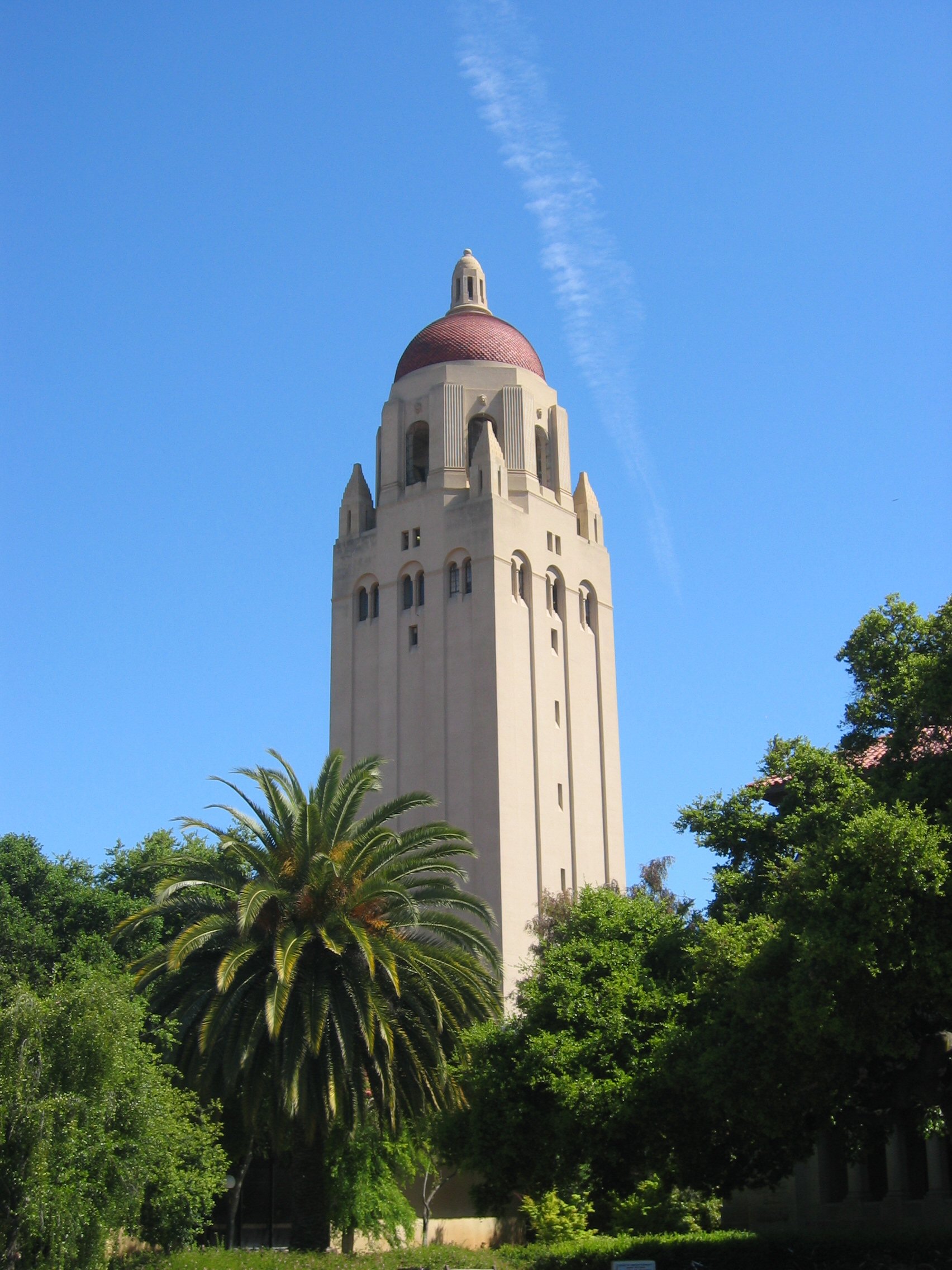
Stanford University's Hoover Tower

This week, The Daily Beast posted their piece “The 50 Most Stressful Colleges” (see link: http://www.thedailybeast.com/blogs-and-stories/2010-04-04/the-50-most-stressful-colleges/?cid=hp:beastoriginalsC1). In the piece, the writer or writers emphasized five (5) criteria for college stressfulness: 1) cost; 2) competitiveness; 3) acceptance rate; 4) engineering; and 5) crime on campus rates. Sounds great right? Not if the writer or writers relied mostly on US News and World Report for most of their data in ranking what they believe are the Top 50. It seems to me that reporters with little background in higher education, the psychology of talented high school youth and college students, or financial aid should refrain from writing about such a topic. Still, since they did bring the subject up, it’s probably a good idea to address it from perspectives The Daily Beast would likely not consider.

For starters, the high correlation between their five criteria and the most prestigious research universities in the country — including Harvard, Princeton, Columbia, Stanford, University of North Carolina, and my doctoral alma mater, Carnegie Mellon University — seems okay on the surface of things. But really, are students at the University of Pittsburgh who are engineering majors less stressed out than English majors at Carnegie Mellon? Or could a student at a liberal arts school like Oberlin be experiencing higher levels of stress than a student at a school not on The Daily Beast’s list — say George Washington University?

Based on my own experiences as a professor and a student, yes, highly selective, research-oriented universities with competitive engineering programs can deliver stress to students on a platter. Yet, it’s not as if the other liberal arts colleges, state colleges and universities, and schools of similar elite ilk not on the list. The Daily Beast could’ve used pre-med and biology programs — such as those at Tufts and Johns Hopkins — as examples of competitiveness, as if engineering students are particularly prone to stress and suicide. I think, though, that this is the main point about The Daily Beast’s piece. It’s the taking of the recent news stories — students killing themselves or murdering students and faculty — and drawing the conclusion that it’s combination of the criteria that’s the difference here.

The piece discounts the experience of millions of college students under the stress of financial aid, whose programs, though not as prestigious, are likely as demanding, and with the pressure of high expectations from their schools and their families. It discounts students, quite frankly, and the baggage they bring with them when they enter college. The schools they list could cost $150,000 a year to attend, have acceptance rates or eight percent or less (I have no idea how Carnegie Mellon made their list with a thirty-seven percent acceptance rate), and pressure-cooker engineering programs, but the suicide rate and violent crime rate would likely not correlate at all. It’s all about how students handle pressure, and how schools help students with managing the pressures they experience at competitive and selective colleges and universities.

I should know. Halfway through my first semester at the University of Pittsburgh, I experienced stress because of the baggage I brought from my Mount Vernon High School days, specifically in the form of a young woman I wanted to date but couldn’t. I spent the last six weeks of that semester missing more than sixty percent of my classes, withdrew into a alcohol-binge one weekend, and generally didn’t seek any social outlets for my emotional and psychological pain. Because I knew that there was a stigma attached to seeking psychological help, I didn’t, and struggled my way through the end of ’87 and into the first days of ’88 wondering if the sacrifices I made to get into college in the first place were actually worth it.

I think that student mental health is a much neglected aspect of pre-K to graduate education. Period. We act as if students and parents are solely responsible for the maintaining of student mental health, when in point of fact, most students and parents see the exploration of the subject as a stigma of some sort. Of course they are wrong. Still, I think that every school and every school district in this country should have at least one psychologist on staff (age-appropriate, of course), and that every student be given a mental health evaluation at least once a year.

Going a step further, I think that mental health fitness should be a part of the college admissions process, and that students who have the academic abilities but show signs of mental health issues be given additional resources to deal with these issues before the stress of higher education has had a chance to effect their undergraduate journey. I also don’t think it would hurt to make faculty, staff and administrators at universities to take professional development seminars in student psychology, so that they themselves can understand the difference between normal and abnormal behaviors of their students.

Some of you will think this idea beyond crazy. After all, those who can’t cut it are losers, right? And, since when can a university look at the mental health fitness of applicants, anyway? How many parts of doctor-patient privilege don’t I understand? I never said that this would be a perfect solution. This would provoke a number of controversies and lend itself to multiple obstacles. On the other hand, wouldn’t it be good for students and parents to have a sense of the kinds of stresses that can affect the well-being — academic and otherwise — of someone before they went off to a college or university?

Perhaps the biggest obstacle of all on this matter is the issue of competition. There’s nothing wrong with having students in a competitive environment. It often brings out the best in them academically (and the worst, unfortunately, hence my comments in the previous two paragraphs). Suffering setbacks in the process of competition can even teach us more about ourselves and the world around us than constant success. That’s what folks say, at least. So students shouldn’t be afraid to compete. But college campuses — and public schools also — should wrap this competition in a velvet cocoon of excellence. Meaning that from an early age, students are encouraged to strive for and achieve excellence, academically, socially, athletically, and so on. Along the way, healthy competition should be inculcated, but within the context of students performing well to begin with.

All so that by the time students arrive on a college campus, the stress of competition is managed through an atmosphere that is all about excellence. This is not a zero-sum game where the winner takes all and the loser should think about becoming a janitor. These are human beings, after all, whose lives should be about more than A’s, and competition about more than destroying their opponents. It took me until my third semester at Pitt to learn that lesson, which made my transition to a healthier mental health easier.

Student Follies

01 Thursday Apr 2010

Posted by decollins1969 in 1, Academia, Eclectic

≈ Leave a comment

Tags

College, Education, Etiquette, Higher Education, Teaching and Learning


I’ve been chomping to talk about some of the more inane and insane actions of some of my students over the years. Why? I’ve found that the boundaries between professor and student have broken down quite a bit over the years. So much so that students tend to tell me things that would’ve earned me an F at the University of Pittsburgh as an undergraduate twenty-two years ago. It amazes me that common sense — or at least, some sense of etiquette — doesn’t kick in for these folks in their dealings with me and other instructors. It’s as if we’re merely tutors or academic mercenaries, subject to their feelings and whims, as if we’re only in the classroom to be there for them when they’ve screwed up. So, for those of you who are within a few years of embarking on your higher education journey — or are hopeful parents who expect their kids to attend college in the next decade or so — here are ten examples of what I’m calling “Student Follies.”

1. “I’m paying for this course, so…”: This one drives me nuts. It’s not like these students are writing me checks to pay for a course. The thing I say to them is that until my paycheck has their signature on it, I’m going to teach as a representative of the university, not as an agent for a student.

2. “Can you give me extra credit?”: What? Is this high school? Are you kiddin’ me?!? Whenever I get this question, I have to make sure not to laugh. If it were just college freshmen or high school students asking this question, I’d understand. But I often get upperclassmen or older adults who should know better asking about extra credit to increase their grade. Unlike high school, college is an endeavor that’s about a balance between providing every student an opportunity to excel and providing relative fairness and equality in those opportunities. I often explain that offering extra credit to an individual student is unfair to the students who busted their tails in getting their papers or other assignments done on time. They say they understand, but the fact that they asked in the first place says to me that they might not.

3. “Can I redo my paper?”: This question is an extension of number 2. Why would I give any student an extra bite at an apple that every other student got to bite only one time? I don’t like it when students don’t do well on something I know that with the right amount of training and effort, they could’ve earned a better grade. But my advice will remain to look at my comments and use them as strong advice for their next paper or assignment.

4. “I haven’t been to class because…” or “I have to miss class because…”: Every semester I’ve taught, whether high school students, undergrads or grad students, at an elite university, community college or other institution, I’ve had students miss as many as all of their classes for an entire semester. My first year as a TA at the University of Pittsburgh, I had a student-athlete (played on the tennis team) in his senior year who missed the semester because of an injury. What? Was this a brain injury? Of course not! After attempting to cheat on his makeup final, he failed my course, unsurprisingly.

I’m a flexible professor, and certainly understand when stuff comes up for students, more and more whom have jobs, spouses, families, and serious issues to deal with. So communicating with me like an adult is encouraged. But, at the same time, some students don’t understand the TMI rule. I don’t need to know that you might miss class to watch the NCAA Championship Game Monday night if West Virginia beats Duke on Saturday. Plus, I’m a Pitt fan anyway.

5. “I don’t like the grade you gave me…”: If a student really feels that they should talk to me about their grade, then they should. After class, before class, during a break, with an appointment to meet. Not while I’m giving instruction or explaining the pitfalls that most students fall into in writing papers. I generally hand papers with grades and comments to students at the end of class to avoid them creating an awkward moment. But the students I’ve been working with of late seem to think that their tuition payment gives them the right to object to a grade as soon as they see something they don’t like. The last thing I would’ve thought of doing as an undergrad was to object in front of other students to a grade or grading process. After all, it’s the professor, not the student, who determines grades for courses.

6. Complaining about things that I cannot do anything about: Complementary to number 5, it’s this sense that somehow I’m supposed to know that the LCD projector isn’t working properly, or that a student forgot her glasses for class one day. Or, for that matter, that a student has dyslexia or some other learning or physical disability, or that I should be more patient with another student because she works two jobs. Or that my course schedule, planned out months ahead of time, posted and handed to you the first day of the semester, is now an inconvenience for you because your job has scheduled you for a week-long conference out-of-town. Although I’m flexible, I’m also not going to rearrange my schedule or the schedule set for twenty, thirty or forty students because your life has just become more intense. How about, “Dr. Collins, can I get an extension?,” with a reasonable reason, and without complaining about being an adult?

7. “I’m entitled to my opinion…”: Really? Yes, in a free democratic society, you are entitled to your opinion. But in a college course, your opinion needs to be an informed one. With evidence from relevant and quality sources, based on reasonable analysis, with the ability to discern the difference between bullcrap and actual facts and acceptable interpretations. Unfortunately, I’ve had far too many students who’ve only been interested in expressing their opinions on life in the classroom and in their paper assignments, who think that every sentence should start with “In my opinion,” or “I believe…,” or “I feel…,” or “I think…” College papers aren’t expository essays, or, as we say more often these days, opinion-editorial pieces.

As a student, you shouldn’t think that it’s okay to write that American Indians were decimated by diseases after contact with Europeans “because they practiced a heathen religion.” Or that Whites prolonged slavery in America because “they were under the influence of satan.” Without any evidence to add to this, statements like these merely amount to bigotry. College is about exposure to new ideas and ways of thinking about the world. Giving answers to questions only in the form of opinions demonstrates that these students would prefer not to learn anything at all.

8. Bringing a full meal to eat during class: What? Do students actually think that it’s good form to bring a full three-course dinner to class? Apparently, the answer to this is yes. I know that people need to eat, pee, and deal with family issues when they’re in an evening course. But that doesn’t mean that you should interrupt a lecture, discussion or film with Triple Delight or a Big Mac and french fries. Cell phones should be on vibrate if a student can’t turn their phone off. Slamming the door to the front of the classroom after entering shows little respect for the professor or for the other students. This isn’t even something specific to being in college. I mean, would anyone pull this crap in a meeting with their boss?

9. “Your lectures are incomprehensible…”: Oh well. I guess that I should turn the class over to the students to run, since I’m obviously a teaching hack. I’m not naive enough to think that everything I say is crystal-clear or that everyone understands what’s being taught. But I also know that most of the students who complain have one or two issues. One, they haven’t been doing their readings or other preparation work for class, but somehow expect my lectures to make up for their laziness. Two, they expect me to give them direct answers to questions that require an understanding of interpretation and nuance. Some of my students have expressed their frustrations with this in ways that would’ve gotten me kicked out of my classes as an undergrad at Pitt.

10. Let’s play “Stump the Professor”: Too many students believe that showing the professor that they know historical trivia is necessary for their earning of an A. Knowing facts is helpful, but thinking through those facts takes much more than telling me that five people — and not three — died in the Boston Massacre in 1770. Great to know, but not really the point. Students don’t get to move on to Double Jeopardy if somehow I miss a fact or get a date incorrect by nine years. Correcting these things are fine, but not if a student does it with the idea that this proves that I as their professor somehow didn’t know what I was doing. This one is more annoying than many of the others, mostly because the students involved have an agenda, usually along the lines of proving how much smarter they think they are when comparing themselves to me.

So there it is. There are more, many, many more follies and stories I could tell. But, it comes down to respecting the position a professor holds, even if you don’t like the person. And learning as much as your can when in a course, rather than cutting corners to a higher grade.

Doctoring History

25 Thursday Mar 2010

Posted by decollins1969 in 1, Boy @ The Window, Eclectic

≈ Leave a comment

Tags

A.B. Davis Middle School, American History, Class of 1987, Demontravel, Humanities, Teachers, Teaching and Learning


One of the worst teachers I ever had was my eighth grade history teacher. There were a few others in my Mount Vernon K-12 days — and certainly in my times at Pitt and Carnegie Mellon — who were worse. But the absolute worst history teacher or professor I ever had between ’74 and ’96 was in a classroom in the corner of the new wing at A.B. Davis Middle School from September ’82 through June ’83.

His name was Mr. Demontravel, our American history teacher. Or as he preferred in the last three months of eighth grade, Dr. Demontravel (he had finished his doctoral thesis on the Civil War, on what beyond that, I wasn’t sure, and, given the way he was to me and us, I didn’t care either). Or as I liked to call him throughout that year, “Demon Travel.” His was a class that sucked the life out of history for most of us. Like most teachers of K-12 social studies or history, it was a dates, names, and places class. Unlike most social studies teachers, his teaching methodology was the epitome of lazy. Every class, five days a week, Demontravel would put up five questions on the blackboard for us to copy down and answer using our textbook. At the end of every two-week period, we’d get a fifty-question multiple choice exam, helping Scan-Tron stay in business.

Demontravel rarely stood up to lecture or do anything else. Lectures for him might as well have been appearances by Halley’s Comet, only the lectures were far less memorable. This process went on unabated for forty-weeks, four marking periods, an entire school year. Calling this boring would only get you into the door of the intellectual famine Demontravel subjected us to in eighth grade.

He wasn’t particularly helpful on the rare occasions when someone did have a question. When a classmate did ask him something, the portly Demontravel would stand up from his desk, which was to our right as we faced the chalkboard, slowly walk toward it, point to a question on the board, tell us in his best Teddy Roosevelt voice what page to turn to in looking for the answer, and then, just as slowly, return to his seat at his desk. Of course, the page numbers he gave us were usually wrong. Demontravel was truly an unremarkable man, virtually bald in all of his pink salmon-headedness, skinny and potbellied beyond belief. His shiny bald head had a Gorbachev-like spot on it. In his early fifties, Demontravel was so boring that it was a wonder that I noticed him at all.

But there was the fact that there was a prize on the line for us nerdy middle-schoolers—the eighth-grade History Award. “Something I could actually win,” I thought. And Demontravel was the sole arbiter over the award. My favorite and easiest subject was in the hands of this hack of a teacher. That made me downright angry whenever I thought about it.

What made it worse was that I was in competition with a classmate who cared for history in the same way that a semi-suburban boy like me cared for milking cows. For most of the year, we were separated by less than a point in our overall grades as we fought for the award. I guess I should’ve known that I wasn’t going to get it, regardless of my grades in Demon Travel’s course. My competitor, female and White as she was, was doted on by Demontravel for most of the year. I guess my near-exact same grade just meant that I was slumming in the A+ zone.

Then there was Demontravel’s demand for a typewritten three- to five-page essay on a World War II topic of our choosing, at the beginning of April ’83. It wasn’t something I could just write at my leisure and in my own handwriting. My father Jimme had to go buy a typewriter for me, one of those where you have to punch the keys to leave lettered ink on a page. I didn’t know how to type, and I knew no one else at home did either. So I used the two-index finger method, gradually figuring out how to type in double-space, to add footnotes and references, to write without using a pen. I chose to look at the Battle of the Philippines and the almost comical errors of both the Japanese and the U.S. there in 1942 and again in 1944-45. Demontravel gave me a 95 or 96 on it, helping me pull away of my friendly competitor at the beginning of May.

This was when we had our little incident, me and “Demon Travel,” in which I showed up the newly-minted PhD in his classroom. Ours was a discussion of World War I, one of the few times he actually attempted to lecture. He somehow managed to get wrong a key treaty on the Eastern Front that declared Germany a victor, gave them parts of Belarus and the Ukraine, and took Russia out of the war. Demontravel managed to get the parties involved in the treaty incorrect as well. I raised my hand, and when called upon I politely pointed out his error. He immediately became angry and told me that he couldn’t be wrong. Since I also could never be wrong, especially about an historical fact, I quoted the book directly, pointed out the name and date of the treaty, the parties involved, and the significance of the treaty to boot.

At that point he told me that if I ever corrected him like that again I would go Assistant Principal Gentile’s office. Gentile, a hard ass, would’ve been better off as a correction’s officer in Shawshank Redemption or in the HBO series Oz than as an administrator at Davis. I still didn’t want to see him, so I got quiet, quiet but fuming. Demontravel looked like a redneck after a day of labor in the hot Mississippi sun. All he needed was a shotgun in one hand and a bottle of beer in the other. My classmates were cracking up, excited even because they saw me as having put Demontravel in his place. I kind of knew then that it wouldn’t matter if I did finish ahead of my competitor. I wasn’t going to get my much-deserved award.

The lesson that it would take me until my thirties to learn was that life and learning isn’t just about how much you know and how well you exhibit such knowledge and wisdom. It’s much more about politics and being able to read people and situations before speaking and acting in such situations. I knew, but pretty much didn’t care, that Demontravel didn’t like me. He probably knew, but didn’t need to care, that I thought that his class was a joke, a cheap version of the short-lived contest show on NBC, Sale of the Century. Bottom line — especially in having gone through the experience of earning my own doctorate in history — you don’t mess with a boring yet overworked teacher who just finished earning a Ph.D. Even if his reach has exceeded his grasp of it.

Newer posts →

Boy @ The Window: A Memoir

Boy @ The Window: A Memoir

Places to Buy/Download Boy @ The Window

There's a few ways in which you can read excerpts of, borrow and/or purchase and download Boy @ The Window. There's the trade paperback edition of Boy @ The Window, available for purchase via Amazon.com at http://www.amazon.com/Boy-Window-Donald-Earl-Collins/dp/0989256138/

There's also a Kindle edition on Amazon.com. The enhanced edition can be read only with Kindle Fire, an iPad or a full-color tablet. The links to the enhanced edition through Apple's iBookstore and the Barnes & Noble NOOK edition are below. The link to the Amazon Kindle version is also immediately below:

scr2555-proj697-a-kindle-logo-rgb-lg

Boy @ The Window on Amazon.com: http://www.amazon.com/Boy-The-Window-Memoir-ebook/dp/B00CD95FBU/

iBookstore-logo-300x100

Boy @ The Window on Apple's iBookstore: https://itunes.apple.com/us/book/boy-the-window/id643768275?ls=1

Barnes & Noble (bn.com) logo, June 26, 2013. (http://www.logotypes101.com).

Boy @ The Window on Barnes & Noble: http://www.barnesandnoble.com/w/boy-the-window-donald-earl-collins/1115182183?ean=2940016741567

You can also add, read and review Boy @ The Window on Goodreads.com. Just click on the button below:

Boy @ The Window

Twitter Updates

Tweets by decollins1969
  • RSS - Posts
  • RSS - Comments

Archives

  • June 2025
  • April 2023
  • September 2022
  • August 2022
  • July 2022
  • June 2022
  • May 2022
  • April 2022
  • March 2022
  • January 2022
  • December 2021
  • November 2021
  • October 2021
  • September 2021
  • August 2021
  • July 2021
  • June 2021
  • April 2021
  • March 2021
  • February 2021
  • January 2021
  • December 2020
  • November 2020
  • October 2020
  • September 2020
  • August 2020
  • July 2020
  • May 2020
  • April 2020
  • March 2020
  • January 2020
  • December 2019
  • November 2019
  • August 2019
  • July 2019
  • June 2019
  • May 2019
  • April 2019
  • March 2019
  • February 2019
  • January 2019
  • December 2018
  • November 2018
  • October 2018
  • September 2018
  • August 2018
  • July 2018
  • June 2018
  • May 2018
  • March 2018
  • February 2018
  • January 2018
  • December 2017
  • November 2017
  • October 2017
  • September 2017
  • August 2017
  • July 2017
  • June 2017
  • May 2017
  • April 2017
  • March 2017
  • February 2017
  • January 2017
  • December 2016
  • November 2016
  • October 2016
  • September 2016
  • August 2016
  • July 2016
  • June 2016
  • May 2016
  • April 2016
  • March 2016
  • February 2016
  • January 2016
  • December 2015
  • November 2015
  • October 2015
  • September 2015
  • August 2015
  • July 2015
  • June 2015
  • May 2015
  • April 2015
  • March 2015
  • February 2015
  • January 2015
  • December 2014
  • November 2014
  • October 2014
  • September 2014
  • August 2014
  • July 2014
  • June 2014
  • May 2014
  • April 2014
  • March 2014
  • February 2014
  • January 2014
  • December 2013
  • November 2013
  • October 2013
  • September 2013
  • August 2013
  • July 2013
  • June 2013
  • May 2013
  • April 2013
  • March 2013
  • February 2013
  • January 2013
  • December 2012
  • November 2012
  • October 2012
  • September 2012
  • August 2012
  • July 2012
  • June 2012
  • May 2012
  • April 2012
  • March 2012
  • February 2012
  • January 2012
  • December 2011
  • November 2011
  • October 2011
  • September 2011
  • August 2011
  • July 2011
  • June 2011
  • May 2011
  • April 2011
  • March 2011
  • February 2011
  • January 2011
  • December 2010
  • November 2010
  • October 2010
  • September 2010
  • August 2010
  • July 2010
  • June 2010
  • May 2010
  • April 2010
  • March 2010
  • February 2010
  • January 2010
  • December 2009
  • November 2009
  • October 2009
  • September 2009
  • August 2009
  • July 2009
  • June 2009
  • May 2009
  • April 2009
  • March 2009
  • February 2009
  • January 2009
  • December 2008
  • November 2008
  • October 2008
  • September 2008
  • August 2008
  • July 2008
  • June 2008
  • May 2008
  • April 2008
  • March 2008
  • February 2008
  • January 2008
  • December 2007
  • November 2007
  • October 2007
  • September 2007
  • August 2007
  • July 2007
  • June 2007

Recent Comments

MaryPena's avatarMaryPena on My Day of Atonement/Bitter Hat…
decollins1969's avatardecollins1969 on No Good Teaching Deed Goes…
Mary Rose O’Connell's avatarMary Rose O’Connell on No Good Teaching Deed Goes…

NetworkedBlogs on Facebook

NetworkedBlogs
Blog:
Notes From a Boy @ The Window
Topics:
My Life, Culture & Education, Politics & Goofyness
 
Follow my blog

616 616 East Lincoln Avenue A.B. Davis Middle School Abuse Academia Academy for Educational Development AED Afrocentricity American Narcissism Authenticity Bigotry Blackness Boy @ The Window Carnegie Mellon University Child Abuse Class of 1987 CMU Coping Strategies Crush #1 Crush #2 Death Disillusionment Diversity Domestic Violence Economic Inequality Education Family Friendship Friendships Graduate School Hebrew-Israelites High-Stakes Testing Higher Education History Homelessness Humanities Humanities Program Hypocrisy Internalized Racism Jealousy Joe Trotter Joe William Trotter Jr. K-12 Education Love Manhood Maurice Eugene Washington Maurice Washington Misogyny Mother-Son Relationship Mount Vernon High School Mount Vernon New York Mount Vernon public schools Multiculturalism MVHS Narcissism NFL Pitt Pittsburgh Politics of Education Poverty President Barack Obama Race Racial Stereotypes Racism Relationships Self-Awareness Self-Discovery Self-Reflection Sexism Social Justice Teaching and Learning University of Pittsburgh Violence Whiteness Writing

Top Rated

Blog at WordPress.com.

  • Subscribe Subscribed
    • Notes from a Boy @ The Window
    • Join 103 other subscribers
    • Already have a WordPress.com account? Log in now.
    • Notes from a Boy @ The Window
    • Subscribe Subscribed
    • Sign up
    • Log in
    • Report this content
    • View site in Reader
    • Manage subscriptions
    • Collapse this bar
 

Loading Comments...