• About Me
  • Other Writings
  • Interview Clips
  • All About Me: American Racism, American Narcissism, and the Conversation America Can’t Have
  • Video Clips
  • Boy @ The Window Pictures
  • Boy @ The Window Theme Music

Notes from a Boy @ The Window

~

Notes from a Boy @ The Window

Tag Archives: Joe William Trotter Jr.

Almost Doesn’t Count

24 Saturday Mar 2012

Posted by decollins1969 in 1, Academia, culture, Eclectic, Politics, Pop Culture, race

≈ Leave a comment

Tags

Arrogance, Burnout, Carnegie Mellon University, Dissertation, Joe Trotter, Joe William Trotter Jr., Multiculturalism, New York University Press, Niko Pfund, NYU Press, Publishing, Publishing World, Rage, Rejection, Steven Schlossman, Trust


LA Lakers Shannon Brown's missed dunk in Game 1 of NBA Western Conference Finals vs. Phoenix Suns, May 17, 2010. (Getty Images).

The title for this post could also be “It Was Never Almost.” I had one of my best chances at publishing my dissertation on multiculturalism and mid-twentieth century Black Washington, DC (now the book Fear of a “Black” America) in March ’97. But not knowing the publishing world, combined with PTDD (post-traumatic dissertation disorder) from the past year of surviving Joe Trotter and my dissertation committee (see my “’It Is Done’” – 15 Years Later” post from November ’11 and “Letter of Recommendation (or “Wreck-o-Mendation)” post from September ’10) made this three-week period of negotiations a total communications mash-up.

I was in an “I’ll show them” mode in the months after my committee approved my dissertation “‘A Substance of Things Hoped For’: Multiculturalism, Desegregation, and Identity in African American Washington, DC, 1930-1960” at the end of November ’96. Within a month, I made some minor revisions to the 505-page tome, and worked on some query letters for academic publishing houses about turning the dissertation into a book.

I contacted Oxford University Press, Cambridge University Press, Princeton University Press and a few others. I also sent a query to New York University Press. Their acquisitions editor responded enthusiastically, and asked for a copy of the manuscript, which I dutifully sent their way in mid-February ’97.

And that’s when the communications about converting my doctoral thesis into a book went haywire. What was unknown to me was that Steven Schlossman, the chair of the history department at Carnegie Mellon, had been in contact with Niko Pfund, the then head of NYU Press (now president of Oxford University Press), about my dissertation. Three weeks after sending out my manuscript, I received a rejection letter from NYU Press, saying that while my manuscript was worthy of publication, that my “anachronistic use” of multiculturalism to describe the ideas and activities of Black intellectuals and educators in Washington, DC didn’t fly for them.

That same week, I received a telephone call from Schlossman asking me to meet about the dissertation. At his office, I not only learned that he had been in contact with Pfund and NYU Press. I also found out that he had sent them the first fifty pages or so of my dissertation without my permission. I told Schlossman about the fact that I’d already been in contact with NYU Press and that they had rejected the manuscript. But he insisted that his way of going through this process was the best way to go.

I was incensed at the idea that folks were working to publish my dissertation without my input. Especially someone like Schlossman, whom I knew didn’t understand why or how I had planned to use multiculturalism from a historical perspective for a book. I didn’t understand what I planned to do yet, but Schlossman could explain it? I left his office, upset and confused about the lack of communication between me and my department, and within NYU Press itself.

NYU Press-Niko Pfund Letter from March 1997, March 24, 2012. (Donald Earl Collins).

A few days later, I received a letter and then a telephone call from Niko Pfund. In the letter, he expressed interest in my manuscript, and wanted me to send in the whole thing. But his assistant had already done an extensive review of the partial manuscript they had received from Schlossman. It was one that was mixed, but it leaned slightly toward rejection because they didn’t get the term “multiculturalism” in the context of “Black history.”

I complained that I was getting mixed signals from Pfund and NYU Press. I’d been rejected, yet this was the second time I’d been invited to submit the same manuscript. The folks there didn’t understand why I used the term multiculturalism in my dissertation, yet never discussed the issue with me directly, just with Schlossman. Someone did a decidedly thorough yet biased review of a portion of my manuscript, yet never had the chapter in hand that was specifically about why multiculturalism has a history.

All I heard from Pfund were excuses, that Schlossman sought them out, that I was being offered an opportunity here for review, but certainly not for publication, because the NYU Press has “high standards.” I rejected him and his unapologetic bull crap on the spot. I decided that I couldn’t work with a place where the director didn’t even know that his acquisitions editor had rejected my manuscript, nor had the common sense to contact a potential author directly to clear up contradictory communications.

It turned out that Pfund and NYU Press weren’t my best opportunities for publishing my first book. But it would’ve been the best time to publish it, within months of completing the dissertation. It would’ve remained a timely topic, with President Bill Clinton’s Commission on Race commencing the following year.

It just wouldn’t have been the best time for me. I was pissed with the world, and burned out to boot. There really wasn’t anyone in my life who could’ve given me sage advice about the publishing process, and I certainly didn’t and couldn’t trust anyone in Carnegie Mellon’s history department to play that role. That much, I was certain about.

“It Is Done” – 15 Years Later

21 Monday Nov 2011

Posted by decollins1969 in 1, Academia, Boy @ The Window, culture, Eclectic, race, Youth

≈ Leave a comment

Tags

Academia, Barbara Lazarus, Barbara Sizemore, Betrayal, Calling, Careers, Carnegie Mellon University, Catherine Lugg, Dan Resnick, Daniel P. Resnick, Dissertation, Distrust, Education, Epiphany, Joe Trotter, Joe William Trotter Jr., Self-Discovery, Writing


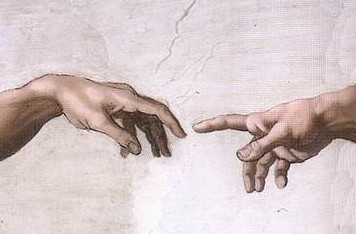
Hands of God & Adam, fingers about to touch, Sistine Chapel ceiling, Vatican, Michelangelo, 1508-1512 (via Wikipedia). In public domain.

The next twenty-four hours will mark a decade and a half since my former dissertation advisor Joe Trotter wrote today’s title quote in a God-like-pronouncement of an email to me regarding my final content-based revisions to my doctoral thesis. With those revisions following my committee meetings in October, I was now officially Dr. Collins. I knew that. I just didn’t feel it.

Working on a book-length research project with an abusive advisor and disinterested committee members at a school as conservative and isolating as Carnegie Mellon University left me exhausted. For I never felt I could ever be all of myself there. I made myself into the scholar I hoped that I wouldn’t become. At least, the twenty-one version of me that began graduate school back in ’91 held that hope. Five years later, I felt alienated from my own purpose and calling, and was more than unsure about becoming a full-time professor and historian. Especially given the wonderful examples of scholarly inhumanity and hypocrisy that Trotter, Dan Resnick and so many others had proven themselves to be (see “You’re Not Ready” post from November ’08 and “And Now, A Plagiarism Moment” post from September ’10).

I was burned out. I felt numb, with a boiling mantle of rage underneath the surface. If Trotter had said the

Arching fountain of a Pahoehoe (like my post-PhD rage) approximately 10 m high issuing from the western end of the 0740 vents, a series of spatter cones 170 m long, south of Pu‘u Kahaualea, September 10, 2007. (USGS via Wikipedia). In public domain.

wrong thing to me at the wrong time in ’96, I probably would’ve laid him out with a right hook to the jaw. And Resnick’s lucky that I didn’t own a car, because I might’ve run him down with it.

As it was, when Trotter attempted to meet with me a few weeks later to discuss “my future,” I refused. Especially given his suggestions for job applications. One, a one-year position at a University of Nebraska branch campus. The other, a CUNY school in Queens with a proposed position that wouldn’t begin until July ’98. I told him, “You don’t get to determine my future, certainly not without me.”

What should’ve been a period of rest and repair between Thanksgiving Week ’96 and graduation day in May ’97 was hardly that at all. It took me, really and truly, six months to recover from the dissertation process, and probably close to two years to not pass by or go on Carnegie Mellon’s campus without wanting to strangle my dissertation committee with piano wire. By then, I’d moved on to the rather mundane task of figuring out how to cobble together a career that wasn’t dependent on a full-time faculty position in academia.

And over the past fifteen years, I have pieced together several careers. As a part-time college professor, as a nonprofit program officer and as a consultant. It helped to have people like the late Barbara Lazarus and my dear friend Cath Lugg in my corner in those first years after I’d finished my doctorate. It helped that I expanded my career options from merely pursuing a history professorship wherever Joe Trotter’s winds could’ve taken me.

But it helped, most of all, for me to start trusting my instincts, my own heart, again. The irony of my complete disillusionment at the end of my degree-earning journey was that it left me with the time to contemplate whom I thought I really was, what I really wanted to do in life, and how I wanted to do it.

It was far from an immediate process of epiphanies and revelation. It took me nearly six years after finishing my dissertation to see myself as a writer, cutting through twenty years of denial and abuse in the process. It took me a little longer to see myself as a writer first and foremost, with all of my other professional hats second, third, and so forth. To understand that mine was a concern far greater than multiculturalism in education. My role as a writer and educator was also about aspirations, academic pathways to success, racial and ethnic equity in education, access to and success in college.

Barbara Sizemore, 1927-2004, circa mid-1990s. (http://sesp.northwestern.edu).

Now, that doesn’t mean that I haven’t looked back to wonder what could’ve been. If I were a White male with my credentials, I’d long ago been doing what I’ve been fighting to do as a writer and educator for years. If my advisors had been someone like a Cornel West or Henry Louis Gates. Or if I had attended an Ivy League school in undergrad. Or if I’d earned a master’s degree in journalism or communications, or a doctorate in a school of education or in psychology.

The late Barbara Sizemore once warned me about earning my doctorate in history some two decades ago. “You always have to do things the hard way, don’t you?,” she said to me with disapproval when she learned of my acceptance into Pitt’s history PhD program. I should’ve said, “Yes, I do.” Because the last fifteen years have been a hard road, as all roads to enlightenment are.

The Audacity of Youth, Grad School Style

06 Saturday Aug 2011

Posted by decollins1969 in 1, Academia, Boy @ The Window, Eclectic, Youth

≈ Leave a comment

Tags

Audacity, Black Washington, Bruce Anthony Jones, Calling, Career, Career Options, Carnegie Mellon University, Certfication, Dan Resnick, Dissertation, Doctoral Thesis, Experience, Fudging Data, History, Joe Trotter, Joe William Trotter Jr., Multiculturalism, Naivete, Pittsburgh, Proletarianization Thesis, Teacher Education, Thesis, Wisdom, Youth


Me as Naruto, the ultimate hollerer, Noah's 7th birthday, July 30, 2010. (Source/Donald Earl Collins)

This weekend should be of significance to me. Actually it should be of more significance than anything else I’ve done professionally in the fifteen years since. For this was the weekend that I decided I was “Dr. Collins,” three and a half months before actually becoming Dr. Collins.

I was in the middle of a tumultuous time, caught between Joe Trotter and five years of graduate school, the last three of which had been at Carnegie Mellon. I had just finished revising my first draft of my dissertation, adding thirty pages to an already hefty 475-page manuscript. Me and Trotter hadn’t been getting along for four months, and after two months with my first draft, I’d received a response in mid-July that was disheartening.

Most of my dissertation, examining how multiculturalism was lived intellectually, educationally and culturally in Black Washington, DC, received no comment whatsoever. The chapters on the development of

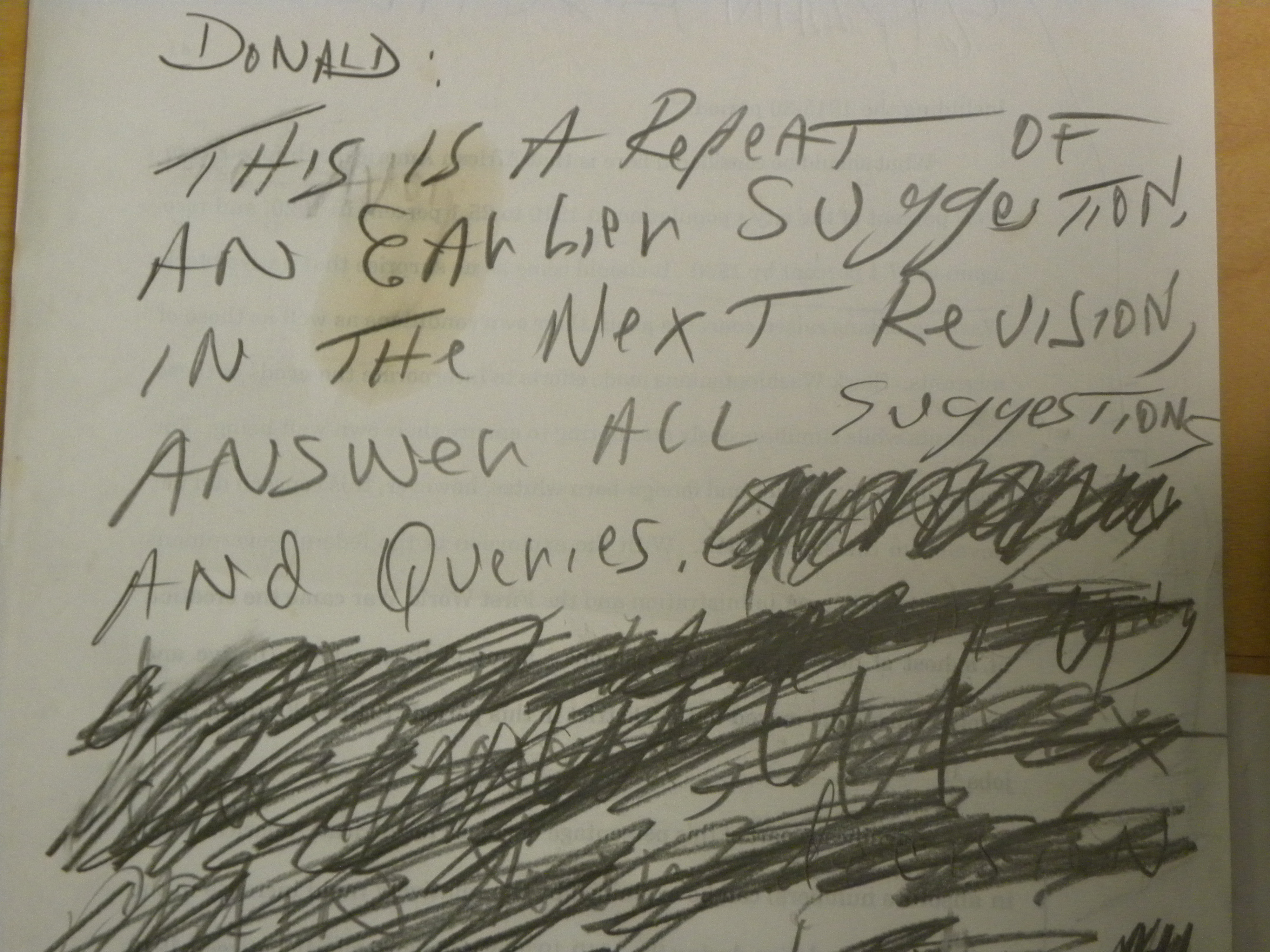
Trotter comments, back of page 43 of first dissertation draft, July 15, 1996. Pic taken August 6, 2011. (Source/Donald Earl Collins)

the Black community in DC, particularly in the period immediately before the 1930-1960 period, had received lots of snarky comments. Like “I told you to change this already,” or “This is the third time I commented on this section,” or “Make these suggested revisions on…already,” handwritten in pencil, big, bold and rushed, as if he wanted to stab me in the neck with the pencil. Comments on writing, evidence, to sharpen analysis of my multiculturalism argument, I expected. What I, naive little me, didn’t expect was a series of comments about data and information that, quite frankly, was irrelevant.

After talking with a couple of professors who weren’t on my dissertation committee — including one whom himself had been Trotter’s advisor back in the ’70s — I finally figured out what had been eating at the man ever since I began handing him chapters. It wasn’t as if Trotter’s comments were transparent in what he wanted me to revise. He wanted me to put together a proletarianization argument for DC. Bottom line was, he was pissed with me because I had written that the Great Migration period (1910-1930) of Blacks leaving the rural South for the industrial, urban North had little effect on DC, a truly Southern city at the time.

I was incensed when I finally figured out why Trotter had been giving me a hard time since last fall and especially since April. It made me think that maybe earning a doctorate in history — especially with him as the head of my committee, along with Dan Resnick and an increasingly distant Bruce Anthony Jones — wasn’t worth it. I thought that if I had to go through another year of this, that I’d drop out of the program.

But I’d only do that after giving the revisions one more shot. I addressed every — and I mean every — comment I had from Trotter by email or written out across a page, and then documented every change in a six-page memo of my revisions. I even went so far as to rhetorically fudge the Great Migration period data, just to see how Trotter would respond. On page 100 of my dissertation, I wrote, “For Washington, a slight acceleration in black migration occurred between 1915 and 1930.” That was an obfuscation, for Blacks migration didn’t “accelerate” until the 1930s, after a twenty-year period of limited migration that only added 20,000 to a Black population of more than a 100,000. Trotter actually praised this revision.

I made a deal with myself to quit after another year if this revision didn’t work out. After receiving a response that only required four minor revisions, Trotter made an attempt to remove the one professor I did have in my corner from my committee in Bruce Jones, using Jones’ recent acceptance of a position at the University of Missouri as an excuse. From that weekend in August ’96 until the week before Thanksgiving, everything about my doctorate became a battle with Trotter.

In a way, I guess I was lucky it did work out. But now, as I did then, I wonder if it was really worth it, to fight as hard as I did for that degree. Would I be a better writer, a better educator, if I had dropped out of the program, gone back to school, and become a high school history or social studies teacher? At least my employment status would’ve been much more stable between ’96 and ’99 if I had, and I’d have an additional career option now.

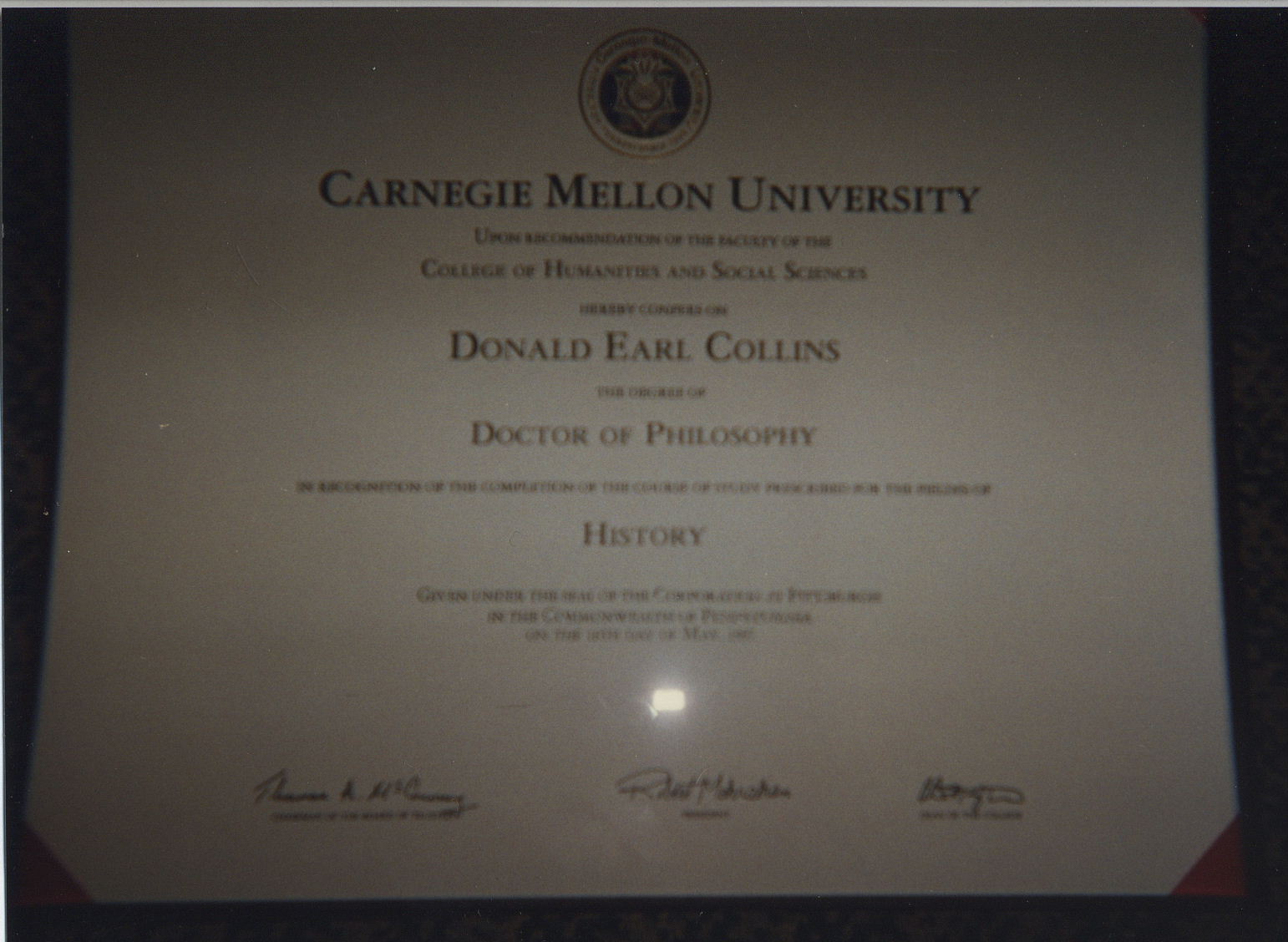
PhD Graduation - CMU Diploma, May 21, 1997. (Source/Donald Earl Collins)

Even now, thinking about what happened a decade and a half ago makes me clench my teeth, not with anger, but more with a sense of dread and latent rage. What I and at least two other male students went through (as I’d learn later on) was patently unfair. Still, I realize that while I’ve long since forgiven Trotter for his misdeeds, I can’t help but think that professionally, he aged me in my last year in graduate school. The sense of security I felt about my professional future back then was gone, and I don’t think I’ve felt that certain, that youthful, since.

I do know this. That that youthful, if somewhat naive, twenty-six year-old still resides in me. But with the mind of a forty-one year-old man, I can use both wisdom and experience to say that I wouldn’t go through that again. I’d either would’ve gone to law school or a school of education, maybe even with a focus on ed foundations and ed policy. As it is, between Boy @ The Window and my recent articles, that’s really what I’m most intellectually passionate about these days anyway.

I may be Dr. Collins or  Professor Collins, maybe for the rest of my life. But really, I’d be happiest as Donald Earl Collins, the author, educator and troublemaker I believe with all my heart I am and I will always be.

Running Interference

04 Monday Apr 2011

Posted by decollins1969 in 1, Academia, Boy @ The Window, Carnegie Mellon University, culture, Eclectic, race

≈ Leave a comment

Tags

Academia, Academic Suicide, Advising, Advisor, April 4th, Bad Mentoring, CMU, David Montgomery, Dissertation, Doctoral Thesis, Joe Trotter, Joe William Trotter Jr., Manning Marable, Mentoring, Michael Nettles, MLK Assassination, Spencer Foundation Dissertation Fellowship Program


Joe Trotter, circa 2008.

Joe Trotter, circa 2008.

Today is the forty-third anniversary of Martin Luther King’s assassination by James Earl Ray in Memphis, Tennessee. But for the past fifteen years, April 4th has also had the dubious distinction of reminding me of a big argument between me and Joe Trotter. He was my doctoral thesis advisor at Carnegie Mellon and, until that day, someone I considered a mentor in my becoming an academic historian.

Below is an excerpt from my book Fear of a “Black” America (with some minor additions) in which I recount what happened that day:

‘I’m looking out for your best interests’ was what my dissertation advisor typically said in discussing my future with me. As far as Trotter was concerned, he was in charge of the rest of my academic career, determining everything from whether I would finish my doctorate to where I would live and work after I graduated. But as I’d already discovered in the months leading to this moment, he was not nurturing my career at all. Virtually all of my achievements as a graduate student occurred despite my advisor rather than because of him.

This was because my advisor discouraged my attempts to publish, to obtain grants for my research, to participate in major conferences, and to apply for jobs when it was apparent I had nearly completed my doctoral thesis. My advisor would frequently say ‘You’re not ready’ to take on a particular project or to apply for a grant or job to hinder my efforts. Yet Trotter never pointed out what he thought I needed to do to be “ready.”

One of our last official meetings as advisor and student covered this particular issue. Six chapters into an eight-chapter dissertation, I was still being told that I was ‘not ready’ to apply for jobs or to attend major conferences. Trotter had in fact contradicted some of what he had said about my work in a previous meeting. So when he declared for the eighteenth time in this particular meeting that he was not giving me his support because he was ‘looking out for my best interests,’ I sarcastically replied ‘Yeah, right! I don’t believe you!’ I decided that I could not abide the hypocrisy of an advisor who cared little for my future while at the same time professing to care very deeply.”

There was an eerie silence. Trotter actually didn’t know what to say. Neither did I. Mostly because I wanted to strangle him with his own blue neck tie. So I did something less dramatic but far more legal. I said, “I don’t have anything else to say to you,” picked up my stuff, walked out his heavy dark wood door, and slammed it as hard as I could. “Stupid ass,” I said under my breath as I walked out of Baker Hall that day. I was talking about myself as much as I was talking about Trotter.

For any academic scholar who reads this, they’ll likely conclude that I committed academic suicide by exhibiting such defiance to my advisor that day. Not true — I have a doctorate and years teaching in academia to prove otherwise. Not having the support of an advisor — whether that support’s official or in the reality of a friendship or a mentorship — does make building a career harder. But given what I’d learned about Trotter’s lack of support for a Spencer Fellowship that I ended up receiving as an award anyway, despite him, I knew that even if everything had been okay, it wouldn’t have been after graduation.

The reality is that my former advisor and thousands like him commit a form of academic suicide every day by refusing to promote at least one student’s career development. Besides having one’s work published and obtaining grants, developing new talent is key to creating a legacy as a successful professor. It’s why I can go to any history conference and hear stories about David Montgomery, or to an education conference and hear folks discuss their wonderful mentoring relationships with Michael Nettles. Or why so many responded across all of the social networks after learning that Manning Marable had passed away on Friday, April 1st.

I’m not holding these examples up because these professors were saints. Hardly. Just pointing out the fact that when a professor maliciously and deliberately attempts to hold back students otherwise deserving of moving on out of jealousy or some other reason, it puts a pox on their house as well.

Letter of Recommendation (or Wreck-o-mendation)

23 Thursday Sep 2010

Posted by decollins1969 in 1, Academia, Boy @ The Window, Eclectic, Mount Vernon High School

≈ Leave a comment

Tags

Academia, Carnegie Mellon University, Dan Resnick, Daniel P. Resnick, George Reid Andrews, Joe Trotter, Joe William Trotter Jr., Letters of Recommendation, Pittsburgh, Race, References, Sy Drescher, Transparency, University of Pittsburgh


George Reid Andrews, University of Pittsburgh

About a year and a half ago, I wrote about a string of not-so-wonderful professors I had at Pitt and Carnegie Mellon who were less than fine with me pursuing anything beyond a bachelor’s degrees, much less with me becoming Dr. Collins. I talked about how some of them went so far as to tell me that I wasn’t “graduate material,” as if I were made from parts found at a junk yard instead of in the shop of an Italian tailor.

I’m more than aware of the fact that I didn’t let those doubters stop me from becoming who I am today. Some were undoubtedly ones whose skepticism bordered on racist because of their assumptions about my intelligence and writing ability. Still, it should be noted that there are pitfalls to be avoided, if at all possible, when you’re applying for a job or applying to a college or graduate and professional school.

One, even if a professor or teacher has assigned an A for your performance in one of their courses, that doesn’t mean that think that you’re a great student. I learned that the hard way with George Reid Andrews, my professor for Latin American Revolutions my junior year at Pitt. Twenty years ago this week, I asked him for letters of recommendation for graduate school. Andrews agreed, but only to tell me seven months later what he really thought of my work. My research writing samples were “problematic,” my GRE scores were “barely adequate,” and I should’ve considered myself “lucky” just to get into the master’s program in the history department. That terse conversation told me that Andrews’ letter was lukewarm at best, or had found me seriously deficient at worst.

Two, and related to my interactions with Andrews, the process of providing a letter of recommendation or a reference ought to be transparent, so that the student or employee can be confident that they’re not being back-stabbed by the same people in which they’re placing significant trust. It was never a question I dared asked — to see my letter of recommendation — before I’d reached the final stages of grad school.

It would’ve helped with Andrews, and it would’ve helped with two of my three dissertation committee members, Joe Trotter and Dan Resnick. I found out through my Spencer Fellowship that Trotter had written me a lukewarm letter, while Resnick had rambled on and on about my “close relationship” with my “mentor Sy Drescher,” who had played “an instrumental role” in making me a scholar. Drescher, while one of my best professors at Pitt, played much less of a role in me pursuing grad school than so many other professors and students, including his former student Paul Riggs. It was a Leslie Stahl, “let’s give the poor Black boy a hand” kind of letter.

Later, when I asked to see my letters of recommendation from Resnick before sending them out for jobs, he went on for ten minutes about the “sanctity” of the recommendation process, about how privacy and “anonymity” were critical to provide protection for all parties involved. Needless to say, if someone blusters about privacy when politely asked about a letter of recommendation they’re writing for you, do not use that letter!

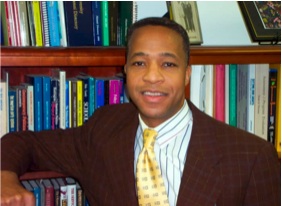
Bruce Anthony Jones, University of South Florida

Three, it’s important to get to know a person, to gain some sense of trust from them, before asking for a letter or a reference. You don’t have to become friends with them or meet their family — although that does help. They just have to know that their recommendation or reference will be put to good use by you and that what they say about you matters to both of you, in the most positive light possible. Otherwise, what’s the point of writing a letter or spending fifteen minutes on the phone talking about your qualities as a student or worker, right? This can go a bit too far, of course, as I wrote one of my own recommendations for Bruce Anthony Jones, another dissertation committee member, for him to merely put his signature to. Once he changed jobs for the University of Missouri-Columbia, his, um, my letter became worthless, if it had been worth anything at all to begin with.

I’ve written about two dozen letters of recommendation for high school, college and graduate students, for jobs, school applications and fellowship programs. Not to mention about an equal number of recommendations and references for professional colleagues and friends in academia and the nonprofit world. I’ve always written my own letters, insisted on them being seen by the people I’ve recommended and required that they explain their own rationale for their acceptance in the process. Most importantly, I’ve made sure to say “No” if I didn’t feel I could recommend them well or provide a great reference.

Outrage, Maybe

18 Tuesday May 2010

Posted by decollins1969 in 1, Academia, Eclectic

≈ Leave a comment

Tags

Academia, Carnegie Mellon University, Graduate School, Joe William Trotter Jr., Outrage (HBO 2009), Power, Race


Today’s date makes it thirteen years since I marched in my polyester cap and gown in a hot and humid tent on Carnegie Mellon’s campus to receive my doctorate. It should’ve been a great day, but it was a bittersweet one. For it revealed far more about my mother’s imperfections and jealousies than I ever wanted to know (see “My Post-Doctoral Life” post from May 18, ’08). That was sad, and remains one of the worst times in my life. Not just because of my relationship with my mother since then. Because, as a result of her actions, I never did get the chance to properly accept my degree in an individual department ceremony, in front of my closest peers, my former professors, and especially my dreaded advisor, Joe Trotter.

Outrage Poster (HBO, 2009)

About two months ago, I saw the documentary (finally) Outrage on HBO. Outrage, for those of you who haven’t watched, is the story about powerful Washington politicians and operatives, ones who’ve used their power to discriminate against gays and lesbians, really the whole LGBT community. Ones whom themselves are gay, deep in the closet, but gay. Ones whom folks like Michael Rogers have made a point of exposing their hypocrisy by outing them. Everyone from Ed Koch — which explained a lot to me, seeing as I found the former mayor of New York from ’77 to ’89 an enigma while I was growing up — to Larry Craig and Florida Governor Charlie Crist was in the film.

It was a good film, and a revelation to me. The lengths to which people in powerful position and places will go to protect their secrets, their power, by destroying others if necessary. It’s safe to say that this is how I see my former advisor as well. I’m not suggesting that Joe Trotter is gay or in the closet, for I have no evidence of this (or of his heterosexuality, for that matter!). But, the film helped me realize that a person doesn’t have to have a secret of the magnitude of being gay in a homophobic society to be a hypocrite. Being Black on a historically anti-Black campus like Carnegie Mellon could just as easily do the trick.

It may be impossible for my former advisor to hide his skin color, but boy did he try to get me to hide my Blackness by doing what he called “running interference” on me on multiple occasions. He tried to forbid me from doing conference presentations, at AERA and on the 40th anniversary of Brown v. Board of Education at the University of Georgia. From sending drafts of articles to the Journal of American History and other scholarly publications. Trotter practically blew his shiny-headed top when he found out

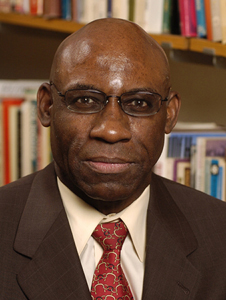
Professor Joe William Trotter, Jr. (circa 2008)

about my feature piece (done with my friend Marc) in Black Issues in Higher Education back in ’93. There was something there with Trotter that I didn’t take the time to piece together when I was his student, as I was too busy trying to get out of there as fast as I could.

Yet, there are signs that Trotter was “in the closet” about something, be it race, jealousy, sexual orientation, maybe even a rough upbringing. At least two other male students, one who graduated a year ahead of me, the other who never finished his dissertation, who had problems with Trotter, personality conflicts, confounding issues that went unexplained. Even when each of us took into account Trotter wanting his “proletarianization hypothesis” in our doctoral dissertations.

Whatever it was, it was enough where he all but refused to help any of us — male or female — find work or  get postdoctoral fellowships, even after finishing our doctorates. What a hypocrite! His thirty years of scholarship have been all about recognizing the active role ordinary Blacks played in shaping their lives and communities, despite racism and violence. His role with me and other students was in opposition to his own research, at least during my time there.

If I’d had the chance to speak at the individual ceremony thirteen years ago, especially after watching something like Outrage, I’d have said the following. That as much as liked working with my advisor at the beginning of our four years of working together, that I always felt uneasy about his guidance. That there was always a sense that I hadn’t fulfilled my end of the bargain, that I hadn’t met my half of the quid pro quo. And that because I was a late-bloomer in many respects, sex included, I couldn’t fully understand what he really expected of me beyond my academic work. It’s too bad he didn’t come out and say whatever it was he wanted from me, it would’ve made both of our times working with each other easier. Too bad, for in the end, it was his loss, of a friend and potential colleague, not mine.

Newer posts →

Boy @ The Window: A Memoir

Boy @ The Window: A Memoir

Places to Buy/Download Boy @ The Window

There's a few ways in which you can read excerpts of, borrow and/or purchase and download Boy @ The Window. There's the trade paperback edition of Boy @ The Window, available for purchase via Amazon.com at http://www.amazon.com/Boy-Window-Donald-Earl-Collins/dp/0989256138/

There's also a Kindle edition on Amazon.com. The enhanced edition can be read only with Kindle Fire, an iPad or a full-color tablet. The links to the enhanced edition through Apple's iBookstore and the Barnes & Noble NOOK edition are below. The link to the Amazon Kindle version is also immediately below:

scr2555-proj697-a-kindle-logo-rgb-lg

Boy @ The Window on Amazon.com: http://www.amazon.com/Boy-The-Window-Memoir-ebook/dp/B00CD95FBU/

iBookstore-logo-300x100

Boy @ The Window on Apple's iBookstore: https://itunes.apple.com/us/book/boy-the-window/id643768275?ls=1

Barnes & Noble (bn.com) logo, June 26, 2013. (http://www.logotypes101.com).

Boy @ The Window on Barnes & Noble: http://www.barnesandnoble.com/w/boy-the-window-donald-earl-collins/1115182183?ean=2940016741567

You can also add, read and review Boy @ The Window on Goodreads.com. Just click on the button below:

Boy @ The Window

Twitter Updates

Tweets by decollins1969
  • RSS - Posts
  • RSS - Comments

Archives

  • June 2025
  • April 2023
  • September 2022
  • August 2022
  • July 2022
  • June 2022
  • May 2022
  • April 2022
  • March 2022
  • January 2022
  • December 2021
  • November 2021
  • October 2021
  • September 2021
  • August 2021
  • July 2021
  • June 2021
  • April 2021
  • March 2021
  • February 2021
  • January 2021
  • December 2020
  • November 2020
  • October 2020
  • September 2020
  • August 2020
  • July 2020
  • May 2020
  • April 2020
  • March 2020
  • January 2020
  • December 2019
  • November 2019
  • August 2019
  • July 2019
  • June 2019
  • May 2019
  • April 2019
  • March 2019
  • February 2019
  • January 2019
  • December 2018
  • November 2018
  • October 2018
  • September 2018
  • August 2018
  • July 2018
  • June 2018
  • May 2018
  • March 2018
  • February 2018
  • January 2018
  • December 2017
  • November 2017
  • October 2017
  • September 2017
  • August 2017
  • July 2017
  • June 2017
  • May 2017
  • April 2017
  • March 2017
  • February 2017
  • January 2017
  • December 2016
  • November 2016
  • October 2016
  • September 2016
  • August 2016
  • July 2016
  • June 2016
  • May 2016
  • April 2016
  • March 2016
  • February 2016
  • January 2016
  • December 2015
  • November 2015
  • October 2015
  • September 2015
  • August 2015
  • July 2015
  • June 2015
  • May 2015
  • April 2015
  • March 2015
  • February 2015
  • January 2015
  • December 2014
  • November 2014
  • October 2014
  • September 2014
  • August 2014
  • July 2014
  • June 2014
  • May 2014
  • April 2014
  • March 2014
  • February 2014
  • January 2014
  • December 2013
  • November 2013
  • October 2013
  • September 2013
  • August 2013
  • July 2013
  • June 2013
  • May 2013
  • April 2013
  • March 2013
  • February 2013
  • January 2013
  • December 2012
  • November 2012
  • October 2012
  • September 2012
  • August 2012
  • July 2012
  • June 2012
  • May 2012
  • April 2012
  • March 2012
  • February 2012
  • January 2012
  • December 2011
  • November 2011
  • October 2011
  • September 2011
  • August 2011
  • July 2011
  • June 2011
  • May 2011
  • April 2011
  • March 2011
  • February 2011
  • January 2011
  • December 2010
  • November 2010
  • October 2010
  • September 2010
  • August 2010
  • July 2010
  • June 2010
  • May 2010
  • April 2010
  • March 2010
  • February 2010
  • January 2010
  • December 2009
  • November 2009
  • October 2009
  • September 2009
  • August 2009
  • July 2009
  • June 2009
  • May 2009
  • April 2009
  • March 2009
  • February 2009
  • January 2009
  • December 2008
  • November 2008
  • October 2008
  • September 2008
  • August 2008
  • July 2008
  • June 2008
  • May 2008
  • April 2008
  • March 2008
  • February 2008
  • January 2008
  • December 2007
  • November 2007
  • October 2007
  • September 2007
  • August 2007
  • July 2007
  • June 2007

Recent Comments

MaryPena's avatarMaryPena on My Day of Atonement/Bitter Hat…
decollins1969's avatardecollins1969 on No Good Teaching Deed Goes…
Mary Rose O’Connell's avatarMary Rose O’Connell on No Good Teaching Deed Goes…

NetworkedBlogs on Facebook

NetworkedBlogs
Blog:
Notes From a Boy @ The Window
Topics:
My Life, Culture & Education, Politics & Goofyness
 
Follow my blog

616 616 East Lincoln Avenue A.B. Davis Middle School Abuse Academia Academy for Educational Development AED Afrocentricity American Narcissism Authenticity Bigotry Blackness Boy @ The Window Carnegie Mellon University Child Abuse Class of 1987 CMU Coping Strategies Crush #1 Crush #2 Death Disillusionment Diversity Domestic Violence Economic Inequality Education Family Friendship Friendships Graduate School Hebrew-Israelites High-Stakes Testing Higher Education History Homelessness Humanities Humanities Program Hypocrisy Internalized Racism Jealousy Joe Trotter Joe William Trotter Jr. K-12 Education Love Manhood Maurice Eugene Washington Maurice Washington Misogyny Mother-Son Relationship Mount Vernon High School Mount Vernon New York Mount Vernon public schools Multiculturalism MVHS Narcissism NFL Pitt Pittsburgh Politics of Education Poverty President Barack Obama Race Racial Stereotypes Racism Relationships Self-Awareness Self-Discovery Self-Reflection Sexism Social Justice Teaching and Learning University of Pittsburgh Violence Whiteness Writing

Top Rated

Blog at WordPress.com.

  • Subscribe Subscribed
    • Notes from a Boy @ The Window
    • Join 103 other subscribers
    • Already have a WordPress.com account? Log in now.
    • Notes from a Boy @ The Window
    • Subscribe Subscribed
    • Sign up
    • Log in
    • Report this content
    • View site in Reader
    • Manage subscriptions
    • Collapse this bar
 

Loading Comments...