• About Me
  • Other Writings
  • Interview Clips
  • All About Me: American Racism, American Narcissism, and the Conversation America Can’t Have
  • Video Clips
  • Boy @ The Window Pictures
  • Boy @ The Window Theme Music

Notes from a Boy @ The Window

~

Notes from a Boy @ The Window

Tag Archives: Carnegie Mellon University

Know Food, Know The World

04 Saturday Jun 2011

Posted by decollins1969 in 1, Academia, culture, Eclectic, Mount Vernon High School, race, Religion

≈ Leave a comment

Tags

Carnegie Mellon University, Commodities, Conflict, Cooperation, Exploitation, Food, Ingredients, Jared Diamond, Peter Stearns, Recipes, Resources, Teaching, Teaching and Learning, University of Maryland University College, World History


Chocolate Cake, Vanilla Icing, 2011. Source: http://www.tastebook.com

I don’t really dedicate much of my blogging to what I do these days, my college teaching work. I guess that I kick up enough dust talking about my Mount Vernon years, my Humanities years, my Carnegie Mellon years, and my former jobs and bosses as it is.

But this is a fairly positive post (mostly, anyway). It about something that I learned recently while teaching one of my World History courses. Something so simple that it’s amazing sometimes how stupid I can be.

I realized one day in discussing the age of exploitation, um, well, exploration that one of the best ways to think about this period — heck, any period in world history, really — begins and ends with one word: food. I’d taught this course a couple of times for University of Maryland University College already. Not to mention having served as a teaching assistant under the great Peter Stearns while a grad student at Carnegie Mellon a decade and a half before (see my “Ego Inflation” post from last month).
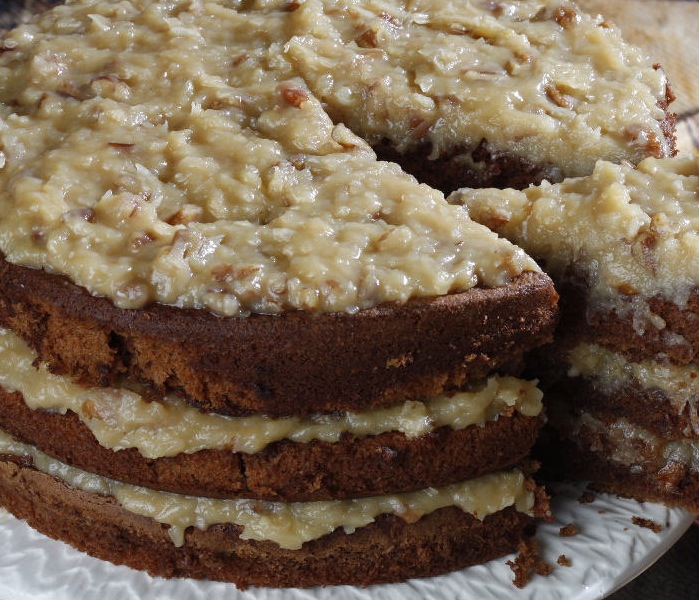
German Chocolate Cake, 2011. Source:http://blogs.courier-journal.com. Meet a cake that was never German, but named by an English guy. And, since when do coconuts grow in Europe or the US?

But on that fall evening in ’09, looking at exploration patterns, commerce patterns and the state of the world circa 1600 CE, it hit me how I could just about reorganize every aspect of the way I’d been teaching World History by just looking at how much food has influenced it. Every bite we take, everything we imbibe, has some history attached to it, and with it, stories of bloody conflict, imperial conquest or rare attempts at true humanity and cooperation.

This is about much more than Jared Diamond’s books on the rise and fall of civilizations because of resources and the lack thereof. Commodities like salt, sugar, black pepper and olive oil have all been written about over the past fifteen years. It’s fairly obvious that these spices and other foodstuffs were fundamental in the histories of the Middle East, ancient Greece and Rome, India, Timbuktu and Western Europe over the past 5,000 years.

Still, I’m not really talking about that kind of history, either. It’s more about something as simple as taking a modern dish and using its ingredients to tell a story. Take something like a chocolate cake with vanilla icing. If the ingredients are natural and not ones cooked up at a chemical plant in northern New Jersey, then they’ve come from all over the world. Cocoa, the main ingredient to mix with the flour, is from the cacao plant, which originally from South America, but is primarily produced in sub-Saharan Africa. Sugar’s needed to sweeten it, and though originally from India, has been grown in Florida, Louisiana and in the Caribbean for centuries. One of the main economic drivers for the enslavement of Africans was the European need to rot out their teeth with the stuff.

Vanilla extract or vanilla beans are originally from Mexico and other parts of Central America. But the largest producers of it are Indonesia and especially Madagascar. There’s history in every gram of devil’s food cake with vanilla icing that we eat.

You could do the same thing with a “traditional” Chinese stir-fry. Especially if ingredients like baby corn or

Sweet-and-sour-chicken, 2011. Source: http://www.foodnetwork.com

sweet and sour sauce are added to the mix. That’s because baby corn and tomatoes (the latter the main ingredient in sweet and sour sauce) are both from the Americas, not Asia or Europe. Both arrived in Ming China nearly 500 years ago.

Every dish, whether invented in 2011 CE or 2011 BCE, has a rich story attached to it. From that story, we can all find important patterns in world history, cultural development, domination and destruction within. It may not be the most profound thing I’ve ever stumbled upon. Still, I didn’t get this from Peter Stearns or Jared Diamond. If anything, I might’ve gotten this from Forrest Gump.


Black Male Id-entity & the F-Bomb

26 Thursday May 2011

Posted by decollins1969 in 1, Boy @ The Window, culture, Eclectic, Politics, Pop Culture, race, Youth

≈ Leave a comment

Tags

616, 616 East Lincoln Avenue, Anti-Gay Slur, Authenticity, Basketball, Basketball Courts, Bigotry, Black Males, Carnegie Mellon University, Context, Coolness, F-Bomb, F-word, Faggot, Heterosexism, Homophobia, Joakim Noah, Kobe Bryant, Michael Wilbon, Mount Vernon New York, Nathan Hale Elementary, NBA, Nigga, Pitt, Pittsburgh, Playgrounds, Sean Miller, Toure X, Twitter, University of Pittsburgh, Washington DC, Words


Joakim Noah Apparently Says ‘F–k You Faggot’ To Fan (VIDEO)

Joakim Noah Apparently Says ‘F–k You Faggot’ To Fan (VIDEO)

Gay Rights Month isn’t for another six days, as it’s still May. But in light of Joakim Noah’s unfortunate anti-gay slur outburst, “Fuck you, faggot!,” it makes sense to start this year’s conversation a week early.

This is more than about the NBA, gay athletes in the closet or what professional athletes should and shouldn’t say to fans and to each other. The behind-the-curtain issue here could just as well be about Black male identity (whether heterosexual or gay) and how Black males express themselves to each other and to the rest of the world.

My first memories playing with a group of Black males in Mount Vernon, New York are all negative. When I was six in ’76, a group of preteens on the neighborhood playground near Nathan Hale Elementary on South 6th Avenue tried to force me into sucking one of their dicks, practically sticking it in my face to do so. I got away before being truly scarred for life. After we moved to 616 East Lincoln Avenue in April ’77, our first time playing outside was spent running away from the other kids, who greeted us by throwing rocks at us and calling me and my brother Darren “faggots.” (see my June 1, 2009 post, “In the Closet, On the Down Low” for more).

When I was nine, I played basketball on a court near 616 for the first time with a group of kids from my building. After throwing up an awkward brick and an air ball, I got five minutes of “You terrible!,” “You need to sit down!,” “You’re never gonna be an athlete!,” “You need to get back to reading them books of yours!,” and “You shoot like a faggot!”

Even though I eventually learned how to dribble with both hands, shoot a j, make layups, block shots, and on rare occasions, dunk a basketball, I’ve been leery being around other Black males on the basketball court. One would think after playing pickup with former Pitt basketball players while in grad school that I’d completely forgotten what happened to me back in the spring of ’79. But I hadn’t, at least on an unconscious level. I often watched what I said, I mean, down to every single word. Not to mention how I walked, where my arms were, and how I held my head. Still, I sometimes felt inadequate on the court, whether I went 8-for-9 or 2-for-7, blocked a shot, stole a ball, or got knocked down guarding someone six-foot-six and 260 pounds.

But I figured out something in those years of playing pickup at Pitt and Carnegie Mellon and other places in Pittsburgh and DC over the years. That blending in doesn’t matter. Fools — even ones with momentary lapses in judgment like Joakim Noah — will be fools because on the playground or court, it makes them cool in the minds of their peers.

Yes, this isn’t just a Black male issue. Sean Miller, currently coach of the University of Arizona men’s basketball team — not to mention an all-time Pitt basketball great — once played a prank on me our freshmen year. He called me up in my Lothrop Hall dorm room late one night, offered me a blow job, and called me a “faggot” in the process.  So being called a “faggot” or saying that something or someone is “gay” is part of our culture on and off the basketball court, for Black and White males to be sure.

But unlike Michael Wilbon, I can’t excuse it because it’s commonplace and therefore it may be difficult for some young men to immediately stop themselves from saying “faggot.” Nor can I rationalize this like Touré (a.k.a. TouréX on Twitter) attempted to do in a Twitter exchange with me a couple of days ago. He compared the use of “faggot” to “nigga,” with the idea that both words have more than one meaning and that the meaning can sometimes be positive, depending on context.

I can see the argument for “nigga,” even though I don’t like it when younger men use it to affirm each other and especially me. But “faggot” meaning “less than a man?” Or “stupid” or “dumb?” So is Noah or Kobe more of a man for telling someone else they’re not a man? Even in context, this isn’t positive — it’s potentially soul-destroying, and not just for someone being called a faggot.

Of the preteens and young boys who called me “faggot” growing up, at least three have served hard time. Is there a direct connection? Of course not. Still, it seems that a culture steeped in the requirement of being cool, finding quick and easy success and putting down others while doing so lends itself well to a crash-and-burn mentality that so many of us have about our lives.

Ego Inflation

18 Wednesday May 2011

Posted by decollins1969 in 1, Academia, Boy @ The Window, culture, Eclectic, Politics, race

≈ 2 Comments

Tags

A Room With A View, Academia, Academic Politics, Carnegie Mellon University, College of Humanities & Social Sciences, Denholm Elliott, Dune, Ego Inflation, Egocentrism, Elite Institution, Elitist Institutions, George Mason University, Grade Inflation, Jace Nance, Mercurial, Napoleonic Complex, Nefud, Peter N. Stearns, Peter Stearns, PhD Graduation, Provost, Race, World History, World Stereotypes


My PhD Graduation, Thackeray Club, Pittsburgh, PA, May 18, 1997. Angelia N. Levy

May 18th. Another year, fourteen years now, in fact. I’ve been Dr. Collins to my students and the world of academia officially for that long. I’ve learned a lot of lessons about the values and limits of having a doctorate in history over the course of the past decade and a half. One of them is how easily egos are inflated by it. And everything else gets inflated in the process of having an ego that could challenge the Himalayas for supremacy.

One of the more stunning and thoughtful moments I had during the graduation ceremony at Carnegie Mellon on that hot and sticky Sunday in ’97 — besides the dreadful realization that my own mother was jealous of me — was shaking Peter Stearns‘ hand on stage. The Napoleonic red-and-white-haired Stearns — currently the university provost at George Mason — was the Dean of Humanities & Social Sciences at

Provost Peter N. Stearns, George Mason University, 2008. Source: http://provost.gmu.edu.

Carnegie Mellon at the time. Having to touch his rough yet clammy right hand as they read off the names of the doctorates that afternoon brought back quite a few not-so-pleasant memories of why I found Carnegie Mellon a terrible elitist (as opposed to elite) school to attend for four years.

I’d most recently co-presented with Stearns on how to successfully finish a doctorate that March, which wasn’t so unpleasant. Except for the fact that most of his presentation was off-the-cuff ego-stroking. Except that the lessons learned from writing a dissertation in six weeks in ’64 were mostly irrelevant to the students in front of us that day. Except that I already knew that Stearns was equally polite and dismissive of my presentation by proxy.

Too bad hand sanitizers — or as my son Noah calls them, hanitizers — were in their infancy in ’97. For as I shook Stearns’ hand, the memory that crept to the fore was my other experience working with the man, when I was a teaching assistant for two sections of his world-famous World Stereotypes, oops, World History course in the fall of ’94. He spent lecture after lecture entertaining mostly White college freshman with dirty jokes about beer and sex in covering World History Plato-to-NATO style. I spent most of my teaching time attempting to refocus my group of students away from stereotyping South Asian women as “demur” and Arab men as horn dogs.

Then the end of that semester came, and I turned in all of my grades. I had a few students with D’s and F’s because they had failed their exams, or hadn’t shown up for class really, or both. One of those students was a White male freshman who’d only been to class twice, had failed one exam and barely passed his final. I received an email from Stearns two days before the end of the semester ordering me to change the student’s grade from an F to a C. The reason: “[h]e’s a good kid…he showed up for a couple of my sections…” [emphasis added]. I send an email back that basically read, “So?” Stearns repeated his order to change the grade, in person, which meant that I needed to change the grades of five other students so that their grades weren’t worse than the student that Stearns had coddled.

It was the one and only time I found myself inflating grades. That exchange confirmed so much that I heard and suspected about the father of college-level World History. Stearns was mercurial, egotistical and played favorites, who somehow were usually White and often male. I knew of at least one former grad student who’d all but been blackballed from finding academic jobs because of him. I also knew that he arbitrarily provided vastly different pay levels to grad students and instructors when he was the history department chair.

Denholm Elliott in A Room With A View, 1985. Source: http://content8.flixster.com/photo/13/52/75/13527526_gal.jpg

When my future wife first saw Stearns in ’96 at some history department conference in which my then advisor Joe Trotter forced me to do a presentation, she said that the five-foot-four man looked like the late British actor Denholm Elliott, especially from the movie A Room With A View (1985). That’s really an insult to Elliott. A better comparison would be between the actor who played the emperor in the Star Wars prequel trilogy. Or, more specifically, like the late actor Jack Nance’s character Nefud from Dune (1984). Very mean of me, I suppose, not to mention, a digression.

As I began to walk off the stage after shaking Stearns’ hand, I felt agitated, and thought of all that I’d gone through with him and with Carnegie Mellon in general. Ultimately, like the characters I mentioned above, Stearns was and remains an imperialist, building an academic empire in his image and crushing all opposition (real and imagined) along the way. His legacy will be the multiplication of inflated student egos who believe they understand the world but instead really only understand how to see the world in their own egocentric ways.

Jack Nance as Nefud in Dune, 1984. Source: http://www.aveleyman.com/FilmCredit.aspx?FilmID=5459

Kate Lynch, Annie Lennox & A CMU Education

15 Saturday Jan 2011

Posted by decollins1969 in 1, Academia, Boy @ The Window, culture, Eclectic, eclectic music, Politics

≈ 3 Comments

Tags

" "Here Comes The Rain Again", "Walking On Broken Glass, Academic Politics, Annie Lennox, Carnegie Mellon University, Dress, Eurythmics, Graduate School, Haircut, Kate Lynch, Katherine Lynch, Male-Centered Faculty, Teaching, Teaching Styles


Annie Lennox, Stock Photo, January 15, 2011. Source: http://www.mediabistro.com

Probably the professor that most approximated a teacher in my courses at Carnegie Mellon University (called “CMU” by folks there, in the ‘Burgh) was Katherine Lynch (she usually went by Kate). I took her for two classes in my transfer year to Carnegie Mellon in ’93-’94.


I had Lynch for Historical Methods my first semester because, you know, a student with a master’s degree and a year of doctoral work at the University of Pittsburgh in history would have no idea about historical methodology by his third year of coursework. But the department insisted that I needed to take courses like that in order to earn their stamp of approval — that I was properly prepared for my comprehensive exams and the dissertation stage once this year of hoop-jumping ended (but that’s a blog post for another time). I also took a course with Lynch in Comparative Urban History (read “Western Europe and the US” here).

What I remember most about Professor Lynch was how much of a contradiction she was, and not necessarily in a bad way. She kept her hair short and platinum blond, wore clothes that were professional but fit that near-rocker style. Compared to the tweed jacket, sweater vest and Shaft-suit-wearing crowd of super-stuffy professors in the history department, Kate Lynch reminded me of, well, Annie Lennox in

Annie Lennox, Gaza Protest, January 3, 2009. Source: http://www.topnews.in

Eurythmics and solo (or Sharon Stone, at least in haircut). Even though I was twenty-four years old by my second time in one of her seminars, my mind in class wandered like I was in high school again. I thought of songs like “Would I Lie To You,” “Walking On Broken Glass,” “No More I Love You’s,” and my favorite when it came to Lynch, “Here Comes The Rain Again.”


The contradiction was in Lynch’s teaching style. Cold, dispassionate, and befuddling, a complete opposite of how she presented herself based on her outward appearances. I’m sure the decidedly male history department played a significant role in how she expressed herself in the classroom. I found her off-putting, to say the least. She was moody, happy and energized one class, irritated and impatient another. She’d lecture on a concept in a graduate seminar for an hour, then somehow expect us to have a vigorous discussion for the next two.

All because Lynch’s style was all about us deciphering her cryptic questions, rather than about us debating fine historical points or big historical themes. In many classes, it came down to one of us — and I was fairly good at this — finding a paragraph on page 88 of a 400-page book that addressed one of her cipher questions. My late eleventh-grade AP US History teacher and mentor Harold Meltzer and his weird and meandering stories were easier to figure out. I’ve always said that Humanities prepared me more for grad school than it did for college. In Lynch’s case, I was absolutely right.

Even with all of that, Lynch was undoubtedly the closest thing to a teacher I had in my nine courses at Carnegie Mellon. Joe Trotter was a better professor, but Lynch acted the most like a teacher, reminding me very much of many of my teachers during my Humanities years from seventh grade through high school. On that scale, at least, she was pretty good.

Yet I sensed that Lynch was holding back, not engaging us in ways that would’ve made us better students, better historians, better intellectuals. And I confirmed that sense when I finished my coursework in May ’94. She was a much warmer person and intellectual outside of the classroom, much more interested in discussing ideas — hers and mine — than she showed at any point in the two classes I had with her. In the classroom, most of my classmates felt like they were “walking on broken glass” around her. But for me outside of the classroom, Lynch was easily the most engaging and caring of the professors I took while in the “madhouse asylum” that was Carnegie Mellon’s history department.

If there was anything I learned from Lynch, it was the need to engage students, to be vulnerable (not weak, mind you) to them in order to reach even the ones that might well be unreachable. Because the opposite approach doesn’t work very well, that is, if one wants to teach and not just facilitate a “shape of the river” discussion.

Colleges, HBCUs, and the No-Profit Motive

20 Monday Dec 2010

Posted by decollins1969 in 1, Academia, Boy @ The Window, culture, Eclectic

≈ Leave a comment

Tags

Adult Learners, Carnegie Mellon University, College of General Studies, Course Offerings, Evening Courses, HBCUs, Howard University, Saturday Classes, Student Affairs, Student Development, Student Engagement, Traditional Students, University of Pittsburgh


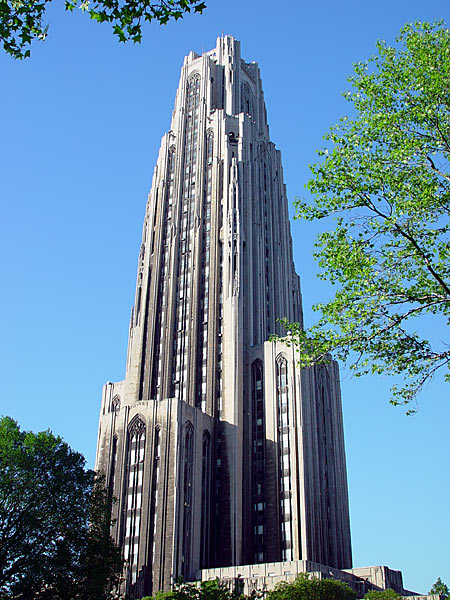
Cathedral of Learning, University of Pittsburgh, December 20, 2010. Source: http://www.photohome.com

At the beginning of my junior year at the University of Pittsburgh (’89-’90), I took a cross-listed English lit and Black Studies course on African American women and men in literature. I took it partly to fulfill a writing requirement, and partly because I wanted to explore literature written by Black authors for once.


Besides the decidedly poor view of Black men in this literature — no doubt why Tyler Perry sees no need in developing a Black male character with the minimal complexity of a Worf of Mogh from the Star Trek franchise — there was another issue I needed to overcome. It was a 5:45 to 8:10 pm class on a Tuesday evening. Prior to the fall of ’89, I’d only taken one course that started after 4 pm, an assembly language course, and I withdraw from it after switching my major to history the previous fall.

But this course was great, despite books like The Women of Brewster Place and A Woman’s Place. I knew what some of the smartest Black women on campus thought of me before I opened my mouth. But much more important than that, I got to know a greater cross-section of students than the traditional daytime students between the ages of eighteen and twenty-four. Nontraditional students — adult learners as we educators call them now — populated our classroom.

They were housed in the College of General Studies, which didn’t mean anything negative to me. Some of my older friends from my freshman courses were CGS students, and were sharper in wit and wisdom than many of my Honors College friends and Humanities classmates from Mount Vernon High School in New York. They added tremendously to this course, and made it so much more fun than I would’ve had with other twenty-year-olds.

I ended up taking six 5:45 to 8:10 courses in my last two years of undergrad, and two more evening courses my first year of grad school at Pitt. They were some of my most memorable courses, with a diverse student population because of CGS, with students who were fully capable of performing well in a college setting. In part because counselors and other student services staff at CGS were available to help these students overcome their relative lack of academic preparation and because almost all of the courses these students took were fully integrated into Pitt’s course schedule.

It seems obvious. But treating adult learners with the care they needed and giving them courses that any traditional student could take made them feel more at home, and probably were significant factors in the success I saw so many of them have.

Fast forward eighteen years to my two semesters as an adjunct professor at Howard University. Besides

Founders Library, Howard University, Washington, DC Photo taken 9 April 2006 with Canon Powershot SD300. David Monack, author, released photo into public domain.

the laziness of the students in my Teaching Black Studies course — not to mention the stuffiness of the faculty (imagine referring to all of your colleagues as “Dr. So-and-So,” and not by their first names) — the main problem I had with them was with the times offered for my course. They originally wanted me to teach on a Monday-Wednesday-Friday noontime schedule. But I worked full-time, and preferred to teach an evening course. The Afro-American Studies department compromised, and gave me a 5 pm course that met Monday-Thursday during the summer.


My fall course, though, fell through, as the latest Howard wanted to schedule it was at 4 pm, and then mislabeled the course on top of that. It was a ridiculous experience, dealing with underprepared and entitled, spoiled students, not to mention a lethargic faculty and administration. I learned later that Howard didn’t offer evening, weekend or distance learning courses at the undergraduate level. I learned soon after that many universities — historically Black and otherwise — were more like Howard than they were like my student and teaching experiences at Pitt, Duquesne and George Washington.

There’s real money that universities — especially HBCUs — are giving up to maintain a false sense of the college experience for faculty and students alike. Even among traditional students, working part-time jobs and having expansive extracurricular activities makes it difficult to fit appropriate classes in between 8 am and 5 pm. While online teaching is one way to go, putting together course offerings that fit the schedules of twenty-first century students is a better place to start.

While the Harvards, Yales, Princetons, and even Carnegie Mellons of the university universe can afford to act like its 1969 still, Howard, Morehouse, Clark Atlanta and so many others cannot. You want to stay solvent and academically relevant? Dusting off the course booklet and looking at evenings and Saturdays to accommodate all of your potential students is a great place to begin.

Cream on the Brain

12 Sunday Dec 2010

Posted by decollins1969 in 1, Academia, Boy @ The Window, culture, Eclectic, Mount Vernon High School, Politics, race

≈ Leave a comment

Tags

"A Substance of Things Hoped For", A.B. Davis Middle School, Ability Grouping, Academic Excellence, Barbara Sizemore, Carnegie Mellon University, Creme de la Creme, Culture Wars, Diversity, Fear of a "Black" America, Humanities, Identity, Jeanne Oakes, Keeping Track, Magnet Programs, Magnet Schools, Mount Vernon High School, Mount Vernon New York, Mount Vernon public schools, Multiculturalism, Pittsburgh Public Schools, Student Engagement, Tracking, University of Pittsburgh


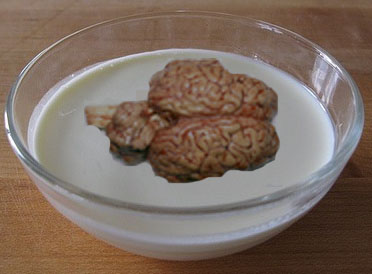
A Brain Floating in the Heavy Cream of Obsession with Academic Excellence, December 13, 2010. Donald Earl Collins

A quarter-century ago, education scholar and Ford Foundation education program director Jeanne Oakes published Keeping Track: How Schools Structure Inequality. Oakes’ groundbreaking, definitive work on the educational inequalities created or reinforced by ability grouping has led a whole generation of scholars to examine the viability of tracking in K-12 education. In a 2005 edition of her book, Oakes wrote that “through tracking, schools continue to replicate existing inequality along lines of race and social class and contribute to the intergenerational transmission of social and economic inequality.”

I picked up Oakes’ Keeping Track for the first time in ’90. By then, I already knew from experience how true her words and research were. Six years in Mount Vernon, New York’s public schools via the Humanities Program had taught me all I’d need to know about the tensions between creating a class of students whose level of academic performance was par excellence while simultaneously addressing segregation and diversity in the school district. The magnet program and the district failed at one and succeeded at the other, which in turn reinforced its failure.

I worked on a paper some twenty years ago for the late Barbara Sizemore, my professor at the University of Pittsburgh my senior year (and a former superintendent of DC Public Schools) looking at how magnet school programs actually created resegregation in individual schools and Pittsburgh Public Schools because of the exclusivity that comes with tracking or ability grouping. It was an easy paper for me to do, guided in no small part by my experiences in Humanities at Davis Middle and Mount Vernon High School. Easy, but not easy to get a handle on beyond the obvious demographics of race, class and test scores.

I managed to wiggle myself into the culture wars of the early ’90s and the debate around multiculturalism and K-12 education soon after that paper. It seems obvious now that the unacknowledged diversity of Humanities was what enabled me to take sides in favor of multiculturalism. That led to my dissertation looking at the historical development of multiculturalism among Blacks in Washington, DC (“A Substance of Things Hoped For,” Carnegie Mellon University, 1997 for those who want more information), and eventually, my first book, Fear of a “Black” America from six years ago.

But it took my memoir Boy @ The Window to bring me back to square one. I realized about a year ago that I’d done nearly thirty interviews of former classmates, teachers and administrators for the manuscript. There was much more material to mine beyond their impressions of me and how to shape their descriptions of themselves — and my memories of them — into characters for Boy @ The Window. I decided to work on an academic piece that looked at the benefits and pitfalls of high-stakes schooling — not just testing — in the form of a history lesson via magnet schools, specifically my Humanities experience.

After a quick rejection, I redoubled my efforts a few months ago. I decided to look at the education psychology and sociology literature, as well as Oakes again, to see how these interviews and my experiences could be useful in our testing-obsessed times. I finally realized what had troubled me about Humanities for the past three decades. It was the reality that all involved with Humanities had taken on the e pluribus unum identity of an academic superstar (much more than just a nerd, by the way). Beyond Black or White, and ignoring the realities of poverty in our district and (at least for me) in our program, Humanities was all about sharpening our academic personas above all else.

This fueled the major success of Humanities during its existence between ’76 and ’93, which in turn would define its failures. In successfully nurturing the idea of academic excellence as identity, as evidenced by so many of us attending and graduating from college, this magnet program failed in its other major educational functions. It failed to embrace diversity, to help its students understand the diversity that was Humanities, to nurture creativity and imagination beyond A’s and college acceptances. It failed to develop the whole student, which aside from its charge to help desegregate Mount Vernon public schools, was its original mission.

Humanities failed because its teachers, administrators (including the former superintendent of schools) and many of the most vocal parents (mostly affluent and White) refused to deal with diversity seriously. Academic excellence without significant parental engagement or the humility necessary to discuss issues of race, gender, class, sexual orientation led to a severe overemphasis on calling us the “creme de la creme.” All of this would have a negative impact on our development as students, and as emerging adults.

I don’t think that it’s asking too much of parents, administrators and teachers to work together in both striving for academic excellence while building programs that embrace difference and nurture creativity and imagination, and not just an addiction to A’s. Or is it?

An Alternate Universe Donald

23 Tuesday Nov 2010

Posted by decollins1969 in 1, Academia, Boy @ The Window, culture, Eclectic, eclectic music, Marriage, music, Politics, Pop Culture, race, Religion, Youth

≈ Leave a comment

Tags

Alternate Universe, Amy Holmes, Carnegie Mellon University, Conservatism, Dinesh D'Souza, Faust, FOX News, John McWhorter, Jon Secada, Kafka, Mariah Carey, Megyn Kelly, Tara Wall, Tupac, University of Pittsburgh, Wu-Tang Clan


Muppet as Michael Steele on The Daily Show Screen Shot, November 23, 2010. Source: http://tellingthetruthiness.blogspot.com

In light of revelations — skin-deep, that is — from FOX News’ not-so-dumb-butt Megyn Kelly in an upcoming GQ article titled “She Reports, We Decided She’s Hot,” it seems to me that I missed out. Not in taking photos that reveal arms, chest, butt, abs or flanks. But in the massive gold rush that anyone with brains and without a conscience could have been a part of over the last thirty years. That gold rush? The “I’m a conservative and will saying anything, true or not” gold rush.

If I had turned conservative while at Pitt or Carnegie Mellon, it would’ve opened up doors. More doors than have been opened to or for me over the past twenty years. Imagine, a tall Black guy with a doctorate and still in his twenties and willing to serve as a mouthpiece for low taxes on the rich, a minimal social welfare safety net, and corporatization of public schools and Capitol Hill? I’d be a senior staff person of the American Enterprise Institute or the Heritage Foundation by now, with a 3-handicap on the golf course to boot!

But back in the days when I attended Pitt, conservatives were not nearly that organized. There were plenty of them, but not working to identify future leaders the way conservatives have at places like Dartmouth or Stanford or even Carnegie Mellon, my second grad school. No, at Pitt, most conservatives hunkered down in bathroom stalls calling people like me the N-word or offered me bananas through their scrawlings on the metal partitions and doors.

College Republicans and other conservatives were much more organized on Carnegie Mellon’s campus, and with nearly four years there, I could’ve joined at any time. I’d probably adapted my music list. I’m not sure Mariah Carey or Jon Secada would’ve gone over well with this group, much less Tupac or Wu-Tang. I definitely would’ve needed to shave the goat-tee, my signature look for most of the past seventeen years. And I would’ve started using a knife and fork to eat fried chicken for sure.

Still, these would’ve been small prices to pay for steady and well-paying employment. I would’ve hit a six-figure income before I turned thirty. And I would’ve easily been able to turn my history of multicultural thoughts and actions of African Americans in the twentieth century — Fear of a “Black”

John McWhorter at the ISMIL conference in Leiden, June 2008, downloaded November 23, 2010. Jasy jatere (in public domain)

America — into a book about the fears of Blacks and Whites of a new and dangerous multicultural world. I might’ve even been able to keep my title, without the word Black in quotes, though. It would’ve been a bestseller, and I would’ve offed Dinesh D’Souza and John McWhorter as the intellectual giants of conservative thought on race. Yay, alternative me!

I’m not sure if me and my wife of more than ten years would’ve made it past the boyfriend-girlfriend stage. Her views are less leftist and more amoral in some areas than mine. But I couldn’t see her supporting me being a mouthpiece against gay rights and marriage, abortion, education reform without community engagement and austerity cuts in public services. It probably wouldn’t have mattered how much money I made. All of my memories of marriage, of good times and bad, of arguments and making up, of Noah from pregnancy to seven — all gone. Only a person equally conservative and amoral — more than likely White, although Tara Wall or Amy Holmes are among notable exceptions. — would’ve likely married me or would’ve wanted to have a kid with me.

For some folks, this is a pointless exercise. I’m a liberal, a social-Christian, democratic-leftist, one with a handful of cultural conservative views around etiquette and public conduct that I wouldn’t impose on anyone except myself, a progressive, in a word. I didn’t have tons of opportunities to become a lucrative mouthpiece and writer for the Right. And I wouldn’t have taken them if I’d been taken to a strip club and given a suitcase full of $100-bills to be turned. Still, it’s good to dream. To realize that my life, such as it has been, has had so much more color and flavor to it than it would’ve in this Faust-Kafka vision of one of my alternate universes.

← Older posts
Newer posts →

Boy @ The Window: A Memoir

Boy @ The Window: A Memoir

Places to Buy/Download Boy @ The Window

There's a few ways in which you can read excerpts of, borrow and/or purchase and download Boy @ The Window. There's the trade paperback edition of Boy @ The Window, available for purchase via Amazon.com at http://www.amazon.com/Boy-Window-Donald-Earl-Collins/dp/0989256138/

There's also a Kindle edition on Amazon.com. The enhanced edition can be read only with Kindle Fire, an iPad or a full-color tablet. The links to the enhanced edition through Apple's iBookstore and the Barnes & Noble NOOK edition are below. The link to the Amazon Kindle version is also immediately below:

scr2555-proj697-a-kindle-logo-rgb-lg

Boy @ The Window on Amazon.com: http://www.amazon.com/Boy-The-Window-Memoir-ebook/dp/B00CD95FBU/

iBookstore-logo-300x100

Boy @ The Window on Apple's iBookstore: https://itunes.apple.com/us/book/boy-the-window/id643768275?ls=1

Barnes & Noble (bn.com) logo, June 26, 2013. (http://www.logotypes101.com).

Boy @ The Window on Barnes & Noble: http://www.barnesandnoble.com/w/boy-the-window-donald-earl-collins/1115182183?ean=2940016741567

You can also add, read and review Boy @ The Window on Goodreads.com. Just click on the button below:

Boy @ The Window

Twitter Updates

Tweets by decollins1969
  • RSS - Posts
  • RSS - Comments

Archives

  • June 2025
  • April 2023
  • September 2022
  • August 2022
  • July 2022
  • June 2022
  • May 2022
  • April 2022
  • March 2022
  • January 2022
  • December 2021
  • November 2021
  • October 2021
  • September 2021
  • August 2021
  • July 2021
  • June 2021
  • April 2021
  • March 2021
  • February 2021
  • January 2021
  • December 2020
  • November 2020
  • October 2020
  • September 2020
  • August 2020
  • July 2020
  • May 2020
  • April 2020
  • March 2020
  • January 2020
  • December 2019
  • November 2019
  • August 2019
  • July 2019
  • June 2019
  • May 2019
  • April 2019
  • March 2019
  • February 2019
  • January 2019
  • December 2018
  • November 2018
  • October 2018
  • September 2018
  • August 2018
  • July 2018
  • June 2018
  • May 2018
  • March 2018
  • February 2018
  • January 2018
  • December 2017
  • November 2017
  • October 2017
  • September 2017
  • August 2017
  • July 2017
  • June 2017
  • May 2017
  • April 2017
  • March 2017
  • February 2017
  • January 2017
  • December 2016
  • November 2016
  • October 2016
  • September 2016
  • August 2016
  • July 2016
  • June 2016
  • May 2016
  • April 2016
  • March 2016
  • February 2016
  • January 2016
  • December 2015
  • November 2015
  • October 2015
  • September 2015
  • August 2015
  • July 2015
  • June 2015
  • May 2015
  • April 2015
  • March 2015
  • February 2015
  • January 2015
  • December 2014
  • November 2014
  • October 2014
  • September 2014
  • August 2014
  • July 2014
  • June 2014
  • May 2014
  • April 2014
  • March 2014
  • February 2014
  • January 2014
  • December 2013
  • November 2013
  • October 2013
  • September 2013
  • August 2013
  • July 2013
  • June 2013
  • May 2013
  • April 2013
  • March 2013
  • February 2013
  • January 2013
  • December 2012
  • November 2012
  • October 2012
  • September 2012
  • August 2012
  • July 2012
  • June 2012
  • May 2012
  • April 2012
  • March 2012
  • February 2012
  • January 2012
  • December 2011
  • November 2011
  • October 2011
  • September 2011
  • August 2011
  • July 2011
  • June 2011
  • May 2011
  • April 2011
  • March 2011
  • February 2011
  • January 2011
  • December 2010
  • November 2010
  • October 2010
  • September 2010
  • August 2010
  • July 2010
  • June 2010
  • May 2010
  • April 2010
  • March 2010
  • February 2010
  • January 2010
  • December 2009
  • November 2009
  • October 2009
  • September 2009
  • August 2009
  • July 2009
  • June 2009
  • May 2009
  • April 2009
  • March 2009
  • February 2009
  • January 2009
  • December 2008
  • November 2008
  • October 2008
  • September 2008
  • August 2008
  • July 2008
  • June 2008
  • May 2008
  • April 2008
  • March 2008
  • February 2008
  • January 2008
  • December 2007
  • November 2007
  • October 2007
  • September 2007
  • August 2007
  • July 2007
  • June 2007

Recent Comments

decollins1969's avatardecollins1969 on No Good Teaching Deed Goes…
Mary Rose O’Connell's avatarMary Rose O’Connell on No Good Teaching Deed Goes…
Lyndah McCaskill's avatarLyndah McCaskill on The Raunchiest of Them Al…

NetworkedBlogs on Facebook

NetworkedBlogs
Blog:
Notes From a Boy @ The Window
Topics:
My Life, Culture & Education, Politics & Goofyness
 
Follow my blog

616 616 East Lincoln Avenue A.B. Davis Middle School Abuse Academia Academy for Educational Development AED Afrocentricity American Narcissism Authenticity Bigotry Blackness Boy @ The Window Carnegie Mellon University Child Abuse Class of 1987 CMU Coping Strategies Crush #1 Crush #2 Death Disillusionment Diversity Domestic Violence Economic Inequality Education Family Friendship Friendships Graduate School Hebrew-Israelites High-Stakes Testing Higher Education History Homelessness Humanities Humanities Program Hypocrisy Internalized Racism Jealousy Joe Trotter Joe William Trotter Jr. K-12 Education Love Manhood Maurice Eugene Washington Maurice Washington Misogyny Mother-Son Relationship Mount Vernon High School Mount Vernon New York Mount Vernon public schools Multiculturalism MVHS Narcissism NFL Pitt Pittsburgh Politics of Education Poverty President Barack Obama Race Racial Stereotypes Racism Relationships Self-Awareness Self-Discovery Self-Reflection Sexism Social Justice Teaching and Learning University of Pittsburgh Violence Whiteness Writing

Top Rated

Blog at WordPress.com.

  • Subscribe Subscribed
    • Notes from a Boy @ The Window
    • Join 103 other subscribers
    • Already have a WordPress.com account? Log in now.
    • Notes from a Boy @ The Window
    • Subscribe Subscribed
    • Sign up
    • Log in
    • Report this content
    • View site in Reader
    • Manage subscriptions
    • Collapse this bar
 

Loading Comments...