• About Me
  • Other Writings
  • Interview Clips
  • All About Me: American Racism, American Narcissism, and the Conversation America Can’t Have
  • Video Clips
  • Boy @ The Window Pictures
  • Boy @ The Window Theme Music

Notes from a Boy @ The Window

~

Notes from a Boy @ The Window

Tag Archives: Bigotry

Black Male Id-entity & the F-Bomb

26 Thursday May 2011

Posted by decollins1969 in 1, Boy @ The Window, culture, Eclectic, Politics, Pop Culture, race, Youth

≈ Leave a comment

Tags

616, 616 East Lincoln Avenue, Anti-Gay Slur, Authenticity, Basketball, Basketball Courts, Bigotry, Black Males, Carnegie Mellon University, Context, Coolness, F-Bomb, F-word, Faggot, Heterosexism, Homophobia, Joakim Noah, Kobe Bryant, Michael Wilbon, Mount Vernon New York, Nathan Hale Elementary, NBA, Nigga, Pitt, Pittsburgh, Playgrounds, Sean Miller, Toure X, Twitter, University of Pittsburgh, Washington DC, Words


Joakim Noah Apparently Says ‘F–k You Faggot’ To Fan (VIDEO)

Joakim Noah Apparently Says ‘F–k You Faggot’ To Fan (VIDEO)

Gay Rights Month isn’t for another six days, as it’s still May. But in light of Joakim Noah’s unfortunate anti-gay slur outburst, “Fuck you, faggot!,” it makes sense to start this year’s conversation a week early.

This is more than about the NBA, gay athletes in the closet or what professional athletes should and shouldn’t say to fans and to each other. The behind-the-curtain issue here could just as well be about Black male identity (whether heterosexual or gay) and how Black males express themselves to each other and to the rest of the world.

My first memories playing with a group of Black males in Mount Vernon, New York are all negative. When I was six in ’76, a group of preteens on the neighborhood playground near Nathan Hale Elementary on South 6th Avenue tried to force me into sucking one of their dicks, practically sticking it in my face to do so. I got away before being truly scarred for life. After we moved to 616 East Lincoln Avenue in April ’77, our first time playing outside was spent running away from the other kids, who greeted us by throwing rocks at us and calling me and my brother Darren “faggots.” (see my June 1, 2009 post, “In the Closet, On the Down Low” for more).

When I was nine, I played basketball on a court near 616 for the first time with a group of kids from my building. After throwing up an awkward brick and an air ball, I got five minutes of “You terrible!,” “You need to sit down!,” “You’re never gonna be an athlete!,” “You need to get back to reading them books of yours!,” and “You shoot like a faggot!”

Even though I eventually learned how to dribble with both hands, shoot a j, make layups, block shots, and on rare occasions, dunk a basketball, I’ve been leery being around other Black males on the basketball court. One would think after playing pickup with former Pitt basketball players while in grad school that I’d completely forgotten what happened to me back in the spring of ’79. But I hadn’t, at least on an unconscious level. I often watched what I said, I mean, down to every single word. Not to mention how I walked, where my arms were, and how I held my head. Still, I sometimes felt inadequate on the court, whether I went 8-for-9 or 2-for-7, blocked a shot, stole a ball, or got knocked down guarding someone six-foot-six and 260 pounds.

But I figured out something in those years of playing pickup at Pitt and Carnegie Mellon and other places in Pittsburgh and DC over the years. That blending in doesn’t matter. Fools — even ones with momentary lapses in judgment like Joakim Noah — will be fools because on the playground or court, it makes them cool in the minds of their peers.

Yes, this isn’t just a Black male issue. Sean Miller, currently coach of the University of Arizona men’s basketball team — not to mention an all-time Pitt basketball great — once played a prank on me our freshmen year. He called me up in my Lothrop Hall dorm room late one night, offered me a blow job, and called me a “faggot” in the process.  So being called a “faggot” or saying that something or someone is “gay” is part of our culture on and off the basketball court, for Black and White males to be sure.

But unlike Michael Wilbon, I can’t excuse it because it’s commonplace and therefore it may be difficult for some young men to immediately stop themselves from saying “faggot.” Nor can I rationalize this like Touré (a.k.a. TouréX on Twitter) attempted to do in a Twitter exchange with me a couple of days ago. He compared the use of “faggot” to “nigga,” with the idea that both words have more than one meaning and that the meaning can sometimes be positive, depending on context.

I can see the argument for “nigga,” even though I don’t like it when younger men use it to affirm each other and especially me. But “faggot” meaning “less than a man?” Or “stupid” or “dumb?” So is Noah or Kobe more of a man for telling someone else they’re not a man? Even in context, this isn’t positive — it’s potentially soul-destroying, and not just for someone being called a faggot.

Of the preteens and young boys who called me “faggot” growing up, at least three have served hard time. Is there a direct connection? Of course not. Still, it seems that a culture steeped in the requirement of being cool, finding quick and easy success and putting down others while doing so lends itself well to a crash-and-burn mentality that so many of us have about our lives.
On Baseball & Hyprocrisy

02 Saturday Apr 2011

Posted by decollins1969 in 1, Boy @ The Window, Eclectic, Politics, Pop Culture, race, Religion, Sports, Youth

≈ Leave a comment

Tags

Babe Ruth, Barry Bonds, Baseball, Bigotry, Bob Ryan, Color Line, Cy Young, George Will, Hank Aaron, Henry Aaron, Hypocrisy, Integrity of the Game, Joe Di Maggio, Josh Gibson, Lou Gehrig, Mike Lupica, Mythology, Myths and Legends, Pope Lupica, Purists, Purity of the Game, Race, Racism, Records, Reggie Jackson, Satchel Paige, Sports, Steroids, Ted Williams (Baseball), Willie Mays


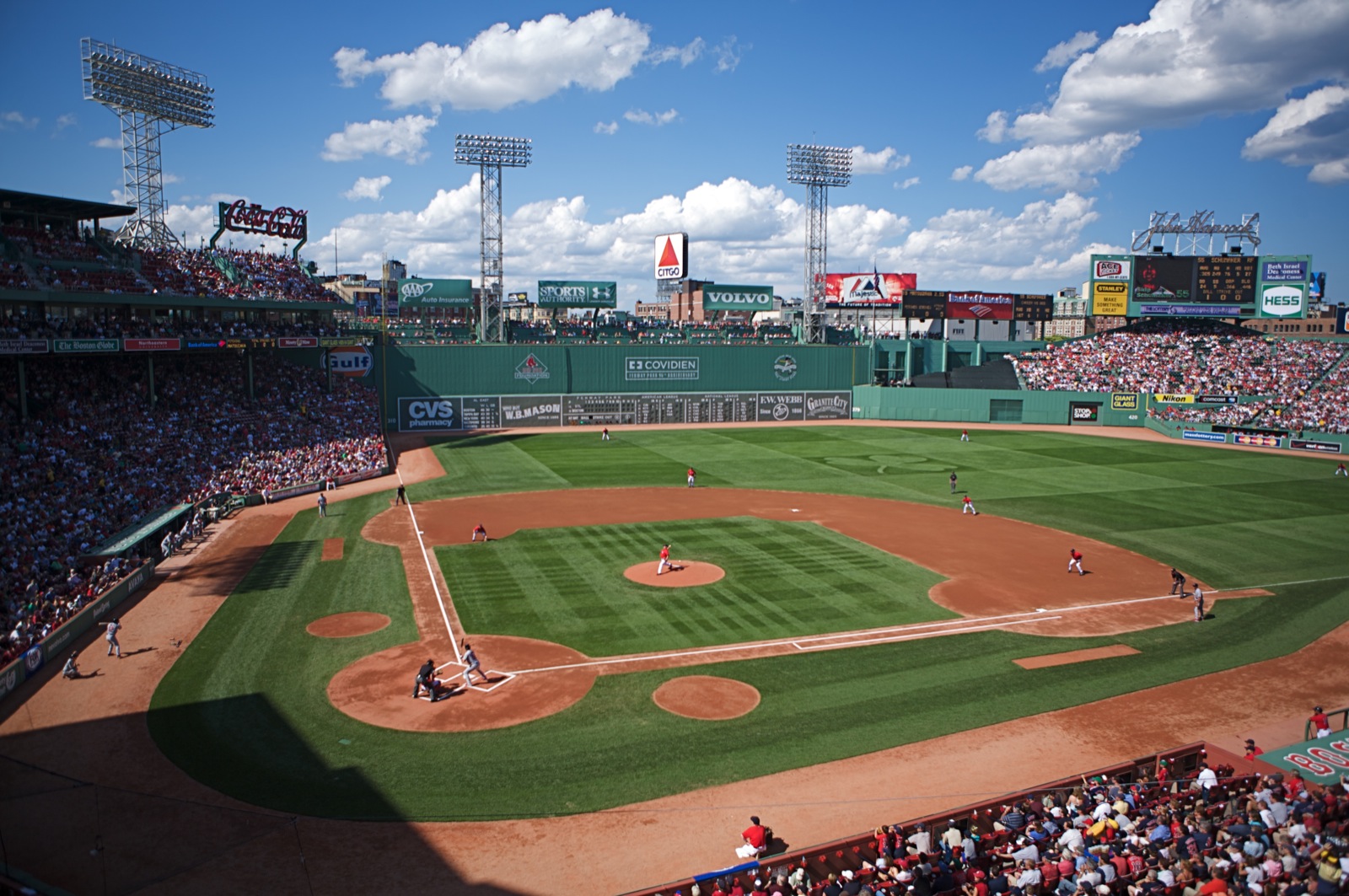
Fenway From Legend's Box, Fenway Park, Boston, June 21, 2008. Jared Vincent via Flickr http://flickr.com/photos/23999911@N00/2607333633 - Permission granted under the terms of the cc-by-2.0 license.

A new baseball season has arrived for this estranged ex-fan of the game. Millions of people celebrate as if this is a rite of spring, like a cherry-blossom festival or an opportunity to spend more time outside. When I see the start of baseball, it merely reminds me to up my dosage of Zyrtec and Rhinocort.


But that’s not quite true. It also hits me in the brain and gut with the common mythologies and hypocrisies of America the Beautiful. Especially this spring, with Barry Bonds on trial for perjury — and indirectly, for using steroids, sullying the game, not to mention his Hall-of-Fame record prior to ’99. The guardians of the game — baseball purists like George Will and numerous others, and sports reporters like Pope Lupica and Bob Ryan — supply us with the myths and legends of Babe Ruth, Joe Di Maggio, Ted Williams, Lou Gehrig, Ty Cobb, Walter Johnson, Mickey Mantle and Cy Young. Along with their records, those precious records. Of home runs, total hits, hitting streaks, RBIs, strikeouts, wins, stolen bases, games played, batting averages, slugging percentages. The stuff that makes baseball America’s pastime (which should always be written as past-time, or past-its-time), different from all the other major sports.

The hypocrisy comes from this ridiculous notion of keeping the game separate and holy, like the sabbath for orthodox Jews and for the most devout of Christians and Muslims. Except that this game, this most American of games, is about as pure as New York City snow two minutes after hitting the ground. The biggest, most disgusting hypocrisy of all is how most baseball purists will celebrate Babe Ruth’s greatness any day over a Henry Aaron, Willie Mays, Reggie Jackson, or Josh Gibson. Or Walter Johnson over Satchel Paige. That sixty-four years since Jackie Robinson broke the color line in major league baseball, there’s still a color line in baseball’s precious records, as well as among the people who hold them. That alone is a stomach-churning, blood-pressure-raising shame.

But this issue of who should and shouldn’t be in Cooperstown because of the Steroids Era in baseball, well, it presupposes a false dichotomy. That there was a time before, say ’88, where baseball wasn’t dirty, and that with anabolic steroids and HGH, baseball became dirty. But since ’03, baseball’s become clean and transparent again. This is beyond ridiculous. Baseball’s been as dirty as any sport in American history, in fact dirtier, than the other sports put together. Between amphetamines and illegal drugs, pine tar and Vaseline balls, sharpened cleats and headhunting and the exclusion of Blacks, the sport and the individuals involved in it have been seeking and finding competitive advantages for as long as baseball has been a professional endeavor.

Still, the biggest myth and hypocrisy in baseball remains its insistence that its records are sacred, above critical scrutiny and reproach. I have a problem with this, and not just because of the racism that’s built into any records achieved prior to 1947. But because baseball’s sanctimonious bigotry infects any record that’s been achieved in the sixty-four years since. Whether it was Roger Maris in ’61, Hank Aaron in ’74, or Barry Bonds before ’99, much less after.

As long as the guardians of the game remain White, male and overly connected to baseball as patriotic and its records as sacrosanct, baseball’s hypocrisy will know no bounds. “It’s a shame and a pitiful,” as my father would say. And it’s also a reason I hope my son never plays this wretched game.

Living in the Land of “No!”

23 Wednesday Mar 2011

Posted by decollins1969 in 1, Academia, Boy @ The Window, culture, Eclectic, Politics, race, Youth

≈ Leave a comment

Tags

Academia, Academic Writing, Ageism, Bias, Bigotry, Career Options, Forbes Quadrangle, Historical Dictionary of American Education, History of Education Quarterly, Multiculturalism, No!, Passion, Pitt, Race, Richard J. Altenbaugh, The Second Plate, University of Pittsburgh, Wesley Posvar Hall, Writing, Yes


People forming a "NO" to London's Heathrow Airport Expansion, May 31, 2008. Source: The Daily Mail http://bit.ly/hc0KSP

There was a time in my career and life when I was desperate to publish an article in a scholarly journal. Right after finishing grad school at Carnegie Mellon at the end of ’96, I set out to write a literature review essay on how folks in education foundations and education policy had covered multiculturalism and connected it — or, in most cases, not connected it — to the politics around this controversial topic during the 1980s and 1990s. Of all the things I’d written up to this point in my career, this was a bit ambitious.

I had submitted an article for publication with the History of Education Quarterly in March ’97 and had made several revisions at Richard Altenbaugh’s request. He was the new senior editor of the journal, as it had recently moved from Indiana University to Slippery Rock to be under his direction. Altenbaugh had also been my professor for my education foundations graduate class in the spring of ’92, and I’d done entries for his Historical Dictionary of American Education, which was published in ’99.

Historical Dictionary of American Education Cover, March 23, 2011. Donald Earl Collins

At Altenbaugh’s behest, I met him and a wildly bearded co-editor at an informal meeting in March ’98. We met at The Second Plate, an eating place on the second floor of Forbes Quadrangle at Pitt, where I’d spent my homeless days in ’88, my history major days, and my first two years of grad school. Over the course of a two-hour lunch that had little to do with the food, Altenbaugh and his assistant grilled me about the contents of my article, my writing in general, and about the publishing business. Now I knew that this essay would need more revisions, but a two-hour inquisition on why a twenty-eight-year-old was too young to make bold conclusions based on existing studies was just a ridiculous argument.

For Altenbaugh and the other editor, I was simply too young to write an essay that reviewed previous scholarly work. Their logic: “even a senior scholar with fifteen years in the field would have trouble pulling this off.” The editors also insisted that the only road to academic Nirvana regarding my work would be through publishing academic articles and books that met the approval of an exclusive scholarly community. Translation: “write something that is interesting to a few other professors — but not so exciting that it would catch the public’s attention — and by all means do not work on something as controversial as multiculturalism.” Oh yeah, they also recommended that get approval for my essay draft from two elderly, nearly-dead White historians before resubmitting to the journal.

Bottom line: my essay was rejected, given a “No!” Not because it didn’t have potential, or because the early drafts weren’t any good. But because I was working on a topic too cutting edge as a Black male who even now at forty-one would be too young — according to these guys — to work on a state of the profession essay on multiculturalism, much less thirteen years ago.

Did their “No!” matter? In one sense it really did. I knew that the topic itself was too controversial for most conservative-thinking (in a topical, not political, sense) editors in scholarly publishing. That there were few venues for me to address multiculturalism in an academic sense. I also knew that their “No!” was about much more than my topic. My age and my race also played a role in their decision to not publish my essay — they said as much by implication. Funny thing is, that in these weird times, I’d probably have a much better shot at publishing this essay now than I did when multiculturalism seemed more relevant.

But in the end, it didn’t matter at all. I was already in the middle of a five-year period of questioning whether I was an academic historian first and a writer second, or was it really the other way around? If the latter was true — and it’s turned out to be — then what did it matter that I pushed to publish on a topic that I cared about, but I was already beginning to lose passion for?

What I learned from that “No!” is that there are times to force a “Yes!” out of the land of “No!” And that there are other times when I should choose to take that “No!” and evaluate my own motives for wanting a “Yes!” In the case of my growth as a writer — both in academic writing and in other kinds of writing — there couldn’t have been a better, more bigoted “No!” than the one I received thirteen years ago.

Dairy Queens, Dick Oestreicher and Race

01 Tuesday Feb 2011

Posted by decollins1969 in 1, Academia, Boy @ The Window, culture, Eclectic, Mount Vernon High School, Pop Culture, race

≈ Leave a comment

Tags

"Sittin' on the Dock of the Bay", Affirmative Action, Bigotry, Black History Month, Dairy Queen, Dick Oestreicher, History Department, Michael Bolton, Otis Redding, Race, Racism, Richard Oestreicher, Segregation, Thomas Sowell, University of Pittsburgh, William Julius Wilson


Dairy Queen Sign, Near Frankstown Road, Penn Hills (outside of Pittsburgh, PA), June 14, 2005. Shawn Wall. Qualifies as fair use under US Copyright law because there is no attempt to distribute or alter, and this photo is only being used for illustrative purposes.

Black History Month is upon us once again. But instead of the same tired discussion of Carter G. Woodson, MLK or the meaning (or lack thereof) of this month, I’m telling a story that will (hopefully) dredge up issues for many of you.

It was the last Tuesday in October ’92. I was a student in Dick Oestreicher’s US General Field 2 graduate seminar in the history department at the University of Pittsburgh. The topic for our discussion this day

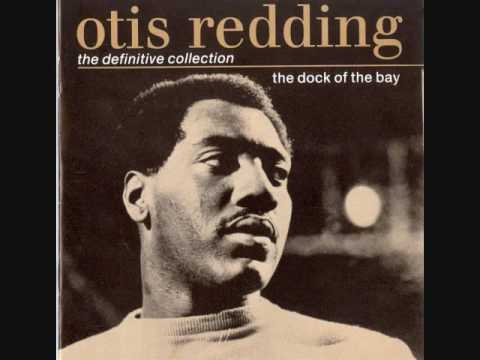
Otis Redding Album Cover, January 31, 2011. Unknown. This photo qualified as fair use under US copyright laws because of its low quality.

was, “Why has black economic mobility, political assimilation, and cultural identity differed from other ethnic groups.” On the surface, it sounded like a good academic discussion to have. But after having to write a fifteen-page analysis on the topic, where I was restricted to William Julius Wilson’s Declining Significance of Race (1978), Thomas Sowell’s Ethnic America (1971), and Kenneth Kusmer’s analysis of race in the context of Black migration to Cleveland (1976), I wasn’t so sure. I made the mistake of being provocative, naming my paper “Sittin’ on the Dock of the Bay” — after the Otis Redding version, and not the Michael Bolton one.

It was a long two-and-a-half hour class. Especially since I was the lone African American in the room talking about race and standing up to the classroom consensus that class was more important than race in the case of the thirty-million-plus people who looked like or had been classified the same as me. I was on the hot seat, arguing that both Sowell and Wilson’s bias was politically conservative in nature, which influenced their analysis of the question of Black progress and lack of such. I also decided that — like so many issues in history — the question of race versus class was an and-both and not an either-or one. That race and class were so intertwined in American culture and history that to separate them would do severe damage to our ability as historians to understand the nature of racism and poverty in American society.

One of my classmates, an over-50 White male, decided at this point to cut off my final point. “You should be grateful, to be able to go to an esteemed institution like the University of Pittsburgh, to be able to sit in that chair and get to earn a Ph.D. If it were thirty years ago, we couldn’t stand in the same Dairy Queen line, right here in Pittsburgh,” the older man said as slowly and as deliberately as someone giving an Oscar acceptance speech. I was amazed, angry, ready to put the man in his place academically. I wanted to verbally take a Dairy Queen triple-scooper and smash it in his stubby nose.

Then my mentally absent professor Dick Oestreicher immediately interrupted, literally positioning himself in the middle of the room to keep me from giving my response. Oestreicher ended class right then and there, dismissing us without even summarizing our discussion or criticizing our allegedly weak academic

Dick Oestreicher, circa 2009

analysis, which he had done in all of the previous weeks.

I was incensed, actually more pissed with Oestreicher than with the bigoted older man. I made sure to stop by Oestreicher’s office the next afternoon after my other grad seminar to find out why he interfered. “You’re going to have to deal with this anyway,” he said while shrugging his shoulders. The following week, I received an A- on my paper, with “Sowell’s well read” as the only comment on my critique of the authors and the undeniably conservative, pro-class and anti-race analysis that the authors provided.

Of my five and a half years in graduate school — and in my two years of grad school at Pitt — it was one of my most unbelievable moments. I wanted to pick Oestreicher up by his mangy hair and show him how some people deal with moments of racism and the people who allow it to continue on their watch. I wanted to tell him that he should stay out of the classroom if he’s too scared to actually teach students.

In the end, I was more patient at twenty-two than I’d probably be about something like this now. I remained academically defiant the rest of the semester, opposed every argument he made whenever he made it. Meanwhile, the bigoted old man had withdrawn from the course in the last month of the semester.

I learned, more than anything else, that many so-called liberal professors were only academic liberals, not actual liberals. Oestreicher in my mind was worse than my hard-ass principal Richard Capozzola at Mount Vernon High School. At least with Capozzola, you knew that he didn’t like anyone who looked like me — meaning young, Black, male, unpopular and poor. With Oestreicher and so many in academia, their liberalism and expressions in support of racial equality were mere scholarly arguments. In reality, people like him would never expect someone like me to have a chance in hell or heaven to become one of their academic peers.

But you know what was the funniest thing of all? I’d never been to a Dairy Queen before.

Where the Past Meets the Future

15 Wednesday Sep 2010

Posted by decollins1969 in 1, culture, Eclectic, Movies, Politics, race, Religion

≈ 2 Comments

Tags

"Past Tense Part 1", Adrian Fenty, Alexander Siddiq, Avery Brooks, Benjamin Sisko, Bigotry, Carl Paladino, Charles Rangel, Christine O'Donnell, Economic Woes, Election Primary 2010, Julian Bashir, Kevin Powell, Star Trek: Deep Space Nine, Star Trek: DS9, Tea Baggers, Tea Party, Vincent Gray


Star Trek DS9 - Past Tense Pt. 1, Screen Shot

Last night, I was reminded of the power of entertainment, Netflix and how art and life converge. I was watching episodes of Star Trek: Deep Space Nine when a familiar two-part episode, “Past Tense,” began. I had planned to skip it, but once I remembered the story line, I watched it again, for the first time in at least thirteen years.

The crew of the Defiant, in attempting to beam down to 24th-century San Francisco, find themselves in the year 2024, in a San Francisco and an America turned upside down by bad economic times. Two members of the crew, played by Avery Brooks (Cmdr. Benjamin Sisko, or “Hawk” for those of you who remember Spencer For Hire on ABC from the ’80s) and Alexander Siddiq (Dr. Julian Bashir, or more recently, on 24 and in the movie Kingdom of Heaven) find themselves in one of many government-run concentration camps for the homeless and unemployed. This just days before an uprising that exposes the truth of an unjust system of economic neglect and government cover-up to the nation and world.

It’s not that Americans don’t care, according to Brooks’ Sisko and Siddiq’s Bashir, it’s that “they’ve given up,” they’ve “forgotten how to care.” I paused the DVD and thought about that statement as I watched Tea Baggers’ Christine O’Donnell and Carl P. Paladino win in Delaware and New York, Kevin Powell get slaughtered by Ed Towns in Brooklyn, and Charles Rangel paste five other opponents in Harlem. Not to mention young Turk Adrian Fenty losing to the ol’ Blacks network and Vincent Gray in DC.

Last night proved to me that most Americans simply don’t know how to care about anything except for someone who looks and sounds like them, whether that politician represents their interests or not. Some may care, some may not, some may even have forgotten how to care. But way, way too many of us get caught up in style over substance, in grandiose grandstanding over a sensible platform, over a good handshake rather than someone giving us a real hand in our lives.

We are as shortsighted as a roach, running just hard enough to not get stomped on, but not seeing that the person with the size 14-4Es has two feet, not one. As Polyanna-ish as Star Trek is, that two-part episode from season three of Deep Space Nine presents a stark and nasty future that is already beginning to manifest itself right now. All because we’ve allowed our bigotry and fear to lead us in the direction of creating a self-fulfilling prophecy.

Maybe They’ve Won After All

10 Friday Sep 2010

Posted by decollins1969 in 1, culture, Eclectic, High Rise Buildings, New York City, Patriotism, Politics, race, Religion

≈ 2 Comments

Tags

9-11, Bigotry, Freedom, Ground Zero Mosque, Intolerance, Islam, Islamic Center, Patriotism, Qur'an, Racism, Religion, Terry Jones, Twin Towers, World Trade Center


There’s a Hole in the Bucket (Still) at Ground Zero. Source: http://unambig.com

I wrote this five days after 9-11, after spending three days stuck in Atlanta and a day on a Greyhound bus from Atlanta to DC, after defending a Sikh man against a hostile White male and Black guy because he looked like one of “them.”

———————————-

With much of this week’s focus on the atrocities at the former World Trade Center in New York, the Pentagon, and the airplane crash south of Pittsburgh, there is a disturbing and growing backlash against Americans of Arab descent throughout the nation.  The nation should be outraged because of the wanton destruction of property and life at the hands of suicidal terrorists.  But this in no way should justify the fire bombings of mosques in Texas and marching against Arab communities in Chicago.  This, of course, is among other incidents of hatred and revenge directed at folks who in some cases have been in America for several generations.  And like many Americans, Americans of Arab descent migrated to our multicultural society to escape religious extremism, government persecution, and yes, terrorism.  The backlash against Arab Americans since the attacks on Tuesday sicken me as much as the frightening attacks themselves.

I am a African American male, and I have thought about what the nation’s response might have been if a suicidal group of African American terrorists had done this horrible thing.  Would we be in the midst of race riots in America’s major cities, in which groups of Whites armed with American flags and poles, rocks, guns and whatever else they could find to beat and possibly kill Blacks just because they’re Black?  Would law enforcement agencies search every allegedly suspicious-looking brown-skinned person with kinky hair because they might connect them to an African American terrorist group?

Or what if an Irish terrorist group had hijacked the planes flown into the Twin Towers and the Pentagon?  Would non-Irish Americans then be so quick to lash out at any “Mic” they could find? Would they intimidate Americans of Irish descent to the point where they would be scared out of going to school or attending a prayer vigil with their fellow Americans?  Would we be so willing to engage in the language of bloodlust toward a group of Irish Americans as we have done to our Arab American brothers and sisters?

We can say that the majority of Americans have not engaged in this bigoted and racist behavior.  But our silence is not good enough.  Mainstream journalism acts as if a few prominent Arab Americans denouncing both the terrorist attack and the expected backlash against Arabs by other Americans ends their responsibility.  It does not.  The press must do a better job of discussing this smouldering problem with all Americans, including representatives of the Arab American community.  It also must do better in explaining the differences between the tenets of Islam and the unspeakable acts of terrorists clinging to a warped version of Islam.  It’s not at all much different from the barbaric actions of the Ku Klux Klan, who claim that they act in defense of White Christians.

If we as Americans continue to commit and condone through our silence acts of hatred against Arab Americans, are we much better than the tortured souls who flew four Boeing jets as weapons of mass destruction, all in the name of Allah?  If we are to defeat terrorism as a nation and a world, we must also defeat its roots, fear and hatred.  If we are to be one undivided and multicultural nation united against terrorism, we can no longer tolerate incidents of terrorism against one another, no matter how much we hurt.

——————————–

Needless to say, The Washington Post was engaged in blind, raging patriotism for the next couple of years, so my two cents was ignored. Unfortunately, between the racism and religious hatred directed at the proposed Islamic Center near, but not on, Ground Zero in New York City, and the idiot Terry Jones wanting to burn Qur’ans in Florida, it looks like the nineteen suicidal morons from Saudi Arabia have won after all. We still have a big hole in the ground where the Twin Towers once stood. So much for standing together on the platform of America the brave and the free.

Race, Racism and Bigotry

05 Thursday Aug 2010

Posted by decollins1969 in 1, Academia, Boy @ The Window, culture, Eclectic, Politics, Pop Culture, race

≈ Leave a comment

Tags

Bigot, Bigotry, Connecticut Shooting, FOX News, Omar S. Thornton, Prejudice, Race, Racism, Racist, Rush Limbaugh, Shirley Sherrod, Social Justice, Truth & Reconciliation Commissions


Ebony & Ivory Hands. Source: http://www.wvu.edu/~lawfac/jscully/Race/images/aa%20hands.jpg

Seven and a half years ago, at a retreat for a gathering of social justice fellows in Northern California, a lengthy discussion of -isms occurred. The premise was the fact that every human being has prejudices, biases, can come off as a bigot.

At one point, I made the point that there’s a difference between bigotry and racism. The average bigoted person usually doesn’t have the ability to slander, libel or otherwise act on their bigotry in a way that discriminates against the person or a whole class of people who are the object of this individual’s bigotry. Afterward, a fellow insisted that all bigotry rose to the level of an -ism of some sort, no matter how little the power or influence the person harboring this bigotry possessed.

In recent weeks, between the New Black Panther Party, FOX News, Ben Jealous and the NAACP, Shirley Sherrod, the USDA, the White House, the workplace shooting in Hartford, Connecticut, the radioactive issues around race and racism have reared their ugly heads. For a society forty-five years removed from the end of Jim Crow — and 146 years removed from the end of slavery — we’re still much in need of a Truth and Reconciliation Commission on race. But in order to have a real conversation on race, we need to understand that there are differences between race, racism and bigotry, that these words aren’t interchangeable.

Take the term race. As defined by so many other scholars over the past 110 years — it’s a social construction based on skin and hair-deep differences between groups of people from various parts of the world.  Not to mention the legacy of the Transatlantic Slave Trade and slavery in the Western Hemisphere. Saying that there are differences based on race between the incomes of Blacks, Whites, and Latinos, for instance, is merely a statement of fact, and not an implication that any individual or group is practicing racism. Nor does race make sense outside of cultural distinctions. Tens of millions of us are living proof that there’s only one human race, genetically speaking, that is.

The word racism involves much more than mere racial distinctions and history. It involves the embracing

Source: http://www.newsnmax.com/blog/img/Rush_limbaugh.jpg

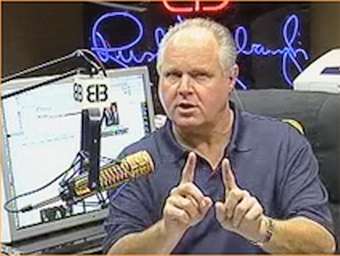
in words and deeds ideas and systems that either deliberately or inadvertently discriminate against other groups based on their race. It’s an expression of bigotry, but not just simply to acknowledge or enlighten oneself or others. Rush Limbaugh’s spit-flying session on President Obama in the weeks before the ’08 Election — “It was all about RACE! It was all about RACE!” — is a good example of this. Limbaugh was arguing that Obama was winning the election because of racism. Specifically, reverse racism among African Americans and White guilt over racism among independents and progressives. Limbaugh all but kissed his microphone while hollering out of a rage that can only be described as racism.

Anyone can express racism or be a racist. But where should we draw the line between bigotry and racism? I’ll use my mother as an example. She’s complained for thirty years how “all the jobs been taken by West Indians and Spanish people” in Mount Vernon and other parts of Westchester County. Well, working-class jobs, anyway. There’s no doubt that this is an expression of bigotry. But does this mean that my mother’s a racist? Hardly. For whatever it’s worth, my mother has worked with, gone to church with, and broken bread with folks regardless of their race or ethnicity, and not begrudgingly. Even with the authority to hire and fire thirty years ago, my mother worked to ensure that all under her supervision weren’t discriminated against.

But while all of us have a smidgen of bigotry in our hearts and minds as occasionally expressed from our mouths, many of us aren’t racists or practicing racism. But a racist is without a doubt a bigot. So experience, intent, position in society, and race (not racism, not bigotry) are all involved in making someone’s words and deeds examples of racism, and that person a racist.

These are subjective definitions, and I could be challenged and wrong. However, they’re based on twenty years of work as a writer, scholar, historian, professor, and forty years living in post-Civil Rights America. We need to start somewhere to have a real and serious discussion of race. Maybe this is it.

← Older posts
Newer posts →

Boy @ The Window: A Memoir

Boy @ The Window: A Memoir

Places to Buy/Download Boy @ The Window

There's a few ways in which you can read excerpts of, borrow and/or purchase and download Boy @ The Window. There's the trade paperback edition of Boy @ The Window, available for purchase via Amazon.com at http://www.amazon.com/Boy-Window-Donald-Earl-Collins/dp/0989256138/

There's also a Kindle edition on Amazon.com. The enhanced edition can be read only with Kindle Fire, an iPad or a full-color tablet. The links to the enhanced edition through Apple's iBookstore and the Barnes & Noble NOOK edition are below. The link to the Amazon Kindle version is also immediately below:

scr2555-proj697-a-kindle-logo-rgb-lg

Boy @ The Window on Amazon.com: http://www.amazon.com/Boy-The-Window-Memoir-ebook/dp/B00CD95FBU/

iBookstore-logo-300x100

Boy @ The Window on Apple's iBookstore: https://itunes.apple.com/us/book/boy-the-window/id643768275?ls=1

Barnes & Noble (bn.com) logo, June 26, 2013. (http://www.logotypes101.com).

Boy @ The Window on Barnes & Noble: http://www.barnesandnoble.com/w/boy-the-window-donald-earl-collins/1115182183?ean=2940016741567

You can also add, read and review Boy @ The Window on Goodreads.com. Just click on the button below:

Boy @ The Window

Twitter Updates

Tweets by decollins1969
  • RSS - Posts
  • RSS - Comments

Archives

  • June 2025
  • April 2023
  • September 2022
  • August 2022
  • July 2022
  • June 2022
  • May 2022
  • April 2022
  • March 2022
  • January 2022
  • December 2021
  • November 2021
  • October 2021
  • September 2021
  • August 2021
  • July 2021
  • June 2021
  • April 2021
  • March 2021
  • February 2021
  • January 2021
  • December 2020
  • November 2020
  • October 2020
  • September 2020
  • August 2020
  • July 2020
  • May 2020
  • April 2020
  • March 2020
  • January 2020
  • December 2019
  • November 2019
  • August 2019
  • July 2019
  • June 2019
  • May 2019
  • April 2019
  • March 2019
  • February 2019
  • January 2019
  • December 2018
  • November 2018
  • October 2018
  • September 2018
  • August 2018
  • July 2018
  • June 2018
  • May 2018
  • March 2018
  • February 2018
  • January 2018
  • December 2017
  • November 2017
  • October 2017
  • September 2017
  • August 2017
  • July 2017
  • June 2017
  • May 2017
  • April 2017
  • March 2017
  • February 2017
  • January 2017
  • December 2016
  • November 2016
  • October 2016
  • September 2016
  • August 2016
  • July 2016
  • June 2016
  • May 2016
  • April 2016
  • March 2016
  • February 2016
  • January 2016
  • December 2015
  • November 2015
  • October 2015
  • September 2015
  • August 2015
  • July 2015
  • June 2015
  • May 2015
  • April 2015
  • March 2015
  • February 2015
  • January 2015
  • December 2014
  • November 2014
  • October 2014
  • September 2014
  • August 2014
  • July 2014
  • June 2014
  • May 2014
  • April 2014
  • March 2014
  • February 2014
  • January 2014
  • December 2013
  • November 2013
  • October 2013
  • September 2013
  • August 2013
  • July 2013
  • June 2013
  • May 2013
  • April 2013
  • March 2013
  • February 2013
  • January 2013
  • December 2012
  • November 2012
  • October 2012
  • September 2012
  • August 2012
  • July 2012
  • June 2012
  • May 2012
  • April 2012
  • March 2012
  • February 2012
  • January 2012
  • December 2011
  • November 2011
  • October 2011
  • September 2011
  • August 2011
  • July 2011
  • June 2011
  • May 2011
  • April 2011
  • March 2011
  • February 2011
  • January 2011
  • December 2010
  • November 2010
  • October 2010
  • September 2010
  • August 2010
  • July 2010
  • June 2010
  • May 2010
  • April 2010
  • March 2010
  • February 2010
  • January 2010
  • December 2009
  • November 2009
  • October 2009
  • September 2009
  • August 2009
  • July 2009
  • June 2009
  • May 2009
  • April 2009
  • March 2009
  • February 2009
  • January 2009
  • December 2008
  • November 2008
  • October 2008
  • September 2008
  • August 2008
  • July 2008
  • June 2008
  • May 2008
  • April 2008
  • March 2008
  • February 2008
  • January 2008
  • December 2007
  • November 2007
  • October 2007
  • September 2007
  • August 2007
  • July 2007
  • June 2007

Recent Comments

MaryPena's avatarMaryPena on My Day of Atonement/Bitter Hat…
decollins1969's avatardecollins1969 on No Good Teaching Deed Goes…
Mary Rose O’Connell's avatarMary Rose O’Connell on No Good Teaching Deed Goes…

NetworkedBlogs on Facebook

NetworkedBlogs
Blog:
Notes From a Boy @ The Window
Topics:
My Life, Culture & Education, Politics & Goofyness
 
Follow my blog

616 616 East Lincoln Avenue A.B. Davis Middle School Abuse Academia Academy for Educational Development AED Afrocentricity American Narcissism Authenticity Bigotry Blackness Boy @ The Window Carnegie Mellon University Child Abuse Class of 1987 CMU Coping Strategies Crush #1 Crush #2 Death Disillusionment Diversity Domestic Violence Economic Inequality Education Family Friendship Friendships Graduate School Hebrew-Israelites High-Stakes Testing Higher Education History Homelessness Humanities Humanities Program Hypocrisy Internalized Racism Jealousy Joe Trotter Joe William Trotter Jr. K-12 Education Love Manhood Maurice Eugene Washington Maurice Washington Misogyny Mother-Son Relationship Mount Vernon High School Mount Vernon New York Mount Vernon public schools Multiculturalism MVHS Narcissism NFL Pitt Pittsburgh Politics of Education Poverty President Barack Obama Race Racial Stereotypes Racism Relationships Self-Awareness Self-Discovery Self-Reflection Sexism Social Justice Teaching and Learning University of Pittsburgh Violence Whiteness Writing

Top Rated

Blog at WordPress.com.

  • Subscribe Subscribed
    • Notes from a Boy @ The Window
    • Join 103 other subscribers
    • Already have a WordPress.com account? Log in now.
    • Notes from a Boy @ The Window
    • Subscribe Subscribed
    • Sign up
    • Log in
    • Report this content
    • View site in Reader
    • Manage subscriptions
    • Collapse this bar
 

Loading Comments...