Mark Twain New Editions: ‘Offensive’ Words To Be Removed

Tags

, , , , , , , , , ,


Mark Twain New Editions: ‘Offensive’ Words To Be Removed

Dear HuffingtonPost:

I find your deletion of my comment on the N-word-to-“slave” change in Mark Twain’s Huckleberr­y Finn offensive, Huffington­Post. You can’t erase history by simply erasing a word. Your knee-jerk deletion actually proves the point of my previous comment. That we Americans are willfully dumb and unwilling to have a real, ugly yet conciliato­ry conversati­on about race, racism, and racist behavior and speech. I guess I should’ve written Randall Kennedy’s book [N-word]: The Strange Career of a Troublesom­e Word (2002) or Stevie Wonder’s “Living For The City” (1973), where the warden says “in your cell, [N-word]” or Carl Van Vechten’s [N-word] Heaven (1926) instead of the actual word. We’d spend the next 50 years editing the word out of existence, only having not dealt with the hurt, anger, discrimina­tion, and issues of inferiorit­y contained in the context in which the N-word was and is being used.

Let’s go a step further, and edit Shakespear­e’s Othello or Rudyard Kipling’s “White Man’s Burden” (1899) or any number of other works because they contain potentiall­y offensive attitudes about race. Your deletion explains well why South Africa could do a truth and reconcilia­tion commission on apartheid, and why it will take a cultural revolution for racial reconcilia­tion to happen here in the US.

The 1’s Have It

Tags

, , , , , , , , , , , , , , , , ,


The 1 Train, NYC Subway, January 5, 2011, Screen Shot. Donald Earl Collins

Every year that’s ended in “1” has been an interesting one for me, and I’m hoping that this year’s no different, at least in a positive way. The number 1 may be the loneliest number of all. But for me, the years that have ended in that number have been good, bad, ugly and complicated.


’71: I was a toddler, so only a few fragments of memory here. Still, my mom and my dad married that year, only to break up five years later and divorce in ’78. It was a good year, but it led to a lot of bad ones for my mother and father, and indirectly, for me and my older brother Darren.

’81: Now this is where things for me became really complicated. I started the year a straight-A student in sixth grade, finished second in a writing contest, managed to get into the Humanities Program, and had good friends. But becoming a Hebrew-Israelite and having a head the size of Jupiter with my early successes made the last four months of ’81 about as miserable for me as being naked in a blizzard. It took until ’89 to recover from all of the problems that started at home and at school that year.

’91: What a pivotal year! The year began with me having high hopes of getting into grad school, not knowing whether I’d be in Pittsburgh, DC, New York or even Berkeley in eight months. I hadn’t dated in so long that I figured I’d finished my master’s degree before I started going out again. But the year turned that May, between getting money to go to grad school at Pitt and me moving on from a brief crush on one of my best friends. I finally decided to start dating again, nearly a year before I finished my master’s. It turned out that this sense of hope and acting on hope was the theme for the rest of my decade.

’01: The hope and optimism that I took with me from the ’90s remained. Yet the pessimism of working in the real world and real world events would temper that youthful sense that everything I wanted in life was possible simply because I had the talent, faith and drive to make them all happen. Between working as assistant director for the New Voices Fellowship Program at AED and 9/11, though, I learned that so much in my and our lives was well beyond my control. And with that, that people can do me harm even when my only crime is being myself. That yin and yang reality shaped the stagnation that was this decade, with marriage, Noah and Fear of a “Black” America among the highlights of an up-and-down ten years.

What will ’11 bring? I honestly have no idea. The only thing I do know is that I can’t afford to sit back and wait for something good to happen. This much I learned in ’81, ’91, and ’01. As Morgan Freeman said in Shawshank Redemption, I need to “get busy living, or get busy dying. That’s g__damn right.”

Tucker Carlson: Michael Vick ‘Should Have Been Executed’ (VIDEO)


Tucker Carlson saying someone should be executed isn’t news — it’s one of his many neo-con wet daydreams as part of his mindless stand-ins on FOX News. Roland Martin and others are right. How does someone with the analytical ineptitude of former Mr. Bowtie Wearer keep getting news show gigs between FOX News, PBS and CNN? Because like most of his ilk, Carlson sounds reasonable and reasoned, albeit from the perspectiv­e that makes most high-and-m­ighty bigots feel good about themselves­. If we use Carlson’s reasoning about Vick, then it’s safe to say that the faux-journ­alist and commentato­r should never have gotten a second chance after Crossfire went off the air on CNN six years ago.
Read the Article at HuffingtonPost

Interceptions Cause Excitement and Emotion

Tags

, , , , , , , , , , , , , , ,


Ed Reed of Baltimore Ravens Pick, 2004, December 28, 2010. Source: http://sportsillustrated.cnn.com/2005/writers/jeffri_chadiha/08/30/chadiha.safeties/index.html; AP Photo. Though this image is subject to copyright, its use is covered by the U.S. fair use laws because the photo is only being used for informational purposes.

Eli Manning’s masterful four-interception performance against the Green Bay Packers this past Sunday for my New York Giants the day after Christmas (as he was still in the spirit of giving, with his league-high 24 picks so far this season) inspired this latest post of mine. Not to mention ESPN columnist Jemele Hill’s tweeted R&B musical musings about the aerial mistakes of strong armed QBs and the lyrics of Lynn Ahrens and Schoolhouse Rock. I give you my adaptation of “Interjections,” “Interceptions:”


With Eli Manning at quarterback, uh-huh-huh,
The defense knew how to at-tack.
They baited the man
With Cov-2 again
While #10 threw some interceptions…

F***! Oh no!
S***! Oh God!
D***! That really, really sucks!

Interceptions (F***!) cause excitement (S***!) and emotion (D***!).
They’re generally set apart from a sack or fumble by a Pick-6 down the field
Or by dejection when the result’s not as bad.

Though Jay Cutler has a strong arm, uh-huh-huh
Jay didn’t know he could do, ha-arm
He was put under pressure
And despite his great treasure
Cutler lofted some interceptions…

What! Who are you throwing at, pal?
Oh my God! You think the ball comes with a radar system!
Hey! You’re kinda dumb, aren’t you?

Interceptions (Well!) cause excitement (OMG!) and emotion (Hey!).
They’re generally set apart from a sack or fumble by a Pick-6 down the field
Or by dejection when the result’s not as bad.

So if you’re happy (Hurray!) or sad (Man!)
Or pissed off (Grrrrr!) or mad (Rats!)
Or excited (Yes!) or glad (Yay!)
An interception makes or breaks a game.

The game was tied at seven all, uh-huh-huh,
When Brett Favre tried to throw the ba-hall
He made a connection
In the other direction,
And the crowd saw a game-ending interception…

Aw! You threw it right to him – again!
Damn! You just lost the game – again!
Yes! Favre, you choked – again!

Interceptions (Aw!) cause excitement (Damn!) and emotion (Yes!).
They’re generally set apart from a sack or fumble by a Pick-6 down the field
Or by dejection when the result’s not as bad.

So if you’re happy (Hurray!) or sad (Man!)
Or pissed off (Grrrrr!) or mad (Rats!)
Or excited (Yes!) or glad (Yay!)
An interception makes or breaks a game.

Interceptions (Hey!) cause excitement (Hey!) and emotion (Hey!).
They’re generally set apart from a sack or fumble by a Pick-6 down the field
Or by dejection when the result’s not as bad.

Interceptions cause excitement and emotion,
Hallelujah, Hallelujah, Hallelujah… YEA!

Turn out the lights! The party’s over! (Even if the Giants somehow make the playoffs this year).

Sweet and Sour 16

Tags

, , , , , , ,


Slice of cake nicer looking, but similar in style to cake I had 25 years ago, December 27, 2010. Source: http://www.cake-decorating-corner.com

Happy forty-first birthday to me! Competing with the savior of humanity on the last week of the year has never been easy. Most years, there’s been no contest between the observed celebration of Jesus’ birth and the date of my actual birth. But the second half of my growing up years were the worst in terms of how I saw my birthday. From ’78 to ’87, there were two Happy Birthdays for me: one in ’79, and one in ’85. The one that occurred twenty-five years ago, I’d rather forget.

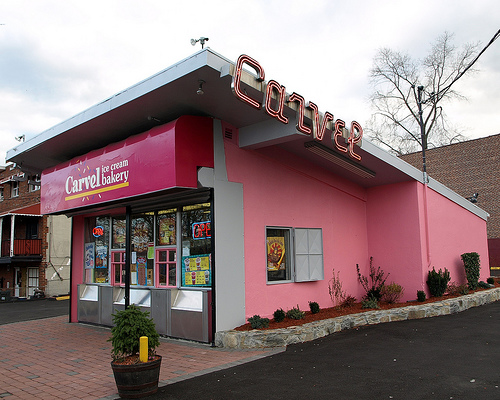
My sixteenth birthday, the twenty-seventh of December, was the first time since I turned nine that anyone bothered to give me a cake. This was a spontaneous decision, as I sat around 616 all day with little to do but watch after my younger siblings. Mom and Maurice agreed to buy me a birthday cake. Since it was my abusive stepfather’s money, I didn’t want any cake. I especially didn’t want the Carvel ice cream cake he thought I should have. I mean, it was a cold last Friday in December day, and all he could come up with was ice cream cake?

Carvel Ice Cream Store, Edenwald, East 233rd Street & Paulding Avenue, Bronx, New York, December 27, 2010. jag9889 at http://www.flickr.com/photos/jag9889

The kicker was that I had to go get the cake. It was my birthday, but I had to leave 616, catch the 7 bus to Prospect, get off at Waldbaum’s and walk over to the empty Carvel store to buy a chocolate ice cream cake with a huge vanilla ice cream coating. I bought it and brought it home so we could celebrate me turning sixteen.

I wasn’t thankful for this assignment, and it showed. I had two bites before my older brother Darren and my younger siblings devoured the rock-hard dessert. I wished that Maurice would just go somewhere and die. Not a violent death or one that I had to be the cause of. Just a death that he deserved, like a massive coronary blockage due to a diet rich in saturated fats.

About a week ago, I told my seven-year-old son this story. Or at least, an exaggerated, funny and much less painful fictionalized version of it. I made my ex-stepfather into Jabba the Hutt, and my Carvel ice cream cake into a small square boulder that was painted white. At one point in the story, I told Noah that I hit my stepfather in the head with a piece of the cake, “knocking him out cold.” I made it so that my siblings ate the cake like Shaggy and Scooby ate Scooby Snacks after solving a case, with tongues circling their faces and licking off the excess to boot.

Noah just laughed and laughed throughout. I just hope that he finds something to laugh about when he finally hears the real story.

NBER Report: Great Teachers Are Worth $400,000 A Year


Here we go again with an overemphas­is on teacher effectiven­ess as THE way to high student achievemen­t. Yes, teachers — especially elementary school teachers — deserve higher pay, on par with a middle-man­ager in a nonprofit or in government­. But parental and community engagement­, curriculum alignment, ending high-stake­s testing, an emphasis on literacy across the curriculum­, more profession­al developmen­t, better training school leadership are also needed. Not to mention address related issues of poverty and overall community developmen­t and health.

It’s a bit disingenuo­us to put a price tag on — excuse me, a cost-benef­its approach to describing — teacher effectiven­ess, to say the least. Without the inclusion of non-helico­pter / non-soccer mom parents as part of schooling or education reform, and without supportive and effective school leadership­, having great teachers will only mean they’ll move on after five years for a job that pays more. All of this is this corporate mentality to improving education, an approach that has worked so well for us in banking, real estate and hiring, right?
Read the Article at HuffingtonPost

Colleges, HBCUs, and the No-Profit Motive

Tags

, , , , , , , , , , , ,


Cathedral of Learning, University of Pittsburgh, December 20, 2010. Source: http://www.photohome.com

At the beginning of my junior year at the University of Pittsburgh (’89-’90), I took a cross-listed English lit and Black Studies course on African American women and men in literature. I took it partly to fulfill a writing requirement, and partly because I wanted to explore literature written by Black authors for once.


Besides the decidedly poor view of Black men in this literature — no doubt why Tyler Perry sees no need in developing a Black male character with the minimal complexity of a Worf of Mogh from the Star Trek franchise — there was another issue I needed to overcome. It was a 5:45 to 8:10 pm class on a Tuesday evening. Prior to the fall of ’89, I’d only taken one course that started after 4 pm, an assembly language course, and I withdraw from it after switching my major to history the previous fall.

But this course was great, despite books like The Women of Brewster Place and A Woman’s Place. I knew what some of the smartest Black women on campus thought of me before I opened my mouth. But much more important than that, I got to know a greater cross-section of students than the traditional daytime students between the ages of eighteen and twenty-four. Nontraditional students — adult learners as we educators call them now — populated our classroom.

They were housed in the College of General Studies, which didn’t mean anything negative to me. Some of my older friends from my freshman courses were CGS students, and were sharper in wit and wisdom than many of my Honors College friends and Humanities classmates from Mount Vernon High School in New York. They added tremendously to this course, and made it so much more fun than I would’ve had with other twenty-year-olds.

I ended up taking six 5:45 to 8:10 courses in my last two years of undergrad, and two more evening courses my first year of grad school at Pitt. They were some of my most memorable courses, with a diverse student population because of CGS, with students who were fully capable of performing well in a college setting. In part because counselors and other student services staff at CGS were available to help these students overcome their relative lack of academic preparation and because almost all of the courses these students took were fully integrated into Pitt’s course schedule.

It seems obvious. But treating adult learners with the care they needed and giving them courses that any traditional student could take made them feel more at home, and probably were significant factors in the success I saw so many of them have.

Fast forward eighteen years to my two semesters as an adjunct professor at Howard University. Besides
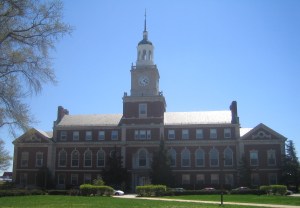
Founders Library, Howard University, Washington, DC Photo taken 9 April 2006 with Canon Powershot SD300. David Monack, author, released photo into public domain.

the laziness of the students in my Teaching Black Studies course — not to mention the stuffiness of the faculty (imagine referring to all of your colleagues as “Dr. So-and-So,” and not by their first names) — the main problem I had with them was with the times offered for my course. They originally wanted me to teach on a Monday-Wednesday-Friday noontime schedule. But I worked full-time, and preferred to teach an evening course. The Afro-American Studies department compromised, and gave me a 5 pm course that met Monday-Thursday during the summer.


My fall course, though, fell through, as the latest Howard wanted to schedule it was at 4 pm, and then mislabeled the course on top of that. It was a ridiculous experience, dealing with underprepared and entitled, spoiled students, not to mention a lethargic faculty and administration. I learned later that Howard didn’t offer evening, weekend or distance learning courses at the undergraduate level. I learned soon after that many universities — historically Black and otherwise — were more like Howard than they were like my student and teaching experiences at Pitt, Duquesne and George Washington.

There’s real money that universities — especially HBCUs — are giving up to maintain a false sense of the college experience for faculty and students alike. Even among traditional students, working part-time jobs and having expansive extracurricular activities makes it difficult to fit appropriate classes in between 8 am and 5 pm. While online teaching is one way to go, putting together course offerings that fit the schedules of twenty-first century students is a better place to start.

While the Harvards, Yales, Princetons, and even Carnegie Mellons of the university universe can afford to act like its 1969 still, Howard, Morehouse, Clark Atlanta and so many others cannot. You want to stay solvent and academically relevant? Dusting off the course booklet and looking at evenings and Saturdays to accommodate all of your potential students is a great place to begin.