• Spinning Sage’s Gold: Allegories on the Western-Dominated Present and a Possible Post-Western Future (2025)
  • About Me
  • Other Writings
  • Interview Clips
  • Video Clips
  • Boy @ The Window Pictures
  • Boy @ The Window Theme Music

Notes from a Boy @ The Window

~

Notes from a Boy @ The Window

Category Archives: race

Patriot Days

03 Saturday Jul 2010

Posted by decollins1969 in 1, Boy @ The Window, culture, Patriotism, Politics, race, Religion, Sports

≈ 1 Comment

Tags

Charlie Brown, foreign policy, Independence Day, July 4th, Military, Patriotism, Peanuts, Pledge of Allegiance, Social Justice
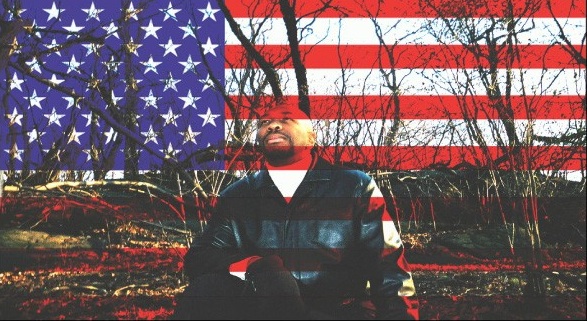

Source: Donald Earl Collins, Fear of a "Black" America Cover

Few things are more annoying or more confusing than my understanding of patriotism and how others — mostly White — perceive my patriotism and the patriotism of people of color more broadly. It’s something that I’ve struggled to grasp for more than thirty years. For those of you whose patriotism is akin to breathing, that’s your prerogative. I’ve found that something like one’s love for their country, like one’s belief in God (or not), shouldn’t be one that comes without thought or without any doubts at all. For without giving it any serious or critical thought or without any questioning or lingering doubts, most American patriotism is like being a Yankees or a Lakers fan. Patriotism in that sense is simply rooting for a team that can do no wrong, one that is expected to win in any contest simply because that’s all they’ve ever done.

My sense of patriotism began in ’79, when I started to devour history books and volumes of World Book Encyclopedia. I wasn’t completely naive, because I had also read Lerone Bennett’s/Ebony’s three-volume Black America set while learning about World War II. But I did believe that America ultimately stood for goodness and prosperity, for freedom and democracy all over the world. I fervently saluted the flag at pledge of allegiance time in school in fourth, fifth, sixth and seventh grade.
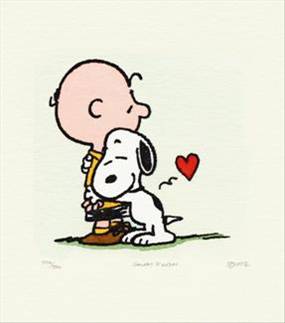
Snoopy & Charlie Brown. Source: Charles Schulz, Peanuts

At one point between fourth and sixth grade, I even created a pretend nation-state in our bedroom at 616, where I played out domestic and foreign policy issues through make-believe characters, from, of all things, the Peanuts comic strip. I saw the Cold War with the Soviet Union as one we absolutely had to win in order to keep the totalitarian communists at bay. Several of my Humanities classmates can attest to my defense of American foreign policy as late as ninth grade.

But even as I generally saw the US as the country the Scholastic Weekly Reader described it to be, I had my doubts as to America the always right and beautiful. It started at the end of fifth grade, when I hit the chapter in our social studies book about how we ended World War II with Hiroshima and Nagasaki. I hadn’t seen the mushroom cloud or the fire-bleached skulls before then. It scared me, but more importantly, it made me think about how cruel it was to wipe out a city the size of Mount Vernon but with three times as many people in the same space.

Then, with the Reagan Years and the almost complete refusal to acknowledge racism and poverty in the ’80s got me to the point where I refused to recite the pledge by my junior year of high school. One of the reasons I never saw the military as an option for escaping the abuse and poverty I’d grown up with was because I saw American foreign policy as one that was at least as imperialistic as that of the Soviets. Iran-Contra, Vietnam, El Salvador and Grenada were examples of us over-stepping our role as the leader of the free world.

It got worse for me before it got better. The Gulf War (’90-’91) and my growing knowledge of American history and atrocities at home and abroad made me feel as if this country was never meant for me, never meant to be mine.

Luckily I had other people from which to draw inspiration about how to approach a nation that generally takes people like me for granted, as if my life and death doesn’t matter at all. People as varied as Derrick Bell, Martin Luther King, Jr., Malcolm X, W.E.B. Du Bois, Anna Julia Cooper, Zora Neale Hurston, and Ralph Ellison — not to mention my Army ROTC friends who served — served to inspire another sense of patriotism.

Their writings and speeches, their acts on behalf of civil rights, human rights and social justice did teach me two things. One, that even folks who serve in the military deserve credit for understanding that their projection of American power means little without clear objectives and a clear sense that this use of power is necessary, justifiable and can actually matter to and gain the support of the rest of the world. Two, that holding my country’s feet to the fire around racism, poverty, imperialism and other forms of injustice is a form of patriotism. Without the socially conscious, this country’s ideals, its flag and other symbols of power, are meaningless beyond the imperial. So, for better and for worse, happy birthday America.

The Last Airbender, or Shyamalan’s Cynical Egg?

01 Thursday Jul 2010

Posted by decollins1969 in 1, culture, Eclectic, Movies, Pop Culture, race, Youth

≈ 3 Comments

Tags

Avatar: The Last Airbender, Bryan Konietzko, Cynicism, M. Night Shyamalan, Michael DiMartino, Movies, Racebending, Roger Ebert, The Last Airbender


The Last Airbender Poster. Source: http://www.mediawiki.org/wiki/Manual:External_editors

I’ve been reading the reviews. On HuffingtonPost, by Roger Ebert, on Twitter and so on. I’ve been watching the previews since December. I’ve read all of the articles about casting and race (see my post “Racebending Avatar: The Last Airbender” from April 2009). As of midnight in New York and L.A., the movie has finally arrived. And for most fans of the greatest animation series ever, The Last Airbender‘s DOA, SOL, and FUBAR, all wrapped into one. M. Night Shyamalan, who hasn’t done a great film since Shyamalan and Mark Wahlberg, 2008. Licensed with Cc-by-sa-2.0Sixth Sense in ’99, should’ve used all six of his senses before agreeing to wield a cleaver to a show based on multicultural authenticity and a sense of humanity only matched by its revealing humor.

The truth is, this isn’t all Shyamalan’s fault. Michael DiMartino and Bryan Konietzko, the creators of the animated series Avatar: The Last Airbender, sold their movie rights and creative direction for this movie so easily and cheaply. They may as well have been the McDonald brothers selling what’s now McDonald’s to Roy Kroc back in 1955. The producers of the film and Paramount Studios should be shot with a turkey for letting a live-action film based on an animated series — which almost never works out — make it to a CGI board, much less a screen.

But even with all of that, the picking of mostly White actors to play multiethnic roles was horrendous. The making up for this by making all of the actors playing Fire Nation characters — the bad guys — Maori and South Asian was another sign. Not at all dissimilar from the constant complaints about Star Trek: Nemesis (2002), the last of that long-running franchise. The special effects of fire and water-bending — not so special, in the words of Beavis and Butthead. And 3D effects? Huh? Really?

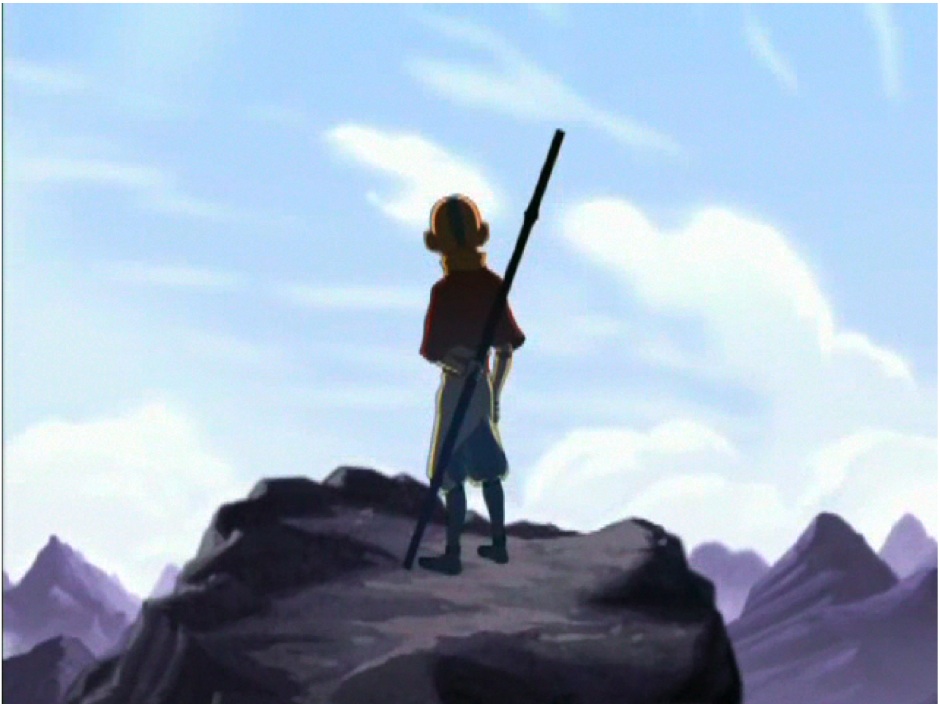
Avatar Aang, Back Turned. Screen Shot, Avatar: The Last Airbender

This shows how cynical the world that controls what we see and hear is. They think that the consuming public is so stupid, our kids so demanding, that they can serve us slop out of a garbage can with a fungus-covered plastic spoon, and then expect us to like it. It’s still a world in which our heroes and villains must look and act a certain way, our appreciation for anything not overtly American gets thrown out of a window, our need for the bombastic more important than our need for the authentic.

The real jaded-ness here, though, is that The Last Airbender wasn’t made with fans of the animated series in mind, the majority of whom are teenagers and adults. No, this movie was made for the five to ten-year-old set, the ones who may or may not have seen the Nicktoons replays of Avatar: The Last Airbender. But even the kids who have seen the series cannot appreciate the layers of complexity in the show, the richness of the characters, or the overall dialogue of the series. That’s what folks like Shyamalan are counting on.

My son was asking about The Last Airbender this morning, because he thinks that it’ll be like the animated series. Soon to be seven, Noah has a more thorough understanding of the series than most his age. But he doesn’t know how bad this movie is. If I’m pushed to or if he begs, I might take him, if only to show him how a good series can be turned into a horrible film. Then I’ll ask Shyamalan to give back his salary for making such schlock.

The Silent Treatment

21 Monday Jun 2010

Posted by decollins1969 in 1, Boy @ The Window, culture, Mount Vernon High School, Pop Culture, race, Youth

≈ Leave a comment

Tags

616, Class of 1987, Coolness, Culture, Mount Vernon High School, Mount Vernon New York, Pop Culture, Race, Silent Treatment, The Roots, Westchester County Department of Community Mental Health


Source: Screen Shot from The Roots, “Silent Treatment” Music Video, Geffen, 1995

Right after the MVHS graduation ceremony at Memorial Field in June ’87, it started. I’d walk down the street to the store, and bump into one of my suddenly former classmates, say “Hi,” and get no response at all. The few times I bumped into a certain Ms. Red Bone, she’d stare straight at me, then straight through me, all as I said “Hi.” She just kept on walking, as if I had phased out of our space-time continuum into a parallel universe. By the beginning of August, I honestly thought that these people, my classmates for so long, were showing their true colors. They just didn’t like me, not me because I’d been a Hebrew-Israelite or me because I was poor or me because I listened to Mr. Mister. It was all about me, something within me that they detested.

“You can’t pay any attention to that. They’re all just jealous,” my new friend E (see “The Power of E” posting from August ’08) said when I told her about the ghost treatment over lunch one day. She and I worked for General Foods in Tarrytown that summer.

“Of what? Of me?,” I asked in disbelief.

“It’s because you’re not trying to be anybody except yourself,” she said.

“That’s a good theory,” I thought, but I didn’t really believe it. E was fully in my corner, and much more obvious about it than anyone else.

This pattern of treatment had only occurred two other times. Once was in sixth grade, after I came to Holmes with my kufi for the first time. My best friend Starling stopped talking to me, and refused to even acknowledge my presence for nearly two weeks before our second and last fight. The other was earlier in my senior year, in the weeks after the final class rankings were posted. Some in the Class of ’87 were upset with me because I was ranked fourteenth in our class. Three of them responded by not talking to me at all. They’d walk by me in the hallways, looked at and through me, and kept going without so much as a nod. That went on from mid-December through the beginning of March.

The Black “Party All The Time” folks in my class, the popular and dapper folks, snickered whenever they saw me. So I guess that they decided that to acknowledge me after graduation would me contaminating themselves with the knowledge that I was still alive, still figuring things out, still not cool enough to be bothered with.

Three years later, I bumped into one of these folks on my way home from my summer job with Westchester County Department of Community Mental Health in White Plains. I was walking home to 616 on East Lincoln, having just gotten off the 41 Beeline Express. It was after 6:30, and I was beat from another day of database work and my research preparations for my senior year at Pitt. Coming in the opposite direction toward North Columbus was a party-all-the-timer, a popular, slightly light-skinned dude named J. Since I assumed that he would walk by me as if I were thin air, I started to walk by him as if he weren’t there.

Surprisingly, J stopped me and said, “Hi, Donald.” He said that he needed to talk to me, to tell me that the path that I walked in high school, while weird, was a better path than the one that he was on. He told me about his mind-bending experiences at Howard, about his dropping out and need to take care of some serious emotional and mental health issues. After a year of work at Pitt and in Westchester County, I could tell, too.

At first, I was taken aback. I mean, this was a guy who laughed at me for nearly six years, who’d never lowered himself to so much as to give me a thumbs-up while in school. Now J was sharing the most intimate of details about his life with me? I asked him, “Why are you telling me this?” Among the other things he said, the thing that stuck with me was, “Because you’re true to yourself.” I gave him a handshake, and wished him well.

That was nearly twenty years ago. I guess that J and others were under a lot of pressure — peer pressure, girl pressure, family pressures — to be cool, to be successful, to be something other than themselves. None of this justified how they treated me back then. Nor does it justify how any of them may see me now. I’m just glad the only silent treatment I get now is from my wife when I’ve taken a joke too far. At least I know that she’ll talk to me again, eventually.

The World Is Not Enough

15 Tuesday Jun 2010

Posted by decollins1969 in 1, culture, Pop Culture, race, Youth

≈ Leave a comment

Tags

A Question of Freedom, Abby Sunderland, Academy for Educational Development, AED, Affluence, Catcher in the Rye, Cem, Holden Caulfield, Into the Wild, Jordan Romero, Ken, McCandless, Narcissism, New Voices Fellowship Program, R. Dwayne Betts, Youth


Mount Everest from from Kalapatthar in Nepal. Photo Source: Pavel Novak Attribution-Share Alike 2.5 Generic

A few years ago, at my social justice fellowship job in DC, I worked with probably the worst program assistant in all my years of work. He was a twenty-two-year-old graduate of U Virginia or some other four-year institution in the heart of the Confederacy, and this was his first professional position. In eight months’ time, he managed to screw up in every conceivable way. He sent out professional emails with the signature, “Scooby Dooby Doo.” He’d address me with, “Yo, wass up,” as if we were friends. He slept in one day during our summer conference, and showed up hung over and in the clothes that he’d worn the day before another day. He couldn’t even do a mail merge without turning it into the German loss at Stalingrad. It took all of these screw ups and more before my boss was ready to entertain firing him. My former boss’ lament was, “He’s young. He’s just trying to figure things out.”

It’s one of the biggest and most hypocritical statements I’ve heard, and not just at my former job. We make excuses for youth — at least some youth — because we believe that somehow, some way, these folks will one day find themselves and take over the reins of our society and world. If this were a universal thing, that would be fine with me. But it’s not. If you’re educated, middle class or affluent, White and male — and sometimes female — the above is what people say about you when you screw in ways that would’ve gotten me fired inside of a week, whether at sixteen, nineteen or twenty-two.

The fact is, we live in a society in which for those folk whose concerns have grown beyond money, food,

Bungee jumping off the Zambezi Bridge, Victoria Falls, Africa, 1996

shelter and basic education and health, the everyday world isn’t enough. We think that youth and young adults have the mandate to search for themselves and screw up at all costs, because, well, the world is already theirs to inherit.

We don’t make excuses for poor White males, or Blacks, or the millions of undereducated youth regardless of race, gender and wealth the same way we do for the likes of the fully advantaged. Do we normally call it a mere mistake when a young woman of color gets pregnant at seventeen, or when someone like the author and poet R. Dewayne Betts (of his memoir A Question of Freedom) somehow ends up an accessory to a violent crime at sixteen? Of course not! We condemn both, treat them like they’re full-fledged adults, and hope that they rot out of our sight, media and mind.

From Holden Caulfield in the late J.D. Salinger’s Catcher in the Rye to the real-time Chris McCandless in the movie and book Into The Wild, the well-off mandarin class has embraced the contrarian and narcissistic perspectives that some youth have of our flawed and brutal world. Instead of fighting for a better world, the fictitious Caulfield and the real-life McCandless both went off in search of a reality that never existed anywhere except in their own minds. Ultimately, one took his own life, while the other put themselves in a position to lose his in not-so-wild Alaska.

Wooden sailing boat Kleine Freiheit – 70 year old gaff cutter

I don’t object to the likes of thirteen-year-old Jordan Romero climbing Mount Everest with his father. Nor do I object to sixteen-year-old Abby Sunderland’s attempts to circumnavigate the world solo, despite the dangers of such. What I do have problems with, though, are the underlying assumptions and reasoning behind such feats. This isn’t just about man versus nature or about finding oneself through an epic struggle. Really, it’s about the reality that our world — at least for the kinds of folk that I’ve described here — isn’t enough for them anymore. It certainly wasn’t enough for their parents.

We celebrate these youth as if this is the way to live, and that right and wrong and consequences don’t matter. At some point, we need to get over our affluent obsession over youth, over ourselves and our collective lamenting of the state of our world, if we ever hope to grow up and fix whatever ails us and our world.

My Apologies, “M”

11 Tuesday May 2010

Posted by decollins1969 in 1, Eclectic, Mount Vernon High School, race

≈ Leave a comment

Tags

A.B. Davis Middle School, Apology, Class of 1987, Culture, Italian, Mount Vernon High School, Mount Vernon New York, Race


M Line, Q-Brooklyn, Nassau Line

I have a confession to make (as if I haven’t confessed enough the past four years, right?). I owe a few of my former Humanities classmates apologies, though not the kind of apology some of you may expect. For these apologies have nothing to do with what I’ve written on this blog since June ’07. Nor are they about anything I’ve written (or rewritten) to date in the Boy @ The Window manuscript. These apologies are more about my trust and truthfulness, or lack thereof, to specific people at specific moments of time, during my six years of semi-solitude, somewhat self-imposed, I might add.

This particular apology is to a classmate who sat in front of me for most of my classes between 7S and AP US History with Meltzer. For the purposes of this post, let’s call her “M” (I know that some of you will likely figure out who “M” is, but play along anyway, please). M was one of the most curious people I went to school with during those years, which by definition, also made her extremely intelligent. She was part of the Italian crew that seemed to overwhelm me in 7S especially, yet not part of it at the same time.

But I didn’t even know that about M on my first day of seventh grade in ’81. I showed up, white kufi and all, with smiles and a sense of myself that was a combination of naiveté and sheer arrogance that morning. I no sooner sat at my assigned and alphabetically-arranged seat than both Mrs. Sesay and my new classmates of 7S began to ask me questions about my background. M, who sat two seats in front of me, asked, “Have you ever been to Israel?” “Yes, once. I’ve been to Tel Aviv and Jerusalem,” I lied. I’d only traveled outside of New York four times, including my fetus travels in ’69. I lied so quickly that I spent the next several minutes thinking about why.

It was the first of my several Christmas Story moments. I was like the character Ralphie, who was forced by his adoring mother to wear a pink bunny suit made by his aunt. Except that he was never made to parade his social suicide clothing all over town and school so that he could bring even more ridicule and scorn his way than his mouth could earn all by itself. There was no one in my circle who could’ve saved me from the ostracism that would follow me because of my kufi.

M’s question let me know immediately that I was in trouble with these Humanities kids. My elementary school classmates would’ve never asked me if I’ve ever been to Israel. M’s question gave me my first indication that I was poor. It made me think, if this whole Hebrew-Israelite thing was so wonderful, then why in five months hadn’t we gone to Israel? Why had we only been to temple once? Why, then, didn’t I have an allowance? M wasn’t the only one who had questions.

I was mad at M, but more angry and disappointed with myself for lying to her. Over the years, I grew bitter and angry with my family as well, about the whole Hebrew-Israelite thing, about kufis and other things. I think that M was the only White person in my classes other than our eventual valedictorian who may have sensed any of this during our Davis years. M, despite the big ’80s hair, Sergio Valente jeans, and constant gum chewing, was not only inquisitive. She had a talent for language that no one I knew in Humanities possessed. I’m sure she worked at it a bit, but still, Italian or not, M picked up the nuances of language faster than any of us, including the kids whose parents and grandparents spoke the language at home.

Unfortunately, she had her own issues in the social pecking order that was Humanities and in the diversity that was Davis and MVHS. She was Italian after all, and as a Humanities student, a nerd by definition. Yet she was attractive and by definition, also needed to be cool. M became this interesting contrast of pop cultural fashion, teenage cool and mostly subtle intellectual prowess, not much different from the main character played by Rob Brown in Finding Forrester. My Italian nemesis A tried, and tried, and tried again with her in those early years of Humanities, only to get shut down time and time again. I loved hearing her  tell A to “Shut up!” in her Brooklyn-esque accent on so many occasions.

I thought that M found me both fascinating and puzzling at times, as if I were a science experiment that yielded some surprising results. I was interesting because in many ways I represented the anti-stereotype, a Black kid who wasn’t cool and cared about grades, a Hebrew-Israelite who actually wanted to learn Italian and learn more about Italian culture. This made me an enigma because I was Black, part of a race that many Italians in Mount Vernon distrusted in the early ’80s. The politics of the town around City Hall, the police and fire departments and the Board of Education certainly helped make it so.

We did get into it once after school, about what I don’t remember. I remember calling her a “slut” for something she had said to me. I was picking fights a lot during my months of infatuation with Crush #1, so I didn’t keep a complete scorecard of every argument and every idiotic thing I said. In any case, I apologize. My bad.

But that’s not what I’m apologizing about.  Sometime in the middle of eleventh grade in Mrs. Warns English class, we were discussing travels to different parts of the world. M had missed the first three weeks of tenth grade, I think, to spend time in Italy, and was interested in traveling to places like Spain and Mexico, as she was quickly learning Spanish to go with her virtually fluent Italian. When the class conversation turned to me, I admitted that I hadn’t been out of New York State since ’78, and had never left the country. M’s mouth dropped open, as if I’d admitted that my father had tried to get a prostitute for me (which he did the following school year — see my “Secrets and Truths” post, January 2009). Her eyes glared at me, letting me know that she remembered. I stared blankly back at M, not even so much as shrugging my shoulders in response.

So, M, I apologize, and not just for lying. You’re one of only a handful of folks who showed genuine interest in me because of and beyond my kufi during the Humanities years. Yet I didn’t trust that interest at all. I took it as more a passing curiosity than anything else. I never gave either of us a chance to become acquaintances, much less friends. For that, and for calling you a “slut” in seventh grade, I am truly sorry.

Our Flat-Butt Society

08 Saturday May 2010

Posted by decollins1969 in 1, culture, Eclectic, Politics, Pop Culture, race

≈ Leave a comment

Tags

Beauty, Culture, Flat Butts, Pop Culture, Race


Flat-Butt Truck

Picture a world in which the only ingredient needed to achieve beauty was a flat butt. Imagine that this flat butt would guarantee more than an easier time in dating, marriage, and beauty pageants. A flat butt makes it easier to do well in school, to find comfortable fitting jeans, and to gain access to higher education, quality health care, better homes, and steady employment. Now imagine that those who have oblong butts, round butts, bubble butts, or some other combination of butt shapes have limited access to education, employment, medical care, housing, well-fitting clothes, and beauty pageants. Sounds ridiculous, doesn’t it? But, despite the numerous exceptions, we live in a flat-butt society.

We assume that flatter is better because some dead person created it as our ideal vision of beauty centuries ago. But this dead person created this standard without the benefit of interacting with people with other kinds of butts. Today we find ourselves in two worlds: the make-believe world of flat butts, and the real world of multiple kinds of butts. Hundreds of years of conditioning have left most in our society with the impression that a flat butt is a good butt and that other butts—especially round and bubbly ones—are unhealthy and symbolize low intellectual stamina. We need to dig up this dead person and ask him a few questions about his flat-butt vision.

Take the symbols of beauty for our culture. Whether male or female, they usually have flat butts with big chests. Round, shapely butts equal obesity as far as most of us are concerned. The ideal flat butt is one that is firm and muscular, an extension of a firm and muscular back. It’s one that a rubber band would boomerang off of. Has anyone ever seen a Miss America or Mr. Universe with anything other than a flat, muscular butt? Between so-called supermodels like Heidi Klum and Gisele, Sports Illustrated’s annual swimsuit issue, and the constant fawning over Hollywood actors, the women and especially men that are with them should feel extremely lucky. At least, that’s what we’re told by advertisers, journalists, reporters and commentators nearly every minute of every day.

There are of course exceptions to the flat-butt rule. These anomalies are often exotic and rarer than gold, but not the flat-butt norm. The popular press and hip-hop videos tend to cover these unusual people as ones who have exceptional derrieres. This only reinforces the idea that flat butts are normal and within everyone’s reach, and that anyone who doesn’t have a flat butt and isn’t exotic simply isn’t attractive. It’s no wonder that non-flat-bottomed men, women, and girls are spending millions for doctors to suck the fat out of their butts.

Another dead expert decided that a flat-butt person, as the international symbol of beauty, also was more athletic and intelligent. Because those with flat butts already were in the top positions of our society, it was self-evident that anyone without a flat butt lacked intellect or leadership ability. This expert assumed by scientific observation that people with non-flat butts couldn’t lead in science, society, or sports because their butts would get in the way. Over time, those with non-flat butts became leaders in the athletic field, but only in areas where intelligence seemed unnecessary. It’s likely that this deceased expert had a non-flat butt and spent much of his life obsessed with flattening it, wanting to become part of the flat-butt elite.

We can even see the penetration of our culture’s flat-butt philosophy in clothing and in our public spaces. Go to any clothing store in the country, and one will find it almost impossible to find trousers, slacks, jeans, pants, skirts, shorts, and underwear made for people with oblong, round, bubble, or mixed butts. The closest approximation to bottoms for the non-flat-bottomed male or female are ones made for the overweight, another population that fails to meet our society’s beauty standards.

We design our public spaces with flatness in mind. Take a look at the interior, exterior, and posterior of any public transit system in the country. A flat butt fits better in the molded seat of a bus or train than a round one. Public transit vehicles themselves have flat features, especially their rears. Public restrooms have toilet seats with flat butts in mind, as any non-flat-butted person can attest. And only someone with a flat butt would design slides in public parks for children with flat butts. Kids without flat butts tend to get stuck on these slides because the slides aren’t built with enough flexibility to accommodate other kinds of butts.

Sexual relations is one area in which the divide between flat butts and bubble butts (at least) has softened in recent years. It appears that some flat butt people are actually attracted to people with round, even jiggly butt cheeks. Yet this attraction only goes so far. Despite the mixing of flat and round and the recently discovered coolness of the non-flat, thinking in this area for most flat butts remains flat. For them, flat is phat-in beauty, culture, intelligence, and in some cases, athletics. The round, oblong, bubble, and mixed butts still have a long way to go.

What those with round butts need are pioneers to prove that like the world, the ideal for butts is variety and balance, not flat as the ideal. Proving this may require studies that show that a round butt provides long-term health benefits or has no genetic connection to intelligence. Chiropractors could show that those with non-flat butts have a greater chance of avoiding spinal degeneration than those with flat butts. Geneticists with round and flat butts may need to show that the round butt gene is the dominant one while flat-butt genes are recessive. Engineers can prove that rounding off buses and trains will make them more aerodynamic and energy-efficient, and deeper seat moldings will save millions in caring for our backs. Whatever the innovation or discovery, it’s up to the round butts of our nation to make this flat-butt society more round.

Where Grace and Rhodes Meet

04 Tuesday May 2010

Posted by decollins1969 in 1, Academia, culture, Eclectic, Politics, race, Sports

≈ Leave a comment

Tags

Academia, Culture, Harvard Law School, Intelligence, Myron Rolle, NFL, Race, Rhodes Scholarship, Sports, Stephanie Grace


In the past couple of weeks, two incidents have occurred that have brought attention to race and intelligence in America — again. One really is an incident, though, while the other is a continuing conversation about the head-scratching that goes on when someone personifies the idea of the anti-stereotype in a world full of them. Both make me cringe, even as I know that people like me can’t allow others to define us.

Over the past week, there’s been a minor firestorm blowing over comments from the soon-to-be Harvard Law School graduate, the amazing Stephanie Grace. She inserted foot-in-mouth — or, rather, fingers up her butt — regarding her wanting to keep open the option of the possibility that African Americans may be predisposed to being intellectually inferior to Whites. The fact that she sent this out to the Black Law Student Association at Harvard as an email was somewhere between foolish and obnoxiously audacious. The contents of her email, a display of the thoughts of someone about to begin a federal clerkship in the next few months is disturbing. It’s not just because Grace has spent the past three years at Harvard Law. It’s also because she spent that time there in a school with the likes of Charles Ogletree, Lani Guinier, and Randall Kennedy — all Black or Biracial — teaching there.

There will be no rationale refuting Grace’s idiotic email here, because my own very existence as a writer, professor and educator — not to mention the millions of highly educated people of color like me — should be enough. But for folks whose minds remain mesmerized by the eugenics movement and Nazi experiments in the first half of the twentieth century, no amount of evidence against their racist views would be enough.

Just ask Myron Rolle. He was the last person drafted in the sixth round of the NFL draft that occurred a little more than a week ago. All because he took a year off from playing football at the end of his college experience at Florida State University to — of all things — go to Oxford University in the UK to study medical anthropology for a year as a Rhodes Scholar! Rolle became the 207th overall pick because NFL geniuses in the front office suspected that the future neurosurgeon had a mixed set of priorities, that he couldn’t both play football and be interested in another demanding and rewarding career that would require raw intellectual talent. Teams passed on him because he accepted a Rhodes Scholarship and decided to postpone playing in the NFL for a year.

A scholarship that only former NBA players like Bill Bradley and Tom McMillen, and former NFL quarterback Pat Haden were able to obtain. Not to mention such luminaries as former POTUS Bill Clinton, Susan Rice (high-level official in the State Department under the Obama Administration), Newark mayor Cory Booker, and MSNBC commentator and host Rachel Maddow. But, I guess African American male athletes are only supposed to eat a bag full of oats and then run a 4.3-40-yard-dash, rather than explore the neurology of the human brain.

Former Baltimore Ravens coach Brian Billick insinuated that NFL players can’t be thinkers, at least intellectual ones, because that would mean they would get clobbered playing the game. Other coaches and GMs simply questioned Rolle’s commitment. I question their faulty and bigoted logic. It’s not every day that a Black athlete at a NCAA Division I football school can flex his intellectual muscles as easily as he can bench press 400 or 500 pounds. Maybe that’s what was so scary about Rolle.

Except that it shouldn’t have been scary at all. Indianapolis Colts star Peyton Manning stayed an extra year at the University of Tennessee, and not just to use up his last year of eligibility. Having finished his bachelor’s degree in four years (he was red-shirted his freshman year), Manning spent his fifth year working on a master’s degree. Hall of Famer Steve Young worked on a law degree at Stanford while playing for the San Francisco 49ers, during a stretch that included a Super Bowl win. But Rolle isn’t any of those guys. They’re White, and quarterbacks at that. They need to be smart. Cornerbacks in the NFL, on the other hand, don’t need to use their brains to read the difference between a screen pass, an out route, a go route or a skinny post, right?

What both cases show is that there’s an alarming portion of our population who find it easier to believe that African Americans have low intellectual potential. What’s even more significant, though, is that many of these same folks become agitated, even fearful, of educated Blacks, particularly Blacks who are their intellectual superiors. It’s an agitation I’ve been all too familiar with for nearly twenty years. With White professors who’ve allowed students to speak racial stereotypes to and about me in their classrooms, who’ve accused me of plagiarism, and refused to help me find a job because they thought I would just get one because I’m Black. With White supervisors who’ve accused me of being everything but a child of God because they thought I was after their job, or used me as part of a dog-and-pony show to get money from corporate funders. It’s something that I don’t expect to go away anytime in the immediate future.

Which is why I found it astounding to read a comment on another blog about the Stephanie Grace issue last week. A recent law school graduate talking about his experience as a young African American male lawyer, in which he felt he had to constantly disprove stereotypes while proving himself at some New York law firm. He advised folks thinking about becoming lawyers to not pursue the profession, which is about as sane as saying that melanin, genetics and intelligence are inextricably linked.

Even in the absence of racism, we all have to compete, to prove ourselves, to overcome in order to be successful in this world. It’s not about others bigotry and their attempts to stifle your success or career. It’s about proving to yourself how good you are, about how successful you can be, in law or any other field. Not to mention giving yourself financial security, finding work that you can be passionate about (even when it doesn’t bring riches), taking care of your family and yourself, helping other cope and be successful in an insane world. You can’t avoid idiots. I learned that ages ago, the hard way, with my former advisor Joe Trotter at Carnegie Mellon, who, by the way, is African American. We have to keep walking our path, to get beyond the corner of Grace and Rhodes, in order to be to Colossus we hope we are.

← Older posts
Newer posts →

Boy @ The Window: A Memoir

Boy @ The Window: A Memoir

Places to Buy/Download Boy @ The Window

There's a few ways in which you can read excerpts of, borrow and/or purchase and download Boy @ The Window. There's the trade paperback edition of Boy @ The Window, available for purchase via Amazon.com at http://www.amazon.com/Boy-Window-Donald-Earl-Collins/dp/0989256138/

There's also a Kindle edition on Amazon.com. The enhanced edition can be read only with Kindle Fire, an iPad or a full-color tablet. The links to the enhanced edition through Apple's iBookstore and the Barnes & Noble NOOK edition are below. The link to the Amazon Kindle version is also immediately below:

scr2555-proj697-a-kindle-logo-rgb-lg

Boy @ The Window on Amazon.com: http://www.amazon.com/Boy-The-Window-Memoir-ebook/dp/B00CD95FBU/

iBookstore-logo-300x100

Boy @ The Window on Apple's iBookstore: https://itunes.apple.com/us/book/boy-the-window/id643768275?ls=1

Barnes & Noble (bn.com) logo, June 26, 2013. (http://www.logotypes101.com).

Boy @ The Window on Barnes & Noble: http://www.barnesandnoble.com/w/boy-the-window-donald-earl-collins/1115182183?ean=2940016741567

You can also add, read and review Boy @ The Window on Goodreads.com. Just click on the button below:

Boy @ The Window

Twitter Updates

Tweets by decollins1969
  • RSS - Posts
  • RSS - Comments

Archives

  • June 2025
  • April 2023
  • September 2022
  • August 2022
  • July 2022
  • June 2022
  • May 2022
  • April 2022
  • March 2022
  • January 2022
  • December 2021
  • November 2021
  • October 2021
  • September 2021
  • August 2021
  • July 2021
  • June 2021
  • April 2021
  • March 2021
  • February 2021
  • January 2021
  • December 2020
  • November 2020
  • October 2020
  • September 2020
  • August 2020
  • July 2020
  • May 2020
  • April 2020
  • March 2020
  • January 2020
  • December 2019
  • November 2019
  • August 2019
  • July 2019
  • June 2019
  • May 2019
  • April 2019
  • March 2019
  • February 2019
  • January 2019
  • December 2018
  • November 2018
  • October 2018
  • September 2018
  • August 2018
  • July 2018
  • June 2018
  • May 2018
  • March 2018
  • February 2018
  • January 2018
  • December 2017
  • November 2017
  • October 2017
  • September 2017
  • August 2017
  • July 2017
  • June 2017
  • May 2017
  • April 2017
  • March 2017
  • February 2017
  • January 2017
  • December 2016
  • November 2016
  • October 2016
  • September 2016
  • August 2016
  • July 2016
  • June 2016
  • May 2016
  • April 2016
  • March 2016
  • February 2016
  • January 2016
  • December 2015
  • November 2015
  • October 2015
  • September 2015
  • August 2015
  • July 2015
  • June 2015
  • May 2015
  • April 2015
  • March 2015
  • February 2015
  • January 2015
  • December 2014
  • November 2014
  • October 2014
  • September 2014
  • August 2014
  • July 2014
  • June 2014
  • May 2014
  • April 2014
  • March 2014
  • February 2014
  • January 2014
  • December 2013
  • November 2013
  • October 2013
  • September 2013
  • August 2013
  • July 2013
  • June 2013
  • May 2013
  • April 2013
  • March 2013
  • February 2013
  • January 2013
  • December 2012
  • November 2012
  • October 2012
  • September 2012
  • August 2012
  • July 2012
  • June 2012
  • May 2012
  • April 2012
  • March 2012
  • February 2012
  • January 2012
  • December 2011
  • November 2011
  • October 2011
  • September 2011
  • August 2011
  • July 2011
  • June 2011
  • May 2011
  • April 2011
  • March 2011
  • February 2011
  • January 2011
  • December 2010
  • November 2010
  • October 2010
  • September 2010
  • August 2010
  • July 2010
  • June 2010
  • May 2010
  • April 2010
  • March 2010
  • February 2010
  • January 2010
  • December 2009
  • November 2009
  • October 2009
  • September 2009
  • August 2009
  • July 2009
  • June 2009
  • May 2009
  • April 2009
  • March 2009
  • February 2009
  • January 2009
  • December 2008
  • November 2008
  • October 2008
  • September 2008
  • August 2008
  • July 2008
  • June 2008
  • May 2008
  • April 2008
  • March 2008
  • February 2008
  • January 2008
  • December 2007
  • November 2007
  • October 2007
  • September 2007
  • August 2007
  • July 2007
  • June 2007

Recent Comments

MaryPena's avatarMaryPena on My Day of Atonement/Bitter Hat…
decollins1969's avatardecollins1969 on No Good Teaching Deed Goes…
Mary Rose O’Connell's avatarMary Rose O’Connell on No Good Teaching Deed Goes…

NetworkedBlogs on Facebook

NetworkedBlogs
Blog:
Notes From a Boy @ The Window
Topics:
My Life, Culture & Education, Politics & Goofyness
 
Follow my blog

616 616 East Lincoln Avenue A.B. Davis Middle School Abuse Academia Academy for Educational Development AED Afrocentricity American Narcissism Authenticity Bigotry Blackness Boy @ The Window Carnegie Mellon University Child Abuse Class of 1987 CMU Coping Strategies Crush #1 Crush #2 Death Disillusionment Diversity Domestic Violence Economic Inequality Education Family Friendship Friendships Graduate School Hebrew-Israelites High-Stakes Testing Higher Education History Homelessness Humanities Humanities Program Hypocrisy Internalized Racism Jealousy Joe Trotter Joe William Trotter Jr. K-12 Education Love Manhood Maurice Eugene Washington Maurice Washington Misogyny Mother-Son Relationship Mount Vernon High School Mount Vernon New York Mount Vernon public schools Multiculturalism MVHS Narcissism NFL Pitt Pittsburgh Politics of Education Poverty President Barack Obama Race Racial Stereotypes Racism Relationships Self-Awareness Self-Discovery Self-Reflection Sexism Social Justice Teaching and Learning University of Pittsburgh Violence Whiteness Writing

Top Rated

Blog at WordPress.com.

  • Subscribe Subscribed
    • Notes from a Boy @ The Window
    • Join 103 other subscribers
    • Already have a WordPress.com account? Log in now.
    • Notes from a Boy @ The Window
    • Subscribe Subscribed
    • Sign up
    • Log in
    • Report this content
    • View site in Reader
    • Manage subscriptions
    • Collapse this bar
 

Loading Comments...