• About Me
  • Other Writings
  • Interview Clips
  • All About Me: American Racism, American Narcissism, and the Conversation America Can’t Have
  • Video Clips
  • Boy @ The Window Pictures
  • Boy @ The Window Theme Music

Notes from a Boy @ The Window

~

Notes from a Boy @ The Window

Category Archives: Politics

Patriotism, Post-Racialism and Prima Donnas

04 Monday Jul 2011

Posted by decollins1969 in 1, Academia, culture, Eclectic, Patriotism, Politics, Pop Culture, race

≈ Leave a comment

Tags

4th of July, Abraham Lincoln, Alexandra Pelosi, American Patriotism, Hyper-Patriotism, Imperialism, Independence Day, John Allen Muhammad, July 4th, Martin Luther King, Military, Narcissism, Nationalism, Patriotism, Post-Racialism, Prima Donnas, Susan B. Anthony, Timothy McVeigh


US Flag and Lower 48, July 3, 2011. Source: http://mapsof.net

It’s yet another 4th of July, number 235, and I find myself tired of how the prima donnas in this country think it their right to define for me what patriotism is and isn’t. Last I checked, carrying an M-16 rifle and wearing a uniform overseas isn’t the alpha and omega of patriotism here or anywhere, and saying that it is doesn’t make it so. By that definition, it would mean that Martin Luther King, Jr., Abraham Lincoln and Susan B. Anthony weren’t patriots, while Timothy McVeigh and John Allen Muhammad were. Those who serve in combat are obvious American patriots. But hiding behind our military in defining patriotism allows us as a nation to ignore so many things that contradict our sense of nationalism and patriotism.
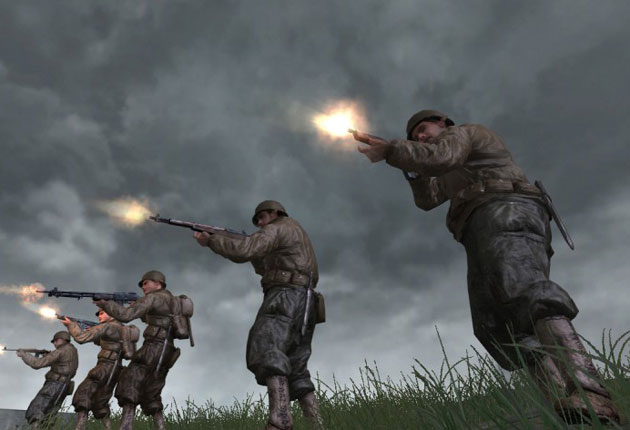
Call of Duty Screen Shot, July 3, 2011. Source: http://independent.co.uk

Patriotism is about much more than guns, battles, taking flanking positions or making perfect speeches wholly incompatible with the imperfections of our society and people. As anyone in the education field knows, Americans in general know about as much history as my son knows right now, and he just finished second grade.

Our aversion to history is especially noticeable when it comes to race. We’ve declared ourselves post-racial when we haven’t even been pre-racial. Meaning that in order to get beyond race, we actually have to deal with it directly, head-on, without holding back, the ugly history of race and racism that is as American as apple pie. I’m afraid that it’ll take a national tragedy, though, for more Americans to dare be that brave, that honest, that, well, patriotic.

It’s sad, because most of us are prima donnas, or rather, imperial narcissists who talk about patriotism without understanding that being a patriot often means using one’s brain and vociferously resisting the status quo. We’re more concerned about winning Mega Millions and Powerball or the price of gas than we really are about troop levels in Iraq and Afghanistan or making US foreign and economic policies more equitable abroad and at home. We somehow assume that “America is #1!” is our birthright, even as many of us haven’t the socioeconomic capacity to partake in America’s remaining riches.

Alexandra Pelosi (a documentarian and former House Speaker Nancy Pelosi’s daughter) has been doing the media circuit talking about her latest film, Citizen U.S.A., the story of immigrants becoming naturalized

Citizen U.S.A. Poster, June 2011. Source: http://www.jfklibrary.org

American citizens and their appreciation of what they believe America is about. Her message has essentially been “shame on you” to native-born Americans for not seeing our nation the way these immigrants can and do.

But even Pelosi’s perspective is limited in its prima-donna-ness. There are millions of us who see the direction of the nation and work not to illuminate its already over-hyped greatness — a classic sign of imperialism, by the way — but to make the nation a better one, a nation that lives up to its ideals. Isn’t this another example of one’s patriotism, one that’s forward-thinking enough to work for the long-term success of a nation, rather than chest-thumping about greatness in the present?

It seems to me that we should illuminate the fact that we expend so much energy making millions of Americans who are not with the prima-donna program into unpatriotic outcasts. So much so that most of us have never had an independent thought on this topic in our entire lives. And if the 4th of July is to be about more than guns, speeches, guns and denigration, we need more people to think for and beyond themselves about patriotism, even if some of us are incapable of accepting independent thought and criticism from them.


The Curious Case of Mrs. O’Daniel

30 Thursday Jun 2011

Posted by decollins1969 in 1, Boy @ The Window, culture, Eclectic, Politics, Pop Culture, race, Youth

≈ Leave a comment

Tags

1979-80 School Year, African American History, African American Teachers, Black History, Black Teachers, Board of Education, Cooperative Learning, Corporal Punishment, Fifth Grade, Language Arts, Mrs. O'Daniel, Nurturing Teachers, Reading, Student Engagement, Wiliam H. Holmes Elementary, Writing


I meant to do a post on this last month, but got caught up in other work and other posts. This one’s about the unique experience me and about thirty of my William H. Holmes Elementary School classmates had between ’77 and ’81, and my unique experience in particular. That experience, at least for me (and to a slightly lesser extent, for my classmates), was in having a number of caring, highly qualified Black teachers before we went off to the vicious worlds of A.B. Davis Middle School, Nichols Middle School, and Mount Vernon High School.

Starting in first grade in ’75, I had Ms. Griffin at Nathan Hale Elementary (now Cecil Parker Elementary), Mrs. Shannon — my first teacher crush — in third grade at Holmes, and Mrs. Bryant, a great teacher, in sixth grade. But the toughest and yet very caring of all the Black teachers I had in K-6 in Mount Vernon was Mrs. O’Daniel, my fifth grade teacher. She was the teacher that made me realize how troubled the world around me really was.

I and we learned early on how not to cross Mrs. O’Daniel. Once early in the school year, when our class was wound up and acting out, Mrs. O’Daniel threatened to “introduce [us] to the Board of Education. Do y’all know what that is?” After raising my hand, I said, “Yeah, it’s the building next door to us.” “No, not that Board of Education,” Mrs. O’Daniel said with a slight smile, “this one.” This Board of Education was three yard sticks taped together, and she tapped the palm of her left hand with it to emphasize what it was for — our behinds.

She used it on me one time, because I happened to take something that wasn’t mine from her nook in the classroom, what, I don’t remember. Five taps with the Board of Education across my hand was quite enough for me in the ’79-’80 schools.

Mrs. O’Daniel, though, did much more than provide discipline for our classroom. She spent a lot of our time that year on history, American history, African American history, reading and writing. I read parts of W. E. B. Du Bois’ Souls of Black Folk in her class that year and wrote a small and wholly inadequate book report on it. I learned about the atomic bombs dropped on Hiroshima and Nagasaki for the first time in May ’80. I learned so much about MLK and Malcolm X that year, more than I’d learn all through middle school and high school.

I also discovered how far behind some of my classmates were. We had two twelve-year-olds and a thirteen-year old in our class, and all of them read well below the fifth grade level. Mrs. O’Daniel assigned me and two other classmates the task of working with the older classmates to help them build up their reading and writing skills. That spring, I spent a month working with the oldest member of our class, going over words that I once struggled with in second and third grade. I felt bad for him, but even more puzzled about how a teenager could be stuck in fifth grade reading only on the second grade level.

There was a mystery to Mrs. O’Daniel as far as I was concerned. I still can’t remember if she’d grown up in North Carolina or Alabama, or if she had any kids or grand kids, or if her husband was still alive. When she announced in the early spring of ’80 that she had just turned sixty, we were stunned, thinking of how old sixty was compared to ten, eleven or even thirteen. She seemed a bit strange, but certainly not old beyond our knowledge that she was born in 1920. Mrs. O’Daniel was as tall as teacher as I ever had, but hardly frail or old outside of her salt and less salt hair.

She died in ’83, sometime during my first weeks in Mount Vernon High School. Some of my former Holmes classmates, who were now in Humanities in ninth grade, broke down and cried when they heard the news. I must admit, I was stunned. I’d never known anyone who had contact with me and died before. All I knew was that an older person who cared about me, about all of my classmates, had passed away.

It made me sad, but it didn’t sink in until much, much later how fortunate I was to have had Mrs. O’Daniel and Mrs. Bryant, Mrs. Shannon and Ms. Griffin as my teachers early on. I had no idea that the only teacher of color that I’d have until I reached the University of Pittsburgh would be Ms. Simmons, a first-year, seventh-grade math teacher I stood toe to toe with by Xmas ’81. I think that my understanding of African American history and culture would’ve been much more limited prior to my Pitt years if it weren’t for Mrs. O’Daniel. And for that, and so much more, I thank her.

Eugene Robinson Disses Black Generation X

08 Wednesday Jun 2011

Posted by decollins1969 in 1, Academia, Boy @ The Window, culture, Eclectic, Politics, Pop Culture, race

≈ Leave a comment

Tags

Abandoned, Abandoned Communities, African Americans, African Immigrants, Black Americans, Black Baby Boomers, Black Gen Xers, Caribbean Immigrants, Disintegration, Emergent, Eugene Robinson, Generational Divide, Intrarace Relations, Invisibility, Mainstream, Mlllennial Generation Blacks, Model Minority, MSNBC, Post-Civil Rights Generation, Pulitzer Prize, Race, Racism, Thomas Sowell, Transcendent, Washington Post


Disintegration Book Cover, June 8, 2011. Donald Earl Collins. Note the beat-up look of the cover, thanks to my wife, who had it for more than five months before I read it last week.

I finally got around to reading Eugene Robinson’s Disintegration: The Splintering of Black America this week. Despite my doubts, I hoped that the famed Washington Post columnist, MSNBC rock star and Pulitzer Prize winner would say something profound, or at the least, provocative. Not only did I not learn anything new in the three and half hours it took for me to read Disintegration. I learned that Robinson, like so many accomplished Blacks of his generation, doesn’t see Black Generation Xers when talking about the state of African America. The generational divide, perhaps the greatest example of disintegration that Robinson should’ve discussed, he rendered invisible throughout his book.

I know I’m late by Black literati standards in taking so long to sit down and read this book. After all, I bought the book this past Christmas as my personal birthday present. I had a feeling, though, that somehow, this book really wasn’t for me, a forty-one year-old Black Gen Xer who’s spent about half of my life thinking about this and other related issues. To slightly misquote Arnold Schwarzenegger from Total Recall, “Welcome to the party, Robinson!”

Over and over again in Disintegration, Robinson referred to the positions of Black Baby Boomers in a splintered Black America, as well as to the hopes, fears and aspirations of millennial generation African Americans (particularly on issues like the decline of interracial prejudice and educational attainment). I guess because Robinson mostly relied on his personal journey as a guide to understanding the history of African America’s disintegration — including using his sons as a time line template — it meant that folks born between ’65 and ’85 didn’t really count.

Unless, of course, they were part of the Abandoned class, the ones who found themselves increasingly poor and isolated after ’68 in communities like Shaw and U Street in DC. Or, in my case, on the South Side and other pockets of Mount Vernon, New York by the late 70s and ’80s. Then Robinson’s sympathetic voice kicked in, one which acknowledged all of the ills that one in four Blacks face every day. Still, Black Gen Xers are only in the Abandoned in Robinson’s mind and words by proxy.

There are far more obvious errors of omission in Robinson’s somewhat thought-provoking, 237-page column than leaving out an entire generation of post-Civil Rights era Black folk. Like Robinson stumbling his way into Thomas Sowell’s “model minority” argument like a punch-drunk boxer in the final round of a fight. Or, really, like a writer running out of steam at the end of a manuscript.

Robinson’s fifteen-page chapter “The Emergence (Part 1): Coming To America” is all about a new immigration wave of Blacks from sub-Saharan Africa and the Caribbean who are more highly educated than any other immigrant group arriving these days (and are better educated than most Americans, for that matter). Yes this is true in the aggregate. But besides a few examples that serve to exaggerate more than enlighten, Robinson’s analysis sounds like Sowell’s arguments from ’72. Only without the conservative policy implications and with a generous lack of sophistication in understanding the diversity within these immigrant groups.

There’s also the use of these troubling terms of Transcendent and Mainstream, both of which evoke a ’70s-style thinking about African Americans who’ve “made it.” How about “New Black Elite” and “Successful Yet Struggling Black Middle,” both of which are more accurate descriptors? I understand that Robinson’s purpose with Disintegration was to poke and prod readers, albeit in a light way. Still, the book seems written for what he would describe as aspiring Transcendents who are far too busy climbing social ladders to think about cultural and community disintegration post-1968, rather than those of us who do.

Which brings me back to Robinson’s Black Gen X blind spot. How is it possible that someone with the panache and diligence of Robinson could forget about the 26-46 year-old demographic in Disintegration? The reasons are as plain as the positions of prestige that Transcendent African American Baby Boomers occupy and cling to like a man with a fingernail death grip on a precipice. (And, despite Robinson’s protestations to the contrary, by his own definition, he and his family are Transcendent. Who else gets to hang out with Oprah and Vernon Jordan or do interviews with President Obama without being Transcendent?)

Me and my generation of Blacks had been written off by Robinson’s gangs of elites and wannabe elites by the time I was a college freshman at the University of Pittsburgh in ’87. Our ideas about the disintegration of Black America and what that has meant over the past forty years are undoubtedly fresher. Yet we as a group aren’t asked about our ideas. Apparently when Black America disintegrated, we fell into a black hole. At least in Mr. Robinson’s neighborhood.

GOP/TPers’ Theme Music for Election 2012

30 Monday May 2011

Posted by decollins1969 in 1, culture, Eclectic, eclectic music, music, Patriotism, Politics, Pop Culture, race

≈ 3 Comments

Tags

ABC, Al Green, Bruce Springsteen, Climate Change, Conservatives, Creed, Donald Trump, Election 2012, Gay Rights, Genesis, GOP, Grover Washington Jr., Herman Cain, Human Rights, Immigration Reform, James Blunt, John Mellencamp, Lower Taxes, Maxwell, Michelle Bachmann, Mike Huckabee, Mitt Romney, Newt Gingrich, Patriotism, PE, Political Messages, Presidential Candidates, Protest Songs, Public Enemy, Racial Justice, Republicans, Sade, Sarah Palin, Tea Party, Ted Nugent, The Cranberries, Theme Songs, Tim Pawlenty, TPers, U2, unemployment, Usurping Messages


Huckabee with Ted Nugent on guitar, Huckabee Show, FOX News Channel, May 14, 2011. Source: http://dailymail.co.uk

Ever since Mike Huckabee announced that he wasn’t running for POTUS in the Election ’12 cycle (after playing chords with Ted Nugent), I’ve been thinking about an appropriately snarky and sarcastic way to understand the GOP/Tea Party candidacy process. It’s been a bit confusing. Between Trump and Huckabee, Newt Gingrich and Herman Cain, Pawlenty and Romney, Palin and Bachmann, I’d have a hard time finding a candidate I’d vote for even if I were a true American conservative.

But I do know what would help. Theme music to get our juices flowin’, to rile us up about how excited we should be that among these candidates is a challenger worthy of President Barack Obama. Heck, it’s worked before. Ed Meese and Don Regan used Bruce Springsteen’s “Born In The U.S.A.” and John Mellencamp’s “Pink Houses” as theme music in ’84. This despite the fact that these were protests songs of an America anti-common man and pro-war.

GOP/TPers can do the same in ’12. Here’s a list of songs to usurp — oops, I mean use — between now and November 6 of next year.

1. Genesis, “Illegal Alien” (1983), as in, “It’s no fun/being an illegal alien” — especially if the GOP/TPers take over in ’12.

2. James Blunt, “No Bravery” (2005), a truthful description of what it takes to run on the GOP/TP ticket, i.e., no independent thought.

3. ABC, “How To Be A Millionaire” (1985), which should be retitled, “How To Be A Billionaire,” since that’s the ultimate goal of the leaders of the GOP – “a million is not enough” could be the party’s new slogan.

4. U2, “Crumbs From Your Table,” (2004), which, if these folks are elected next year, will be all we’ll have to eat by the ’16 election cycle.

Crumbs on my table, courtesy of Noah's old elephant and a Lipton tea bag wrapped around trunk, May 30, 2011. Donald Earl Collins.

5. Chicago, “Hard Habit To Break,” (1984), especially in the refrain, “I’m addicted to you,” meaning easy money from top 1%, debt and low taxes, and oil, oh, sweet crude oil!

6. The Cranberries, “Zombie,” (1994), the sincerest hope of the GOP/TPers when it comes to what’s left of our voting populace.

Herman Cain, They Think You're Stupid Book Cover (more like We Think You're Stupid), 2009. Source: National Black Republican Association, http://nbra.info

7. Al Green, “One Of These Good Old Days,” (1972), a tribute to the way the Party of Corporations wants things to be for rich – it’s their climax song!

8. Prince, “1999,” (1983), except they would definitely change it to “1899,” the height of affluent largesse, corporate greed and monopoly-building (until the ’00s), and acceptable racism.

9. Creed, “My Own Prison,” (1997), one of the ultimate dreams of the GOP/TPers, that we’d build our own prisons and then put ourselves in them so they don’t have to worry about job creation.

10. Grover Washington, Jr., “Summer Chill,” (1992), what the party hopes their paid-off scientists can “prove” in a new study funded by the John M. Olin Foundation, the Heritage Foundation, and the Scaife Foundations, making “Drill, baby, drill” a reality in ANWR.

11. Public Enemy, “Welcome To The Terrordome,” (1989), most likely would be used by the GOP/TPers to promote gladiator-like games as a way to bring the unemployment rate down for those they can’t get to build their own prisons.

12. Sade, “The Sweetest Taboo,” (1985), a tribute to all of their in the closet and anti-gay party members willing to sacrifice the civil and human rights of LGBT Americans everywhere for a seat in Washington.

13. Maxwell, “…Til The Cops Come Knockin’,” (1996), the general plan for all elected GOP/TPers until they’re caught in illegal activities.

In addition, there’s Alexander O’Neal’s “When The Party’s Over” (1987), another example of what would happen to us, our country and our world if the GOP/TPers reclaimed and remained in charge. They’d suck the bottom ninety-nine percent of us dry until the good times are over, and then blame us for not letting them steal the plumbing, too. Please add to this list. I could’ve created an iPod list of a hundred appropriate songs, but fourteen’s just a start. Eat your heart out, Ted Nugent!

Black Male Id-entity & the F-Bomb

26 Thursday May 2011

Posted by decollins1969 in 1, Boy @ The Window, culture, Eclectic, Politics, Pop Culture, race, Youth

≈ Leave a comment

Tags

616, 616 East Lincoln Avenue, Anti-Gay Slur, Authenticity, Basketball, Basketball Courts, Bigotry, Black Males, Carnegie Mellon University, Context, Coolness, F-Bomb, F-word, Faggot, Heterosexism, Homophobia, Joakim Noah, Kobe Bryant, Michael Wilbon, Mount Vernon New York, Nathan Hale Elementary, NBA, Nigga, Pitt, Pittsburgh, Playgrounds, Sean Miller, Toure X, Twitter, University of Pittsburgh, Washington DC, Words


Joakim Noah Apparently Says ‘F–k You Faggot’ To Fan (VIDEO)

Joakim Noah Apparently Says ‘F–k You Faggot’ To Fan (VIDEO)

Gay Rights Month isn’t for another six days, as it’s still May. But in light of Joakim Noah’s unfortunate anti-gay slur outburst, “Fuck you, faggot!,” it makes sense to start this year’s conversation a week early.

This is more than about the NBA, gay athletes in the closet or what professional athletes should and shouldn’t say to fans and to each other. The behind-the-curtain issue here could just as well be about Black male identity (whether heterosexual or gay) and how Black males express themselves to each other and to the rest of the world.

My first memories playing with a group of Black males in Mount Vernon, New York are all negative. When I was six in ’76, a group of preteens on the neighborhood playground near Nathan Hale Elementary on South 6th Avenue tried to force me into sucking one of their dicks, practically sticking it in my face to do so. I got away before being truly scarred for life. After we moved to 616 East Lincoln Avenue in April ’77, our first time playing outside was spent running away from the other kids, who greeted us by throwing rocks at us and calling me and my brother Darren “faggots.” (see my June 1, 2009 post, “In the Closet, On the Down Low” for more).

When I was nine, I played basketball on a court near 616 for the first time with a group of kids from my building. After throwing up an awkward brick and an air ball, I got five minutes of “You terrible!,” “You need to sit down!,” “You’re never gonna be an athlete!,” “You need to get back to reading them books of yours!,” and “You shoot like a faggot!”

Even though I eventually learned how to dribble with both hands, shoot a j, make layups, block shots, and on rare occasions, dunk a basketball, I’ve been leery being around other Black males on the basketball court. One would think after playing pickup with former Pitt basketball players while in grad school that I’d completely forgotten what happened to me back in the spring of ’79. But I hadn’t, at least on an unconscious level. I often watched what I said, I mean, down to every single word. Not to mention how I walked, where my arms were, and how I held my head. Still, I sometimes felt inadequate on the court, whether I went 8-for-9 or 2-for-7, blocked a shot, stole a ball, or got knocked down guarding someone six-foot-six and 260 pounds.

But I figured out something in those years of playing pickup at Pitt and Carnegie Mellon and other places in Pittsburgh and DC over the years. That blending in doesn’t matter. Fools — even ones with momentary lapses in judgment like Joakim Noah — will be fools because on the playground or court, it makes them cool in the minds of their peers.

Yes, this isn’t just a Black male issue. Sean Miller, currently coach of the University of Arizona men’s basketball team — not to mention an all-time Pitt basketball great — once played a prank on me our freshmen year. He called me up in my Lothrop Hall dorm room late one night, offered me a blow job, and called me a “faggot” in the process.  So being called a “faggot” or saying that something or someone is “gay” is part of our culture on and off the basketball court, for Black and White males to be sure.

But unlike Michael Wilbon, I can’t excuse it because it’s commonplace and therefore it may be difficult for some young men to immediately stop themselves from saying “faggot.” Nor can I rationalize this like Touré (a.k.a. TouréX on Twitter) attempted to do in a Twitter exchange with me a couple of days ago. He compared the use of “faggot” to “nigga,” with the idea that both words have more than one meaning and that the meaning can sometimes be positive, depending on context.

I can see the argument for “nigga,” even though I don’t like it when younger men use it to affirm each other and especially me. But “faggot” meaning “less than a man?” Or “stupid” or “dumb?” So is Noah or Kobe more of a man for telling someone else they’re not a man? Even in context, this isn’t positive — it’s potentially soul-destroying, and not just for someone being called a faggot.

Of the preteens and young boys who called me “faggot” growing up, at least three have served hard time. Is there a direct connection? Of course not. Still, it seems that a culture steeped in the requirement of being cool, finding quick and easy success and putting down others while doing so lends itself well to a crash-and-burn mentality that so many of us have about our lives.

Balkis Makeda’s 2nd Coming

23 Monday May 2011

Posted by decollins1969 in 1, Boy @ The Window, culture, Eclectic, Mount Vernon High School, Politics, race, Religion, Youth

≈ Leave a comment

Tags

616, 616 East Lincoln Avenue, Balkis Makeda, Balqis Makeda, Birthday, Christianity, Cooking, Cult, Cults, Eri, Hebrew-Israelites, Hell, Hello, Interpreting Dreams, Israelites, Ivory Soap, Judah ben Israel, King Solomon, Kufi, Maurice Eugene Washington, Mount Vernon High School, Mount Vernon New York, Poverty, Queen of Sheba, Race, Reincarnation, Rituals, Unclean Issues of Blood


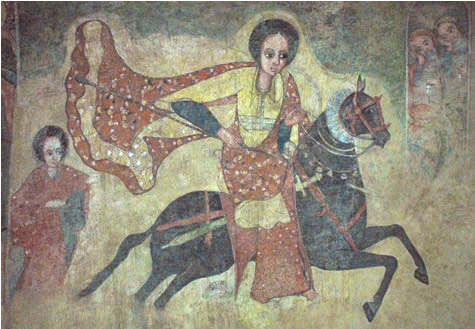
Queen of Sheba traveling to Solomon: A fresco in Ethiopia, Date Unknown. Source: http://www.expedition360.com/journal/archives/2007/05/. In public domain.

Yesterday, my youngest brother Eri turned twenty-seven (Happy Birthday again, bro!). He was the fourth baby my mother gave birth to in a five-year span. I’d been pissed before about all that had happened with us regarding my mother, my stupid (ex)-stepfather, our poverty and being on welfare, and the whole Hebrew-Israelite thing. But now, along with Eri’s birth, came with it an elderly trespasser at 616, courtesy of the fifty-four-inch waist — and waste — of an idiot Maurice.

You see, my stupid stepfather invited his Hebrew-Israelite matriarch “Balkis Makeda” to stay with us. The woman claimed to be a reincarnated Balkis Makeda (Queen of Sheba and wife of King Solomon of the ancient Israelites), and was the catalyst in Maurice’s Hebrew-Israelite conversion during his separation from Mom between October ’80 and April ’81.

Because of Maurice — um, excuse me, Judah ben Israel — and our fearless leader “Balkis Makeda,” we followed a number of un-Torah-like practices. This included the requirement that we all were to believe that she was the reincarnation of the Queen of Sheba, living among us in the twentieth century as an average person and showing us the way to Yahweh and ultimate truth.

Bar of Ivory Soap, December 28, 2009. Source: Erin Gifford, http://couponcravings.com/2009/12/cvs-free-ivory-soap.html.

We stopped using Ivory Soap at home because our leader had a dream once about rats gnawing on a bar of it. Baby Maurice couldn’t use a soap that’s 99.44 percent pure because of Makeda’s dream, and we switched to Zest. (The real reason, I think, was because the soap was white — like Whites ethnically — and considered the opposite of pure by many in the Hebrew-Israelite community).We weren’t allowed to use the word “Hello” when greeting someone in person or when answering the telephone. Maurice explained that “Hello’s got the word Hell in it, you know, Hell-low!” We’d somehow be committing someone to eternal damnation with a universal English greeting.

Now in her seventies and in declining health, the geezer was moved in before Mom could seriously object. What a situation! Six kids, including me, plus Mom, Maurice, and an old woman living together in a 1,200-square-foot, two-bedroom, one-bathroom apartment. We now needed to behave like good little Hebrew-Israelites with this woman in our house, so as to not embarrass my stepfather. Yeah, right!

One of the other rules of our absurdly orthodox practice was that Mom couldn’t cook or do any familial tasks for the next three months. She was “unclean” because she’d just given birth to Eri. This might’ve made sense in the deserts of ancient Canaan, with no antibiotics and drugs to deal with unclean issues of blood and other bodily fluids. It didn’t now. Plus I didn’t remember Mom not cooking for three months after Yiscoc and Sarai were born. This was suck-up time, plain and simple.

Maurice made what was an abyss of bad even worse by cooking dinner for three days. Three straight nights of over-boiled and under-ripened cabbage drenched in its own juices and seasoned to high heaven with red and black pepper. My stepfather could’ve been the founder of a new weight-loss diet. Mom, of course, asked me to take over her cooking duties, which I did for the next six weeks (see my “Top Cook” post from May ’09).

The woman couldn’t stand us, and especially couldn’t stand me. She probably sensed how much I couldn’t

A child in the Black Hebrews community, in Dimona, Israel, September 5, 2005. Source: Dror Eiger, http://flickr.com/photos/95465714@N00/41252116. In public domain, as file is licensed under the Creative Commons Attribution-Share Alike 2.0 Generic license.

stand her and her idiotic notions of Judaism, even with the context of being a Hebrew-Israelite. All I knew was that when I cut through all of the words and nuggets of truth, ritual and superstition, that “Makeda” was full of crap, and had fostered the conversion of my stupid stepfather, the only person I knew who was even more full of crap than her. I was already a Christian in the closet by then. Now I faced the prospect of revealing my spiritual conversion in the middle of such a grand mess. But I knew I had little other choice.

Within weeks of “coming out” to Mom, Maurice and my classmates at Mount Vernon High School (see my post “Kufi Emancipation Day” from September ’09 for more), the older woman moved out, under pressure from Mom. Both, ironically, were under pressure from me, as I threatened to move out myself. She died in Section 8 housing on Mount Vernon’s South Side in February ’85. I dare say that she wasn’t the reincarnated Makeda. For the only one who could’ve learned a lesson from a lifetime of poverty and cult-like rituals would’ve been her, not us.

Ego Inflation

18 Wednesday May 2011

Posted by decollins1969 in 1, Academia, Boy @ The Window, culture, Eclectic, Politics, race

≈ 2 Comments

Tags

A Room With A View, Academia, Academic Politics, Carnegie Mellon University, College of Humanities & Social Sciences, Denholm Elliott, Dune, Ego Inflation, Egocentrism, Elite Institution, Elitist Institutions, George Mason University, Grade Inflation, Jace Nance, Mercurial, Napoleonic Complex, Nefud, Peter N. Stearns, Peter Stearns, PhD Graduation, Provost, Race, World History, World Stereotypes


My PhD Graduation, Thackeray Club, Pittsburgh, PA, May 18, 1997. Angelia N. Levy

May 18th. Another year, fourteen years now, in fact. I’ve been Dr. Collins to my students and the world of academia officially for that long. I’ve learned a lot of lessons about the values and limits of having a doctorate in history over the course of the past decade and a half. One of them is how easily egos are inflated by it. And everything else gets inflated in the process of having an ego that could challenge the Himalayas for supremacy.

One of the more stunning and thoughtful moments I had during the graduation ceremony at Carnegie Mellon on that hot and sticky Sunday in ’97 — besides the dreadful realization that my own mother was jealous of me — was shaking Peter Stearns‘ hand on stage. The Napoleonic red-and-white-haired Stearns — currently the university provost at George Mason — was the Dean of Humanities & Social Sciences at

Provost Peter N. Stearns, George Mason University, 2008. Source: http://provost.gmu.edu.

Carnegie Mellon at the time. Having to touch his rough yet clammy right hand as they read off the names of the doctorates that afternoon brought back quite a few not-so-pleasant memories of why I found Carnegie Mellon a terrible elitist (as opposed to elite) school to attend for four years.

I’d most recently co-presented with Stearns on how to successfully finish a doctorate that March, which wasn’t so unpleasant. Except for the fact that most of his presentation was off-the-cuff ego-stroking. Except that the lessons learned from writing a dissertation in six weeks in ’64 were mostly irrelevant to the students in front of us that day. Except that I already knew that Stearns was equally polite and dismissive of my presentation by proxy.

Too bad hand sanitizers — or as my son Noah calls them, hanitizers — were in their infancy in ’97. For as I shook Stearns’ hand, the memory that crept to the fore was my other experience working with the man, when I was a teaching assistant for two sections of his world-famous World Stereotypes, oops, World History course in the fall of ’94. He spent lecture after lecture entertaining mostly White college freshman with dirty jokes about beer and sex in covering World History Plato-to-NATO style. I spent most of my teaching time attempting to refocus my group of students away from stereotyping South Asian women as “demur” and Arab men as horn dogs.

Then the end of that semester came, and I turned in all of my grades. I had a few students with D’s and F’s because they had failed their exams, or hadn’t shown up for class really, or both. One of those students was a White male freshman who’d only been to class twice, had failed one exam and barely passed his final. I received an email from Stearns two days before the end of the semester ordering me to change the student’s grade from an F to a C. The reason: “[h]e’s a good kid…he showed up for a couple of my sections…” [emphasis added]. I send an email back that basically read, “So?” Stearns repeated his order to change the grade, in person, which meant that I needed to change the grades of five other students so that their grades weren’t worse than the student that Stearns had coddled.

It was the one and only time I found myself inflating grades. That exchange confirmed so much that I heard and suspected about the father of college-level World History. Stearns was mercurial, egotistical and played favorites, who somehow were usually White and often male. I knew of at least one former grad student who’d all but been blackballed from finding academic jobs because of him. I also knew that he arbitrarily provided vastly different pay levels to grad students and instructors when he was the history department chair.

Denholm Elliott in A Room With A View, 1985. Source: http://content8.flixster.com/photo/13/52/75/13527526_gal.jpg

When my future wife first saw Stearns in ’96 at some history department conference in which my then advisor Joe Trotter forced me to do a presentation, she said that the five-foot-four man looked like the late British actor Denholm Elliott, especially from the movie A Room With A View (1985). That’s really an insult to Elliott. A better comparison would be between the actor who played the emperor in the Star Wars prequel trilogy. Or, more specifically, like the late actor Jack Nance’s character Nefud from Dune (1984). Very mean of me, I suppose, not to mention, a digression.

As I began to walk off the stage after shaking Stearns’ hand, I felt agitated, and thought of all that I’d gone through with him and with Carnegie Mellon in general. Ultimately, like the characters I mentioned above, Stearns was and remains an imperialist, building an academic empire in his image and crushing all opposition (real and imagined) along the way. His legacy will be the multiplication of inflated student egos who believe they understand the world but instead really only understand how to see the world in their own egocentric ways.

Jack Nance as Nefud in Dune, 1984. Source: http://www.aveleyman.com/FilmCredit.aspx?FilmID=5459

← Older posts
Newer posts →

Boy @ The Window: A Memoir

Boy @ The Window: A Memoir

Places to Buy/Download Boy @ The Window

There's a few ways in which you can read excerpts of, borrow and/or purchase and download Boy @ The Window. There's the trade paperback edition of Boy @ The Window, available for purchase via Amazon.com at http://www.amazon.com/Boy-Window-Donald-Earl-Collins/dp/0989256138/

There's also a Kindle edition on Amazon.com. The enhanced edition can be read only with Kindle Fire, an iPad or a full-color tablet. The links to the enhanced edition through Apple's iBookstore and the Barnes & Noble NOOK edition are below. The link to the Amazon Kindle version is also immediately below:

scr2555-proj697-a-kindle-logo-rgb-lg

Boy @ The Window on Amazon.com: http://www.amazon.com/Boy-The-Window-Memoir-ebook/dp/B00CD95FBU/

iBookstore-logo-300x100

Boy @ The Window on Apple's iBookstore: https://itunes.apple.com/us/book/boy-the-window/id643768275?ls=1

Barnes & Noble (bn.com) logo, June 26, 2013. (http://www.logotypes101.com).

Boy @ The Window on Barnes & Noble: http://www.barnesandnoble.com/w/boy-the-window-donald-earl-collins/1115182183?ean=2940016741567

You can also add, read and review Boy @ The Window on Goodreads.com. Just click on the button below:

Boy @ The Window

Twitter Updates

Tweets by decollins1969
  • RSS - Posts
  • RSS - Comments

Archives

  • June 2025
  • April 2023
  • September 2022
  • August 2022
  • July 2022
  • June 2022
  • May 2022
  • April 2022
  • March 2022
  • January 2022
  • December 2021
  • November 2021
  • October 2021
  • September 2021
  • August 2021
  • July 2021
  • June 2021
  • April 2021
  • March 2021
  • February 2021
  • January 2021
  • December 2020
  • November 2020
  • October 2020
  • September 2020
  • August 2020
  • July 2020
  • May 2020
  • April 2020
  • March 2020
  • January 2020
  • December 2019
  • November 2019
  • August 2019
  • July 2019
  • June 2019
  • May 2019
  • April 2019
  • March 2019
  • February 2019
  • January 2019
  • December 2018
  • November 2018
  • October 2018
  • September 2018
  • August 2018
  • July 2018
  • June 2018
  • May 2018
  • March 2018
  • February 2018
  • January 2018
  • December 2017
  • November 2017
  • October 2017
  • September 2017
  • August 2017
  • July 2017
  • June 2017
  • May 2017
  • April 2017
  • March 2017
  • February 2017
  • January 2017
  • December 2016
  • November 2016
  • October 2016
  • September 2016
  • August 2016
  • July 2016
  • June 2016
  • May 2016
  • April 2016
  • March 2016
  • February 2016
  • January 2016
  • December 2015
  • November 2015
  • October 2015
  • September 2015
  • August 2015
  • July 2015
  • June 2015
  • May 2015
  • April 2015
  • March 2015
  • February 2015
  • January 2015
  • December 2014
  • November 2014
  • October 2014
  • September 2014
  • August 2014
  • July 2014
  • June 2014
  • May 2014
  • April 2014
  • March 2014
  • February 2014
  • January 2014
  • December 2013
  • November 2013
  • October 2013
  • September 2013
  • August 2013
  • July 2013
  • June 2013
  • May 2013
  • April 2013
  • March 2013
  • February 2013
  • January 2013
  • December 2012
  • November 2012
  • October 2012
  • September 2012
  • August 2012
  • July 2012
  • June 2012
  • May 2012
  • April 2012
  • March 2012
  • February 2012
  • January 2012
  • December 2011
  • November 2011
  • October 2011
  • September 2011
  • August 2011
  • July 2011
  • June 2011
  • May 2011
  • April 2011
  • March 2011
  • February 2011
  • January 2011
  • December 2010
  • November 2010
  • October 2010
  • September 2010
  • August 2010
  • July 2010
  • June 2010
  • May 2010
  • April 2010
  • March 2010
  • February 2010
  • January 2010
  • December 2009
  • November 2009
  • October 2009
  • September 2009
  • August 2009
  • July 2009
  • June 2009
  • May 2009
  • April 2009
  • March 2009
  • February 2009
  • January 2009
  • December 2008
  • November 2008
  • October 2008
  • September 2008
  • August 2008
  • July 2008
  • June 2008
  • May 2008
  • April 2008
  • March 2008
  • February 2008
  • January 2008
  • December 2007
  • November 2007
  • October 2007
  • September 2007
  • August 2007
  • July 2007
  • June 2007

Recent Comments

MaryPena's avatarMaryPena on My Day of Atonement/Bitter Hat…
decollins1969's avatardecollins1969 on No Good Teaching Deed Goes…
Mary Rose O’Connell's avatarMary Rose O’Connell on No Good Teaching Deed Goes…

NetworkedBlogs on Facebook

NetworkedBlogs
Blog:
Notes From a Boy @ The Window
Topics:
My Life, Culture & Education, Politics & Goofyness
 
Follow my blog

616 616 East Lincoln Avenue A.B. Davis Middle School Abuse Academia Academy for Educational Development AED Afrocentricity American Narcissism Authenticity Bigotry Blackness Boy @ The Window Carnegie Mellon University Child Abuse Class of 1987 CMU Coping Strategies Crush #1 Crush #2 Death Disillusionment Diversity Domestic Violence Economic Inequality Education Family Friendship Friendships Graduate School Hebrew-Israelites High-Stakes Testing Higher Education History Homelessness Humanities Humanities Program Hypocrisy Internalized Racism Jealousy Joe Trotter Joe William Trotter Jr. K-12 Education Love Manhood Maurice Eugene Washington Maurice Washington Misogyny Mother-Son Relationship Mount Vernon High School Mount Vernon New York Mount Vernon public schools Multiculturalism MVHS Narcissism NFL Pitt Pittsburgh Politics of Education Poverty President Barack Obama Race Racial Stereotypes Racism Relationships Self-Awareness Self-Discovery Self-Reflection Sexism Social Justice Teaching and Learning University of Pittsburgh Violence Whiteness Writing

Top Rated

Blog at WordPress.com.

  • Subscribe Subscribed
    • Notes from a Boy @ The Window
    • Join 103 other subscribers
    • Already have a WordPress.com account? Log in now.
    • Notes from a Boy @ The Window
    • Subscribe Subscribed
    • Sign up
    • Log in
    • Report this content
    • View site in Reader
    • Manage subscriptions
    • Collapse this bar
 

Loading Comments...