• About Me
  • Other Writings
  • Interview Clips
  • All About Me: American Racism, American Narcissism, and the Conversation America Can’t Have
  • Video Clips
  • Boy @ The Window Pictures
  • Boy @ The Window Theme Music

Notes from a Boy @ The Window

~

Notes from a Boy @ The Window

Tag Archives: Montgomery County Public Schools

The Wussification of Grading

29 Wednesday Aug 2012

Posted by decollins1969 in 1, culture, Eclectic, Politics, Youth

≈ Leave a comment

Tags

Core Curriculum, Education, Elementary School, Grading Systems, K-12 Education, MCPS, Montgomery County Public Schools, Politics of Education, Psychology of Grading, Test Teaching, Testing, Wussification


Grades Collage, January 24, 2010. (http://hopkins.typepad.com).

Montgomery County Public Schools opened its doors to students for the start of the 2012-13 school year on Monday, August 27. With the start of the school year came some new changes to the report card and grading system, at least for MCPS’ elementary schools. Starting this year, the school district has dropped the old grading system of O, S and N (Outstanding, Satisfactory and Needs Improvement) for first and second graders, and the old A, B, C, D and E system for third, fourth and fifth graders. Instead, they’ve introduced a new grading system for all 1st-5th graders:

Score Description
ES Exceptional at the grade-level standard
P Meets the grade-level standard by demonstrating proficiency of the content or processes for the measurement topic
I In progress toward meeting the grade-level standard
N Not yet making progress or making minimal progress toward meeting the grade-level standard
M Missing data – no grade recorded
NEP Not English Proficient; may be used for a level 1 or 2 ESOL student for no more than two marking periods.

According to MCPS, “[t]he goal of this grading format is to give families a clear understanding of your child’s progress toward end of year grade level expectations.”

Now, I’ve been an educator of some sort now for the better part of two decades, and have worked with several grading systems as a college professor. Not to mention having to learn different grading systems as a student even before that. Trust me when I say that this new grading system isn’t a clear one, and isn’t easy to understand.

But the overall goal is clear. MCPS wants to tie grades to their new yet only partially implemented integrated Curriculum 2.0, adopted as part of the new Core Curriculum for the state of Maryland. It is an integrated, standards-based curriculum that introduces a variety of interrelated themes across the various subjects for K-5 (although fourth and fifth grade will not see any of this curriculum until 2013, when my son is in fifth grade). In theory, this grading system will be more directly tied to students’ proficiency levels in achieving or exceeding state-level standards in reading, mathematics, writing and other subjects for their grade level.

Sounds reasonable, doesn’t it? After all, if a child is proficient in say, the fourth-grade standard for reading, then they would receive a P grade. This is unreasonable, though, and for at least a couple of reasons. For one, it means the entire MCPS elementary school curriculum has become about meeting standards that will be tested at the state-level on the MSA, and at the county level on MAP-R. The curriculum itself has now become integrated into the testing game at the elementary school level.

Second, and maybe even more important here, is the idea that grading-to-a-testing-based-curriculum is a better and more accurate way to assess children. I’m not sure how this helps kids, though. If a student does well enough to score multiple “ES'” on their report card, they’ve exceeded the standard for their grade level. But this doesn’t necessarily mean they are ready for the next grade level. If a student has multiple N’s on their report card, does that mean that they have failed to meet the standards in several subjects at their grade level, that they aren’t making progress?

ESPN logo, August 29, 2012. (http://thebiglead.com). In public domain.

It seems to me that beyond understanding the grading system and the tensions in its methodology is the fact that, in the end, these grades aren’t going to mean much to MCPS’ K-5 students. Or to students across the state of Maryland, for that matter. After all, an A, C, or E is much easier to interpret than an ES, P, I or N (or ESP(i)N, as I’ll begin to call it from now on). Psychologically speaking, while this grading system takes some symbolic pressure off of performance via state and county test scores, it also means that kids won’t have a full appreciation for success, mixed success or failure beyond a curriculum of testing.

It would’ve been smarter to go to a qualitative grading system — something that I know some schools and universities have used over the years — than to this one that ties curriculum and grading systems to testing. At least with a descriptive system of grading, you can get in a single paragraph a fairly focused analysis from a teacher about a student’s progress, their strengths, weaknesses and where they’ve had good or great success. This new MCPS grading system, though, is the academic equivalent of giving every team in a children’s soccer league a trophy, whether their record was 10-0 or 0-10. It pretty much renders grading meaningless, as everything is about standards and measurements, and ultimately, testing.

Curriculum 2.0 – Been There, Done That

21 Monday May 2012

Posted by decollins1969 in 1, Academia, Boy @ The Window, culture, Eclectic, Mount Vernon New York, Politics, Pop Culture, race, Youth

≈ Leave a comment

Tags

Academic Excellence, Closing the Achievement Gap, Curriculum 2.0, Desegregation, Diane Ravitch, Grimes Center for Creative Education, High-Stakes Testing, Humanities Program, Integrated Curriculum, MCPS, Montgomery County Public Schools, Mount Vernon public schools, Pennington-Grimes ES, Politics of Education, Reinventing the Wheel, White Flight


Nekyia: Persephone supervising Sisyphus pushing his rock in the Underworld. Side A of an Attic black-figure amphora, ca. 530 BCE, from Vulci, February 13, 2007. (Bibi Saint-Pol via Wikipedia). In public domain.

This school year, my son’s school district, Montgomery County Public Schools in Maryland, began implementation of what they call Curriculum 2.0. This new curriculum, formerly known as the Elementary Integrated Curriculum, has been in the works for the better part of a decade. As MCPS explained in a flyer to parents, Curriculum 2.o will be one that will “better engage students and teachers, and dedicate more learning time to subjects such as the arts, information literacy, science, social studies and physical education. By blending these subjects with the core content areas of reading, writing, and mathematics, students will receive robust, engaging instruction across all subjects in the early grades.”

Why is better engagement of teachers and students necessary, and how will an integrated curriculum make this possible? The answer to the first part of this question is much more obvious than the answer to the second part. In light of county-level and state-level testing (in the latter case, the MSA for third, fourth and fifth grades), an engaging and integrated curriculum will enable students to be better prepared for the heavy doses of critical reasoning and reading comprehension that this testing involves, at least theoretically.

What hasn’t made much sense has been the implementation process itself, as Curriculum 2.0 became the curriculum for kindergarten and first graders in this 2011-12 school year, with the option of having it for second graders at some schools (like my son’s school in Silver Spring). Meanwhile, third and fourth graders won’t become part of Curriculum 2.0 until 2012-13, and this year’s fifth graders won’t see Curriculum 2.0 at all. It seems as if the implementation process was about as well planned as the SS Minnow’s tour of the South Pacific.

But that’s not the only story here. For someone’s who’s spent a great deal of time attempting to understand

A One Thousand and One Night manuscript written in Arabic under the second half of the Abbasid Era (750-1258 CE), February 9, 2008 (Danieliness via Wikipedia). Released into public domain via cc-by-sa-3.0 license.

the circumstances under which I grew up, including my times in Mount Vernon, New York’s public schools in the ’70s and ’80s, MCPS’s Curriculum 2.0 is sort of like deja vu all over again. Except that in the period between ’76 and ’93, the kind of curriculum MCPS is implementing now was mostly for Mount Vernon’s gifted and talented students then, students who were part of the district’s Humanities Program, particularly those in the Grimes Center for Creative Education. The motivations for developing a similar curriculum three and half decades earlier came out of the need for racial integration and preventing White Flight, and in the process, a measure of academic excellence. Different circumstances in search of the same results, I guess.

A piece of evidence I uncovered a few years ago while working on Boy @ The Window shows how much educators reinvent the wheel in terms of curriculum development, a pitfall in education on which Diane Ravitch has been proven correct for the past thirty years. Charlotte Evans wrote in her April 1981 New York Times article on the Grimes Center that there “is a flowering of creativity at Pennington-Grimes [Grimes had combined with Pennington in the 1980-81 school year] that is evident in the hallways as well as in the classrooms.” Leroy L. Ramsey, New York State Department of Education Administrator of Intercultural Affairs and Educational Integration, when asked by Evans to comment, said that “the intent” of a school like Pennington-Grimes “was to break racial isolation and to stop white flight, and we have done that in Mount Vernon.”

As detailed by Evans in her April 1981 New York Times article, with the

[c]oordinating [of] language, math and science with social studies in the same way, first graders study the family and its roots, how people live and lived in different places. Second graders focus on prehistoric times – the old and new Stone Ages; third graders on the ancient Middle East, fourth graders on Greek and Roman civilization and sixth graders on the Renaissance, Reformation and the Age of Discovery.

This interdisciplinary approach to creating a magnet-style gifted track curriculum did not stop with a focuson other histories and cultures in social studies. “Fifth-graders, for example, specialize in studying the Middle Ages in Islamic nations and in Africa and Europe,” but they also “read Arabian Nights in connection with their Islamic study and went on to African folk tales,” according to fifth-grade teacher Mattie Lucadamo. In addition, there were other “flourishes,” such as “learning the foundation of Hindu-Arabic numbers” and “study[ing] astronomy, tracing it back to the Babylonians.”

It never ceases to amaze me how we as educators, education researchers, and governments spend time, money and human resources recreating what was already in existence, in this case, when I was my son’s age. But, like with the experiment that was the Grimes Center and Humanities, parents with resources will find a way to game the system. In one case, an innovative program was moved to Mount Vernon’s predominantly White North Side in May ’80, and tended to give more preferences to White students in general.

In the case of Curriculum 2.0, the more aware parents will send their kids to Kumon or Kaplan or other testing centers to give their kids every opportunity to do well in this new curriculum, score in the top percentiles on the MSA, and garner the gifted label in time for middle school.

Diversity Isn’t As Simple As Reaching Out To HBCUs

25 Wednesday Apr 2012

Posted by decollins1969 in 1, Academia, Boy @ The Window, culture, Eclectic, Politics, race, Work, Youth

≈ Leave a comment

Tags

Academy for Educational Development, Admissions, Black Students, Carnegie Mellon University, Center for American Progress, Diversity, Diversity Solutions, Enrollement, Graduation, HBCUs, Hiring Process, Historically Black Colleges and Universities, Latino Students, Montgomery County MD, Montgomery County Public Schools, Panacea, Predominantly White Institutions, PWIs, STEM Fields, Tokenism, University of Pittsburgh, White House Initiative on Historically Black Colleges and Universities


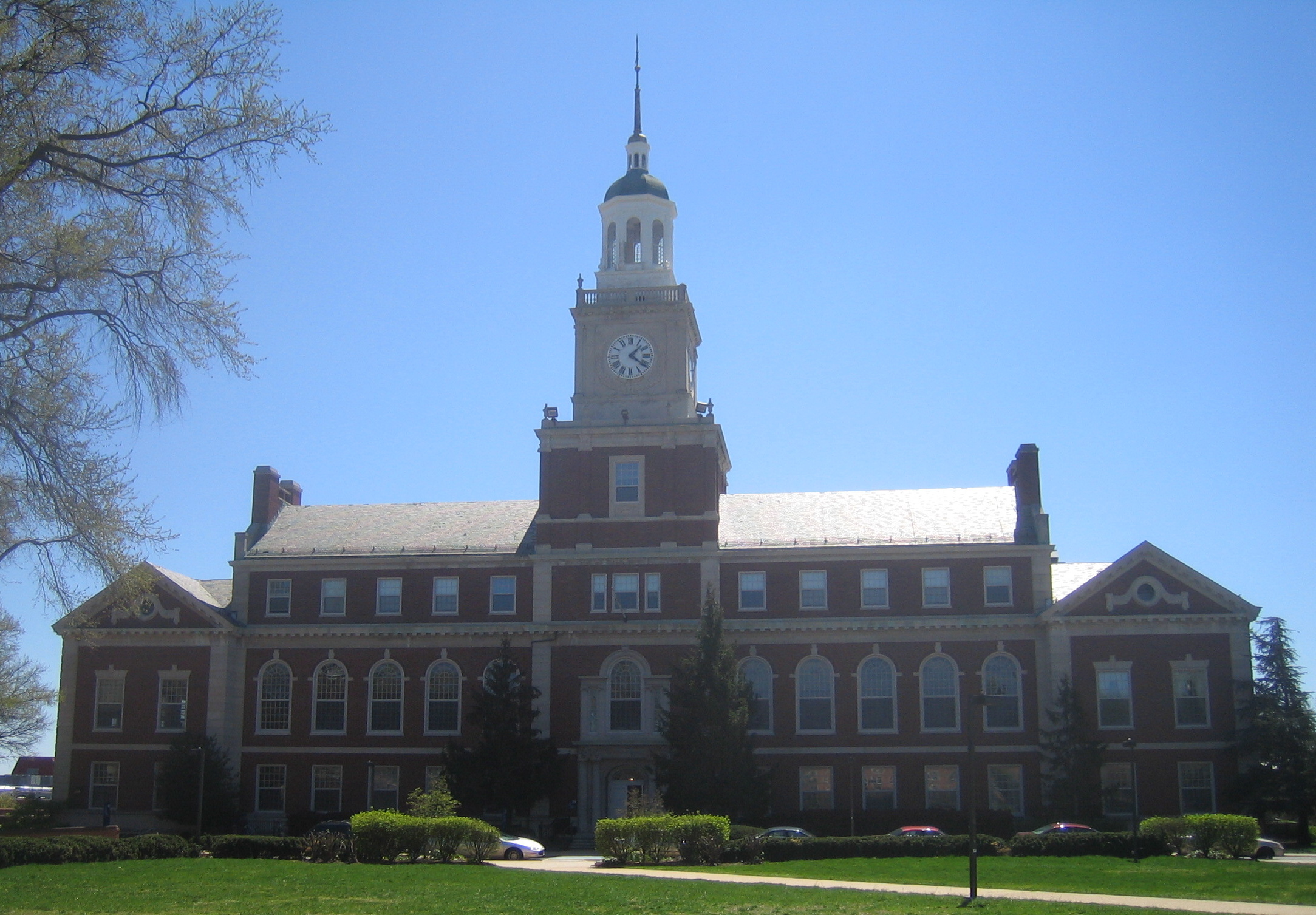
Founders Library, Howard University, Washington, DC, April 9, 2006. (David Monack via Wikipedia). Released to public domain.

There were many things that made me want to holler during my graduate school days two decades ago. One of them was constantly hearing that there were no students or faculty of color to be found because no one Black or Brown was qualified, or “in the pipeline,” or interested in this field or that field. I’d hear this at meetings on Pitt’s campus, at meetings on Carnegie Mellon’s campus, at conferences like the American Education Research Association’s annual meeting, at other academic conferences and settings.

Thank goodness those days are over. Now most of us realize there’s a few folks Black and Latino to find in almost every career option. But a new excuse for lack of diversity in higher education and on the job front has come up in meetings, at conferences, and in conversations, at least in terms of solutions. In job interviews, at local meetings regarding Montgomery County Public Schools, at Center for American Progress conferences on K-12 reform, at my previous jobs with the Academy for Educational Development and in other settings. The way to solve the diversity problem seems to come down to one prescriptive. “We need to reach out to HBCUs.”

So, it all comes down to the 110 or so Historically Black Colleges and Universities to solve the lack of diversity problem facing K-12 education, higher education, STEM careers, social justice nonprofits, public service, civic education, journalism, international development and foreign service, among other sectors? Really? Statistics over the past twenty years have shown that about twenty percent of all African American undergraduate students attend HBCUs. Statistics also show that about eleven percent of all Blacks who complete a four-year degree do so at a HBCU. According to the latest data from the US Department of Education (in conjunction with the White House Initiative on Historically Black Colleges and Universities), nearly 30,000 Blacks graduated with either a two-year or four-year degree from an HBCU in 2011.

The interesting thing about this initiative is that it has existed in some form or another since President Jimmy Carter signed the original executive order creating it in 1980, with every president contributing to it or strengthening it since then. This White House initiative has always been about helping HBCUs build their capacities for admitting, enrolling and graduating more African American students. Yet there’s a huge snag around the capacity of HBCUs to meet the goal to bring the number of undergraduate degrees produced on par with the overall 2020 goal of making the US the number one producer of college graduates again. It would mean that HBCUs would be responsible for graduating 166,713 students a year by 2020.

Besides the reality that this is a near-impossible goal for most HBCUs– most lack the resources necessary

Old New York City Subway token, phased out (like notion of token Black ought to be), May 30, 2005. (Jessamyn West via Wikipedia). Released to public domain.

to admit and enroll so many students — there’s a couple of trends being ignored by the worlds of work and academia. HBCUs aren’t some untapped resource that folks at predominantly White institutions and in various fields suddenly discovered in the late-1990s and the ’00s. HBCU graduates have been working in all of these fields that have lacked diversity in terms of demographics and ideas for years.

With only eleven percent of all Black graduates, few, if any, fields will benefit from the one-shot solution they hope HBCUs will provide. Unless the goal of a school district, a social justice organization or a business is only to hire one, a ’70s-era goal in the 2010s that’s hardly worth a sentence of my time.

The other trend is the overall trend of the kinds of higher institutions African Americans attend. About half of all Black undergraduates — traditional students, adult learners and first-generation students — enroll at two-year schools, community colleges and for-profit institutions (the last a black hole if one’s expecting students to actually graduate). Which means that about thirty percent of all African American students — about 600,000 in all — attend predominantly White four-year institutions.

It’s not as if folks in leading positions propose that to increase the number of Latinos in certain fields, the answer would somehow lie in the couple of dozen Hispanic-Serving Institutions (HSIs), right? Or that to bring more women into the STEM fields, that a singular strategy would involve outreach to Sarah Lawrence, Spelman, Bryn Mawr, and Vassar? At least one would hope not.

It seems that a multi-pronged approach to addressing diversity issues for a school district, a technical field, the nonprofit sector or academia needs to be in order. One that starts much earlier, like in elementary school. One that doesn’t treat Black students at predominantly White institutions as a foregone conclusion, and HBCUs as a panacea.

But somehow, I’ll find myself at another meeting in the near future, hearing from some leader or official about their efforts to address diversity by contacting HBCUs as their one and only solution. A conversation that I find myself dreading more and more.

Getting My Son To Eat Lunch

19 Thursday Jan 2012

Posted by decollins1969 in 1, Boy @ The Window, culture, Eclectic, Mount Vernon High School, Mount Vernon New York, Politics, Youth

≈ Leave a comment

Tags

A.B. Davis Middle School, budget cuts and school lunches, food issues, lunch, lunches, MCPS, Montgomery County MD, Montgomery County Public Schools, Noah, quality of food, Silver Spring, USDA and school lunch, William H. Holmes Elementary


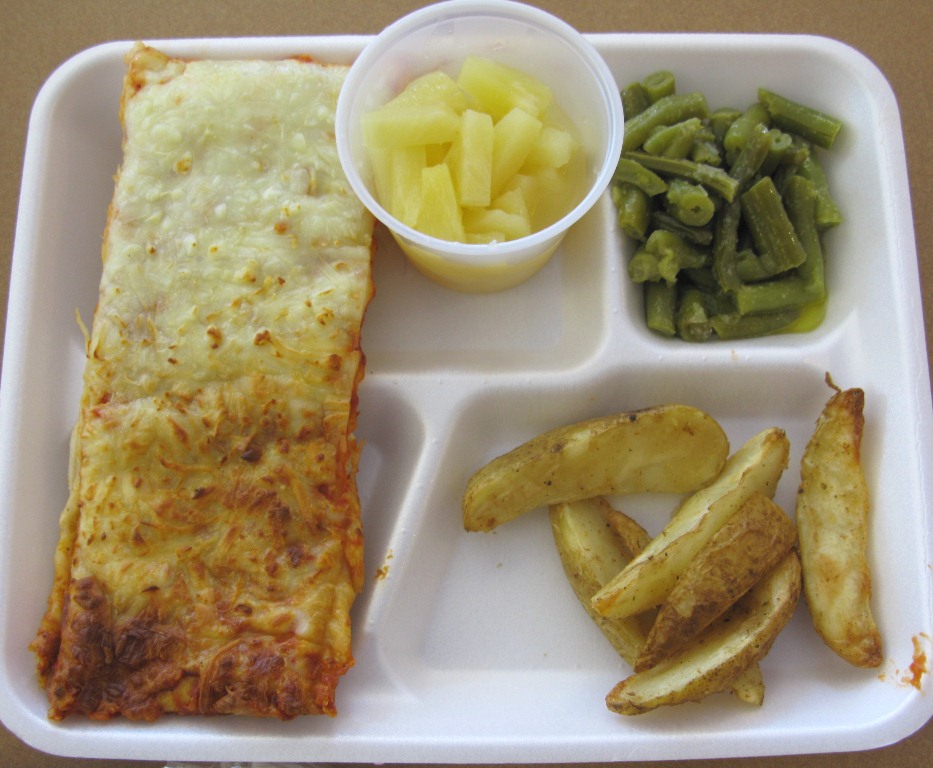
Lunch at a DC public school, (the closest approximation to the pizza lunches I've observed this school year), March 14, 2011. (http://betterdcschoolfood.blogspot.com). Qualifies as fair use under US Copyright laws, as photo is used only to illustrate subject of post, not for reproduction.

I’m out of new ideas, old ideas, tried and true ideas. In the three and a half years since my son began kindergarten in Montgomery County Public Schools, he has become increasingly picky and undisciplined about eating his lunch. He eats breakfast, snacks throughout the evening, and eats his dinner just fine. But lunch, oh, lunch — it’s been a struggle.

Noah hates sandwiches, ALL sandwiches. He stopped eating peanut butter and jelly almost a year and a half ago. For most of second grade, I bought Noah chicken nuggets, the organic kind from Whole Foods, toast them, put them in a Thermos, pack a separate container with ketchup, and had confidence that he’d eat most or all of it. Then last March, I did one of my random lunches with him at his school, only to discover that Noah had been throwing away his lunch from home, for at least two months according to one of his friends. “The nuggets are too hard and cold,” he said.

My son all but gave up on the lunches served at his school two years ago. By the second month of first grade — October 2009 — Noah would only eat the chicken nuggets lunch or the hot dog lunch. By the end of that school year, it was just the chicken nuggets lunch. Given my observations of two dozen or so lunches served at his school since August ’08, I can’t really blame him. Holmes Elementary’s cold PB&J sandwiches, A.B. Davis’ grilled ham and cheese sandwiches (at least by how they smelled), and Mount Vernon High School’s “murder burgers and suicide fries” would be like eating at Ruth’s Chris Steak House for Noah and his compadres these days. (By the way, thanks Akbar Buckley for the burgers and fries refrain, wherever you are).

Noah proud of his cinnamon sugar donuts, December 18, 2011 (maybe should serve for his lunch now). (Donald Earl Collins).

I’ve spent morning after morning fixing lunches that I hoped Noah would eat. I’ve done everything I know and then some. Let’s see. McDonald’s McNuggets and fries, cheese pizza slices, Oscar Meyer Lunchables, turkey drumsticks, chicken drumsticks, meat slices, bologna sandwiches, turkey sandwiches, beef patties, spaghetti and meat sauce, apples, chips, Goldfish, cookies, homemade french bread, fruit snacks and Fruit Roll-Ups, pancake and bacon, and hot dogs. His response. “The hot dog is cold, and the bread is too hard,” or “I didn’t have time to eat,” or “I don’t like sandwiches,” or the slice of pizza was “too big.”

This is where we are. Noah, like every other student, needs to eat in order to function at maximum capacity academically. But my guess is that the constant noise of his lunchroom and the chaos that is recess is a distraction for him. MCPS’ stripped down budget and bare minimum USDA-approved lunches don’t help stimulate his digestive tract either.

It’s not like he could walk home for lunch like I did all through elementary school. Kids within half a block of Noah’s school aren’t allowed to walk home, given the times we live in. And we live a mile and a half from his school anyway. Short of picking him up for lunch every day — which I doubt he’d want — I’ve lost my footing on this issue. I don’t want to go there with disciplinary actions, not with food, not with the way kids handle food these days. Hmm…

Newer posts →

Boy @ The Window: A Memoir

Boy @ The Window: A Memoir

Places to Buy/Download Boy @ The Window

There's a few ways in which you can read excerpts of, borrow and/or purchase and download Boy @ The Window. There's the trade paperback edition of Boy @ The Window, available for purchase via Amazon.com at http://www.amazon.com/Boy-Window-Donald-Earl-Collins/dp/0989256138/

There's also a Kindle edition on Amazon.com. The enhanced edition can be read only with Kindle Fire, an iPad or a full-color tablet. The links to the enhanced edition through Apple's iBookstore and the Barnes & Noble NOOK edition are below. The link to the Amazon Kindle version is also immediately below:

scr2555-proj697-a-kindle-logo-rgb-lg

Boy @ The Window on Amazon.com: http://www.amazon.com/Boy-The-Window-Memoir-ebook/dp/B00CD95FBU/

iBookstore-logo-300x100

Boy @ The Window on Apple's iBookstore: https://itunes.apple.com/us/book/boy-the-window/id643768275?ls=1

Barnes & Noble (bn.com) logo, June 26, 2013. (http://www.logotypes101.com).

Boy @ The Window on Barnes & Noble: http://www.barnesandnoble.com/w/boy-the-window-donald-earl-collins/1115182183?ean=2940016741567

You can also add, read and review Boy @ The Window on Goodreads.com. Just click on the button below:

Boy @ The Window

Twitter Updates

Tweets by decollins1969
  • RSS - Posts
  • RSS - Comments

Archives

  • June 2025
  • April 2023
  • September 2022
  • August 2022
  • July 2022
  • June 2022
  • May 2022
  • April 2022
  • March 2022
  • January 2022
  • December 2021
  • November 2021
  • October 2021
  • September 2021
  • August 2021
  • July 2021
  • June 2021
  • April 2021
  • March 2021
  • February 2021
  • January 2021
  • December 2020
  • November 2020
  • October 2020
  • September 2020
  • August 2020
  • July 2020
  • May 2020
  • April 2020
  • March 2020
  • January 2020
  • December 2019
  • November 2019
  • August 2019
  • July 2019
  • June 2019
  • May 2019
  • April 2019
  • March 2019
  • February 2019
  • January 2019
  • December 2018
  • November 2018
  • October 2018
  • September 2018
  • August 2018
  • July 2018
  • June 2018
  • May 2018
  • March 2018
  • February 2018
  • January 2018
  • December 2017
  • November 2017
  • October 2017
  • September 2017
  • August 2017
  • July 2017
  • June 2017
  • May 2017
  • April 2017
  • March 2017
  • February 2017
  • January 2017
  • December 2016
  • November 2016
  • October 2016
  • September 2016
  • August 2016
  • July 2016
  • June 2016
  • May 2016
  • April 2016
  • March 2016
  • February 2016
  • January 2016
  • December 2015
  • November 2015
  • October 2015
  • September 2015
  • August 2015
  • July 2015
  • June 2015
  • May 2015
  • April 2015
  • March 2015
  • February 2015
  • January 2015
  • December 2014
  • November 2014
  • October 2014
  • September 2014
  • August 2014
  • July 2014
  • June 2014
  • May 2014
  • April 2014
  • March 2014
  • February 2014
  • January 2014
  • December 2013
  • November 2013
  • October 2013
  • September 2013
  • August 2013
  • July 2013
  • June 2013
  • May 2013
  • April 2013
  • March 2013
  • February 2013
  • January 2013
  • December 2012
  • November 2012
  • October 2012
  • September 2012
  • August 2012
  • July 2012
  • June 2012
  • May 2012
  • April 2012
  • March 2012
  • February 2012
  • January 2012
  • December 2011
  • November 2011
  • October 2011
  • September 2011
  • August 2011
  • July 2011
  • June 2011
  • May 2011
  • April 2011
  • March 2011
  • February 2011
  • January 2011
  • December 2010
  • November 2010
  • October 2010
  • September 2010
  • August 2010
  • July 2010
  • June 2010
  • May 2010
  • April 2010
  • March 2010
  • February 2010
  • January 2010
  • December 2009
  • November 2009
  • October 2009
  • September 2009
  • August 2009
  • July 2009
  • June 2009
  • May 2009
  • April 2009
  • March 2009
  • February 2009
  • January 2009
  • December 2008
  • November 2008
  • October 2008
  • September 2008
  • August 2008
  • July 2008
  • June 2008
  • May 2008
  • April 2008
  • March 2008
  • February 2008
  • January 2008
  • December 2007
  • November 2007
  • October 2007
  • September 2007
  • August 2007
  • July 2007
  • June 2007

Recent Comments

MaryPena's avatarMaryPena on My Day of Atonement/Bitter Hat…
decollins1969's avatardecollins1969 on No Good Teaching Deed Goes…
Mary Rose O’Connell's avatarMary Rose O’Connell on No Good Teaching Deed Goes…

NetworkedBlogs on Facebook

NetworkedBlogs
Blog:
Notes From a Boy @ The Window
Topics:
My Life, Culture & Education, Politics & Goofyness
 
Follow my blog

616 616 East Lincoln Avenue A.B. Davis Middle School Abuse Academia Academy for Educational Development AED Afrocentricity American Narcissism Authenticity Bigotry Blackness Boy @ The Window Carnegie Mellon University Child Abuse Class of 1987 CMU Coping Strategies Crush #1 Crush #2 Death Disillusionment Diversity Domestic Violence Economic Inequality Education Family Friendship Friendships Graduate School Hebrew-Israelites High-Stakes Testing Higher Education History Homelessness Humanities Humanities Program Hypocrisy Internalized Racism Jealousy Joe Trotter Joe William Trotter Jr. K-12 Education Love Manhood Maurice Eugene Washington Maurice Washington Misogyny Mother-Son Relationship Mount Vernon High School Mount Vernon New York Mount Vernon public schools Multiculturalism MVHS Narcissism NFL Pitt Pittsburgh Politics of Education Poverty President Barack Obama Race Racial Stereotypes Racism Relationships Self-Awareness Self-Discovery Self-Reflection Sexism Social Justice Teaching and Learning University of Pittsburgh Violence Whiteness Writing

Top Rated

Blog at WordPress.com.

  • Subscribe Subscribed
    • Notes from a Boy @ The Window
    • Join 103 other subscribers
    • Already have a WordPress.com account? Log in now.
    • Notes from a Boy @ The Window
    • Subscribe Subscribed
    • Sign up
    • Log in
    • Report this content
    • View site in Reader
    • Manage subscriptions
    • Collapse this bar
 

Loading Comments...