• About Me
  • Other Writings
  • Interview Clips
  • All About Me: American Racism, American Narcissism, and the Conversation America Can’t Have
  • Video Clips
  • Boy @ The Window Pictures
  • Boy @ The Window Theme Music

Notes from a Boy @ The Window

~

Notes from a Boy @ The Window

Tag Archives: Humanities

Teachers That “Demon”-ize History

29 Tuesday Mar 2011

Posted by decollins1969 in 1, Academia, Boy @ The Window, Christianity, Eclectic, Politics, Pop Culture, race, Religion

≈ Leave a comment

Tags

A.B. Davis Middle School, Demontravel, History, History Teaching, Humanities, K-12 Education, K-16 Education, Pedagogy, Schools of Education, Teaching, Teaching and Learning


Qin Shihuangdi, China's 1st Emperor, book burner and scholar burier (except for historians of the Qin kingdom), 221-210 BCE. In public domain.

As I promised ten days ago in my “This…Is…Jeopardy?” post, this one continues my thoughts about the inability of most students and teachers to appreciate how to really teach and learn from history. To think that what most in the profession call social history has existed for a half-century, yet few outside of academia actually teach history in this manner. That between the schools of education that prepare them, the curricular paradigms adhered to by state boards of education and the rules and regulations at the district and school building level, few history teachers encourage their students to imagine. Or to think critically. Or  to ask “how” and “why” questions.

And we pay for these educational atrocities every single day, in our public discourse, in journalism, in international politics. Not to mention in our idiotic discussions of race, class, gender, religion, sexual orientation, in just about every endeavor that involves thinking beyond our selfish selves.
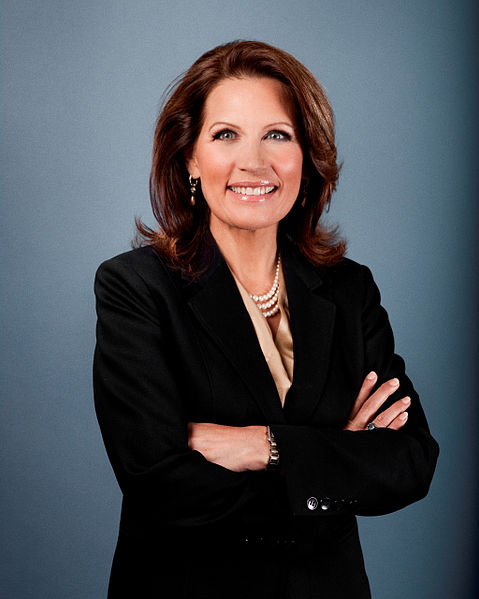
Michelle Bachmann Portrait, US Congress, January 14, 2011 - A case in point. In public domain.

The worst example of this for my money was my eighth grade US history teacher, Mr. Demontravel. Or as he preferred in the last three months of eighth grade in the spring of ’83, Dr. Demontravel (he had finished his doctoral thesis on the Civil War. Or as I liked to call him throughout that year, “Demon Travel.”

Beyond the trivia of him finishing his doctorate, Demontravel’s teaching style, while terrible, was also one that remains all too typical in our public school (and unfortunately, some of our colleges as well). His was a class that sucked the life out of history for most of the Humanities students at A.B. Davis. Like most teachers of K-12 social studies or history, it was an important and obscure dates, important names, and key places class.

Unlike most social studies teachers, his teaching methodology was the epitome of lazy. Every class, five days a week, Demontravel would put up five questions on the blackboard for us to copy down and answer using our textbook. At the end of every two-week period, we’d get a fifty-question multiple choice exam made up of those questions written out on the blackboard over the previous two weeks, helping Scan-Tron stay in business.

Demontravel rarely stood up to lecture or do anything else. Lectures for him might as well have been appearances by Halley’s Comet, only the lectures were far less memorable. This process went on unabated for forty-weeks, four marking periods, seventeen exams (counting the final), an entire school year. Calling this boring would only get you into the door of the intellectual famine Demontravel subjected us to in eighth grade.

Over the years, I’ve had hundreds of students complain about various versions of this kind of history teaching. That they hated history, didn’t understand its purpose. Many students have loved my teaching of social history off and on over the past two decades, and have told me so, that there interest in a particular issue or topic was peaked as a result of one of my courses. But there are some, perhaps as many as ten percent of my students (about 200 in all) who would’ve preferred the mind-numbing methodology of teaching history as trivia. For that group, Demontravel would’ve been a preference over being able to
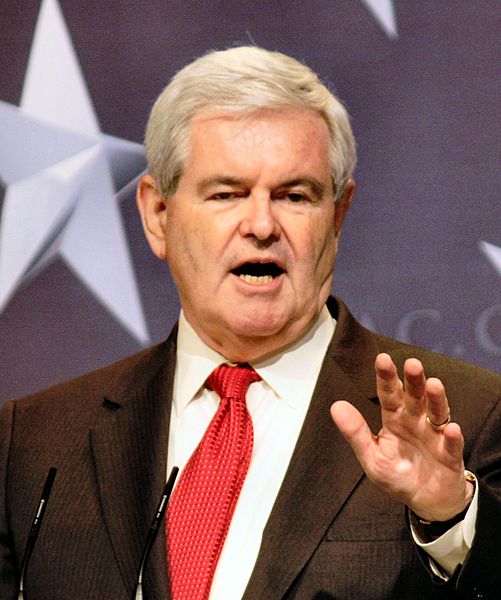
Newt Gingrich, potential 2012 GOP candidate, at CPAC meeting, February 20, 2010. (Irony is that Gingrich, an opponent of social history, was a history professor for eight years before turning to a political career.) Gage Skidmore. Permission granted via Creative Commons and attribution to Gage Skidmore.

understand that, like life, history is full of irony, hurt, passion, hatred, and serendipity.

Maybe this is a losing battle, that most students will never have a teacher with the ability to inspire them to think beyond the trivial when it comes to history. Maybe this is a losing battle because there are far more demons traveling through K-12 as social studies and history teachers than there are people like me, or my late teacher Harold Meltzer, for that matter. I have a feeling, though, that generations from now, future students will look at this aspect of hypocrisy in American education and just shake their heads. They won’t understand why it was so hard to teach the truth of how and why good, bad and ugly things occurred in US and world history.

This…Is…Jeopardy?

18 Friday Mar 2011

Posted by decollins1969 in 1, Academia, Boy @ The Window, culture, Politics, Pop Culture, Youth

≈ Leave a comment

Tags

Alex Trebek, Grading, History Trivial, Humanities, Humanities Program, Instructor, Jeopardy, Mount Vernon High School, Mount Vernon public schools, Pitt, Professor, Students, Teaching, Teaching and Learning, Teaching Assistant, Teaching History, University of Pittsburgh


This Is Jeopardy?

This Is Jeopardy?

The first class I ever taught was as a guest lecturer my first semester of grad school at Pitt. Larry Glasco, my advisor, had me take charge of his History of Black Pittsburgh course one November Thursday in ’91. It was a task made easier by the showing of the documentary Wylie Avenue Days during the two-hour and twenty-minute class. With about a quarter of the class composed of adult learners, including several who’d grown up in the Hill District during the time frame covered in the documentary, it became a real conversation about experiences with racism and inter- and intra-racial relations in Pittsburgh in the first two-thirds of the twentieth century. It was a great introduction to teaching.

In the two decades since, I’ve often wish that all of my classes had the kind of intellectual balance that my first class possessed and I as instructor helped provide. Sadly, many times in my journey as a teacher, instructor and professor, I’ve had students who showed as much interest in discussing the hows and whys of history as Glenn Beck of FOX News Channel has in science and the truth.

These students, about one out of every six I’ve taught over the past two decades (about 300 in all) have taken up an amount of my teaching time. They’ve groused about the assignments I’ve given them to do, the exam questions I’ve created to assess their knowledge. They’ve gnashed their teeth about my grading, about how tough I supposedly can be in assigning grades. With papers, short-answer exams, multiple choice tests, even fill-in-the-blank quizzes. There’s been no pleasing this group of students.

Until now. It occurred to me about a year ago. I was watching yet another episode of Jeopardy, and it swung to a history category, one that I would’ve swept if I’d been on the show that day or anytime since the show came back on the air in ’85. That then reminded me of something one of my Humanities classmates from Mount Vernon High School said to me soon after finding out that I was ranked fourteenth in the Class of ’87. “All you can do with history is play Jeopardy,” he said with derision.

That memory then reminded me of how teachers like our seventh through tenth grade social studies teachers taught us. Whether Court, Demontravel (who I’ll talk about later this year), Flanagan or Zini, the idea was to be able to spit out as many date-connected facts, names and battles as quickly and accurately as possible. With no thought about human nature, empathy with the struggles of individuals and groups, or any attempt to explain the processes behind why something happened, like slavery, Jim Crow or Indian removal, for instance.

To satisfy my students who want a high school version of history, I need to come to class next semester and draw a gigantic box on the chalkboard. In that box, I’ll draw six columns by five rows of smaller boxes within this huge box. In the top box of each column, I’ll write in a topic area, say, “Colonial America,” “Expanding Voting Rights,” “‘Eq’-words,” “Myths & Legends,” “My Founding Fathers,” and “Rebel Yell” (this on the American Revolution and the Civil War) across all six. There wouldn’t be any money values, just number values, from 1 to 5 from the easiest to most difficult questions. Daily Doubles would help struggling students make up points, while Double Jeopardy sessions would help the best students solidify their A’s.

This is a great idea, isn’t it? My least interested students can then pretend that they’re learning history by being entertained and memorizing history trivia. My students who need to learn or sharpen their critical thinking skills will find themselves sorely neglected. And my most interested students would be ready to strangle me.

In the end, it’s not worth it to turn my part in this profession into Sony Entertainment, especially for a minority of the students I’ve taught over the years. Besides, I can’t afford to buy Watson to impress my students, or at least, have someone pretend that they have the artificial intelligence of IBM’s Watson by sounding like a teraflop supercomputer.

On Women and Wired Weirdness

05 Saturday Mar 2011

Posted by decollins1969 in 1, Boy @ The Window, culture, Eclectic, Marriage, music, Youth

≈ Leave a comment

Tags

"Cherish The Day", 616, 616 East Lincoln Avenue, A.B. Davis Middle School, Brandie Weston, Crush #1, Damsel-in-Distress, Domestic Violence, Feminism, Fights, Humanities, Marriage, Mount Vernon New York, Mrs. Sesay, Puberty, Relationships, Sade, Sexism, Womanism


[Why Sade? Closest I could find to my dream-life muse, and most appropriate video I could find]

Getting a bit long in the tooth to be rattling off about Crush #1 again, right? After all, yesterday was the twenty-ninth anniversary of the fight that led to a crush that led to some sort of falling in love for the first time. The three-month period between March 4 and May 30 of ’82 shaped the ways I saw girls and women from the age of twelve until my early thirties. The crush on Crush #1 and its inevitable side-tracking as my then stepfather knocked my mother unconscious in front of me helped shaped my feminism, my womanism and my sexism.

In all of that, I’ve learned that I was wired for this weirdness. Because as a person of deep thought, a boy surrounded by sexism and misogyny, and a lonely and semi-ostracized preteen, the sum was much greater than these contradictory parts.

To think that this all pretty much started because I picked a fight with Crush #1 at the end of class in seventh grade. Almost all of my extracurricular incidents that year began or ended in our homeroom with our homeroom/English teacher Mrs. Sesay. I know that she’s a principal somewhere these days, but back then, her lack of behavioral leadership skills in the classroom led to more verbal abuse and fighting than a group of gifted-track kids should’ve stood for. Anyway, the incident began because Crush #1 asked a question about a subject that Mrs. Sesay had spent the entire week going over, a concept that Sesay would test us on that Friday. I laughed out loud — thinking that I was only snickering — after Crush #1 asked that question.

Thinking nothing of it, I began to pack up after the 2:15 pm bell rang. Crush #1 came up to me and pushed me from behind.

“You’re an ugly, arrogant asshole!” she said with the distaste of a ballerina being asked for money by a junkie.

I called her “stupid” and then said something else stupid. “You’re an idiot!,” Crush #1 yelled as she threw two punches into my chest and a third at my jaw.

The fight lasted about fifteen or twenty seconds, but after landing a punch on her left boob and nipple, I stopped fighting, already descending into the land of the idiot romantic. All while Crush #1 kept hitting me, then being pulled away from me by a couple of her friends. One of them, the recently deceased Brandie Weston, called me a “pervert” as they exited the classroom.

I know that I wasn’t the first boy in history to start a fight with a girl who I’d come to like or love, but I do think that boys who do that have a lot of weird in them. Mind you, I hadn’t quite hit puberty yet, so my testosterone levels weren’t high enough yet to be the cause of my brain malfunction. No, my very sexism and her fierce sense of tomboyish feminism was why I liked her in the first place, and drank deep from that well for the next three months.

The Memorial Day ’82 incident with my mother changed what was an otherwise innocent crush and love into something weirder and more meaningful. I think that’s why it has so clearly affected how I’ve seen girls and women over the years. Crush #1 defended herself, my mother tried and couldn’t. Crush #1 was cranky and usually personable, my mother polite and as close-minded as a clam in deep water. Crush #1 would be fine whether she knew I liked her or not, my mother a damsel-in-distress that needed someone with sense and care to help her.

The weeks following that Memorial Day I made a decision to put my mother first. The side effect of that decision was that I’d spend the next fifteen years or so using Crush #1 as my template — and my mother as the anti-template — for understanding women, for befriending, dating or not dating women, for women I’d put on a pedestal from afar and for women I’d merely sleep with. In the end, I’d resent myself and my mother for that decision. And another six years trying to understand why.

Thinking about it now, it still amazes me how much of what occurred between ’82 and ’96 was part of an unconscious decision process. But since the end of ’89, I’ve gotten a reminder about once every six weeks. Crush #1 has been a part my dreams and nightmares, a muse that would surface some of my wiser thoughts. She’s a reminder that the twelve-year-old in me isn’t dead, just dormant.

The muse reminds me of how little I do know about women and romance, even after eleven years of marriage and more than two decades of various relationships overall. And that the struggle between the various strands of feminist, womanist and sexist thought in me remains just that.

The Contrarian One

15 Tuesday Feb 2011

Posted by decollins1969 in 1, Boy @ The Window, Christianity, culture, Eclectic, eclectic music, Mount Vernon High School, Politics, race, Religion, Youth

≈ Leave a comment

Tags

A.B. Davis Middle School, Anonymity, Contrarian, Dune, Humanities, MacGyver, Mount Vernon High School, Mount Vernon New York, Mount Vernon public schools, Privacy, Richard Dean Anderson, Sting, troubled youth


Sting as Feyd-Rautha in David Lynch's Dune, July 20, 2007. TAnthony. Qualifies as fair use under US Copyright laws because this is a low-resolution screenshot illustrating a character which is a subject in the article that uses it, and by nature no free version exists.

For the most part, I have protected the privacy of my childhood classmates and friends by not calling them by their actual names in this blog. I have used pseudonyms, code names like “Crush #1” or “Crush #2,” code letters based on their position in my cohort or how I saw them growing up. I don’t apply these rules to the adults I interacted with because they were public figures, authority figures really. That’s been one of my unofficial journalist-esque rules for this blog, and I’m sticking to it.

In this case, however, I’m pushing the envelope a bit. Even though I have no plans on using a name today, I’m using some initials of a former classmate that almost none of my readers will know. But for those that went through Humanities with me and read this post, the initials may make this person obvious. This classmate — and friend, I guess — was one of the few free thinkers I knew in my Humanities days. He wasn’t just smart — we were all smart. He fashioned himself an intellectual, someone who either thought against the grain or refused to get caught up in what he considered the daily stupid stress sandwich of grades, awards, and more grades that was our magnet program. Most of all, the kid was a contrarian, the one and only JD.

Just like with most of my classmates, I didn’t get along with him at first. He immediate came off to me as someone who saw himself above the fray, maybe even better than the rest of us. It didn’t help that JD introduced himself as “half-Russian, one-quarter French and one-quarter English” that first day of seventh grade nearly thirty years ago. For most of the first year, I thought that his persona was an act, an attempt at upper-crust coolness. I didn’t understand how girls — White and Black — liked this guy, zits and all.

Richard Dean Anderson as MacGyver, May 18, 2007. Source: http://www.just-whatever.com/2007/05/18/what-would-macgyver-do/

At various times during our Humanities days, his looks were compared to Sting, and later, MacGyver — actor Richard Dean Anderson’s most famous character. I’m sure that he liked the comparisons. If you meshed the two, you’d maybe end up with a JD, but probably about two inches shorter than the real life person.

At first, I didn’t think that he was all that smart. After all, we ended up in a fight over my outburst of laughter because he said Australians spoke “Australian” instead of English. I always wondered why we fought this week, of all weeks (twenty-nine years ago this week, by the way). It wasn’t as if we hadn’t annoyed each other before. Eventually I did begin to get Mr. OshKosh, as I called JD in my mind — and occasionally, out loud — during our Davis years. He was a deliberate individual, often trying too hard to be one. It was obvious to me that he thought the whole Humanities thing was a joke, that he found school a Sisyphean effort.

Still, even though we had fought — and I somehow managed to win against the karate kid — we’d get caught up in weird intellectual conversations about communism versus capitalism, or about America’s endless cultural corruption. JD would always take the most extreme view of America the ugly, leaving me no choice other than to argue with him or to agree with him, depending on the severity of his argument. He was a devout atheist, at least in argument, indirectly questioning my Hebrew-Israelite and, later on, early Christian beliefs. That he made me question what I thought I believed and what I actually did believe, I appreciated even at the time. I also got the sense that he was constantly questioning his world while casting doubt in my direction.

It was part of the dissatisfaction that I sensed in him all during our six years together in Mount Vernon’s schools. I didn’t know how much of it came from his home life, but my guess by the middle of high school was that we only saw a tip of a very large iceberg for six and half hours a day and five days a week. What was more obvious, at least to me, was that he seemed comfortable in his uncomfortability at Mount Vernon High School, with the flight of his White classmates in ninth and tenth grade, with the hypocrisy of Humanities as academic light in a sea of ignorance while ignoring the elephants in the room.

Despite holding many of his most private cards to his vest, JD was probably one of the five most honest people I knew in all of my education. His body language, his lack of interest in most things in the classroom, his varied cultural and intellectual interests outside of the classroom, his dating habits all but betrayed his closed-mouthness when it came to who he understood himself to be. He was, and has remained, my favorite contrarian.

The 1’s Have It

05 Wednesday Jan 2011

Posted by decollins1969 in 1, Boy @ The Window, Marriage

≈ Leave a comment

Tags

1, 1 Is The Loneliest Number, 9/11, AED, Dating, Graduate School, Hebrew-Israelites, Humanities, Marriage, Morgan Freeman, Mount Vernon New York, New Voices Fellowship Program, One, Pitt, Shawshank Redemption, Shawshank Redemption Quote, The Number 1, University of Pittsburgh


The 1 Train, NYC Subway, January 5, 2011, Screen Shot. Donald Earl Collins

Every year that’s ended in “1” has been an interesting one for me, and I’m hoping that this year’s no different, at least in a positive way. The number 1 may be the loneliest number of all. But for me, the years that have ended in that number have been good, bad, ugly and complicated.


’71: I was a toddler, so only a few fragments of memory here. Still, my mom and my dad married that year, only to break up five years later and divorce in ’78. It was a good year, but it led to a lot of bad ones for my mother and father, and indirectly, for me and my older brother Darren.

’81: Now this is where things for me became really complicated. I started the year a straight-A student in sixth grade, finished second in a writing contest, managed to get into the Humanities Program, and had good friends. But becoming a Hebrew-Israelite and having a head the size of Jupiter with my early successes made the last four months of ’81 about as miserable for me as being naked in a blizzard. It took until ’89 to recover from all of the problems that started at home and at school that year.

’91: What a pivotal year! The year began with me having high hopes of getting into grad school, not knowing whether I’d be in Pittsburgh, DC, New York or even Berkeley in eight months. I hadn’t dated in so long that I figured I’d finished my master’s degree before I started going out again. But the year turned that May, between getting money to go to grad school at Pitt and me moving on from a brief crush on one of my best friends. I finally decided to start dating again, nearly a year before I finished my master’s. It turned out that this sense of hope and acting on hope was the theme for the rest of my decade.

’01: The hope and optimism that I took with me from the ’90s remained. Yet the pessimism of working in the real world and real world events would temper that youthful sense that everything I wanted in life was possible simply because I had the talent, faith and drive to make them all happen. Between working as assistant director for the New Voices Fellowship Program at AED and 9/11, though, I learned that so much in my and our lives was well beyond my control. And with that, that people can do me harm even when my only crime is being myself. That yin and yang reality shaped the stagnation that was this decade, with marriage, Noah and Fear of a “Black” America among the highlights of an up-and-down ten years.

What will ’11 bring? I honestly have no idea. The only thing I do know is that I can’t afford to sit back and wait for something good to happen. This much I learned in ’81, ’91, and ’01. As Morgan Freeman said in Shawshank Redemption, I need to “get busy living, or get busy dying. That’s g__damn right.”

Cream on the Brain

12 Sunday Dec 2010

Posted by decollins1969 in 1, Academia, Boy @ The Window, culture, Eclectic, Mount Vernon High School, Politics, race

≈ Leave a comment

Tags

"A Substance of Things Hoped For", A.B. Davis Middle School, Ability Grouping, Academic Excellence, Barbara Sizemore, Carnegie Mellon University, Creme de la Creme, Culture Wars, Diversity, Fear of a "Black" America, Humanities, Identity, Jeanne Oakes, Keeping Track, Magnet Programs, Magnet Schools, Mount Vernon High School, Mount Vernon New York, Mount Vernon public schools, Multiculturalism, Pittsburgh Public Schools, Student Engagement, Tracking, University of Pittsburgh


A Brain Floating in the Heavy Cream of Obsession with Academic Excellence, December 13, 2010. Donald Earl Collins

A quarter-century ago, education scholar and Ford Foundation education program director Jeanne Oakes published Keeping Track: How Schools Structure Inequality. Oakes’ groundbreaking, definitive work on the educational inequalities created or reinforced by ability grouping has led a whole generation of scholars to examine the viability of tracking in K-12 education. In a 2005 edition of her book, Oakes wrote that “through tracking, schools continue to replicate existing inequality along lines of race and social class and contribute to the intergenerational transmission of social and economic inequality.”

I picked up Oakes’ Keeping Track for the first time in ’90. By then, I already knew from experience how true her words and research were. Six years in Mount Vernon, New York’s public schools via the Humanities Program had taught me all I’d need to know about the tensions between creating a class of students whose level of academic performance was par excellence while simultaneously addressing segregation and diversity in the school district. The magnet program and the district failed at one and succeeded at the other, which in turn reinforced its failure.

I worked on a paper some twenty years ago for the late Barbara Sizemore, my professor at the University of Pittsburgh my senior year (and a former superintendent of DC Public Schools) looking at how magnet school programs actually created resegregation in individual schools and Pittsburgh Public Schools because of the exclusivity that comes with tracking or ability grouping. It was an easy paper for me to do, guided in no small part by my experiences in Humanities at Davis Middle and Mount Vernon High School. Easy, but not easy to get a handle on beyond the obvious demographics of race, class and test scores.

I managed to wiggle myself into the culture wars of the early ’90s and the debate around multiculturalism and K-12 education soon after that paper. It seems obvious now that the unacknowledged diversity of Humanities was what enabled me to take sides in favor of multiculturalism. That led to my dissertation looking at the historical development of multiculturalism among Blacks in Washington, DC (“A Substance of Things Hoped For,” Carnegie Mellon University, 1997 for those who want more information), and eventually, my first book, Fear of a “Black” America from six years ago.

But it took my memoir Boy @ The Window to bring me back to square one. I realized about a year ago that I’d done nearly thirty interviews of former classmates, teachers and administrators for the manuscript. There was much more material to mine beyond their impressions of me and how to shape their descriptions of themselves — and my memories of them — into characters for Boy @ The Window. I decided to work on an academic piece that looked at the benefits and pitfalls of high-stakes schooling — not just testing — in the form of a history lesson via magnet schools, specifically my Humanities experience.

After a quick rejection, I redoubled my efforts a few months ago. I decided to look at the education psychology and sociology literature, as well as Oakes again, to see how these interviews and my experiences could be useful in our testing-obsessed times. I finally realized what had troubled me about Humanities for the past three decades. It was the reality that all involved with Humanities had taken on the e pluribus unum identity of an academic superstar (much more than just a nerd, by the way). Beyond Black or White, and ignoring the realities of poverty in our district and (at least for me) in our program, Humanities was all about sharpening our academic personas above all else.

This fueled the major success of Humanities during its existence between ’76 and ’93, which in turn would define its failures. In successfully nurturing the idea of academic excellence as identity, as evidenced by so many of us attending and graduating from college, this magnet program failed in its other major educational functions. It failed to embrace diversity, to help its students understand the diversity that was Humanities, to nurture creativity and imagination beyond A’s and college acceptances. It failed to develop the whole student, which aside from its charge to help desegregate Mount Vernon public schools, was its original mission.

Humanities failed because its teachers, administrators (including the former superintendent of schools) and many of the most vocal parents (mostly affluent and White) refused to deal with diversity seriously. Academic excellence without significant parental engagement or the humility necessary to discuss issues of race, gender, class, sexual orientation led to a severe overemphasis on calling us the “creme de la creme.” All of this would have a negative impact on our development as students, and as emerging adults.

I don’t think that it’s asking too much of parents, administrators and teachers to work together in both striving for academic excellence while building programs that embrace difference and nurture creativity and imagination, and not just an addiction to A’s. Or is it?

On Broken Wings

02 Thursday Dec 2010

Posted by decollins1969 in 1, Boy @ The Window, culture, Eclectic, eclectic music, Mount Vernon High School, Pop Culture, race, Youth

≈ Leave a comment

Tags

"Broken Wings", 616, 616 East Lincoln Avenue, Billboard Pop Chart, Eclectic Music, Forgiveness, Healing, Hip-Hop, Humanities, Mending Hearts, Mount Vernon High School, Mount Vernon New York, Mr. Mister, Musical Tastes, Race, Rap, Top 40, Welcome To The Real World


Two pictures of a seagull that eventually soared, Puget Sound off Bainbridge Island, WA, May 21, 2001. (Donald Earl Collins).

Two pictures of a seagull that eventually soared, Puget Sound off Bainbridge Island, WA, May 21, 2001. (Donald Earl Collins).

It was thirty years ago on this date that Mr. Mister’s “Broken Wings” Broken Wings was #1 on Billboard’s Top 40 pop charts. Twenty-five years, another time, another person, I was in and was. Somehow in a world dominated by hip-hop and rap, it seems like it’s been way more than a quarter-century since a bunch of studio musicians in their mid-thirties got together to create the album Welcome To The Real World.

What I remember most about my fifteen-year-old self in ’85 what how music served as an escape from the violence — or the potential of it — at 616 and from my loneliness at school. I could find myself in another world through song, where no one could touch or hurt me in any way, where life seemed more worthwhile. The sounds, images and smells that lyrics and notes could conjure gave me a place to find myself, a confidence that I otherwise didn’t have.

I liked a lot of crap in those days of my renewed interest in music. I liked Mr. Mister, Tears for Fears, some Heart, Sting, Simple Minds, some Madonna or a-ha, and U2 even before I knew who U2 was. I also liked Kool In The Gang, Billy Ocean, Lisa Lisa and Cult Jam (with Full Force), Run DMC, early Whitney Houston, some Freddy Jackson, Sade, and Luther. The problem was, I had trouble combining these divergent interests in music. Sade would make me feel sad. “Another woman out of my reach,” I often thought. While I liked Run-DMC (especially “My Adidas”), the lyrics were sometimes silly, and I couldn’t be silly all the time. Kool In The Gang had gone from cool to wack in the last year or so. For me, most of the R&B from the mid-’80s was boring, romantic yet stiff. I wasn’t feelin’ it.

Sunset Over Clouds (feeling of soaring), December 2, 2010. Source: http://www.writeideaonleadership.com

Sunset Over Clouds (feeling of soaring), December 2, 2010. Source: http://www.writeideaonleadership.com

Certainly the pop of ’85 wasn’t exactly full of passion, pride, or pain. It often had the feel of folks working off a high in a recording studio, which has turned out to be true in many cases. But it was easier to listen to. Keep in mind that the music world had just started to recover from seven or eight years of music that was without social conscience and virtually pain-free — and that’s even accounting for Phyllis Hyman, Miki Howard and U2.

Mr. Mister’s “Broken Wings” met me at a place where I needed to be met in ’85. My own “wings” needed some mending. I wanted to be free of my family’s so-called love, and I wanted to know what love as an emotion really felt like. I needed inspiration on a weekly basis because of what I saw at home and at Mount Vernon High School. R&B rarely provided that kind of fuel for my mind and spirit.

I found it in the lyrics, the liner notes, the pace of the music, the ability of a voice or synthesizer (as the case often was) to make a song soar. Given my situation, it was a no-brainer for me to choose lyrics like “take these broken wings and learn to fly again, learn to live so free . . .” over “rock . . . steady . . . steady rockin’ all night long . . .” in the mid-’80s.

I certainly don’t walk the streets of Mount Vernon with $20 Walkman knockoff singing in high falsetto to Mr. Mister like I did twenty-five (or thirty) years ago (I do that in DC and Maryland running 10Ks, with my iPod or iPhone instead). But I do still find songs like “Broken Wings” appealing. At almost forty-one (now almost forty-six), I understand much better the need to mend broken relationships, to heal bruised and broken hearts, to want to make yourself and those you love whole again. From my wife to my mother to my late sister Sarai and older brother Darren, I really do understand. I sometimes can’t believe I got this much out of one song from so long ago. Especially when I was so young and so injured myself.

← Older posts
Newer posts →

Boy @ The Window: A Memoir

Boy @ The Window: A Memoir

Places to Buy/Download Boy @ The Window

There's a few ways in which you can read excerpts of, borrow and/or purchase and download Boy @ The Window. There's the trade paperback edition of Boy @ The Window, available for purchase via Amazon.com at http://www.amazon.com/Boy-Window-Donald-Earl-Collins/dp/0989256138/

There's also a Kindle edition on Amazon.com. The enhanced edition can be read only with Kindle Fire, an iPad or a full-color tablet. The links to the enhanced edition through Apple's iBookstore and the Barnes & Noble NOOK edition are below. The link to the Amazon Kindle version is also immediately below:

scr2555-proj697-a-kindle-logo-rgb-lg

Boy @ The Window on Amazon.com: http://www.amazon.com/Boy-The-Window-Memoir-ebook/dp/B00CD95FBU/

iBookstore-logo-300x100

Boy @ The Window on Apple's iBookstore: https://itunes.apple.com/us/book/boy-the-window/id643768275?ls=1

Barnes & Noble (bn.com) logo, June 26, 2013. (http://www.logotypes101.com).

Boy @ The Window on Barnes & Noble: http://www.barnesandnoble.com/w/boy-the-window-donald-earl-collins/1115182183?ean=2940016741567

You can also add, read and review Boy @ The Window on Goodreads.com. Just click on the button below:

Boy @ The Window

Twitter Updates

Tweets by decollins1969
  • RSS - Posts
  • RSS - Comments

Archives

  • June 2025
  • April 2023
  • September 2022
  • August 2022
  • July 2022
  • June 2022
  • May 2022
  • April 2022
  • March 2022
  • January 2022
  • December 2021
  • November 2021
  • October 2021
  • September 2021
  • August 2021
  • July 2021
  • June 2021
  • April 2021
  • March 2021
  • February 2021
  • January 2021
  • December 2020
  • November 2020
  • October 2020
  • September 2020
  • August 2020
  • July 2020
  • May 2020
  • April 2020
  • March 2020
  • January 2020
  • December 2019
  • November 2019
  • August 2019
  • July 2019
  • June 2019
  • May 2019
  • April 2019
  • March 2019
  • February 2019
  • January 2019
  • December 2018
  • November 2018
  • October 2018
  • September 2018
  • August 2018
  • July 2018
  • June 2018
  • May 2018
  • March 2018
  • February 2018
  • January 2018
  • December 2017
  • November 2017
  • October 2017
  • September 2017
  • August 2017
  • July 2017
  • June 2017
  • May 2017
  • April 2017
  • March 2017
  • February 2017
  • January 2017
  • December 2016
  • November 2016
  • October 2016
  • September 2016
  • August 2016
  • July 2016
  • June 2016
  • May 2016
  • April 2016
  • March 2016
  • February 2016
  • January 2016
  • December 2015
  • November 2015
  • October 2015
  • September 2015
  • August 2015
  • July 2015
  • June 2015
  • May 2015
  • April 2015
  • March 2015
  • February 2015
  • January 2015
  • December 2014
  • November 2014
  • October 2014
  • September 2014
  • August 2014
  • July 2014
  • June 2014
  • May 2014
  • April 2014
  • March 2014
  • February 2014
  • January 2014
  • December 2013
  • November 2013
  • October 2013
  • September 2013
  • August 2013
  • July 2013
  • June 2013
  • May 2013
  • April 2013
  • March 2013
  • February 2013
  • January 2013
  • December 2012
  • November 2012
  • October 2012
  • September 2012
  • August 2012
  • July 2012
  • June 2012
  • May 2012
  • April 2012
  • March 2012
  • February 2012
  • January 2012
  • December 2011
  • November 2011
  • October 2011
  • September 2011
  • August 2011
  • July 2011
  • June 2011
  • May 2011
  • April 2011
  • March 2011
  • February 2011
  • January 2011
  • December 2010
  • November 2010
  • October 2010
  • September 2010
  • August 2010
  • July 2010
  • June 2010
  • May 2010
  • April 2010
  • March 2010
  • February 2010
  • January 2010
  • December 2009
  • November 2009
  • October 2009
  • September 2009
  • August 2009
  • July 2009
  • June 2009
  • May 2009
  • April 2009
  • March 2009
  • February 2009
  • January 2009
  • December 2008
  • November 2008
  • October 2008
  • September 2008
  • August 2008
  • July 2008
  • June 2008
  • May 2008
  • April 2008
  • March 2008
  • February 2008
  • January 2008
  • December 2007
  • November 2007
  • October 2007
  • September 2007
  • August 2007
  • July 2007
  • June 2007

Recent Comments

MaryPena's avatarMaryPena on My Day of Atonement/Bitter Hat…
decollins1969's avatardecollins1969 on No Good Teaching Deed Goes…
Mary Rose O’Connell's avatarMary Rose O’Connell on No Good Teaching Deed Goes…

NetworkedBlogs on Facebook

NetworkedBlogs
Blog:
Notes From a Boy @ The Window
Topics:
My Life, Culture & Education, Politics & Goofyness
 
Follow my blog

616 616 East Lincoln Avenue A.B. Davis Middle School Abuse Academia Academy for Educational Development AED Afrocentricity American Narcissism Authenticity Bigotry Blackness Boy @ The Window Carnegie Mellon University Child Abuse Class of 1987 CMU Coping Strategies Crush #1 Crush #2 Death Disillusionment Diversity Domestic Violence Economic Inequality Education Family Friendship Friendships Graduate School Hebrew-Israelites High-Stakes Testing Higher Education History Homelessness Humanities Humanities Program Hypocrisy Internalized Racism Jealousy Joe Trotter Joe William Trotter Jr. K-12 Education Love Manhood Maurice Eugene Washington Maurice Washington Misogyny Mother-Son Relationship Mount Vernon High School Mount Vernon New York Mount Vernon public schools Multiculturalism MVHS Narcissism NFL Pitt Pittsburgh Politics of Education Poverty President Barack Obama Race Racial Stereotypes Racism Relationships Self-Awareness Self-Discovery Self-Reflection Sexism Social Justice Teaching and Learning University of Pittsburgh Violence Whiteness Writing

Top Rated

Blog at WordPress.com.

  • Subscribe Subscribed
    • Notes from a Boy @ The Window
    • Join 103 other subscribers
    • Already have a WordPress.com account? Log in now.
    • Notes from a Boy @ The Window
    • Subscribe Subscribed
    • Sign up
    • Log in
    • Report this content
    • View site in Reader
    • Manage subscriptions
    • Collapse this bar
 

Loading Comments...