
Living in the Land of “No!”

Tags

, , , , , , , , , , , , , , , , , , ,


People forming a "NO" to London's Heathrow Airport Expansion, May 31, 2008. Source: The Daily Mail http://bit.ly/hc0KSP

There was a time in my career and life when I was desperate to publish an article in a scholarly journal. Right after finishing grad school at Carnegie Mellon at the end of ’96, I set out to write a literature review essay on how folks in education foundations and education policy had covered multiculturalism and connected it — or, in most cases, not connected it — to the politics around this controversial topic during the 1980s and 1990s. Of all the things I’d written up to this point in my career, this was a bit ambitious.

I had submitted an article for publication with the History of Education Quarterly in March ’97 and had made several revisions at Richard Altenbaugh’s request. He was the new senior editor of the journal, as it had recently moved from Indiana University to Slippery Rock to be under his direction. Altenbaugh had also been my professor for my education foundations graduate class in the spring of ’92, and I’d done entries for his Historical Dictionary of American Education, which was published in ’99.

Historical Dictionary of American Education Cover, March 23, 2011. Donald Earl Collins

At Altenbaugh’s behest, I met him and a wildly bearded co-editor at an informal meeting in March ’98. We met at The Second Plate, an eating place on the second floor of Forbes Quadrangle at Pitt, where I’d spent my homeless days in ’88, my history major days, and my first two years of grad school. Over the course of a two-hour lunch that had little to do with the food, Altenbaugh and his assistant grilled me about the contents of my article, my writing in general, and about the publishing business. Now I knew that this essay would need more revisions, but a two-hour inquisition on why a twenty-eight-year-old was too young to make bold conclusions based on existing studies was just a ridiculous argument.

For Altenbaugh and the other editor, I was simply too young to write an essay that reviewed previous scholarly work. Their logic: “even a senior scholar with fifteen years in the field would have trouble pulling this off.” The editors also insisted that the only road to academic Nirvana regarding my work would be through publishing academic articles and books that met the approval of an exclusive scholarly community. Translation: “write something that is interesting to a few other professors — but not so exciting that it would catch the public’s attention — and by all means do not work on something as controversial as multiculturalism.” Oh yeah, they also recommended that get approval for my essay draft from two elderly, nearly-dead White historians before resubmitting to the journal.

Bottom line: my essay was rejected, given a “No!” Not because it didn’t have potential, or because the early drafts weren’t any good. But because I was working on a topic too cutting edge as a Black male who even now at forty-one would be too young — according to these guys — to work on a state of the profession essay on multiculturalism, much less thirteen years ago.

Did their “No!” matter? In one sense it really did. I knew that the topic itself was too controversial for most conservative-thinking (in a topical, not political, sense) editors in scholarly publishing. That there were few venues for me to address multiculturalism in an academic sense. I also knew that their “No!” was about much more than my topic. My age and my race also played a role in their decision to not publish my essay — they said as much by implication. Funny thing is, that in these weird times, I’d probably have a much better shot at publishing this essay now than I did when multiculturalism seemed more relevant.

But in the end, it didn’t matter at all. I was already in the middle of a five-year period of questioning whether I was an academic historian first and a writer second, or was it really the other way around? If the latter was true — and it’s turned out to be — then what did it matter that I pushed to publish on a topic that I cared about, but I was already beginning to lose passion for?

What I learned from that “No!” is that there are times to force a “Yes!” out of the land of “No!” And that there are other times when I should choose to take that “No!” and evaluate my own motives for wanting a “Yes!” In the case of my growth as a writer — both in academic writing and in other kinds of writing — there couldn’t have been a better, more bigoted “No!” than the one I received thirteen years ago.

This…Is…Jeopardy?

Tags

, , , , , , , , , , , , , , , ,


The first class I ever taught was as a guest lecturer my first semester of grad school at Pitt. Larry Glasco, my advisor, had me take charge of his History of Black Pittsburgh course one November Thursday in ’91. It was a task made easier by the showing of the documentary Wylie Avenue Days during the two-hour and twenty-minute class. With about a quarter of the class composed of adult learners, including several who’d grown up in the Hill District during the time frame covered in the documentary, it became a real conversation about experiences with racism and inter- and intra-racial relations in Pittsburgh in the first two-thirds of the twentieth century. It was a great introduction to teaching.

In the two decades since, I’ve often wish that all of my classes had the kind of intellectual balance that my first class possessed and I as instructor helped provide. Sadly, many times in my journey as a teacher, instructor and professor, I’ve had students who showed as much interest in discussing the hows and whys of history as Glenn Beck of FOX News Channel has in science and the truth.

These students, about one out of every six I’ve taught over the past two decades (about 300 in all) have taken up an amount of my teaching time. They’ve groused about the assignments I’ve given them to do, the exam questions I’ve created to assess their knowledge. They’ve gnashed their teeth about my grading, about how tough I supposedly can be in assigning grades. With papers, short-answer exams, multiple choice tests, even fill-in-the-blank quizzes. There’s been no pleasing this group of students.

Until now. It occurred to me about a year ago. I was watching yet another episode of Jeopardy, and it swung to a history category, one that I would’ve swept if I’d been on the show that day or anytime since the show came back on the air in ’85. That then reminded me of something one of my Humanities classmates from Mount Vernon High School said to me soon after finding out that I was ranked fourteenth in the Class of ’87. “All you can do with history is play Jeopardy,” he said with derision.

That memory then reminded me of how teachers like our seventh through tenth grade social studies teachers taught us. Whether Court, Demontravel (who I’ll talk about later this year), Flanagan or Zini, the idea was to be able to spit out as many date-connected facts, names and battles as quickly and accurately as possible. With no thought about human nature, empathy with the struggles of individuals and groups, or any attempt to explain the processes behind why something happened, like slavery, Jim Crow or Indian removal, for instance.

To satisfy my students who want a high school version of history, I need to come to class next semester and draw a gigantic box on the chalkboard. In that box, I’ll draw six columns by five rows of smaller boxes within this huge box. In the top box of each column, I’ll write in a topic area, say, “Colonial America,” “Expanding Voting Rights,” “‘Eq’-words,” “Myths & Legends,” “My Founding Fathers,” and “Rebel Yell” (this on the American Revolution and the Civil War) across all six. There wouldn’t be any money values, just number values, from 1 to 5 from the easiest to most difficult questions. Daily Doubles would help struggling students make up points, while Double Jeopardy sessions would help the best students solidify their A’s.

This is a great idea, isn’t it? My least interested students can then pretend that they’re learning history by being entertained and memorizing history trivia. My students who need to learn or sharpen their critical thinking skills will find themselves sorely neglected. And my most interested students would be ready to strangle me.

In the end, it’s not worth it to turn my part in this profession into Sony Entertainment, especially for a minority of the students I’ve taught over the years. Besides, I can’t afford to buy Watson to impress my students, or at least, have someone pretend that they have the artificial intelligence of IBM’s Watson by sounding like a teraflop supercomputer.

World Book Encyclopedia’s Insidious Effect

Tags

, , , , , , , , , , , , , , , ,


World Book Encyclopedia, 1978 Edition, March 15, 2011. Source: http://cgi.ebay.com

I’ve talked about how World Book Encyclopedia literally changed my life from a reading standpoint between December ’78 and April ’79. It was after running away from home to get away from my new stepfather, the now-and-forever abuser and idiot Maurice Washington. I talked about how after my mother gave me an ass-whuppin’ that seemed to last forever, I was forbidden from having any playtime for six weeks. I punished myself, my mother and my idiot stepfather by picking up the A volume of World Book Encyclopedia and began to read it. “I’ll show them!,” I thought.

I made a point of reading and reading. By the time I decided to go outside again, it was April ’79, well past my six-week grounding. And my SRA test for fourth grade confirmed that I had raised my reading score from 3.9 (just barely at the fourth grade level) to a 7.4 (the equivalent of an above average seventh grader). So much for punishing my mother and myself!

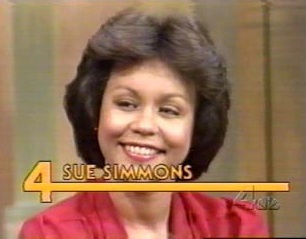
Many of my former classmates, and certainly a number of my closest friends, have heard parts and various versions of this story over the years. But I’ve hardly ever told the story of how I had access to the ’78 edition of all thirty or so volumes of World Book Encyclopedia in the first place. That started because of a teacher crush, the second one I had in my first four years of K-12. This one involved my third grade teacher at William H. Holmes Elementary, Mrs. Shannon. She was fun, funny, beautiful, and dressed like a young Sue Simmons from WNBC-TV New York did when she started working for Channel 4 earlier in

Sue Simmons, circa 1978, March 15, 2011. Qualifies as fair use under US Copyright laws because of low resolution of picture and relevance to subject matter of blog.

’77-’78.

Like most crushes I’ve had over the years, this one snuck up on my eight-year-old self and hit me in the head like a 90-mph fastball from Randy Johnson. And like the crushes I’d have when I reached Humanities in middle school and high school, I acted weird throughout February and March ’78. I became shier than I already was. I found myself daydreaming during reading time, not following instructions for assignments, just generally out of sorts.

Then there was the Easter play, the Peter Cottontail play. I wanted to play the lead role of Peter the Bunny, but all Mrs. Shannon wanted me to be was a stupid flower. I was mad, acted out, and she punished me by taking me out of the play all together. Following that, I refused to talk to her in class the next day. “You don’t have to speak,” Mrs. Shannon said as she sent me to sit in the corner until I was ready to talk again. I stayed in that corner the rest of the afternoon.

The following week, this week thirty-three years ago, Mrs. Shannon called for a parent-teacher conference with my mother and soon-to-be idiot stepfather. My mother, who had only been to two meetings at my schools since kindergarten, now found herself finding out that I was a bad student. Well, not exactly. Mrs. Shannon told them, “He has the ability. He has the potential. He just doesn’t want to concentrate.” Then she suggested that my mother could find a way for me to focus through World Book Encyclopedia. “It’ll draw out his imagination,” Mrs. Shannon said.

That’s all I thought and talked about on my way home with my mother. I brought it up so much that my mother said, “Alright already!” after two days of me constantly asking about it. We met a World Book sales person, and my mother wrote a check for $310, which was a lot of money for her. Within a week, four or five boxes reached 616, by far the largest order of books I’d see until grad school.

I didn’t start reading them immediately, and my mother complained about “spending all that damn money” on these books. But after December 2, ’78, my Saturday of running away from home, the investment began to pay off, and with it, the ability to think and imagine while being as weird as I wanted and needed to be, and others believed me to be as well. It’s a bittersweet memory, how I became a brainiac, how a teacher crush put me on a path of intellect and writing, of constant remembering and of painful transformations. How insidious knowledge — and the search for it — can be.

Dumb Ass Communications, Inc.

Tags

, , , , , , , , , , , , , , , , , , , , , ,


Lion and Sun, December 30, 2006. Original by [http://www.cais-soas.com/News/2006/December2006/30-12.htm CAIS

Of all my one-time stepfather Maurice Washington’s get-rich-quick schemes, the one that was the most elaborate, most expensive, most ridiculous of ideas was one that initially had some promise. In the year after he and my mother reconciled while making us all into Hebrew-Israelites in ’81, he concocted the idea of beginning a media entertainment business.

His great vision was to start a business that catered to Blacks audiences in TV and radio land, one that would redefine how media would in fact reach niche audiences. Maurice wanted to call it Sun-Lion Communications, partly after his Hebrew-Israelite moniker, Judah ben Israel, a lion of Jehovah. Of course, the dumb ass didn’t know that he was following a combination of Babylonian astrological, Persian and

Sun Lion Coin, 13th Century, Seljuq Turks. Source: http://mehmeteti.150m.com/thamara/index.htm

Islamic traditions in the process.

The plan grew from an idea at the end of ’81 into a full-fledged business proposal during ’82. So much so that my mother took $2,500 of the precious and pitiful few funds we had and bought a business license to incorporate this Sun-Lion Communications. In fact, she did that this time twenty-nine years ago. The one thing that my mother did right in doing so, that stuck in Maurice’s craw for years afterward, was to get a business license in her name, not my stepfather’s.

That was one of the underlying reasons for the Memorial Day ’82 incident in which Maurice drop-kicked my mother into unconsciousness — besides him being an asshole, of course. My mother may have made many dumb decisions over the years, but she wasn’t an idiot. Maurice had plenty of ideas before. When we first met the blowhard in ’77, Maurice told me and my older brother Darren that he was “a writer, a lawyer and a doctor.” All while driving a Reliable Taxi cab in Mount Vernon. Even at the age of seven, I wasn’t that naive. I knew enough to ask, “So how many books have you written?” But he did write. Street poetry and a few half-worked out plays. With time, focus and a lot of hard work, who knows?

Maurice, though, never wanted to work that hard. After losing his cab driver job on April 30, ’79 because he was literally caught sleeping at the wheel, he’d been unemployed for more than three years. At one point prior to him and my mother separating before becoming a Hebrew-Israelite, Maurice had the idea of starting a restaurant, to which my mother said, “Yeah, if you wanna eat us outta business!” in response.

I digress. After Memorial Day ’82 and spending most of June and July abusing me — I was a witness, to domestic violence, after all — Maurice finally got a job. It was as a part-time security guard for the closed Vicks plant in the middle of Wilson Woods (it’s a school now, I think). Within a few weeks of working the night and weekend shifts guarding the empty building, Maurice found inspiration. He had a “vision from God” that this empty shell was where Sun-Lion Communications would be headquartered, with studios, satellites, soundproofing, and so many other things a media business would need.

Although the idea still had promise (Bob Johnson had started BET only three years earlier, mind you), it was a high-risk business, with national cable in its early toddler stage. Not to mention our own growling stomachs, my mother consistently three weeks behind in rent, and us facing Con Ed’s warnings of our electricity being cutoff because we were $180 behind on that too.

That led to one of my mother and Maurice’s classic 616 arguments at the end of October ’82. In the living room, with all of our run-down furniture, Maurice was bellyaching about my mother’s refusal to put the business license in his name and her lack of emotional support. “I support a candy shop if we had the money, but we don’t,” she said. With Maurice yelling, demanding, “Give me the license, woman!,” I started worrying, as I was in the kitchen, drying dishes from the wonderful dinner of Great Northern Beans and rice. It was the standard meal when the idiot decided that he should play the role of stepfather and father and help feed us.

“How much you think this gonna cost?,” my mother finally asked.

“A hundred million dollars,” Maurice said.

“Man, you must be a fool!” my mother yelled. “With that kind of money, why would I need to start a business? You must think I’m pea-brained idiot!”

“You are!” Maurice yelled as he walked out the living room, went into the master bedroom, put on his clothes and coat and then came back up front, and left.

That was the last time I heard about Sun-Lion Communications. My ex-stepfather was and remains a dumb ass, never having found his way in this world, and about as good at business as he’s been as maintaining a proper diet and good health.

On Women and Wired Weirdness

Tags

, , , , , , , , , , , , , , , , , ,


[Why Sade? Closest I could find to my dream-life muse, and most appropriate video I could find]

Getting a bit long in the tooth to be rattling off about Crush #1 again, right? After all, yesterday was the twenty-ninth anniversary of the fight that led to a crush that led to some sort of falling in love for the first time. The three-month period between March 4 and May 30 of ’82 shaped the ways I saw girls and women from the age of twelve until my early thirties. The crush on Crush #1 and its inevitable side-tracking as my then stepfather knocked my mother unconscious in front of me helped shaped my feminism, my womanism and my sexism.

In all of that, I’ve learned that I was wired for this weirdness. Because as a person of deep thought, a boy surrounded by sexism and misogyny, and a lonely and semi-ostracized preteen, the sum was much greater than these contradictory parts.

To think that this all pretty much started because I picked a fight with Crush #1 at the end of class in seventh grade. Almost all of my extracurricular incidents that year began or ended in our homeroom with our homeroom/English teacher Mrs. Sesay. I know that she’s a principal somewhere these days, but back then, her lack of behavioral leadership skills in the classroom led to more verbal abuse and fighting than a group of gifted-track kids should’ve stood for. Anyway, the incident began because Crush #1 asked a question about a subject that Mrs. Sesay had spent the entire week going over, a concept that Sesay would test us on that Friday. I laughed out loud — thinking that I was only snickering — after Crush #1 asked that question.

Thinking nothing of it, I began to pack up after the 2:15 pm bell rang. Crush #1 came up to me and pushed me from behind.

“You’re an ugly, arrogant asshole!” she said with the distaste of a ballerina being asked for money by a junkie.

I called her “stupid” and then said something else stupid. “You’re an idiot!,” Crush #1 yelled as she threw two punches into my chest and a third at my jaw.

The fight lasted about fifteen or twenty seconds, but after landing a punch on her left boob and nipple, I stopped fighting, already descending into the land of the idiot romantic. All while Crush #1 kept hitting me, then being pulled away from me by a couple of her friends. One of them, the recently deceased Brandie Weston, called me a “pervert” as they exited the classroom.

I know that I wasn’t the first boy in history to start a fight with a girl who I’d come to like or love, but I do think that boys who do that have a lot of weird in them. Mind you, I hadn’t quite hit puberty yet, so my testosterone levels weren’t high enough yet to be the cause of my brain malfunction. No, my very sexism and her fierce sense of tomboyish feminism was why I liked her in the first place, and drank deep from that well for the next three months.

The Memorial Day ’82 incident with my mother changed what was an otherwise innocent crush and love into something weirder and more meaningful. I think that’s why it has so clearly affected how I’ve seen girls and women over the years. Crush #1 defended herself, my mother tried and couldn’t. Crush #1 was cranky and usually personable, my mother polite and as close-minded as a clam in deep water. Crush #1 would be fine whether she knew I liked her or not, my mother a damsel-in-distress that needed someone with sense and care to help her.

The weeks following that Memorial Day I made a decision to put my mother first. The side effect of that decision was that I’d spend the next fifteen years or so using Crush #1 as my template — and my mother as the anti-template — for understanding women, for befriending, dating or not dating women, for women I’d put on a pedestal from afar and for women I’d merely sleep with. In the end, I’d resent myself and my mother for that decision. And another six years trying to understand why.

Thinking about it now, it still amazes me how much of what occurred between ’82 and ’96 was part of an unconscious decision process. But since the end of ’89, I’ve gotten a reminder about once every six weeks. Crush #1 has been a part my dreams and nightmares, a muse that would surface some of my wiser thoughts. She’s a reminder that the twelve-year-old in me isn’t dead, just dormant.

The muse reminds me of how little I do know about women and romance, even after eleven years of marriage and more than two decades of various relationships overall. And that the struggle between the various strands of feminist, womanist and sexist thought in me remains just that.

AED Update – DOA for 50th Anniversary

Tags

, , , , , , , , ,


As of yesterday, the Academy for Educational Development (AED), my employer from December 2000 to February 2008 (and a place in which I remained a consultant from February-August 2008) is on the chopping block. Officially, the website mentioned in a press release that the AED Board of Directors “will pursue a process to sell itself of all of its highly valued programs and assets,” that this is “the only way to ensure the continuity of our programs and projects and to provide a new home and safe harbor for our talented staff within another appropriate for-profit or non-profit organization.” No explanation of why the Board found themselves making this allegedly difficult decision in the first place, however.

After all, as reported in the Washington Post, the Nonprofit News and the Los Angeles Times in December, USAID had put the organization’s $640 million in government grants on indefinite suspension after they learned of millions of dollars of malfeasance with two projects in Afghanistan/Pakistan. But it’s not until the sixth paragraph of its long press release on its website that AED even admits its time in the sun as an international development contractor is coming to a close.

There’s much more to this story than this press release, though. An undisclosed source confirmed that AED’s suspension has become permanent, as the government notified the organization of its decision to no longer do any business with the organization earlier this week. That puts the government grants that AED already administers on a death watch as well.

Despite all proclamations to the contrary, AED’s role since 1969 has been primarily as a government contractor with USAID and the US Department of State. With seventy percent of its business in government-funded international development programs, insufficient program diversification and a top-heavy business model — and not just funny bookkeeping — put AED on this road.

As a tribute to my former employer, below is a YouTube video of Gerry Rafferty’s big ’70s hit “Baker Street.” Gerry Rafferty – Baker Street It seems appropriate, since most of AED’s senior leadership was so ’60s and ’70s in their outlook on international development, education reform, gender and racial diversity and organizational management in general.

This year marks the 50th anniversary of AED’s founding. I started working there during AED’s year forty, and saw plenty of lavish celebrating of the organization’s ability to attract government funding, giving projects like mine — funded by the lowly Ford Foundation and Lumina Foundation for Education — short shrift in the process. Outside of love, friendship, wisdom and redemption, there’s nothing more remarkable in life than irony. I can hear the alto saxophone playing right now.