The Silent Treatment

Tags

, , , , , , , , , ,


Source: Screen Shot from The Roots, “Silent Treatment” Music Video, Geffen, 1995

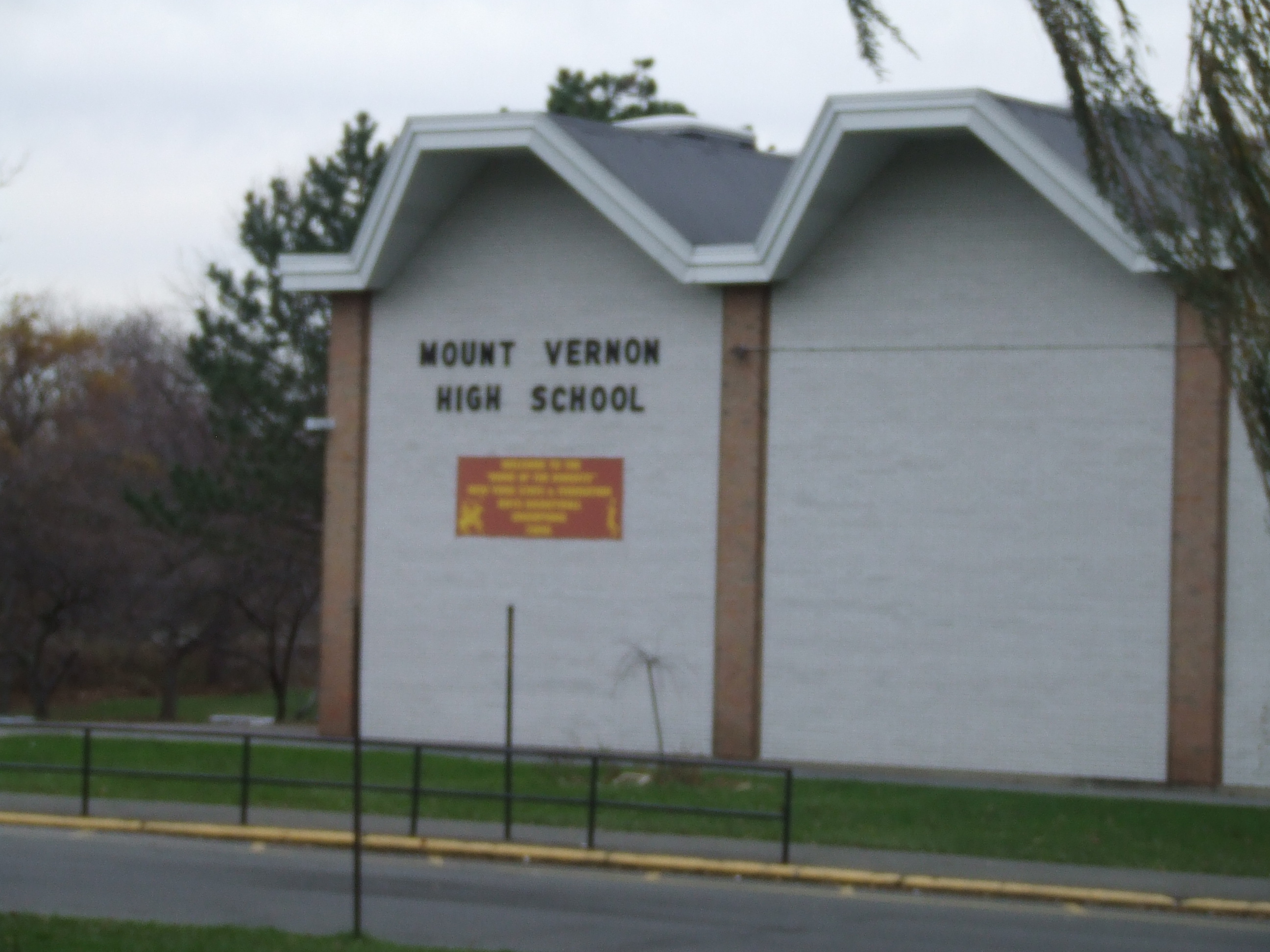
Right after the MVHS graduation ceremony at Memorial Field in June ’87, it started. I’d walk down the street to the store, and bump into one of my suddenly former classmates, say “Hi,” and get no response at all. The few times I bumped into a certain Ms. Red Bone, she’d stare straight at me, then straight through me, all as I said “Hi.” She just kept on walking, as if I had phased out of our space-time continuum into a parallel universe. By the beginning of August, I honestly thought that these people, my classmates for so long, were showing their true colors. They just didn’t like me, not me because I’d been a Hebrew-Israelite or me because I was poor or me because I listened to Mr. Mister. It was all about me, something within me that they detested.

“You can’t pay any attention to that. They’re all just jealous,” my new friend E (see “The Power of E” posting from August ’08) said when I told her about the ghost treatment over lunch one day. She and I worked for General Foods in Tarrytown that summer.

“Of what? Of me?,” I asked in disbelief.

“It’s because you’re not trying to be anybody except yourself,” she said.

“That’s a good theory,” I thought, but I didn’t really believe it. E was fully in my corner, and much more obvious about it than anyone else.

This pattern of treatment had only occurred two other times. Once was in sixth grade, after I came to Holmes with my kufi for the first time. My best friend Starling stopped talking to me, and refused to even acknowledge my presence for nearly two weeks before our second and last fight. The other was earlier in my senior year, in the weeks after the final class rankings were posted. Some in the Class of ’87 were upset with me because I was ranked fourteenth in our class. Three of them responded by not talking to me at all. They’d walk by me in the hallways, looked at and through me, and kept going without so much as a nod. That went on from mid-December through the beginning of March.

The Black “Party All The Time” folks in my class, the popular and dapper folks, snickered whenever they saw me. So I guess that they decided that to acknowledge me after graduation would me contaminating themselves with the knowledge that I was still alive, still figuring things out, still not cool enough to be bothered with.

Three years later, I bumped into one of these folks on my way home from my summer job with Westchester County Department of Community Mental Health in White Plains. I was walking home to 616 on East Lincoln, having just gotten off the 41 Beeline Express. It was after 6:30, and I was beat from another day of database work and my research preparations for my senior year at Pitt. Coming in the opposite direction toward North Columbus was a party-all-the-timer, a popular, slightly light-skinned dude named J. Since I assumed that he would walk by me as if I were thin air, I started to walk by him as if he weren’t there.
Surprisingly, J stopped me and said, “Hi, Donald.” He said that he needed to talk to me, to tell me that the path that I walked in high school, while weird, was a better path than the one that he was on. He told me about his mind-bending experiences at Howard, about his dropping out and need to take care of some serious emotional and mental health issues. After a year of work at Pitt and in Westchester County, I could tell, too.

At first, I was taken aback. I mean, this was a guy who laughed at me for nearly six years, who’d never lowered himself to so much as to give me a thumbs-up while in school. Now J was sharing the most intimate of details about his life with me? I asked him, “Why are you telling me this?” Among the other things he said, the thing that stuck with me was, “Because you’re true to yourself.” I gave him a handshake, and wished him well.

That was nearly twenty years ago. I guess that J and others were under a lot of pressure — peer pressure, girl pressure, family pressures — to be cool, to be successful, to be something other than themselves. None of this justified how they treated me back then. Nor does it justify how any of them may see me now. I’m just glad the only silent treatment I get now is from my wife when I’ve taken a joke too far. At least I know that she’ll talk to me again, eventually.

Graduation

Tags

, , , , , , , ,


Me and My Uncle Sam, June 18, 1987. Source: Donald Earl Collins

Twenty-three years on, as the British would say. To think that it’s been that long since the Class of ’87’s graduation from Mount Vernon High School. Wow. I’ve talked about various aspects of the last days of my time at MVHS, in Humanities and in Mount Vernon already. This one’s only about the actual ceremony.

My high school graduation ceremony at Memorial Field in South Side Mount Vernon went well enough, except it didn’t. It was a hot, hot mid-June day, about eighty-seven triple-H degrees. It was likely hotter for the guys, as many parents — my mother included — made us wear suits underneath our heat-absorbing burgundy polyester gowns. The girls, at least, wore yellow, the other school color for caps and gowns. It was a good day all right. Except that an eighty-eight year-old White guy stole the show. George Gibson graduated with our class, having fulfilled his requirements for a high school diploma some seven decades later than the kids from his generation. At least the few who made it to high school back then, as most kids in early twentieth-century never made it past middle school.

My father Jimme showed up to the ceremony drunk as a skunk. My mother and my Uncle Sam, whom I hadn’t seen in almost three years, had to keep him from insulting the other parents. In retrospect, in might’ve been good to take him Capozzola, Prattella and Estelle Abel’s way. Valedictorian and salutatorian got the opportunity to represent our class on stage, each giving overworked  and unimpressive speeches. That wasn’t bad, for they had stolen the show the week before at MVHS’ Honors Convocation. That was the good thing about the old White guy. Local TV news covered Gibson instead of the Class of ’87’s top two students, which I laughed about when I watched the 11 o’clock news later that evening.

The picture with me and my Uncle Sam was the first non-school related picture I had taken in something like eight or nine years. Who knew that it’d be the last picture taken of me in Mount Vernon for the next two decades? If I’d known that twenty-three years ago, I would’ve bought a camera that spring, at least before graduation.

After throwing our burgundy and yellow caps in the air, we went over to our now former classmates — who were now friends, lovers, acquaintances, and in some cases, foes — to say good-bye, to embrace and hug, to cry and scream and dance and twirl around in the air with. Afterward, I walked home, minus family and friends, trying to make sense of the moment. Not fully realizing that the moment we threw our caps in the air, Mount Vernon was no long my home, and I was no longer welcome.

Another Day In Paradise

Tags

, , , , , , , , ,


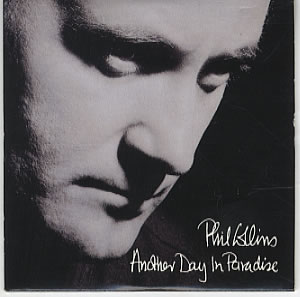
Source: Virgin, Atlantic, WEA. The image is used as the primary means of visual identification of the article topic.

A little more than twenty years ago, Phil Collins (no relation) released the first song from his …But Seriously album, “Another Day In Paradise.” In the context of the times, it was part of a series of pop music songs that sought to arouse a social justice consciousness in the late-’80s, to stem the “Greed is good” culture that had evolved during the Reagan Years. Though overwrought and a bit like being hit over the head with a sledgehammer, “Another Day In Paradise” — a song about homelessness in America — was the final #1 hit of the ’80s, and the first one of the ’90s as well.

That song has as much relevance today as it did twenty and a half years ago, and not just with the issue of homelessness. The current BP oil deluge crisis, the manipulation of the housing market, our growing personal and national debt, even the tampering with our food by corporate giants like Tyson, Monsanto, and Con-Agra. All fall into the paradigm of a society faced with ills of its own making yet in nearly complete ignorance of its own participation in these disasters. Our addiction to oil is stronger than any individual’s addiction to crack cocaine or crystal meth. The housing market and our net debtor status reflects greed run amok and nearing the speed of light. And the food crisis — with the obesity and health crisis it has created — is an indication that our narcissism and greed knows no bounds.

Progressives and others on the left — people even more left than me — tend to act as if these corporations aren’t affected by their own evil decisions and policies, that the ills that they have created will only affect our adult children and grandchildren. In fact, that’s how our representatives in government talk as well. But, as we are seeing with the pictures of oil and mud-soaked pelicans and turtles, that’s simply not true. What’s been happening to our environment, energy, food and economy affects all of us, rich and poor, now, not in twenty or fifty years, but now.

The rich can and do clean up the crap that affects us all better than we can because they have the money to do so. But they still breathe the same polluted air, eat the same GMO foodstuffs — especially if they run Monsanto and Con-Agra — and drink the same contaminated water that we drink. They’re just too rich and ignorant to realize that we’re all in the same rickety boat, and that with each windfall profit, their putting the nails in their own coffins too.

The lyrics to Phil Collins’ song go something like this at the end:

You can tell from the lines on her face
You see that she’s been there
Probably been moved on from every place
Cause she didn’t fit in there

Except the “she” in the way I see these lyrics today isn’t a homeless woman. It’s the riches of our planet, as we rape and torture it into what we hope is submission, ignoring the signs that the consequences for our greed are already too high for us to pay. Our paradise world has already been turned into a living hell for millions all over the world — from half-century-long oil spills in Nigeria (see In Nigeria, Oil Spills Are a Longtime Scourge – NYTimes.com ) to the half a million victims of the Union Carbide toxic gas leak in Bhopal, India in ’84. With Katrina in ’05 and this BP disaster this year, maybe this is only our procrastination, incompetence, narcissism and greed chickens coming home to roost.

The World Is Not Enough

Tags

, , , , , , , , , , , , , , ,


Mount Everest from from Kalapatthar in Nepal. Photo Source: Pavel Novak Attribution-Share Alike 2.5 Generic

A few years ago, at my social justice fellowship job in DC, I worked with probably the worst program assistant in all my years of work. He was a twenty-two-year-old graduate of U Virginia or some other four-year institution in the heart of the Confederacy, and this was his first professional position. In eight months’ time, he managed to screw up in every conceivable way. He sent out professional emails with the signature, “Scooby Dooby Doo.” He’d address me with, “Yo, wass up,” as if we were friends. He slept in one day during our summer conference, and showed up hung over and in the clothes that he’d worn the day before another day. He couldn’t even do a mail merge without turning it into the German loss at Stalingrad. It took all of these screw ups and more before my boss was ready to entertain firing him. My former boss’ lament was, “He’s young. He’s just trying to figure things out.”

It’s one of the biggest and most hypocritical statements I’ve heard, and not just at my former job. We make excuses for youth — at least some youth — because we believe that somehow, some way, these folks will one day find themselves and take over the reins of our society and world. If this were a universal thing, that would be fine with me. But it’s not. If you’re educated, middle class or affluent, White and male — and sometimes female — the above is what people say about you when you screw in ways that would’ve gotten me fired inside of a week, whether at sixteen, nineteen or twenty-two.

The fact is, we live in a society in which for those folk whose concerns have grown beyond money, food,

Bungee jumping off the Zambezi Bridge, Victoria Falls, Africa, 1996

shelter and basic education and health, the everyday world isn’t enough. We think that youth and young adults have the mandate to search for themselves and screw up at all costs, because, well, the world is already theirs to inherit.

We don’t make excuses for poor White males, or Blacks, or the millions of undereducated youth regardless of race, gender and wealth the same way we do for the likes of the fully advantaged. Do we normally call it a mere mistake when a young woman of color gets pregnant at seventeen, or when someone like the author and poet R. Dewayne Betts (of his memoir A Question of Freedom) somehow ends up an accessory to a violent crime at sixteen? Of course not! We condemn both, treat them like they’re full-fledged adults, and hope that they rot out of our sight, media and mind.

From Holden Caulfield in the late J.D. Salinger’s Catcher in the Rye to the real-time Chris McCandless in the movie and book Into The Wild, the well-off mandarin class has embraced the contrarian and narcissistic perspectives that some youth have of our flawed and brutal world. Instead of fighting for a better world, the fictitious Caulfield and the real-life McCandless both went off in search of a reality that never existed anywhere except in their own minds. Ultimately, one took his own life, while the other put themselves in a position to lose his in not-so-wild Alaska.

Wooden sailing boat Kleine Freiheit – 70 year old gaff cutter

I don’t object to the likes of thirteen-year-old Jordan Romero climbing Mount Everest with his father. Nor do I object to sixteen-year-old Abby Sunderland’s attempts to circumnavigate the world solo, despite the dangers of such. What I do have problems with, though, are the underlying assumptions and reasoning behind such feats. This isn’t just about man versus nature or about finding oneself through an epic struggle. Really, it’s about the reality that our world — at least for the kinds of folk that I’ve described here — isn’t enough for them anymore. It certainly wasn’t enough for their parents.

We celebrate these youth as if this is the way to live, and that right and wrong and consequences don’t matter. At some point, we need to get over our affluent obsession over youth, over ourselves and our collective lamenting of the state of our world, if we ever hope to grow up and fix whatever ails us and our world.

Not Finding Work

Tags

, , , , ,


Source: Rob Rogers, Pittsburgh Post-Gazette, 2003

This is at least the fifth time in my adult life that I’ve struggled with having enough full-time work consistently, this time in concert with the Great Recession and a drying up of consultant work. Luckily I do teach and do have some consulting work. There have been other times over the years, though, where having any work at all was beyond my grasp.

The first time I went through this as an adult was the long, hazy-hot-and-humid summer of ’88. Long because the University of Pittsburgh’s school year ended the last week of April. I was home from April 30 to August 29, 120 days in all, marking the longest time I ever had off from school. I came back to New York, Mount Vernon and 616, and spent the first two weeks on domestic work. I waited two weeks because there was too much cleaning to do, too many clothes to wash, too many old responsibilities to pick up again.

It was already too late by the time I began to look. Summer jobs were sparse and I was now in competition with college students in the area. I could’ve had a two or three-week head start on things if I’d started looking right away. My mother didn’t let me here the end of it. “I told you to look, but you didn’t listen,” she said to me over and over again. “You could’ve had a good job, but you sat on your ass and did nothing” was another thing my mother said to me, as if I didn’t need a break before looking for work.

By the beginning of June, I was also in competition with high school students for jobs. The summer of ’88 just happened to be one of the worst summers on record for finding a job, at least if you were between sixteen and twenty-four. In some areas like New York, the summer unemployment rate for young adults went over seventy percent, and it was worse for Black males. So I wasn’t alone, at least according to Tom Brokaw and NBC Nightly News.

I certainly didn’t feel any better, though. I went to the New York State Employment Office on Gramatan, and they offered me jobs mowing grass and fixing air conditioners. The first one required a car and barely paid four an hour. The other paid $4.50 an hour but I needed to have experience fixing air conditioners. Oh well! I looked through the papers, and called for a law office job doing research. The job required a history background and offered a $10 an hour salary, but it required me to have my B.A. in hand. “Just because I don’t have degree yet doesn’t mean I can’t do the work,” I practically begged. The woman on the other end of the phone responded, “Trust me, I’m doing you a favor. You’ll thank me later.”

I was desperate for work by the second half of June, so desperate that I literally walked Manhattan for a job one day. I looked at a job ad in the Daily News, one that required applicants to go to an address on Broadway in Manhattan. The job allegedly paid $400 a week. I had just enough money left from my CIS job at Pitt to catch the Subway there and back. I walked from 616 to 241st, and took the 2 like I used to. Stupid me got off the train at 42nd Street and Times Square, having forgotten that New York’s numbered addresses didn’t take jumps from block to block. If a building’s address on one block was 1000 Broadway, the building’s address on the next block would likely be 996 Broadway. My address was around the 200 mark of Broadway. I proceeded to walk in my only good suit from Times Square to Broadway and from there in Midtown all the way to Chinatown, a walk of nearly three miles. It was pouring rain on that hot and humid day, somewhere in the upper eighties.

After almost an hour of walking, I found the place. It was a sweatshop, with lots of Chinese immigrant women sewing cloth for dear life. Apparently the job involved “supervising” these poor women. I had to turn around and walk until I found the nearest Subway stop, wind my way back to 241st, and then walk home from there. Five hours, five lost pounds and two ruined shoes later, I was beyond worn and forlorn. I gave up hope that day of finding any summer work.

My last real attempt at finding work that summer was to take the U.S. Postal Service’s postal carrier exam out at their sorting facilities in North White Plains. It was an embarrassing experience, taking a civil service exam with folks who obviously weren’t in school. I didn’t even know that there were study guides for these exams, for knowing the difference between McClellan and Mclellan, zip codes 10552 and 15250, and AK and AL as states. I spent two hours sweating in a warehouse-like room, breezing through questions and hoping that I would get a call. That was the twenty-fifth of July, the last Monday of the month.

About ten days later, a letter came from the Postal Service telling me that I passed the exam with an 86. Preference would be given to veterans and other applicants with special circumstances, then the highest scores after that would get a call, depending on job vacancies. I knew that it would be a long time before I heard from them again. I did, just before Christmas ’92, when I was in my second year of grad school.

While going back to school ended my unemployment cycle that time around, I don’t have that as an option now as a partially gainfully employed professor and consultant. But, between my skills, faith, hope and the fact that I still have quite a bit of work already, I have as much to look forward to now as I did twenty-two summers ago.

A Casually Uncasual Fan

Tags

, , , , , ,


Fans in the 2006 FIFA World Cup in Munich, Germany. Source: René Stark http://creativecommons.org/licenses/by-sa/3.0/

Something’s happened to me that I can’t explain. I can’t quite put my finger on it. Maybe it’s the beginning of my youthful decline. Or maybe it’s the fact that none of my teams did very well in the regular season or playoffs this year so far. Whatever it is, I find myself not caring much about American sports these days.

I haven’t watched a single minute of the NBA Finals this year, and don’t plan to either. I care only slightly more that the Celtics win only because I can stand Kobe Bryant and the Lakers even less. I didn’t watch a single minute of the Stanley Cup Finals, didn’t watch the French Open, haven’t watched baseball in years, and have tired of the 2010 NFL season three months before it starts. What’s wrong with me?

The thrill is gone, as BB King would say. I used to live and die by my teams, especially the Knicks. With them playing three Game 7s in the ’94 NBA Playoffs, my emotions were on a roller-coaster ride with every game. There were games back then that left me hoarse from screaming at officials, with my jaw clenched after a loss, in orgasmic euphoria after a win.

The last time I felt that way about anything in any sport was when my Steelers won the Super Bowl last year (2008-09 season, that is). Even then, I felt so bad for Kurt Warner, Larry Fitzgerald and the Arizona Cardinals. They gave their all to win that game. I know for a fact that I wouldn’t have felt anything for any opponent like that twenty years ago.

I think that it’s not so much that I’m getting older or have become more mature. It’s that I no longer need the spectacle of sports to jump-start my imagination or get me off the couch to exercise. I prefer the sound of my long-distance two swishing through a net over the sound of it on TV. I prefer the dread and challenge of a three-to-four-mile-run over sitting on the couch and figuring out what defensive scheme is being run before most quarterbacks do. I have become, sadly, a casual fan of spectator sports.

So, where do I go from here? It’s not as if the NFL’s going to become dynasty driven again, or that there are a bunch of teams in the NBA with enough talent to challenge the — yawn — same old teams that compete for rings almost every year. The baseball ship sailed for me years ago, and I’d probably have to go see a Capitals game in person before I’d enjoy watching hockey again. Maybe it’ll be the World Cup, or the US Open (golf), or watching Noah knock down an eight-footer. I’ll bet on that last one waking me from my slumber.

The Last Class

Tags

, , ,


Source: Donald Earl Collins, November 2006

Twenty-three years to the date only makes me realize how old I’m getting, as this is my annual reminder of my last day at Mount Vernon High School. Normally I talk about the wonderfully dreadful former Science Department chair Estelle Abel (more like Cain than Abel in her case, I guess) and her attempt to destroy my soul within minutes of me closing my locker for the last time. But I’ve used her as my punching bag too many times in the blogosphere in the past three years (see June 10, ’07, ’08, and ’09 posts as reference points), not to mention in Fear of a “Black” America. Yeah, she was a real piece of work all right. But she was part of a school, school district and town whose racial and social dynamics that left a lot to be desired.

My last day at MVHS couldn’t have gone by fast enough twenty-three years ago. I was in the midst of a rage-based hangover from the school’s V and S (for valedictorian and salutatorian) Honors Convocation the night before (see post “Honors Coronation,” June 9, ’08), and I wanted to get the day

Source: Donald Earl Collins, November 2006

over with as much as I wanted to get out of Mount Vernon. From AP English to AP Calc, from Humanities Art to lunch, from AP Physics to Gym, my whole day was a blur. I think this was one of the few times I wanted to forget more than I wanted to remember. I know I said good-bye to more than a few of my classmates along the way. But nothing about that last day was particularly memorable.

Until the final class of my final day. I had eighth-period Health the second half of my senior year, as required by the school district. I wasn’t the only senior or Humanities student in that class. But by putting it off for as long as I could, there were hardly any classmates or other students I knew in there. The academics of this class weren’t important at all. I might as well have been in sixth grade again the way the teacher taught sex education and oral hygiene.

No, the significant part about Health was the social dynamics. The young Black males hitting on the females, sometimes during class, while the teacher was talking. The glances at body parts from start to finish on both sides of the gender aisle. The constant giggles about sex and its potential consequences — all bad consequences, by the way. The fact that a known low-level drug dealer from 55 Sheridan was in our classroom, talking about Saran Wrap as an alternative to a condom for intercourse.

Yeah, that final class wasn’t so much about watching the clock tick to 2:50 pm as much as it was about surviving forty-five minutes of deliberate ignorance and bad pedagogy. The teachings of this class would stick with us about as well as a magnet sticks to a penny. My classmates were graduating, but were on very different paths from me.

Source: Donald Earl Collins, November 2006

It was all too bad. When the bell rang, mercifully for me, for the last time, I wasn’t so much excited as I was relieved. If I’d been more of a man back then, I probably would’ve cried. Not tears of joy. Tears of release, of relief, of the letting go of anger and bitterness over those past four years of high school and six years of Humanities. Only for it all to come back again, fifteen minutes later, because I bumped into Estelle Abel.