• Spinning Sage’s Gold: Allegories on the Western-Dominated Present and a Possible Post-Western Future (2025)
  • About Me
  • Other Writings
  • Interview Clips
  • Video Clips
  • Boy @ The Window Pictures
  • Boy @ The Window Theme Music

Notes from a Boy @ The Window

~

Notes from a Boy @ The Window

Category Archives: Youth

Milky White Skin

21 Thursday Apr 2011

Posted by decollins1969 in 1, Boy @ The Window, culture, eclectic music, Pop Culture, race, Youth

≈ Leave a comment

Tags

616, 616 East Lincoln Avenue, Adjectives, Adverbs, Bethedsa Maryland, Bethesda Literary Festival 2011, Boy @ The Window, Essay and Short Story Contest, Finding Forrester, Georgetown Cupcakes, Literary Devices, Literary Nonfiction, Literature, Milky Skin, Milky White Skin, Sean Connery, Whiteness, Winners, Writing


Bethesda Literary Festival logo, April 21, 2011. http://www.bethesda.org

I attended the Bethesda Literary Festival last weekend. It’s been a while since I’ve gone to any conference involving writers, wannabe writers, published authors and other curiously weird types. I usually find these events somewhere between dreadfully boring and undeniably soul-sucking. I wish that I could say that the festival held at various parts of downtown Bethesda were an exception. But what I can say is that the Bethesda Literary Festival provided the best desserts — especially the cupcakes (my guess, from Georgetown Cupcakes) — I’ve had at any literary event.

Bethesda Literary Festival 2011 Logo, April 21, 2011. http://www.bethesda.org

The most poignant event at the festival for me was the Essay and Short Story Contest winners for ’11. Grouped into two categories — over 18 and young adults — the winners were announced and had the opportunity to read from their stories and essays. I must admit, some of the stories were compelling. (That word, compelling, a common word lit agents have used as a reason for rejection of Boy @ The Window. I often think that they’re working from an unspoken definition of what compelling really is.) But I also found most of the stories cliché, typical, White both in terms of the actual color as well in racial and cultural terms.

Listening to these aspiring authors, young and talented writers read their work reminded me so much of a line from Finding Forrester, where the character played by Sean Connery says, “Writers write so that readers can read. Let someone else read it.” It’s difficult for any writer to read something they’ve written with the passion and emotion contained within their own words. And with two exceptions — a mother reading for her daughter about a dying aunt, and a seventeen-year-old reading his essay in poetry slam fashion — the Forrester axiom was in full effect.

I kept checking my watch, hoping that I’d hear something that would inspire me or at least pique my interest. The latter did occur, but not in the way in which I would’ve expected. I listened to one forty-

Ridiculousness of Milky Skin, April 21, 2011. Donald Earl Collins

something short-story honorable mention read about a “tongue licking ice cream.” Earlier, there had been a young adult winner, reading phrases like “Same cloudless indigo eyes. Same auburn, frizzy locks. Same childish, pearly pudge of skin…”

It all took me back to novels and other pieces of literature from my high school days. Like Shakespearean plays in which actors described some young English woman as having “milky skin,” as a point of attraction and lust. That kind of writing, the constant shifting and sliding of adjectives and adverbs. It drove me crazy in ’85. Last weekend, it made my eyes glaze over, with both looking like the clear frosting on a glazed donut.

I yawned with the anticipation of more of the same stories that writers and publishers have been selling for as long as I’ve been alive. I knew what was coming. Stories of epiphanies and social consciousness, upper-middle-class-White-Bethesda-and-Potomac-style. Stories of parallel and pain, from climbing Mt. Kilimanjaro and grave illness to autism to death and dying. Universal stories that somehow were milky White, told in a style that made the messy truth of it as palatable as a slice of key lime pie.

I don’t write that way. But not because I can’t. I could write page after page in vivid description of Crush #1. I could count each hair on her well-muscled forearms on the way to measuring every mole on her shoulders, every tooth in magnitude of whiteness, every capillary in her eyeballs. I could spend a few pages describing the different smells of flatulence and excrement I grew up with at 616. From the sweetness of a spaghetti and meat sauce fart to the lingering death-knell scent of a bathroom after the flushing of what once was a combination of coffee, beer and fried chicken.

Literary nonfiction, memoir, or other serious writing endeavors, though, are about the balance between the sweet milky whiteness of the literary and the messy realness of me as the writer. In the case of Boy @ The Window, of me as the main character as well. Descriptions of milky or caramel colored skin do reside among its pages. But so do descriptions of conversations, characters, actions and emotions. All as part of telling a story, sharing some truth, beyond the romance of the purely literary.
The Tyranny of Salvation

18 Monday Apr 2011

Posted by decollins1969 in 1, Boy @ The Window, culture, Eclectic, Jimme, Marriage, My Father, Politics, race, Religion, Youth

≈ 2 Comments

Tags

616, 616 East Lincoln Avenue, Balkis Makeda, Conversion, Easter, Ex-stepfather, Fatherhood, Fathers, Hebrew-Israelites, Judah ben Israel, Kufi, Marriage, Maurice Eugene Washington, Maurice Washington, Mount Vernon New York, Passover, Religion, Salvation, Separation, Sixth Grade, Starling Churn, Stepfather, William H. Holmes Elementary, Yarmulke


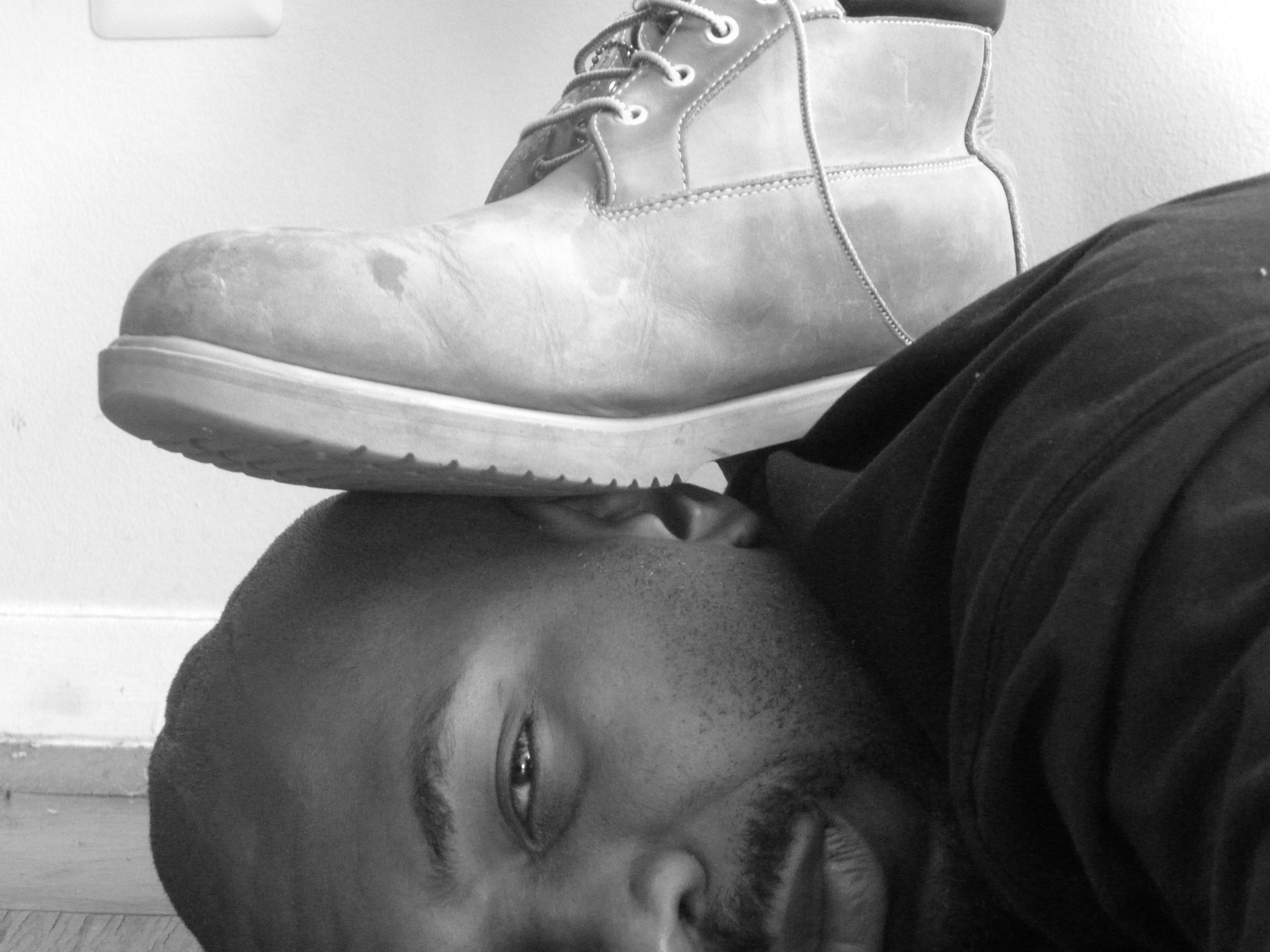
Foot On My Neck & Head, symbolic of my years as a Hebrew-Israelite, April 18, 2011. Donald Earl Collins

Thirty years ago this date, on a sunny Saturday in April ’81, the false prophet known as my stepfather came back into our lives with a new religion, delaying my spiritual growth by at least three years. The day before both Easter and Passover that year, me, my mom and my older brother Darren became Hebrew-Israelites, Black Jews, Afrocentric Jewish Negroes, strange folks among strange folks in our strange land. It was supposed to be my and our salvation, the beginning of glorious times. Instead, it was a hell on Earth like no other, with fists, kicks and empty stomachs to look forward to for the next three years.

An excerpt from Boy @ The Window seems appropriate here:

Maurice returned to our lives in April ’81 after a six-month separation from my mom (sort of, because unbeknown to us, she was pregnant with my younger brother Yiscoc, a Hebrew variation for Isaac) claiming that he was a different man, a changed man, thanks to an allegedly reincarnated Balkis Makeda and his Hebrew-Israelite conversion.

This was the religion my stepfather converted to after he and Mom had separated. In the period before his return, my stepfather had been working on Mom, attempting to convince her that he was now a good man and could be trusted as the man of our house. He loved Jehovah, had stopped smoking, and had learned how to love himself. And he had changed his name to Judah ben Israel, not legally, mind you. The name literally means “Lion of God and of Israel,” and referred to my stepfather as a royal descendant of Jacob/Israel, the immediate father of the Israelite people. It was in this context that my stepfather gained a sense of himself and control over his world.

I didn’t know what to think at first. After I had watched Maurice load up on lamb shanks and pork chops on the first Saturday in October six months earlier, I hadn’t expected him to come back at all. I already thought of the man as the great pretender after three and a half years of living in the same 1,200 square-foot space together. That, and eating like he was Dom DeLuise at a banquet, were his only true talents. As few and far between my visits with Jimme were after Mom’s divorce became final in ’78, I’d always seen an inebriated Jimme as more of a father than Maurice could be if he really tried.

Still, despite my confusion and skepticism, I worked extremely hard to convince myself that Maurice’s conversion was real. Especially since Mom had decided to welcome him back into all of our lives. I had to. Because becoming a Hebrew-Israelite wasn’t exactly a process in which free will was involved. Our mother told us that this would be our religion “for the rest of our lives.” Then our stepfather came to explain this “way of life” to us, and we put on our white, multi-holed, circular kufis for the first time. I had no idea what Mom and Maurice had pushed us into.

A part of me was on the outside looking in, thinking, “this is crazy.” But we were already the children of one divorce, and I wasn’t sure if I wanted to see another one so soon. Darren, to his credit, played along as if being a Hebrew-Israelite was just a role in a school play.”

I lost many of my sixth-grade friends when I showed up to school the Tuesday morning after Easter and Passover with a kufi on my head, including my best friend Starling.

Tyranny Of Salvation

Tyranny Of Salvation

I might not have lost my childhood thirty years ago on this date. But it was the beginning of eight years wandering in the wilderness. It was a bitter, tyrannical wilderness, populated by wolves in sheep’s clothing, Maurice Washington number one among them. I stepped on many landmines in the process of finding myself again.

Still, those years are ones I can’t get back. It’s amazing that I found God at all, given all of the crap we’re told by spiritual leaders about the road to salvation.

Never As Good As The First Time

12 Tuesday Apr 2011

Posted by decollins1969 in 1, Boy @ The Window, culture, Eclectic, eclectic music, Jimme, Marriage, music, New York City, race, Religion, Youth

≈ Leave a comment

Tags

"Never As Good As The First Time", 616, 616 East Lincoln Avenue, Abuse, Ass-Whuppin', Child Abuse, Corporal Punishment, Drop-Kick, Ex-stepfather, Hebrew-Israelites, Isshin-ryu Karate, Judah ben Israel, Karate, Maurice Eugene Washington, Mount Vernon New York, Religion, Sade, Stepfather


Sade – Never As Good As The First Time

Sade – Never As Good As The First Time

I know. Today marks 150 years since a bunch of rebel rednecks besieged a fort in South Carolina after months of talk of civil war across the South and North, beginning the bloodiest conflict to date in American history. I’ll get to this in the next couple of days. Today, though, marks a more personal and bloody anniversary for me. You see, today’s the twenty-ninth anniversary of experiencing unadulterated child abuse for the first time.

Although much of what I’d gone through prior to April ’82 in terms of my parents’ and stepfather’s use of discipline would be considered abusive now, I wouldn’t have seen it that way when I was twelve. You run away from home, you get an ass-whuppin’. You tell a lie about your brother, you get whupped with a belt. You don’t clean up the kitchen properly, you stand in a corner of your room with the lights off, with one leg up in the air and your two arms balancing books for an hour.

Yeah, that was life at 616 before Maurice, Judah, whatever you want to call the man, became almost psychotic (based on my experience, actually bipolar) after becoming a Hebrew-Israelite in ’81. And, in the process, also making us Black Jews. Poor, misguided, conflicted Hebrew-Israelites we were. But not him.

Suge Knight Mugshot. Face and beard of my ex-stepfather from 30 years ago.

My idiot stepfather’s ego was stoked in this religion.

And it came out in the worst way on this second weekend in April ’82. It was a week after a freakish late winter/early spring storm had dumped 12-18 inches of snow on the New York City area — Mount Vernon included — and kept the schools closed for a few days. In the previous couple of months, Maurice had become a hanger-on at a newly opened Karate studio down the street from 616, next door to the old dry cleaner business on East Lincoln Avenue. He made me come to the studio because he wanted to show me “how to be a man.”

But when I’d see him on my almost daily runs to the grocery store, he mostly hung out with young Turks and wannabe thugs from the Pearsall Drive projects across the street. Maurice smoked up a storm of Benson & Hedges Menthol while talking about women, being a Hebrew-Israelite, and about me as his “book-smart kid,” at least when I happened to walk by.

I knew what that meant. My stepfather was making it known that he thought of me as soft. This would have disastrous consequences for me later on in ’82, as I’d come to be robbed by a guy called “Pookie.” But as far as this part of Mount Vernon was concerned, it was nothing like the poorer, almost exclusively Black South Side. At least where we lived, people didn’t go into parks with baseball bats attempting to put people’s heads in orbit, like with my father Jimme the year before.

Maurice had tried to teach me and my older brother Darren Isshin-ryu Karate two years earlier. Beyond that, he’d been showing us a variety of basic moves since ’77. Despite myself, I did pick up a few moves. Now he decided that I would learn how to fight no matter the consequences. It was all about breaking bones and inflicting maximum pain. When I told Maurice that I didn’t want to learn, he said “You will

D'Angelo Mugshot, circa 2010. A slightly better doppelgänger for idiot Maurice Washington from '82.

learn because I’m your father” as he started to throw hard punches into my midsection.

After I yelled “You’re not my father!,” he drop-kicked me to the floor. Maurice, all six-foot-one and 270 pounds of him, then pulled me up by my arms, slammed me back-first into a mirrored wall, and punched me several times in the head, chest, and stomach until several of the men in the studio surrounded him. My stepfather, completely exasperated and winded, yelled “Don’t you EVER say that again, muthafucka! I’ll kill you next time!” I ran for home with a knot on my forehead that didn’t go down for almost a week.

By the time that knot on my forehand began to shrink, I’d been feeling lonely and betrayed for nearly a year. It’d been exactly fifty-two weeks, a full year, since the asshole had come back into our lives with this earth-shattering religion. Now we were more broke than ever, I had lost my best friends, and in fact, had no one I could call friend. With this latest karate episode, I knew I was cursed, at least, that’s how I felt back then.

I wasn’t a normal kid before the Hebrew-Israelite period in my life. So I didn’t have a natural progression toward adulthood — I was struggling to remain a kid but succeeded at only having adult issues by the time a drop-kick knocked me to the floor of a karate studio. So, because of my virtually photographic memory and those terrible times, I often flip one of Sade’s refrains from “Never As Good As The First Time.” The thorns I remember, the roses, I forget (except for Crush #1). And Maurice second stint as a husband and father “didn’t live up to the dream,” ‘cuz his second time with us was “not quite what it seemed.”

On Baseball & Hyprocrisy

02 Saturday Apr 2011

Posted by decollins1969 in 1, Boy @ The Window, Eclectic, Politics, Pop Culture, race, Religion, Sports, Youth

≈ Leave a comment

Tags

Babe Ruth, Barry Bonds, Baseball, Bigotry, Bob Ryan, Color Line, Cy Young, George Will, Hank Aaron, Henry Aaron, Hypocrisy, Integrity of the Game, Joe Di Maggio, Josh Gibson, Lou Gehrig, Mike Lupica, Mythology, Myths and Legends, Pope Lupica, Purists, Purity of the Game, Race, Racism, Records, Reggie Jackson, Satchel Paige, Sports, Steroids, Ted Williams (Baseball), Willie Mays


Fenway From Legend's Box, Fenway Park, Boston, June 21, 2008. Jared Vincent via Flickr http://flickr.com/photos/23999911@N00/2607333633 - Permission granted under the terms of the cc-by-2.0 license.

A new baseball season has arrived for this estranged ex-fan of the game. Millions of people celebrate as if this is a rite of spring, like a cherry-blossom festival or an opportunity to spend more time outside. When I see the start of baseball, it merely reminds me to up my dosage of Zyrtec and Rhinocort.


But that’s not quite true. It also hits me in the brain and gut with the common mythologies and hypocrisies of America the Beautiful. Especially this spring, with Barry Bonds on trial for perjury — and indirectly, for using steroids, sullying the game, not to mention his Hall-of-Fame record prior to ’99. The guardians of the game — baseball purists like George Will and numerous others, and sports reporters like Pope Lupica and Bob Ryan — supply us with the myths and legends of Babe Ruth, Joe Di Maggio, Ted Williams, Lou Gehrig, Ty Cobb, Walter Johnson, Mickey Mantle and Cy Young. Along with their records, those precious records. Of home runs, total hits, hitting streaks, RBIs, strikeouts, wins, stolen bases, games played, batting averages, slugging percentages. The stuff that makes baseball America’s pastime (which should always be written as past-time, or past-its-time), different from all the other major sports.

The hypocrisy comes from this ridiculous notion of keeping the game separate and holy, like the sabbath for orthodox Jews and for the most devout of Christians and Muslims. Except that this game, this most American of games, is about as pure as New York City snow two minutes after hitting the ground. The biggest, most disgusting hypocrisy of all is how most baseball purists will celebrate Babe Ruth’s greatness any day over a Henry Aaron, Willie Mays, Reggie Jackson, or Josh Gibson. Or Walter Johnson over Satchel Paige. That sixty-four years since Jackie Robinson broke the color line in major league baseball, there’s still a color line in baseball’s precious records, as well as among the people who hold them. That alone is a stomach-churning, blood-pressure-raising shame.

But this issue of who should and shouldn’t be in Cooperstown because of the Steroids Era in baseball, well, it presupposes a false dichotomy. That there was a time before, say ’88, where baseball wasn’t dirty, and that with anabolic steroids and HGH, baseball became dirty. But since ’03, baseball’s become clean and transparent again. This is beyond ridiculous. Baseball’s been as dirty as any sport in American history, in fact dirtier, than the other sports put together. Between amphetamines and illegal drugs, pine tar and Vaseline balls, sharpened cleats and headhunting and the exclusion of Blacks, the sport and the individuals involved in it have been seeking and finding competitive advantages for as long as baseball has been a professional endeavor.

Still, the biggest myth and hypocrisy in baseball remains its insistence that its records are sacred, above critical scrutiny and reproach. I have a problem with this, and not just because of the racism that’s built into any records achieved prior to 1947. But because baseball’s sanctimonious bigotry infects any record that’s been achieved in the sixty-four years since. Whether it was Roger Maris in ’61, Hank Aaron in ’74, or Barry Bonds before ’99, much less after.

As long as the guardians of the game remain White, male and overly connected to baseball as patriotic and its records as sacrosanct, baseball’s hypocrisy will know no bounds. “It’s a shame and a pitiful,” as my father would say. And it’s also a reason I hope my son never plays this wretched game.

Living in the Land of “No!”

23 Wednesday Mar 2011

Posted by decollins1969 in 1, Academia, Boy @ The Window, culture, Eclectic, Politics, race, Youth

≈ Leave a comment

Tags

Academia, Academic Writing, Ageism, Bias, Bigotry, Career Options, Forbes Quadrangle, Historical Dictionary of American Education, History of Education Quarterly, Multiculturalism, No!, Passion, Pitt, Race, Richard J. Altenbaugh, The Second Plate, University of Pittsburgh, Wesley Posvar Hall, Writing, Yes


People forming a "NO" to London's Heathrow Airport Expansion, May 31, 2008. Source: The Daily Mail http://bit.ly/hc0KSP

There was a time in my career and life when I was desperate to publish an article in a scholarly journal. Right after finishing grad school at Carnegie Mellon at the end of ’96, I set out to write a literature review essay on how folks in education foundations and education policy had covered multiculturalism and connected it — or, in most cases, not connected it — to the politics around this controversial topic during the 1980s and 1990s. Of all the things I’d written up to this point in my career, this was a bit ambitious.

I had submitted an article for publication with the History of Education Quarterly in March ’97 and had made several revisions at Richard Altenbaugh’s request. He was the new senior editor of the journal, as it had recently moved from Indiana University to Slippery Rock to be under his direction. Altenbaugh had also been my professor for my education foundations graduate class in the spring of ’92, and I’d done entries for his Historical Dictionary of American Education, which was published in ’99.

Historical Dictionary of American Education Cover, March 23, 2011. Donald Earl Collins

At Altenbaugh’s behest, I met him and a wildly bearded co-editor at an informal meeting in March ’98. We met at The Second Plate, an eating place on the second floor of Forbes Quadrangle at Pitt, where I’d spent my homeless days in ’88, my history major days, and my first two years of grad school. Over the course of a two-hour lunch that had little to do with the food, Altenbaugh and his assistant grilled me about the contents of my article, my writing in general, and about the publishing business. Now I knew that this essay would need more revisions, but a two-hour inquisition on why a twenty-eight-year-old was too young to make bold conclusions based on existing studies was just a ridiculous argument.

For Altenbaugh and the other editor, I was simply too young to write an essay that reviewed previous scholarly work. Their logic: “even a senior scholar with fifteen years in the field would have trouble pulling this off.” The editors also insisted that the only road to academic Nirvana regarding my work would be through publishing academic articles and books that met the approval of an exclusive scholarly community. Translation: “write something that is interesting to a few other professors — but not so exciting that it would catch the public’s attention — and by all means do not work on something as controversial as multiculturalism.” Oh yeah, they also recommended that get approval for my essay draft from two elderly, nearly-dead White historians before resubmitting to the journal.

Bottom line: my essay was rejected, given a “No!” Not because it didn’t have potential, or because the early drafts weren’t any good. But because I was working on a topic too cutting edge as a Black male who even now at forty-one would be too young — according to these guys — to work on a state of the profession essay on multiculturalism, much less thirteen years ago.

Did their “No!” matter? In one sense it really did. I knew that the topic itself was too controversial for most conservative-thinking (in a topical, not political, sense) editors in scholarly publishing. That there were few venues for me to address multiculturalism in an academic sense. I also knew that their “No!” was about much more than my topic. My age and my race also played a role in their decision to not publish my essay — they said as much by implication. Funny thing is, that in these weird times, I’d probably have a much better shot at publishing this essay now than I did when multiculturalism seemed more relevant.

But in the end, it didn’t matter at all. I was already in the middle of a five-year period of questioning whether I was an academic historian first and a writer second, or was it really the other way around? If the latter was true — and it’s turned out to be — then what did it matter that I pushed to publish on a topic that I cared about, but I was already beginning to lose passion for?

What I learned from that “No!” is that there are times to force a “Yes!” out of the land of “No!” And that there are other times when I should choose to take that “No!” and evaluate my own motives for wanting a “Yes!” In the case of my growth as a writer — both in academic writing and in other kinds of writing — there couldn’t have been a better, more bigoted “No!” than the one I received thirteen years ago.

This…Is…Jeopardy?

18 Friday Mar 2011

Posted by decollins1969 in 1, Academia, Boy @ The Window, culture, Politics, Pop Culture, Youth

≈ Leave a comment

Tags

Alex Trebek, Grading, History Trivial, Humanities, Humanities Program, Instructor, Jeopardy, Mount Vernon High School, Mount Vernon public schools, Pitt, Professor, Students, Teaching, Teaching and Learning, Teaching Assistant, Teaching History, University of Pittsburgh


This Is Jeopardy?

This Is Jeopardy?

The first class I ever taught was as a guest lecturer my first semester of grad school at Pitt. Larry Glasco, my advisor, had me take charge of his History of Black Pittsburgh course one November Thursday in ’91. It was a task made easier by the showing of the documentary Wylie Avenue Days during the two-hour and twenty-minute class. With about a quarter of the class composed of adult learners, including several who’d grown up in the Hill District during the time frame covered in the documentary, it became a real conversation about experiences with racism and inter- and intra-racial relations in Pittsburgh in the first two-thirds of the twentieth century. It was a great introduction to teaching.

In the two decades since, I’ve often wish that all of my classes had the kind of intellectual balance that my first class possessed and I as instructor helped provide. Sadly, many times in my journey as a teacher, instructor and professor, I’ve had students who showed as much interest in discussing the hows and whys of history as Glenn Beck of FOX News Channel has in science and the truth.

These students, about one out of every six I’ve taught over the past two decades (about 300 in all) have taken up an amount of my teaching time. They’ve groused about the assignments I’ve given them to do, the exam questions I’ve created to assess their knowledge. They’ve gnashed their teeth about my grading, about how tough I supposedly can be in assigning grades. With papers, short-answer exams, multiple choice tests, even fill-in-the-blank quizzes. There’s been no pleasing this group of students.

Until now. It occurred to me about a year ago. I was watching yet another episode of Jeopardy, and it swung to a history category, one that I would’ve swept if I’d been on the show that day or anytime since the show came back on the air in ’85. That then reminded me of something one of my Humanities classmates from Mount Vernon High School said to me soon after finding out that I was ranked fourteenth in the Class of ’87. “All you can do with history is play Jeopardy,” he said with derision.

That memory then reminded me of how teachers like our seventh through tenth grade social studies teachers taught us. Whether Court, Demontravel (who I’ll talk about later this year), Flanagan or Zini, the idea was to be able to spit out as many date-connected facts, names and battles as quickly and accurately as possible. With no thought about human nature, empathy with the struggles of individuals and groups, or any attempt to explain the processes behind why something happened, like slavery, Jim Crow or Indian removal, for instance.

To satisfy my students who want a high school version of history, I need to come to class next semester and draw a gigantic box on the chalkboard. In that box, I’ll draw six columns by five rows of smaller boxes within this huge box. In the top box of each column, I’ll write in a topic area, say, “Colonial America,” “Expanding Voting Rights,” “‘Eq’-words,” “Myths & Legends,” “My Founding Fathers,” and “Rebel Yell” (this on the American Revolution and the Civil War) across all six. There wouldn’t be any money values, just number values, from 1 to 5 from the easiest to most difficult questions. Daily Doubles would help struggling students make up points, while Double Jeopardy sessions would help the best students solidify their A’s.

This is a great idea, isn’t it? My least interested students can then pretend that they’re learning history by being entertained and memorizing history trivia. My students who need to learn or sharpen their critical thinking skills will find themselves sorely neglected. And my most interested students would be ready to strangle me.

In the end, it’s not worth it to turn my part in this profession into Sony Entertainment, especially for a minority of the students I’ve taught over the years. Besides, I can’t afford to buy Watson to impress my students, or at least, have someone pretend that they have the artificial intelligence of IBM’s Watson by sounding like a teraflop supercomputer.

World Book Encyclopedia’s Insidious Effect

15 Tuesday Mar 2011

Posted by decollins1969 in 1, Academia, Boy @ The Window, culture, Eclectic, Marriage, Youth

≈ Leave a comment

Tags

616, 616 East Lincoln Avenue, Ass-Whuppin', Imagination, Intellect, Learning, Mrs. Shannon, Parent-Teacher Conference, Peter Cottontail, Reading, Reading Level, Reading Scores, Runaway, Running Away, Teacher Crush, Third Grade, World Book Encyclopedia


World Book Encyclopedia, 1978 Edition, March 15, 2011. Source: http://cgi.ebay.com

I’ve talked about how World Book Encyclopedia literally changed my life from a reading standpoint between December ’78 and April ’79. It was after running away from home to get away from my new stepfather, the now-and-forever abuser and idiot Maurice Washington. I talked about how after my mother gave me an ass-whuppin’ that seemed to last forever, I was forbidden from having any playtime for six weeks. I punished myself, my mother and my idiot stepfather by picking up the A volume of World Book Encyclopedia and began to read it. “I’ll show them!,” I thought.

I made a point of reading and reading. By the time I decided to go outside again, it was April ’79, well past my six-week grounding. And my SRA test for fourth grade confirmed that I had raised my reading score from 3.9 (just barely at the fourth grade level) to a 7.4 (the equivalent of an above average seventh grader). So much for punishing my mother and myself!

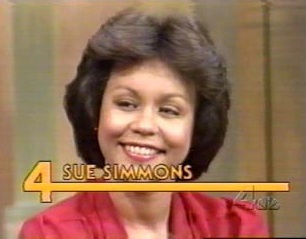
Many of my former classmates, and certainly a number of my closest friends, have heard parts and various versions of this story over the years. But I’ve hardly ever told the story of how I had access to the ’78 edition of all thirty or so volumes of World Book Encyclopedia in the first place. That started because of a teacher crush, the second one I had in my first four years of K-12. This one involved my third grade teacher at William H. Holmes Elementary, Mrs. Shannon. She was fun, funny, beautiful, and dressed like a young Sue Simmons from WNBC-TV New York did when she started working for Channel 4 earlier in

Sue Simmons, circa 1978, March 15, 2011. Qualifies as fair use under US Copyright laws because of low resolution of picture and relevance to subject matter of blog.

’77-’78.

Like most crushes I’ve had over the years, this one snuck up on my eight-year-old self and hit me in the head like a 90-mph fastball from Randy Johnson. And like the crushes I’d have when I reached Humanities in middle school and high school, I acted weird throughout February and March ’78. I became shier than I already was. I found myself daydreaming during reading time, not following instructions for assignments, just generally out of sorts.

Then there was the Easter play, the Peter Cottontail play. I wanted to play the lead role of Peter the Bunny, but all Mrs. Shannon wanted me to be was a stupid flower. I was mad, acted out, and she punished me by taking me out of the play all together. Following that, I refused to talk to her in class the next day. “You don’t have to speak,” Mrs. Shannon said as she sent me to sit in the corner until I was ready to talk again. I stayed in that corner the rest of the afternoon.

The following week, this week thirty-three years ago, Mrs. Shannon called for a parent-teacher conference with my mother and soon-to-be idiot stepfather. My mother, who had only been to two meetings at my schools since kindergarten, now found herself finding out that I was a bad student. Well, not exactly. Mrs. Shannon told them, “He has the ability. He has the potential. He just doesn’t want to concentrate.” Then she suggested that my mother could find a way for me to focus through World Book Encyclopedia. “It’ll draw out his imagination,” Mrs. Shannon said.

That’s all I thought and talked about on my way home with my mother. I brought it up so much that my mother said, “Alright already!” after two days of me constantly asking about it. We met a World Book sales person, and my mother wrote a check for $310, which was a lot of money for her. Within a week, four or five boxes reached 616, by far the largest order of books I’d see until grad school.

I didn’t start reading them immediately, and my mother complained about “spending all that damn money” on these books. But after December 2, ’78, my Saturday of running away from home, the investment began to pay off, and with it, the ability to think and imagine while being as weird as I wanted and needed to be, and others believed me to be as well. It’s a bittersweet memory, how I became a brainiac, how a teacher crush put me on a path of intellect and writing, of constant remembering and of painful transformations. How insidious knowledge — and the search for it — can be.

← Older posts
Newer posts →

Boy @ The Window: A Memoir

Boy @ The Window: A Memoir

Places to Buy/Download Boy @ The Window

There's a few ways in which you can read excerpts of, borrow and/or purchase and download Boy @ The Window. There's the trade paperback edition of Boy @ The Window, available for purchase via Amazon.com at http://www.amazon.com/Boy-Window-Donald-Earl-Collins/dp/0989256138/

There's also a Kindle edition on Amazon.com. The enhanced edition can be read only with Kindle Fire, an iPad or a full-color tablet. The links to the enhanced edition through Apple's iBookstore and the Barnes & Noble NOOK edition are below. The link to the Amazon Kindle version is also immediately below:

scr2555-proj697-a-kindle-logo-rgb-lg

Boy @ The Window on Amazon.com: http://www.amazon.com/Boy-The-Window-Memoir-ebook/dp/B00CD95FBU/

iBookstore-logo-300x100

Boy @ The Window on Apple's iBookstore: https://itunes.apple.com/us/book/boy-the-window/id643768275?ls=1

Barnes & Noble (bn.com) logo, June 26, 2013. (http://www.logotypes101.com).

Boy @ The Window on Barnes & Noble: http://www.barnesandnoble.com/w/boy-the-window-donald-earl-collins/1115182183?ean=2940016741567

You can also add, read and review Boy @ The Window on Goodreads.com. Just click on the button below:

Boy @ The Window

Twitter Updates

Tweets by decollins1969
  • RSS - Posts
  • RSS - Comments

Archives

  • June 2025
  • April 2023
  • September 2022
  • August 2022
  • July 2022
  • June 2022
  • May 2022
  • April 2022
  • March 2022
  • January 2022
  • December 2021
  • November 2021
  • October 2021
  • September 2021
  • August 2021
  • July 2021
  • June 2021
  • April 2021
  • March 2021
  • February 2021
  • January 2021
  • December 2020
  • November 2020
  • October 2020
  • September 2020
  • August 2020
  • July 2020
  • May 2020
  • April 2020
  • March 2020
  • January 2020
  • December 2019
  • November 2019
  • August 2019
  • July 2019
  • June 2019
  • May 2019
  • April 2019
  • March 2019
  • February 2019
  • January 2019
  • December 2018
  • November 2018
  • October 2018
  • September 2018
  • August 2018
  • July 2018
  • June 2018
  • May 2018
  • March 2018
  • February 2018
  • January 2018
  • December 2017
  • November 2017
  • October 2017
  • September 2017
  • August 2017
  • July 2017
  • June 2017
  • May 2017
  • April 2017
  • March 2017
  • February 2017
  • January 2017
  • December 2016
  • November 2016
  • October 2016
  • September 2016
  • August 2016
  • July 2016
  • June 2016
  • May 2016
  • April 2016
  • March 2016
  • February 2016
  • January 2016
  • December 2015
  • November 2015
  • October 2015
  • September 2015
  • August 2015
  • July 2015
  • June 2015
  • May 2015
  • April 2015
  • March 2015
  • February 2015
  • January 2015
  • December 2014
  • November 2014
  • October 2014
  • September 2014
  • August 2014
  • July 2014
  • June 2014
  • May 2014
  • April 2014
  • March 2014
  • February 2014
  • January 2014
  • December 2013
  • November 2013
  • October 2013
  • September 2013
  • August 2013
  • July 2013
  • June 2013
  • May 2013
  • April 2013
  • March 2013
  • February 2013
  • January 2013
  • December 2012
  • November 2012
  • October 2012
  • September 2012
  • August 2012
  • July 2012
  • June 2012
  • May 2012
  • April 2012
  • March 2012
  • February 2012
  • January 2012
  • December 2011
  • November 2011
  • October 2011
  • September 2011
  • August 2011
  • July 2011
  • June 2011
  • May 2011
  • April 2011
  • March 2011
  • February 2011
  • January 2011
  • December 2010
  • November 2010
  • October 2010
  • September 2010
  • August 2010
  • July 2010
  • June 2010
  • May 2010
  • April 2010
  • March 2010
  • February 2010
  • January 2010
  • December 2009
  • November 2009
  • October 2009
  • September 2009
  • August 2009
  • July 2009
  • June 2009
  • May 2009
  • April 2009
  • March 2009
  • February 2009
  • January 2009
  • December 2008
  • November 2008
  • October 2008
  • September 2008
  • August 2008
  • July 2008
  • June 2008
  • May 2008
  • April 2008
  • March 2008
  • February 2008
  • January 2008
  • December 2007
  • November 2007
  • October 2007
  • September 2007
  • August 2007
  • July 2007
  • June 2007

Recent Comments

MaryPena's avatarMaryPena on My Day of Atonement/Bitter Hat…
decollins1969's avatardecollins1969 on No Good Teaching Deed Goes…
Mary Rose O’Connell's avatarMary Rose O’Connell on No Good Teaching Deed Goes…

NetworkedBlogs on Facebook

NetworkedBlogs
Blog:
Notes From a Boy @ The Window
Topics:
My Life, Culture & Education, Politics & Goofyness
 
Follow my blog

616 616 East Lincoln Avenue A.B. Davis Middle School Abuse Academia Academy for Educational Development AED Afrocentricity American Narcissism Authenticity Bigotry Blackness Boy @ The Window Carnegie Mellon University Child Abuse Class of 1987 CMU Coping Strategies Crush #1 Crush #2 Death Disillusionment Diversity Domestic Violence Economic Inequality Education Family Friendship Friendships Graduate School Hebrew-Israelites High-Stakes Testing Higher Education History Homelessness Humanities Humanities Program Hypocrisy Internalized Racism Jealousy Joe Trotter Joe William Trotter Jr. K-12 Education Love Manhood Maurice Eugene Washington Maurice Washington Misogyny Mother-Son Relationship Mount Vernon High School Mount Vernon New York Mount Vernon public schools Multiculturalism MVHS Narcissism NFL Pitt Pittsburgh Politics of Education Poverty President Barack Obama Race Racial Stereotypes Racism Relationships Self-Awareness Self-Discovery Self-Reflection Sexism Social Justice Teaching and Learning University of Pittsburgh Violence Whiteness Writing

Top Rated

Blog at WordPress.com.

  • Subscribe Subscribed
    • Notes from a Boy @ The Window
    • Join 103 other subscribers
    • Already have a WordPress.com account? Log in now.
    • Notes from a Boy @ The Window
    • Subscribe Subscribed
    • Sign up
    • Log in
    • Report this content
    • View site in Reader
    • Manage subscriptions
    • Collapse this bar

Loading Comments...