• Spinning Sage’s Gold: Allegories on the Western-Dominated Present and a Possible Post-Western Future (2025)
  • About Me
  • Other Writings
  • Interview Clips
  • Video Clips
  • Boy @ The Window Pictures
  • Boy @ The Window Theme Music

Notes from a Boy @ The Window

~

Notes from a Boy @ The Window

Author Archives: decollins1969

Comparative Slavery

20 Tuesday Apr 2010

Posted by decollins1969 in 1, Academia, race

≈ Leave a comment

Tags

Academia, Comparative Slavery, Graduate School, Paul Riggs, Race, Seymour Drescher, South Africa, University of Pittsburgh, Writing


This time twenty years ago, I was finishing up what would turn out to be my first 4.0 semester at Pitt as an undergrad. I’m not bragging, even though my wife once thought I was (more on that in a few days). Key to the way that semester turned out — academically, at least — was a graduate course I talked myself into my junior year, Comparative Slavery. I found a loophole in the University of Pittsburgh handbook that allowed an undergrad to take a graduate school if that course would eventually be used as credit toward a master’s degree in that student’s fifth year. Somehow, I convinced my advisor and an administrator to let me take the course. Groveling and highlighting of obscure rules in the Pitt handbook were involved, though.

It was a good course, taught by Sy Drescher, whose scholarly research we in the history field would now consider part of Transatlantic Studies, as he looked at slavery from the standpoint of its impact on European notions of freedom, as much as he looked at the slave trade itself. As an aside, my nutty Carnegie Mellon University professor Dan Resnick once wrote a letter of recommendation for me to the Spencer Foundation discussing how huge an impact Drescher had on me as a student, which helped me become the great grad student I was. It was a bigoted, paternalistic letter, and I don’t think Drescher would’ve appreciated it if he had known about it. Drescher was one of my best professors at Pitt, undergrad and grad, but his student Paul Riggs was the one who had made a big impression on me in terms of my decision to pursue history as a degree, and to a large extent a profession.

But I digress, once again. This was my second course with Drescher as my professor. My freshman year, I had taken his Western Civilization II course (about how Europe came to dominate the world, 1492-present). It was a great course, and when I saw that he was teaching this one, I sought advice from Paul about the course and about his advisor, all of which convinced me to take it. I learned so much in that semester from that course, and not just the academic content. The fact that American slavery wasn’t the worst in the Western Hemisphere, the fact that the slave trade continued because the average life expectancy of slaves in places like Brazil and Haiti was about seven years, the fact that slavery and the slave trade made money for everyone involved, including West Africans. It was an eye-opening course.

I also learned a few important life and academic socialization lessons. I was in a class of seven people, including about three veteran grad students, a grad student who was the son of a famous civil rights leader, and a nineteen-year old first-year grad student who had gone off to college at the age of fifteen. Listening to these folks debate serious historical issues week after week was fun at first. Until I realized that some of them didn’t know what they were talking about. That at least two were classic yet sophisticated brown-nosers, attempting to sell arguments that would most likely impress Drescher (luckily, our professor didn’t like brown-nosers). And that there were many moments when all seven of us would sit in our grad seminar stumped by a question Drescher asked us about our readings for that week. I learned that students with master’s degrees or working on master’s degrees weren’t any more intelligent than I was as a college junior, or for that matter, when I was a high school junior. They simply read more on a given set of topics, much more in some cases than ninety-five percent of the educated public.

We had a primary source research paper on comparative slavery to do that semester, one that was supposed to be between twenty-five and thirty-five pages long. I decided to do mine on slavery in South Africa versus slavery in the US. It was a continuation of my undergraduate interest in South Africa that had developed my sophomore year. It turned out that with the other paper assignments and readings, Drescher realized that no one in the class would have their papers ready in time to submit by the end of April. So a week before the papers were due, he assigned us all “I” grades (incomplete) and told us to get our papers done as soon as possible.

It put me in a weird position, because I wasn’t a grad student. My semester Work-Study job was up, and I had made plans to be in Mount Vernon that summer working for Westchester County Department of Community Mental Health again. So it meant that I needed a job and some money in May and possibly June, I needed to extend my one-room efficiency lease, and I needed to turn a seventeen-page draft into a workable document of at least twenty-five pages. The last part was the easiest, since I had access to British parliamentary document and documents from the colonial government in South Africa about the conditions of slaves and the laws about slavery in that part of the world, all on microfiche. I just needed time to work on it.

Plus, I needed to get over the fact that I had earned A’s in my other four courses that semester: Latin American Revolutions, History of Africa to 1800, History of Blacks in Sports, and American Working-Class History. I had learned that semester how to be a cool nerd, to be diligent, to be social, to hang out when I made the time, and to study when I made the time as well. I had found balance in my life and broken free from six years of Humanities thinking. I no longer obsessed about A’s, which I believed was why I was doing nothing but earning them that semester.

So I did nothing on the comparative slavery paper in the first seventeen days of May. I worked my idiot job at Campos Market Research, where one of my friends and my eventual wife worked (again, more about that in a couple of days). I hung out with E (see “The Power of Another E” post from April 2009) and my other folks, took some driving lessons, went to see the Pirates play, cried about my Knicks again, and watched the Detroit Pistons clothesline players on their way to the hoop. I read the Autobiography of Malcolm X for the first time, and learned that life really is ironic as a result of reading his story.

Then I got a call from my eventual boss with Westchester County, telling me I had until June 19 to start my job if I still wanted it for the summer. That, and Drescher about to go on vacation after Memorial Day sent me into overdrive. It took a week, but I wrote, cut, wrote and revised my paper until it was thirty-four pages long and had enough endnotes to take up another six pages. It was by far the best academic writing I’d done up to that point in school. I think that Drescher was so happy that any of us turned in a paper that made any sense at all that he graded me on a curve and gave me an A. Honestly, I was just happy to have it out of the way.

I knew by the end of May that I was ready for grad school. It would take until I was done with my doctorate to prove to people like Dan Resnick, though, that I was truly grad school material. Either way, I think of that semester and this course and realize that while I would always care about my grades, I stopped worrying about them after that. And that really is a kind of freedom that can’t be underestimated, especially going into my senior year and in those six years of grad school that came after. I think that this experience helped me to become a better and more confident me.
My Father and Conservatives

13 Tuesday Apr 2010

Posted by decollins1969 in 1, culture, Eclectic, Politics, Pop Culture, race

≈ Leave a comment

Tags

Debate, Discourse, Jimme, NBA on TNT, Parody, Politics, Race


This particular post may be a bit much for some of you. So this is a warning. There are some verbal bombs in this posting. It’s a “What-If?” post about a hypothetical interview between me and my father. My father, though, at the height of his alcoholism, when even on his best days, Miller Beer wasn’t far from his mind. This pseudo-interview would be me as if I was Ernie Johnson as anchor for the NBA on TNT with Charles Barkley, being played by my drunken father from the second half of the ’80s. The topic? The last couple of years of the Conservative Movement, specifically its response to the presidency of Barack Obama and its obsession with spreading fear and fomenting violence, as if Armageddon were on our very doorstep. Remember: you’ve been forewarned.

So I asked, “Do you think the changing conservative movement has been a positive influence on Americans in the past two years?”

My father: “That Reagan a good man dere, but most of those dum muddafuckin’ conservatives don’t know shit. Reagan think you dumb asses too, and he dead! I’m tired of yo’ muddafuckin’ asses sayin’ a bunch of stupid shit all the time! You tea baggers need to go bag some the fuck else where! You dum muddafuckas, and I’m tired of yo’ shit! I beat yo’ ass and keep beatin’ yo’ ass, you dum muddafuckas!” Father Files 1.April 2010

Me: “Wow! I mean, are you in the camp of those progressives and other folks who’ve been using the text messaging acronym STFU in their comments about the Tea Party and other reactionary conservatives? Do you really think that they deserve this kind of language and response?”

My father: “I’m a big shot muddafucka. I make fitty million dollas a week. Look at dis dum lookin’ muddafucka conservative — dat dum muddafucka cain’t do shit fo’ me! Muddafucka! Got thoughts nobody want! I buy an’ sell muddafuckas ’round here! I kick yo’ muddafuckin’ stupid ass! And I’m da boss of the bosses. No conservative tell me what ta do. You conservatives don’t know shit!” Father Files 2.April 2010

Me: “Well, okay. Do you have any final words for the folks who have become part of the post-Obama conservative movement, or do you really care about this at all?”

My father: “You dum muddafuckin’ conservatives — su my dict! You dum muddafuckas. I don’ giv’ no money to no dum muddafuckin’ conservative. If you a conservative, I don’ want you ’round me. You betta get the fuck outta here!” Father Files 3.April 2010

Hopefully most of you laughed and weren’t too offended. Still, I have a few points to make regarding this. Our language toward each other has become so coarse and rough that we sound like my father when he was in his mid-forties, drinking many more days than not, and angry at the world. We’ve reached the point where most of us — me included — refuse to take the high road. In our language or actions. The Tea Party or other conservatives who’ve become like rabid dogs really don’t have anything to say. Which is why President Obama is a Nazi/Communist/Socialist tyrant (by the way, all educated Blacks who are too uppity are Communists, going all the way back to World War I ). Or why health care reform is a form of terrorism, alternative energy the downfall of American civilization, and talking with the world the road to Hell itself.  Many of these folks are — dare I say it — closeted bigots who were crushed by Obama’s election in ’08. But we live in an era in which racism should never be mentioned, especially by people who look like me. So I’m saying it anyway.

But for progressives to respond with STFU across Facebook, Twitter and the blogosphere? Conservatives, even bigoted ones who are tea-baggers and part of the birther movement, have the right to spout their idiotic ideology. I have a bit of experience with the bizarre form of Afrocentric Judaism that I grew up with or listening to folks spew their venom toward Whites in the form of Melanin Theory in the ’90s. We gain little to nothing with verbal bombs the equivalent of being in a bar with your blitzed father on East 241st Street in the Bronx in ’84 or ’85.

I must admit, though, that this hypothetical conversation (based on far too many real ones between ’82 and ’97) made me laugh a few sheepish laughs. Not of approval, but of understanding. Understanding that not everyone can maintain civility at all times. Certainly not me, and certainly not the likes of Tiger Woods. But try we must, even if the other side’s foaming at the mouth. Others, hopefully, will see that those who are foaming are in need of a rabies shot.

Raised on Hip-Hop?

10 Saturday Apr 2010

Posted by decollins1969 in 1, culture, Eclectic, eclectic music, music, Politics, Pop Culture, race

≈ Leave a comment

Tags

Authenticity, Cultural Segregation, Culture, Hip-Hop, Music, Politics, Pop Culture, Race


About seven years ago, I had lunch with a young woman and my former boss (see “What We’ll Do for $$$” post, July ’09) at some overpriced Dupont Circle restaurant specializing in Russian cuisine. It was just before the birth of my son Noah. There was so much wrong in that lunch, in that conversation, in the dynamics of that conversation. But in between the idiotic moments of conversation, there was something completely unrelated to it mentioned that topped everything else. In describing her background in the arts and humanities, the young woman said, “I grew up on hip-hop…”

“Huh?,” I thought. Where did that come from? At the time, I was thirty-three, and she was twenty-seven. That would’ve meant that the young woman was born in ’75 or ’76. Hip-hop was barely an embryo the day she was born, and hadn’t become a truly national phenomenon until the end of ’86. Even then, it would take until the ’90s for hip-hop to dominate the music scene. And, given that this individual had grown up in the mid-Atlantic region and in the Midwest — not exactly hotbeds for the development of hip-hop — I found her statement somewhere between ridiculous and as true as a hollow bell.

It did get me thinking, though, about how circumscribed lives in this country of ours can be when we believe that everyone should see the world the way we see it. As if everyone else’s experience can be encompassed in our little life story. “I was raised on hip-hop” sounded to me like this young woman’s family, friends, community and education was completely immersed in the development and growth of hip-hop. Short of her being best friends with Russell Simmons, Sean Coombs and MC Lyte, the statement’s unbelievable on its face. But it’s also a refusal to recognize that the idealized way in which we describe our lives and world doesn’t really add up to what our world was, is, or the way in which we would like it to be.

Now, there are a whole generation of folks who’ve grown up listening to nothing but hip-hop, dancing in nothing but hip-hop rhythms, reading hip-hop-based novels and watching movies with hip-hop themes. Those folk, born after ’82, have the right to say that they were “raised on hip-hop.” But what does that mean, really? That they see the world through the lens of hip-hop culture? That American politics, globalization, social justice, education, popular culture, sports and entertainment can all be seen by folks simply and completely through the lens of hip-hop culture? If it does mean that, then I guess that’s a’ight. After all, that’s how some of these people in the hip-hop era have grown up.

I suspect, however, that this isn’t what folks like the young woman I described earlier mean when they say that they were “raised on hip-hop.” They’re asserting a sense of Blackness, an essence of an understanding of being Black or African American that they assume cannot be distilled as easily through their parents’ R&B, Jazz or pop music, through dance or art that’s more consistent with more culturally integrative times. For them, hip-hop is being Black — or “keepin’ it real” — a step beyond The Lost Poets, a phase past Marvin Gaye and Jackie Wilson, a grittiness that can’t be expressed through Diana Ross, Michael Jackson or Quincy Jones. Hip-hop is being Black in an urban and impoverished context — or being real and cool, I suppose — even when the people growing up on it aren’t impoverished or aren’t even Black.

And I have problems with this assessment of what being “raised on hip-hop” means for so many who have embraced it without understanding the eclectic origins of hip-hop. Or without acknowledging that too much drink from this well can be as isolating as only embracing neo-conservative ideology or only believing that one denomination of a religion — much less an entire religious ideology — can provide all of the answers we will ever need in this life.

The rhythms of my voice, my ability to speak and write in standard English, my eclectic music collection and my understanding of math and science, all illuminate the fact that I have lived a life of many textures. Yet I am still a Black man whose life was shaped by poverty, racism, community, education, music, sports and so many other things that other African Americans of similar backgrounds face and often embrace. I would never claim that I was “raised on hip-hop” any more than I’d say that I was “raised on physical abuse.” I heard Sugar Hill Gang, Doug E. Fresh and Run D.M.C. between ’80 and ’86, and I experienced physical abuse, but I wasn’t “raised” by either. My experiences are a part of me, but they don’t define me, and I certainly wouldn’t allow myself as an African American be defined by them.

To misquote Laurence Fishburne’s character Morpheus from The Matrix (1999), I’ll say this: “What is Black? How do you define, Black? If you’re talking about what you can feel, what you can smell, what you can taste and see, then ‘Black’ is simply a social construct interpreted by our brains.” Being Black isn’t all that’s hip-hop, and hip-hop isn’t all that makes or defines anyone as Black. It’s the totality of our experiences and actions that do so. Even if we were “raised” on country music, lima beans and Ex-lax.

Pressure

09 Friday Apr 2010

Posted by decollins1969 in 1, Academia, culture

≈ Leave a comment

Tags

Academia, College, Higher Education, Mental Health, Stress, Student Development, Teaching and Learning


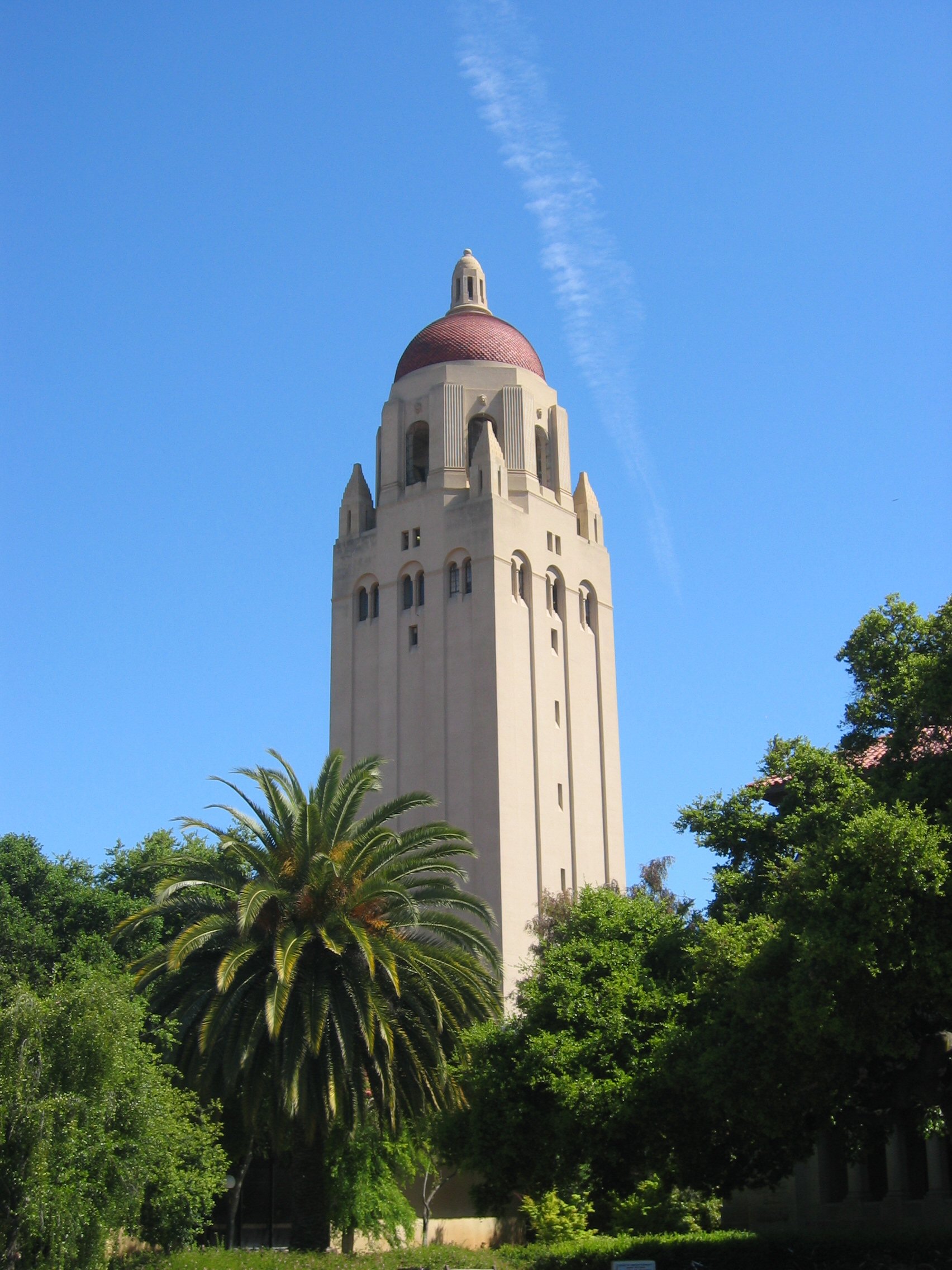
Stanford University's Hoover Tower

This week, The Daily Beast posted their piece “The 50 Most Stressful Colleges” (see link: http://www.thedailybeast.com/blogs-and-stories/2010-04-04/the-50-most-stressful-colleges/?cid=hp:beastoriginalsC1). In the piece, the writer or writers emphasized five (5) criteria for college stressfulness: 1) cost; 2) competitiveness; 3) acceptance rate; 4) engineering; and 5) crime on campus rates. Sounds great right? Not if the writer or writers relied mostly on US News and World Report for most of their data in ranking what they believe are the Top 50. It seems to me that reporters with little background in higher education, the psychology of talented high school youth and college students, or financial aid should refrain from writing about such a topic. Still, since they did bring the subject up, it’s probably a good idea to address it from perspectives The Daily Beast would likely not consider.

For starters, the high correlation between their five criteria and the most prestigious research universities in the country — including Harvard, Princeton, Columbia, Stanford, University of North Carolina, and my doctoral alma mater, Carnegie Mellon University — seems okay on the surface of things. But really, are students at the University of Pittsburgh who are engineering majors less stressed out than English majors at Carnegie Mellon? Or could a student at a liberal arts school like Oberlin be experiencing higher levels of stress than a student at a school not on The Daily Beast’s list — say George Washington University?

Based on my own experiences as a professor and a student, yes, highly selective, research-oriented universities with competitive engineering programs can deliver stress to students on a platter. Yet, it’s not as if the other liberal arts colleges, state colleges and universities, and schools of similar elite ilk not on the list. The Daily Beast could’ve used pre-med and biology programs — such as those at Tufts and Johns Hopkins — as examples of competitiveness, as if engineering students are particularly prone to stress and suicide. I think, though, that this is the main point about The Daily Beast’s piece. It’s the taking of the recent news stories — students killing themselves or murdering students and faculty — and drawing the conclusion that it’s combination of the criteria that’s the difference here.

The piece discounts the experience of millions of college students under the stress of financial aid, whose programs, though not as prestigious, are likely as demanding, and with the pressure of high expectations from their schools and their families. It discounts students, quite frankly, and the baggage they bring with them when they enter college. The schools they list could cost $150,000 a year to attend, have acceptance rates or eight percent or less (I have no idea how Carnegie Mellon made their list with a thirty-seven percent acceptance rate), and pressure-cooker engineering programs, but the suicide rate and violent crime rate would likely not correlate at all. It’s all about how students handle pressure, and how schools help students with managing the pressures they experience at competitive and selective colleges and universities.

I should know. Halfway through my first semester at the University of Pittsburgh, I experienced stress because of the baggage I brought from my Mount Vernon High School days, specifically in the form of a young woman I wanted to date but couldn’t. I spent the last six weeks of that semester missing more than sixty percent of my classes, withdrew into a alcohol-binge one weekend, and generally didn’t seek any social outlets for my emotional and psychological pain. Because I knew that there was a stigma attached to seeking psychological help, I didn’t, and struggled my way through the end of ’87 and into the first days of ’88 wondering if the sacrifices I made to get into college in the first place were actually worth it.

I think that student mental health is a much neglected aspect of pre-K to graduate education. Period. We act as if students and parents are solely responsible for the maintaining of student mental health, when in point of fact, most students and parents see the exploration of the subject as a stigma of some sort. Of course they are wrong. Still, I think that every school and every school district in this country should have at least one psychologist on staff (age-appropriate, of course), and that every student be given a mental health evaluation at least once a year.

Going a step further, I think that mental health fitness should be a part of the college admissions process, and that students who have the academic abilities but show signs of mental health issues be given additional resources to deal with these issues before the stress of higher education has had a chance to effect their undergraduate journey. I also don’t think it would hurt to make faculty, staff and administrators at universities to take professional development seminars in student psychology, so that they themselves can understand the difference between normal and abnormal behaviors of their students.

Some of you will think this idea beyond crazy. After all, those who can’t cut it are losers, right? And, since when can a university look at the mental health fitness of applicants, anyway? How many parts of doctor-patient privilege don’t I understand? I never said that this would be a perfect solution. This would provoke a number of controversies and lend itself to multiple obstacles. On the other hand, wouldn’t it be good for students and parents to have a sense of the kinds of stresses that can affect the well-being — academic and otherwise — of someone before they went off to a college or university?

Perhaps the biggest obstacle of all on this matter is the issue of competition. There’s nothing wrong with having students in a competitive environment. It often brings out the best in them academically (and the worst, unfortunately, hence my comments in the previous two paragraphs). Suffering setbacks in the process of competition can even teach us more about ourselves and the world around us than constant success. That’s what folks say, at least. So students shouldn’t be afraid to compete. But college campuses — and public schools also — should wrap this competition in a velvet cocoon of excellence. Meaning that from an early age, students are encouraged to strive for and achieve excellence, academically, socially, athletically, and so on. Along the way, healthy competition should be inculcated, but within the context of students performing well to begin with.

All so that by the time students arrive on a college campus, the stress of competition is managed through an atmosphere that is all about excellence. This is not a zero-sum game where the winner takes all and the loser should think about becoming a janitor. These are human beings, after all, whose lives should be about more than A’s, and competition about more than destroying their opponents. It took me until my third semester at Pitt to learn that lesson, which made my transition to a healthier mental health easier.

Bittersweet Symphony

03 Saturday Apr 2010

Posted by decollins1969 in 1, Christianity, Eclectic, Religion

≈ 2 Comments

Tags

Atheism, Bigotry, Bill Maher, Christianity, Creflo Dollar, Frederick K.C. Price, Gospel of Prosperity, Hebrew-Israelites, Jimmy Swaggert, Kenneth Copeland, Liberation Theology, Pat Robertson, Televangelism


This weekend marks twenty-six years since I became a Christian. Given how torturous my nearly three and a half years of wearing a kufi and walking in the beliefs of the Hebrew-Israelites (at least nominally) were, I dare say that the turning point for all of my life occurred in April ’84. I’m grateful every day — and I mean, every day — for finding my way to God and Jesus. But, as I’m come to understand myself and Christianity over the years, I’ve also come to regret the religious and anti-religious narcissism that is infused in all of our conversations about Christianity, God, Atheism, evolution and so many other things that require more than scientific knowledge and absolute certainty.

For better and for worse, I have to start with the people who helped me get on the Christian path in the first place. If not for televangelists like Frederick K.C. Price and Kenneth Copeland, my understanding of Christianity would’ve been limited to conversations with my best friend in elementary school and my pedestrian attempts at understanding the New Testament. So I have to thank both for opening my eyes to the endless possibilities that all people have through faith and redemption, salvation and grace.

Still, their work, and the work of others like Benny Hinn, Jimmy Swaggert, Robert Tilton, Pat Robertson, Oral and Richard Roberts and others has revolved into a form of narcissism. Their gospel — and the gospel of the megachurches that now populate our nation — should be remembered by historians as the Gospel of Prosperity. There’s absolutely nothing wrong with taking control over your finances, giving to a church to provide community and social services or even using principles of faith (beyond the religious or spiritual) in order to make one’s life better materially. There is something vitally wrong, though, when this is almost all your ministry is about. I must admit, I was inspired by Price when I was a teenager, listening to his story about how he grew up in Alabama, about the poverty he had to overcome in order to become an ordained minister and establish his church in L.A. It was much later that I learned how enriching a Gospel of Prosperity could be for those with the power of the pulpit and the will to wield that power.

Seeing it firsthand at my church outside Pittsburgh (in Wilkinsburg for those of you familiar with Western Pennsylvania) was what made me realize how incredibly shallow this kind of preaching is for a church and its flock. The leadership began a campaign to raise something in the order of $1 million toward building a new church, as this church now boasted over 3,000 members. That was in December of ’96.

Within a couple of months, we had easily exceeded this amount, which was on top of the amount church member normally gave. Within a week, the pastor announced that God had given him a vision that another $3 million would be needed to help with the costs of building a new church and maintaining the current church building. A vision? Really? I think even God realizes that most of us, with help, can decipher a budget sheet to know what’s needed to build a building the size of a 3,000-seat church. What made this particularly dishonest was that the leadership should’ve let us sheep know what was needed from jump street, not a staggered campaign of visions in order to build the congregation’s confidence in giving. Not to mention the tapping into our American obsession with getting rich or becoming well-off.

Around the same time, Price was doing the same thing via his TV program. A whole series on Jesus as a materially rich Jew living in Galilee, and not as the relatively poor son of a carpenter and fisherman as portrayed in the Gospels. “How could he be poor and feed 5,000 people? Why would a poor man need to hire an accountant?,” Price asked at one point in his series in ’97. Although I think you could argue that Jesus’ ministry was doing well enough to keep him and his disciples in food, olive oil and sandals for three years, I’m not sure what this means for the average Christian or average person. The implication of all of this, of course, is that if you end up in debt, or without significant upward changes in income, or somehow become unemployed, that you somehow didn’t display enough faith. Or give your full tithe to your local pastor or church. Or for that matter, give beyond the tithing to pastors like Price, Copeland, and numerous others.

It couldn’t be about education, the kinds of job individuals have, or the wrecked state of the American economy, right? Or that, no matter how much faith we have, it’s our acting on that faith, having the skills necessary to make our dreams real possibilities, and of course, meeting people who are well positioned in our lives to help us (and oddly enough, vice-versa)? No, our lack of faith in The One is to blame. Need I mention that folks like Price have been saying for at least thirty years that we as Christians shouldn’t worry about the world’s oil reserves running out, as there’s more than enough to carry us all the way to the Rapture?

Before those in Bill Maher’s camp laugh in wild glee, I’ve found in my academic and spiritual walk narcissistic intolerance among many atheists as well. As if all Christians — and all people who believe in a higher power in general — are delusional, are absolutely orgasmic about seeing the world go up in flames and think science is something to be discarded. Theirs may well be the Gospel of Scientific Absolutism, as if science and the scientific method alone holds all of the answers in the Cosmos. I’m not arguing against evolution, the Big Bang, or String Theory. What I am standing up against are overly simplistic answers for the “why” questions — questions that come with weird and somewhat unscientific explanations — that can confound many a biologist or astrophysicist. Or, for the purposes of this post, atheists who refuse the acknowledge the myriad examples of intelligence in the supposedly random universe. While I stand in almost all respects on the side on science, complete randomness isn’t something that I choose to believe in.

So where does this leave me after twenty-six Christian years? In a very lonely place, where I’m both a complicated Christian and a less-than-scientific scientist in a broad sense. I stopped watching Price in ’98, and the other televangelists between ’88 and ’01. Christianity is about so much more than prosperity and pontificating pastors, learning about much more than science. Social justice, wealth redistribution, speaking truth to power, fighting for equality in this life and the next. Both religion and science have this possibility and have provided this for many people over the course of human history.

Unfortunately, folks like Price think that this is about speaking power to truth, and people like Maher already believe they know everything they need to know. Both have missed the point that faith, or belief, is important in every endeavor, and serves as a catalyst for great human achievement and for great human atrocities. So, for me, this Easter truly is a bittersweet one, where my salvation is real, and my doubt almost as much.

Student Follies

01 Thursday Apr 2010

Posted by decollins1969 in 1, Academia, Eclectic

≈ Leave a comment

Tags

College, Education, Etiquette, Higher Education, Teaching and Learning


I’ve been chomping to talk about some of the more inane and insane actions of some of my students over the years. Why? I’ve found that the boundaries between professor and student have broken down quite a bit over the years. So much so that students tend to tell me things that would’ve earned me an F at the University of Pittsburgh as an undergraduate twenty-two years ago. It amazes me that common sense — or at least, some sense of etiquette — doesn’t kick in for these folks in their dealings with me and other instructors. It’s as if we’re merely tutors or academic mercenaries, subject to their feelings and whims, as if we’re only in the classroom to be there for them when they’ve screwed up. So, for those of you who are within a few years of embarking on your higher education journey — or are hopeful parents who expect their kids to attend college in the next decade or so — here are ten examples of what I’m calling “Student Follies.”

1. “I’m paying for this course, so…”: This one drives me nuts. It’s not like these students are writing me checks to pay for a course. The thing I say to them is that until my paycheck has their signature on it, I’m going to teach as a representative of the university, not as an agent for a student.

2. “Can you give me extra credit?”: What? Is this high school? Are you kiddin’ me?!? Whenever I get this question, I have to make sure not to laugh. If it were just college freshmen or high school students asking this question, I’d understand. But I often get upperclassmen or older adults who should know better asking about extra credit to increase their grade. Unlike high school, college is an endeavor that’s about a balance between providing every student an opportunity to excel and providing relative fairness and equality in those opportunities. I often explain that offering extra credit to an individual student is unfair to the students who busted their tails in getting their papers or other assignments done on time. They say they understand, but the fact that they asked in the first place says to me that they might not.

3. “Can I redo my paper?”: This question is an extension of number 2. Why would I give any student an extra bite at an apple that every other student got to bite only one time? I don’t like it when students don’t do well on something I know that with the right amount of training and effort, they could’ve earned a better grade. But my advice will remain to look at my comments and use them as strong advice for their next paper or assignment.

4. “I haven’t been to class because…” or “I have to miss class because…”: Every semester I’ve taught, whether high school students, undergrads or grad students, at an elite university, community college or other institution, I’ve had students miss as many as all of their classes for an entire semester. My first year as a TA at the University of Pittsburgh, I had a student-athlete (played on the tennis team) in his senior year who missed the semester because of an injury. What? Was this a brain injury? Of course not! After attempting to cheat on his makeup final, he failed my course, unsurprisingly.

I’m a flexible professor, and certainly understand when stuff comes up for students, more and more whom have jobs, spouses, families, and serious issues to deal with. So communicating with me like an adult is encouraged. But, at the same time, some students don’t understand the TMI rule. I don’t need to know that you might miss class to watch the NCAA Championship Game Monday night if West Virginia beats Duke on Saturday. Plus, I’m a Pitt fan anyway.

5. “I don’t like the grade you gave me…”: If a student really feels that they should talk to me about their grade, then they should. After class, before class, during a break, with an appointment to meet. Not while I’m giving instruction or explaining the pitfalls that most students fall into in writing papers. I generally hand papers with grades and comments to students at the end of class to avoid them creating an awkward moment. But the students I’ve been working with of late seem to think that their tuition payment gives them the right to object to a grade as soon as they see something they don’t like. The last thing I would’ve thought of doing as an undergrad was to object in front of other students to a grade or grading process. After all, it’s the professor, not the student, who determines grades for courses.

6. Complaining about things that I cannot do anything about: Complementary to number 5, it’s this sense that somehow I’m supposed to know that the LCD projector isn’t working properly, or that a student forgot her glasses for class one day. Or, for that matter, that a student has dyslexia or some other learning or physical disability, or that I should be more patient with another student because she works two jobs. Or that my course schedule, planned out months ahead of time, posted and handed to you the first day of the semester, is now an inconvenience for you because your job has scheduled you for a week-long conference out-of-town. Although I’m flexible, I’m also not going to rearrange my schedule or the schedule set for twenty, thirty or forty students because your life has just become more intense. How about, “Dr. Collins, can I get an extension?,” with a reasonable reason, and without complaining about being an adult?

7. “I’m entitled to my opinion…”: Really? Yes, in a free democratic society, you are entitled to your opinion. But in a college course, your opinion needs to be an informed one. With evidence from relevant and quality sources, based on reasonable analysis, with the ability to discern the difference between bullcrap and actual facts and acceptable interpretations. Unfortunately, I’ve had far too many students who’ve only been interested in expressing their opinions on life in the classroom and in their paper assignments, who think that every sentence should start with “In my opinion,” or “I believe…,” or “I feel…,” or “I think…” College papers aren’t expository essays, or, as we say more often these days, opinion-editorial pieces.

As a student, you shouldn’t think that it’s okay to write that American Indians were decimated by diseases after contact with Europeans “because they practiced a heathen religion.” Or that Whites prolonged slavery in America because “they were under the influence of satan.” Without any evidence to add to this, statements like these merely amount to bigotry. College is about exposure to new ideas and ways of thinking about the world. Giving answers to questions only in the form of opinions demonstrates that these students would prefer not to learn anything at all.

8. Bringing a full meal to eat during class: What? Do students actually think that it’s good form to bring a full three-course dinner to class? Apparently, the answer to this is yes. I know that people need to eat, pee, and deal with family issues when they’re in an evening course. But that doesn’t mean that you should interrupt a lecture, discussion or film with Triple Delight or a Big Mac and french fries. Cell phones should be on vibrate if a student can’t turn their phone off. Slamming the door to the front of the classroom after entering shows little respect for the professor or for the other students. This isn’t even something specific to being in college. I mean, would anyone pull this crap in a meeting with their boss?

9. “Your lectures are incomprehensible…”: Oh well. I guess that I should turn the class over to the students to run, since I’m obviously a teaching hack. I’m not naive enough to think that everything I say is crystal-clear or that everyone understands what’s being taught. But I also know that most of the students who complain have one or two issues. One, they haven’t been doing their readings or other preparation work for class, but somehow expect my lectures to make up for their laziness. Two, they expect me to give them direct answers to questions that require an understanding of interpretation and nuance. Some of my students have expressed their frustrations with this in ways that would’ve gotten me kicked out of my classes as an undergrad at Pitt.

10. Let’s play “Stump the Professor”: Too many students believe that showing the professor that they know historical trivia is necessary for their earning of an A. Knowing facts is helpful, but thinking through those facts takes much more than telling me that five people — and not three — died in the Boston Massacre in 1770. Great to know, but not really the point. Students don’t get to move on to Double Jeopardy if somehow I miss a fact or get a date incorrect by nine years. Correcting these things are fine, but not if a student does it with the idea that this proves that I as their professor somehow didn’t know what I was doing. This one is more annoying than many of the others, mostly because the students involved have an agenda, usually along the lines of proving how much smarter they think they are when comparing themselves to me.

So there it is. There are more, many, many more follies and stories I could tell. But, it comes down to respecting the position a professor holds, even if you don’t like the person. And learning as much as your can when in a course, rather than cutting corners to a higher grade.

This blog has moved

28 Sunday Mar 2010

Posted by decollins1969 in 1

≈ Leave a comment


This blog is now located at __FTP_MIGRATION_NEW_URL__.
You will be automatically redirected in 30 seconds, or you may click here.

For feed subscribers, please update your feed subscriptions to
__FTP_MIGRATION_FEED_URL__.

← Older posts
Newer posts →

Boy @ The Window: A Memoir

Boy @ The Window: A Memoir

Places to Buy/Download Boy @ The Window

There's a few ways in which you can read excerpts of, borrow and/or purchase and download Boy @ The Window. There's the trade paperback edition of Boy @ The Window, available for purchase via Amazon.com at http://www.amazon.com/Boy-Window-Donald-Earl-Collins/dp/0989256138/

There's also a Kindle edition on Amazon.com. The enhanced edition can be read only with Kindle Fire, an iPad or a full-color tablet. The links to the enhanced edition through Apple's iBookstore and the Barnes & Noble NOOK edition are below. The link to the Amazon Kindle version is also immediately below:

scr2555-proj697-a-kindle-logo-rgb-lg

Boy @ The Window on Amazon.com: http://www.amazon.com/Boy-The-Window-Memoir-ebook/dp/B00CD95FBU/

iBookstore-logo-300x100

Boy @ The Window on Apple's iBookstore: https://itunes.apple.com/us/book/boy-the-window/id643768275?ls=1

Barnes & Noble (bn.com) logo, June 26, 2013. (http://www.logotypes101.com).

Boy @ The Window on Barnes & Noble: http://www.barnesandnoble.com/w/boy-the-window-donald-earl-collins/1115182183?ean=2940016741567

You can also add, read and review Boy @ The Window on Goodreads.com. Just click on the button below:

Boy @ The Window

Twitter Updates

Tweets by decollins1969
  • RSS - Posts
  • RSS - Comments

Archives

  • June 2025
  • April 2023
  • September 2022
  • August 2022
  • July 2022
  • June 2022
  • May 2022
  • April 2022
  • March 2022
  • January 2022
  • December 2021
  • November 2021
  • October 2021
  • September 2021
  • August 2021
  • July 2021
  • June 2021
  • April 2021
  • March 2021
  • February 2021
  • January 2021
  • December 2020
  • November 2020
  • October 2020
  • September 2020
  • August 2020
  • July 2020
  • May 2020
  • April 2020
  • March 2020
  • January 2020
  • December 2019
  • November 2019
  • August 2019
  • July 2019
  • June 2019
  • May 2019
  • April 2019
  • March 2019
  • February 2019
  • January 2019
  • December 2018
  • November 2018
  • October 2018
  • September 2018
  • August 2018
  • July 2018
  • June 2018
  • May 2018
  • March 2018
  • February 2018
  • January 2018
  • December 2017
  • November 2017
  • October 2017
  • September 2017
  • August 2017
  • July 2017
  • June 2017
  • May 2017
  • April 2017
  • March 2017
  • February 2017
  • January 2017
  • December 2016
  • November 2016
  • October 2016
  • September 2016
  • August 2016
  • July 2016
  • June 2016
  • May 2016
  • April 2016
  • March 2016
  • February 2016
  • January 2016
  • December 2015
  • November 2015
  • October 2015
  • September 2015
  • August 2015
  • July 2015
  • June 2015
  • May 2015
  • April 2015
  • March 2015
  • February 2015
  • January 2015
  • December 2014
  • November 2014
  • October 2014
  • September 2014
  • August 2014
  • July 2014
  • June 2014
  • May 2014
  • April 2014
  • March 2014
  • February 2014
  • January 2014
  • December 2013
  • November 2013
  • October 2013
  • September 2013
  • August 2013
  • July 2013
  • June 2013
  • May 2013
  • April 2013
  • March 2013
  • February 2013
  • January 2013
  • December 2012
  • November 2012
  • October 2012
  • September 2012
  • August 2012
  • July 2012
  • June 2012
  • May 2012
  • April 2012
  • March 2012
  • February 2012
  • January 2012
  • December 2011
  • November 2011
  • October 2011
  • September 2011
  • August 2011
  • July 2011
  • June 2011
  • May 2011
  • April 2011
  • March 2011
  • February 2011
  • January 2011
  • December 2010
  • November 2010
  • October 2010
  • September 2010
  • August 2010
  • July 2010
  • June 2010
  • May 2010
  • April 2010
  • March 2010
  • February 2010
  • January 2010
  • December 2009
  • November 2009
  • October 2009
  • September 2009
  • August 2009
  • July 2009
  • June 2009
  • May 2009
  • April 2009
  • March 2009
  • February 2009
  • January 2009
  • December 2008
  • November 2008
  • October 2008
  • September 2008
  • August 2008
  • July 2008
  • June 2008
  • May 2008
  • April 2008
  • March 2008
  • February 2008
  • January 2008
  • December 2007
  • November 2007
  • October 2007
  • September 2007
  • August 2007
  • July 2007
  • June 2007

Recent Comments

MaryPena's avatarMaryPena on My Day of Atonement/Bitter Hat…
decollins1969's avatardecollins1969 on No Good Teaching Deed Goes…
Mary Rose O’Connell's avatarMary Rose O’Connell on No Good Teaching Deed Goes…

NetworkedBlogs on Facebook

NetworkedBlogs
Blog:
Notes From a Boy @ The Window
Topics:
My Life, Culture & Education, Politics & Goofyness
 
Follow my blog

616 616 East Lincoln Avenue A.B. Davis Middle School Abuse Academia Academy for Educational Development AED Afrocentricity American Narcissism Authenticity Bigotry Blackness Boy @ The Window Carnegie Mellon University Child Abuse Class of 1987 CMU Coping Strategies Crush #1 Crush #2 Death Disillusionment Diversity Domestic Violence Economic Inequality Education Family Friendship Friendships Graduate School Hebrew-Israelites High-Stakes Testing Higher Education History Homelessness Humanities Humanities Program Hypocrisy Internalized Racism Jealousy Joe Trotter Joe William Trotter Jr. K-12 Education Love Manhood Maurice Eugene Washington Maurice Washington Misogyny Mother-Son Relationship Mount Vernon High School Mount Vernon New York Mount Vernon public schools Multiculturalism MVHS Narcissism NFL Pitt Pittsburgh Politics of Education Poverty President Barack Obama Race Racial Stereotypes Racism Relationships Self-Awareness Self-Discovery Self-Reflection Sexism Social Justice Teaching and Learning University of Pittsburgh Violence Whiteness Writing

Top Rated

Blog at WordPress.com.

  • Subscribe Subscribed
    • Notes from a Boy @ The Window
    • Join 103 other subscribers
    • Already have a WordPress.com account? Log in now.
    • Notes from a Boy @ The Window
    • Subscribe Subscribed
    • Sign up
    • Log in
    • Report this content
    • View site in Reader
    • Manage subscriptions
    • Collapse this bar
 

Loading Comments...