• About Me
  • Other Writings
  • Interview Clips
  • All About Me: American Racism, American Narcissism, and the Conversation America Can’t Have
  • Video Clips
  • Boy @ The Window Pictures
  • Boy @ The Window Theme Music

Notes from a Boy @ The Window

~

Notes from a Boy @ The Window

Tag Archives: K-16 Education

Teachers That “Demon”-ize History

29 Tuesday Mar 2011

Posted by decollins1969 in 1, Academia, Boy @ The Window, Christianity, Eclectic, Politics, Pop Culture, race, Religion

≈ Leave a comment

Tags

A.B. Davis Middle School, Demontravel, History, History Teaching, Humanities, K-12 Education, K-16 Education, Pedagogy, Schools of Education, Teaching, Teaching and Learning


Qin Shihuangdi, China's 1st Emperor, book burner and scholar burier (except for historians of the Qin kingdom), 221-210 BCE. In public domain.

As I promised ten days ago in my “This…Is…Jeopardy?” post, this one continues my thoughts about the inability of most students and teachers to appreciate how to really teach and learn from history. To think that what most in the profession call social history has existed for a half-century, yet few outside of academia actually teach history in this manner. That between the schools of education that prepare them, the curricular paradigms adhered to by state boards of education and the rules and regulations at the district and school building level, few history teachers encourage their students to imagine. Or to think critically. Or  to ask “how” and “why” questions.

And we pay for these educational atrocities every single day, in our public discourse, in journalism, in international politics. Not to mention in our idiotic discussions of race, class, gender, religion, sexual orientation, in just about every endeavor that involves thinking beyond our selfish selves.

Michelle Bachmann Portrait, US Congress, January 14, 2011 - A case in point. In public domain.

The worst example of this for my money was my eighth grade US history teacher, Mr. Demontravel. Or as he preferred in the last three months of eighth grade in the spring of ’83, Dr. Demontravel (he had finished his doctoral thesis on the Civil War. Or as I liked to call him throughout that year, “Demon Travel.”

Beyond the trivia of him finishing his doctorate, Demontravel’s teaching style, while terrible, was also one that remains all too typical in our public school (and unfortunately, some of our colleges as well). His was a class that sucked the life out of history for most of the Humanities students at A.B. Davis. Like most teachers of K-12 social studies or history, it was an important and obscure dates, important names, and key places class.

Unlike most social studies teachers, his teaching methodology was the epitome of lazy. Every class, five days a week, Demontravel would put up five questions on the blackboard for us to copy down and answer using our textbook. At the end of every two-week period, we’d get a fifty-question multiple choice exam made up of those questions written out on the blackboard over the previous two weeks, helping Scan-Tron stay in business.

Demontravel rarely stood up to lecture or do anything else. Lectures for him might as well have been appearances by Halley’s Comet, only the lectures were far less memorable. This process went on unabated for forty-weeks, four marking periods, seventeen exams (counting the final), an entire school year. Calling this boring would only get you into the door of the intellectual famine Demontravel subjected us to in eighth grade.

Over the years, I’ve had hundreds of students complain about various versions of this kind of history teaching. That they hated history, didn’t understand its purpose. Many students have loved my teaching of social history off and on over the past two decades, and have told me so, that there interest in a particular issue or topic was peaked as a result of one of my courses. But there are some, perhaps as many as ten percent of my students (about 200 in all) who would’ve preferred the mind-numbing methodology of teaching history as trivia. For that group, Demontravel would’ve been a preference over being able to

Newt Gingrich, potential 2012 GOP candidate, at CPAC meeting, February 20, 2010. (Irony is that Gingrich, an opponent of social history, was a history professor for eight years before turning to a political career.) Gage Skidmore. Permission granted via Creative Commons and attribution to Gage Skidmore.

understand that, like life, history is full of irony, hurt, passion, hatred, and serendipity.

Maybe this is a losing battle, that most students will never have a teacher with the ability to inspire them to think beyond the trivial when it comes to history. Maybe this is a losing battle because there are far more demons traveling through K-12 as social studies and history teachers than there are people like me, or my late teacher Harold Meltzer, for that matter. I have a feeling, though, that generations from now, future students will look at this aspect of hypocrisy in American education and just shake their heads. They won’t understand why it was so hard to teach the truth of how and why good, bad and ugly things occurred in US and world history.


Five Ingredients to Higher Education Access and Success

11 Friday Mar 2011

Posted by decollins1969 in 1, Academia, Boy @ The Window, culture, Eclectic, Politics, race, Youth

≈ Leave a comment

Tags

Academic Preparation, College Access and Success, Disadvantaged Students, Education Reform, Financial Aid, Higher Education Access and Success, K-16 Education, Low-Income Students, Parental Engagement, Postsecondary Education Access and Success, Race, Social Class, Social Preparation, Student Development, Student Engagement, Students of Color, Underrepresented Students, Will to Power


Five Ingredients for Cream of Mushroom Gravy with Bell Peppers, Soy Sauce, Chicken Broth and More Mushrooms, March 10, 2011. Donald Earl Collins

There should be five pillars to college access and success, similar to the Five Pillars of Islam, essential for the successful and lifelong practice of Islam. For all students, but especially for disadvantaged and underrepresented students, having a guide to the five most necessary ingredients for college entrance, matriculation and graduation is long overdue.


I should know. Between six years of Humanities in Mount Vernon, New York’s public schools in the ’80s, twenty years off and on as an instructor and professor, and a decade’s worth of nonprofit work in fields like civic education and K-16 education reform. So many students — especially those without the financial means and the academic preparation necessary to be successful at the college level — fail for lack of knowledge and lack of access to such knowledge as well.

Based on reports like the Pathways to College Network‘s  A Shared Agenda (2004) and the Social Science

Questions That Matter Report Cover, June 15, 2006. Social Science Research Council

Research Council’s Questions That Matter (2006), the book Double the Numbers (2004) edited by staff from Jobs for the Future, as well as the work of innovative organizations like The Posse Foundation, below are what I believe are the five ingredients of higher education access and success, in order of their importance.


1. Social Preparation: Students must be prepared for the world outside of their towns, cities, neighborhoods, blocks, apartment buildings, homes and individual families. Most disadvantaged and underrepresented students are inadequately prepared for the cultural, social class, philosophical, ideological and spiritual differences between them and most traditional college and college-age students. Leadership development, critical thinking (and not just for academic purposes), a sense of belonging, a passion for active learning are all the seasonings needed to help students become socially comfortable in a postsecondary setting. Academic preparation is one important aspect of a student’s social preparation for college, but it’s not the only one.

2. Academic Preparation: This is of obvious importance, but in terms of higher education access and success, it’s actually overemphasized. Or at least, the acquisition of facts and the assessments used to determine how successful students were at assimilating these facts has been overdone. This high-stakes testing phase in the history of American education has also put too much of the task of preparation on individual teachers, and not enough on the students themselves. Academic preparation for college requires broad knowledge. But it also requires students to be able to analyzes and interpret facts, to begin to put facts together in combinations that cannot be derived by simply reading a textbook or from a teacher’s lesson plan. That requires good-to-great teachers, administrators, and students.

3. Parent, Family and Community Engagement: This aspect of K-16 educational success never gets the attention it deserves. Active parents and adults in schools can and does create the atmosphere necessary for students’ academic and social preparation in the college access and success process. There are times, of course, in which parental engagement can evolve into abuse of staff and teachers, particularly with parents and families who have unrealistic expectations of their children and their children’s teachers. For disadvantaged and underrepresented students, however, it’s of the utmost importance for parents and other concerned adults to be engaged in this process, to apply pressure on schools and students when necessary.

4. Financial Means and Aid: This is a nice phrase, but the fact is, student loans account for nearly three-fifths of the funds for a four-year degree for most students. The real issue here is to not only take advantage of scholarships, application fee-waivers and need-based aid like the Pell Grant and SEOG grants. It’s also to use social preparation and engaged parents to find additional funds and to agitate for more need-based state and federal aid. Or to use academic preparation to obtain the substantial private and state-level merit-based scholarships to cover the skyrocketing costs of college.

5. Will to Power: Researchers and practitioners rarely discuss this aspect of postsecondary access and success. But the bottom line is, the difference between success and failure for any student really is how much pain they are willing to endure to be successful in finishing a college degrees. Even with the proper academic preparation, excellent social preparation, solid financial aid and consistent parental and community engagement, it’s ultimately up to each student to decide to overcome whatever obstacles they face, especially once they become a college student. While willpower alone isn’t enough, it’s still a necessary ingredient to make the other four ingredients jell.


Columns In The Inner Court of The Baal Temple, December 4, 2007. Ddxc. Already in the public domain.


Had I known even half of this back in the day, I wouldn’t have been homeless my sophomore year at Pitt, struggling financially most of my time as an undergrad, or reluctant to take on leadership roles prior to my senior year. But my will to realize success and graduate overcame all of that, making the difference between where I am now and where I was so long ago.

Bad Conversations and Education Reform

02 Tuesday Nov 2010

Posted by decollins1969 in 1, Academia, Boy @ The Window, culture, Eclectic, Politics, race

≈ 2 Comments

Tags

A Nation At Risk, Bill Gates, Conversations on Education Reform, Corporate Interests, Double the Numbers, Education, Education Reform, Experts, Higher Education, K-12 Education, K-16 Education, Obama Administration, Parents, Politics of Education, Race and Education, STEM Fields, Students, Teachers, Thomas L. Friedman


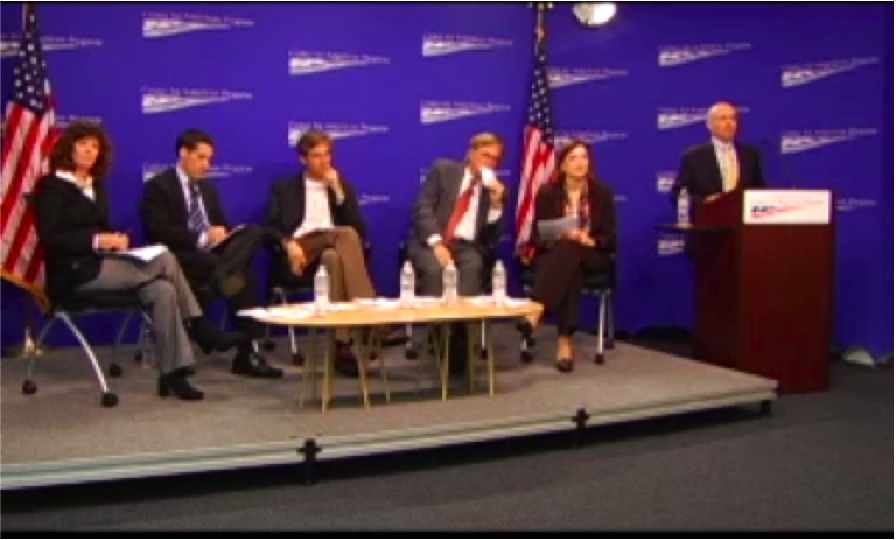
Improving Degree Completion for 21st Century Students, Center for American Progress, Washington, DC, November 2, 2010, Screen Shot. Donald Earl Collins

I’ve been thinking about the fields in which I’ve worked and sort-have-worked in over the past fourteen years, and I’ve drawn one simple conclusion. For all of the talk of education reform, the talk about reform itself is in need of a reformation. I’m tired of the contrast between the experts in the field — who pay little attention to the cutting-edge trends, research and activism in K-16 education — and the everyday folks. They refuse to do anything except complain about teachers, as if education is as simple as organizing a file cabinet.  The who, what and what for’s regarding education reform has stifled what should be an engaging conversation, one that’s essential in the consideration of America’s twenty-first century ills.

Who’s part of this conversation remains something of an atrocity. Almost all of the experts in education reform — whether on a scholarly panel or in the documentary Waiting for Superman — tend to be Whites (more male than female) over the age of fifty. With more than one in three students in public schools of color — and with tens of thousands of teachers and administrators of color in this school districts — it’s hard to believe that all the experts are White, and most of those are middle-aged to elderly males. Their vision, at best, is a liberalized twentieth-century vision of K-12 and postsecondary education. Most of their proposed solutions — smaller class sizes, more homework, small schools, higher certification standards — will not in any way fundamentally reform K-16 education.

When combined with what’s considered important in education reform these days, it becomes painfully

A Nation At Risk (1983) Book Cover, November 2, 2010. Donald Earl Collins

obvious that the conversations we have on education reform are predetermined ones based on certain interests and short-sighted economic considerations. Most of the money in education reform — whether from the federal government, private foundations or corporate interests — is earmarked for things related to STEM fields (science, technology, engineering and mathematics). No one living in this century would deny the importance of STEM fields to a post-industrial economy. But not to the exclusion of everything else. Science folk and scribes alike still need to know how to write well, to think critically, to act ethically, to extend themselves beyond government and corporate interests.

Thomas Friedman — at least as he wrote in The World Is Flat (2005) — Bill Gates, the Obama Administration are all correct in that STEM fields will provide living wages and supply jobs at a rate over the next generation to replace the easy jobs of the by-gone era of industrial jobs straight out of high school. Yet none of them fully appreciates the connection between education reform, community development, corporate irresponsibility, lobbyists and the swaying of government policies and the politics of race and class in all of this.

STEM fields without a real direction for providing livable communities for the poor and for low-income people of color. Education reform that doesn’t do more than make scientists out of artists. Ideas that don’t account for the long-term issues of climate change and energy and resource depletion. Education policies that contradict themselves in terms of funding and a lack of understanding of what education reform truly

Double the Numbers (2004) Book Cover, November 2, 2010. Donald Earl Collins

means. That’s what we have now, and have had since the 1940s.

In the end, all these ideas are about is tapping the same human resources. The dwindling middle class, folks who’ve managed a traditional education track, folks whose lives are stable enough to allow the resources necessary for higher and advanced education. This need to tweak — instead of overhaul — the educational status quo and then call it reform is what leads to bad conversations. This is why what little in the way of reform actually occurs, and why so few of our kids get the reform they truly deserve.

Newer posts →

Boy @ The Window: A Memoir

Boy @ The Window: A Memoir

Places to Buy/Download Boy @ The Window

There's a few ways in which you can read excerpts of, borrow and/or purchase and download Boy @ The Window. There's the trade paperback edition of Boy @ The Window, available for purchase via Amazon.com at http://www.amazon.com/Boy-Window-Donald-Earl-Collins/dp/0989256138/

There's also a Kindle edition on Amazon.com. The enhanced edition can be read only with Kindle Fire, an iPad or a full-color tablet. The links to the enhanced edition through Apple's iBookstore and the Barnes & Noble NOOK edition are below. The link to the Amazon Kindle version is also immediately below:

scr2555-proj697-a-kindle-logo-rgb-lg

Boy @ The Window on Amazon.com: http://www.amazon.com/Boy-The-Window-Memoir-ebook/dp/B00CD95FBU/

iBookstore-logo-300x100

Boy @ The Window on Apple's iBookstore: https://itunes.apple.com/us/book/boy-the-window/id643768275?ls=1

Barnes & Noble (bn.com) logo, June 26, 2013. (http://www.logotypes101.com).

Boy @ The Window on Barnes & Noble: http://www.barnesandnoble.com/w/boy-the-window-donald-earl-collins/1115182183?ean=2940016741567

You can also add, read and review Boy @ The Window on Goodreads.com. Just click on the button below:

Boy @ The Window

Twitter Updates

Tweets by decollins1969
  • RSS - Posts
  • RSS - Comments

Archives

  • June 2025
  • April 2023
  • September 2022
  • August 2022
  • July 2022
  • June 2022
  • May 2022
  • April 2022
  • March 2022
  • January 2022
  • December 2021
  • November 2021
  • October 2021
  • September 2021
  • August 2021
  • July 2021
  • June 2021
  • April 2021
  • March 2021
  • February 2021
  • January 2021
  • December 2020
  • November 2020
  • October 2020
  • September 2020
  • August 2020
  • July 2020
  • May 2020
  • April 2020
  • March 2020
  • January 2020
  • December 2019
  • November 2019
  • August 2019
  • July 2019
  • June 2019
  • May 2019
  • April 2019
  • March 2019
  • February 2019
  • January 2019
  • December 2018
  • November 2018
  • October 2018
  • September 2018
  • August 2018
  • July 2018
  • June 2018
  • May 2018
  • March 2018
  • February 2018
  • January 2018
  • December 2017
  • November 2017
  • October 2017
  • September 2017
  • August 2017
  • July 2017
  • June 2017
  • May 2017
  • April 2017
  • March 2017
  • February 2017
  • January 2017
  • December 2016
  • November 2016
  • October 2016
  • September 2016
  • August 2016
  • July 2016
  • June 2016
  • May 2016
  • April 2016
  • March 2016
  • February 2016
  • January 2016
  • December 2015
  • November 2015
  • October 2015
  • September 2015
  • August 2015
  • July 2015
  • June 2015
  • May 2015
  • April 2015
  • March 2015
  • February 2015
  • January 2015
  • December 2014
  • November 2014
  • October 2014
  • September 2014
  • August 2014
  • July 2014
  • June 2014
  • May 2014
  • April 2014
  • March 2014
  • February 2014
  • January 2014
  • December 2013
  • November 2013
  • October 2013
  • September 2013
  • August 2013
  • July 2013
  • June 2013
  • May 2013
  • April 2013
  • March 2013
  • February 2013
  • January 2013
  • December 2012
  • November 2012
  • October 2012
  • September 2012
  • August 2012
  • July 2012
  • June 2012
  • May 2012
  • April 2012
  • March 2012
  • February 2012
  • January 2012
  • December 2011
  • November 2011
  • October 2011
  • September 2011
  • August 2011
  • July 2011
  • June 2011
  • May 2011
  • April 2011
  • March 2011
  • February 2011
  • January 2011
  • December 2010
  • November 2010
  • October 2010
  • September 2010
  • August 2010
  • July 2010
  • June 2010
  • May 2010
  • April 2010
  • March 2010
  • February 2010
  • January 2010
  • December 2009
  • November 2009
  • October 2009
  • September 2009
  • August 2009
  • July 2009
  • June 2009
  • May 2009
  • April 2009
  • March 2009
  • February 2009
  • January 2009
  • December 2008
  • November 2008
  • October 2008
  • September 2008
  • August 2008
  • July 2008
  • June 2008
  • May 2008
  • April 2008
  • March 2008
  • February 2008
  • January 2008
  • December 2007
  • November 2007
  • October 2007
  • September 2007
  • August 2007
  • July 2007
  • June 2007

Recent Comments

MaryPena's avatarMaryPena on My Day of Atonement/Bitter Hat…
decollins1969's avatardecollins1969 on No Good Teaching Deed Goes…
Mary Rose O’Connell's avatarMary Rose O’Connell on No Good Teaching Deed Goes…

NetworkedBlogs on Facebook

NetworkedBlogs
Blog:
Notes From a Boy @ The Window
Topics:
My Life, Culture & Education, Politics & Goofyness
 
Follow my blog

616 616 East Lincoln Avenue A.B. Davis Middle School Abuse Academia Academy for Educational Development AED Afrocentricity American Narcissism Authenticity Bigotry Blackness Boy @ The Window Carnegie Mellon University Child Abuse Class of 1987 CMU Coping Strategies Crush #1 Crush #2 Death Disillusionment Diversity Domestic Violence Economic Inequality Education Family Friendship Friendships Graduate School Hebrew-Israelites High-Stakes Testing Higher Education History Homelessness Humanities Humanities Program Hypocrisy Internalized Racism Jealousy Joe Trotter Joe William Trotter Jr. K-12 Education Love Manhood Maurice Eugene Washington Maurice Washington Misogyny Mother-Son Relationship Mount Vernon High School Mount Vernon New York Mount Vernon public schools Multiculturalism MVHS Narcissism NFL Pitt Pittsburgh Politics of Education Poverty President Barack Obama Race Racial Stereotypes Racism Relationships Self-Awareness Self-Discovery Self-Reflection Sexism Social Justice Teaching and Learning University of Pittsburgh Violence Whiteness Writing

Top Rated

Blog at WordPress.com.

  • Subscribe Subscribed
    • Notes from a Boy @ The Window
    • Join 103 other subscribers
    • Already have a WordPress.com account? Log in now.
    • Notes from a Boy @ The Window
    • Subscribe Subscribed
    • Sign up
    • Log in
    • Report this content
    • View site in Reader
    • Manage subscriptions
    • Collapse this bar
 

Loading Comments...