• About Me
  • Other Writings
  • Interview Clips
  • All About Me: American Racism, American Narcissism, and the Conversation America Can’t Have
  • Video Clips
  • Boy @ The Window Pictures
  • Boy @ The Window Theme Music

Notes from a Boy @ The Window

~

Notes from a Boy @ The Window

Tag Archives: K-12 Education

Education, A Numbers Game Love Story

22 Thursday Sep 2011

Posted by decollins1969 in 1, Academia, Boy @ The Window, culture, Eclectic, Politics, race

≈ Leave a comment

Tags

Accountability, Craps, Crunching Numbers, ETS, High-Stakes Testing, K-12 Education, K-16 Education, NCLB, P-20 Education, Politicians, Politics of Education, Psychometricians, Psychometrics, Qualitative Research, Quantitative Analysis, SAT, Statistics, Student Success, Teaching Effectiveness, The Education Trust, US Department of Education


Craps dice, like the state of education reform via numbers crunching these days, August 6, 2006. (Source/Roland Scheicher via Wikipedia). In public domain.

This could just as easily be titled, “Why your multivariate regression analysis isn’t better than my chi-square test,” because that is the state of mainstream education research these days. I find it stifling, like being wrapped in Saran Wrap covered by a condom lined in sheep’s intestines.

Numbers have their place, but the field’s obsession with crunching numbers for trends that defy quantification has increased as a result of federal mandates like NCLB and philanthropy’s accountability movement over the past fifteen years. What’s the long-term impact of the thousands of studies and the deployment of thousands of psychometricians and research analysts in P-20 education reform (that’s early childhood education, K-12, undergraduate and graduate education combined)? Not much, because our politicians and philanthropists are staking themselves to trends almost regardless of numbers.

It all started for me about this time twenty years ago. I did an independent study with Bruce Anthony Jones,

Linear regression graph with over 200 data points, February 22, 2009. (Source/Michael Hardy via Wikipedia). In public domain.

then an assistant professor in the University of Pittsburgh School of Education’s ed policy and administration department. In that one semester, I quickly learned that folks in the education field defined research in only two ways: quantitative and qualitative. And by qualitative, they meant soft research, like Carvel’s soft-serve ice cream. What I didn’t know was that many in the field were working to make the qualitative — surveys, focus groups, oral interviews/transcripts — quantifiable.

Today, everything that can be tracked in American education usually has a number attached to it. It’s hardly grades and standardized test scores anymore. Homework hours, time to task on lesson plans to work on a single problem that may be part of a high-stakes state exam, teacher effectiveness, suspensions and disciplinary reports disaggregated by race and gender. It drives me nuts, and I’ve used SAS and SPSS before, during my grad school days. I can only imagine how a teacher who just wants their students to learn and do well must feel about this numbers game.

But if education has become a number game, it most resembles the game of craps. Take the issue of teacher

Michelle Rhee, former DCPS Chancellor, one of many who've taken advantage of education as craps game, Washington, DC, February 19, 2008. (Source/US Department of Labor). In public domain.

effectiveness, often tied to state-mandates around test scores and students meeting or exceeding a percentile at a given school on these tests. Let’s say if a school as a whole actually exceeds the proficiency percentile. They may well receive more money, and teachers may well get a bonus (depending on the state and school district and union contracts, which by the way, may also be part of a statistical formula). None of this actually proves that these students are better prepared for, say, thinking independently or critically, because critical reasoning isn’t tested by most of the high-stakes state tests.

Nor can they show the writing skills necessary for student success later on in their education, as most of these tests don’t test writing comprehension skills either. Most importantly, where does teacher effectiveness come in as a factor? Do we have to account for time to task in comparison to each exam item, like a psychometrician at the Educational Testing Service (ETS) would? Do we factor out home studying/ homework time, parents’ education, income and race, or whether they eat a hearty breakfast the morning of the exam? Or do we continue to simply say, if Teacher X gets Class A to raise its state test score by 25 percent, they get a raise and a pat on the head? Really?

What’s more, whether teacher effectiveness, student success, or free and reduced lunch programs, politicians, parents and pundits hardly look at any numbers beyond any report’s executive summary. We all insist that our school and community colleges and universities get better at graduating students ready for the real world of work. Fine. Then we insist on lower taxes, blaming teachers, destroying unions, complaining about the state of things but not doing anything to make education work for all of our students. Not fine.

It doesn’t take a two-year study from The Education Trust to realize that there’s no one-to-one correlation

Taco Bell's Gordita Supreme, September 22, 2011. (Source/TacoBell.com).

between an effective teacher and higher student test scores. Or a report from the Institute of Education Sciences at the US Department of Education to know that a lunch of murder burgers and suicide fries with ketchup as a vegetable is about as nutritious as a Taco Bell gordita. School districts and many a college have gone without even adequate resources for years. But instead of providing them, we make them kneel in begging for them, and yet expect them to perform Lazarus-type miracles in the process.

We waste time with numbers and spend little time on causes and solutions that make sense in education. I think about that weak +0.4 correlation number that ETS has put out for years regarding the SAT. It’s the likelihood of someone who does well on the exam beginning their freshman year in college with a 3.0 GPA. I scored an 1120 on the SAT in October ’86, not exactly the greatest score. But I did manage a 3.02 average my first year (and a 2.63 my first semester, by the way), and still came within a few days of dropping out because I was homeless at the beginning of my sophomore year.

I dare say the numbers crunchers at ETS didn’t factor that in their multivariate analysis. Or my homesickness or obsession with a former high school crush. Mark Twain is right about statistics — they can “a good walk spoiled (or lies, I think).”


Teachers That “Demon”-ize History

29 Tuesday Mar 2011

Posted by decollins1969 in 1, Academia, Boy @ The Window, Christianity, Eclectic, Politics, Pop Culture, race, Religion

≈ Leave a comment

Tags

A.B. Davis Middle School, Demontravel, History, History Teaching, Humanities, K-12 Education, K-16 Education, Pedagogy, Schools of Education, Teaching, Teaching and Learning


Qin Shihuangdi, China's 1st Emperor, book burner and scholar burier (except for historians of the Qin kingdom), 221-210 BCE. In public domain.

As I promised ten days ago in my “This…Is…Jeopardy?” post, this one continues my thoughts about the inability of most students and teachers to appreciate how to really teach and learn from history. To think that what most in the profession call social history has existed for a half-century, yet few outside of academia actually teach history in this manner. That between the schools of education that prepare them, the curricular paradigms adhered to by state boards of education and the rules and regulations at the district and school building level, few history teachers encourage their students to imagine. Or to think critically. Or  to ask “how” and “why” questions.

And we pay for these educational atrocities every single day, in our public discourse, in journalism, in international politics. Not to mention in our idiotic discussions of race, class, gender, religion, sexual orientation, in just about every endeavor that involves thinking beyond our selfish selves.

Michelle Bachmann Portrait, US Congress, January 14, 2011 - A case in point. In public domain.

The worst example of this for my money was my eighth grade US history teacher, Mr. Demontravel. Or as he preferred in the last three months of eighth grade in the spring of ’83, Dr. Demontravel (he had finished his doctoral thesis on the Civil War. Or as I liked to call him throughout that year, “Demon Travel.”

Beyond the trivia of him finishing his doctorate, Demontravel’s teaching style, while terrible, was also one that remains all too typical in our public school (and unfortunately, some of our colleges as well). His was a class that sucked the life out of history for most of the Humanities students at A.B. Davis. Like most teachers of K-12 social studies or history, it was an important and obscure dates, important names, and key places class.

Unlike most social studies teachers, his teaching methodology was the epitome of lazy. Every class, five days a week, Demontravel would put up five questions on the blackboard for us to copy down and answer using our textbook. At the end of every two-week period, we’d get a fifty-question multiple choice exam made up of those questions written out on the blackboard over the previous two weeks, helping Scan-Tron stay in business.

Demontravel rarely stood up to lecture or do anything else. Lectures for him might as well have been appearances by Halley’s Comet, only the lectures were far less memorable. This process went on unabated for forty-weeks, four marking periods, seventeen exams (counting the final), an entire school year. Calling this boring would only get you into the door of the intellectual famine Demontravel subjected us to in eighth grade.

Over the years, I’ve had hundreds of students complain about various versions of this kind of history teaching. That they hated history, didn’t understand its purpose. Many students have loved my teaching of social history off and on over the past two decades, and have told me so, that there interest in a particular issue or topic was peaked as a result of one of my courses. But there are some, perhaps as many as ten percent of my students (about 200 in all) who would’ve preferred the mind-numbing methodology of teaching history as trivia. For that group, Demontravel would’ve been a preference over being able to

Newt Gingrich, potential 2012 GOP candidate, at CPAC meeting, February 20, 2010. (Irony is that Gingrich, an opponent of social history, was a history professor for eight years before turning to a political career.) Gage Skidmore. Permission granted via Creative Commons and attribution to Gage Skidmore.

understand that, like life, history is full of irony, hurt, passion, hatred, and serendipity.

Maybe this is a losing battle, that most students will never have a teacher with the ability to inspire them to think beyond the trivial when it comes to history. Maybe this is a losing battle because there are far more demons traveling through K-12 as social studies and history teachers than there are people like me, or my late teacher Harold Meltzer, for that matter. I have a feeling, though, that generations from now, future students will look at this aspect of hypocrisy in American education and just shake their heads. They won’t understand why it was so hard to teach the truth of how and why good, bad and ugly things occurred in US and world history.

This Is Why I Write…I Think

09 Tuesday Nov 2010

Posted by decollins1969 in 1, Academia, Boy @ The Window, culture, Eclectic, Pop Culture, race

≈ Leave a comment

Tags

Black Male Narrative, Black Males, Boy @ The Window, Colleges & Universities, Education, Humanities Program, Intellectual Development, K-12 Education, Mount Vernon New York, Prison, Privileging Athletes and Entertainers, Publishing, Writing


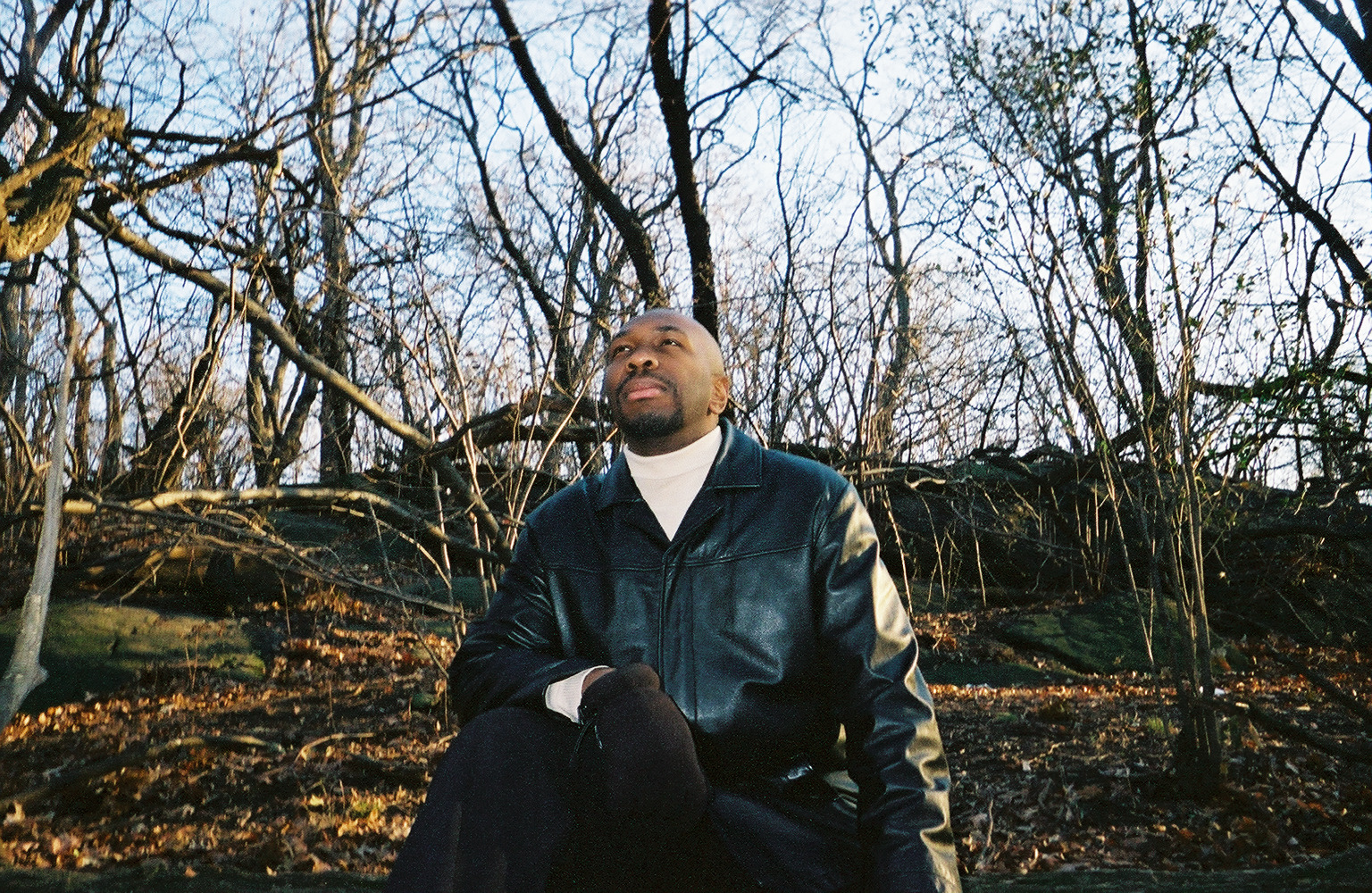
A Younger Me, Thinking, Central Park, New York, NY, December 23, 2002. Angelia N. Levy

In the course of the past half-decade of struggle over a now 360-page manuscript, even I’ve asked myself, why? What am I doing? Why in the world would I want to dredge up and relive twenty-three, twenty-five and thirty-year-old memories? Of all the books I think I have left in me, why a memoir about the years of my life I’ve tried hardest to forget, to not even discuss? Wouldn’t it be easier to write fiction, a novel that includes elements of that life without a detailed account of it? Why take the risk of offending my first hometown, my former classmates and teachers, my family? Why, dummy, why?


Well, it’s not because I get some perverse pleasure out of describing myself as a loser, or torturing myself with unfulfilled love, or because I’m trying to hurt other people’s feelings about Mount Vernon, New York or the Humanities Program. There are lots of reasons. Some of them start with my seven-year-old son. At the very least, I want him to understand his old man as he grows up better than I understood myself

Diary of a Wimpy Kid Book Cover Picture, November 9, 2010. Donald Earl Collins

growing up.


But it’s more than that, much more. I’m tired of sitting in interviews and in on staff meetings (when I worked full-time and had more consulting work) and hearing about the tiny number of highly educated Black males in the pipeline for high-level professional jobs. I’m tired of the narrative that says that Black males — and other males of color, for that matter — have to fuck up their lives in order to find the right path. It makes me groan — in my mind and out of my mouth — when I hear over and over again how few males of color even consider college, much less graduate or go on to advanced degrees.

But that’s not all. It’s disheartening to see these narratives play themselves out in African America, in America writ large, and in the publishing world. Like with my growing-up hometown. For the most part, entertainers and athletes — from the Williams and McCray brothers of the NBA past to Ben Gordon, from Denzel Washington to Al B. Sure — are the only ones with cred. Basketball, music, and occasionally, acting and dance are the ways other Blacks are inspired to have aspirations. Intellectual abilities, especially the ability to retain and then critique knowledge, are discounted. People like me growing up were nerds, or worse, just plain weird.

I write what I write because I know that in communities and in neighborhoods like the one I grew up in, the constant ridicule and the stifling of creative thinking and intellectual development can easily lead to stunted lives. I was lucky in a lot of ways, because I was deliberately naive, because of Humanities, because some of my classmates were almost as weird as me, because we had some wonderful teachers. But that doesn’t represent the Mount Vernon educational experience, not by a long shot.

I’m tired of students of color — especially males of color — falling through the cracks of horrible K-12 education because of bad policies, racial and economic politics, and principals as prison wardens. Not only in Mount Vernon. Pittsburgh. DC. PG County, Maryland. Baltimore, Sacramento, Oakland, New York City, Cleveland, Jackson, Mississippi, Jacksonville, Florida, Atlanta, San Francisco, Philadelphia and so many other schools and school districts I’ve visited for work or research purposes over the years.

The narrative that a Black male can only find their way out of poverty through committing criminal errors that lead to prison time and enlightenment goes all the way back to Richard Wright’s Native Son and Black Boy. The one about Black males finding a niche in the world of entertainment — as athletes, musicians, rap artists, actors and comedians — has its roots in original Black heavyweight champion Jack Johnson. The narrative that involves Black males who used education and their intellectual talents to overcome their circumstances and these stereotypical narratives is seldom heard from in the publishing world.


616 Living Room Window Screen Shot, November 23, 2006. Donald Earl Collins

That’s likely because some folks think that this story’s been overdone. Even though anyone can count those memoirs and novels on their fingers and thumbs. Maybe it’s not entertaining enough to describe a life full of violence and psychological torture, but with no crimes committed by the main character, no veins injected with heroin, no women knocked up with kids. I write my manuscript because I lived long enough to have learned that there are tens of thousands of Black boys and other boys of color — not to mention their teachers, parents, principals — who languish in the struggle to succeed because they’re not scoring touchdowns, spittin’ rhymes or dunking on rims. Or trying to live the thug life, for that matter. These are the kids that need to be saved, as much as the kids who are already on the brink of prison life.


For all these reasons, I write Boy @ The Window. For all of these reasons, I post on this blog as much as I do. To say what I’ve thought, but often haven’t said. And to do it without sounding as serious as an academician. Nor as entertaining as a stoned Baby Boomer trying to make the 70s sound cool. It’s a balance, and I’ve made many mistakes along the way. And will likely make more. But in all of this, I’ve found so much more of my humanity than I thought possible. I just hope that it’s really worth it.

Bad Conversations and Education Reform

02 Tuesday Nov 2010

Posted by decollins1969 in 1, Academia, Boy @ The Window, culture, Eclectic, Politics, race

≈ 2 Comments

Tags

A Nation At Risk, Bill Gates, Conversations on Education Reform, Corporate Interests, Double the Numbers, Education, Education Reform, Experts, Higher Education, K-12 Education, K-16 Education, Obama Administration, Parents, Politics of Education, Race and Education, STEM Fields, Students, Teachers, Thomas L. Friedman


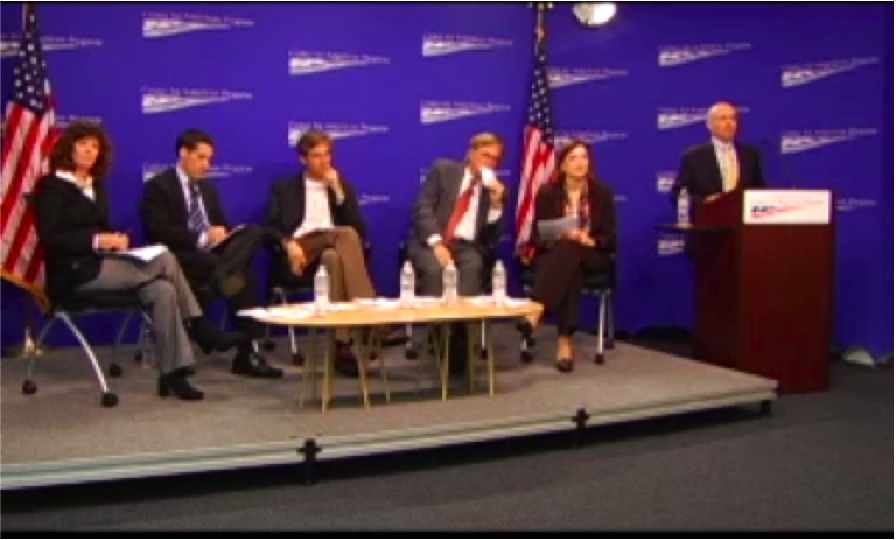
Improving Degree Completion for 21st Century Students, Center for American Progress, Washington, DC, November 2, 2010, Screen Shot. Donald Earl Collins

I’ve been thinking about the fields in which I’ve worked and sort-have-worked in over the past fourteen years, and I’ve drawn one simple conclusion. For all of the talk of education reform, the talk about reform itself is in need of a reformation. I’m tired of the contrast between the experts in the field — who pay little attention to the cutting-edge trends, research and activism in K-16 education — and the everyday folks. They refuse to do anything except complain about teachers, as if education is as simple as organizing a file cabinet.  The who, what and what for’s regarding education reform has stifled what should be an engaging conversation, one that’s essential in the consideration of America’s twenty-first century ills.

Who’s part of this conversation remains something of an atrocity. Almost all of the experts in education reform — whether on a scholarly panel or in the documentary Waiting for Superman — tend to be Whites (more male than female) over the age of fifty. With more than one in three students in public schools of color — and with tens of thousands of teachers and administrators of color in this school districts — it’s hard to believe that all the experts are White, and most of those are middle-aged to elderly males. Their vision, at best, is a liberalized twentieth-century vision of K-12 and postsecondary education. Most of their proposed solutions — smaller class sizes, more homework, small schools, higher certification standards — will not in any way fundamentally reform K-16 education.

When combined with what’s considered important in education reform these days, it becomes painfully

A Nation At Risk (1983) Book Cover, November 2, 2010. Donald Earl Collins

obvious that the conversations we have on education reform are predetermined ones based on certain interests and short-sighted economic considerations. Most of the money in education reform — whether from the federal government, private foundations or corporate interests — is earmarked for things related to STEM fields (science, technology, engineering and mathematics). No one living in this century would deny the importance of STEM fields to a post-industrial economy. But not to the exclusion of everything else. Science folk and scribes alike still need to know how to write well, to think critically, to act ethically, to extend themselves beyond government and corporate interests.

Thomas Friedman — at least as he wrote in The World Is Flat (2005) — Bill Gates, the Obama Administration are all correct in that STEM fields will provide living wages and supply jobs at a rate over the next generation to replace the easy jobs of the by-gone era of industrial jobs straight out of high school. Yet none of them fully appreciates the connection between education reform, community development, corporate irresponsibility, lobbyists and the swaying of government policies and the politics of race and class in all of this.

STEM fields without a real direction for providing livable communities for the poor and for low-income people of color. Education reform that doesn’t do more than make scientists out of artists. Ideas that don’t account for the long-term issues of climate change and energy and resource depletion. Education policies that contradict themselves in terms of funding and a lack of understanding of what education reform truly

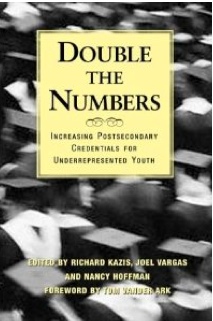
Double the Numbers (2004) Book Cover, November 2, 2010. Donald Earl Collins

means. That’s what we have now, and have had since the 1940s.

In the end, all these ideas are about is tapping the same human resources. The dwindling middle class, folks who’ve managed a traditional education track, folks whose lives are stable enough to allow the resources necessary for higher and advanced education. This need to tweak — instead of overhaul — the educational status quo and then call it reform is what leads to bad conversations. This is why what little in the way of reform actually occurs, and why so few of our kids get the reform they truly deserve.

School’s Out — But Should It Be?

23 Wednesday Jun 2010

Posted by decollins1969 in 1, Eclectic, Politics

≈ 1 Comment

Tags

Cost, K-12 Education, Length of School Year, Parents, Politics of Education, Students, Summer Vacation, Teachers, Teachers Unions


Source: Country Square Apts, Carrollton, TX

This week, my son Noah began his 10-week summer vacation from school in earnest. So far, he’s at his daycare, swimming three days a week, and bowling today. He’s not the only one. So many of my former students at the high school level have been celebrating their summer vacations from school. For some, Memorial Day weekend was the official beginning of summer. For others, particularly in New York, June 25 is the last day of school this year. Most are somewhere in between.

Great for all of them. They are young, they are students, they should be happy to not be stuck in the regimentation that is K-12 education for two and a half months. But the reality is, it shouldn’t be this way. Our American school year should be at least thirty days — or six to seven weeks longer (counting holidays) — than it is right now.

We complain about students coming back to their next school year having forgotten a good portion of what they learned the previous school year. Yet parents complain that a longer school year means higher income and property taxes and a disruption of summer vacations. Teachers and teachers unions refuse to budge on this issue, for they want higher pay (and rightly so) for teachers on a full twelve-month (as opposed to a nine or ten-month) contract and guaranteed time off. School boards can’t afford to do a 210-or-more-day school year. The costs of keeping open school facilities, school food programs, paying teachers and staff, are already hard enough to meet during the current school year format.

But that doesn’t mean that we shouldn’t try. We’re in the second decade of the twenty-first century, expecting to compete with the likes of Japan, China, India, Brazil, Russia — heck, Cuba, the EU, even Canada — with a system designed as we understand it today between 1890 and 1920. That’s just wrong. If anything, we should take a page from the modern university and two-year institution and stagger our K-12 school year into a quarter or fifths system, with two to three weeks off between each quarter or fifth. If we made the standard nine-week marking period ten weeks long — with at least two weeks off between each marking period — it would extend the standard school year from the end of August to the end of July, leaving a full month off for teachers and students alike. There would be no need for a summer marking period. But if you had one, as such, it could then only run two to three weeks.

For those who find that solution unsatisfactory, there is another solution. Keep the standard nine-week marking periods, but stagger the summer sessions. Half of the students and teachers will have the period between early June and mid-July off, and the other half, mid-July to the end of August off. That would provide the break necessary for recovery from the school year, provide sufficient time for families and teachers to take vacations, and would extend the teaching contracts of teachers an extra four to six weeks.

No matter what anyone proposes, there will be many who will fight to oppose the extension of the school year.  I don’t know too many people who need — or more importantly, can afford — a ten or twelve-week vacation with their kids. Teachers spend part of their summers in professional development anyway, so teaching a few more weeks wouldn’t diminish their teaching skills. And students — well, many students do extra work during the summer months anyway. Why not make that work standard? Oh well. Here I go again, swimming upstream!

Teacher Ignorance

25 Tuesday May 2010

Posted by decollins1969 in 1, Eclectic

≈ Leave a comment

Tags

Culture, Discipline, K-12 Education, Mount Vernon New York, Nathan Hale Elementary, Teachers


I’m confronted with the fact that not all teachers are competent or considerate when dealing with their students. In the past week, my son Noah has had two incidents with his first-grade teacher that have involved a complete lack of communication skills. On one, I ended up sitting with Noah in detention for something Noah shouldn’t have been in detention for in the first place. On the other, Noah was accused of cheating — yes, a six-year-old was accused of cheating — on a math quiz because he didn’t put his pencil down immediately after time was up.

We contacted Noah teacher and one of his principals, because the teacher overreacted on both occasions. But now, I feel as if Noah is dealing with a problem that I had the pleasure of dealing with in second grade, ignorant teachers. By ignorant, I don’t mean stupid or dumb. I mean teachers who are ignorant of context, whose level of world knowledge is limited, who understand the letter of the law only slightly, and the spirit of it even less.

The first teacher I had who was like this was my second-grade teacher at Nathan Hale Elementary (now Cecil Parker) in Mount Vernon, Mrs. Hirsch. One of only two White teachers I had in all of elementary school, Mrs. Hirsch was extremely impatient with all of us. She snapped at us for violating any rules at all. “No talking,” she’d yell, and very loudly at that, for any whispering whatsoever. Our single-file lines in the hallway were the straightest in the school in all likelihood. I thought that Mrs. Hirsch was mean.

And she proved it one day during a spelling test. I was already upset that day, as my mother and father were divorcing, and the stress of it had landed my mother in the hospital. I wasn’t feeling well, and was a bit stressed myself. We started the test, and I, with my usually disgusting self, dug a booger out of my left nostril, which landed right on my paper. I wiped the rest on there as well. Another student said, “Ill, Donald!,” and I said something back, something like, “I couldn’t help it.” Mrs. Hirsch came over, looked at my paper, and gave me a zero on the spot. “Shame on you, young man,” she said.

My crime was cheating. At least according to Mrs. Hirsch. But what I’d really done was disgusted her with my booger, nothing more, nothing less. That was it for me as far as Mrs. Hirsch was concerned. I hoped that she would melt, like the Wicked Witch of the West in The Wizard of Oz.

Noah’s issues of late are even more innocent than me digging up my nose during a test. He talked too much to his friends last week, so he and I got to spend ten minutes in his teacher’s classroom during the Dine with Dads event last Friday while she’s eating lunch in the teachers lounge? Or going overtime on a math quiz constitutes cheating? That’s ignorance, plain and simple, unacceptable and unbecoming of a teacher dealing with students as young as Noah.

Newer posts →

Boy @ The Window: A Memoir

Boy @ The Window: A Memoir

Places to Buy/Download Boy @ The Window

There's a few ways in which you can read excerpts of, borrow and/or purchase and download Boy @ The Window. There's the trade paperback edition of Boy @ The Window, available for purchase via Amazon.com at http://www.amazon.com/Boy-Window-Donald-Earl-Collins/dp/0989256138/

There's also a Kindle edition on Amazon.com. The enhanced edition can be read only with Kindle Fire, an iPad or a full-color tablet. The links to the enhanced edition through Apple's iBookstore and the Barnes & Noble NOOK edition are below. The link to the Amazon Kindle version is also immediately below:

scr2555-proj697-a-kindle-logo-rgb-lg

Boy @ The Window on Amazon.com: http://www.amazon.com/Boy-The-Window-Memoir-ebook/dp/B00CD95FBU/

iBookstore-logo-300x100

Boy @ The Window on Apple's iBookstore: https://itunes.apple.com/us/book/boy-the-window/id643768275?ls=1

Barnes & Noble (bn.com) logo, June 26, 2013. (http://www.logotypes101.com).

Boy @ The Window on Barnes & Noble: http://www.barnesandnoble.com/w/boy-the-window-donald-earl-collins/1115182183?ean=2940016741567

You can also add, read and review Boy @ The Window on Goodreads.com. Just click on the button below:

Boy @ The Window

Twitter Updates

Tweets by decollins1969
  • RSS - Posts
  • RSS - Comments

Archives

  • June 2025
  • April 2023
  • September 2022
  • August 2022
  • July 2022
  • June 2022
  • May 2022
  • April 2022
  • March 2022
  • January 2022
  • December 2021
  • November 2021
  • October 2021
  • September 2021
  • August 2021
  • July 2021
  • June 2021
  • April 2021
  • March 2021
  • February 2021
  • January 2021
  • December 2020
  • November 2020
  • October 2020
  • September 2020
  • August 2020
  • July 2020
  • May 2020
  • April 2020
  • March 2020
  • January 2020
  • December 2019
  • November 2019
  • August 2019
  • July 2019
  • June 2019
  • May 2019
  • April 2019
  • March 2019
  • February 2019
  • January 2019
  • December 2018
  • November 2018
  • October 2018
  • September 2018
  • August 2018
  • July 2018
  • June 2018
  • May 2018
  • March 2018
  • February 2018
  • January 2018
  • December 2017
  • November 2017
  • October 2017
  • September 2017
  • August 2017
  • July 2017
  • June 2017
  • May 2017
  • April 2017
  • March 2017
  • February 2017
  • January 2017
  • December 2016
  • November 2016
  • October 2016
  • September 2016
  • August 2016
  • July 2016
  • June 2016
  • May 2016
  • April 2016
  • March 2016
  • February 2016
  • January 2016
  • December 2015
  • November 2015
  • October 2015
  • September 2015
  • August 2015
  • July 2015
  • June 2015
  • May 2015
  • April 2015
  • March 2015
  • February 2015
  • January 2015
  • December 2014
  • November 2014
  • October 2014
  • September 2014
  • August 2014
  • July 2014
  • June 2014
  • May 2014
  • April 2014
  • March 2014
  • February 2014
  • January 2014
  • December 2013
  • November 2013
  • October 2013
  • September 2013
  • August 2013
  • July 2013
  • June 2013
  • May 2013
  • April 2013
  • March 2013
  • February 2013
  • January 2013
  • December 2012
  • November 2012
  • October 2012
  • September 2012
  • August 2012
  • July 2012
  • June 2012
  • May 2012
  • April 2012
  • March 2012
  • February 2012
  • January 2012
  • December 2011
  • November 2011
  • October 2011
  • September 2011
  • August 2011
  • July 2011
  • June 2011
  • May 2011
  • April 2011
  • March 2011
  • February 2011
  • January 2011
  • December 2010
  • November 2010
  • October 2010
  • September 2010
  • August 2010
  • July 2010
  • June 2010
  • May 2010
  • April 2010
  • March 2010
  • February 2010
  • January 2010
  • December 2009
  • November 2009
  • October 2009
  • September 2009
  • August 2009
  • July 2009
  • June 2009
  • May 2009
  • April 2009
  • March 2009
  • February 2009
  • January 2009
  • December 2008
  • November 2008
  • October 2008
  • September 2008
  • August 2008
  • July 2008
  • June 2008
  • May 2008
  • April 2008
  • March 2008
  • February 2008
  • January 2008
  • December 2007
  • November 2007
  • October 2007
  • September 2007
  • August 2007
  • July 2007
  • June 2007

Recent Comments

MaryPena's avatarMaryPena on My Day of Atonement/Bitter Hat…
decollins1969's avatardecollins1969 on No Good Teaching Deed Goes…
Mary Rose O’Connell's avatarMary Rose O’Connell on No Good Teaching Deed Goes…

NetworkedBlogs on Facebook

NetworkedBlogs
Blog:
Notes From a Boy @ The Window
Topics:
My Life, Culture & Education, Politics & Goofyness
 
Follow my blog

616 616 East Lincoln Avenue A.B. Davis Middle School Abuse Academia Academy for Educational Development AED Afrocentricity American Narcissism Authenticity Bigotry Blackness Boy @ The Window Carnegie Mellon University Child Abuse Class of 1987 CMU Coping Strategies Crush #1 Crush #2 Death Disillusionment Diversity Domestic Violence Economic Inequality Education Family Friendship Friendships Graduate School Hebrew-Israelites High-Stakes Testing Higher Education History Homelessness Humanities Humanities Program Hypocrisy Internalized Racism Jealousy Joe Trotter Joe William Trotter Jr. K-12 Education Love Manhood Maurice Eugene Washington Maurice Washington Misogyny Mother-Son Relationship Mount Vernon High School Mount Vernon New York Mount Vernon public schools Multiculturalism MVHS Narcissism NFL Pitt Pittsburgh Politics of Education Poverty President Barack Obama Race Racial Stereotypes Racism Relationships Self-Awareness Self-Discovery Self-Reflection Sexism Social Justice Teaching and Learning University of Pittsburgh Violence Whiteness Writing

Top Rated

Blog at WordPress.com.

  • Subscribe Subscribed
    • Notes from a Boy @ The Window
    • Join 103 other subscribers
    • Already have a WordPress.com account? Log in now.
    • Notes from a Boy @ The Window
    • Subscribe Subscribed
    • Sign up
    • Log in
    • Report this content
    • View site in Reader
    • Manage subscriptions
    • Collapse this bar
 

Loading Comments...