• About Me
  • Other Writings
  • Interview Clips
  • All About Me: American Racism, American Narcissism, and the Conversation America Can’t Have
  • Video Clips
  • Boy @ The Window Pictures
  • Boy @ The Window Theme Music

Notes from a Boy @ The Window

~

Notes from a Boy @ The Window

Tag Archives: Feminism

Fear and (White) Women’s History Month

06 Thursday Mar 2014

Posted by decollins1969 in 1, Boy @ The Window, culture, Eclectic, Politics, Pop Culture, race, Youth

≈ Leave a comment

Tags

Death By A Thousand Cuts, Domestic Violence, Elitism, Fear, Feminism, Microaggressions, Misogyny, Racism, Sexual Harassment, Stereotypes, Threats, Violence, Whiteness, Women's History Month


The Scream (1893) by Edvard Munch, The National Gallery, Oslo, Norway, November 27, 2013. (The Herald via Wikipedia). In public domain (US).

The Scream (1893) by Edvard Munch, The National Gallery, Oslo, Norway, November 27, 2013. (The Herald via Wikipedia). In public domain (US).

I often find it ironic that Women’s History Month follows immediately after Black History Month. In this sequence, both are racialized, as the former tends to represent White women, while the latter represents all Blacks regardless of gender, sexual orientation, or country of origin. Meaning that women of color often have to fight to be recognized during Women’s History Month, that poor women often go unrecognized in both Black and Women’s History months, and that other nuances of demographics and history aren’t thought of at all.

Such is the case with issues of -isms within feminism and Women’s History Month. Particularly when combined with the actualization of fear. In the cases of domestic violence, rape, assault, kidnapping, harassment and other threats against women, it’s certainly understandable that the fear of such things (and the breaking down those threats and fears in dialogue) are a big part of feminism and Women’s History Month more specifically. But when combined with certain -isms — especially racism and elitism — these issues become more about profiling stereotypical threats rather than dealing with real threats against women, especially (but not exclusively) for White women.
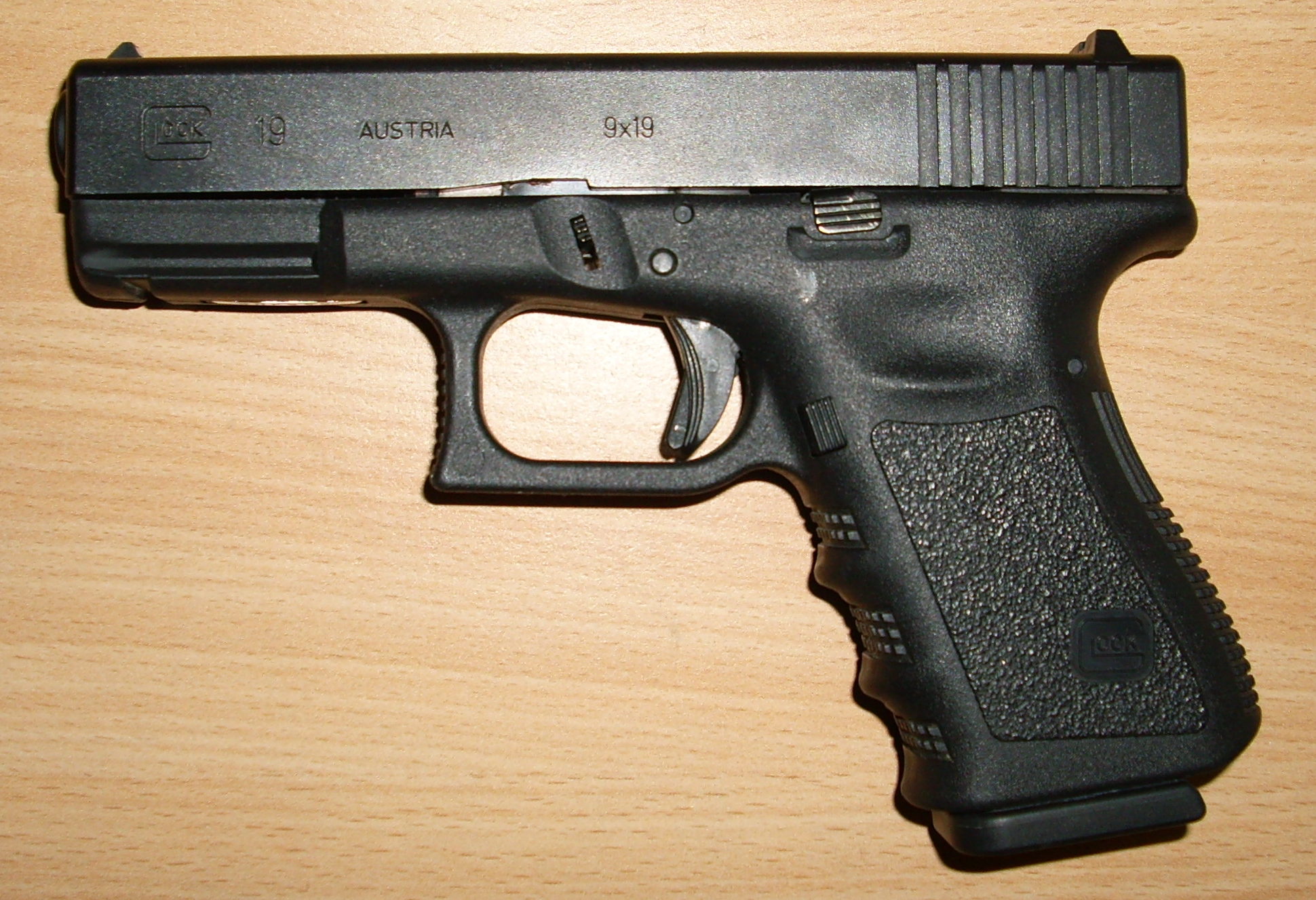
Compact Glock 19 in 9x19mm Parabellum, November 4, 2007. (Vladimir Dudak via Wikipedia). Released to public domain via CC 3.0 & GNU.

Compact Glock 19 in 9x19mm Parabellum, November 4, 2007. (Vladimir Dudak via Wikipedia). Released to public domain via CC 3.0 & GNU.

It’s something I experience every day. A White woman crossing the street as I approach, on my way home, to my car, to run an errand, or to pick up my son from school. A woman — White or Black — gasping audibly at the sight of me in an elevator, some even not getting on board, as if I had a ski mask over my face and a Glock in my right hand. White female co-workers who, upon seeing me outside the office, would put on a blank face and walk by me while I’m holding open a door, too scared to even say “Hello,” much less a “Thank you.”

It’s the nearly daily reminder that where feminism and Whiteness intertwine, I represent the Black male misogynist. I am dangerous, the guy whom White women and middle class women of color imbue anti-feminist threats and violence. Even when standing still on an elevator, deep in my own thoughts about work, teaching, family and writing.

Martyrdom of Joseph Marchand (1860) by unknown, September 27, 2008. (World Imaging via Wikipedia). Released to public domain via CC 3.0 and GNU.

Martyrdom of Joseph Marchand (1860) by unknown (or death by 1,000 cuts), September 27, 2008. (World Imaging via Wikipedia). Released to public domain via CC 3.0 and GNU.

I get it. White women often have to expend micro-energies on microaggressions from men — including Black men — in order to get through the day. For some, it’s probably an exhausting part of their existence. Likely so much so that they forget to turn off their shields even when bumping into a male co-worker or friend.

From my perspective, though, it’s not that simple. It’s not like I look at every White male and female and see another willfully ignorant and entitled racist ready to accuse me of ruining the country or threaten me with bodily harm. I think that in some feminist circles, racial and classist profiling goes on even more so than with most police officers. Fear is an important part of our existence, but it shouldn’t be the centerpiece of how anyone lives their lives, even when it’s justifiable.

In thinking about feminism, Whiteness and Women’s History Month, my two little cents’ worth of thoughts come down to this. I’m tired of being a victim of your fears, which when multiplied over the past 150 years, have often led to misunderstandings, false accusations, arrests, convictions, beatings and deaths. I’m tired of abstract discussions of microaggressions, threats and violence against mostly White women that don’t include the perspectives of women of color. And I’m tired of feminists who refuse to evaluate their own elitism and Whiteness in how they go about their everyday lives.
Irksome American Conversations on Gender & Race With “Impact”

31 Wednesday Oct 2012

Posted by decollins1969 in 1, culture, Eclectic, Marriage, Politics, Pop Culture, race

≈ Leave a comment

Tags

"Impact", "Impacted", American Conversations, Bigotry, Cliches, Discourse, Feminism, Interracial Marriage, Interracial Relationships, News Media, Platitudes, Racism, Social Media, Strong Women


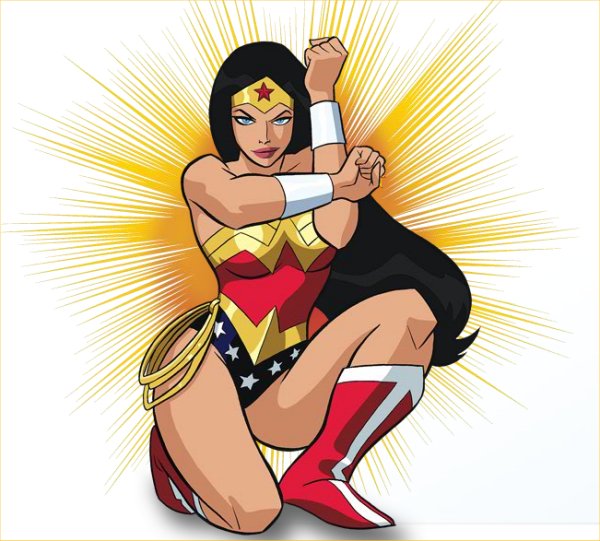
Wonder Woman, October 30, 2012. (http://tvequals.com).

I’ve wanted to write about this one for a few months now. Post-Tropical Cyclone Sandy or not, this one is important to me. The fact that so much of our discourse in traditional media, social media and everyday conversation remains so much more about cliché commentary than about any exploration of the meaning behind the words we say.

I’ve already looked at the laziness that a monopolized media has created in the world of journalism (see my recent post “The Make-Believe Media” from earlier this month). But this is about more than the “both sides do it” media world. It’s about the contradictions between the style in which we use our words and the substance within. The reality behind our words, then, becomes buried, and has made us all a little bit more ignorant in the process.

For me, three random examples stand out:

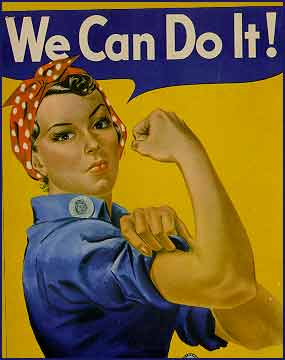
“We Can Do It!” – Rosie the Riveter poster [1942], by J. Howard Miller, October 30, 2012 (Wikipedia). In public domain.

1. “I’m a strong woman” – This could also be “I’m a smart woman,” or “I’m a bitch,” or “I’m a tough woman,” or a hundred other phrases I see every day on Twitter or hear in our public discourse. Even if this is meant to show some sort of feminist solidarity, it seems trite to proclaim strength as part of a conversation about gender (or any other topic, for that matter). I learned my lesson more than thirty years ago, courtesy of Crush #1, at the ripe old age of twelve, to not spend so much of my time telling people how smart I was (see my “Was I Really In Love In 7th Grade?” post from March ’12).

Really, how weird would it sound for me at six-three and 230 pounds to say that “I’m a strong man?” Or in commenting about all the abuse I survived, that “I’m a tough man?” I think that most of us can recognize a strong, tough, intelligent woman without the use of underwhelming language. I think most of us regardless of gender genuinely admire women who are who they are without saying the words all day and every day. To slightly misquote the name of the foundation that Lance Armstrong just stepped down from, just live strong, be strong and stay strong, and tell others females (and occasionally males) to do the same.

2. “Interracial/multiracial marriages are on the rise” = a less racist/post-racial America – Yeah, if there hadn’t been a long history of grossly unequal interracial relationships in this country for the previous two hundred years prior to the late ’80s.  This isn’t to say that the average American citizen isn’t less bigoted or racist than they would’ve been thirty years ago. But a sexual or even marital bond doesn’t automatically mean a lack of prejudice. It certainly doesn’t mean a massive empathy for and participation in social justice and other human rights causes. Just like with any relationship or marriage, people from different ethnic backgrounds can also come together for all the wrong reasons, can be abusive, and can even be racist.

Mildred Loving and Richard Loving (famous for landmark Supreme Court Loving v. Virginia (1967) miscegnation case), January 26, 1965. (AP). Qualifies as fair use under US Copyright laws – subject of post and no other photos available.

Making an exception for a few Whites, Blacks, Latinos or Asians as an individual doesn’t mean that one doesn’t generally view Whites as racist, Blacks as intellectually inferior, Latinos as “illegals” or Asians as “model minorities.” The fact that interracial marriages have been on the rise for nearly thirty years merely proves that the taboo against these marriages has broken down, not that the nation isn’t divided around the issue of race.

Manny Pacquiao v. Antonio Margarito (true meaning of the verb “impact”), Arlington, TX, November 13, 2010. (AP via http://9run.ca).

3. The growing use of impact as a verb and an adverb: Whether “impact,” “impacted,” “impacting,” or “impactful,” most of the time, this term is used incorrectly, especially in terms of politics. Take the use of impact during the 2012 Presidential Election cycle. “Nothing has impacted the 2012 race more than Romney’s 47% tape.” Really? Did someone take the recording and literally hit Mitt Romney in the head with it until he was rendered unconscious? If that didn’t occur, then the correct sentence would be “Nothing has had more of an impact on the 2012 race than Romney’s 47% tape.”

It’s as if journalists, reporters, pundits, commentators, intellectuals and scholars have forgotten that there are other, better words in the English language to use than impact. Like “affect,” or “effect,” or “influence,” or “sway,” or “transform,” or “change.” There are NFL color commentators and WWE announcers who use the word impact more correctly than most in the news and social media worlds. But this incorrect overuse is apparently here to stay, affecting and infecting our already ignorant use of language.

All of these uses of language irk me, because if we are to ever have real discussions of serious issues, we need our language to have real substance to it. Not just platitudes and clichés that wouldn’t survive Fashion Avenue if they took the form of a dress.

On Women and Wired Weirdness

05 Saturday Mar 2011

Posted by decollins1969 in 1, Boy @ The Window, culture, Eclectic, Marriage, music, Youth

≈ Leave a comment

Tags

"Cherish The Day", 616, 616 East Lincoln Avenue, A.B. Davis Middle School, Brandie Weston, Crush #1, Damsel-in-Distress, Domestic Violence, Feminism, Fights, Humanities, Marriage, Mount Vernon New York, Mrs. Sesay, Puberty, Relationships, Sade, Sexism, Womanism


[Why Sade? Closest I could find to my dream-life muse, and most appropriate video I could find]

Getting a bit long in the tooth to be rattling off about Crush #1 again, right? After all, yesterday was the twenty-ninth anniversary of the fight that led to a crush that led to some sort of falling in love for the first time. The three-month period between March 4 and May 30 of ’82 shaped the ways I saw girls and women from the age of twelve until my early thirties. The crush on Crush #1 and its inevitable side-tracking as my then stepfather knocked my mother unconscious in front of me helped shaped my feminism, my womanism and my sexism.

In all of that, I’ve learned that I was wired for this weirdness. Because as a person of deep thought, a boy surrounded by sexism and misogyny, and a lonely and semi-ostracized preteen, the sum was much greater than these contradictory parts.

To think that this all pretty much started because I picked a fight with Crush #1 at the end of class in seventh grade. Almost all of my extracurricular incidents that year began or ended in our homeroom with our homeroom/English teacher Mrs. Sesay. I know that she’s a principal somewhere these days, but back then, her lack of behavioral leadership skills in the classroom led to more verbal abuse and fighting than a group of gifted-track kids should’ve stood for. Anyway, the incident began because Crush #1 asked a question about a subject that Mrs. Sesay had spent the entire week going over, a concept that Sesay would test us on that Friday. I laughed out loud — thinking that I was only snickering — after Crush #1 asked that question.

Thinking nothing of it, I began to pack up after the 2:15 pm bell rang. Crush #1 came up to me and pushed me from behind.

“You’re an ugly, arrogant asshole!” she said with the distaste of a ballerina being asked for money by a junkie.

I called her “stupid” and then said something else stupid. “You’re an idiot!,” Crush #1 yelled as she threw two punches into my chest and a third at my jaw.

The fight lasted about fifteen or twenty seconds, but after landing a punch on her left boob and nipple, I stopped fighting, already descending into the land of the idiot romantic. All while Crush #1 kept hitting me, then being pulled away from me by a couple of her friends. One of them, the recently deceased Brandie Weston, called me a “pervert” as they exited the classroom.

I know that I wasn’t the first boy in history to start a fight with a girl who I’d come to like or love, but I do think that boys who do that have a lot of weird in them. Mind you, I hadn’t quite hit puberty yet, so my testosterone levels weren’t high enough yet to be the cause of my brain malfunction. No, my very sexism and her fierce sense of tomboyish feminism was why I liked her in the first place, and drank deep from that well for the next three months.

The Memorial Day ’82 incident with my mother changed what was an otherwise innocent crush and love into something weirder and more meaningful. I think that’s why it has so clearly affected how I’ve seen girls and women over the years. Crush #1 defended herself, my mother tried and couldn’t. Crush #1 was cranky and usually personable, my mother polite and as close-minded as a clam in deep water. Crush #1 would be fine whether she knew I liked her or not, my mother a damsel-in-distress that needed someone with sense and care to help her.

The weeks following that Memorial Day I made a decision to put my mother first. The side effect of that decision was that I’d spend the next fifteen years or so using Crush #1 as my template — and my mother as the anti-template — for understanding women, for befriending, dating or not dating women, for women I’d put on a pedestal from afar and for women I’d merely sleep with. In the end, I’d resent myself and my mother for that decision. And another six years trying to understand why.

Thinking about it now, it still amazes me how much of what occurred between ’82 and ’96 was part of an unconscious decision process. But since the end of ’89, I’ve gotten a reminder about once every six weeks. Crush #1 has been a part my dreams and nightmares, a muse that would surface some of my wiser thoughts. She’s a reminder that the twelve-year-old in me isn’t dead, just dormant.

The muse reminds me of how little I do know about women and romance, even after eleven years of marriage and more than two decades of various relationships overall. And that the struggle between the various strands of feminist, womanist and sexist thought in me remains just that.

Sexism – It’s Complicated

03 Thursday Mar 2011

Posted by decollins1969 in 1, Boy @ The Window, culture, Eclectic, Marriage, Politics, Pop Culture, Youth

≈ Leave a comment

Tags

Academy for Educational Development, AED, Chick, Contradictions, Damsel-in-Distress, Feminism, Girl, New Voices, New Voices Fellowship Program, Objectification, Objectify, Sexism, Terminology, Woman, Womanism, Women, Youth


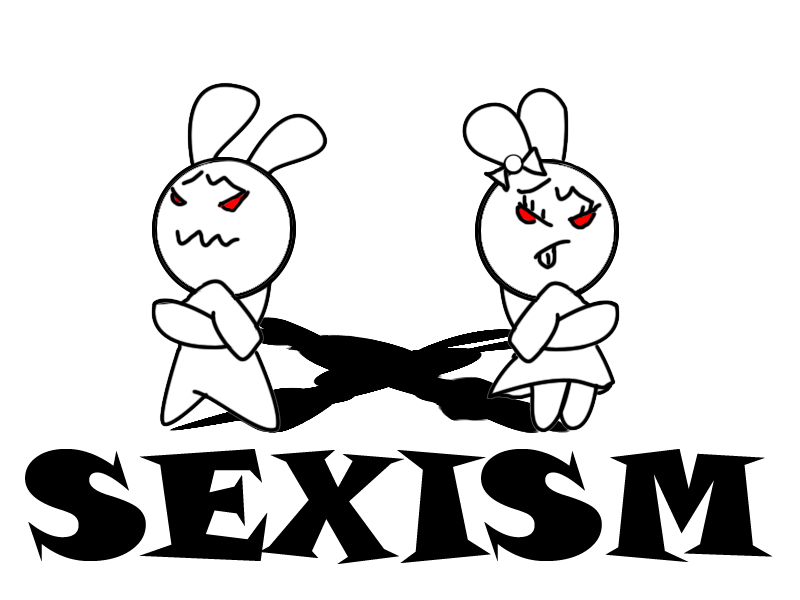
Sexism Hurt Everyone, March 2, 2011. Source: http://dribbleglass.com

I started writing this in response to the contradictions anyone can find in looking at Women’s History Month. Particularly the distance between feminist/womanist rhetoric about girls and women loving themselves for who they are and not how they look. Versus the everyday barrage of images about beauty and achieving it for others’ pleasure, if not for one’s own. Then I realized that this is an issue for women and men, boys and girls, regardless and because of race and socioeconomics. Then I thought that beauty isn’t the only insecurity folks who are blessed or gifted become neurotic about over time.


It just proves that most of us, even the most well-rounded, well-meaning and well-adjusted of us, can’t help but be somewhat sexist. And that there are many of us who represent walking contradictions of feminism and sexism who call others on their -ism “isht” but refuse to recognize it in ourselves.

Sexism is complicated by the fact that it often is more than just the mere objectification of women. After all, men can be eye-candy as well, and using the term women in the universal, at least in the Western world, equates almost exclusively to White women. I haven’t even begun to describe the exclusion of the transgender community from this conversation, as well as how embedded middle class and affluent values are in our understanding feminism (but not womanism) in our Women’s History discourse.

Such was the case for me nine years ago at my job as assistant director of the New Voices Fellowship Program at the Academy for Educational Development (AED). (It’s the organization that finds itself under suspension from government grants because of serious financial malfeasance since the beginning of last December — see my blog post from December 2010). We were prepping binders and other materials for a New Voices selection panel meeting when a staff member engaged me in a conversation about how I moved from dating to marriage. It was a question that required me to discuss my progression to serious relationships.

Though I didn’t want to go into major details about my personal life, I did want to give the young man an answer that made sense. So I started with how I saw women when I was about twenty-two or twenty-three (the younger man’s age at the time, by the way), and worked my way forward. I noted how I often interchanged the terms “woman,” “girl” and “chick” when I was younger, but had pretty much grown out of objectifying women in that manner by the time I’d started dating my future wife a few years later.

A female co-worker walked into the conference room while I was in mid-sentence, and the only thing she heard was “chick.” She demanded a retraction on the spot, which I summarily refused. “I’m not going to change a story by using a different term when I know I used that term ten years ago,” I said. I added that the conversation wasn’t really her business, especially since she walked into the middle of it without

Sexism, March 2, 2011. Source: http://swpeng.com

knowing the context of it.


She reported my allegedly sexist misdeed to my immediate supervisor, who didn’t know how to respond, so he did nothing. That, at least to me, was actually more sexist than anything I may have said and regardless how anyone could’ve interpreted it. That my co-worker never followed up to discuss why I happened to be using the term “chick” seemed to me a sign that even she knew she overreacted to something that was never an issue to begin with.

A few months later, the young woman had resigned, leaving to work on her master’s at the Woodrow Wilson School at Princeton. She told me, in the way of sage advice, that I “needed to open up more and be honest” with younger staff. I just looked at her and wished her well. How can anyone be honest about anything if the first thing we say to each other is to change our stories about our experiences because the words we use can be interpreted as sexist (or racist, or fatist or any other -ist or -ism)?  It seemed to me that if anyone had any serious problems negotiating feminism and sexism, it was my former staff member, not me.

Not that I didn’t realize I had some issues regarding my feminism/womanism versus my own sexism. Most of them have come from what I haven’t said, what I have and haven’t done regarding White women and women of color over the years. As I’ll discuss in my next blog, I’ve had three decades’ worth of damsel-in-distress neurosis (I have no idea what the DSM-IV code is for that).

Newer posts →

Boy @ The Window: A Memoir

Boy @ The Window: A Memoir

Places to Buy/Download Boy @ The Window

There's a few ways in which you can read excerpts of, borrow and/or purchase and download Boy @ The Window. There's the trade paperback edition of Boy @ The Window, available for purchase via Amazon.com at http://www.amazon.com/Boy-Window-Donald-Earl-Collins/dp/0989256138/

There's also a Kindle edition on Amazon.com. The enhanced edition can be read only with Kindle Fire, an iPad or a full-color tablet. The links to the enhanced edition through Apple's iBookstore and the Barnes & Noble NOOK edition are below. The link to the Amazon Kindle version is also immediately below:

scr2555-proj697-a-kindle-logo-rgb-lg

Boy @ The Window on Amazon.com: http://www.amazon.com/Boy-The-Window-Memoir-ebook/dp/B00CD95FBU/

iBookstore-logo-300x100

Boy @ The Window on Apple's iBookstore: https://itunes.apple.com/us/book/boy-the-window/id643768275?ls=1

Barnes & Noble (bn.com) logo, June 26, 2013. (http://www.logotypes101.com).

Boy @ The Window on Barnes & Noble: http://www.barnesandnoble.com/w/boy-the-window-donald-earl-collins/1115182183?ean=2940016741567

You can also add, read and review Boy @ The Window on Goodreads.com. Just click on the button below:

Boy @ The Window

Twitter Updates

Tweets by decollins1969
  • RSS - Posts
  • RSS - Comments

Archives

  • June 2025
  • April 2023
  • September 2022
  • August 2022
  • July 2022
  • June 2022
  • May 2022
  • April 2022
  • March 2022
  • January 2022
  • December 2021
  • November 2021
  • October 2021
  • September 2021
  • August 2021
  • July 2021
  • June 2021
  • April 2021
  • March 2021
  • February 2021
  • January 2021
  • December 2020
  • November 2020
  • October 2020
  • September 2020
  • August 2020
  • July 2020
  • May 2020
  • April 2020
  • March 2020
  • January 2020
  • December 2019
  • November 2019
  • August 2019
  • July 2019
  • June 2019
  • May 2019
  • April 2019
  • March 2019
  • February 2019
  • January 2019
  • December 2018
  • November 2018
  • October 2018
  • September 2018
  • August 2018
  • July 2018
  • June 2018
  • May 2018
  • March 2018
  • February 2018
  • January 2018
  • December 2017
  • November 2017
  • October 2017
  • September 2017
  • August 2017
  • July 2017
  • June 2017
  • May 2017
  • April 2017
  • March 2017
  • February 2017
  • January 2017
  • December 2016
  • November 2016
  • October 2016
  • September 2016
  • August 2016
  • July 2016
  • June 2016
  • May 2016
  • April 2016
  • March 2016
  • February 2016
  • January 2016
  • December 2015
  • November 2015
  • October 2015
  • September 2015
  • August 2015
  • July 2015
  • June 2015
  • May 2015
  • April 2015
  • March 2015
  • February 2015
  • January 2015
  • December 2014
  • November 2014
  • October 2014
  • September 2014
  • August 2014
  • July 2014
  • June 2014
  • May 2014
  • April 2014
  • March 2014
  • February 2014
  • January 2014
  • December 2013
  • November 2013
  • October 2013
  • September 2013
  • August 2013
  • July 2013
  • June 2013
  • May 2013
  • April 2013
  • March 2013
  • February 2013
  • January 2013
  • December 2012
  • November 2012
  • October 2012
  • September 2012
  • August 2012
  • July 2012
  • June 2012
  • May 2012
  • April 2012
  • March 2012
  • February 2012
  • January 2012
  • December 2011
  • November 2011
  • October 2011
  • September 2011
  • August 2011
  • July 2011
  • June 2011
  • May 2011
  • April 2011
  • March 2011
  • February 2011
  • January 2011
  • December 2010
  • November 2010
  • October 2010
  • September 2010
  • August 2010
  • July 2010
  • June 2010
  • May 2010
  • April 2010
  • March 2010
  • February 2010
  • January 2010
  • December 2009
  • November 2009
  • October 2009
  • September 2009
  • August 2009
  • July 2009
  • June 2009
  • May 2009
  • April 2009
  • March 2009
  • February 2009
  • January 2009
  • December 2008
  • November 2008
  • October 2008
  • September 2008
  • August 2008
  • July 2008
  • June 2008
  • May 2008
  • April 2008
  • March 2008
  • February 2008
  • January 2008
  • December 2007
  • November 2007
  • October 2007
  • September 2007
  • August 2007
  • July 2007
  • June 2007

Recent Comments

decollins1969's avatardecollins1969 on No Good Teaching Deed Goes…
Mary Rose O’Connell's avatarMary Rose O’Connell on No Good Teaching Deed Goes…
Lyndah McCaskill's avatarLyndah McCaskill on The Raunchiest of Them Al…

NetworkedBlogs on Facebook

NetworkedBlogs
Blog:
Notes From a Boy @ The Window
Topics:
My Life, Culture & Education, Politics & Goofyness
 
Follow my blog

616 616 East Lincoln Avenue A.B. Davis Middle School Abuse Academia Academy for Educational Development AED Afrocentricity American Narcissism Authenticity Bigotry Blackness Boy @ The Window Carnegie Mellon University Child Abuse Class of 1987 CMU Coping Strategies Crush #1 Crush #2 Death Disillusionment Diversity Domestic Violence Economic Inequality Education Family Friendship Friendships Graduate School Hebrew-Israelites High-Stakes Testing Higher Education History Homelessness Humanities Humanities Program Hypocrisy Internalized Racism Jealousy Joe Trotter Joe William Trotter Jr. K-12 Education Love Manhood Maurice Eugene Washington Maurice Washington Misogyny Mother-Son Relationship Mount Vernon High School Mount Vernon New York Mount Vernon public schools Multiculturalism MVHS Narcissism NFL Pitt Pittsburgh Politics of Education Poverty President Barack Obama Race Racial Stereotypes Racism Relationships Self-Awareness Self-Discovery Self-Reflection Sexism Social Justice Teaching and Learning University of Pittsburgh Violence Whiteness Writing

Top Rated

Blog at WordPress.com.

  • Subscribe Subscribed
    • Notes from a Boy @ The Window
    • Join 103 other subscribers
    • Already have a WordPress.com account? Log in now.
    • Notes from a Boy @ The Window
    • Subscribe Subscribed
    • Sign up
    • Log in
    • Report this content
    • View site in Reader
    • Manage subscriptions
    • Collapse this bar
 

Loading Comments...