• About Me
  • Other Writings
  • Interview Clips
  • All About Me: American Racism, American Narcissism, and the Conversation America Can’t Have
  • Video Clips
  • Boy @ The Window Pictures
  • Boy @ The Window Theme Music

Notes from a Boy @ The Window

~

Notes from a Boy @ The Window

Tag Archives: Education

This Is Why I Write…I Think

09 Tuesday Nov 2010

Posted by decollins1969 in 1, Academia, Boy @ The Window, culture, Eclectic, Pop Culture, race

≈ Leave a comment

Tags

Black Male Narrative, Black Males, Boy @ The Window, Colleges & Universities, Education, Humanities Program, Intellectual Development, K-12 Education, Mount Vernon New York, Prison, Privileging Athletes and Entertainers, Publishing, Writing
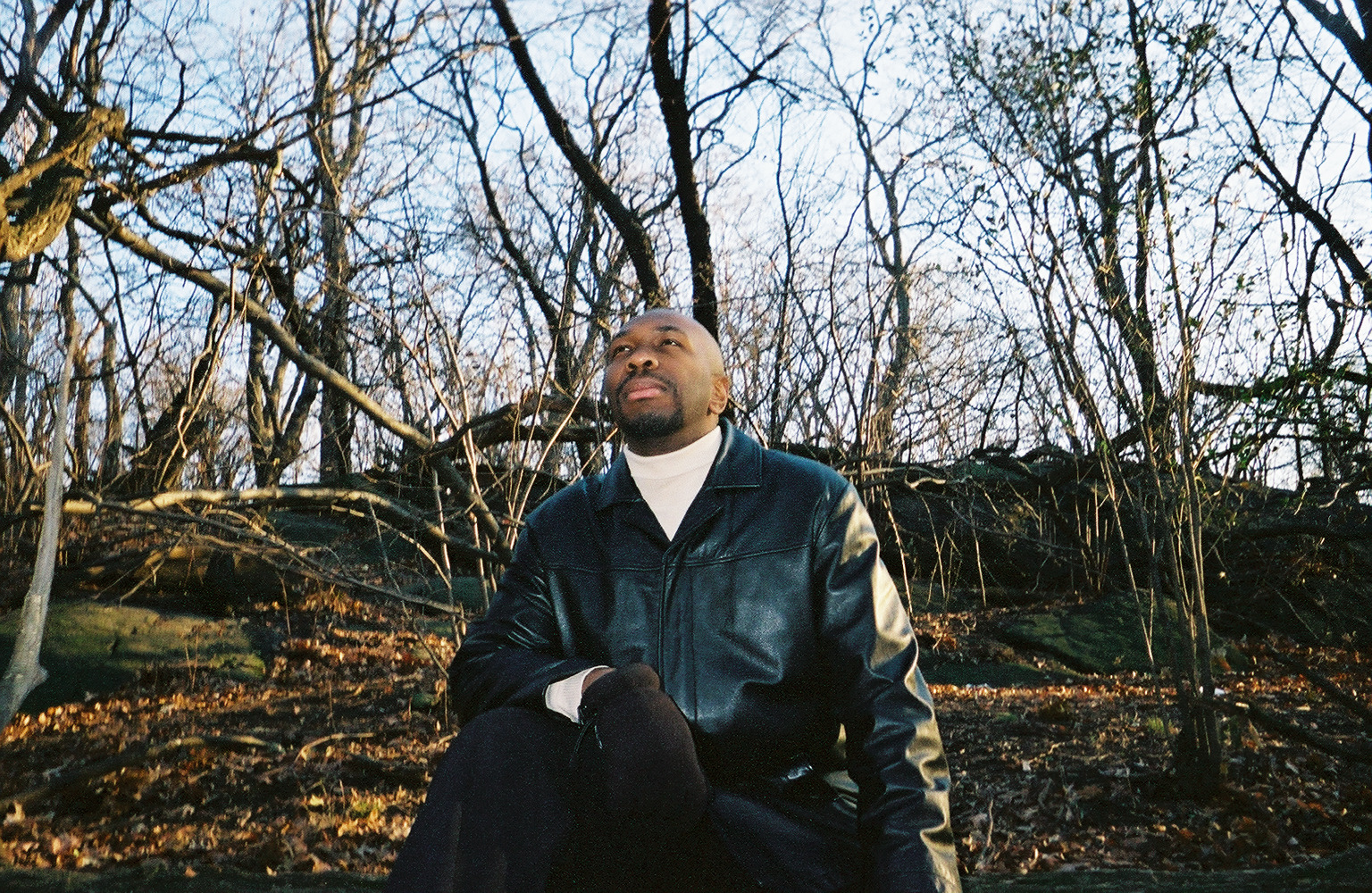


A Younger Me, Thinking, Central Park, New York, NY, December 23, 2002. Angelia N. Levy

In the course of the past half-decade of struggle over a now 360-page manuscript, even I’ve asked myself, why? What am I doing? Why in the world would I want to dredge up and relive twenty-three, twenty-five and thirty-year-old memories? Of all the books I think I have left in me, why a memoir about the years of my life I’ve tried hardest to forget, to not even discuss? Wouldn’t it be easier to write fiction, a novel that includes elements of that life without a detailed account of it? Why take the risk of offending my first hometown, my former classmates and teachers, my family? Why, dummy, why?


Well, it’s not because I get some perverse pleasure out of describing myself as a loser, or torturing myself with unfulfilled love, or because I’m trying to hurt other people’s feelings about Mount Vernon, New York or the Humanities Program. There are lots of reasons. Some of them start with my seven-year-old son. At the very least, I want him to understand his old man as he grows up better than I understood myself

Diary of a Wimpy Kid Book Cover Picture, November 9, 2010. Donald Earl Collins

growing up.


But it’s more than that, much more. I’m tired of sitting in interviews and in on staff meetings (when I worked full-time and had more consulting work) and hearing about the tiny number of highly educated Black males in the pipeline for high-level professional jobs. I’m tired of the narrative that says that Black males — and other males of color, for that matter — have to fuck up their lives in order to find the right path. It makes me groan — in my mind and out of my mouth — when I hear over and over again how few males of color even consider college, much less graduate or go on to advanced degrees.

But that’s not all. It’s disheartening to see these narratives play themselves out in African America, in America writ large, and in the publishing world. Like with my growing-up hometown. For the most part, entertainers and athletes — from the Williams and McCray brothers of the NBA past to Ben Gordon, from Denzel Washington to Al B. Sure — are the only ones with cred. Basketball, music, and occasionally, acting and dance are the ways other Blacks are inspired to have aspirations. Intellectual abilities, especially the ability to retain and then critique knowledge, are discounted. People like me growing up were nerds, or worse, just plain weird.

I write what I write because I know that in communities and in neighborhoods like the one I grew up in, the constant ridicule and the stifling of creative thinking and intellectual development can easily lead to stunted lives. I was lucky in a lot of ways, because I was deliberately naive, because of Humanities, because some of my classmates were almost as weird as me, because we had some wonderful teachers. But that doesn’t represent the Mount Vernon educational experience, not by a long shot.

I’m tired of students of color — especially males of color — falling through the cracks of horrible K-12 education because of bad policies, racial and economic politics, and principals as prison wardens. Not only in Mount Vernon. Pittsburgh. DC. PG County, Maryland. Baltimore, Sacramento, Oakland, New York City, Cleveland, Jackson, Mississippi, Jacksonville, Florida, Atlanta, San Francisco, Philadelphia and so many other schools and school districts I’ve visited for work or research purposes over the years.

The narrative that a Black male can only find their way out of poverty through committing criminal errors that lead to prison time and enlightenment goes all the way back to Richard Wright’s Native Son and Black Boy. The one about Black males finding a niche in the world of entertainment — as athletes, musicians, rap artists, actors and comedians — has its roots in original Black heavyweight champion Jack Johnson. The narrative that involves Black males who used education and their intellectual talents to overcome their circumstances and these stereotypical narratives is seldom heard from in the publishing world.
 

616 Living Room Window Screen Shot, November 23, 2006. Donald Earl Collins

That’s likely because some folks think that this story’s been overdone. Even though anyone can count those memoirs and novels on their fingers and thumbs. Maybe it’s not entertaining enough to describe a life full of violence and psychological torture, but with no crimes committed by the main character, no veins injected with heroin, no women knocked up with kids. I write my manuscript because I lived long enough to have learned that there are tens of thousands of Black boys and other boys of color — not to mention their teachers, parents, principals — who languish in the struggle to succeed because they’re not scoring touchdowns, spittin’ rhymes or dunking on rims. Or trying to live the thug life, for that matter. These are the kids that need to be saved, as much as the kids who are already on the brink of prison life.


For all these reasons, I write Boy @ The Window. For all of these reasons, I post on this blog as much as I do. To say what I’ve thought, but often haven’t said. And to do it without sounding as serious as an academician. Nor as entertaining as a stoned Baby Boomer trying to make the 70s sound cool. It’s a balance, and I’ve made many mistakes along the way. And will likely make more. But in all of this, I’ve found so much more of my humanity than I thought possible. I just hope that it’s really worth it.
Bad Conversations and Education Reform

02 Tuesday Nov 2010

Posted by decollins1969 in 1, Academia, Boy @ The Window, culture, Eclectic, Politics, race

≈ 2 Comments

Tags

A Nation At Risk, Bill Gates, Conversations on Education Reform, Corporate Interests, Double the Numbers, Education, Education Reform, Experts, Higher Education, K-12 Education, K-16 Education, Obama Administration, Parents, Politics of Education, Race and Education, STEM Fields, Students, Teachers, Thomas L. Friedman


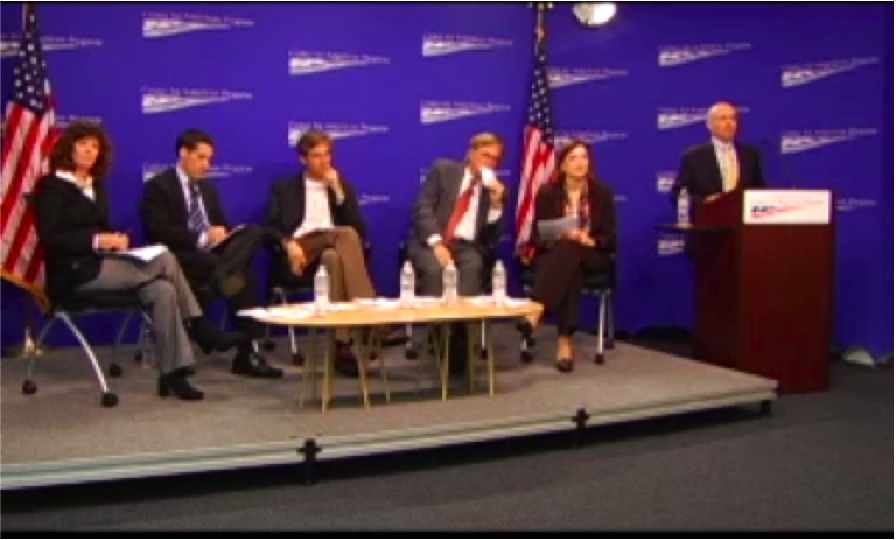
Improving Degree Completion for 21st Century Students, Center for American Progress, Washington, DC, November 2, 2010, Screen Shot. Donald Earl Collins

I’ve been thinking about the fields in which I’ve worked and sort-have-worked in over the past fourteen years, and I’ve drawn one simple conclusion. For all of the talk of education reform, the talk about reform itself is in need of a reformation. I’m tired of the contrast between the experts in the field — who pay little attention to the cutting-edge trends, research and activism in K-16 education — and the everyday folks. They refuse to do anything except complain about teachers, as if education is as simple as organizing a file cabinet.  The who, what and what for’s regarding education reform has stifled what should be an engaging conversation, one that’s essential in the consideration of America’s twenty-first century ills.

Who’s part of this conversation remains something of an atrocity. Almost all of the experts in education reform — whether on a scholarly panel or in the documentary Waiting for Superman — tend to be Whites (more male than female) over the age of fifty. With more than one in three students in public schools of color — and with tens of thousands of teachers and administrators of color in this school districts — it’s hard to believe that all the experts are White, and most of those are middle-aged to elderly males. Their vision, at best, is a liberalized twentieth-century vision of K-12 and postsecondary education. Most of their proposed solutions — smaller class sizes, more homework, small schools, higher certification standards — will not in any way fundamentally reform K-16 education.

When combined with what’s considered important in education reform these days, it becomes painfully

A Nation At Risk (1983) Book Cover, November 2, 2010. Donald Earl Collins

obvious that the conversations we have on education reform are predetermined ones based on certain interests and short-sighted economic considerations. Most of the money in education reform — whether from the federal government, private foundations or corporate interests — is earmarked for things related to STEM fields (science, technology, engineering and mathematics). No one living in this century would deny the importance of STEM fields to a post-industrial economy. But not to the exclusion of everything else. Science folk and scribes alike still need to know how to write well, to think critically, to act ethically, to extend themselves beyond government and corporate interests.

Thomas Friedman — at least as he wrote in The World Is Flat (2005) — Bill Gates, the Obama Administration are all correct in that STEM fields will provide living wages and supply jobs at a rate over the next generation to replace the easy jobs of the by-gone era of industrial jobs straight out of high school. Yet none of them fully appreciates the connection between education reform, community development, corporate irresponsibility, lobbyists and the swaying of government policies and the politics of race and class in all of this.

STEM fields without a real direction for providing livable communities for the poor and for low-income people of color. Education reform that doesn’t do more than make scientists out of artists. Ideas that don’t account for the long-term issues of climate change and energy and resource depletion. Education policies that contradict themselves in terms of funding and a lack of understanding of what education reform truly

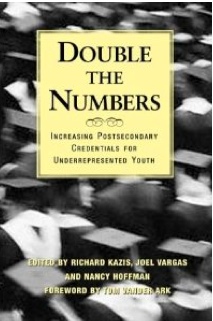
Double the Numbers (2004) Book Cover, November 2, 2010. Donald Earl Collins

means. That’s what we have now, and have had since the 1940s.

In the end, all these ideas are about is tapping the same human resources. The dwindling middle class, folks who’ve managed a traditional education track, folks whose lives are stable enough to allow the resources necessary for higher and advanced education. This need to tweak — instead of overhaul — the educational status quo and then call it reform is what leads to bad conversations. This is why what little in the way of reform actually occurs, and why so few of our kids get the reform they truly deserve.

Opposite World

06 Monday Sep 2010

Posted by decollins1969 in 1, Academia, Eclectic, Patriotism, Politics, Pop Culture, race

≈ Leave a comment

Tags

Anti-Intellectualism, Education, FOX News, Ignorance, Kathleen Parker, Maureen Dowd, Narcissism, Opposite World, Sarah Palin, Stupidity, Tea Party


Ignorance and Apathy. Source: http://iftheshoefitz.com

I know that I don’t fit very well in this world. My way of speaking, my walk, my music tastes. They and so much more make me an oddball in a land full of narcissistic conformists who all believe that they’re special. It’s opposite world for me, and has become more so over the past thirty years. No longer is it that “the customer’s always right.” It’s acceptable that people refuse to give up space in public, step on your shoes and toes and dare you to make them say “excuse me.” Folks refuse to say “thank you” for simple and well-meaning gestures, as if a courtesy would force them to acknowledge your existence. Blind loyalty is how we define patriotism, and becomes a quick path of career advancement. It’s a world that’s full of crap, and makes me wish I owned a societal sewage treatment or compost plant to deal with it all. But none of it is more disappointing that our world’s embracing of stupidity.

As any serious scholar knows, there’s a long history of anti-intellectualism in American culture. It’s existed since the days of Woodrow Wilson, and likely at least a generation longer than that. Yet that’s not what I’m concerned with here. These days, we have a people absolutely proud of their lack of knowledge, choosing to avoid knowing anything for fear of rejection by friends, colleagues, voters and leaders. Our pride in ignorance and stupidity knows no bounds. We have folks like Maureen Dowd and Kathleen Parker, as well

Michael Moore's Stupid White Men (should include women as well). Source: http://www.michaelmoore.com

as Faux News, of course, critical of President Obama, mostly because of his biracial Black and elite education background. That includes criticisms over his being “overly patient” and “too deliberate” in addressing complex foreign policy issues. We have NFL coaches laughing on HBO’s Hard Knocks because they couldn’t figure out that two yardsticks and one twelve-inch ruler equals seven feet in length, something that any fifth-grader supposedly should be able to do.

Sarah Palin’s still a popular candidate — perhaps for president, but more likely as a conservative lightning rod — in no small part because she’s refused to embrace knowledge and “those so-called experts” of such. Apparently it’s okay to not listen to what the opposition has to say because they attended Harvard or graduated from Princeton. At least she’s not as stupid as she appears, having made $13 million since the beginning of ’09 off of selling ignorance to her fans.

We have policy wonks, politicians and bigoted Tea Baggers willing to dismiss any and all evidence — not opinion, but objective, painstakingly gathered evidence — that doesn’t fit their White is right and the Right is right view of the world. We have progressives and liberals — from assisted suicide advocates to vegans — who deny others’ points of view or overall context, leaping into full-throated arguments without looking or without imparting their opinions or their knowledge.

Anyone who disagrees with any side based on evidence, knowledge, and of course, wisdom, can expect to see their knowledge shoved to the side. If it were a book, they’d all burn it. If it were a person, they’d jail it. That’s how much our nation hates knowledge and those who possess it. It’s what makes this world so uncomfortable to live in.

Student Follies

01 Thursday Apr 2010

Posted by decollins1969 in 1, Academia, Eclectic

≈ Leave a comment

Tags

College, Education, Etiquette, Higher Education, Teaching and Learning


I’ve been chomping to talk about some of the more inane and insane actions of some of my students over the years. Why? I’ve found that the boundaries between professor and student have broken down quite a bit over the years. So much so that students tend to tell me things that would’ve earned me an F at the University of Pittsburgh as an undergraduate twenty-two years ago. It amazes me that common sense — or at least, some sense of etiquette — doesn’t kick in for these folks in their dealings with me and other instructors. It’s as if we’re merely tutors or academic mercenaries, subject to their feelings and whims, as if we’re only in the classroom to be there for them when they’ve screwed up. So, for those of you who are within a few years of embarking on your higher education journey — or are hopeful parents who expect their kids to attend college in the next decade or so — here are ten examples of what I’m calling “Student Follies.”

1. “I’m paying for this course, so…”: This one drives me nuts. It’s not like these students are writing me checks to pay for a course. The thing I say to them is that until my paycheck has their signature on it, I’m going to teach as a representative of the university, not as an agent for a student.

2. “Can you give me extra credit?”: What? Is this high school? Are you kiddin’ me?!? Whenever I get this question, I have to make sure not to laugh. If it were just college freshmen or high school students asking this question, I’d understand. But I often get upperclassmen or older adults who should know better asking about extra credit to increase their grade. Unlike high school, college is an endeavor that’s about a balance between providing every student an opportunity to excel and providing relative fairness and equality in those opportunities. I often explain that offering extra credit to an individual student is unfair to the students who busted their tails in getting their papers or other assignments done on time. They say they understand, but the fact that they asked in the first place says to me that they might not.

3. “Can I redo my paper?”: This question is an extension of number 2. Why would I give any student an extra bite at an apple that every other student got to bite only one time? I don’t like it when students don’t do well on something I know that with the right amount of training and effort, they could’ve earned a better grade. But my advice will remain to look at my comments and use them as strong advice for their next paper or assignment.

4. “I haven’t been to class because…” or “I have to miss class because…”: Every semester I’ve taught, whether high school students, undergrads or grad students, at an elite university, community college or other institution, I’ve had students miss as many as all of their classes for an entire semester. My first year as a TA at the University of Pittsburgh, I had a student-athlete (played on the tennis team) in his senior year who missed the semester because of an injury. What? Was this a brain injury? Of course not! After attempting to cheat on his makeup final, he failed my course, unsurprisingly.

I’m a flexible professor, and certainly understand when stuff comes up for students, more and more whom have jobs, spouses, families, and serious issues to deal with. So communicating with me like an adult is encouraged. But, at the same time, some students don’t understand the TMI rule. I don’t need to know that you might miss class to watch the NCAA Championship Game Monday night if West Virginia beats Duke on Saturday. Plus, I’m a Pitt fan anyway.

5. “I don’t like the grade you gave me…”: If a student really feels that they should talk to me about their grade, then they should. After class, before class, during a break, with an appointment to meet. Not while I’m giving instruction or explaining the pitfalls that most students fall into in writing papers. I generally hand papers with grades and comments to students at the end of class to avoid them creating an awkward moment. But the students I’ve been working with of late seem to think that their tuition payment gives them the right to object to a grade as soon as they see something they don’t like. The last thing I would’ve thought of doing as an undergrad was to object in front of other students to a grade or grading process. After all, it’s the professor, not the student, who determines grades for courses.

6. Complaining about things that I cannot do anything about: Complementary to number 5, it’s this sense that somehow I’m supposed to know that the LCD projector isn’t working properly, or that a student forgot her glasses for class one day. Or, for that matter, that a student has dyslexia or some other learning or physical disability, or that I should be more patient with another student because she works two jobs. Or that my course schedule, planned out months ahead of time, posted and handed to you the first day of the semester, is now an inconvenience for you because your job has scheduled you for a week-long conference out-of-town. Although I’m flexible, I’m also not going to rearrange my schedule or the schedule set for twenty, thirty or forty students because your life has just become more intense. How about, “Dr. Collins, can I get an extension?,” with a reasonable reason, and without complaining about being an adult?

7. “I’m entitled to my opinion…”: Really? Yes, in a free democratic society, you are entitled to your opinion. But in a college course, your opinion needs to be an informed one. With evidence from relevant and quality sources, based on reasonable analysis, with the ability to discern the difference between bullcrap and actual facts and acceptable interpretations. Unfortunately, I’ve had far too many students who’ve only been interested in expressing their opinions on life in the classroom and in their paper assignments, who think that every sentence should start with “In my opinion,” or “I believe…,” or “I feel…,” or “I think…” College papers aren’t expository essays, or, as we say more often these days, opinion-editorial pieces.

As a student, you shouldn’t think that it’s okay to write that American Indians were decimated by diseases after contact with Europeans “because they practiced a heathen religion.” Or that Whites prolonged slavery in America because “they were under the influence of satan.” Without any evidence to add to this, statements like these merely amount to bigotry. College is about exposure to new ideas and ways of thinking about the world. Giving answers to questions only in the form of opinions demonstrates that these students would prefer not to learn anything at all.

8. Bringing a full meal to eat during class: What? Do students actually think that it’s good form to bring a full three-course dinner to class? Apparently, the answer to this is yes. I know that people need to eat, pee, and deal with family issues when they’re in an evening course. But that doesn’t mean that you should interrupt a lecture, discussion or film with Triple Delight or a Big Mac and french fries. Cell phones should be on vibrate if a student can’t turn their phone off. Slamming the door to the front of the classroom after entering shows little respect for the professor or for the other students. This isn’t even something specific to being in college. I mean, would anyone pull this crap in a meeting with their boss?

9. “Your lectures are incomprehensible…”: Oh well. I guess that I should turn the class over to the students to run, since I’m obviously a teaching hack. I’m not naive enough to think that everything I say is crystal-clear or that everyone understands what’s being taught. But I also know that most of the students who complain have one or two issues. One, they haven’t been doing their readings or other preparation work for class, but somehow expect my lectures to make up for their laziness. Two, they expect me to give them direct answers to questions that require an understanding of interpretation and nuance. Some of my students have expressed their frustrations with this in ways that would’ve gotten me kicked out of my classes as an undergrad at Pitt.

10. Let’s play “Stump the Professor”: Too many students believe that showing the professor that they know historical trivia is necessary for their earning of an A. Knowing facts is helpful, but thinking through those facts takes much more than telling me that five people — and not three — died in the Boston Massacre in 1770. Great to know, but not really the point. Students don’t get to move on to Double Jeopardy if somehow I miss a fact or get a date incorrect by nine years. Correcting these things are fine, but not if a student does it with the idea that this proves that I as their professor somehow didn’t know what I was doing. This one is more annoying than many of the others, mostly because the students involved have an agenda, usually along the lines of proving how much smarter they think they are when comparing themselves to me.

So there it is. There are more, many, many more follies and stories I could tell. But, it comes down to respecting the position a professor holds, even if you don’t like the person. And learning as much as your can when in a course, rather than cutting corners to a higher grade.

About My Brother

06 Thursday Dec 2007

Posted by decollins1969 in 1, Boy @ The Window, culture, Eclectic, Jimme, Mount Vernon New York, My Father, Politics, Pop Culture, race, Youth

≈ Leave a comment

Tags

616, 616 East Lincoln Avenue, Brotherhood, Brothers, Clear View School, Darren, Darren Gill, Education, Internalized Racism, Jealousy, Mental Retardation, Psychological Abuse, Psychological Scars, Self-Hatred, Self-Loathing, The Clear View School


A better picture of Darren and me, taken in April 1975, Sears, Mount Vernon, NY, July 6, 2006. (Donald Earl Collins).
Darren Gill (cropped), Thanksgiving Dinner, Mount Vernon, NY, November 23, 2006. (Donald Earl Collins).

This Sunday, December 9, my older brother Darren Lynard Gill turns 40 years old. It should be a day of pride, of tears of joy and long-suffering, of wondering about entering the prime decade of his life and my soon joining him there. With our relationship and my older brother’s life as such, there is only the hope that both get better before it’s too late for us.

You see, Darren had both the blessing and the curse of being the first-born son of our mother and our father Jimme Collins (they weren’t married at the time Darren was born) when he was born in ’67. It was a period in which both of our parents were still people full of hopes and dreams. It when my father was nothing more than an occasional social binge drinker and my mother was on the verge of becoming a supervisor of Mount Vernon Hospital’s Dietary Department. Darren became the embodies of their hopes and dreams.

And it should’ve been obvious that at least one of their hopes in Darren came true during his toddler years. All during her first pregnancy, according to my mother, my Uncle Sam, and a number of my mother’s friends at the time, all my mother prayed about was for Darren to be healthy and brilliant. She got what she wished for when Darren turned three. Sometime in 1971, my brother had taught himself how to read. The story goes that Darren was sitting at the dinner table in our second-floor flat at 48 Adams Street while my mother and father and me were milling about. Suddenly, they noticed that Darren had picked up a box of Diamond Crystal Salt and began reading the words on the box. Not just the letter, the actual words “salt” and “diamond” and “crystal”! If he hadn’t been moving his finger from left to right as he was doing this, I don’t think my mother and father would’ve believed what they’d witnessed at all.

This story doesn’t exactly take Darren to the academic decathlon. There was something else Darren inherited from my mother and father besides a high capacity for analytical thinking. He was also extremely shy and didn’t like being around lots of people. For both of them, this shyness needed to be taken care of, as if being shy is some sort of curse. My mother’s solution was placing Darren in Headstart in ’73 and ’74 (delaying his start in public school a full year) so that the shyness issue wouldn’t be one when he started school.

Jimme took this idea one step further and farther. He decided one day that Darren was too much like himself. After seeing an ad for a special school in Upper Westchester County called Clearview, he took us up to Dobbs Ferry (where the school was located at the time) so that Darren could be examined by a group of professionals. After a battery of psychological exams and an IQ test, they determined that my brother was mentally retarded. Darren would begin school in September ’74 at the Clearview School as a day student. Neither of our lives would ever be the same.

But before Darren became an institutionalized version of his shy and wonderfully intelligent self, he gave me the same gift he gave himself. I started kindergarten at Nathan Hale the same fall he started going to Clearview. I already knew and recognized my ABC’s, but couldn’t always make out or sound out words, and didn’t recognize them in sentence form. One afternoon between Christmas and New Years at the end of ’74, we sat down and went through sentence after sentence until I could recognize and read a sentence. He literally changed my life, and I didn’t even know it.

For years after that we remained close. We’d fight like all brothers fight. The main issue besides Clearview was my mother, who treated Darren as if he really was retarded while treating me more favorably because I wasn’t shy like Darren. Between my mother and father’s divorce in ’76-’77, my mother’s second marriage to Maurice, and the kids, poverty, abuse and bizarre religion that would come into our lives on the North Side of Mount Vernon, distance began to grow between us.

The key changes included a temper-tantrum that Darren threw in the middle of a Pelham laundromat in the summer of ’80, when my mother suggested that it was time to move my twelve-year-old brother into a “normal school.” It also included all of the abuse I took from my stepfather two summers later while Darren was off at Clearview’s summer day camp having the time of his life. By the time puberty struck, Darren was jealous of me and I was finding it hard to relate to him and survive 616 East Lincoln at the same time.

Darren would remain a student at Clearview until the year after I finished high school. For fourteen years, the state of New York covered his $33,000-a-year (in 1982 dollars) tuition, as he just slid under the public school accommodations radar for the mildly mentally retarded. I always knew that Darren wasn’t retarded, even though he now mimicked the severely retarded students he’d spent day after day with over the years. Through a dispensation granted by the Mount Vernon Board of Education, Darren graduated with the rest of the Mount Vernon High School Class of ’88, even though he had not spent a day in a public school.

From that point on, Darren was jealous of everything I did. I score a 5 on the AP American History exam, and Darren would take the CollegeBoard score sheet and dump it in the garbage. I get into the University of Pittsburgh, and Darren would enroll in college at home for a semester just to prove that he was just as good as me. If I said I was dating someone, Darren would stop talking to me altogether. Even during our Thanksgiving visit to Mount Vernon last year, Darren became angry with me because I offered and gave him a ride home in my family car, even though he wanted to walk in the pouring, freezing rain. I’ve never been able to have a normal conversation with him for fear of pissing him off or making him feel bad or him letting me know how much better my life has been compared to his.

The truth is, I do feel guilty sometimes about where Darren is in his life. For nearly twenty years, Darren has lived in a one-room flat, where he shares a bathroom and a kitchen in South Side Mount Vernon. His jobs have never paid more than $10 an hour. He’s often too afraid to say “Hi” to a woman he’s attracted to. He’s never learned how to drive and hasn’t taken a college-level course since the end of ’88. I’ve tried many, many times to reach out to him, to give him comfort and out of my hard earned wisdom and knowledge. I went through with my family intervention in ’02 in part because I wanted Darren to see what went wrong for our mother and Jimme as far as his education was concerned. Darren rejects almost all that I have to say and give him out of hand, with a smile of meanness that is praying hard for my failure in this life.

My wife says sometimes that she’s surprised that Darren hasn’t tried to kill himself yet. I’m not, if only because someone with Darren’s level of misery wants to see other people suffer with him, in this life, not in the next. That’s why he regularly visits our mother on Sundays for dinner, to remind her of one of the biggest mistakes she’s ever made. It’s why he regularly calls our father for money, to remind him of the idiotic decisions he has made on Darren’s behalf. It’s why Darren wears a permanent smirk on his face, to conceal his contempt for us all.

But I do want to remind him and anyone who knows either of us one thing. I wouldn’t be the intellectual I am today if Darren hadn’t taken the time to teach me how to read. He stepped in the breach to save me from years of catch-up in public school at a time when no one else in my life was willing or able to. Darren is a better person than me, because without him I wouldn’t be able to do what I do today. Happy Birthday Darren! I love you very much.

Newer posts →

Boy @ The Window: A Memoir

Boy @ The Window: A Memoir

Places to Buy/Download Boy @ The Window

There's a few ways in which you can read excerpts of, borrow and/or purchase and download Boy @ The Window. There's the trade paperback edition of Boy @ The Window, available for purchase via Amazon.com at http://www.amazon.com/Boy-Window-Donald-Earl-Collins/dp/0989256138/

There's also a Kindle edition on Amazon.com. The enhanced edition can be read only with Kindle Fire, an iPad or a full-color tablet. The links to the enhanced edition through Apple's iBookstore and the Barnes & Noble NOOK edition are below. The link to the Amazon Kindle version is also immediately below:

scr2555-proj697-a-kindle-logo-rgb-lg

Boy @ The Window on Amazon.com: http://www.amazon.com/Boy-The-Window-Memoir-ebook/dp/B00CD95FBU/

iBookstore-logo-300x100

Boy @ The Window on Apple's iBookstore: https://itunes.apple.com/us/book/boy-the-window/id643768275?ls=1

Barnes & Noble (bn.com) logo, June 26, 2013. (http://www.logotypes101.com).

Boy @ The Window on Barnes & Noble: http://www.barnesandnoble.com/w/boy-the-window-donald-earl-collins/1115182183?ean=2940016741567

You can also add, read and review Boy @ The Window on Goodreads.com. Just click on the button below:

Boy @ The Window

Twitter Updates

Tweets by decollins1969
  • RSS - Posts
  • RSS - Comments

Archives

  • June 2025
  • April 2023
  • September 2022
  • August 2022
  • July 2022
  • June 2022
  • May 2022
  • April 2022
  • March 2022
  • January 2022
  • December 2021
  • November 2021
  • October 2021
  • September 2021
  • August 2021
  • July 2021
  • June 2021
  • April 2021
  • March 2021
  • February 2021
  • January 2021
  • December 2020
  • November 2020
  • October 2020
  • September 2020
  • August 2020
  • July 2020
  • May 2020
  • April 2020
  • March 2020
  • January 2020
  • December 2019
  • November 2019
  • August 2019
  • July 2019
  • June 2019
  • May 2019
  • April 2019
  • March 2019
  • February 2019
  • January 2019
  • December 2018
  • November 2018
  • October 2018
  • September 2018
  • August 2018
  • July 2018
  • June 2018
  • May 2018
  • March 2018
  • February 2018
  • January 2018
  • December 2017
  • November 2017
  • October 2017
  • September 2017
  • August 2017
  • July 2017
  • June 2017
  • May 2017
  • April 2017
  • March 2017
  • February 2017
  • January 2017
  • December 2016
  • November 2016
  • October 2016
  • September 2016
  • August 2016
  • July 2016
  • June 2016
  • May 2016
  • April 2016
  • March 2016
  • February 2016
  • January 2016
  • December 2015
  • November 2015
  • October 2015
  • September 2015
  • August 2015
  • July 2015
  • June 2015
  • May 2015
  • April 2015
  • March 2015
  • February 2015
  • January 2015
  • December 2014
  • November 2014
  • October 2014
  • September 2014
  • August 2014
  • July 2014
  • June 2014
  • May 2014
  • April 2014
  • March 2014
  • February 2014
  • January 2014
  • December 2013
  • November 2013
  • October 2013
  • September 2013
  • August 2013
  • July 2013
  • June 2013
  • May 2013
  • April 2013
  • March 2013
  • February 2013
  • January 2013
  • December 2012
  • November 2012
  • October 2012
  • September 2012
  • August 2012
  • July 2012
  • June 2012
  • May 2012
  • April 2012
  • March 2012
  • February 2012
  • January 2012
  • December 2011
  • November 2011
  • October 2011
  • September 2011
  • August 2011
  • July 2011
  • June 2011
  • May 2011
  • April 2011
  • March 2011
  • February 2011
  • January 2011
  • December 2010
  • November 2010
  • October 2010
  • September 2010
  • August 2010
  • July 2010
  • June 2010
  • May 2010
  • April 2010
  • March 2010
  • February 2010
  • January 2010
  • December 2009
  • November 2009
  • October 2009
  • September 2009
  • August 2009
  • July 2009
  • June 2009
  • May 2009
  • April 2009
  • March 2009
  • February 2009
  • January 2009
  • December 2008
  • November 2008
  • October 2008
  • September 2008
  • August 2008
  • July 2008
  • June 2008
  • May 2008
  • April 2008
  • March 2008
  • February 2008
  • January 2008
  • December 2007
  • November 2007
  • October 2007
  • September 2007
  • August 2007
  • July 2007
  • June 2007

Recent Comments

MaryPena's avatarMaryPena on My Day of Atonement/Bitter Hat…
decollins1969's avatardecollins1969 on No Good Teaching Deed Goes…
Mary Rose O’Connell's avatarMary Rose O’Connell on No Good Teaching Deed Goes…

NetworkedBlogs on Facebook

NetworkedBlogs
Blog:
Notes From a Boy @ The Window
Topics:
My Life, Culture & Education, Politics & Goofyness
 
Follow my blog

616 616 East Lincoln Avenue A.B. Davis Middle School Abuse Academia Academy for Educational Development AED Afrocentricity American Narcissism Authenticity Bigotry Blackness Boy @ The Window Carnegie Mellon University Child Abuse Class of 1987 CMU Coping Strategies Crush #1 Crush #2 Death Disillusionment Diversity Domestic Violence Economic Inequality Education Family Friendship Friendships Graduate School Hebrew-Israelites High-Stakes Testing Higher Education History Homelessness Humanities Humanities Program Hypocrisy Internalized Racism Jealousy Joe Trotter Joe William Trotter Jr. K-12 Education Love Manhood Maurice Eugene Washington Maurice Washington Misogyny Mother-Son Relationship Mount Vernon High School Mount Vernon New York Mount Vernon public schools Multiculturalism MVHS Narcissism NFL Pitt Pittsburgh Politics of Education Poverty President Barack Obama Race Racial Stereotypes Racism Relationships Self-Awareness Self-Discovery Self-Reflection Sexism Social Justice Teaching and Learning University of Pittsburgh Violence Whiteness Writing

Top Rated

Blog at WordPress.com.

  • Subscribe Subscribed
    • Notes from a Boy @ The Window
    • Join 103 other subscribers
    • Already have a WordPress.com account? Log in now.
    • Notes from a Boy @ The Window
    • Subscribe Subscribed
    • Sign up
    • Log in
    • Report this content
    • View site in Reader
    • Manage subscriptions
    • Collapse this bar
 

Loading Comments...